(Click the images for full-size versions!)
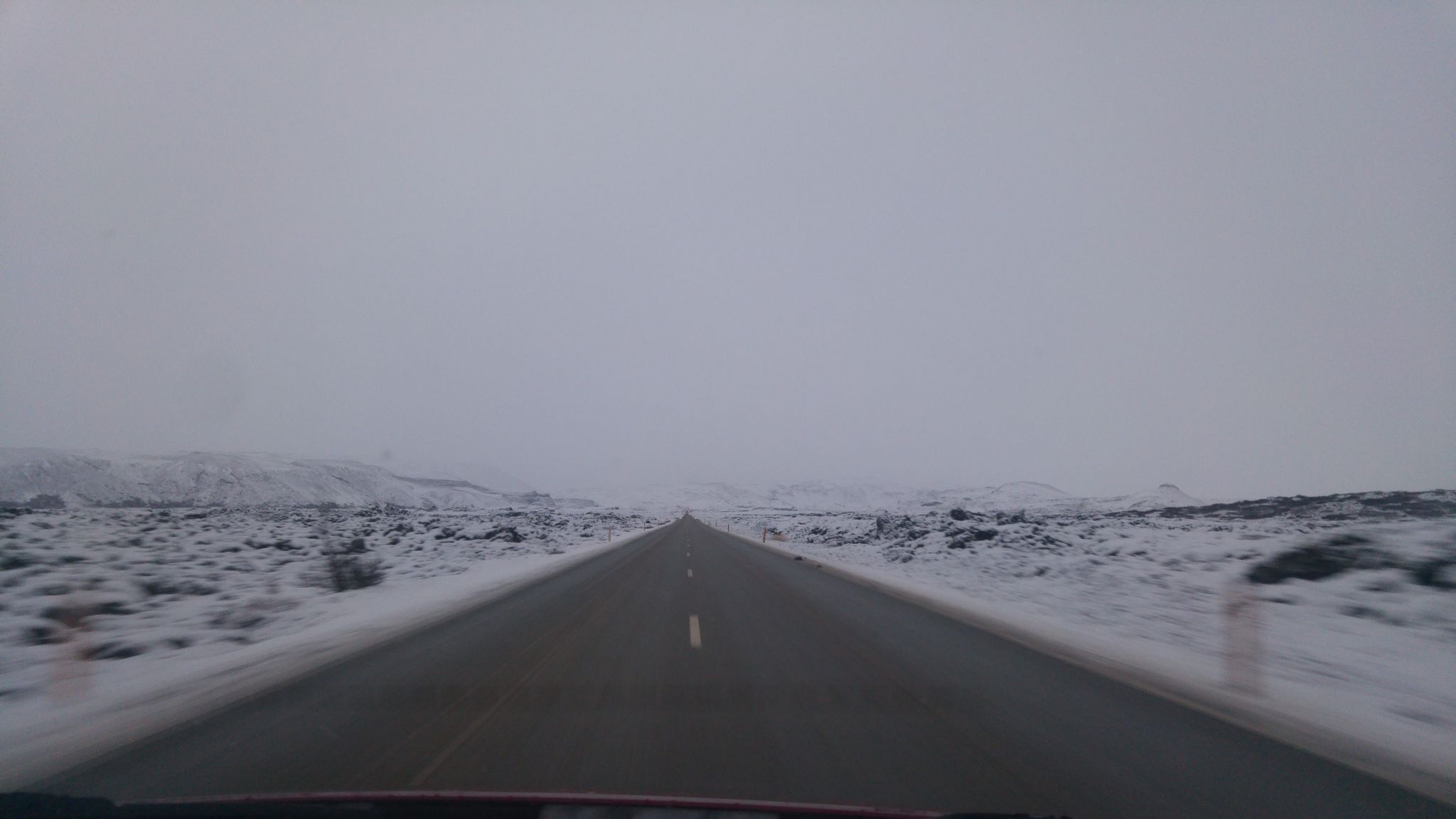
Another new landscape, another direction out of town. Snow had fallen overnight, was still falling as we retraced our tracks through the dock area. Here, rather than the Bauhaus suburbia, it feels like what all those despairing Siberian cities are aspiring to be – clean, functional, and prosperous in a narrow technical sense, though still quite bleak and set against an entirely hostile background. We tailed a yellow bus for a while, the first I’ve seen with actual people in it.

Abruptly, the black tarmac turned to a white gravel road, and the landscape washed-out white; we thanked our lucky stars for the studded snow tyres, and pressed on, up and down small hills, along the shores of the iron-grey Lake Kleifarvatn through sudden streaming snow. At no point was it actually scary – Ben is a highly conscientious driver – but it was certainly one of the more interesting drives I’ve had in a while.


blpblpblp
We pulled up at the Krýsuvík geothermal site (known to us as Steamy Boardwalks), alone in the car park apart from a carpenter’s van, which had presumably transported the distant hi-vis figure we could see doing something to one of said boardwalks. Krýsuvík was a bit disappointing after Geysir, because it basically is Geysir but less so, a rotten clutch of mucky mudpools blupping and farting listlessly into the swirling snow. Snow: it was everywhere, hiding the far side of the valley, blowing in ethereal streaks and snakes across the road, curling and swirling in eddies behind the few passing vehicles like their own tiny auroras. When we drove off again, it passed the windows in flashing warp-speed starlines.
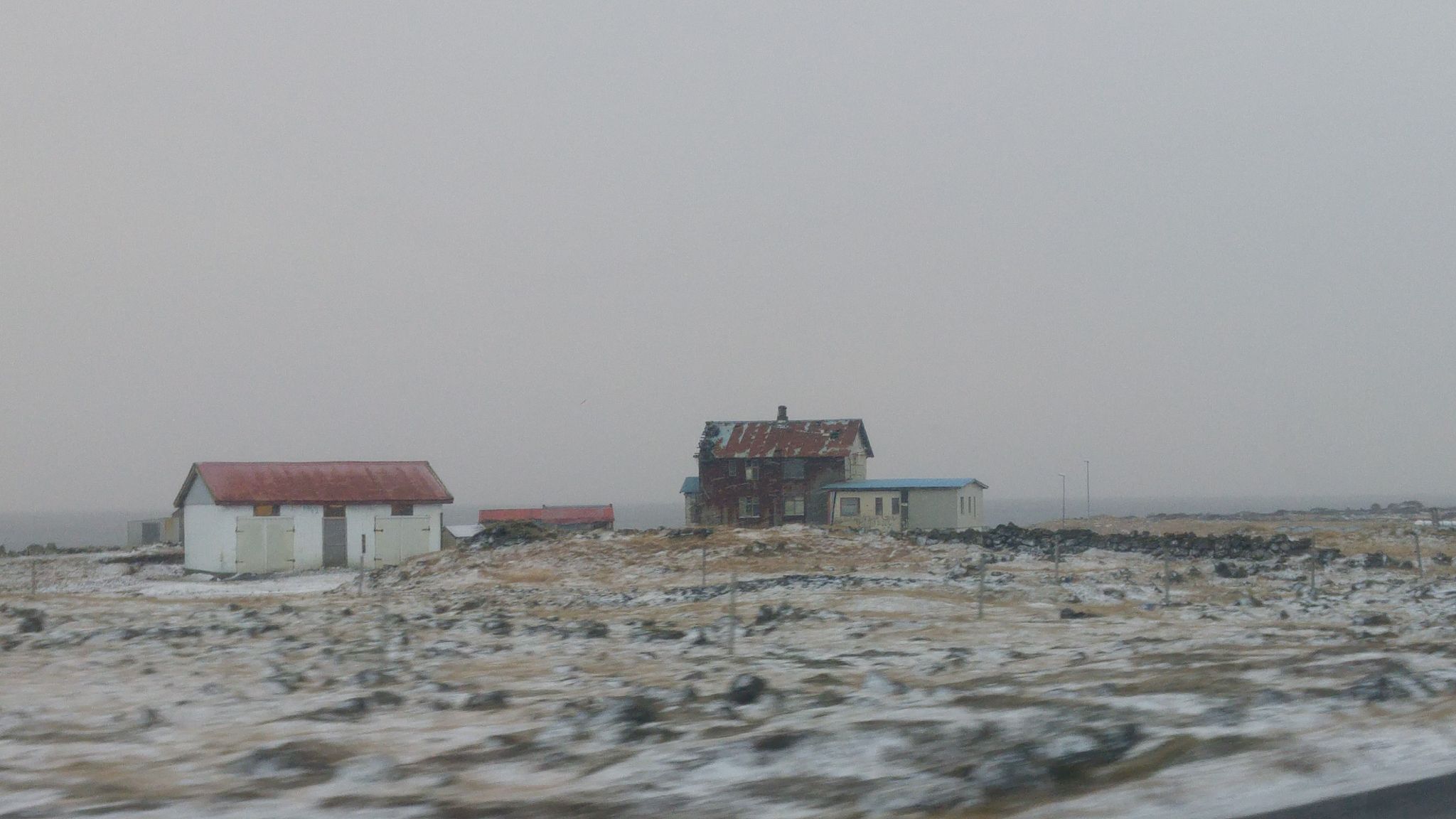
Grindavik, on the coast – a scatter of despairing corrugated huts, a few modern and well-kept looking houses, a few empty warehouses, two giant radio masts striped red and white looming above it all. Christmas decorations on the traffic lights, modern art in the roundabouts, but empty lots full of discarded breezeblocks, a definite sense of wasteland. Some anchored metal pylons of uncertain purpose, behind high wire fences with dire warnings in several languages – NATO, presumably. Along this more benighted part of the south coast, the ruggedness of the black volcanic rock, the grey light and the shaggy feldgrau-coloured moss combine with rusty, run-down signs of human habitation to create a truly depressing landscape.
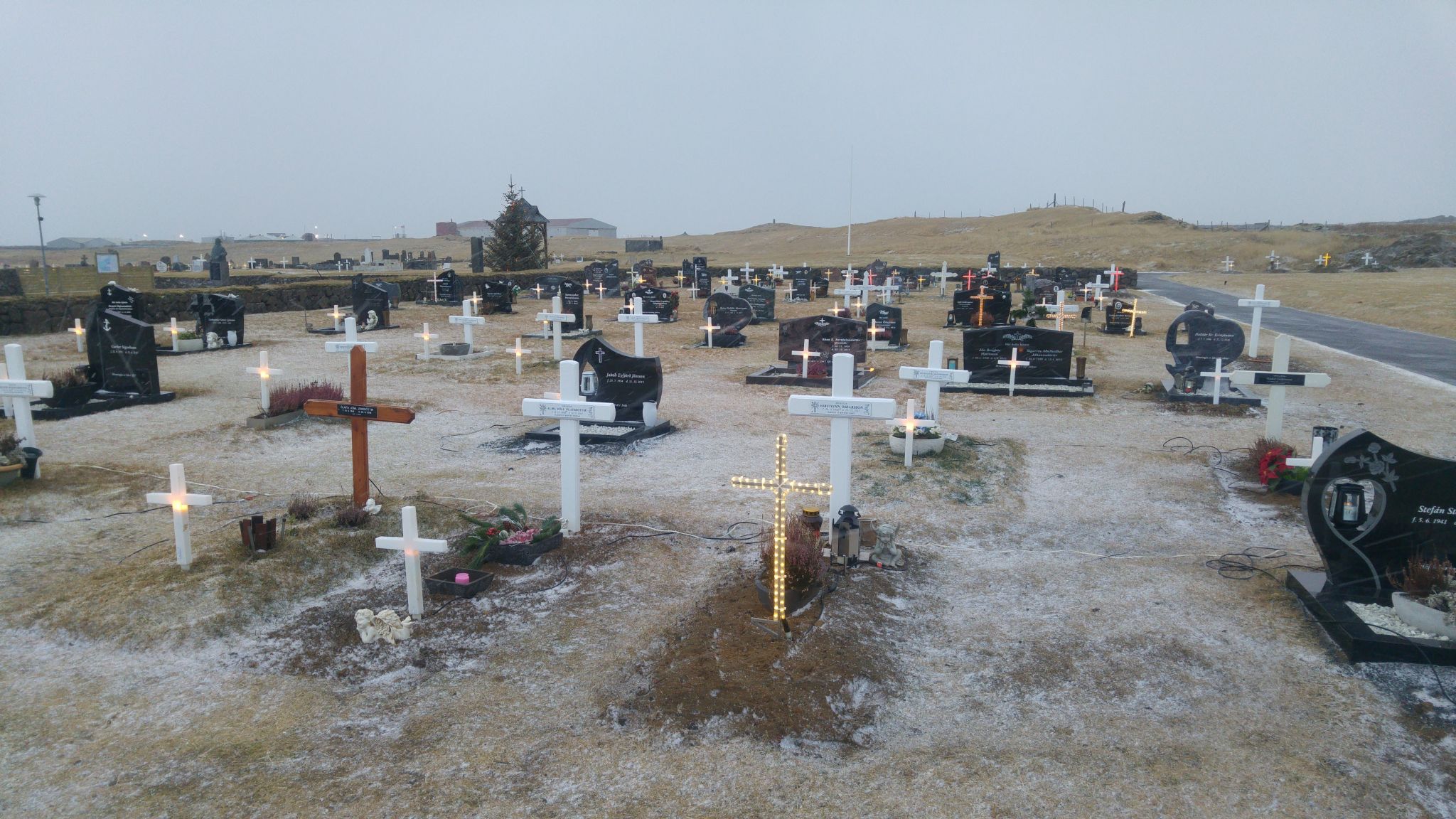
At a graveyard near the sea I confirmed the light-up crucifixes are actually run on mains power, with untidy great cables scattered across the neat cemetery (but to be fair, what the hell else are they going to use? Solar?) Several of the graves were fresh; they still bury people in this country, possibly for a lack of firewood. The cord at an empty flagpole beat out a regular rattle. We retreated to the warmth of the car.
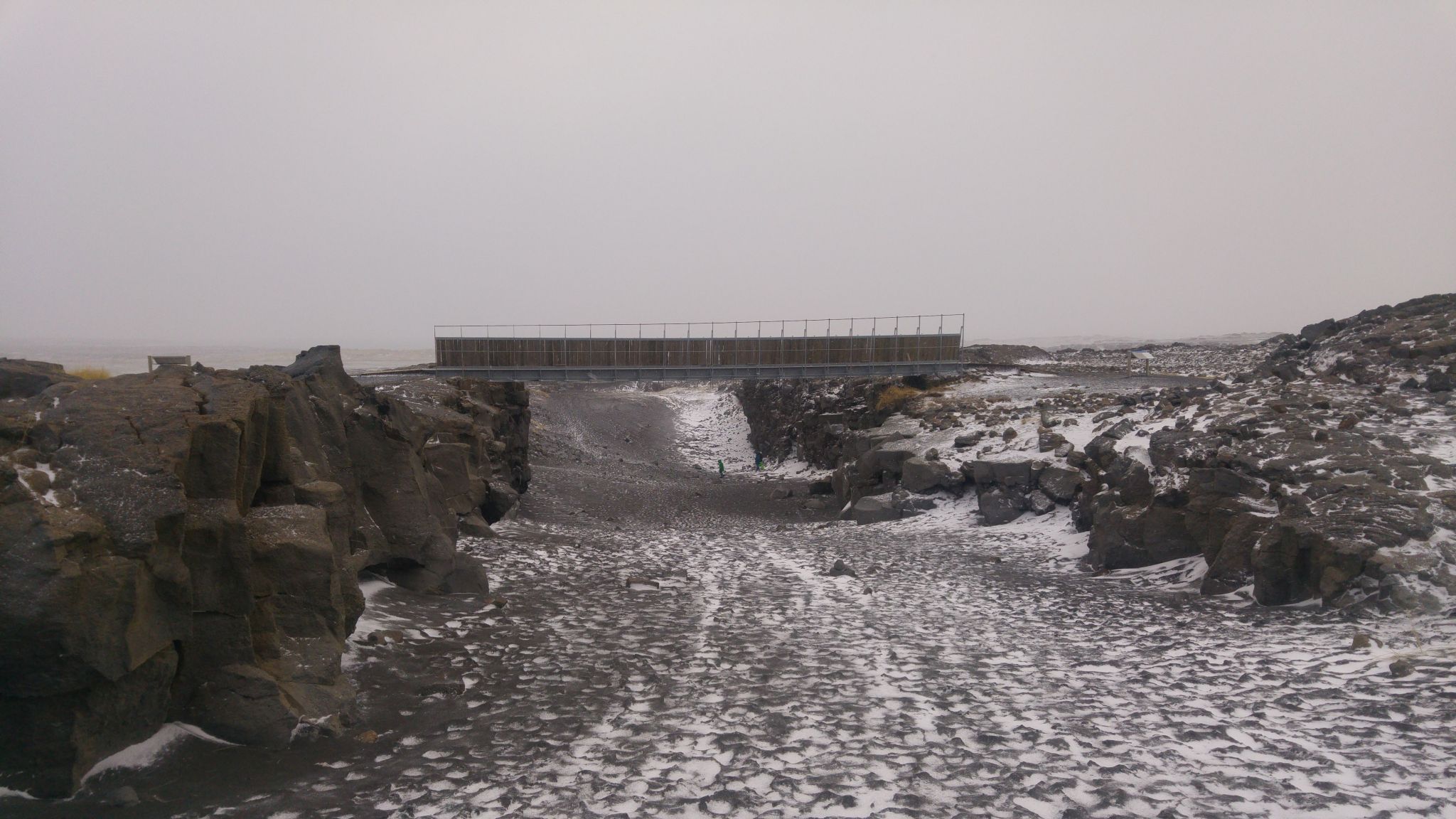
The “Bridge Between Continents” was also a disappointment, but one we’d been readily expecting, as it’s just a small footbridge across a gully which claims to span the Eurasian and North American continental plates. You walk across it, and then under it, trying to stop the wind whipping too many sharp snowflakes into your eyes. Much more intriguing was the geothermal plant a little to the south, enhancing the sense of a blackened moonscape by resembling some sort of space colony – all intriguing stainless steel buildings linked by silver pipes – but police cars patrol it ceaselessly and the wind was bitter.
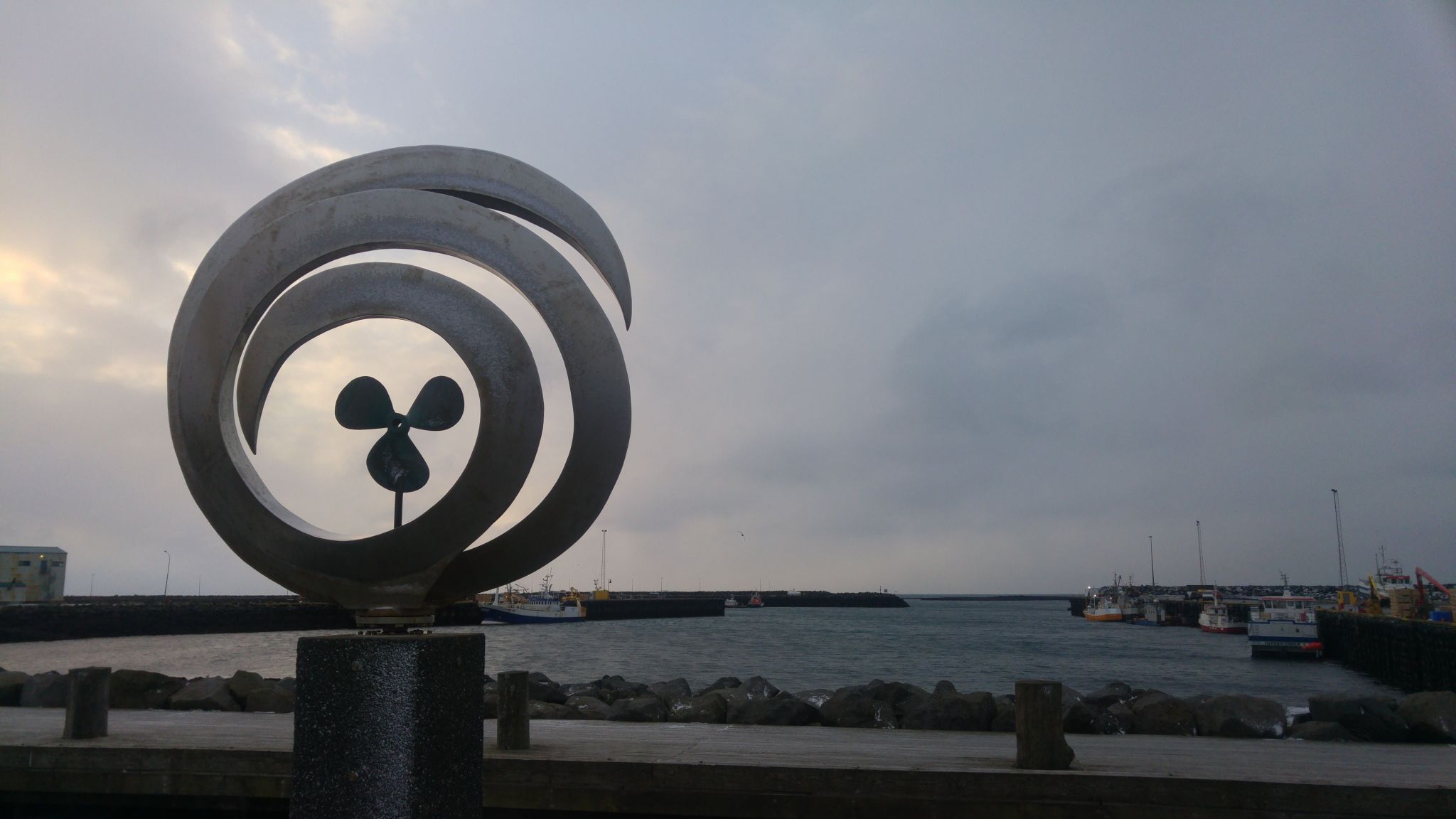
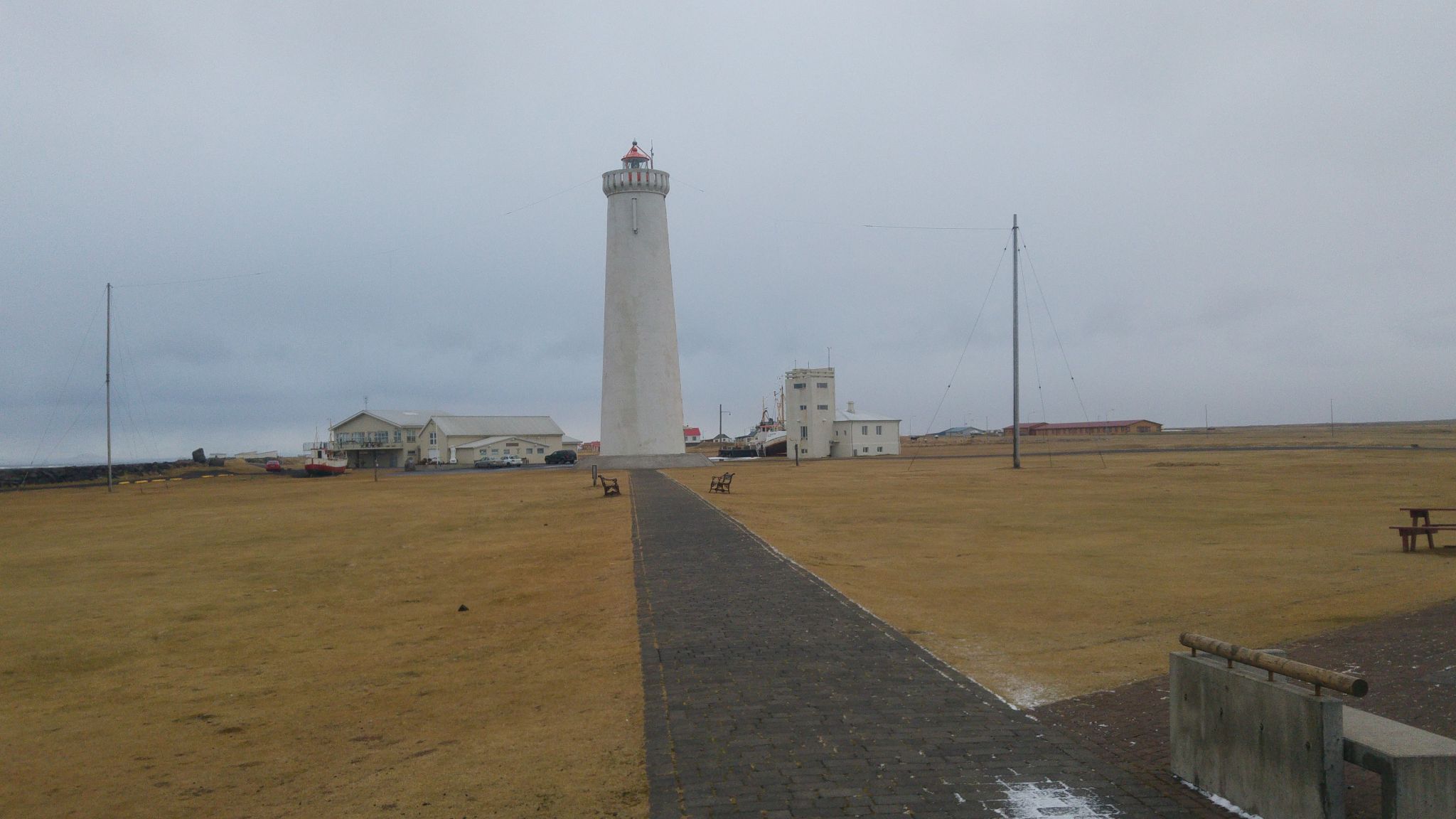
On up the coast, through rarefied little villages, to the northernmost point of the Keflavik peninsula, where a couple of lighthouses stand – a little old square Victorian one, and a much stouter, later round affair. A local had warned us that with wind chill we’d be feeling -20, and he did not exaggerate; the wind was so relentless that individual pebbles had snow built up in their lee, and we could scarcely cross the bridge to the older lighthouse (which was, it seemed, a café in the on-season). We withdrew, and had a (cheap, for Iceland) burger at a desolate little town, before heading back inland a little to the Blue Lagoon.
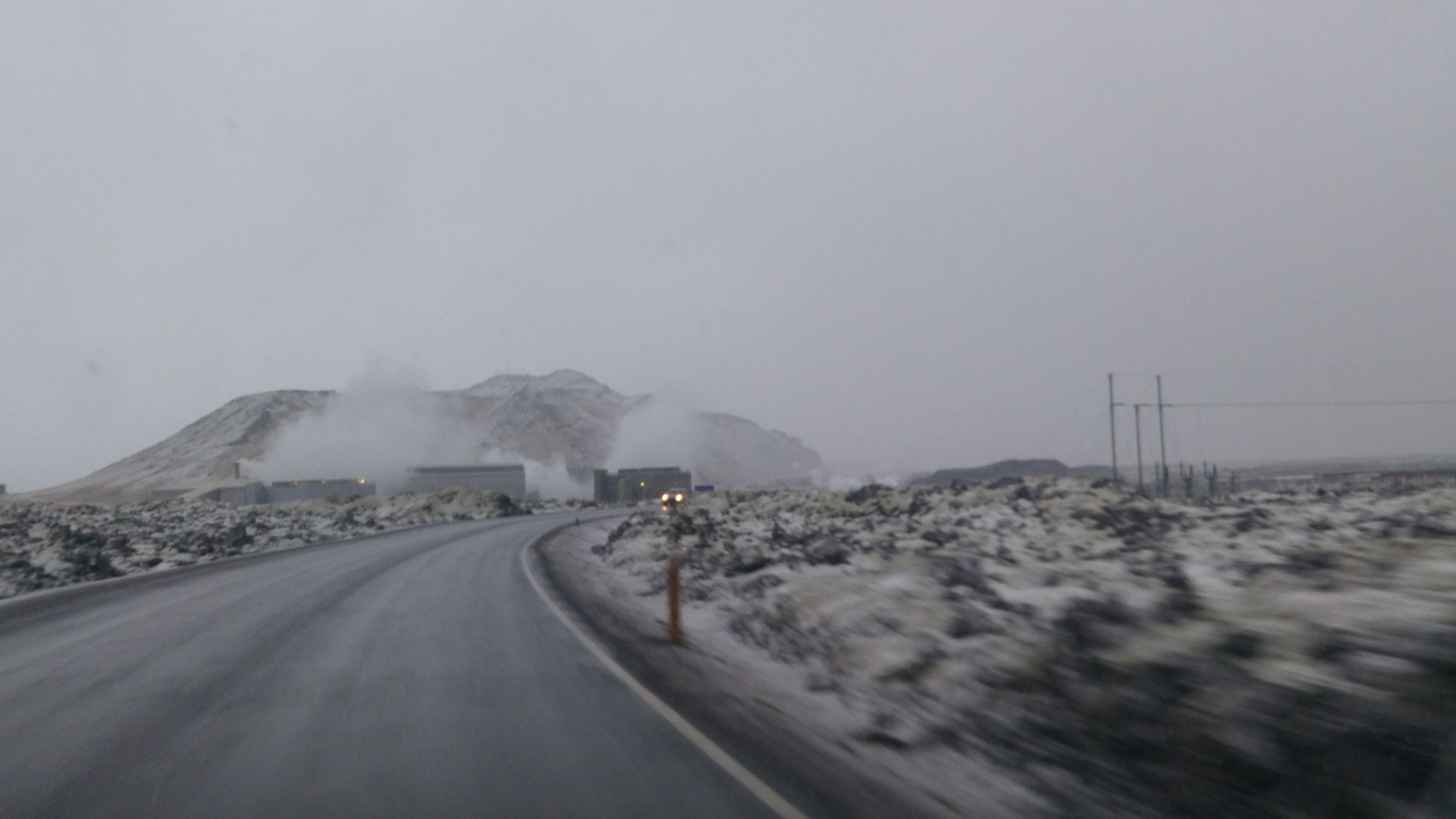
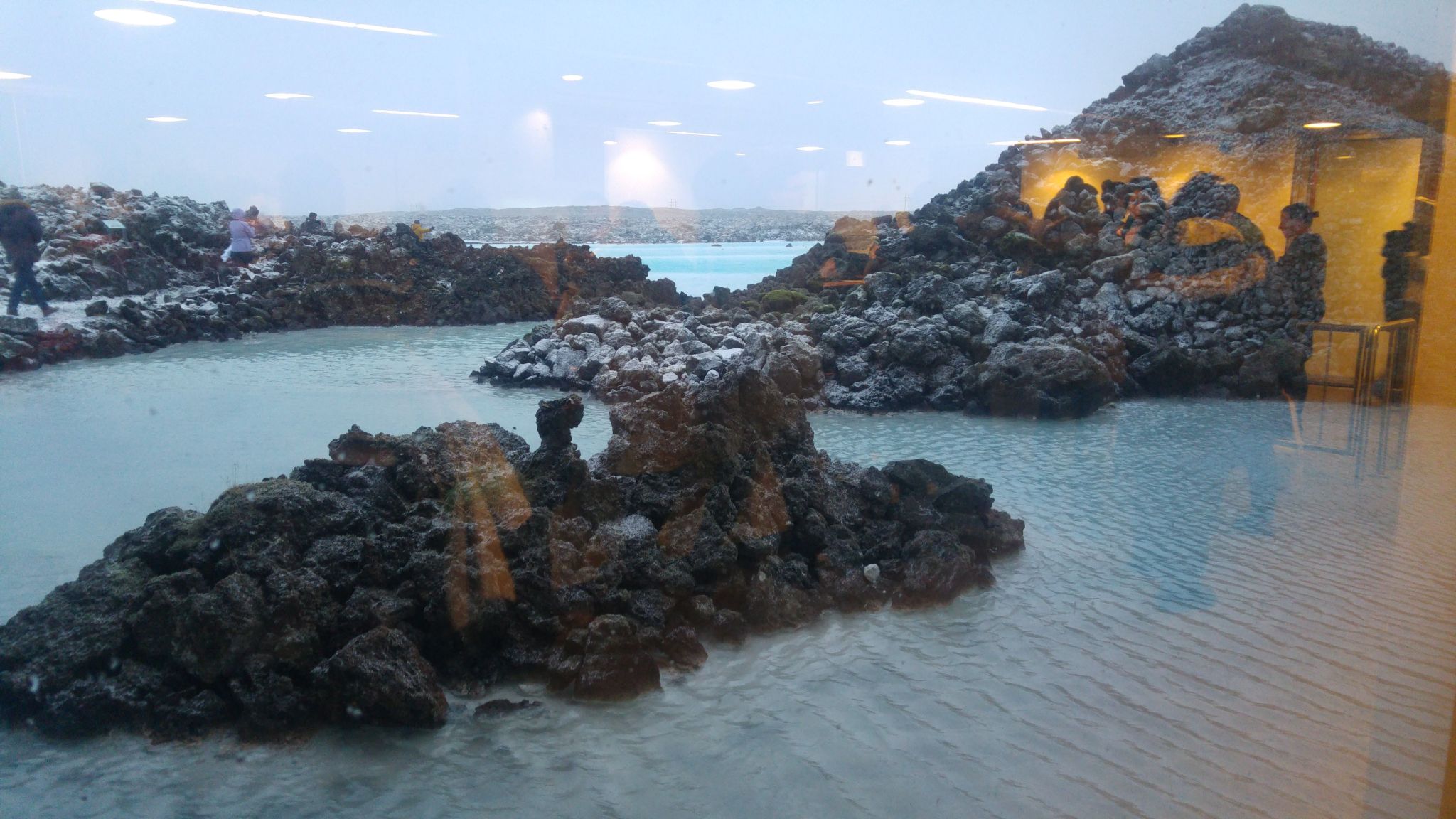
The Lagoon is one of Iceland’s chief attractions and, very much in the spirit of the country more generally, it is clean, modern, thoroughly artificial, eye-wateringly expensive and powered by volcanoes. Despite some vague pretensions at the traditional spa fraudulence, it’s actually an adjunct to a geothermal power plant and has only been around for a couple of decades; Iceland’s legit hot springs are more in the Geysir/Krýsuvík line. You book ahead, queue, are issued a wrist token thing, and pass through the surprisingly small changing rooms to enter a huge pool of milky blue water, hemmed in by volcanic rocks and open to the sky. The water is blood-heat, but the air is frozen cold, so great clouds of steam are excited off the surface by the wind, and when the snow intensified it led to the curious feeling of a body in a hot bath and a head catching flecks of snow.
The water is salt, and impregnated with a white silicate which gives it its colour; there are various bits round the side – a float-up bar, another float-up bar which smears mud on your face, some saunas, a fantastic sort of waterfall thing (the only part which smells of sulphur) which massages you with relentless hoses of hot water, to a sound like pebbles clacking together. We spent a merry few hours paddling in it as the wind and snow came and went, watching the sky darken and then clear, so that when we left – a clean, exfoliated trio of pink prunes – it was below the gleaming stars.
Iceland 2017
Waterfalls, glaciers & black beaches – Thingvellir, Geysir, Gullfoss – Grindavik, Keflavik, Blue Lagoon – Reykjavik, aurora borealis
 underneath the open sky