
We headed for the airport, not to fly but to pick up the hire car (I would have very much preferred to get a train or coach between cities, but I was outvoted), winding our way past stations whose chains of trams queued up like big yellow caterpillars. On the road to Chopin Airport, the splendid Aviator Monument stands on his plinth, his face set in brassy contempt for death and gravity.
Eventually, our car hire man arrived and drove us over to a dusty bit of waste ground full of sheds and cars (some burned out), where he offered us forms in a freshly painted office with two new Ikea desks; the whole setup had something of the seedy, improvised atmosphere of a low budget porno set. But the car (some sort of “crossover” thing which managed to be both grotesquely huge on the outside and quite uncomfortably cramped inside) was new and functional, and it whisked us away through the universal modern sub-suburbia, where the big box superstores stand, cultural and architectural vacuums sucking money from the town centres and into the dividends of venture capitalists.
We went onto a motorway, which, in common with all motorways in all countries, was boring, not helped by the largely flat and featureless Polish plain. Eventually, we arrived in Poznan, and found our “ApartHotel”, excellently furnished and very cheap in a lovely location on the edge of the old town. Highly aware that our museumable hours were cut down to about two, I grabbed a town map and directed everyone straight to the nearest attraction, the church of St Stanislaus.
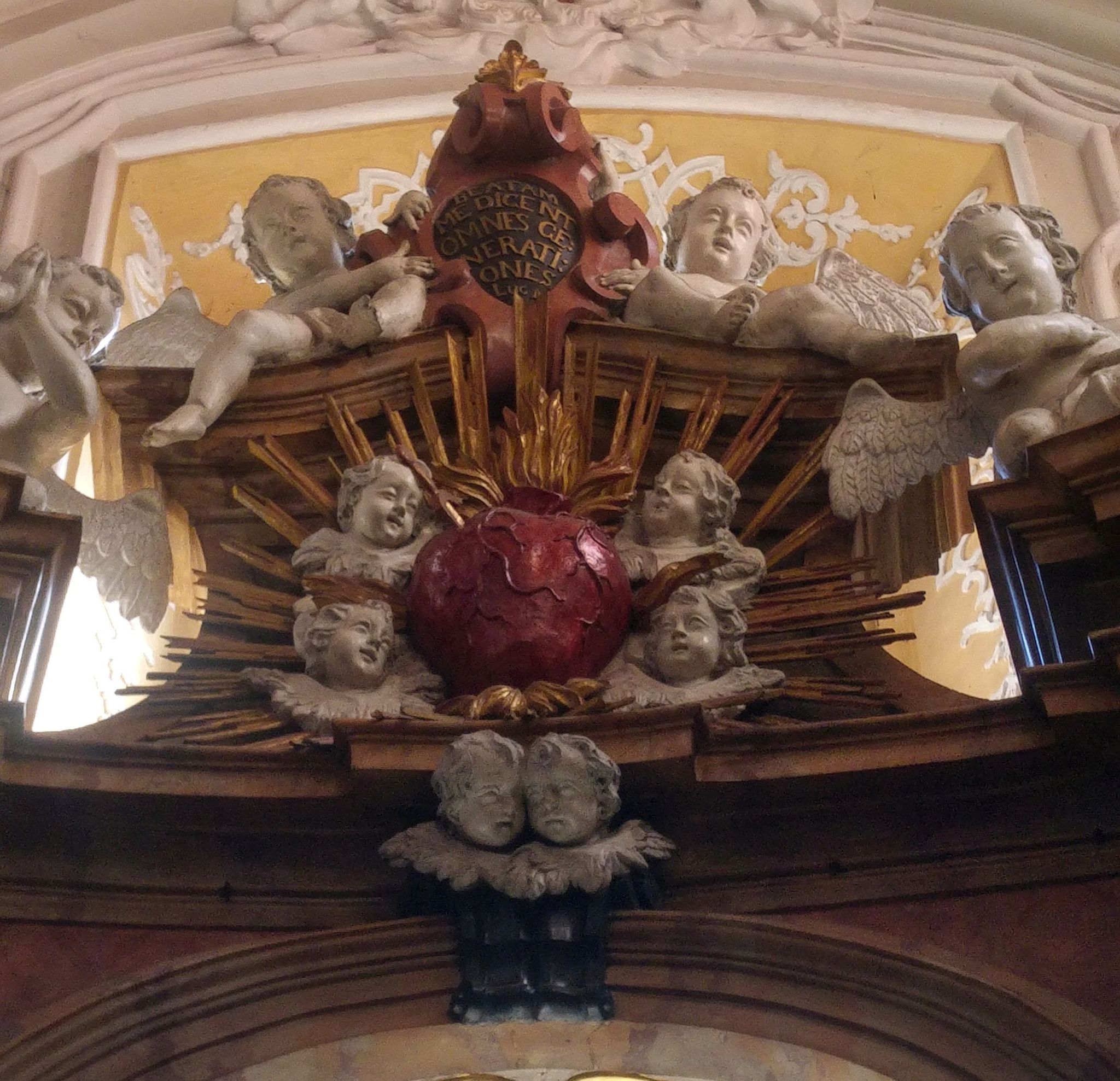
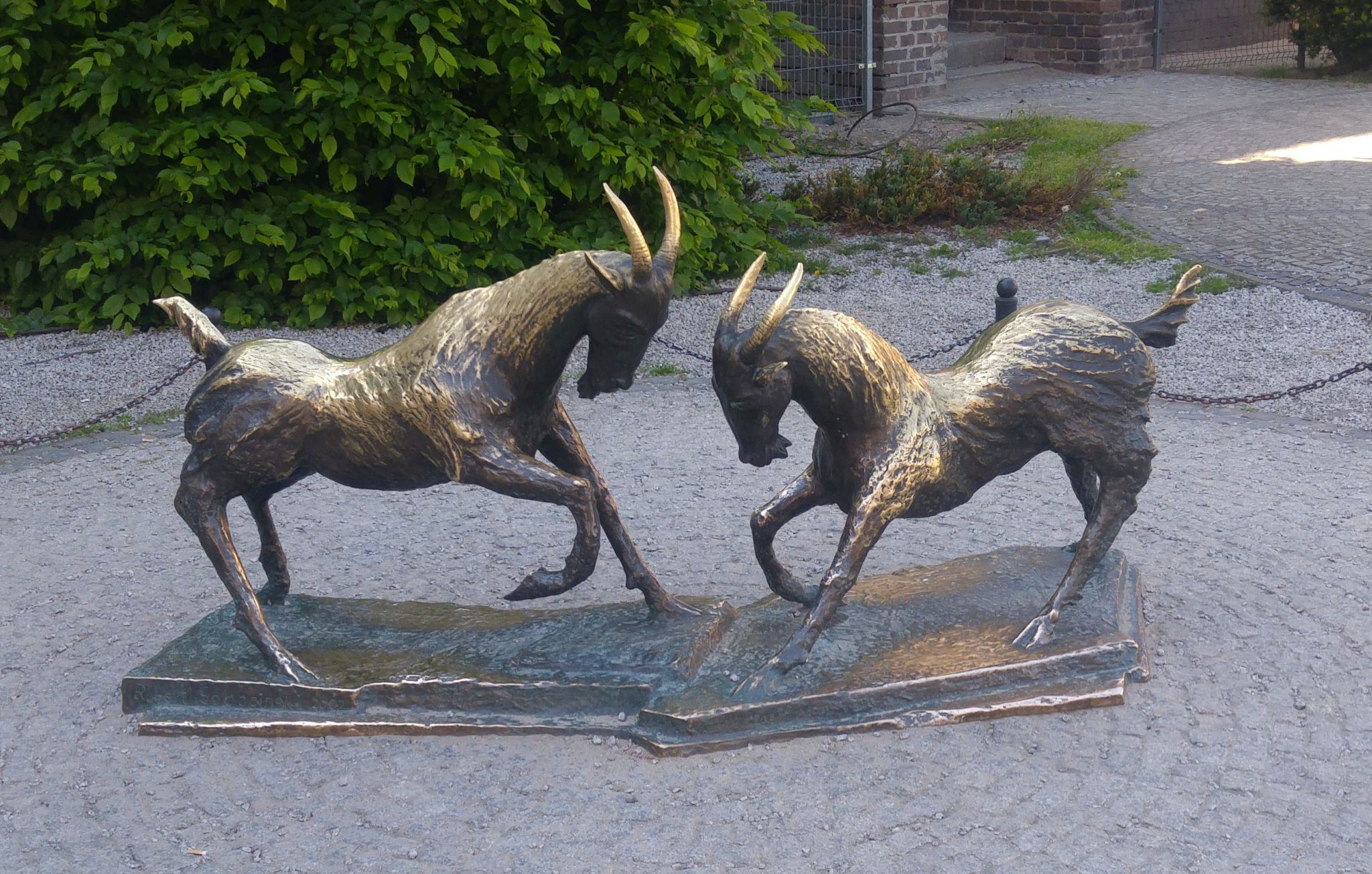
St Stanislaus is pure, overwhelming Jesuit Baroque, vast columns of red and green marble capped with finials of white stucco and gold leaf, sacred hearts and winged baby heads everywhere. Outside, piano music came through the windows of the ballet school, and a pair of brass goats – the symbol of Poznan – butted heads. The town square was exquisite, with a terrace of multicoloured houses below the town hall reminding me somewhat of Bristol. Buildings here are decorated with an interesting sort of inch-deep relief cut into their external stucco.
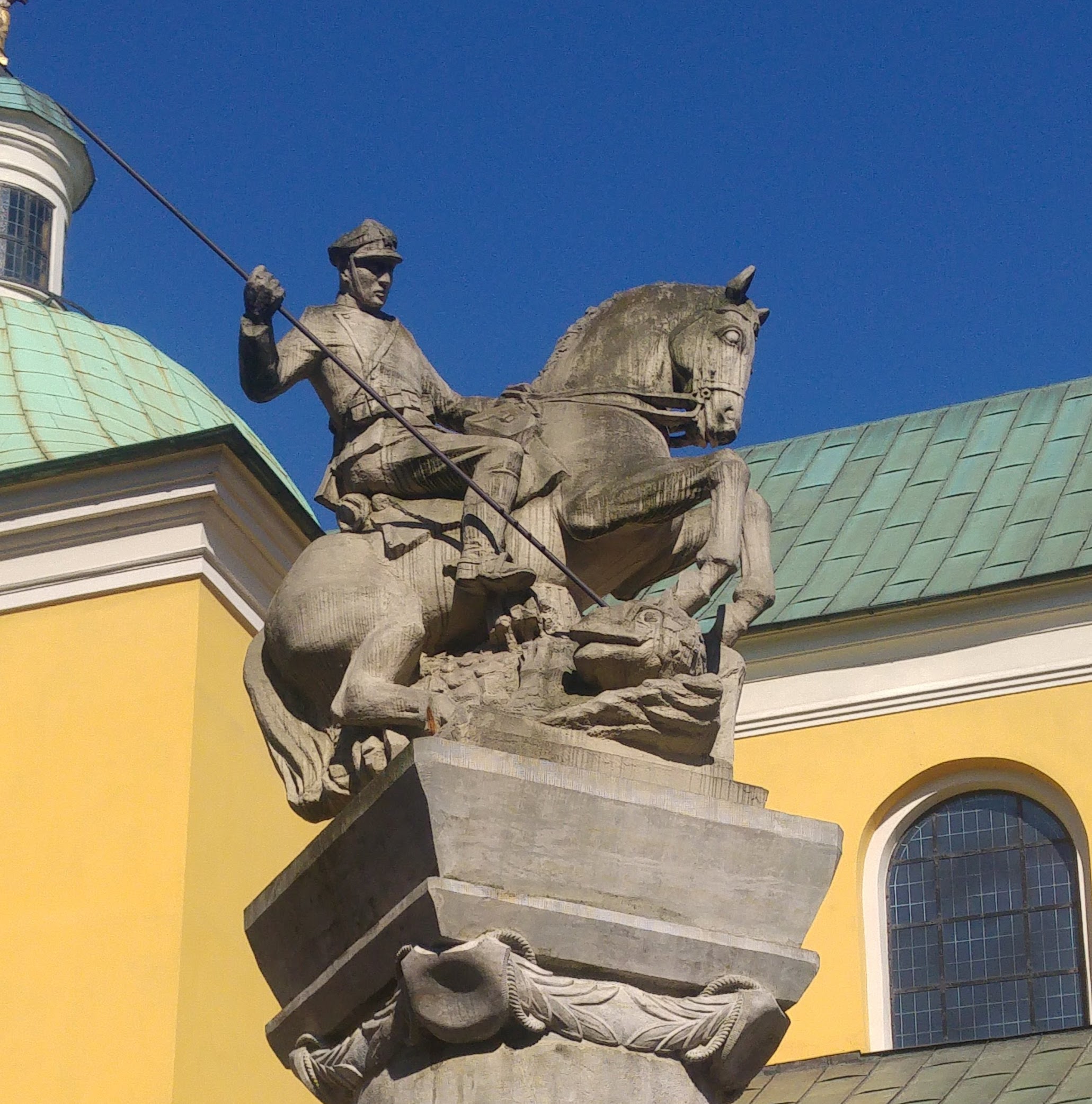
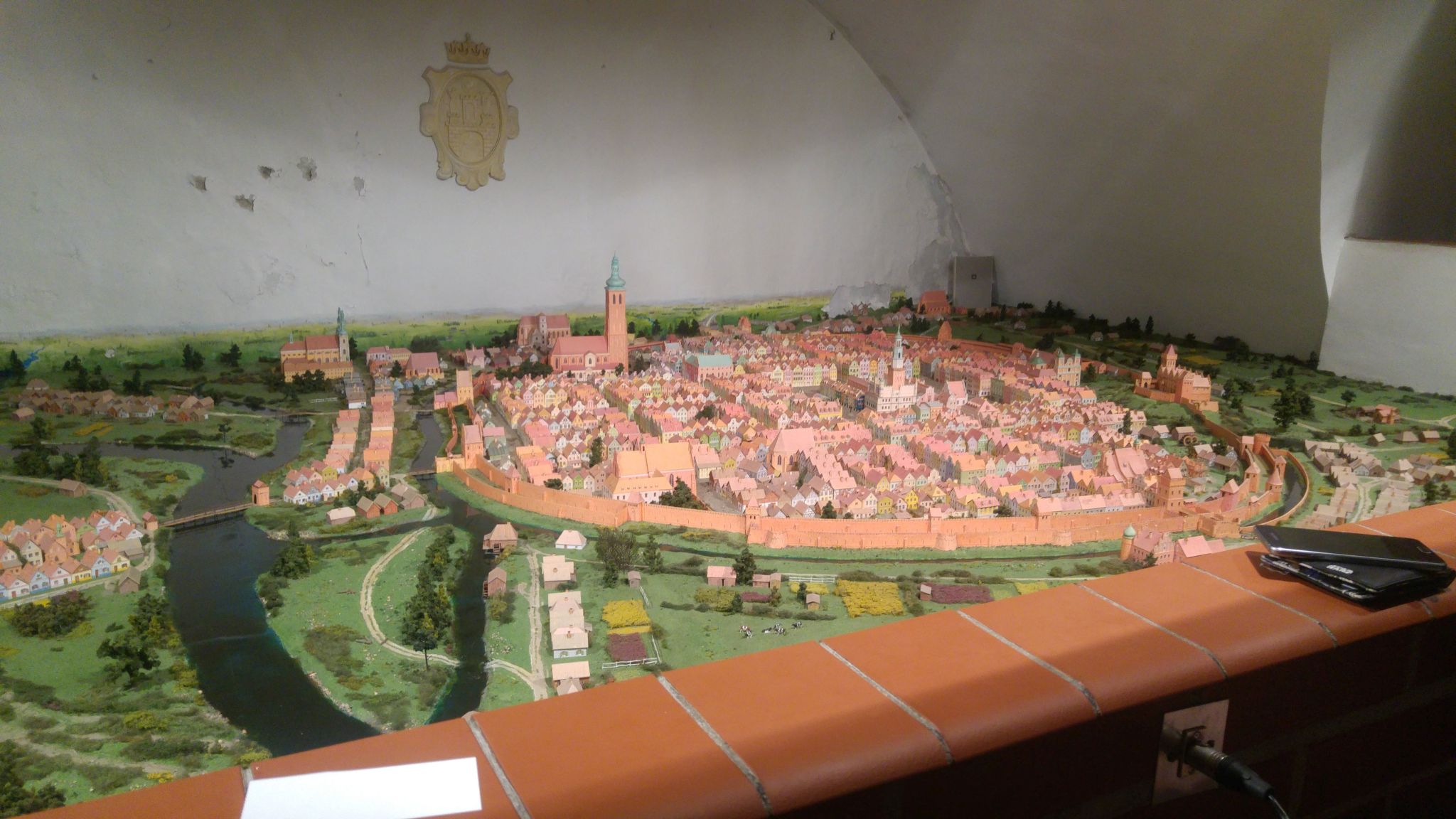
Up the hill, near the brand-new replica of a 13th century castle that now houses a Museum of Applied Art, we tried to find the next thing on my attractions map, a historical model of the town. We found the Franciscan church above it – one which went all the way over the line from “baroque splendour” to “completely tacky”, with iridescent metallic accents on the pulpit that recalled a bunch of Quality Street wrappers. Underneath the church, in a musty-smelling crypt, a stroppy woman totally failed to communicate that the Makieta show would only work in one language at a time (Misha heard her say “Russian”, launched into Russian, and met with total confusion.) So, we wandered off past a violinist in a tracksuit, a equestrian statue of an uhlan with a bolt-action carbine spearing a dragon, and dozens of brass plaques depicting noble Poznanites. After 45 minutes relaxing by an interesting novelty fountain, enjoying the sun and the general atmosphere of this summery, studenty city, we headed back to the Makieta, where the huge model of Poznan was accompanied by an Audio-Visual Experience, a loud, weird commentary that slewed breathlessly through centuries of being wrecked by Swedes and Prussians to strobing lightning-flashes and slightly plausible fire effects.
Largely out of curiosity, we went to a workman’s café, a “bar mleczny” (milk bar, originally). Interesting history behind these things, serving basically as work canteens for people who didn’t have canteens at their actual jobs. It was cheap, but also very, very bad, with a despairing Iron Curtain vibe to the venue, the service and especially the food. My cutlet and chips were merely on the level of bad school dinners, but the spinach blinis Misha and Olga bought had a factory-stamped sense to the pancakes and a lake-bottom quality to their contents. I felt bad sneering, as cheap cafes doling out hearty food is something I am ideologically and practically in favour of. But… it was really pretty heinous. Olga cried a bit.
The Russians wanted a proper dinner, and Rog wanted a proper sit-down pint, so I took the opportunity to head north to the Park Cytadela, at Justyna’s recommendation. I tried to get one of the bike-sharing stations to work, which would have turned a long hike into a delightful wheeled bimble, but although I could get the app to sign in and recognise me, I couldn’t get it to take my money or speak to me in English. So off I walked.
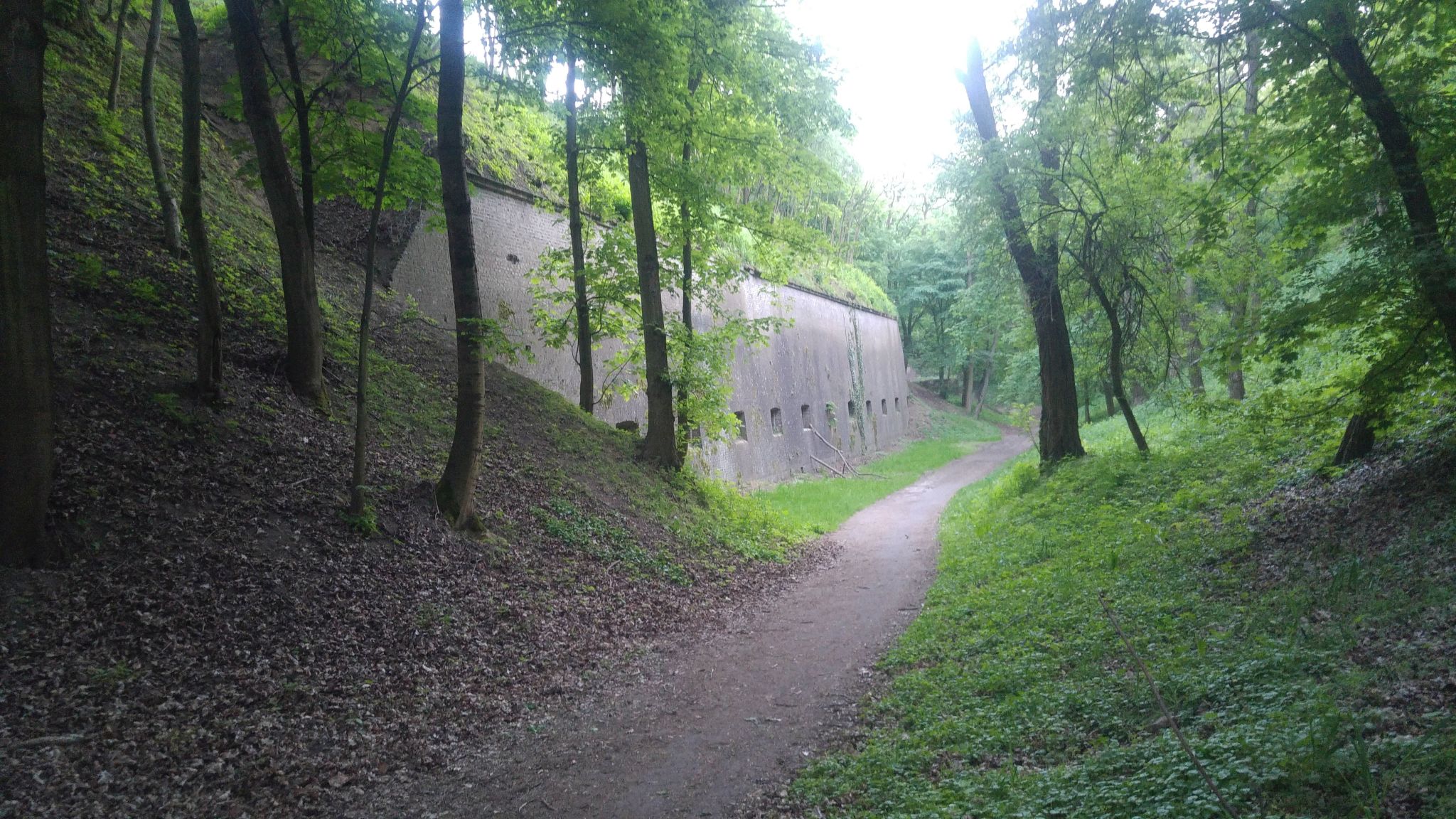
The gigantic Prussian Fort Winiary, keystone of “Festung Posen”, was built big enough to drop the Old Town into three times: one of those insane 19th century citadels where unprecedently powerful states responded to unprecedently powerful artillery by building fortresses of totally inhuman scale. The fortress was violently and comprehensively reduced in 1945, and is now a hundred hectares of park. The parts that remain are too overgrown and too individually massive to make much collective sense of them, and it takes a good map to work out the original layout, but the artifice of the thing is inescapable: a stand of trees grows out of a half-buried row of massive brick arches, a natural-seeming gully is suddenly lined by a gunported brick wall ten metres high and a hundred long. There are birds everywhere, and it’s beautiful and quiet – fully enjoyed by young Poles with dogs, bikes, rollerblades and children, but much too big and open to feel at all busy. One of the surviving above-ground parts is a museum (closed when I arrived) with a standard set of Soviet killing machines sporting the red-white chequer of Definitely The Polish People’s Army, Not A Russian Catspaw.
On my wander back, hunting for a sculpture I never found, I ended up completely alone in the military cemetery on the southern glacis. It’s thoroughly overgrown, feeling as natural as the rest of the park, and the names are barely decipherable on the older stones; it’s come about organically, generation by generation, with rows of graves from different wars. Some are ornate, some plain and coffin-shaped, some cruciform with red and white ribbons; most name individuals, some bear the names of whole families of brothers, many are simply marked NN – unknown and unidentified. The citadel itself was one of the last, and fiercest, battles in a theatre which mainly regarded the Polish as irritants and obstacles.
I found a bus, and went back to the Old Town as the sun set.


Warsaw Old Town – Poznan & Citadel – Poznan Museums, Wroclaw by night – Things of Wroclaw – The long road south – Zakopanorama – Krakow & Wawel
 underneath the open sky