
In Poznan, they keep the front doors of museums closed, which is something that reduces Rog and I, as Englishmen, to paroxysms of polite self-doubt. Fortunately, Misha lacks our compunctions and goes straight in.
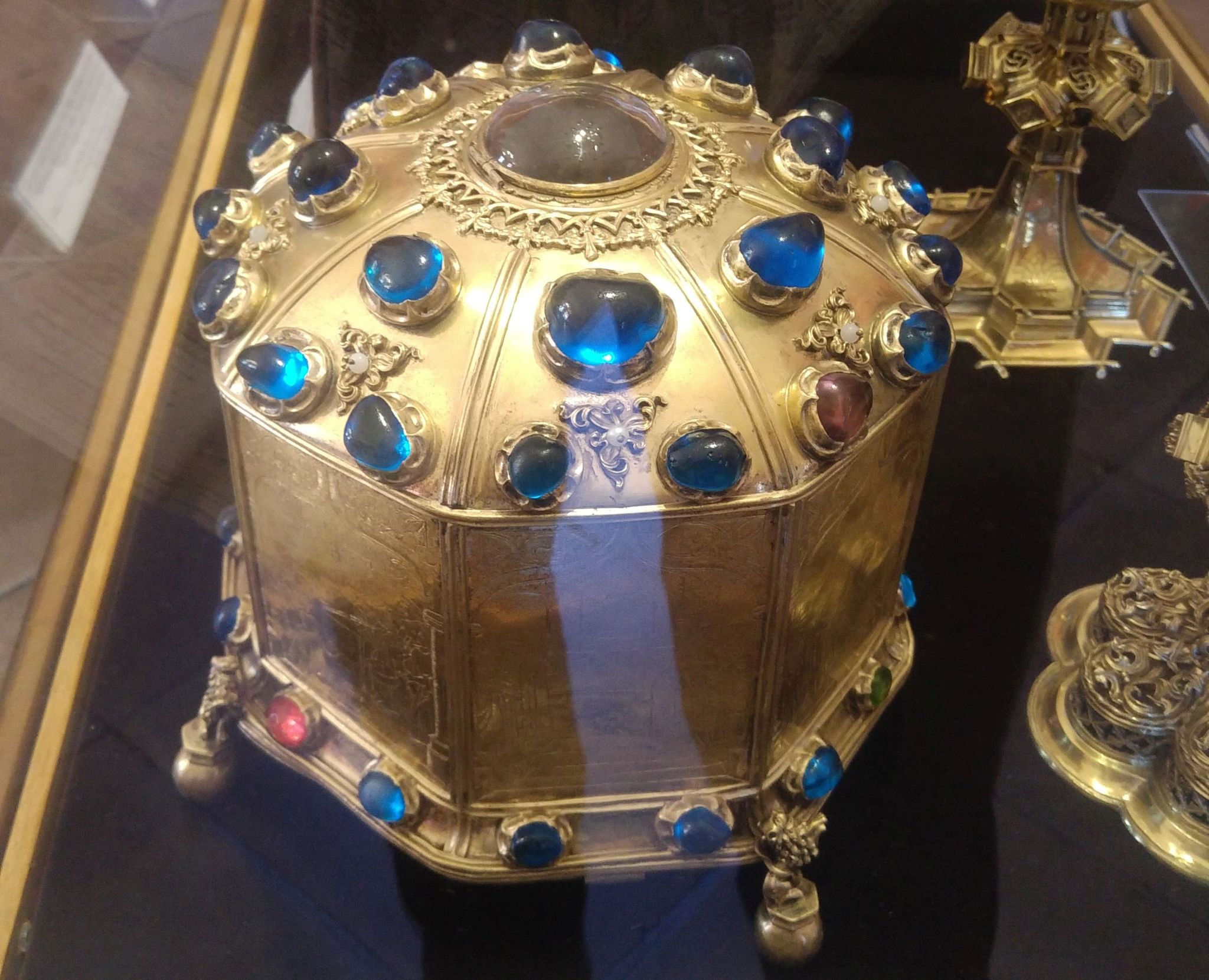
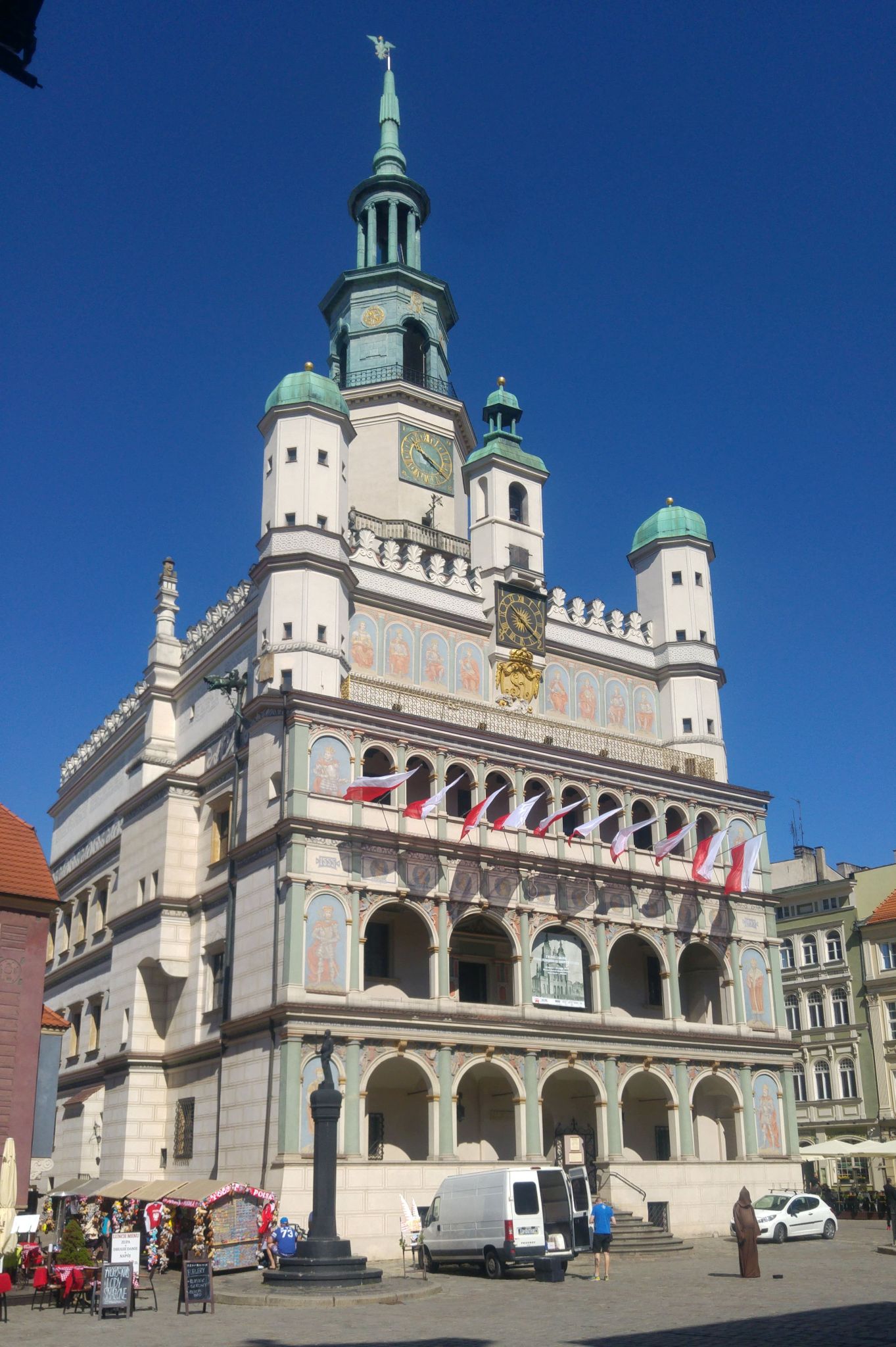
We found time to get pictures with the brass goats (which were warm and quite pleasant to sit on), before heading to the amazing ratusz (yes, Rathaus with a Polish accent), a 16th century Italian confection. The 7zl fee got us the expected (though still wonderful) guild artefacts – lovely painted targets from the shooting clubs, masterpiece silverwork, a heavy whip used for encouraging good manners in apprentice printers – but also a delightful look at Posen under Prussia, complete with a detailed map of the Citadel-as-was and a model of the grand synagogue built shortly before the Great War. Best of all was the original, somehow un-destroyed plaster ceiling with marvellous (which is not to say artistically very good, but marvellous) high reliefs of a tiny David smacking a huge Goliath, Hercules (unusually not in his usual club-waving, lion-pelt-wearing aspect smacking a hydra, but toddling off with pillars on his shoulders like a jobbing builder), mythical creatures such as the griffin, chimera and an imaginatively razor-backed “renocrvs”, and heraldry including a snake eating a baby which Rog recognised off the Alfa Romeo marque – sure enough, it was the Sforza crest.

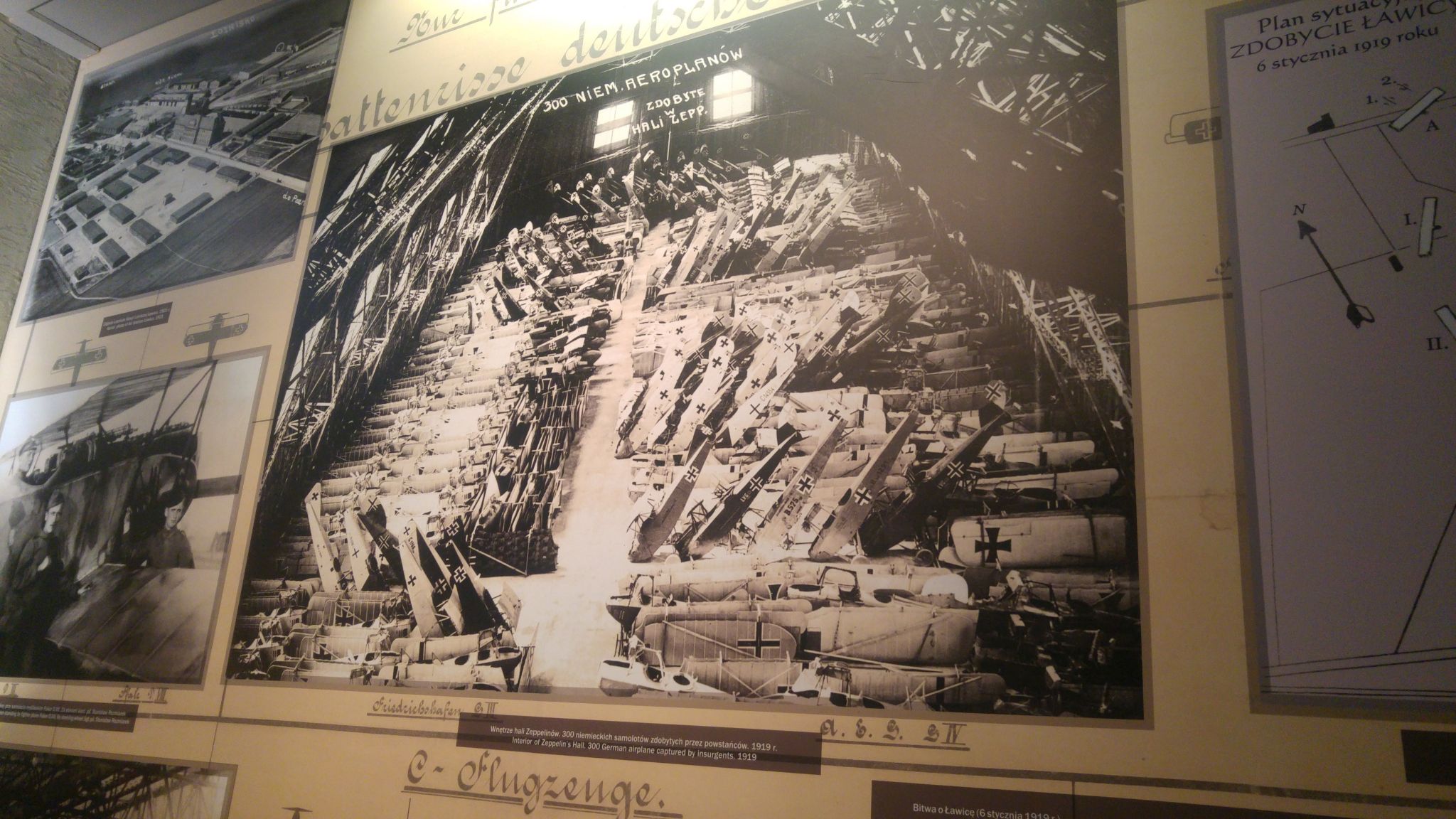
Out in the square, in the blazing sun, clouds of schoolchildren and cynical-sounding American tourists were beginning to gather for the noon goats. But I had 30 minutes so ducked off to the Museum of the Wielkopolska Uprising, a fun-size collection of early nationalistic sentiment, replica uniforms and photographs of earnest young Poles crowding around machine guns as the idea of Poland frantically tried to assert itself as the state of Poland in the general turmoil of the late Great War. I still need to learn more about the Polish-Bolshevik War, but I’m getting there.
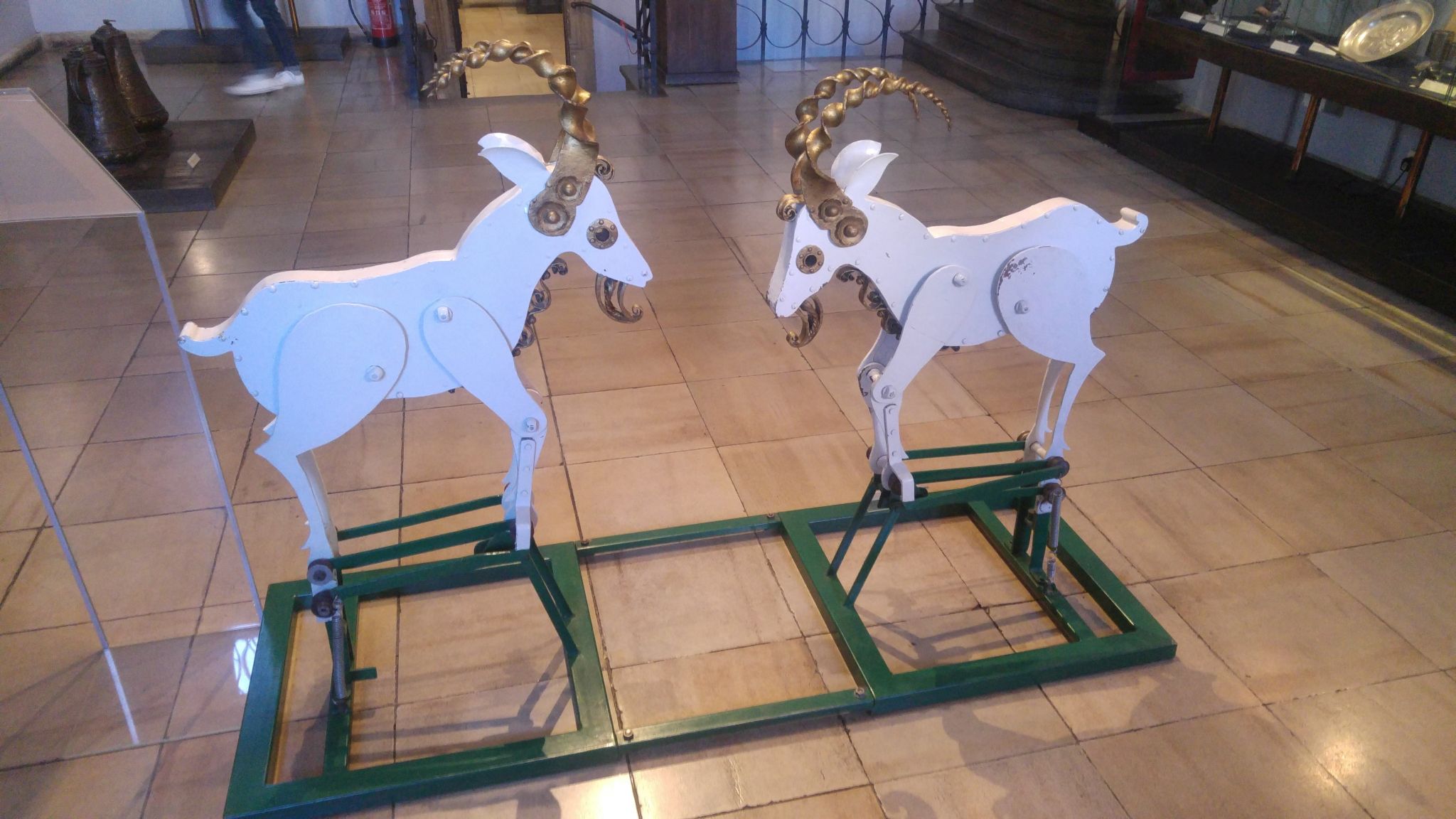
The crowd was now filling all the shady and comfortable parts of the square, and at the stroke of twelve the doors opened – unnecessarily slowly – and the metal goats, with a ponderous sense of absolute drama, creaked out (it must have taken almost a minute), assumed their positions (the suspense!) and clicked heads together a dozen times. Some people clapped. Some people videoed it. Some made sarcastic comments.
The Royal Castle is a 1249 tower with 2014 brickwork, wonderful but confusing. It’s free on Tuesdays, so we went up to the top and enjoyed views of the town – the true immensity of the Citadel district evident by tall buildings a very long way past it, a coal-fired power plant fuming smoke through its lollipop-stick chimney. We felt we didn’t have time for the Museum of Applied Art, or the National Museum (despite its excellent stonework and enticing “classical milfs teaching naked youths various arts and crafts” mosaic motif), so instead went to the cathedral where Polish Christianity and, possibly, the Polish state were born; a surprisingly austere, cold redbrick behemoth, with a splendidly shining golden room on the purported sacred spot.


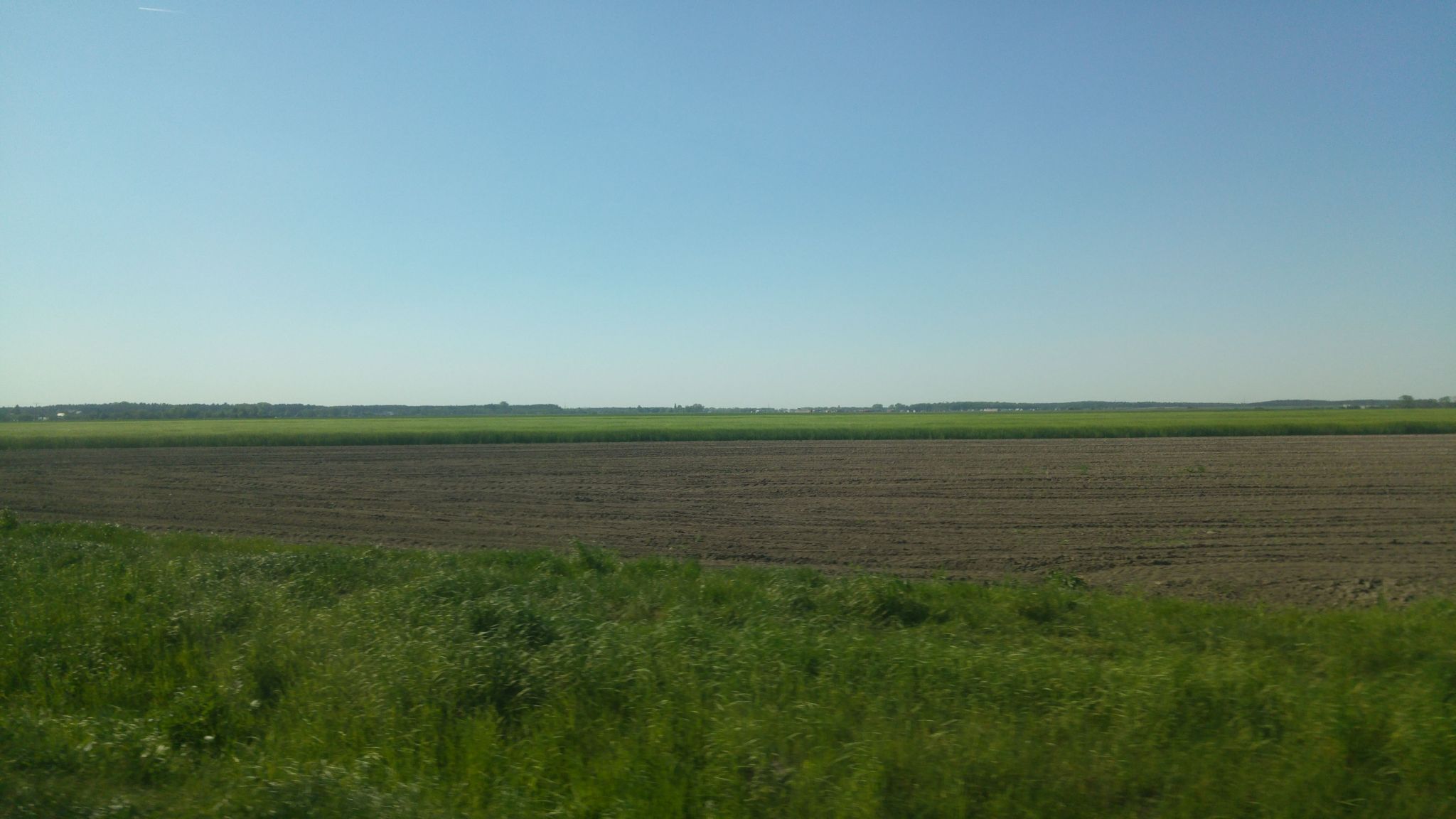
The two-lane road to Wroclaw is utterly inadequate for the volume of traffic even early afternoon on a weekday; it took an hour to get to the outskirts of Poznan. Then, open country, fields of green grass and yellow rape under a cloudless sky. Flocks of shiny new Japanese earth movers were cutting the yellow subsoil and stacking aggregate for the foundation of a new road. We moved onto a previous section of their work, a serious motorway, with railways and bicycle lanes – both in some use – running parallel under the frequent wide wildlife bridges. An enormous white stork flew overhead.
Wroclaw appeared eventually. It is much better known for most of history as Breslau, and while until the nationalist chaos and general slaughter of the 1920s-40s it had – in common with most towns between Moscow and Munich – a multiethnic population with a strong Polish contingent, it’s very obviously a German city.* We arrived into a dense tangle of rivers and industry, blue trams and massive redbrick edifices. It had a vibe of Berlin, or Manchester – cool and youthful but inhabiting the buildings of a previous, more confident age.
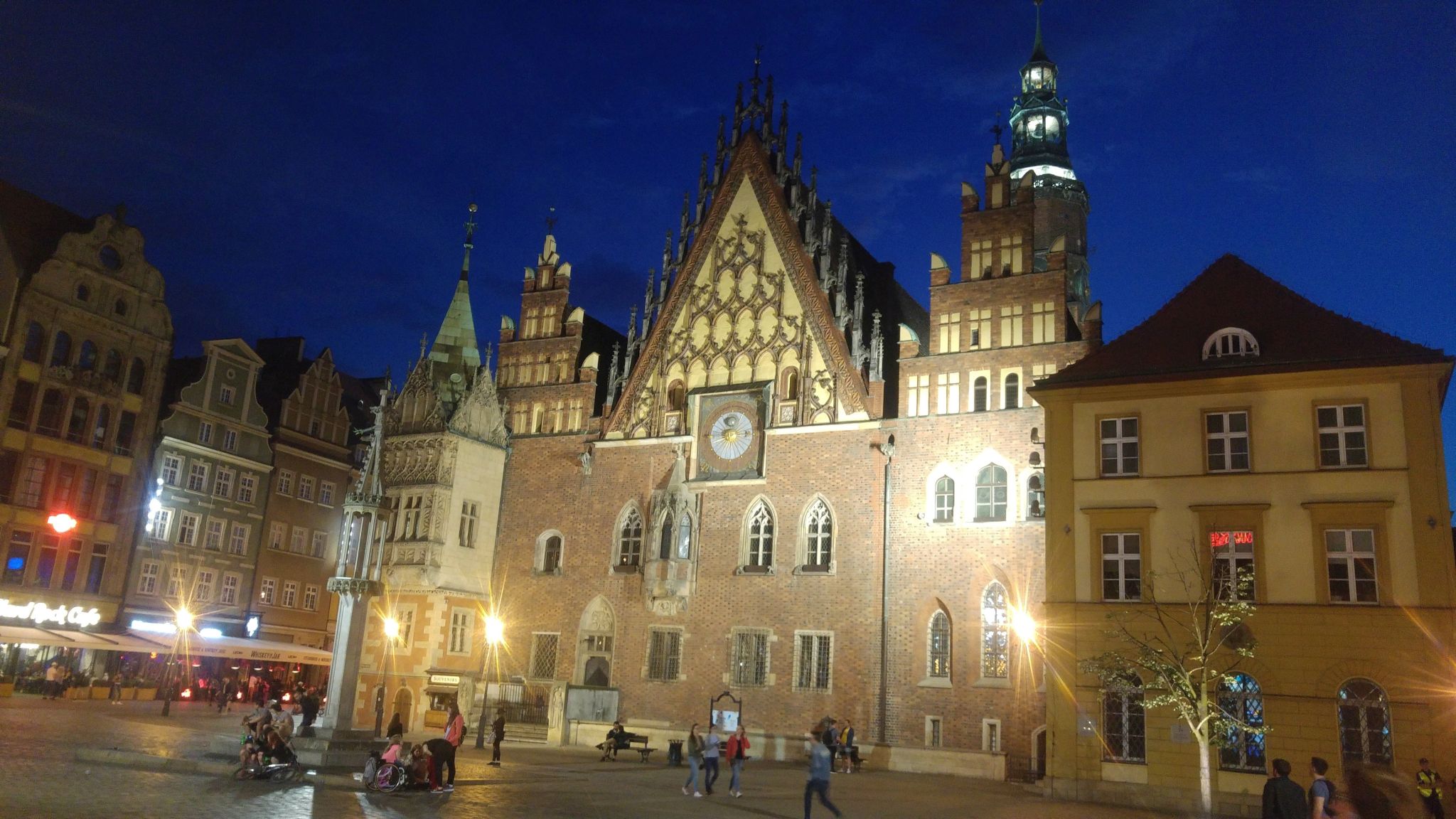
From our rented flat – sharing a mixed-use-ish office block with enterprises including two escape rooms – we went out for dinner and exploring. A bear with a big brass tongue stands in the shadow of the rathaus/ratuzs, a collection of bronze gnomes infest corners and have their own gift shop. We found a brewery-pub and had cherry beer under the stars (other patrons were being accosted by a man dressed as a swamp, who didn’t bother us) and watched as some hippie-looking street performers got out their xylophone, double-ended flaming torches, hula hoops with fiery bits and a device that can really only be called a pyrobrella, and managed to perform a bunch of tricks without serious injury. That earned them a few zlotys.
* The (surviving) Germans were forcibly evicted en masse by the Russian occupiers as part of the wholesale move of Polish borders westward, and a new Polish population shipped in from the eastern Polish provinces they’d themselves been evicted from. One of the craziest things about the mass postwar gunpoint resettlement is that nobody these days seems to remember that it happened. But perhaps it’s for the best that modern Europe is content to break the cycle of recrimination, and focus on weakening divisions and borders rather than redrawing them.
Warsaw Old Town – Poznan & Citadel – Poznan Museums, Wroclaw by night – Things of Wroclaw – The long road south – Zakopanorama – Krakow & Wawel
 underneath the open sky