
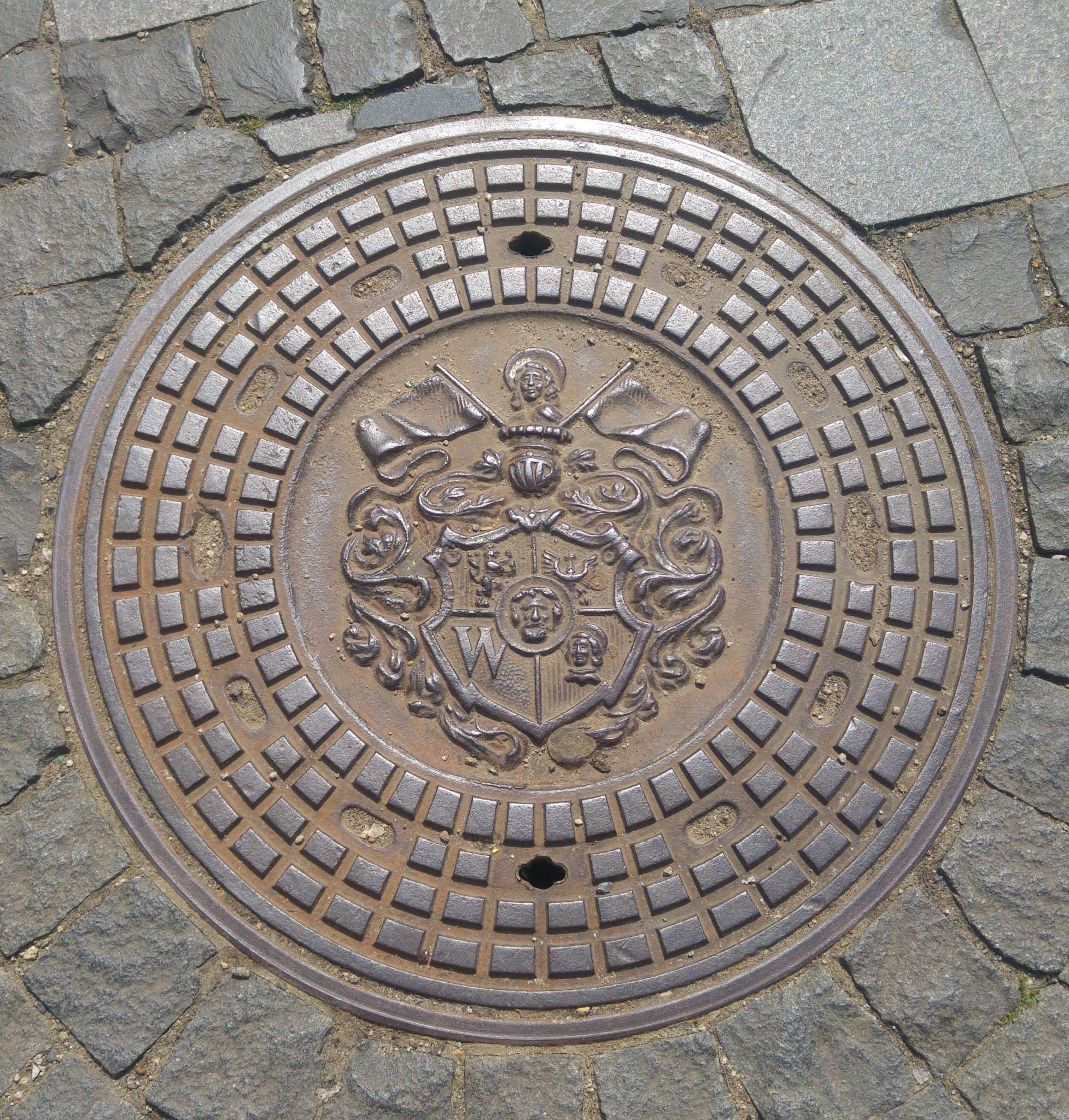
The forecast said that Wednesday would be overcast and grey. It lied; the same baking sun beat down all morning. The crest of Wroclaw has a tiny miserable severed head in the middle of the shield (presumably John the Baptist?) which once you notice it is everywhere, and quite upsetting. I preferred the mermaid and the goats. The ornate curly stonework of the rathaus is absolutely full of nesting sparrows, feeding their cheeping babies.
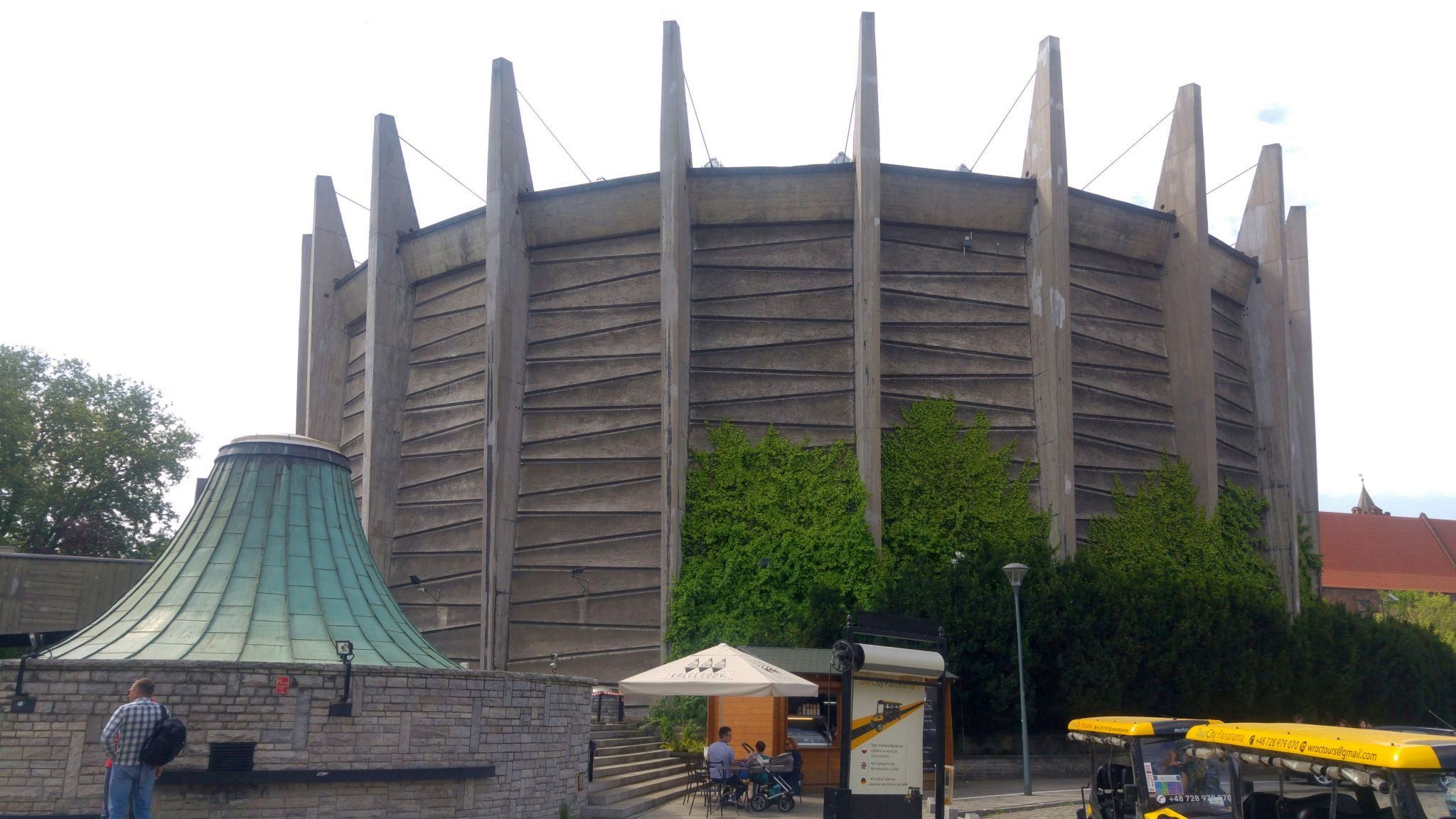
One of the “Things to Do in Wroclaw” highlighted on Tripadvisor was the Racławice Panorama, a gigantic painting of Kosciuszko’s failed 1796 rebellion against the Russians. I’m embarrassed that I’ve still not seen one of these 19th century propaganda IMAX presentations, and this seemed a good opportunity to have a look at the 114-metre painting in its purpose-built rotunda. Unfortunately, this wasn’t the day:
“No ticket.”
“What? Why? Are you not open?”
“No ticket.”
“Will you open later?”
“No ticket.”
“Tomorrow?”
“Tomorrow no ticket.”
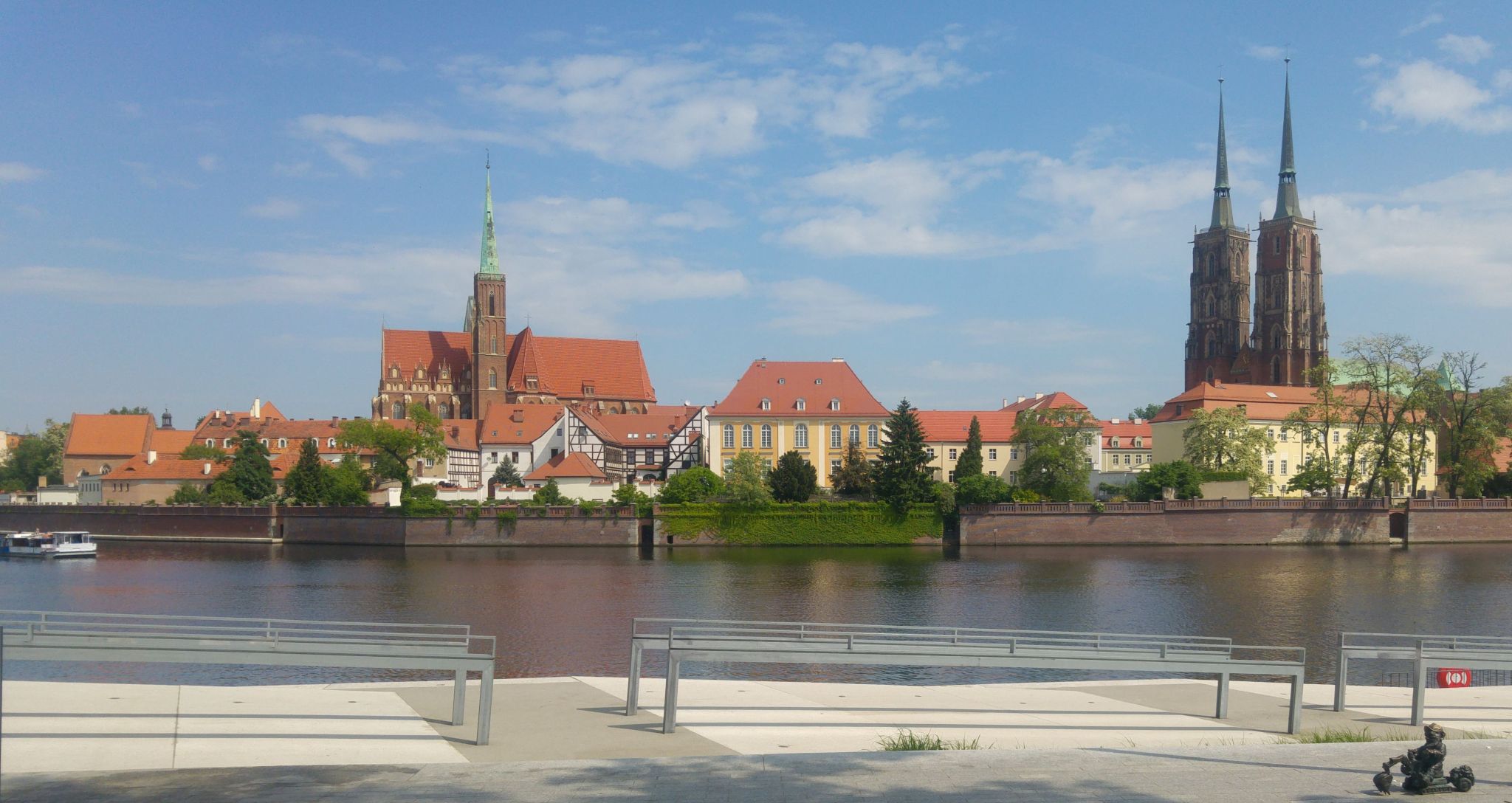
So I took off back down the riverbank, a wrecked Prussian bastion on one hand, a shiny new shopping centre on the other, and down to the waterfront, which felt like a fancy modern regeneration but somehow without the windswept wipe-clean quality these things have back home. I’m warming to Wroclaw: it feels like a Proper City, neither as twee as Poznan or as Stalinist as Warsaw, with nostalgic pre-war echoes. It has everything a Proper City should have: electric trams, riverboats puttering up and down, variety and grandeur in its big, handsome buildings but without one era dominating. In other words, a well preserved early 20th century German city… which it essentially is. I ducked into one huge redbrick railway-station-looking edifice to work out what it was and found an amazing covered produce-and-flower market. Rather than the interior ironwork I expected from the Victorian facade, it was supported by great spans of elliptical reinforced concrete arches, very modern-looking even now.


Wroclaw is scrappier, too, than Poznan or the parts of Warsaw I saw: more graffiti, some of the riverside palaces derelict, some of the tram tracks filled in with tarmac. A Thirties hydro station had a stylised river god on its gate, summoning lightning with turbines. I found the arsenal, which is a military museum of the old style, basically just racks of weapons and meaningless to anyone not me. But I am me, and the collection was incredible: swords used at Leipzig, bent-barrel machine guns for fortress purposes, a cutaway of a DShK action, an anti-tank rifle claiming to be bound for Uruguay (an interwar ruse, Dan informs me), a mad helmet collection ranging from Portuguese WW1 lemon-squeezer helmets to NATO gas masks, with Viet Cong pith helmets in between.


The tower of the Garrison Church had a great many steps, and its interior too was concrete, a result of one of its many rebuildings (most of the church was covered in scaffolding.) Eighty metres above Wroclaw, I could see the chessboard red-and-green churches, the stripy chimneys of power plants, a splendid duck/salmon ladder by the hydro plant, multicoloured accommodation blocks on the edges of town, the huge cylindrical Wroclaw Sky Tower.
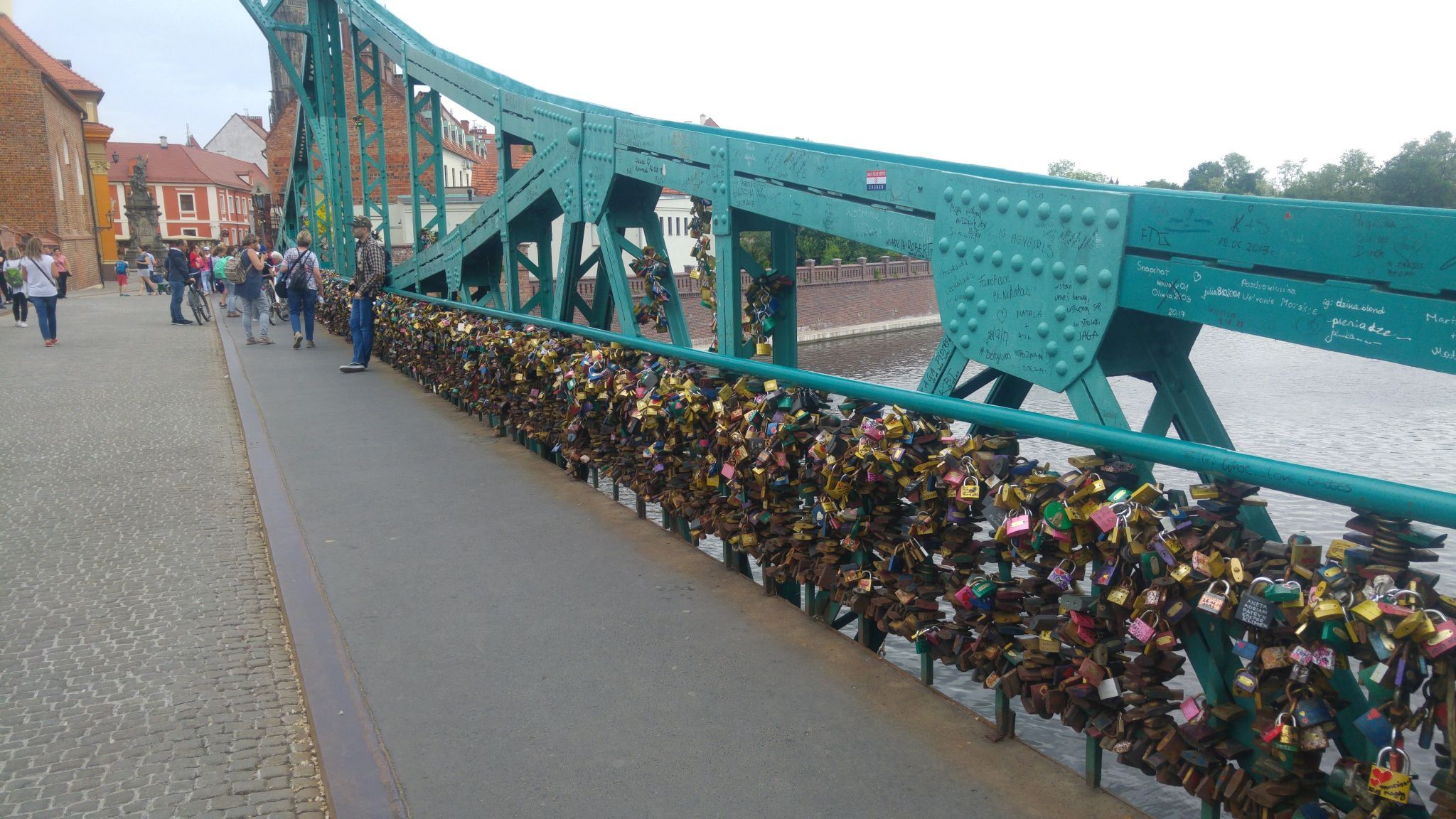
We came to the Ostrow Tumski (another one), the cathedral district, full of sparrows and fragrant flowers. A pretty iron bridge was creaking under the weight of those awful couple padlocks, an information board told us about conservation efforts in the Oder and the floodway system, including the incredible line “the river is primarily water”. The quiet cobbled streets of the church district had more of an Old Town feeling than the actual old town, full of signs with Polish words for “basilica” and “archdiocese”. The Catholic Church of the Holy Cross was noisy with boy scouts and spare of detail, a couple of glorious side altars standing out oddly among the redbrick and whitewash. The Archcathedral of St John the Baptist was cut from the same cloth, but darker, busier, more atmospheric, lined with shadowy little reliquary altars and stained glass in riots of glorious colour. Priests in smart black cassocks and violet stoles crossed the square in front of the huge German Empire seminary.
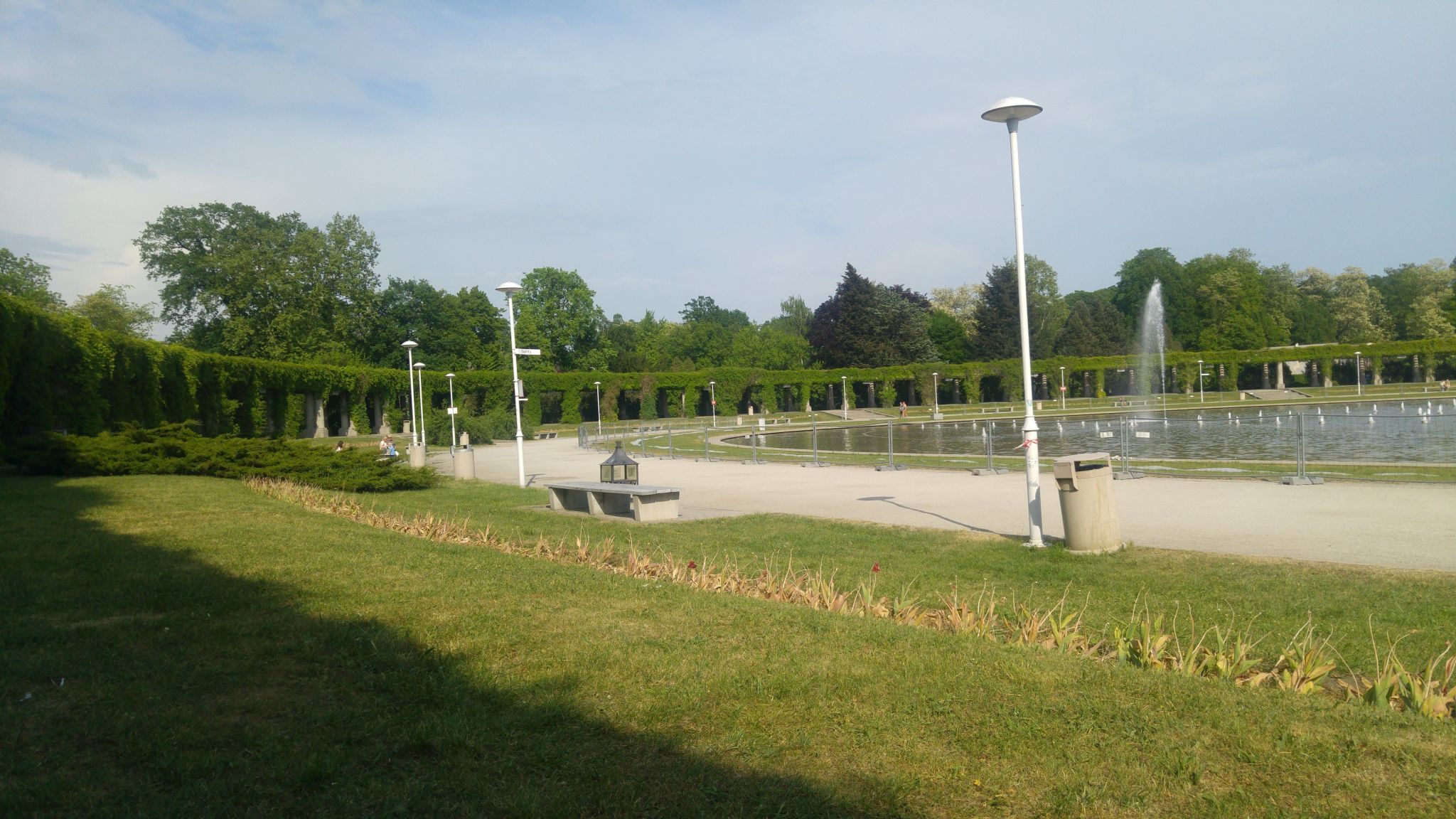
We rode a tram out to the huge park in the east of the city, finding late lunch at a pizza shack opposite the zoo, where disused tram lines trailed intriguingly into the woods. 24zl bought a pizza simply too big to eat: I didn’t need dinner, or much breakfast. The Centennial Hall nearby was a amazing building, a sort of modernist Albert Hall finished in 1913 to commemorate the centenary of the battle of Leipzig (this being Breslau in the German Empire, of course). We didn’t get inside, but interior photos showed the same vast concrete ribs as the market earlier, and it had the same sense as the seaplane hangars at Tallinn. I can imagine it being shockingly modernist in its time, but now it’s wonderfully of its era, with a grand pergola of concrete Doric columns supporting leafy arbours around a “multimedia fountain”.
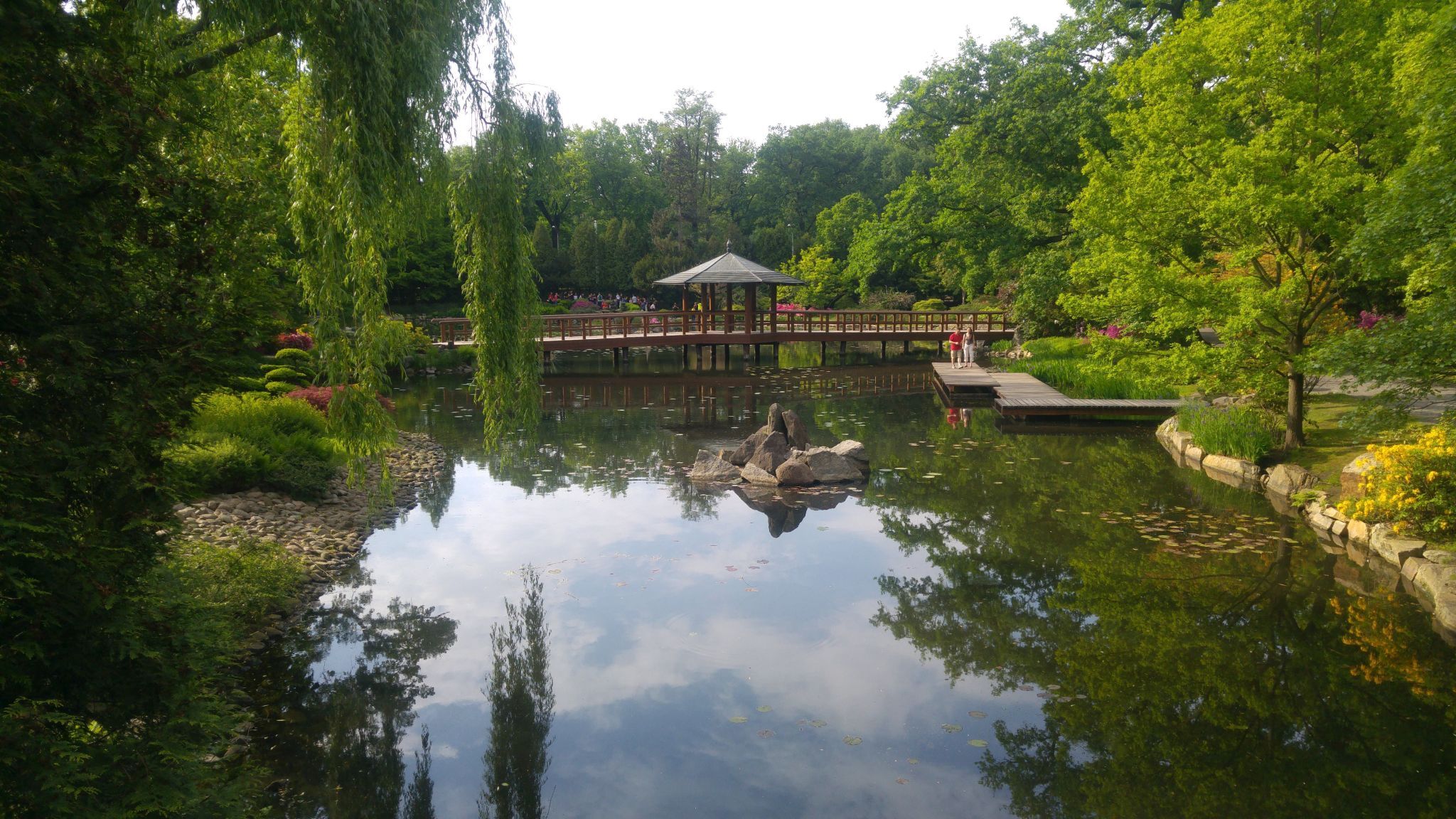
North of that is a true oddity for Poland, a Japanese garden, also from German Empire times. The lake was a little scummy and the plants a little busy compared to the ones in actual Japan, but it was entirely serene and quite beautiful, and we spent a good while sitting and chilling. Dark clouds crowded in from the north, and a sudden wind set all the leaves shivering and clouded the air with blown dust. Little falling things pattered down all around as we ran the pergola back towards the tram stops, but not rain, seeds knocked by the wind. The Polish flag on the dome streamed out, fully extended. We made it under a bridge and grabbed a no.10 tram back to town as the rain, at last, streaked down.

Warsaw Old Town – Poznan & Citadel – Poznan Museums, Wroclaw by night – Things of Wroclaw – The long road south – Zakopanorama – Krakow & Wawel
 underneath the open sky