(This is the last post in a series! You can start from the beginning in Warsaw here, or browse the whole Adventure in reverse order using the tag here.)

Most of the Kazimierz district south of the castle (named for Casimir III) was Jewish before the 1940s, but it was in the Podgórze district on the south bank of the Vistula that the Nazis decreed their ghetto. Zgody Square, where Jews were assembled before taken away to death camps, was scattered with big empty bronze chairs, each representing a thousand souls. At its edge the Eagle Street pharmacy is preserved as a museum, standing out as a gentile-run business in the ghetto and a piece of humanity among the general horror.
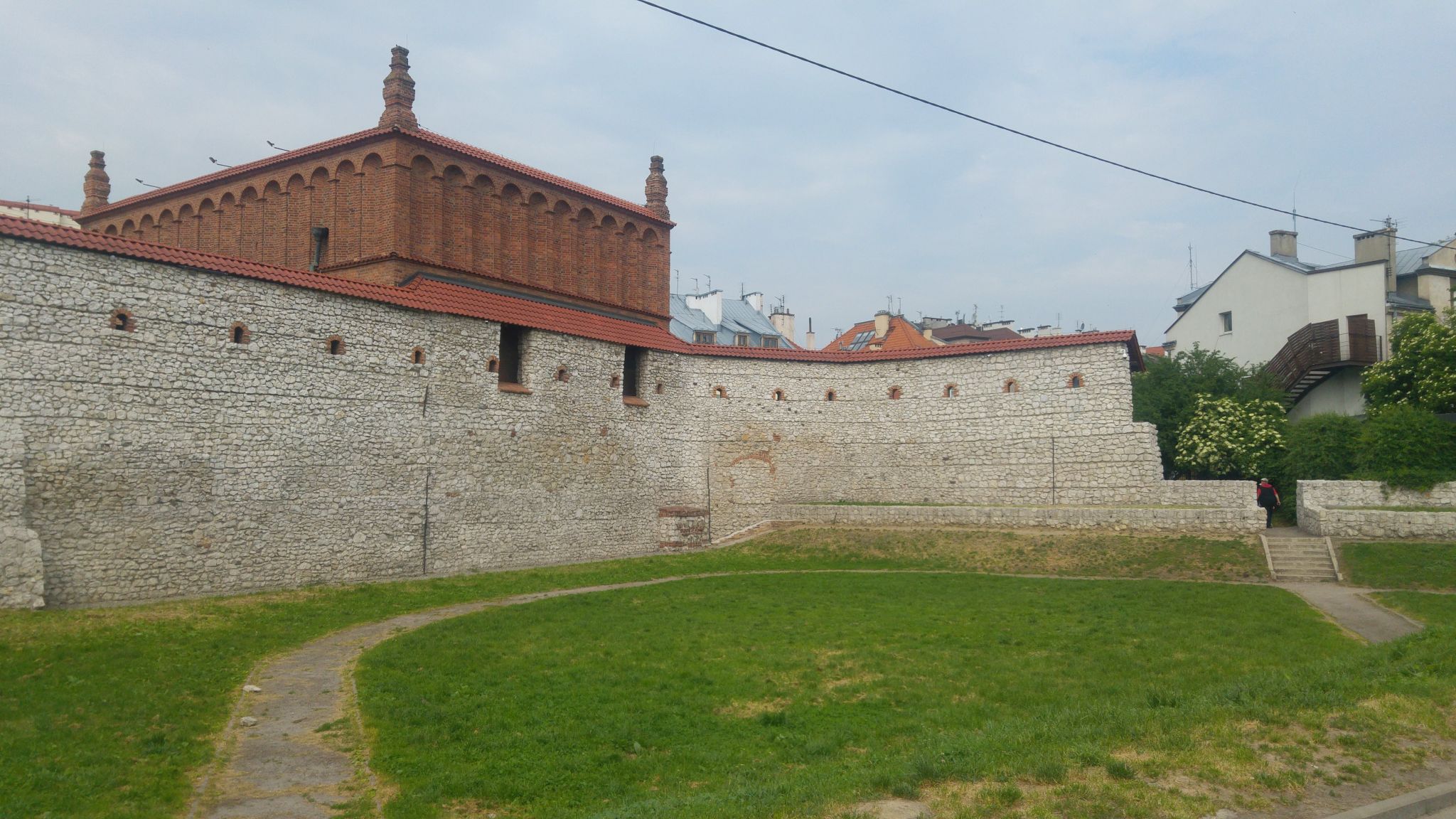
We headed back north across the Vistula, wide and slow and brown between its white stone embankments, into Kazimierz. The 15th century Old Synagogue stood out from the other buildings, with its high, small windows and bleached stone courtyard walls. We breakfasted at something called Bagel Mama: pastrami and cheese, chicken and bacon, a chilli wrap with sour cream. You will note that none of these options are kosher. This is Ashkenazi food filtered through New York and brought back across the Atlantic to appeal to tourists; vaguely Yiddish-accented, but really reinforcing the point that there are no actual Jews here any more.
Kazimierz is still full of life: electric touring wagons like stretch-limo golf carts in the lanes between big but unobtrusive synagogues, trendy cafes with sewing machine tables, Belgian chip bars, a street market selling medals and Soviet-era pin badges I had to physically drag myself away from. We had a castle ahead, and not quite enough time.
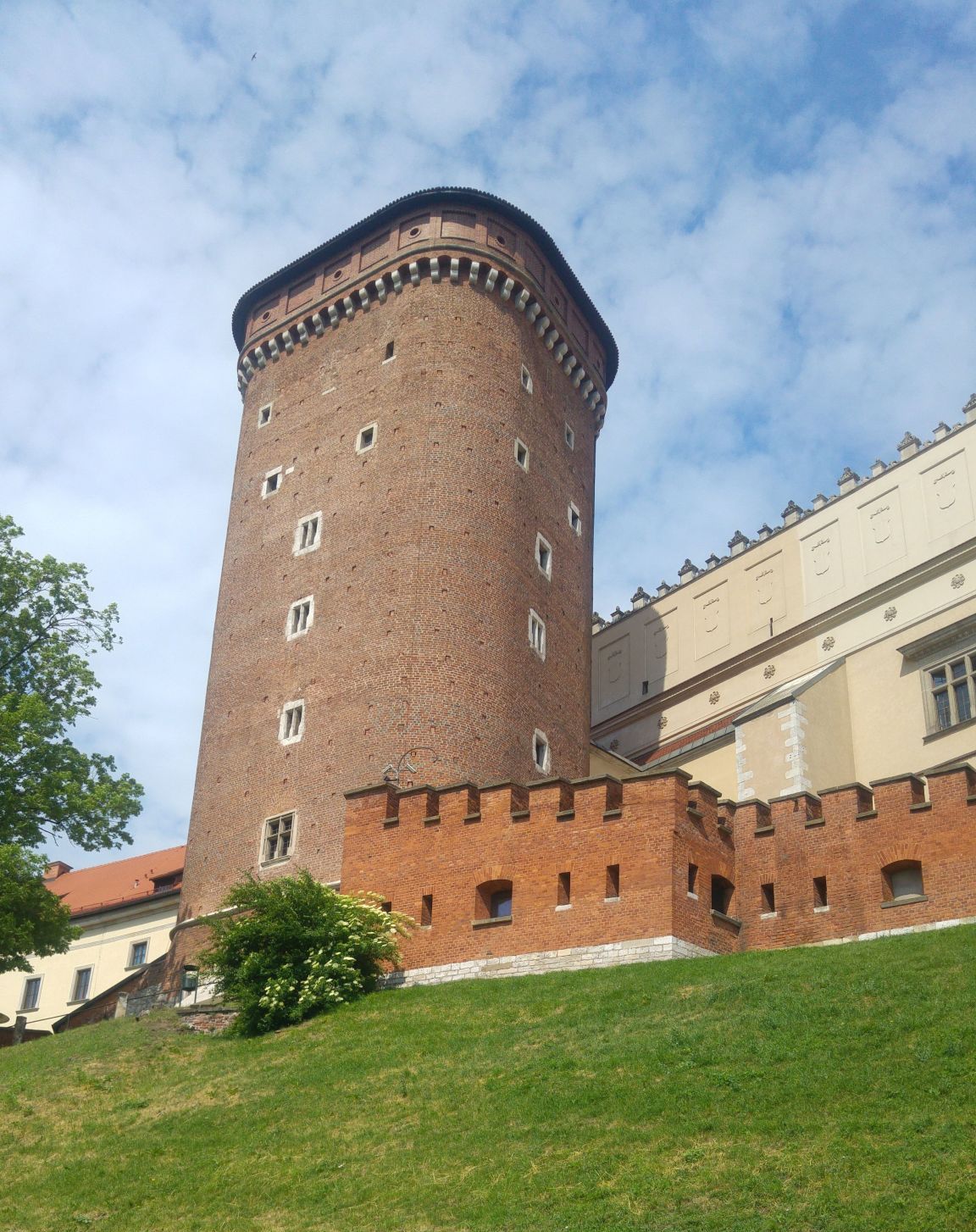
Wawel is so big, and the conservation efforts there so earnest, that they sell tickets for individual sections of the complex, in limited numbers you can see ticking down on a big board behind the kiosk. The old lady who sold the tickets had good English and a friendly, patient style that made it clear this is something which has to be carefully explained to a great many tourists.
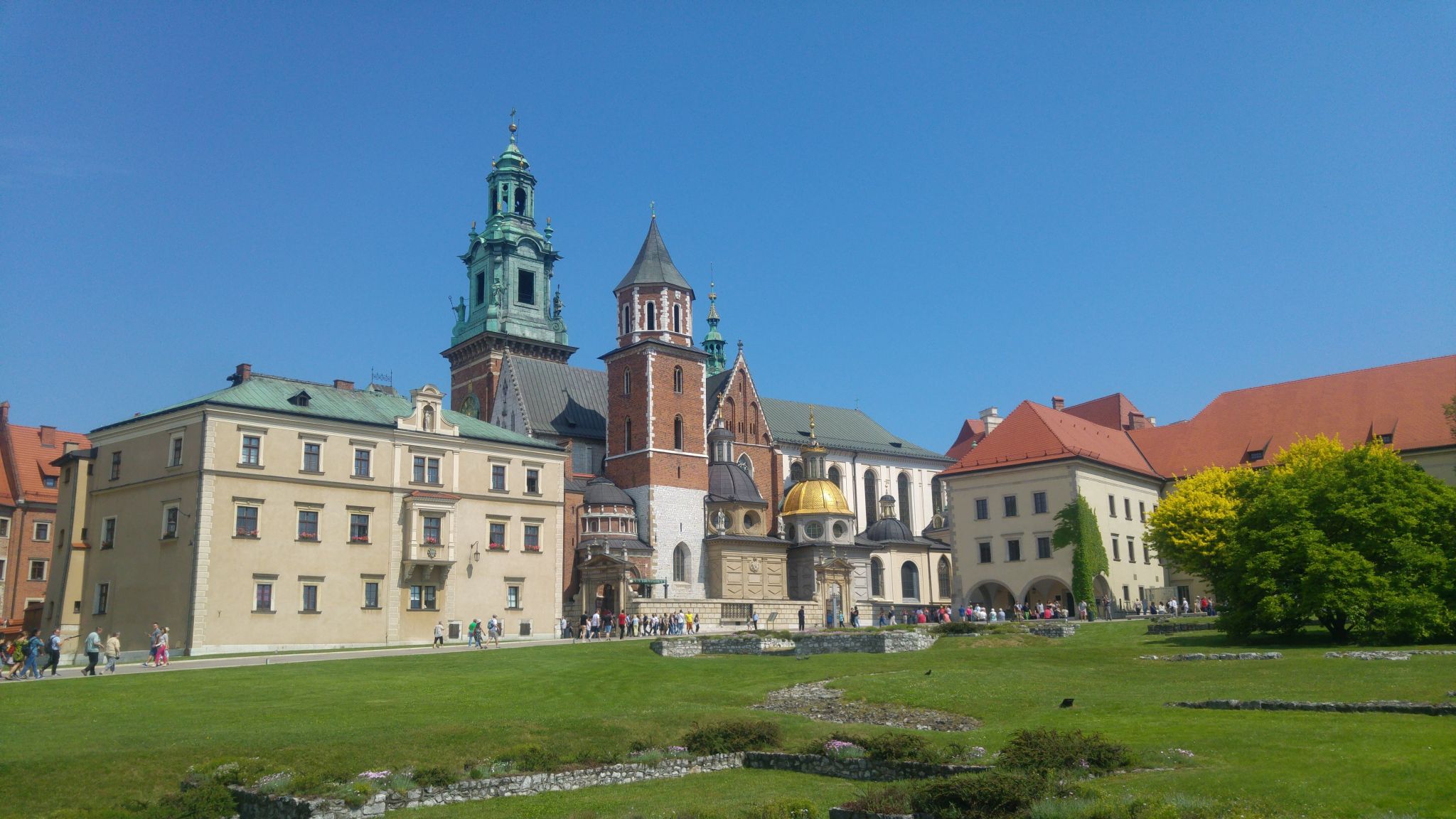
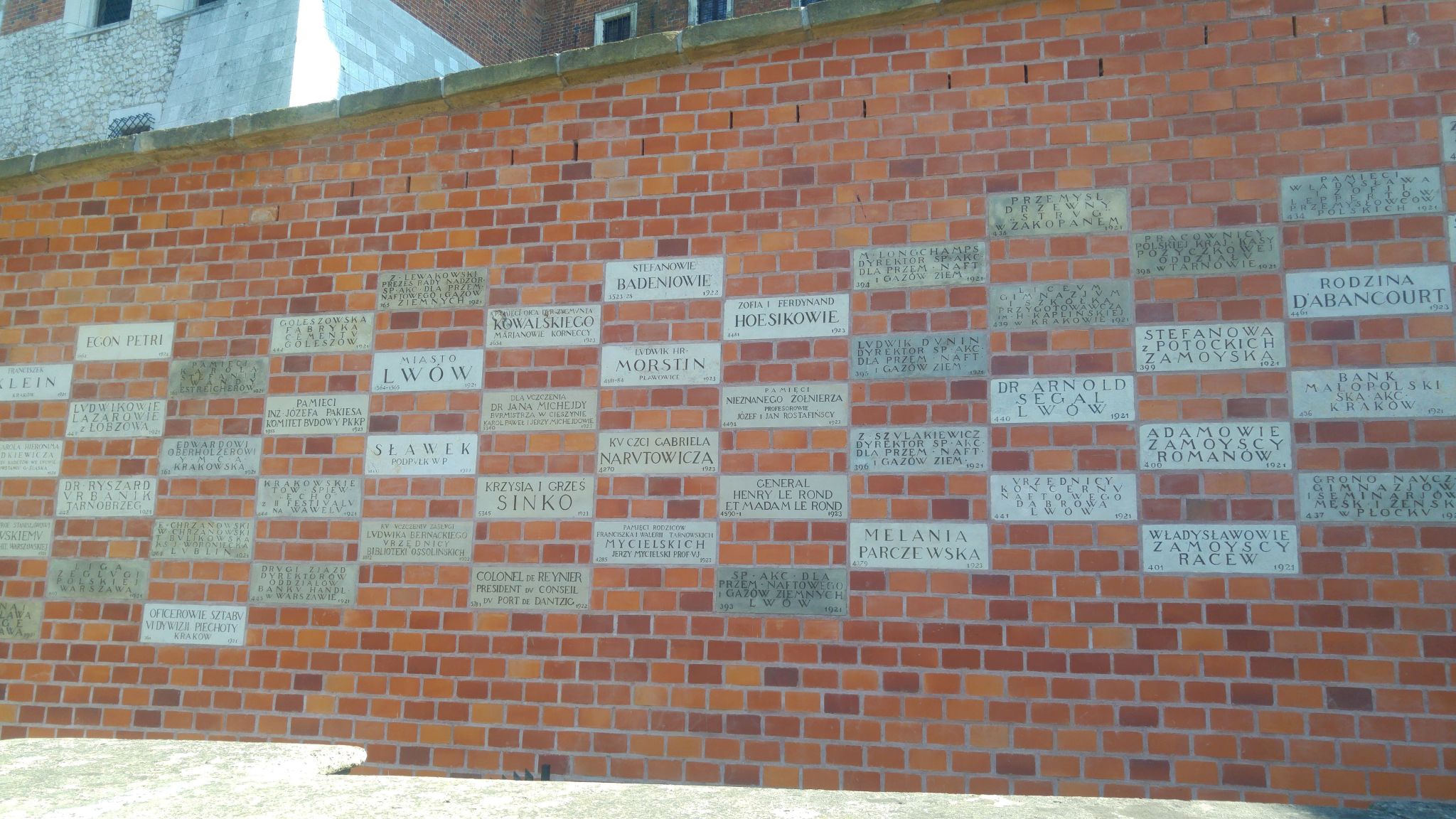
For most of Poland’s glory days as one of the largest, richest and most powerful states in Europe, Krakow was the capital and Wawel was the seat of its kings. The castle is a vast complex of Gothic, Renaissance and Baroque palaces and fortifications, with the combined cachet (and probably the combined bulk) of Westminster Abbey, the Tower of London and the National Gallery rolled into one. In the Abbey portion, the massive silver reliquary of Saint Stanislaus sits as a centrepiece under a glorious wooden throne. Accompanying it are the graves* of Jadwiga, whose marriage into the Jagiello family helped create the Polish-Lithuanian Commonwealth; of Jan Sobieski, who can fairly reasonably claim to have saved European Christianity through deciding to come to the Habsburgs’ aid at the Siege of Vienna; and of Kosciuszko, who died in exile in Switzerland. Above the door of the cathedral is a whale jaw and miscellaneous large bones in iron chains. One of the ever-present tourist guides gabbled something to his crowd about Poland falling if the chains break.
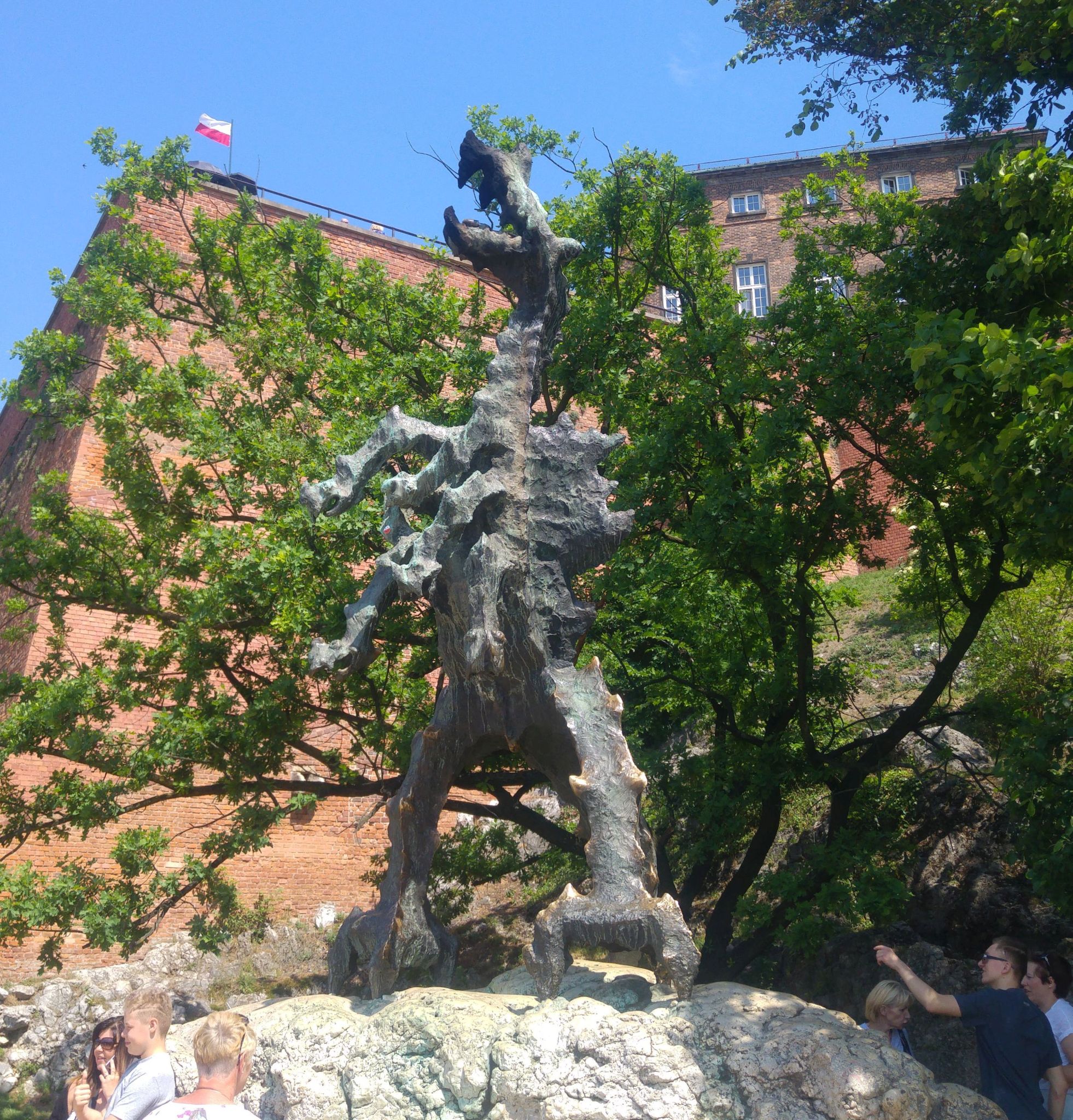
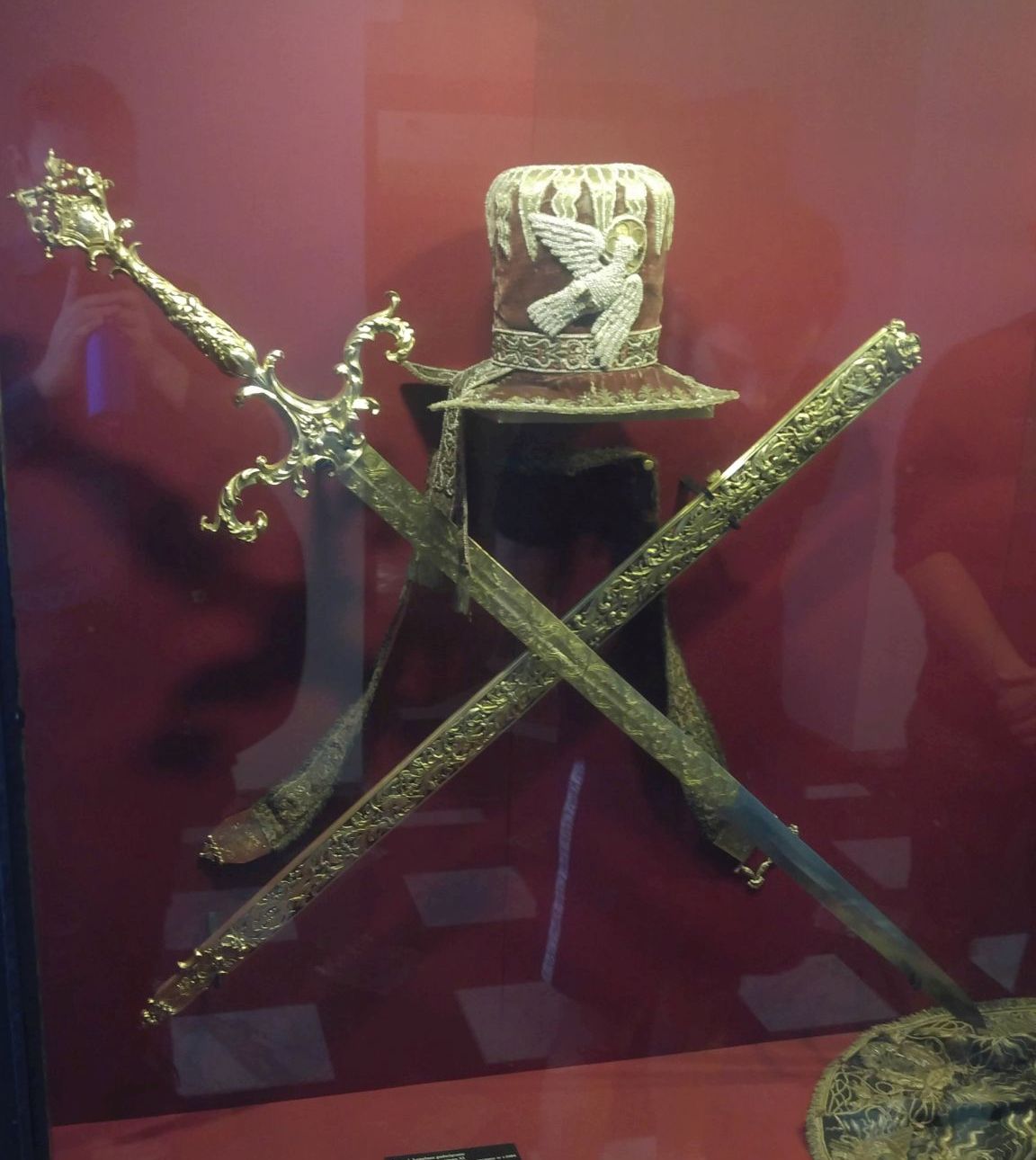
Crowning its almost limitless coolness, Wawel is built on a series of ancient limestone caves, which according to legend housed the dragon Smok (hence his presence on much of the tourist tat.) We didn’t see one inside the caves, but there was one outside, a gruesome bronze six-armed creature twice the height of a man, who spewed fire as we emerged from the cold cave back into the hot daylight. Next on our ascent was the treasury/armoury, full of gilt masterpieces and crazy-ornate clocks and table boats, the armoury half packing the usual splendid mix of moustachioed helmets, wavy-bladed zweihanders and crossbows with pom poms. Standouts were a glorious set of Turkish kit captured in 1683, a fabulous suit of winged hussar armour, and the gigantic sword and even more massive hat the Pope gave Sobieski.
We had cake in the courtyard. Misha lured a pigeon close with crumbs, then caught it with his bare hands.** Our guide around the royal apartments was calm, clear and immensely knowledgeable, running through antique tapestries (“one square metre would take a skilled craftsman one year. Look at this and judge how long it took”), Augustus the Strong porcelain (“they had many alchemists – that’s why this wing was rebuilt – and although they did not find gold, this was worth its weight”) and (“these passages were for receiving unofficial visitors. It must have been lonely here.”) The older rooms are huge, with high, beautiful wooden ceilings and tile stoves in the corners. Sobieski looks the same in all his portraits, a chubby, slightly self-satisfied chap with a good moustache on his round pale head, and seems enormously likeable.
Back along the Royal Road for a last meal with the Russians and a sad sendoff, Rog and I found ourselves in the cloisters of a Dominican monastery, filled with stone monuments and horrible propaganda renditions of Turkish excesses against Christians and vice versa. We climbed the clock tower, enjoyed the limited views but leaving with little idea of why it had its odd piebald colouring (there wasn’t much info in English, although there were many fun illustrations of coronation parades). We went back to the kasha place for honey beer, strolled the cloth hall for souvenirs.
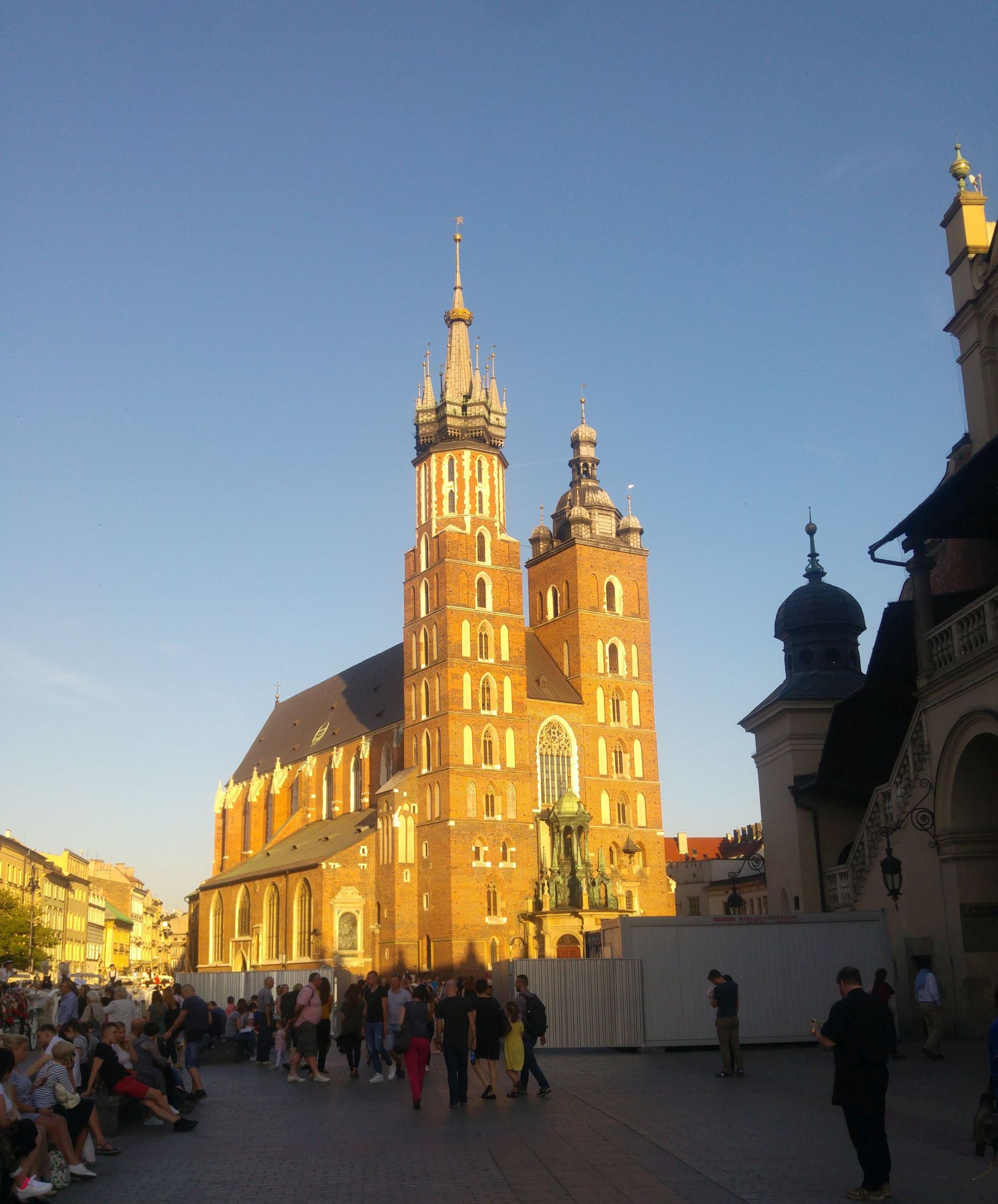
As dusk came down, we went to the foot of St Mary’s to hear the trumpet play the hourly hejnal. The popular story behind “the Trumpeter of Krakow”, of a watchman sounding the alarm and being cut off mid-note by an arrow in the throat, is apocryphal, historically doubtful*** and almost certainly invented by an American author. But that doesn’t make the call itself any less lovely: a sad, plaintive tune, cutting across the chatter of the cafes and the awful rock blaring from south of the cloth hall, played once to each compass point, never finishing.
* Plural; she was exhumed from one fancy marble box and put into a metal one underneath a hideous, dribbly Christ-crucified that legend claims spoke to her.
** I know. I don’t want to dwell on it.
*** I say this because I speculate that a Mongol shortbow would be rather hard pressed to kill someone in that tower even firing from its base, and because I know the tower was built after the Mongol invasion.
Warsaw Old Town – Poznan & Citadel – Poznan Museums, Wroclaw by night – Things of Wroclaw – The long road south – Zakopanorama – Krakow & Wawel
 underneath the open sky