
The backbone of Georgian public transport is the fleet of marshrutkas, public minibuses running to set routes.* Most towns have a train station (although they mostly seem to run freight rather than passengers), and normal buses exist, but marshrutkas are very clearly the go-to for most Georgians for both short and long range journeys. So, after a riverside breakfast of squeaky cheese, excellent vegetables, scrambled eggs and black bread with apple jam, we said goodbye to our lovely Iranian hosts and flagged down the #1 for 1 lari. It runs a circular route from Kutaisi old town to the main bus/train station; people got on and off throughout, leaving the bus always busy but never completely full. I wonder if Uber, Citymapper and all the other lot trying to revolutionise general transport are taking notes. Horn use in Georgia seems to mean “hello!” and “I’m here, watch out” a lot more than it means “idiot!”; marshrutka drivers beep to each other automatically.
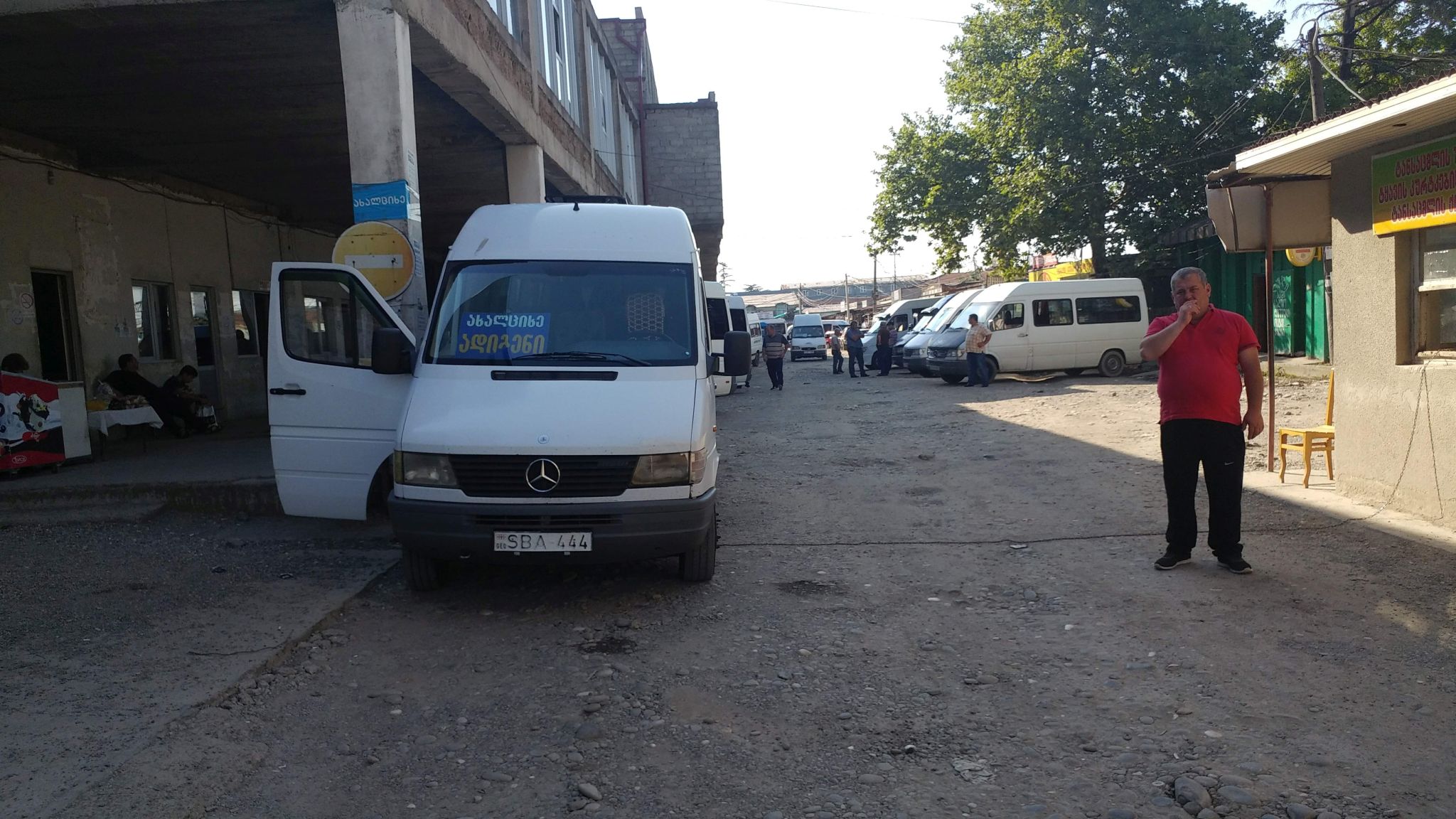
The bus station was a big gravelly waste absolutely full of minibuses. Many were personalised in various ways: beaded seats, religious icons, anti-glare panels, stickers of knights, scorpions and eagles, cheerfully brash logos: LUX BUS, MAXIMUM, ROYAL CLASS. Men yelled “Tbilisi!” “Batumi!” at us, in a spirit of enquiry – we yelled “Chiatura?” back and got pointed in the right direction. Communication has simply not been difficult here. A great many road vehicles in Georgia are second-hand, and in their original livery – we saw French logistics, Polish tour buses and a lorry marked “SEVENOAKS, KENT” on the road. Our ride to Chiatura was a cherry-red number which had in a past life been the van of a Berlin locksmith,** and so we drove off with “Bauschlosserei – Ulrich Kapral – Meisterbetreib” on the front.

Our driver set a deliberate pace, pulling over hopefully whenever he saw people loitering on the side of the road. The surface was good, and we rolled through bright green countryside, with honey-coloured cows grazing the verges and some on the road itself (one of the few aggressive uses of the horn.) Off to the south, the mountains were higher than the clouds.
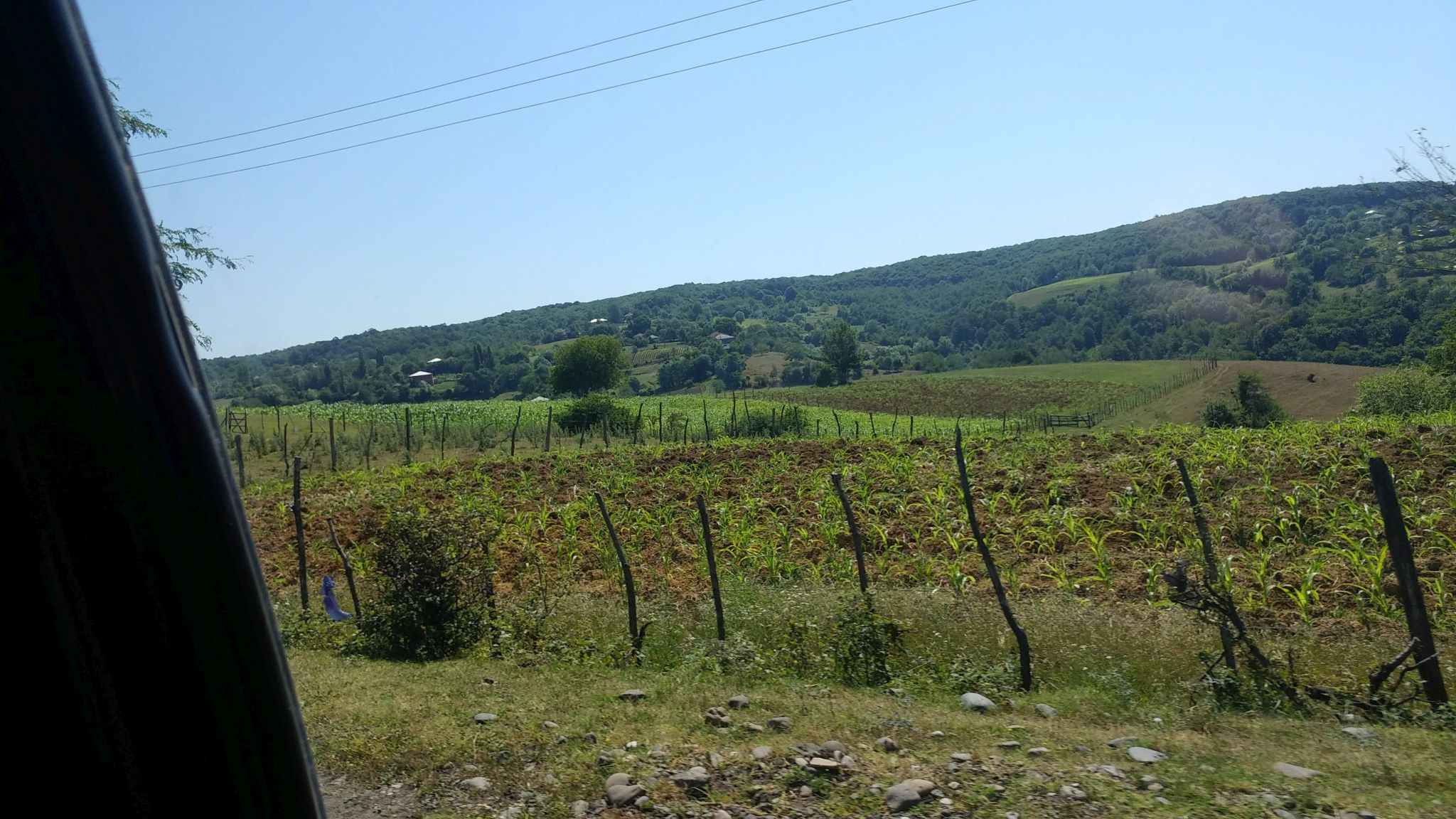
We went up into those hills, a mix of meadow and forest with fences of irregular sticks wired together. Yellow pipes ran suspended alongside the road, looping up to the height of a marshrutka at every lane. The road got more challenging; a quiet, wet coughing from the family at the back heralded smell of baby sick, happily washed away quickly by mountain air and tree resin. Concrete bus shelters went by, some with little gates, others with cows. Some of the farms had old Russian military lorries, some had the odd local crucifixes with downturned arms, making them look more like wind turbines than crosses. Ulrich Kapral finally filled up with wrinkly locals a few km outside of Chiatura, and then we descended into town, past a string of pylons with no wires that now only serve as modern sculpture.

Chiatura was once the “Black Pearl” of Georgia, a manganese mining town tucked into a valley of steep cliffs: a rich and prosperous place on the up and up through the 19th century, its infrastructure combining local uniqueness with Soviet gigantism. The fall of the Soviet Union and decline in manganese mining annihilated Chiatura; blog posts from previous travellers (vital in locating the cable car stations) led me to expect a pure ghost city, a hollow shell of Soviet brutalism inhabited by a fast-declining populace with no money and no reason to exist.
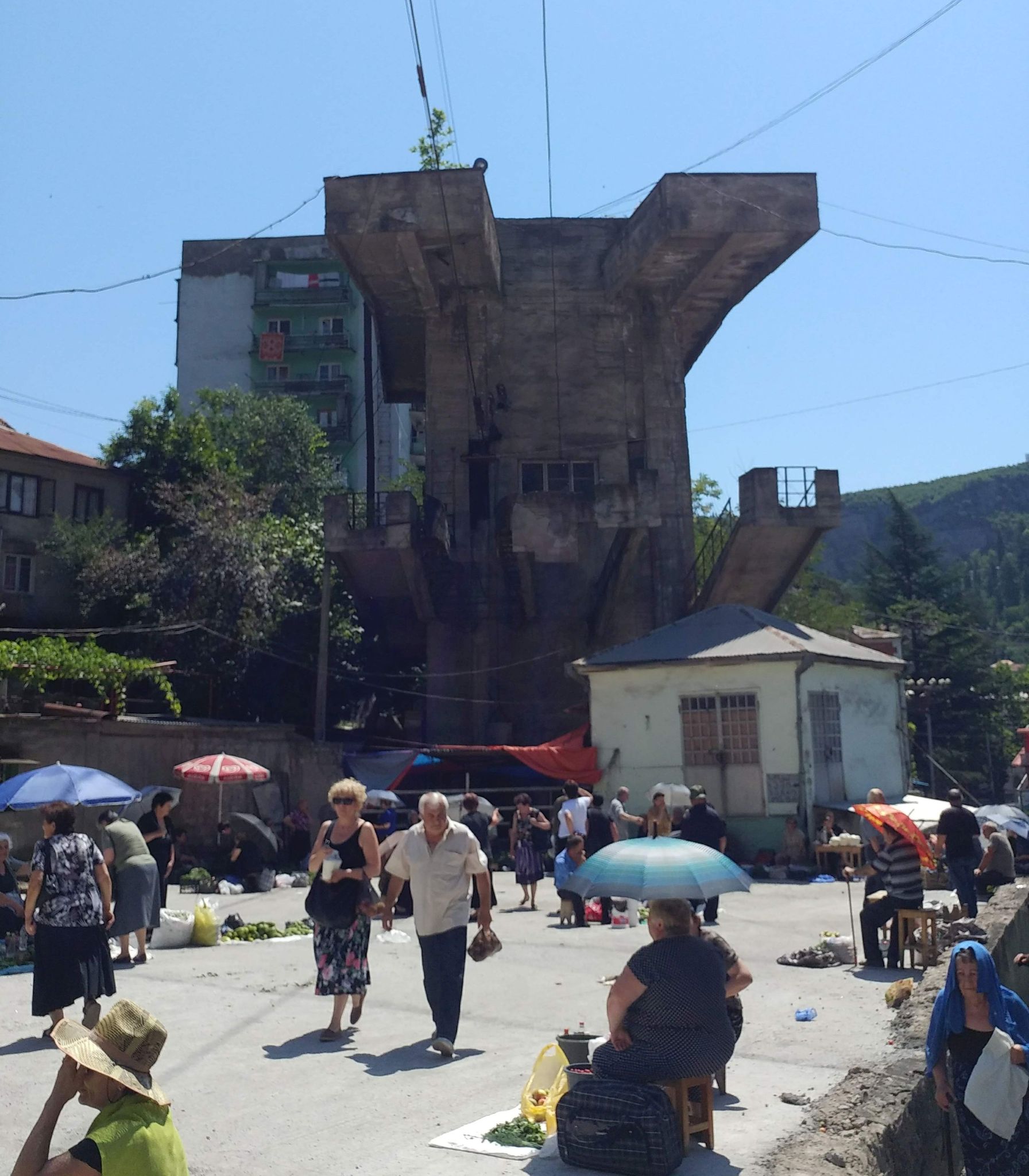
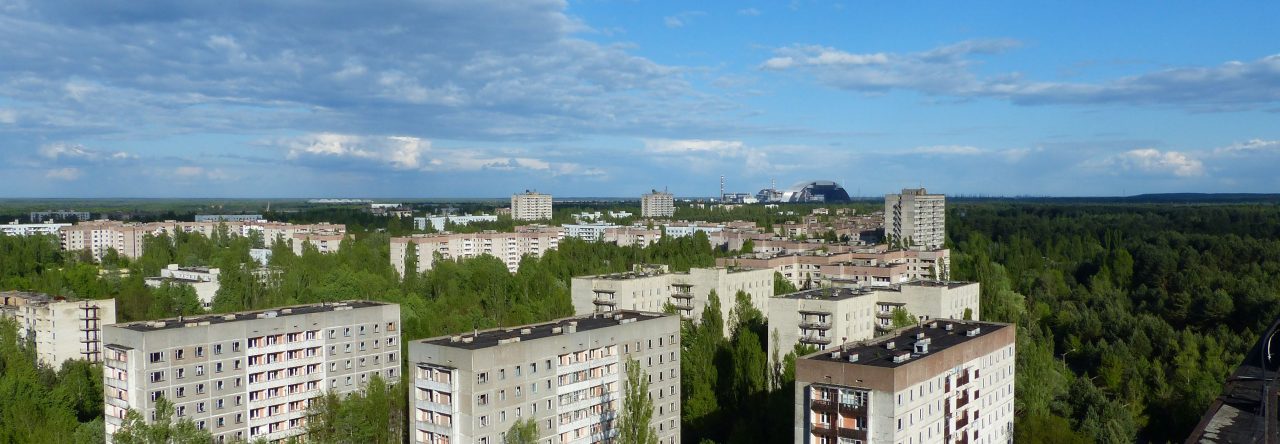
Actually, it was substantially less empty and miserable than blogs had led me to believe (although admittedly my main point of reference for run-down Soviet towns is Pripyat.) The centre is full of life, albeit a different kind of life to the original spec. Little markets perch beneath dead cable car stations, selling boxes of live chickens and rabbits, tractor parts and homemade axes. Street sellers put down their blankets and flog plastic toys outside buildings too dilapidated to safely inhabit. Kutaisi, too, had a feeling of inhabiting the grand designs of a richer, more confident precursor civilisation, but in Chiatura it’s absolutely inescapable, the VDNKh feeling magnified a hundredfold with extra abandoned tower blocks and bits of concrete falling into the polluted river. But it didn’t feel despairing (despite the emigration statistics), and however far the local economy has slid back towards medievalism there’s a cheerful vigour to it. The cable cars seem to have been recognised as the town’s big draw, and (helped by gobs of European money) there are multiple brand new stations going up, with fancy galvanised pylons and shiny orange stations.


The cable cars are, I’ll be honest, the only reason I’d even heard of Chiatura. They were (according to local legend), personally decreed and planned by Stalin in the 50s as one of his last and least malign acts, to help miners get around. Dozens of them go from the town into the immense cliffs above them, dangling iron coffins with round portholes, hanging from steel threads like modernist earrings. Hardly any of them are running now – I don’t think they’ve had more maintenance than some occasional oiling and a few whacks from a spanner since Joe died. Even the most functional station in town (complete with pebbly Lenin & Stalin faces) was basically falling apart.
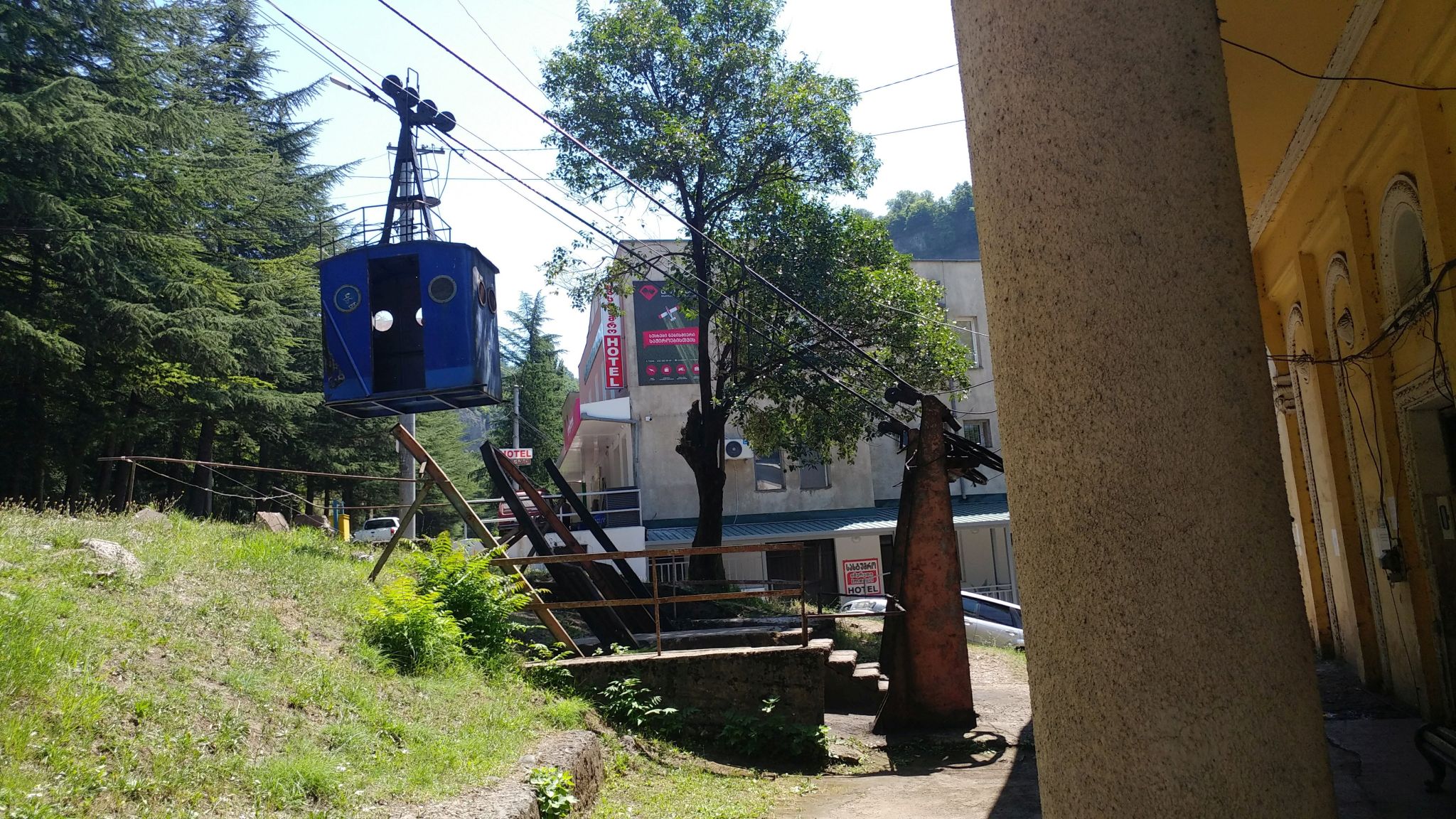
We found a little café nearby for lunch – tea and local beer, more khachapuri, khinkali (funnel-shaped dumplings whose trunks you grasp and leave uneaten), and kotleti (crispy, fragrant meatballs). It was both delicious and alliterative, and topped by seeing the cable car whir into life. I leapt up, only too eager to die in a Stalinist box, while Arpi (wholly sensibly) demurred and had another beer.
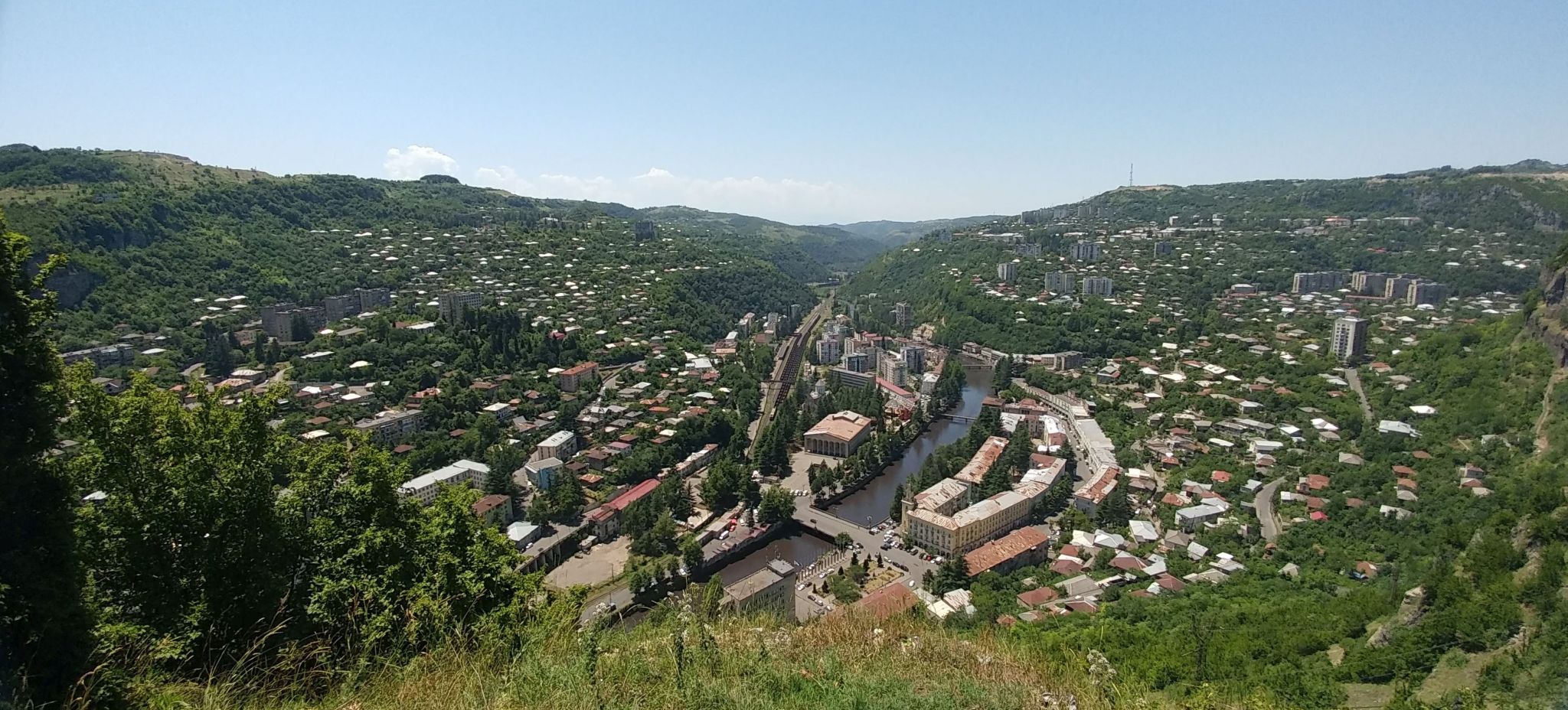
Two lines went up from the station, with different cars. The first was genuinely sarcophagus-like, with small round grating windows, an alarmingly improvised locking mechanism and an interior made entirely of graffiti and rust flakes; the atmosphere was not helped by sharing it with two rather smelly blokes in overalls. It whisked us up very swiftly, and the views from the top were incredible – the whole valley city, a railyard full of abandoned ore tricks, the busted-up arches of the Pioneers’ Palace on the far side of the gorge. The cars were operated from a little metal command box at the top; the operator was a little old lady who gave me indulgent looks in between eating sliced tomatoes and pressing important looking buttons.
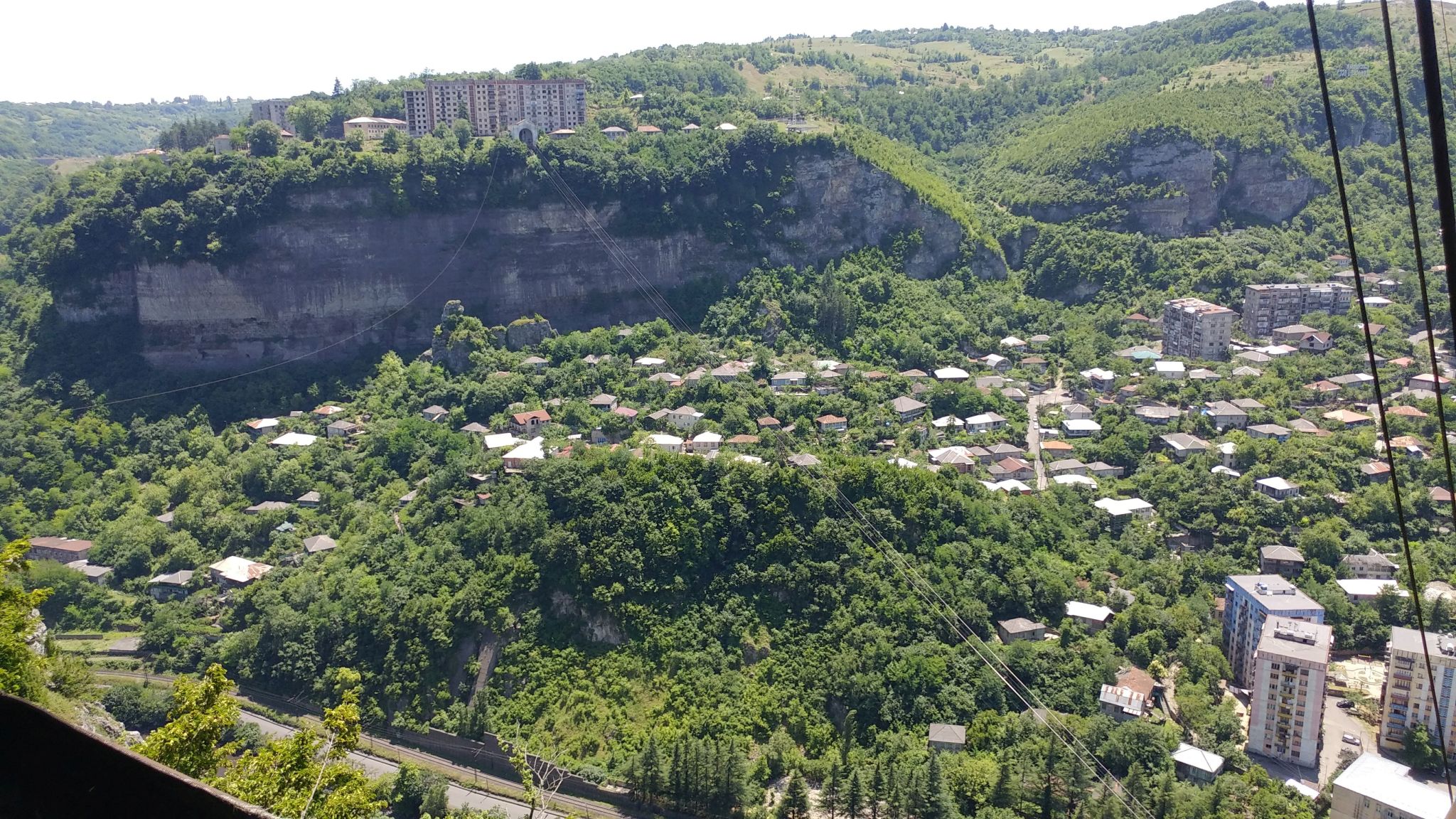
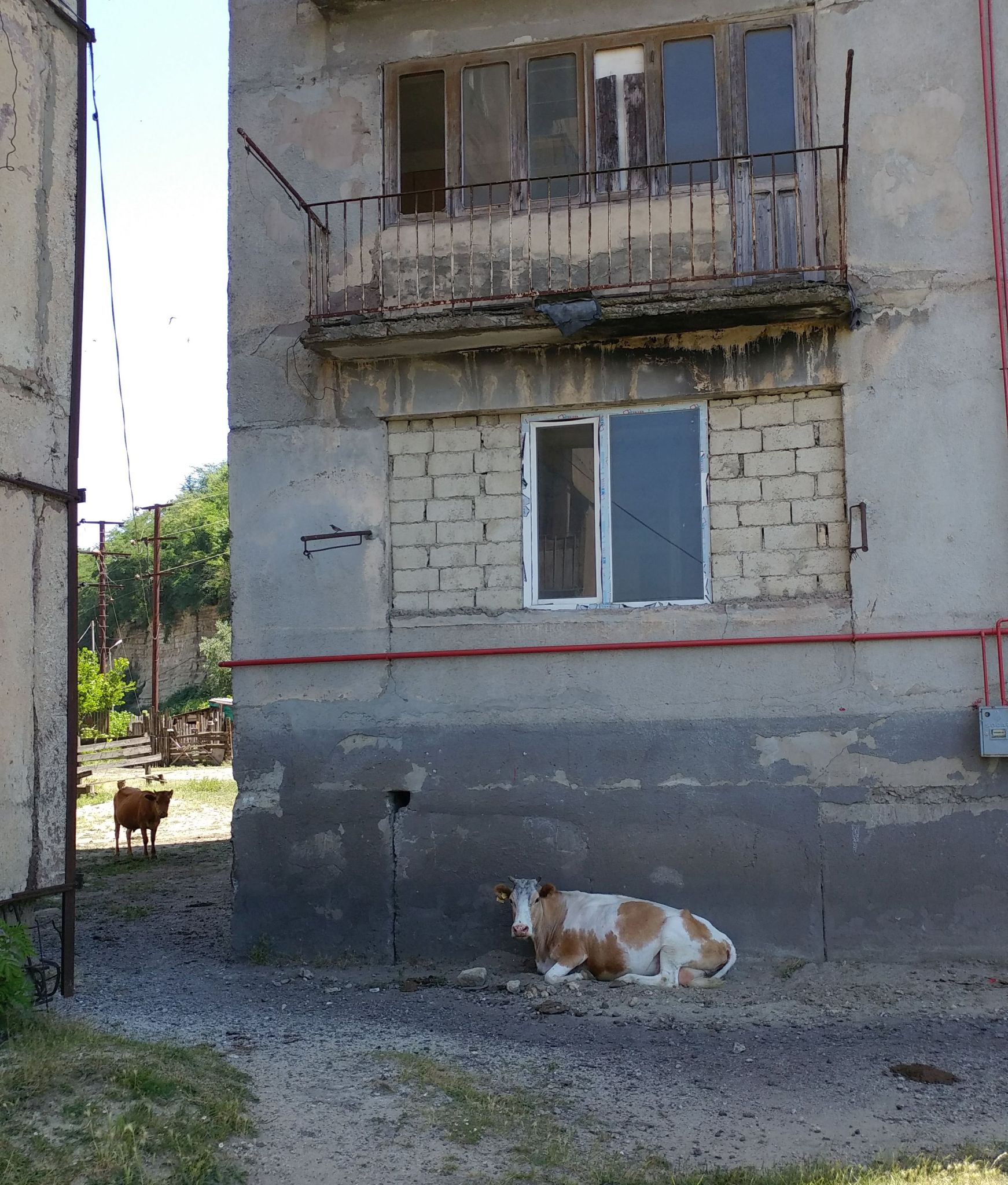
Back down, a second larger car goes up to the other side of the gorge; the attendant (another little old lady) actually gets in this one with you, which makes you feel slightly less in peril. Slightly. It creaked up to a deserted housing estate, with pigs rooting in the muck by the station and a roof about to fall apart. I went past the cows, up to the top of the 10-storey block, and took some photos from the roof. There were bathtubs on the landings and a few closed doors, suggesting inhabitation, but nothing like prosperity.
* From German, via Russian, originally “march route taxi.”
** Or possibly building fitter? My knowledge of German non-martial manual trades is incredibly limited.
Good morning, Kutaisi! – Museums and wine – Chiatura from above – Pioneers’ Palace, Gori – Tbilisi – David Gareja – Akhaltsikhe – Vardzia
 underneath the open sky