This series was originally jointly on my blog and Philip Reeve’s, but his has been overrun with malware so all four posts are now on my own site: Part 1 Part 3 Part 4
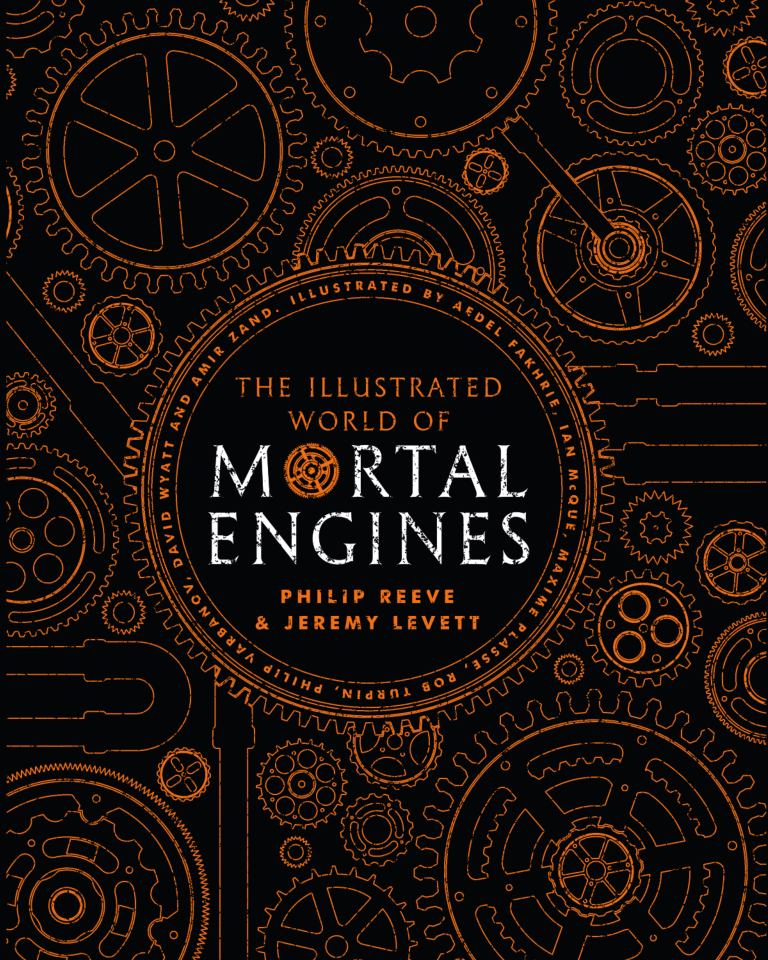
I’m immensely chuffed to announce that the Illustrated World of Mortal Engines, the actual, factual, physical, gorgeous, expanded and wonderfully illustrated version of the Traction Codex Philip Reeve and I worked on together back when I was at uni… launches TOMORROW (though it’s turning up in bookshops and letterboxes already). I haven’t talked about it here yet, because honestly I haven’t talked much about anything other than travelling since I started getting real jobs which don’t like you talking about them online. But it was Very Cool to do.
To commemorate the launch, and talk a bit more about the process of creating the book, I’ve put together an A-Z of the Illustrated World. The first part is on Philip’s blog here, and there’ll be two more after this one. Had a look at the first part? All settled? Read on…
Part Two: G-M
G is for Green Storm…
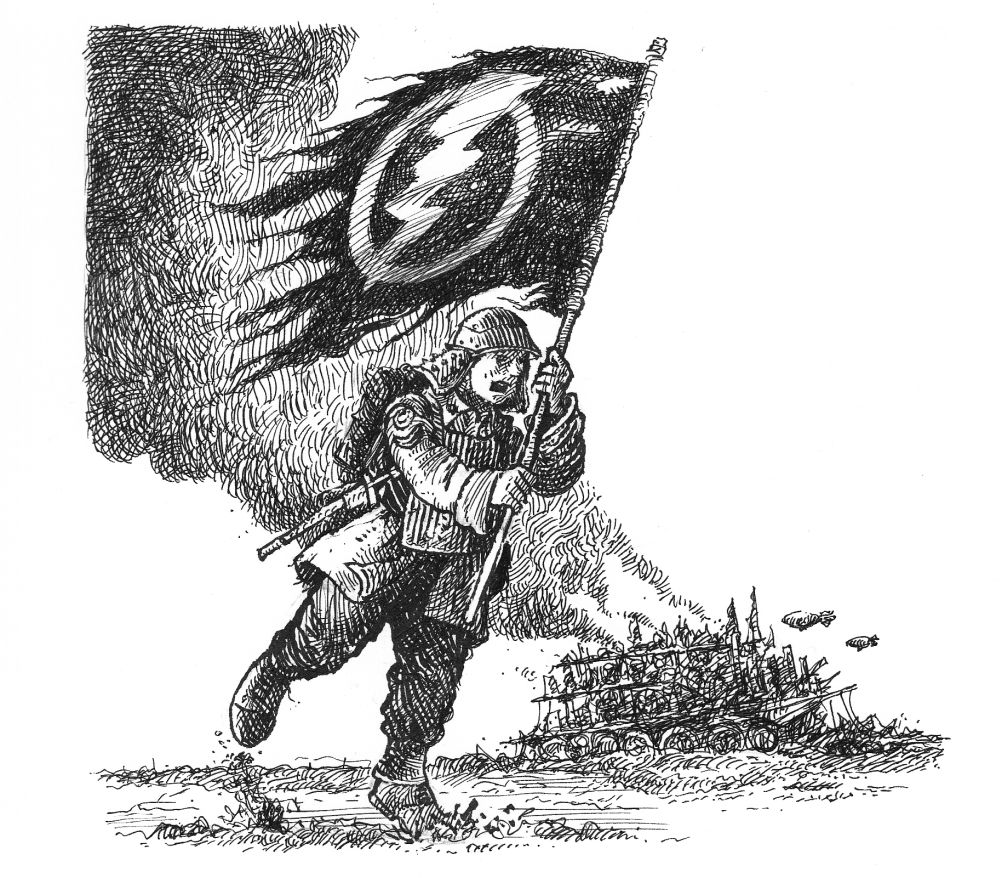 …who readers will know are very important in the later books, but are most conspicuous here by their absence.
The IWOME developed through a long period of writing, hashing out ideas and improving the general structure. One of the issues which emerged, which we never really found an answer to, was that going into the Storm and their war with the cities was a big distraction from the original story of Mortal Engines. Worse, due to the limit on the length of the book and the time pressures of getting illustrations for all the other new stuff in, there wasn’t really time or space to do the Green Storm War justice. So the Storm, and the war, are alluded to but don’t feature heavily in the IWOME.
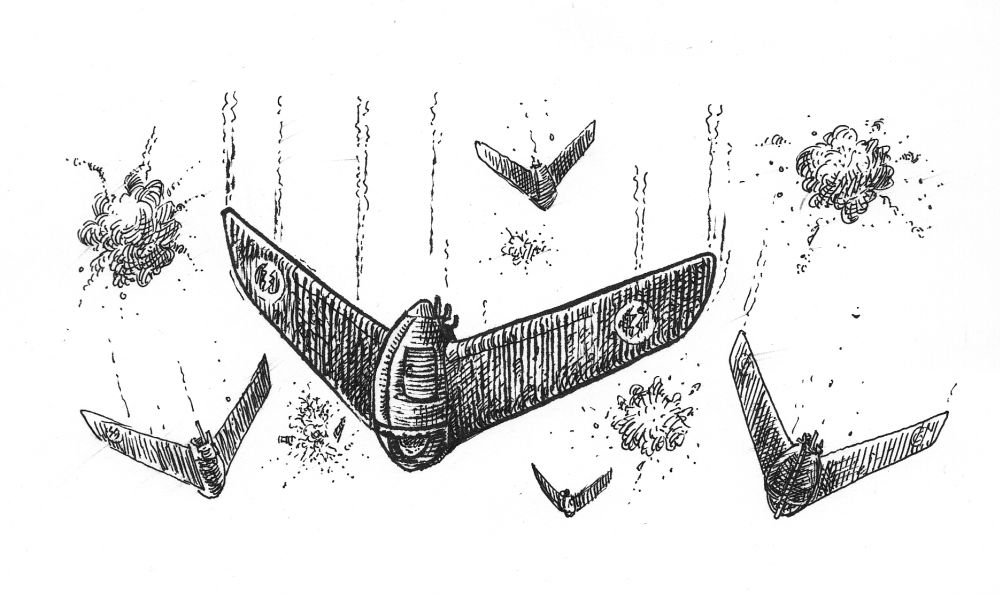
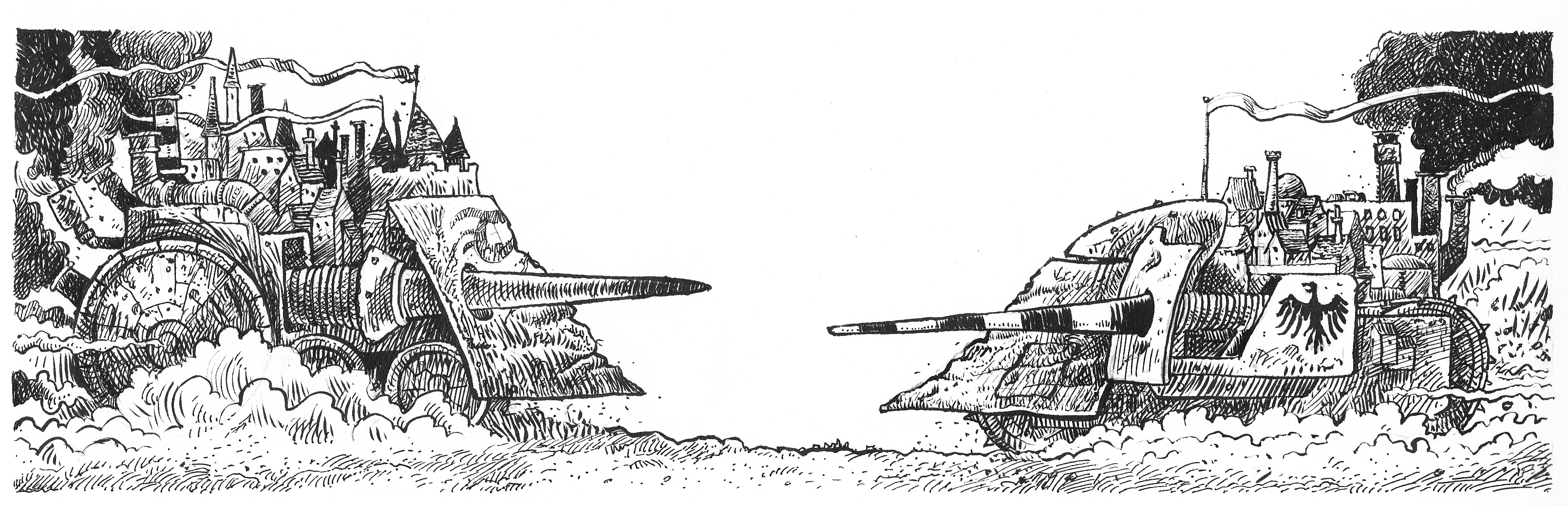
But! We hav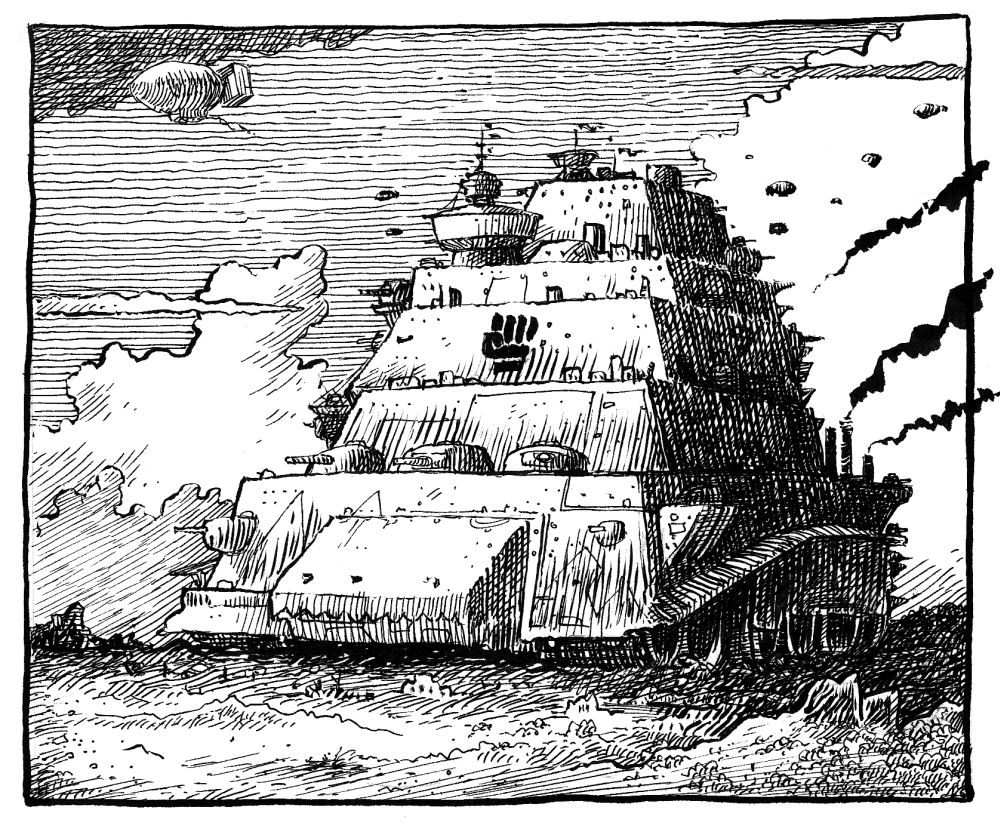 e the early drafts of lots of material – hydrofoil swarms and shaped-charge lancers, the Battle of the Bay of Bengal, increasingly grotesque and ludicrous applications of Stalker technology – and on the Traktionstadtsgesellschaft side, a heap of mad flying machines, armoured fighting towns and an effort to create the Longest Possible German Compound Noun (“Traktionstadtsgesellschaftstandardausgabeverteidigungsreihenfeuerpistole”). Perhaps, one day, we’ll get to come back to them, and the world will see a beautiful professional illustration of the abortive “Stalker walrus”.
H is for Historians and their Disagreements
The phrase “Historians disagree” will be familiar to any readers involved in academia. In the real world, if Historians Disagree, it means right now someone in an archive somewhere is furiously typing up the latest volley in a protracted battle of books and monographs with other people in other archives, all of which will then be glibly summarised in one sentence by an undergrad who’s skim-read half of them. (Possibly, they also will say that the aforementioned battle has generated more heat than light, or something like that.)
But when writing a fictional history, it’s a marvellously useful phrase. Historians will Disagree when we want to allude to something the reader already knows but people in the WoME don’t, or when we haven’t written the relevant backstory but want to speculate on it, or when we have two or three equally good ideas for what might have happened and want to use all of them…
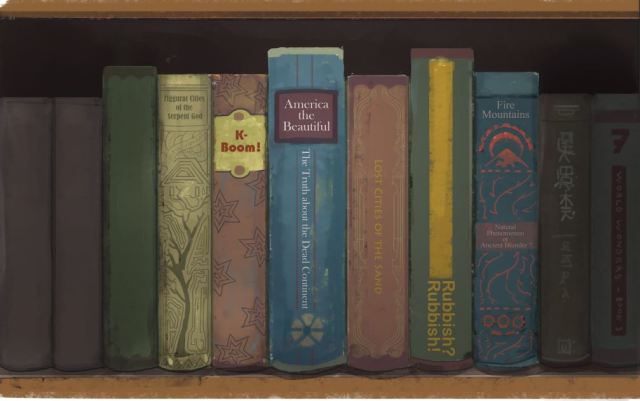 We owe the Historians of the WoME a great deal, and gave them Puerto Angeles for their trouble, a cheerful historian party city where the museums and the samba clubs are both 24/7.
I is for International Productions
The IWOME travels widely across its fictional world, but the people who helped create it are spread all across the real one! Many of us, like Philip, are based in the UK, but work came in from as far afield as France, Bulgaria, Iran and Indonesia (an artist from the USA was going to be involved but couldn’t participate in the end – I’m told this was due to a commitment clash rather than finding out what happened to their homeland in the books.)
I think it’s a real shame we may never get everyone who worked on this book into a room together – but such an international cast of creators is a cool, strange part of putting something like this together in the modern networked world. (And hats off to poor Jamie Gregory, who had to stay up late and work with people in all these timezones!)
I is als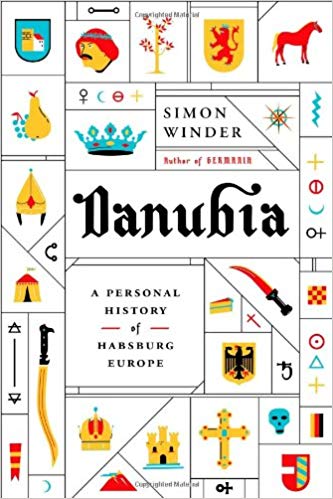 o for Influences, and I thought up a great long self-indulgent post about all the stuff which in some way made it into the IWOME, but it was too mechanical and not very funny. So I’ll just mention Simon Winder, whose description of the actual Schloss Runkelstein/Castel Roncolo in Danubia painted such a compelling and side-splitting picture it earned its own tribute city (well, fort). If I’m ever able to write observations half as canny and funny as his, I’ll be very happy.
J is for Jokes…
…which are Very Important. The IWOME isn’t really a “reference book” for other books – we worked hard to make it something which people will actually enjoy reading in its own right (there’s not much point in writing it, otherwise), with the same sense of humour that runs through the Mortal Engines books. There are… well, quite a lot of bad puns.
Actually, the hardest part in all this was reining the jokes in – humour is important, but it also has to be something that works even if the reader doesn’t get the joke (some of the punchlines are pretty obscure); a jokey double meaning is bad if it makes the original meaning too hard to understand. (Philip has discussed in-jokes in his splendid Railhead A-Z.) And some had to be pruned because they were too gratuitous – we toyed with a mitre-shaped Traction Vatican City, with a lot of popes called Urban (white smoke from the exhaust stacks when a new one was elected) but it was just Slightly Too Silly. So please appreciate the horrible jokes, because there are plenty more on the cutting room floor.
K is not for Characters, but will have to do
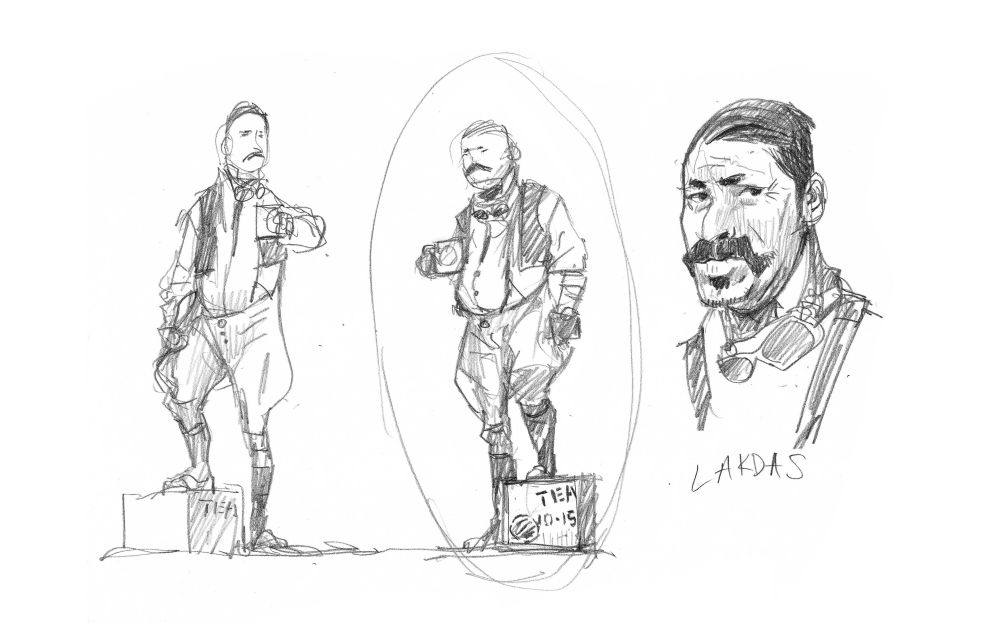
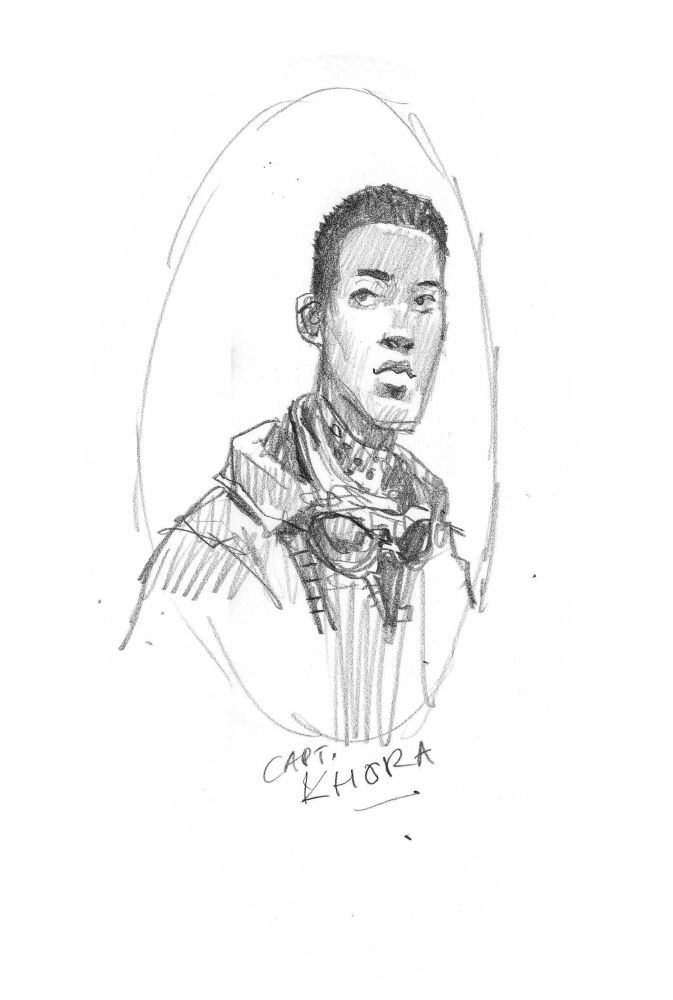 There’s plenty going on in the IWOME with all these maps, cities, wars, histories and amusing pictures, but what about the people who inhabit them? There are loads of little character portraits throughout the IWOME, illustrated by the excellent Ian McQue (I hadn’t really realised before this book Ian was a dab hand at character art as well as all his robots, flying ships and traction cities.)
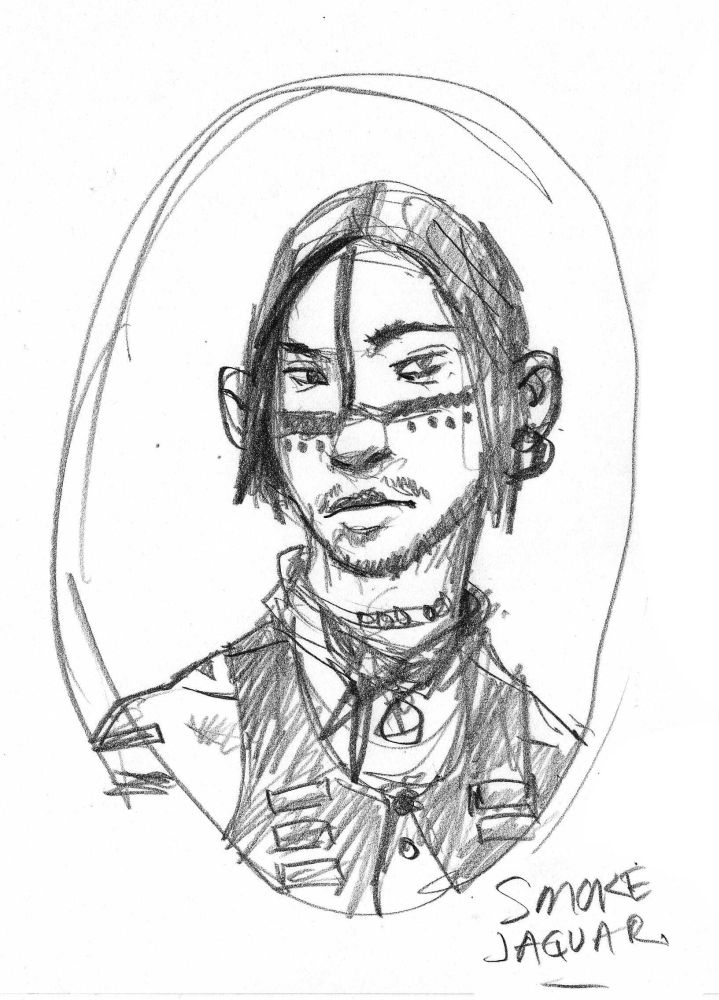 Some people, like Thaddeus Valentine and Freya Rasmussen, are familiar; some, like Madzimoyo Khora, give familiar names a bit more of a background, and some are brand new, like Woolloomooloo Smith (credited with introducing Australian culture to the Great Hunting Ground). Some of them address unanswered questions (like how Anglish-speaking cities in the Hunting Ground have ready access to tea when presumably all the good tea plantations are in League territory – Lakdas Weerasinghe, captain of the blockade runner Invisible Worm, will be very happy to answer that). Others, like pioneer air rustler El Condor, or Niccolo Tornatore, the Doge of Brighton’s arch-rival Venice, are just there as people and stories who can give a little more human texture to the world.
L is for Jeremy Levett
which is to say… me. I’m far too self-conscious these days to write this sort of thing about myself, but Philip had some kind words…

M is for Maps
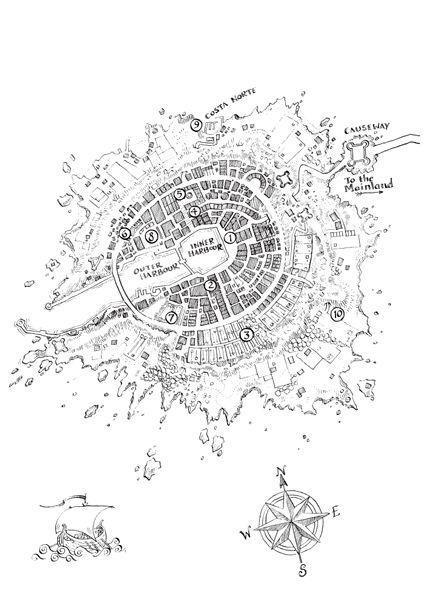 Maps of fictional worlds are very popular, from Tolkien’s Middle-Earth to Keith Thompson’s world of Leviathan, based on actual First World War propaganda-y maps.. However, the WoME has a slightly complicated relationship with them. One problem is that Traction Cities, the primary landmarks, move around. Another is that committing to a map leaves you a bit boxed in story-wise as to where things can or can’t be (I remember Brian Jacques had to keep extending the Redwall map in new directions to tell new stories).
So the maps we do have in the IWOME are mainly places that don’t feature heavily in the story (there is a map of the general shape of the Great Hunting Ground, but it’s very scuffed-up): southern India, South America, Australia. We were given a lot of help creating them by cartography expert Lowtuff, a regular on the Mortal Engines Discord server, who gave a lot of detailed thought to plausibly answering mad questions like “what if we just tilted the whole continent west a lot?” and produced excellent outlines which our artist Maxime Plasse turned into the final maps.
An interesting issue we discovered with the maps, playing around with sea levels and continental plates, is that you can do some absolutely horrible things to continents and and they still don’t actually look that different. Take Nuevo Maya here: most of the important rivers have completely changed course, a million square miles of slightly salty pampas have risen out of the sea, the Falklands are no longer islands and the Panama isthmus is no longer anything… but it’s still instantly recognisable as South America. But, put it side by side with an actual map of South America, and you’ll see quite how different they are.

One which came together particularly well at the eleventh hour is the Dead Continent. Many of its coasts are guesswork, and the interior is a great black patch of terra(/or) incognita, with the only light cast by the paths of scientific expeditions – some of which come back, while some head inland and are lost in the darkness.
Pictures in order: Green Storm Soldier, Panzerkampfstadt and Green Storm Tumblers, by Philip Reeve (all originally for the Traction Codex); Bookshelf, by Aedel Fakhrie (due to multi-language printing issues, this hasn’t quite been done justice in the printed version, so here’s the original); Danubia cover pinched off the book’s Amazon page – READ IT; Traktionturnieren by Philip Reeve; Captain Khora, Smoke Jaguar and Lakdas Weerasinghe sketches by Ian McQue (the final versions are in the IWOME!); selfie with 12″ railway gun, by me; Nuevo Maya map, cartography by me and Lowtuff, final art by Maxime Plasse.
 underneath the open sky

! Can’t wait to get this in my hands :D
I hope you enjoy it! :)
Pingback: Philip Reeve
Pingback: Philip Reeve
Just got hold of my copy yesterday and it exceeds my high expectations. I love the informative and amusing articles and the variety of different illustration styles. Congratulations to EVERYONE involved. One last word, having looked under the dust jacket: awesome!
Thank you, that’s lovely to hear!