This trip actually took place on 23 Feb 2020, but I’m posting it in 2021.
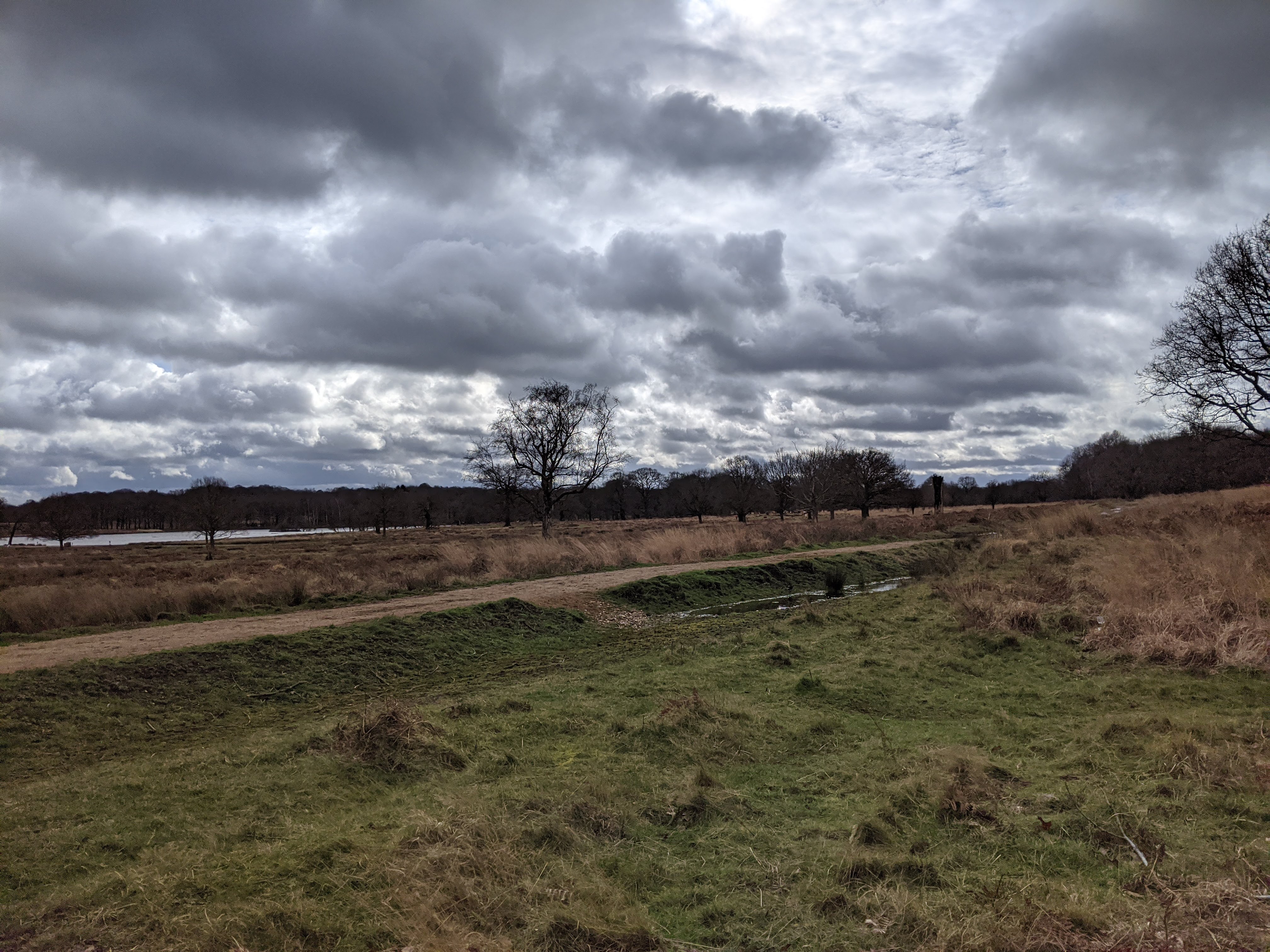
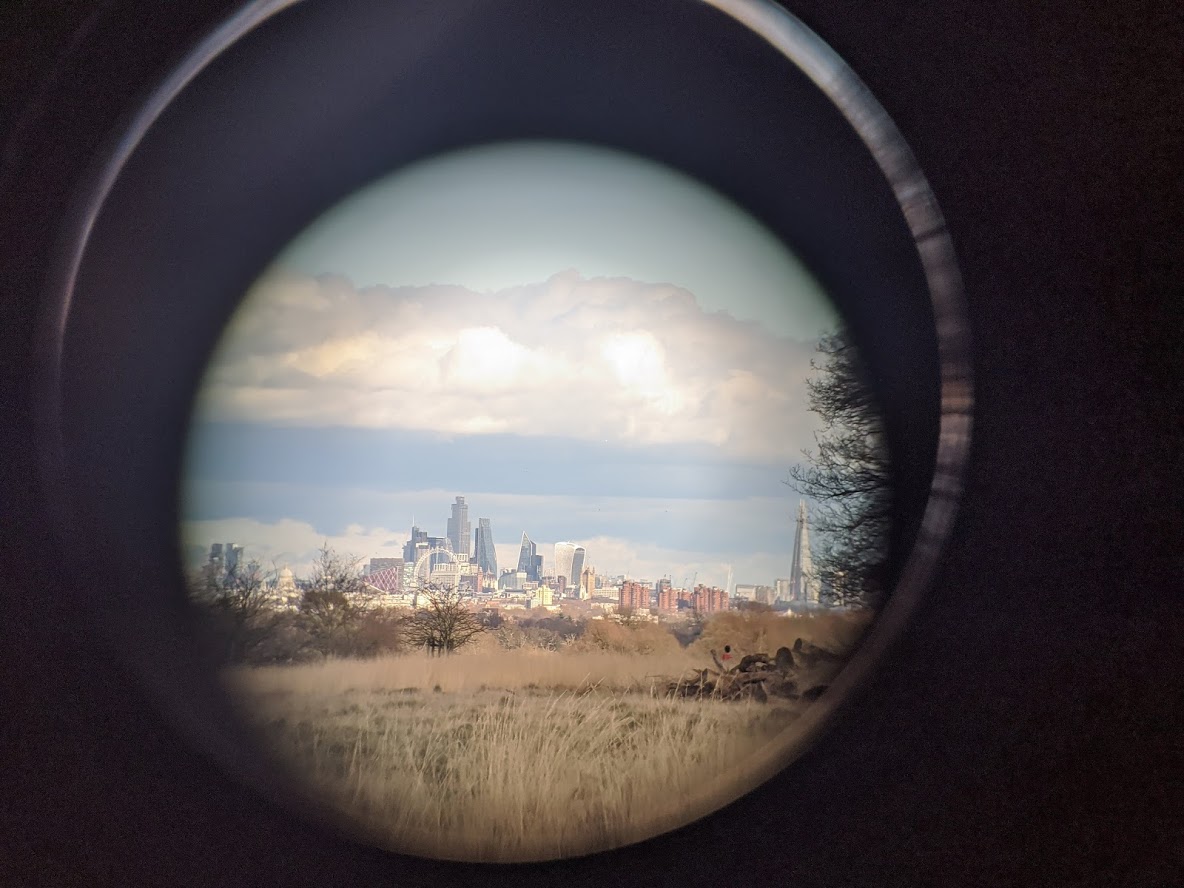
Richmond Park, designated as a hunting preserve by Charles I but far, far older, is the largest and easternmost of London’s royal parks. It’s big enough and wild enough that you can imagine yourself in the open country, rather than with London bustling all around – until you glimpse the glint of a skyscrapers on the horizon, or the jets coming into Heathrow break the silence. The trains of southwest London are abominable on a Sunday, with any number of lines just not working like they ought to, but I managed to get to Richmond station and, a happy surprise, was almost immediately hailed from a coffee shop by an old boss. London sometimes feels like a very small place.

I met Tom and Bex and we proceeded to the north side of the park, finding a map covered in wonderfully macabre old names – Gibbet Hill, Killcat Corner, any number of Copses better read with an extra R. It was a dark, windy day, with a stiff westerly swishing in the long yellow grass and the knobby grey trees, and hurrying dark clouds off towards the city centre. We came to a bunker-esque structure, plausibly an air raid shelter but small, overengineered and a bit in the middle of nowhere. A mystery.
Cars are allowed to use a couple of roads through the park , but limited to a comical 20mph, which sadly hasn’t reduced their numbers. On either side of the slowly rumbling SUVs, grazing with supreme unconcern, were herds of the park’s two deer species: red to the north, fallow to the south. For photos, we improvised an optical zoom by holding phone cameras to binoculars, although they didn’t seem at all frightened of us. Both sets had grown antlers: short, reserved-looking horns on the red deer, much bigger, more antlery-looking antlers on the dapplebacked fallow.
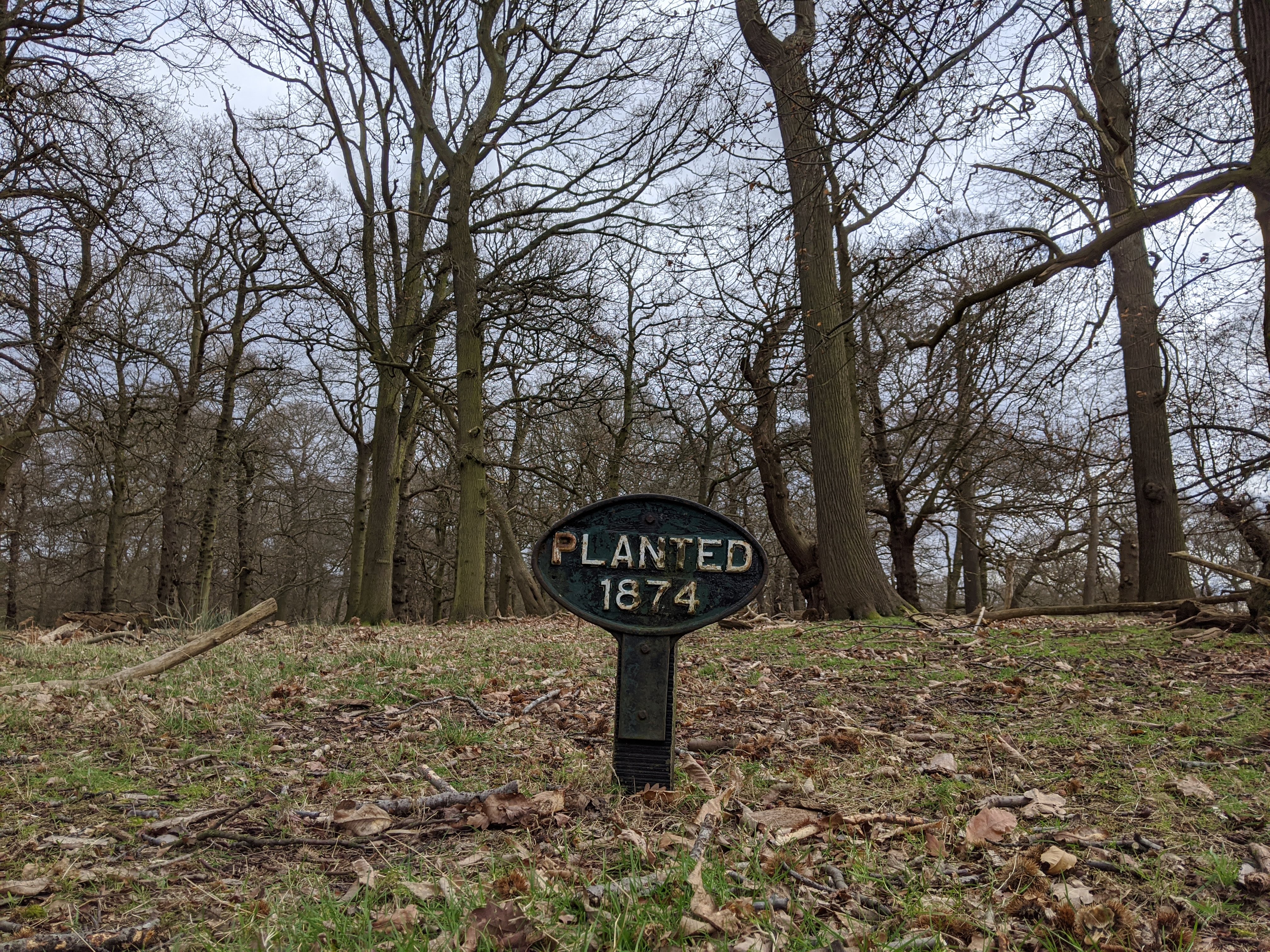
As we advanced into the ancient (and less-ancient, some trees tagged with Victorian plaques) forest, Tom discussed some theories in a book he’d read recently* about how trees communicate with one another (on most of which I’m not wholly convinced, but not wholly unconvinced either.) And, almost as a side note, how almost everything seems to hurt or kill trees, seen on a long enough timescale, and that they show symptoms which can be reasonably interpreted as suffering. This, in combination with a late-winter deadness, gave a strong, unexpected sense of being surrounded by death, an uncomfortable graveyard air that had never occurred to me before (and I didn’t help by bringing up the lignin theory I’d recently learned about, with its strange imagery of immense piles of dead trees, unable to decay.**) But then again, death is interesting: here, a bark-stripped body striated with wood grain, streamlining around knots and branches like a diagram depicting laminar flow; there a huge, half-decayed shipwreck of dead wood, riddled with beetle-holes. A few green shoots were coming in around the spiky chestnut litter; noisy green parakeets and small, glossy jackdaws were everywhere, and we talked about colonies of ants who formed in acorns, or twigs.
We mused on different theories of the “natural” state of the forest, the immensely old and wide anthropogenic geography; on the effects of clearnces and brushwood collection, and the more recent Victorian habits of cutting off low branches and removing dead trees out of a sense of tidiness. Looking at one grove of oaks, maybe a century old, I noticed that only those at the edge of the group had grown peripheral branches.
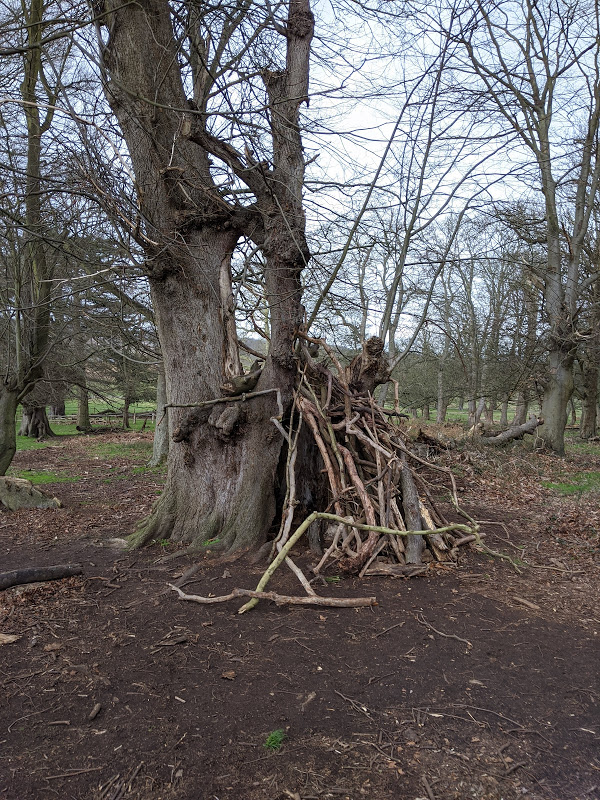
At a cold, grey, two-stage lake, strong winds blew little zephyrs of ripples away from us and a pair of swans held their heads low to look menacing. Someone, or several someones over some time, had been building shelters by stacking branches against hollow trees. We found one very nearly big enough for the three of us, and hid in it the rain suddenly swept in, drinking tea from a thermos and eating some excellent homemade banana cake.
And it was a grand day out.
* The Hidden Life of Trees by Peter Wohlleben. From summaries it seems like some genuinely interesting concepts with some big side orders of anthropomorphisation and pseudoscience, but I really want to read it now.









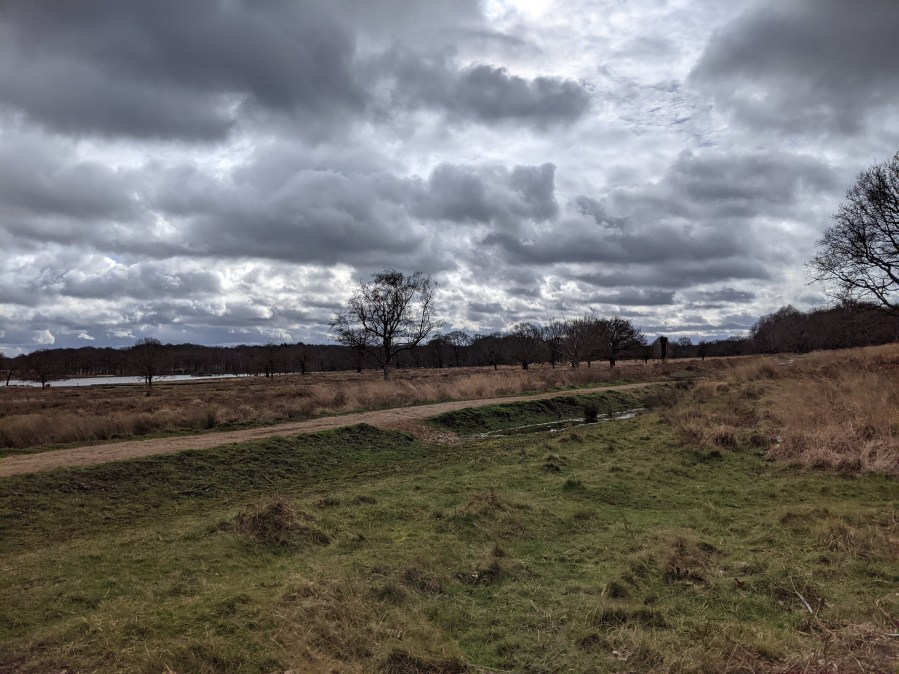


 underneath the open sky