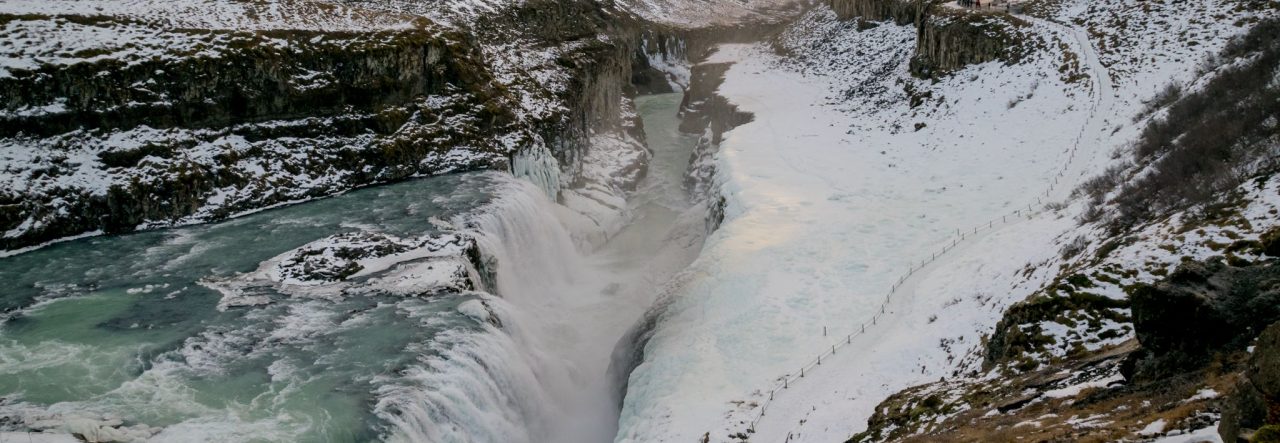
lair of the green man

This is the last post in a series; you can read it in reverse order through the tag or start in Penryn here.

Dartington Hall is a lovely medieval estate, currently very much at the top of a historical sine wave of investment and decline. Built in Plantagenet days, it endured centuries of this before some rich oddballs bought it in the early 20th century to adapt into a sort of Bloomsbury Group combo of agricultural and domestic education college, artists’ retreat and back-to-basics proto-hippie-commune with elements of monastic self-sufficiency (it’s just down the road from an actual monastery, Buckfast Abbey, which mostly seems to make enormous amounts of money as a conference venue and selling bottles of what-the-hell-are-you-looking-at to neds.)* On a bright summery day it was quiet and felt extremely Proper. The main courtyard of grey, licheny three-storey buildings sets off the massive front of the hall itself, which inside has a really very good hammerbeam roof and some weird modern banners.

Through into the gardens, a great sculpted bowl of earth claimed semi-convincingly to have once been a tiltyard; a huge staircase was spaced in flights like a miniature Odesa Steps,** a carved stone otter had been munching on the same stone fish for who knows how many years. In the fun sprawl of the gardens, odd little doors led into the hillside (probably housing lawnmowers rather than hobbits) and plants bloomed out in an absurd diversity of shapes and colours. Set in a graveyard of overgrown stones with half-decipherable names, we found the Spookiest of All Trees: a yew so knotted it resembled a rope fender sized for the Ever Given. Only the brilliant sun stopped it all from feeling Proper Haunted. (Will we be seeing it in the new Utterly Dark?)

We visited Totnes for a nice brunch and a trip to the castle (working out my pandemic-underused CSSC membership). The castle, a fourteenth century stone enhancement of a Norman motte-and-bailey, is now basically just a little double ring of stone and earthworks, its guts all gone centuries ago leaving little to really engage with. Totnes, however, also boasts a perfect town museum in a Tudor house, with hundreds of exquisite, specialised artefacts each evoking memories of the town as a highly developed hub of trade and industry: tin, slate, pilchards, timber, the manufacture of coins, pottery, medicine, imports from Spain, Russia, the Low Countries. It’s a reminder of a very different world, before virtually everything that involved the creation and movement of physical objects was moved far out of town (and, ultimately, largely out of the country), where towns themselves were where things were made. The modern, Guardian-reader Totnes of cream teas, second-hand bookshops and new age tat that inhabits its buildings now feels as close to the Totnes of the museum as a hermit crab is to a sea snail: a completely different creature that just happens to live in the same house.***

Exeter showed to advantage on another blazing day. The local dark red sandstone comes heavily grained with veins of quartz, leaving the ancient city walls looking bizarrely like fat-marbled raw steak. Within those walls (crossing a Yaroslavl Bridge, which reminded me pleasingly of bits of Kutaisi and Newport being named after each other) it was a bright, cheerful place, a mix of really quite ancient buildings and modern shopping arcades all bustling with the life of a society trying its best to get out of under the pandemic. A trendy coffee shop provided some high quality shortbread, a castle complex rather at the bottom of the neglect sine wave provided a fun walk. Naturally, we had to go to the city museum (properly the Royal Albert Memorial Museum). One of the last recipients of serious pre-austerity investment in such things, the museum is another treasure, a pleasing mix of bonkers old artifacts and modern cultural appreciation for them, with some admittedly jarring moments like a Victorian staircase full of stone carvings painted hot pink. Outstanding pieces included a lot of echinoderms (especially if one’s companion is an author writing about 19th century science with an emphasis on sea horrors), and an immensely detailed 18th century model of the entire town.  (The museum’s own link is dead but in looking for it I found a wonderful then-local blogger who posted about it and many other Exeter treasures – have a look!)

A Chinese money cat looted during the Opium Wars; a lascivious scallop; a c.1900 Nigerian caricature of a European officer; an 1850 engineering diagram explaining how Chinese characters could be sent through a telegraph; a warning of the dangers of blogging; and some characterful ceramics by the same chap as that crab back in Plymouth.


Finally, the cathedral. I have never really met a cathedral I didn’t want to be friends with, and this one Has It All. Happily spared much of the iconoclastic vandalism of the Reformation and Civil War, and the frosty machine-cut rectitude of later Victorian sensibilities (though not the war, which annihilated a lovely chapel), it is a joyful splurge of bright colour, gilt and over-the-top high-relief zaniness, with mawkish memorials from every century. An astoundingly detailed wooden choir boasts an elephant misericord dating back to Henry III, and a side chapel to Hugh Oldham is literally entirely owls. Enjoyably, it’s the home of an absolutely mad number of Green Men, whose upsetting, leaf-sprouting faces can be found all over the place, especially in the many ceiling bosses. I am certain at this point there were more depictions of the Green Man in there than there were of Jesus. (All quite high up and hard to photograph, though.)

This story trails off a while, as many of my logs do, because the remainder isn’t really of public interest. I stayed a little while longer on Dartmoor, enjoying a poodle chasing himself up and down the drive, bunnies on the lawn, ill-considered waltzes up tors in driving rain, and very good company. It was time to go home (and get a new raincoat.)


Everyone is fond of owls.

Out West 2021 

Out to Penryn – St Mawes and Falmouth – St Austell and PlymouthThe Forts of Staddon HeightsDrake’s Island and Saltash Totnes and Exeter


* The Wikipedia article for Buckfast Tonic Wine has probably been stripped of everything fun by now, but essentially it’s a surviving example of quackish Victorian ‘tonics’. The drink combines a lot of alcohol, caffeine and sugar in a glass bottle, meaning the person who has got to the end of a bottle is drunk, awake, energised, and armed. I don’t know if any of this is still current but it once caught a fair bit of flak for intensifying anti-social behaviour in deprived parts of Scotland, and when I tried to buy some near Inverness for the memes I got IDed despite looking about forty. It didn’t taste good.
** The Potemkin stairs are carefully designed so that looking from the bottom you can only see stairs and from the top you can only see landings. This staircase sort of managed it.
*** To be clear: I’m really not actually nostalgic for a world of small-scale, local, inefficient primary and secondary industry and all its comorbidities. I’m personally fine with a Britain which allows me and a very large number of other people to shuffle data on a screen for seven hours and then have an afternoon off rather than spending twelve hours trading fingers for lung and skin diseases in a factory. It’s just fascinating to think of how impossibly different the economic landscape was even a hundred years ago, and how transitory our own seemingly settled world of said pointless data-shuffling might be. My actual problems with a system where food, goods and tangible value are all created elsewhere and most economic “activity” in the West is just increasingly complex and baroque ways of sharing that value are: how unequal the current formula is, how it just puts the suffering out of sight and mind in the global south, and how much of it ends up hived off into parasitic rent-seekers and billionaires who don’t even do anything interesting with it.****
**** There are a lot of bad things one could reasonably write about, say, Armstrong, but he gave us some fantastic bridges, Nu-Bamburgh and Cragside. The current rich list are notable only in how incredibly banal their excesses seem to be.
blue powder monkeys

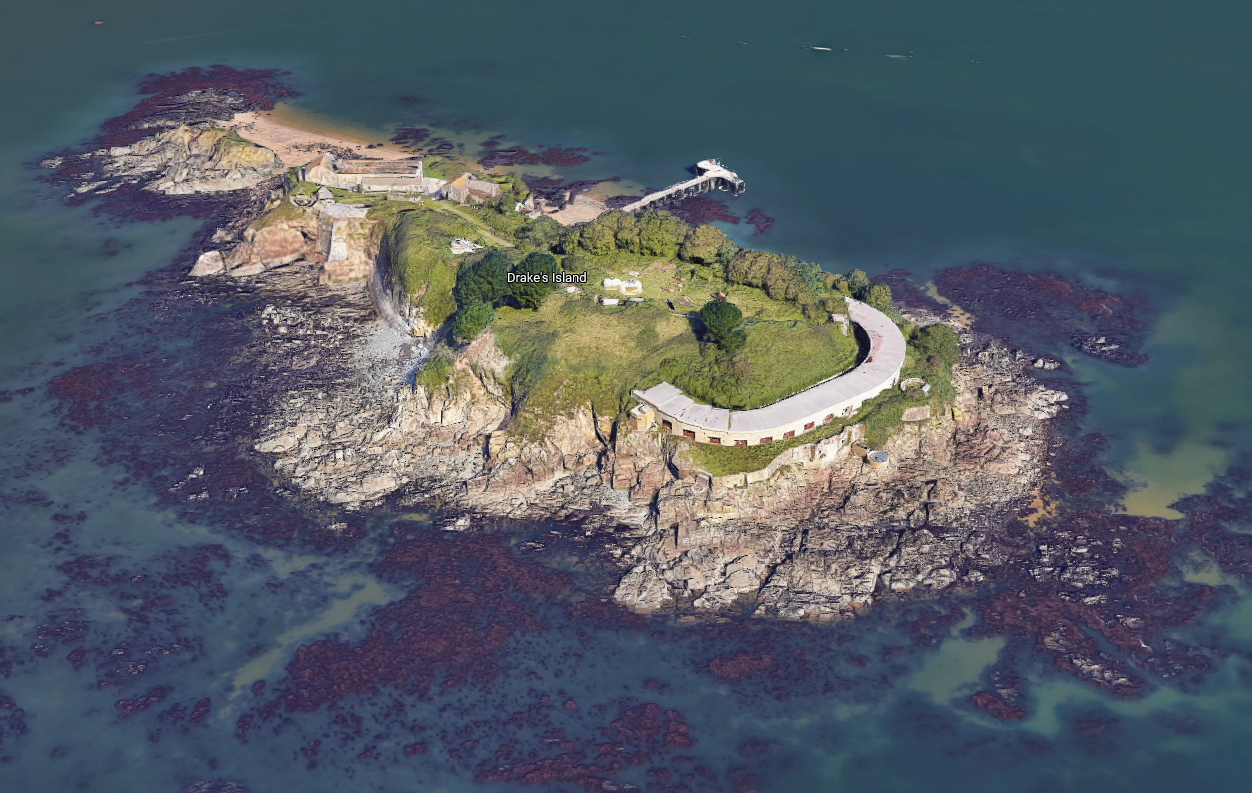
Drake’s Island sits in the throat of Plymouth Sound like a heavily-armed uvula. It has been densely fortified ever since a fortification could do more to passing warships than swear at them, making it the sort of nautilus-shell of accreted defensive architecture (1940s gun mountings on Edwardian emplacements on Victorian casemates on Tudor etc…) that’s irresistible to, well, me. There are a great many Plans in train to redevelop the island as more of a tourist destination (which normally gets me a bit worried, but the explanation of the plans on the day – not to mention the sheer quality of the people involved ­- was reassuring). To support this development the owners are running occasional paid tours – a sort of tourism-bootstrapping procedure, and a chance to see the unrestored parts in their current state of romantic decay. And happily, one was running when I was in Plymouth.

The island as it appears on Google Maps
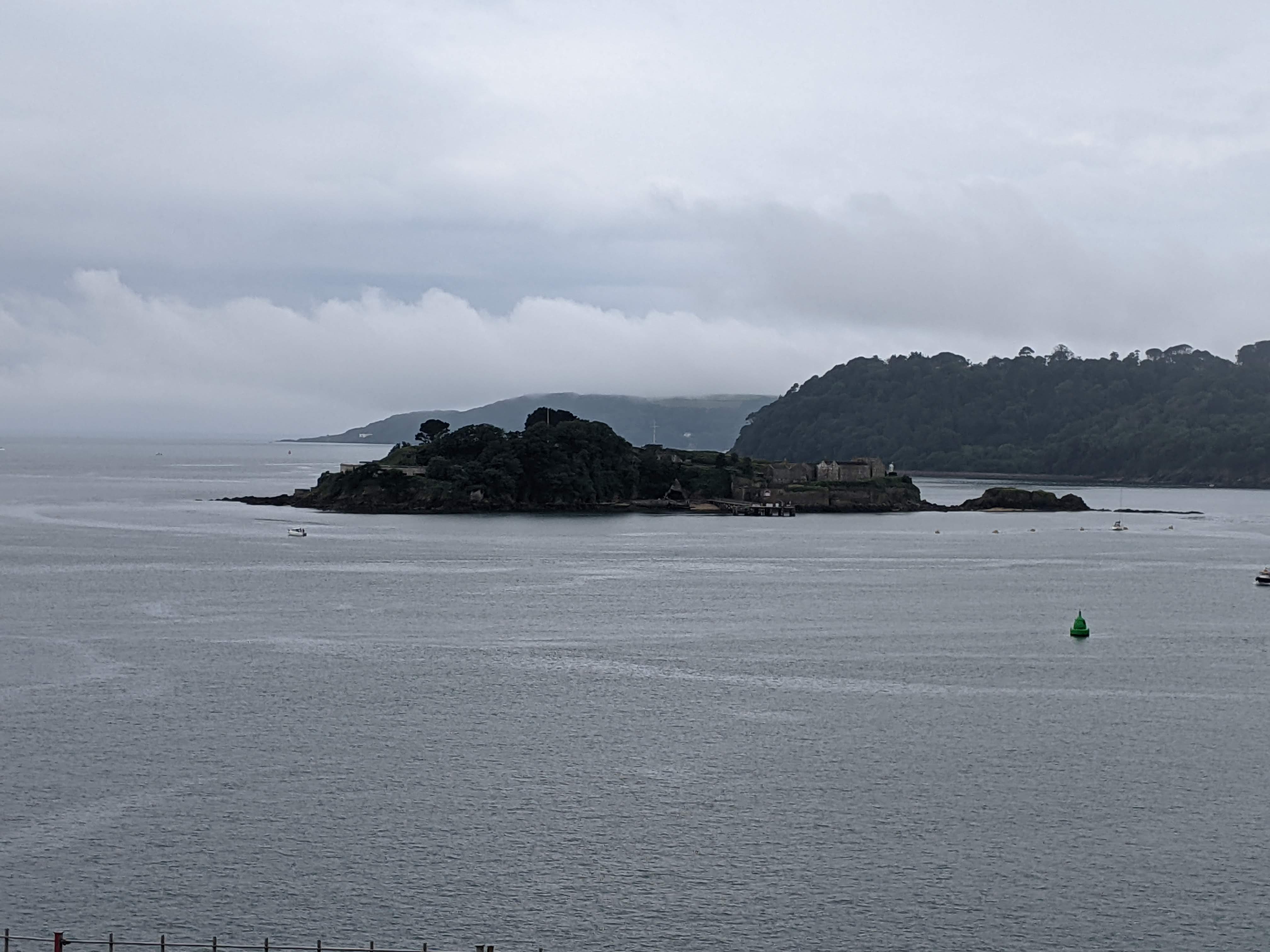
…and as it appeared one brisk August morning.

The ferry “Silver Crest” picked up a mixed group of welly-wearing enthusiasts from Mount Batten Pier and crossed the Sound, mooring at a pier charmingly plastered with DANGER, UNSAFE LANDING STAGE signs. Most of the visible structures – as well as the island’s current name* – are the fault of the Victorians, with a huge casemated Palmerston battery front and centre. However, the island was also refitted as an adventure camp in the 1960s, and the idea of being an unsupervised kid let loose among all this gives a deliciously life-threatening sense of vicarious adventure which really adds to the vibe, as does the visibly collapsing old boathouse.


The buildings – which will house museums and proper heritage exhibits, now that various oligarchs’ ideas of turning the place into a luxury helipad hotel have been denied planning permission – could definitely use some TLC but are probably no less habitable inside than they were in the 1870s, and the warden told enjoyably lurid stories of bored men, supply theft, Victorian colour sergeants and bumboat-women. Various casemates are going to be turned into cocktail bars,** but the best-preserved will be put into order as replicas of the actual gun positions. It was very encouraging to find that the warden not only really knew her stuff but actually cared about how things ended up.

“This was all covered in ivy not long ago – that’s gone now, thanks to Elvis the goat and his three wives…”
“The gun shields are in a lovely state! Are you going to try to replicate the rope mantlets?”
“Yes! We’ve got a ropemaker working on them right now.”
“Are you going to try to mount one of the guns up there?”
“No, those are 12-inch RMLs and the casemates are for 9-inch. But we’ve located one of the original guns in the States and we’re having it brought over once the paperwork’s all sorted out. You wouldn’t believe what a faff it is to import artillery…”

Underground the fort was the standard Palmerston design language of arched brick tunnels, separate chambers for lanterns behind windows, and magazines once filled with copper-hooped barrels; the main difference was a load of small tunnels overhead which, the warden claimed, were in the original spec used by children carrying powder. I’m honestly not  sure whether to believe this*** but they must have been bonkers-fun to clamber about in as a child in the (19)60s and 70s, if you made it out alive.

Back on the mainland, I enjoyed the “Mayflower trail” walking the houses of the old town, culminating in the Elizabethan House Museum. This was an utterly surreal audiovisual experience told from the perspective of the house (doing a creepy crone voice) as it was occupied down the centuries by spendthrift wigmakers, brutally exploited laundry maids, failed merchants etc etc, setting out a fun saga of bankruptcy, violence, misery, and going to Australia (voluntarily or otherwise) with a mix of maternal indulgence and witchy cackles. It was Something Else, and would have been more enjoyable if the tour group weren’t uncomfortably large and if I hadn’t bumped my head fairly hard on a doorframe built for malnourished sixteenth-century shrimp-people. I headed back to the hostel to rest, enjoying the Citadel and various war memorials and grand old bits of architecture.****

The next morning, I took a bus west to Saltash (and – just – Cornwall), the road bridge across the Tamar giving a spectacular view of Brunel’s huge Royal Albert rail bridge, which looks both very Victorian and strikingly modern. There are little parks among the bridge’s piers, and Saltash felt like it would be a charming day out if the pandemic hadn’t shut down everything, including the local museum and the Elizabethan cottage I was looking for. Down by the waterfront was a little talking statue of Ann Glanville, and the Union Inn, painted in a giant Union flag (no guesses where they stand on Cornish independence!) and adorned with the kind of ludicrously, aggressively over-the-top murals that (this side of the Irish Sea, anyway) go beyond nationalism into comedy and almost approach art.

I went back to the station and mounted up on a hilariously truncated Intercity 125 trainset doing local-rail duties. It was time to head east.


Out West 2021 

Out to Penryn – St Mawes and Falmouth – St Austell and PlymouthThe Forts of Staddon HeightsDrake’s Island and SaltashTotnes and Exeter


* The island has variously been named after St Michael and St Nicholas, with Drake (who was at least the island’s governor) only really getting namesake credit in the modern age of romantic nationalism.
** Hopefully with drinks called things like ‘Grapeshot’, ‘The Palliser’ and ‘HMS Devastation’. If you’re reading this and thinking of running a coastal artillery themed cocktail bar, talk to me! I can do this all day.
*** Not that I’d put anything past the Victorians in child labour terms, but apart from anything else this fort had the kind of budget to hire adults to haul powder charges, and the kind of guns that needed them to.
**** The Boer War memorial is particularly good – it’s nice that the government***** decided to do something to commemorate the poor bloody infantry for that time we sent 400,000 of them to fight 25,000 farmers and screwed it up so badly we only won by putting the entire population in concentration camps. It’s not like the squaddies saw any of the gold and gems we fought the war for.
***** JOKES it was actually funded by a diamond merchant, in the name of a prince.

“only that they cannot come by sea”

Of all Britain’s historical strata of castle-ish things, I feel the mid-19th-century Palmerston forts are the least known and least appreciated. They and their strange design language – near-invisible buried forts with immense defensive ditches, colonnades of steel-shuttered, granite-faced casemates like the broadside of a stone frigate – belong to that period of frenetic mid-late 19th century military development where bonkers ideas like guns that weighed as much as ships, hand-cranked combat submarines, pneumatic cannon hurling dynamite charges, ship-killing bombs on long sticks and the naval ram all appeared on paper to be plausible war-winners, were built, achieved nothing, and vanished into obscurity.* Like the rest of that list, the Palmerston forts were obsolete almost as soon as they were built** (which is what makes them such fun!) Unlike the rest, getting rid of them once they’d proven useless was so much hassle they’re largely still there. And Plymouth had twenty-four of them built in the 1860s.

The ferry dropped me at the old Royal Naval Air Station Mount Batten (named, it turns out, for an interesting 17th century naval figure – so my Lord Louis joke was rubbish). A noticeboard showed various exciting marine experiments with fast pinnaces, early flying boats, and TE Lawrence on a motorbike, next to a stone marker with a slightly cartoonish Sunderland. The Mount itself boasted a closed proto-Martello-tower, a round stub of stone from the 1650s.***  Nearby, a place called the Galley Kitchen, behind all its exciting signs, was actually closed. Up on the Heights, I could make out hints of forts and a strange, huge, angular silhouette on the horizon.

Along the coast path, wide, windswept fields were scattered with astonishing numbers of benches, their commemorative plaques giving the feeling of a curious latter-day graveyard (surely there are never enough punters to actually use them all?) The choice of high or low path was decided by signs warning the low path had collapsed into the sea. The high road climbed through shoulder-height gorse over an infinity of stout black plastic planks made from recycled bin bags; the trees closed in on both sides, and I only had occasional glimpses of the bay and the breakwater (with its own, chequerboard-painted gun fort perched on the submerged ridge that protects Plymouth Sound) until I was almost on top of my first destination, Fort Bovisand.

Bovisand was a defensive wedding-cake, a single deck of giant rifled muzzle-loaders daring any warship to get within range enhanced by several generations of newer,  fancier guns on the hillside above it. Like a lot of these places, it’s got an immense long list of failed bankruptcy-inducing development attempts to redevelop it into something.**** Unfortunately (for me, in the short run) the current one appears to actually be liquid and functional, and the front door to the building site is very well protected, so my usual intrepid trespassing urban exploring wasn’t an option, and I had to settle with the view from the heights and the overgrown (but still unbelievably good) defensive ditch.

Undismayed, I set off back up the Staddon Heights, the immense ditch to my left (a presence felt but not seen, a deepness beyond a wall of foliage), to the golf course. A seashell path took me to the brambly outline of Brownhill Battery, which while accessible doesn’t boast a great deal to look at (summer is a bad time to see these places): the afterimages of old generator houses in the concrete, and a Victorian stone building built into the bastion with a rope leading down into mysterious depths. I must be getting old: ten years ago, when faced with a risky descent in a so-overgrown-as-to-be-invisible corner of an abandoned Victorian gun battery, itself so remote as to only even be known by the more incompetent users of the local golf course, I’d have dived right in. I took photos, instead; there was nothing there but rubbish.

The golf course itself has the same upsettingly architect’s-model manicured feeling  as golf courses everywhere, but there are several good curios up there – a concreted-up gun battery visible behind a gate, a pattern on the ground which was once the footings of a barrage balloon. Best, and most visible, is the enormous stone backstop to a (now thoroughly golfed over) high velocity rifle range, looming over everything. It’s an astoundingly large and weird looking structure, and I do wonder what passing ships made of it (probably “oh, that’s nice, I do so dislike being shot” once its function was explained.) A white-bottomed (roe?) deer looked up out of the undergrowth and bounced away.

Near the entrance of the golf course is the imposing front of the still-MoD-owned Fort Staddon (which was finished but never armed). I took pictures, eavesdropped on a flaming row between some locals at the club building, and headed down the old military road in the lilac gloom of dusk, passed by swishing cars and a single high-speed, extremely radical gentleman on a skateboard to the final fort. Fort Stamford is a large, fully-formed polygonal fort now being used as a caravan park, its walls filled with slightly modernised windows and its interior crowded with those quote-unquote “caravans” that are just mobile enough to not pay council tax. Bunnies play on well-mown turf slopes and little cars park in bays once built for 9″ rifled muzzle-loaders. It’s absolutely charming, and the sort of place I’d love to retire to if it wasn’t deliberately built a safe distance away from anything worth firing a cannon at.

The yellow harbour ferry I’d come across on was, ominously, moored halfway across the sound, and I sat at the Mount Batten jetty listening to the dismayed shrieking of its caged pontoons rising and falling with the wave, until happily its smaller but perfectly functional little sister showed up. I walked back along Madeira Road and across the Hoe, the massive angular shadow of the Citadel against the sky on my right hand and a twinkling band of buoys across the Sound on my left, and flopped at the guesthouse, legitimately shocked at how many blisters I didn’t have.


Out West 2021 

Out to Penryn – St Mawes and Falmouth – St Austell and PlymouthThe Forts of Staddon HeightsDrake’s Island and Saltash Totnes and Exeter

* I don’t mean to be too dismissive here – at the time none of these would have been notably more or less bonkers than, say, ships made of metal, powered vehicles, revolving gun turrets, self-propelled torpedoes or sending messages down a wire using electricity, all of which went on to change the world.
** In this case strategically obsolete, rather than technologically; the underground, artillery-armed descendants of polygonal forts became less competitive but still worthwhile until the Second World War, which opened with a creative use of gliders and shaped charges by the Nazis against Eben-Emael, and ended with atomic bombs. But the French threat the Palmerstons were built against was comprehensively ended in 1870 by the Prussians annihilating the Second French Empire.
*** Actual Martello towers, as any fule kno, date from the Revolutionary/Napoleonic Wars realisation that even the Royal Navy wasn’t big enough to always have a ship on station combined with a Corsican escapade in 1794 where the 16th century Genoese “Torre di Mortella” proved frighteningly resistant to cannonballs. Mount Batten Tower is younger than Mortella but older than  its misspelled namesakes.
**** When the magnificent Ian V. Hogg was writing Coast Defences of England and Wales 1856-1956,  the fort was still under military use as a diving school and was in his opinion the best preserved Palmerston fort left standing. I do hope they’re looking after it.

Out West 2021 

Out to Penryn – St Mawes and Falmouth – St Austell and PlymouthThe Forts of Staddon Heights – Drake’s Island and Saltash – Totnes and Exeter