Drake’s Island sits in the throat of Plymouth Sound like a heavily-armed uvula. It has been densely fortified ever since a fortification could do more to passing warships than swear at them, making it the sort of nautilus-shell of accreted defensive architecture (1940s gun mountings on Edwardian emplacements on Victorian casemates on Tudor etc…) that’s irresistible to, well, me. There are a great many Plans in train to redevelop the island as more of a tourist destination (which normally gets me a bit worried, but the explanation of the plans on the day – not to mention the sheer quality of the people involved - was reassuring). To support this development the owners are running occasional paid tours – a sort of tourism-bootstrapping procedure, and a chance to see the unrestored parts in their current state of romantic decay. And happily, one was running when I was in Plymouth.
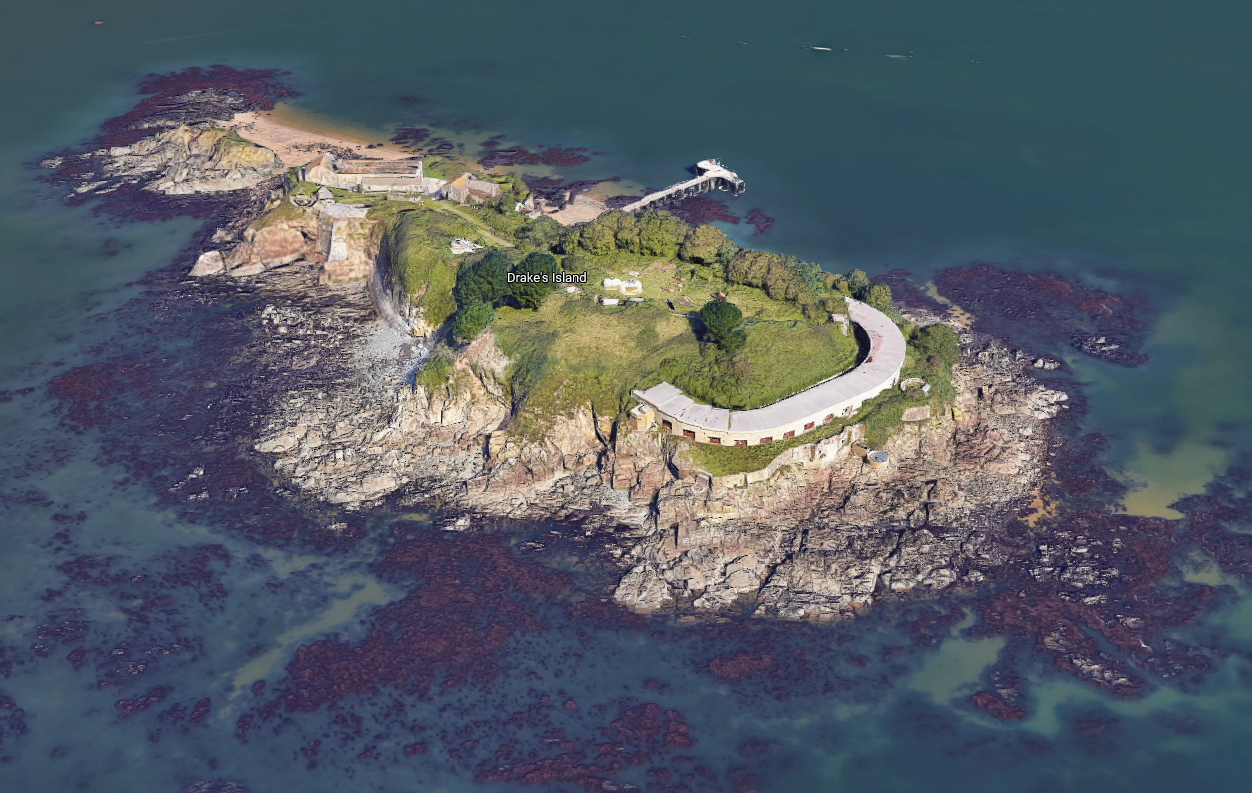
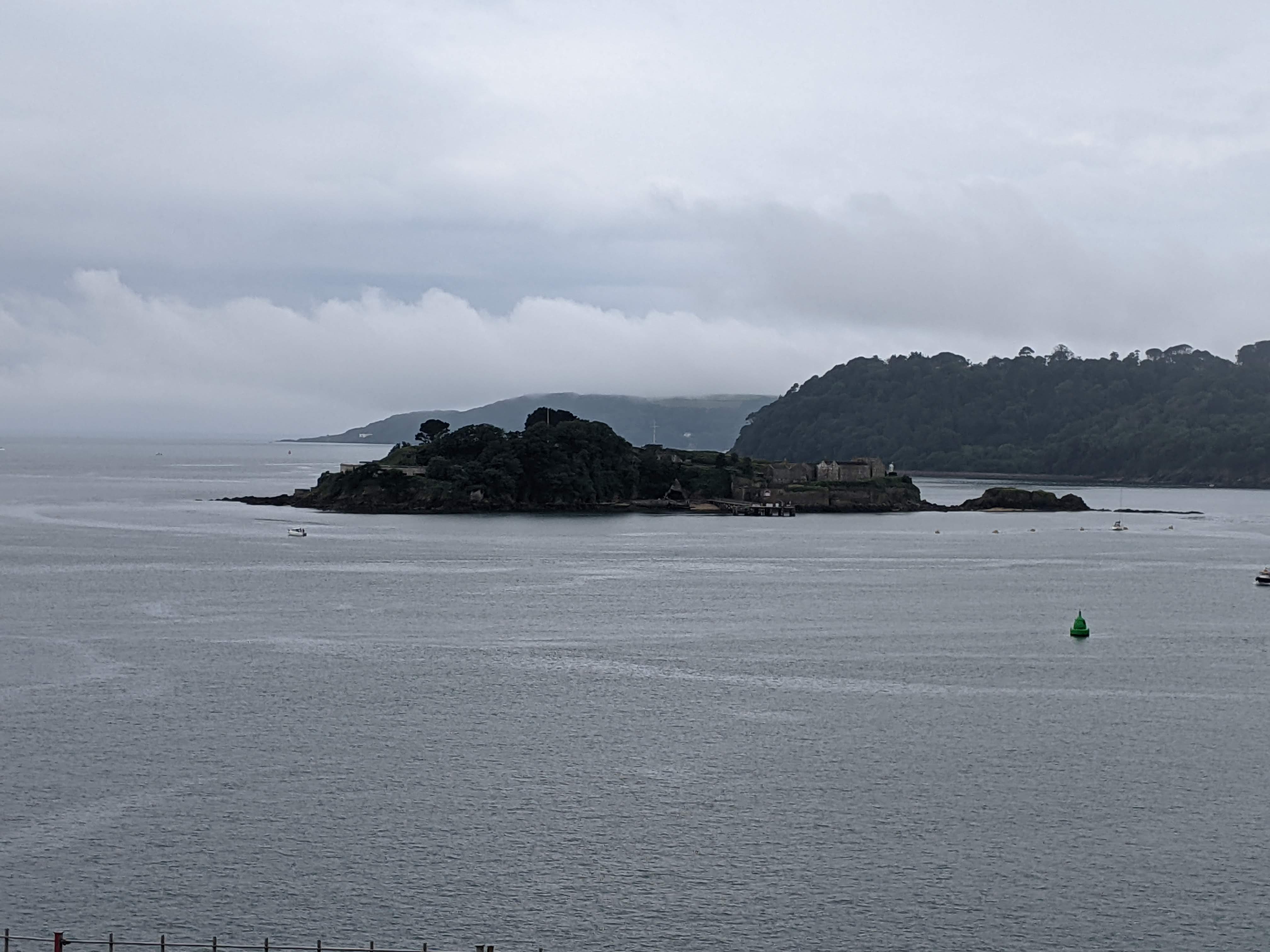
The ferry “Silver Crest” picked up a mixed group of welly-wearing enthusiasts from Mount Batten Pier and crossed the Sound, mooring at a pier charmingly plastered with DANGER, UNSAFE LANDING STAGE signs. Most of the visible structures – as well as the island’s current name* – are the fault of the Victorians, with a huge casemated Palmerston battery front and centre. However, the island was also refitted as an adventure camp in the 1960s, and the idea of being an unsupervised kid let loose among all this gives a deliciously life-threatening sense of vicarious adventure which really adds to the vibe, as does the visibly collapsing old boathouse.


The buildings – which will house museums and proper heritage exhibits, now that various oligarchs’ ideas of turning the place into a luxury helipad hotel have been denied planning permission – could definitely use some TLC but are probably no less habitable inside than they were in the 1870s, and the warden told enjoyably lurid stories of bored men, supply theft, Victorian colour sergeants and bumboat-women. Various casemates are going to be turned into cocktail bars,** but the best-preserved will be put into order as replicas of the actual gun positions. It was very encouraging to find that the warden not only really knew her stuff but actually cared about how things ended up.


“This was all covered in ivy not long ago – that’s gone now, thanks to Elvis the goat and his three wives…”
“The gun shields are in a lovely state! Are you going to try to replicate the rope mantlets?”
“Yes! We’ve got a ropemaker working on them right now.”
“Are you going to try to mount one of the guns up there?”
“No, those are 12-inch RMLs and the casemates are for 9-inch. But we’ve located one of the original guns in the States and we’re having it brought over once the paperwork’s all sorted out. You wouldn’t believe what a faff it is to import artillery…”


Underground the fort was the standard Palmerston design language of arched brick tunnels, separate chambers for lanterns behind windows, and magazines once filled with copper-hooped barrels; the main difference was a load of small tunnels overhead which, the warden claimed, were in the original spec used by children carrying powder. I’m honestly not sure whether to believe this*** but they must have been bonkers-fun to clamber about in as a child in the (19)60s and 70s, if you made it out alive.


Back on the mainland, I enjoyed the “Mayflower trail” walking the houses of the old town, culminating in the Elizabethan House Museum. This was an utterly surreal audiovisual experience told from the perspective of the house (doing a creepy crone voice) as it was occupied down the centuries by spendthrift wigmakers, brutally exploited laundry maids, failed merchants etc etc, setting out a fun saga of bankruptcy, violence, misery, and going to Australia (voluntarily or otherwise) with a mix of maternal indulgence and witchy cackles. It was Something Else, and would have been more enjoyable if the tour group weren’t uncomfortably large and if I hadn’t bumped my head fairly hard on a doorframe built for malnourished sixteenth-century shrimp-people. I headed back to the hostel to rest, enjoying the Citadel and various war memorials and grand old bits of architecture.****


The next morning, I took a bus west to Saltash (and – just – Cornwall), the road bridge across the Tamar giving a spectacular view of Brunel’s huge Royal Albert rail bridge, which looks both very Victorian and strikingly modern. There are little parks among the bridge’s piers, and Saltash felt like it would be a charming day out if the pandemic hadn’t shut down everything, including the local museum and the Elizabethan cottage I was looking for. Down by the waterfront was a little talking statue of Ann Glanville, and the Union Inn, painted in a giant Union flag (no guesses where they stand on Cornish independence!) and adorned with the kind of ludicrously, aggressively over-the-top murals that (this side of the Irish Sea, anyway) go beyond nationalism into comedy and almost approach art.


I went back to the station and mounted up on a hilariously truncated Intercity 125 trainset doing local-rail duties. It was time to head east.
Out to Penryn – St Mawes and Falmouth – St Austell and Plymouth – The Forts of Staddon Heights – Drake’s Island and Saltash – Totnes and Exeter
* The island has variously been named after St Michael and St Nicholas, with Drake (who was at least the island’s governor) only really getting namesake credit in the modern age of romantic nationalism.
** Hopefully with drinks called things like ‘Grapeshot’, ‘The Palliser’ and ‘HMS Devastation’. If you’re reading this and thinking of running a coastal artillery themed cocktail bar, talk to me! I can do this all day.
*** Not that I’d put anything past the Victorians in child labour terms, but apart from anything else this fort had the kind of budget to hire adults to haul powder charges, and the kind of guns that needed them to.
**** The Boer War memorial is particularly good – it’s nice that the government***** decided to do something to commemorate the poor bloody infantry for that time we sent 400,000 of them to fight 25,000 farmers and screwed it up so badly we only won by putting the entire population in concentration camps. It’s not like the squaddies saw any of the gold and gems we fought the war for.
***** JOKES it was actually funded by a diamond merchant, in the name of a prince.
 underneath the open sky