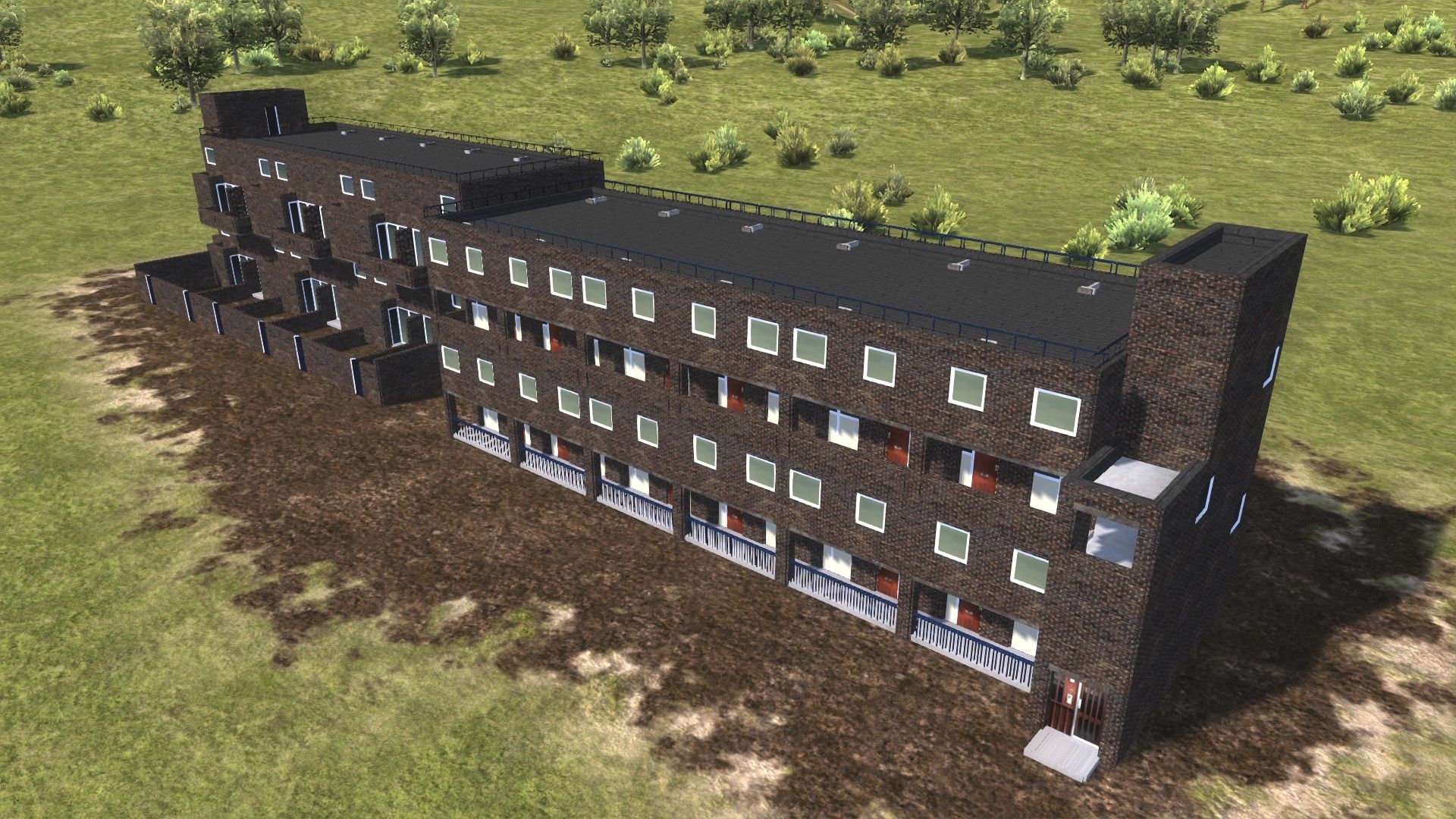
After a previous creative endeavour I’d been planning for this year (a webcomic!) fell through, I’ve picked up the ol’ 3d modelling again – but this time, rather than Tinkercad it’s Blender, rather than Tudor castles it’s late 20th century London housing blocks, and rather than making them for 3d printing (although… I could…) it’s actual mods for Workers & Resources: Soviet Republic.*
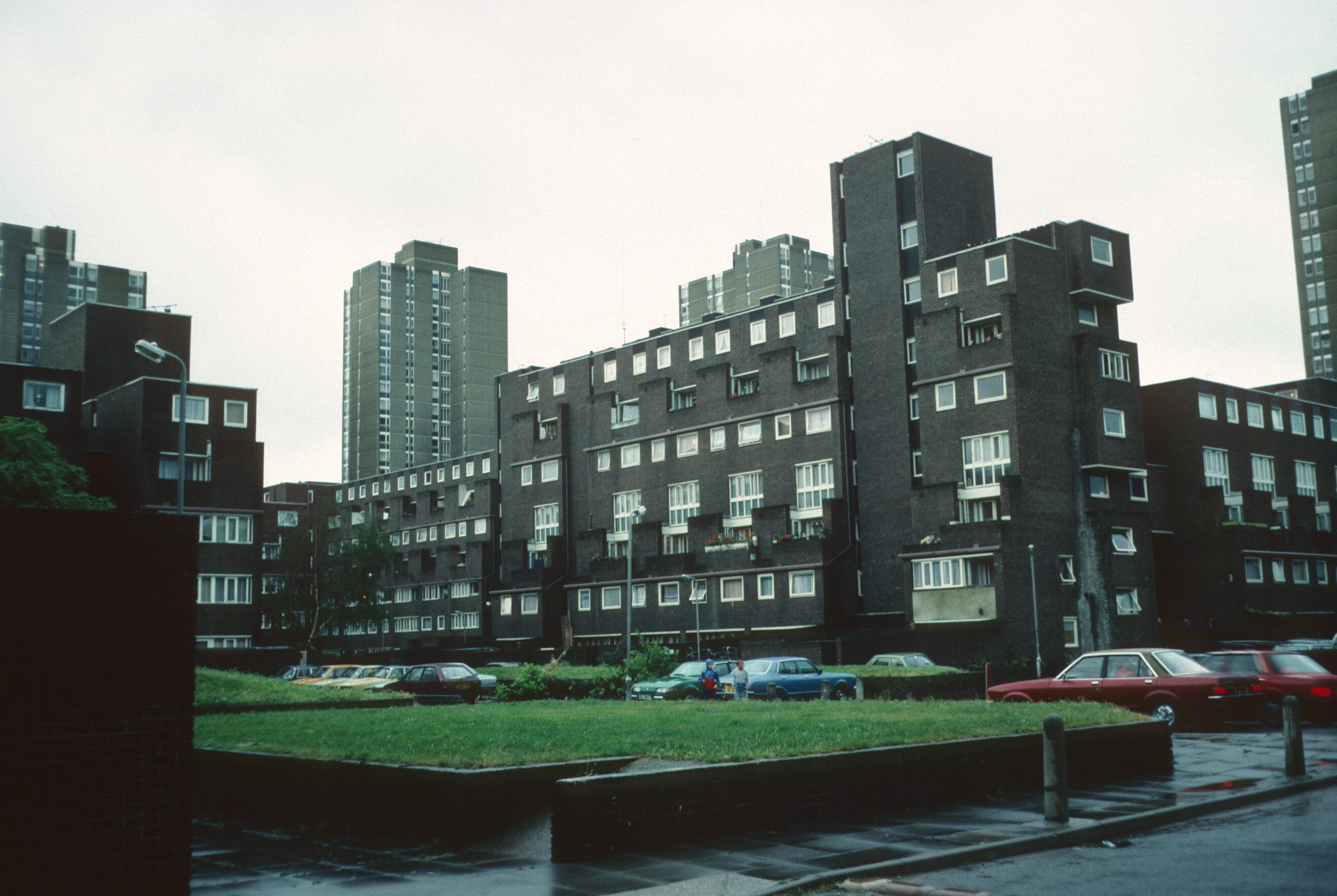
WRSR is set in the 1960s-70s and playing the game involves building many residential blocks (from Resources, to house your Workers). The Ethelred Estate in south London is from exactly the right period and felt like an ideal place to start with my project: it’s got an interesting variety of structures on the “brown residential ziggurat” theme, a striking palette of chocolate-brown bricks, white window frames and – a lovely unifying thing throughout the whole estate – the same royal-blue on all the doors, fences, bollards.**
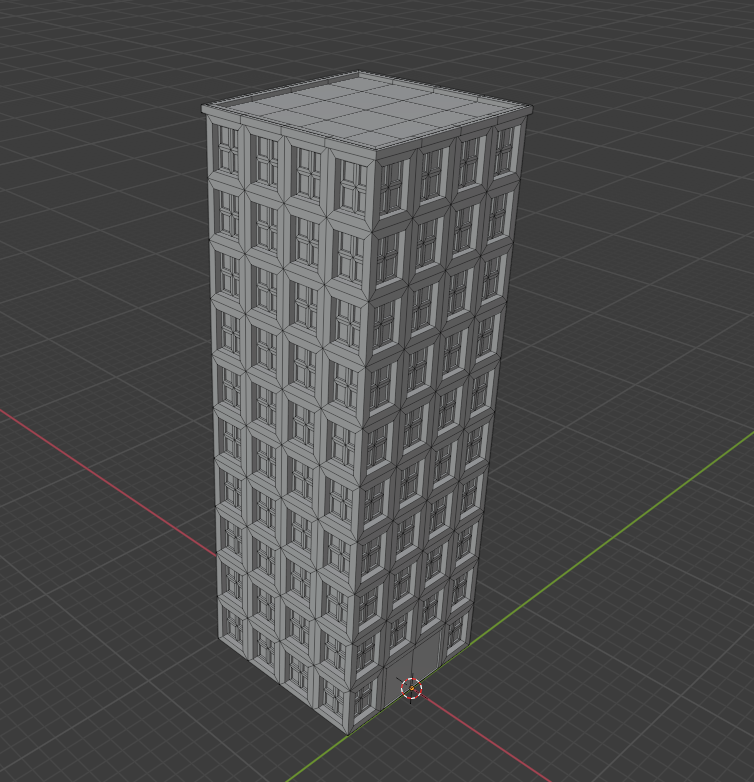
TinkerCAD, my only previous modelling experience, is very simple and designed to be easy to pick up. Blender, by contrast, is a professional piece of software, monstrously capable and complicated, with a bewildering array of buttons and hotkeys. Happily, a youtuber going by OffTheRailsGaming has made a tutorial series designed specifically for WRSR modding, which was very helpful in getting started. The approach I’ve taken (similar, it seems, to the actual architects!) – is creating a variety of 2.5×2.5m segments which can then be assembled together.
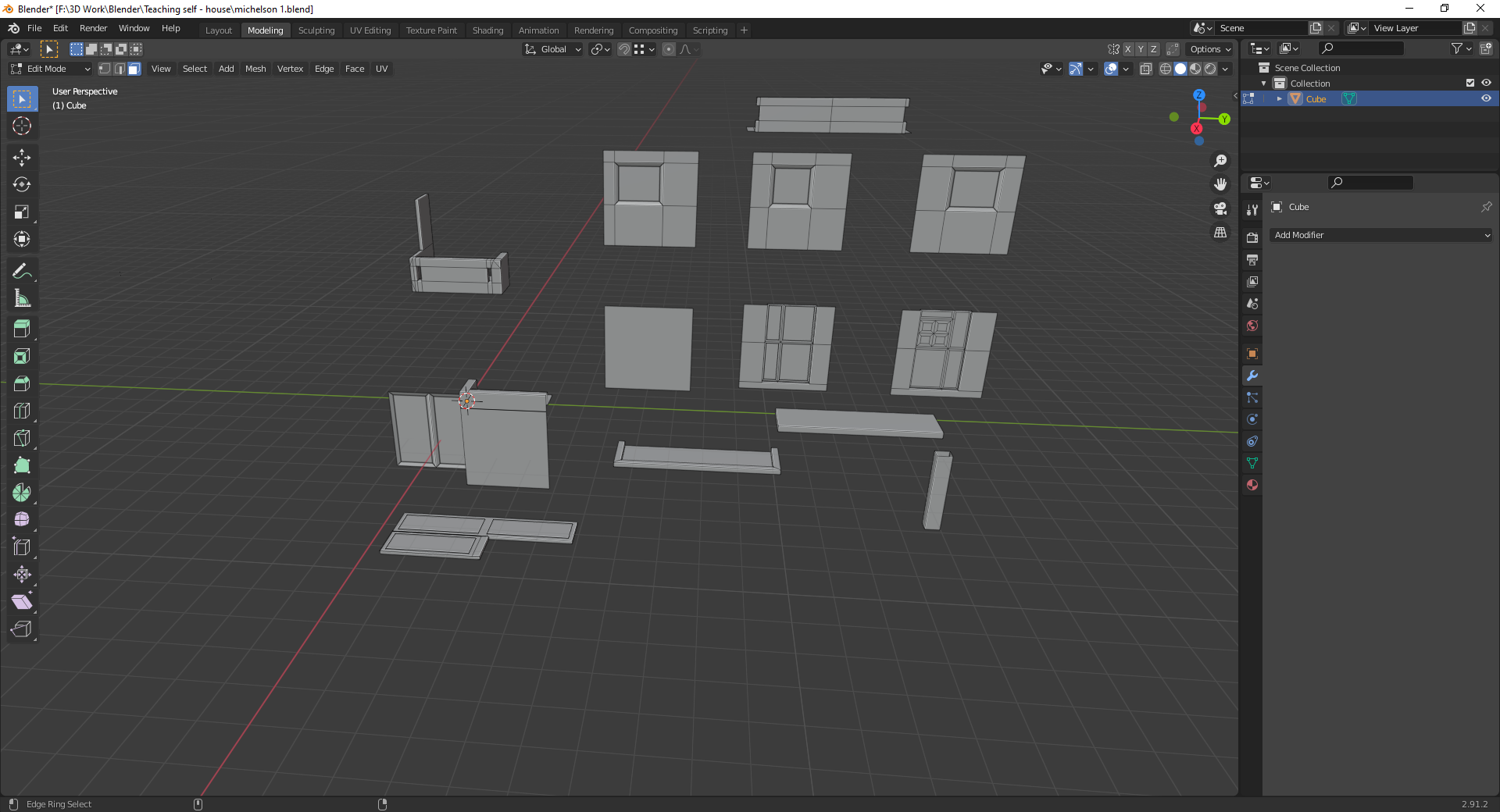
That, with placeholder textures based on photos I snapped, combined with the simple but desperately tiresome process of UV mapping to get me to this.
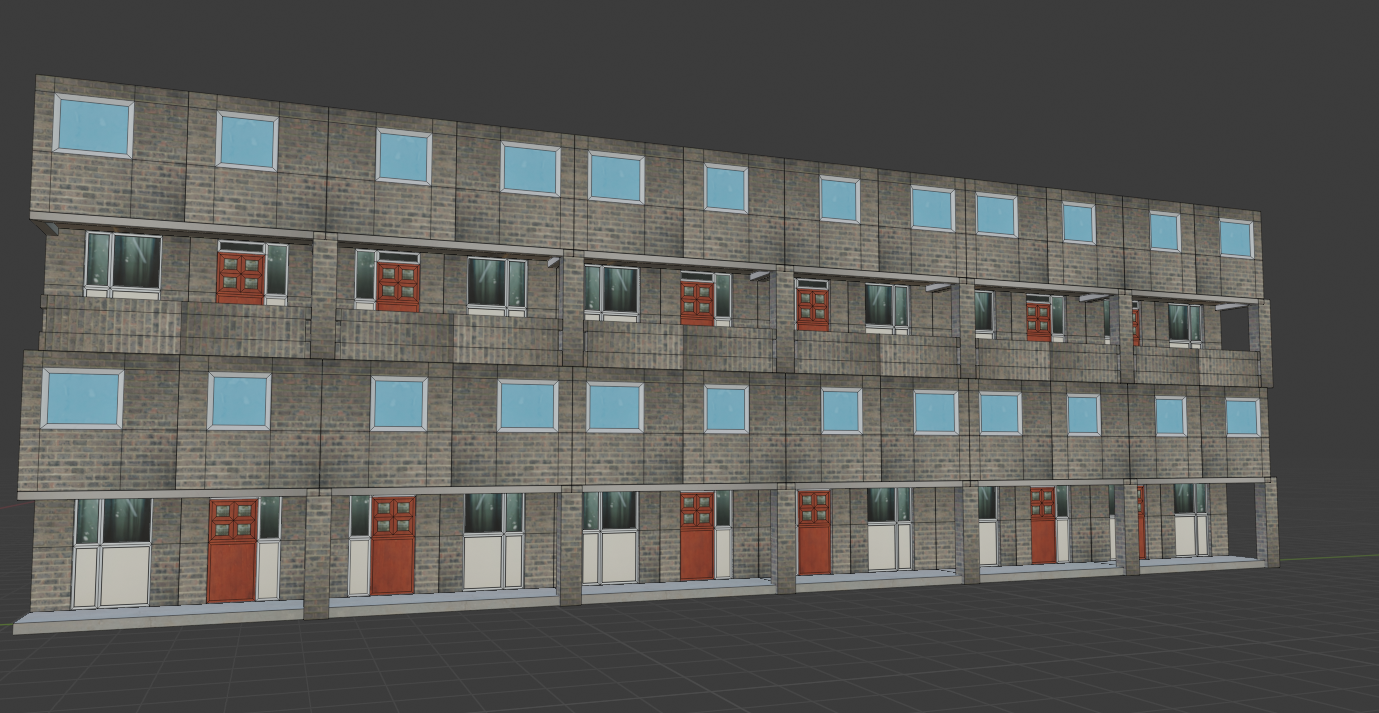
Having mostly modelled the building, it was time for MORE UV MAPPING with some better textures, based mostly on actual photographs of the estate I took. There’s a neat, albeit clunky, tool called Shoebox which is great for turning photograph elements into textures, and someone else on the WRSR modders’ Discord server had been going through the exact same journey as I had so I could copy their own experiences.
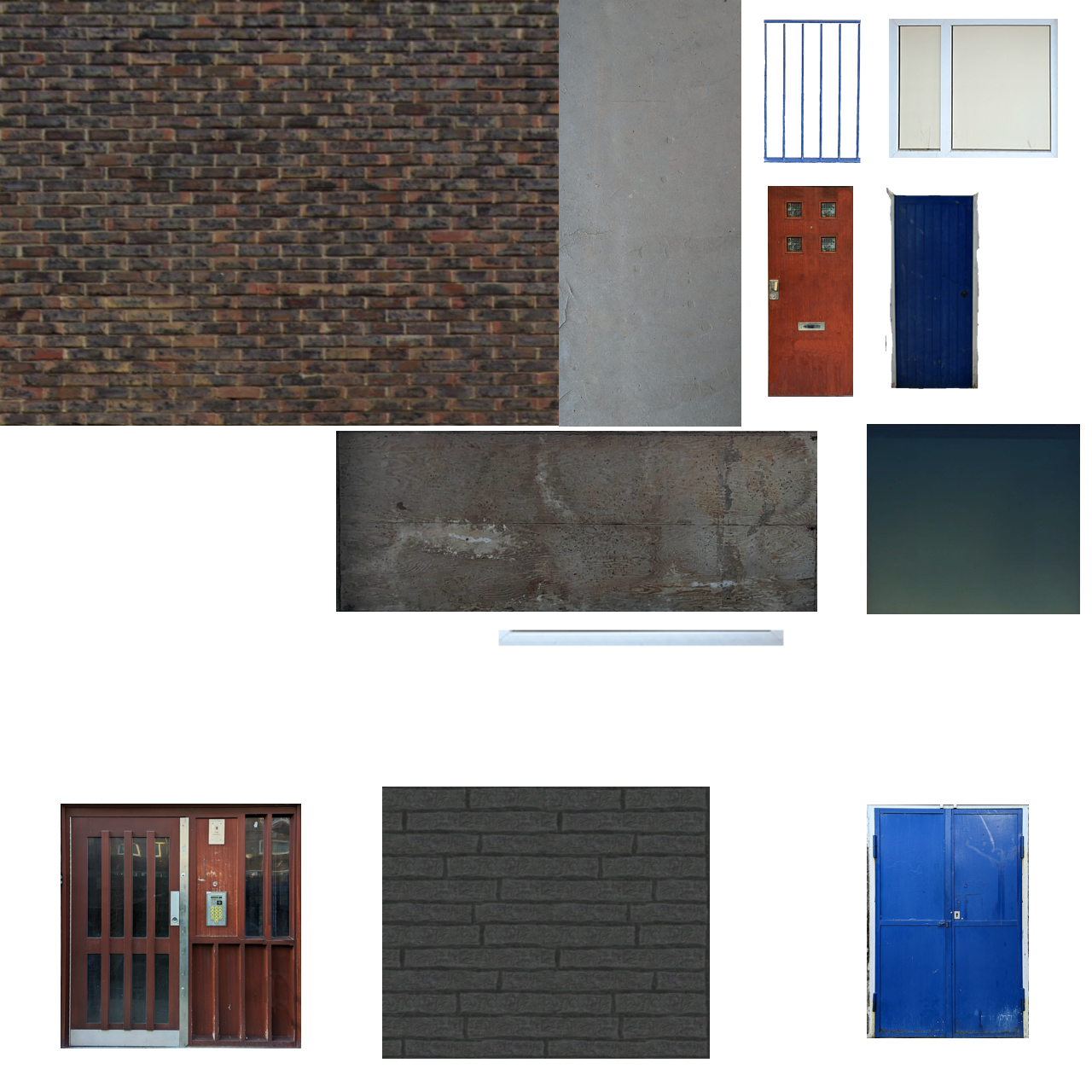
Then, actually getting it into the game! This is a whole, tedious step-by-step process of loading files in one format into specialised bits of software and extruding them as others. I benefited from another tutorial by Chris Brammer, a list of documentation by LovelyPL on the Steam workshop and a lot of fiddling around with scripting – the (very) basic programming to make sure the game has the information about which files your building is in, how much it should cost to build, where paths come from it, etc. The game will automatically generate costs, but you can set them manually; I changed mine to cost more bricks and concrete but less steel than average for a block of flats (partly because they’re low rises, partly to encourage people to use them – steel is a pricey resource and takes a lot of investment to make yourself.) At last, into the game!

This immediately showed a bunch of other problems. It turns out I needed to create things called mipmaps (which paint.net does very handily) to make the textures look less horrible when zoomed out, and to adjust the script files to make the building less overlit (I also changed the textures to darken the greys and whites.) Most complicated was scaling – I built these at actual size, but WRSR’s internal scaling is a bit odd and my blocks looked too small next to other buildings. I had a long discussion which involved horrifying several modders from ex-Soviet countries with how tiny UK housing stock actually is (the segments here are 2.5m square; in 1960s communist Poland the standard was 2.7m, later increased because that was “too claustrophobic”). I settled on resizing my creations to 110% so they didn’t look too outlandish.

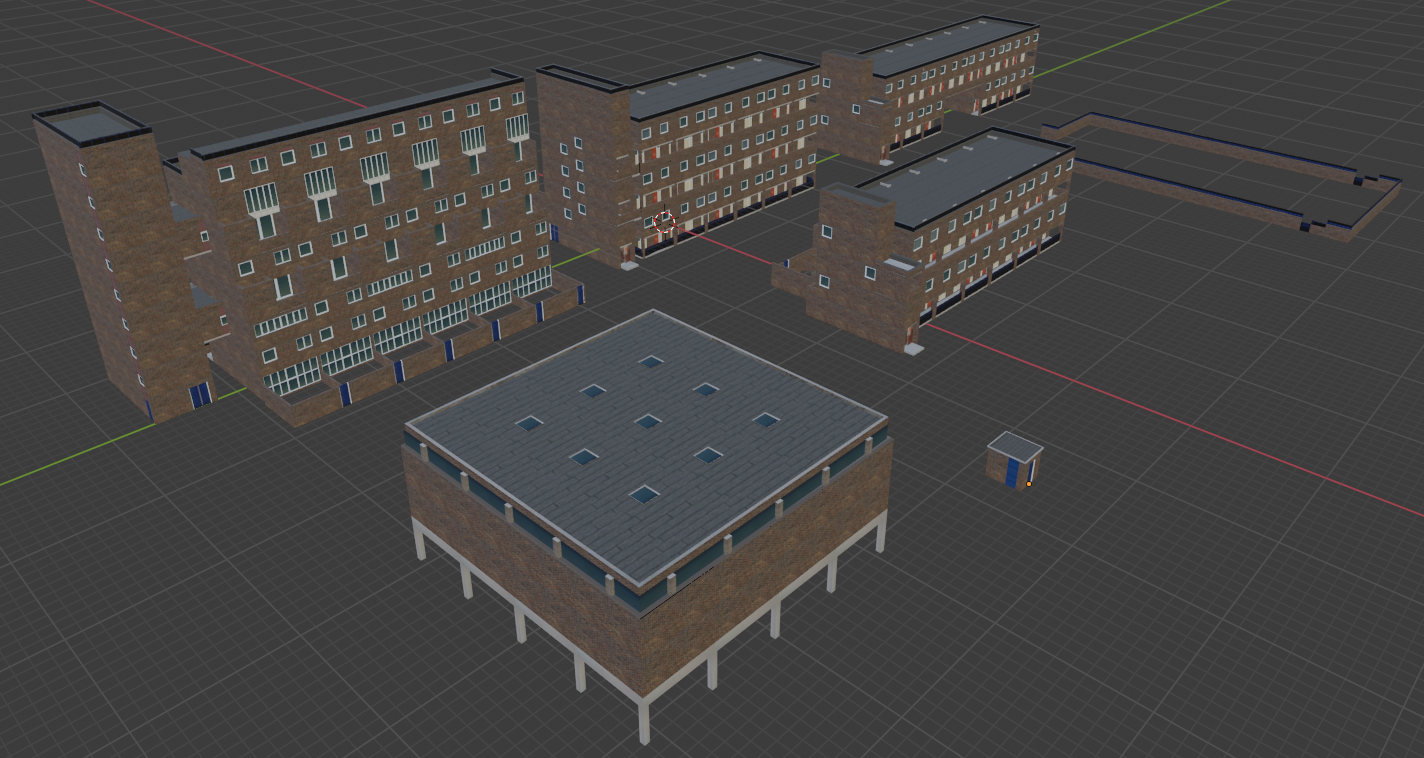
Finally, I had to upload it to the Steam workshop, so here it is! Almost 400 people have downloaded it at time of writing, which is lovely. To follow up, I’ve made a few more – some of the different Ethelred buildings (which turn out to be really quite varied when you look closely), a gym based on the nearby Vauxwall Climbing Centre, a car park and power substation. There are many more things I can and probably will end up doing when the game comes fully back online – a shopping centre based on the old one on Lambeth Walk,*** monuments based on the Ethelred TMO gates and the flowerbeds. It’s been a fun project both in terms of learning more skills and in encouraging me to really look closely at my neighbourhood. But now, alas, I keep seeing interesting 70s tower blocks in London and thinking “ooh, YOU’D do well in WRSR…”
* At the exact time I started to get into this, WRSR has suffered a horrible attack from a deranged former fan using frivolous lawsuits to… well, I don’t know exactly what he intends to achieve at this point except to hurt a small games studio. So the game’s Steam page and its site are currently down due to frivolous DMCA takedown requests. I have every confidence they’ll win in the end but I’m going to hold off adding new mods until it’s back up.
** Although from older photos it looks like this – much like Tower Bridge – was originally chocolate brown. Much like Tower Bridge, the blue is better.
*** The earlier Ethelred Estate included developments on both sides of Lambeth Walk, and a fully pedestrianised shopping precinct, like a sort of downmarket Brunswick Centre. Half of it has now been torn down and the road reopened – you can see the same view of the “then” here and the “now” here.
 underneath the open sky
