I’ve taught myself something new: here is a very tiny Deal Castle, made entirely by me!
This is the very first print, with some design flaws that I’ve now resolved. But more on that later.
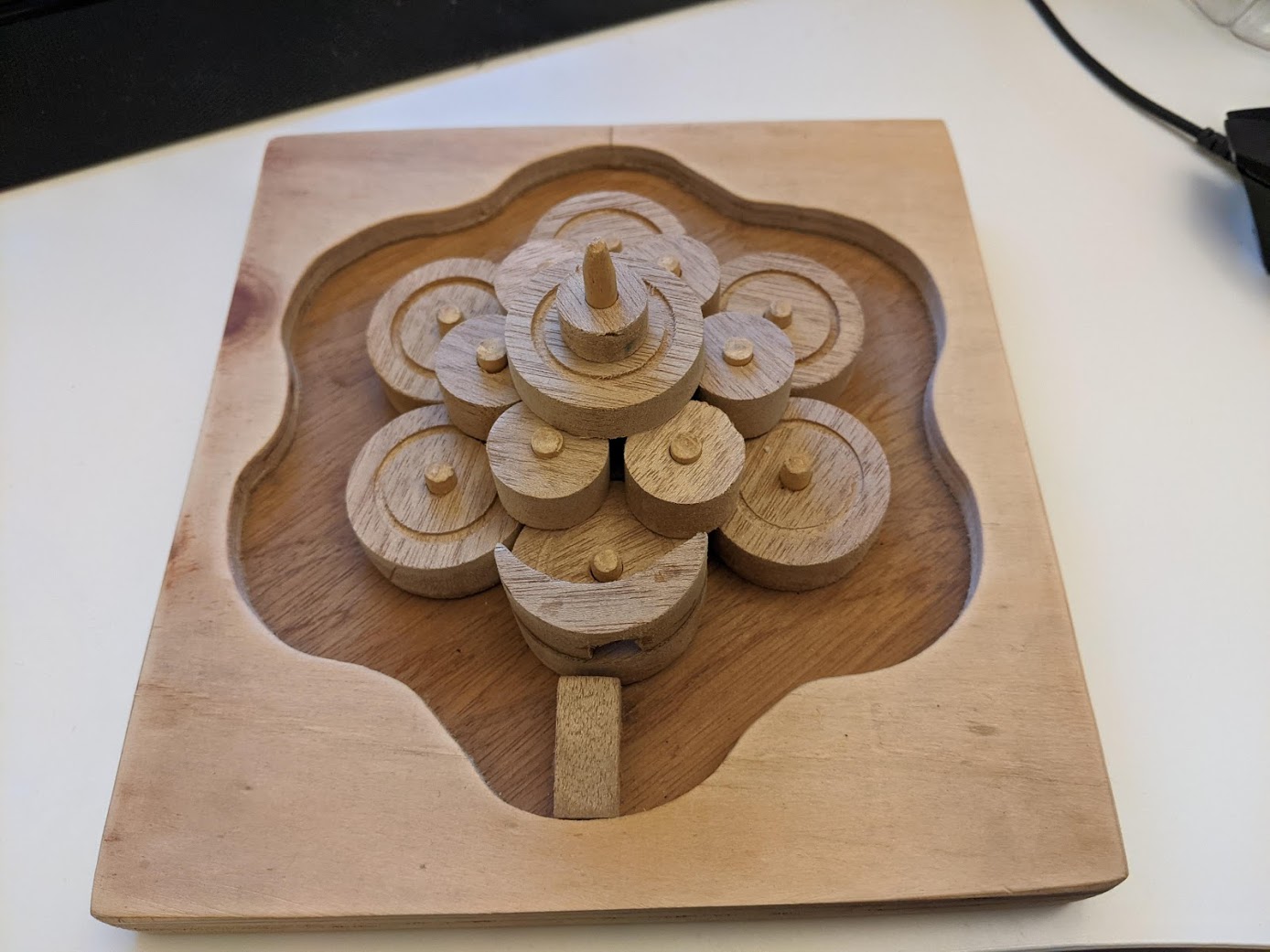
Back in the Before-Times, a beloved uncle who lives in Walmer gave me this handmade wooden model of Deal Castle as a wedding gift, which is really how this all started.
I love the Device Forts – they’re a bit before my usual historical period, but a striking, wonderful missing link between classic medieval castles and proper trace italienne gunpowder forts. I’ve always been quite keen on making tiny models, but unfortunately dyspraxia makes me far too clumsy for the sort of fine detail work So, inspired by various goings-on, including a friend on a Discord server having fun with his new 3d printer, I wondered if I could instead try my hand at crafting 3d models on a computer and leave the difficult “producing this in real life” part to machines. This coincided with me hearing about a technique called photogrammetry.
Photogrammetry in its essence is “using a number of pictures of something to work out how it looks in its entirety”, but digital photogrammetry is a recent and very interesting technique of feeding a lot of separate digital photos of something into software which assembles a 3d model of it (complete with textures.) Rather than a LIDAR-based scan, the physical shape of the object is determined just from the photos. It’s been used for various things, including making scenery in computer games, for archaeology, for budget production of 3d models in the heritage sector, and just for fun – I really recommend David Fletcher’s twitter for some examples of what can be done.
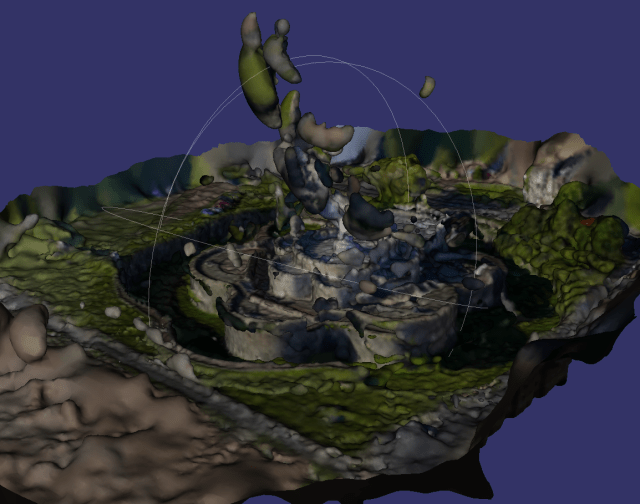
My very first attempt!
So I started (having had a good long google session to determine that this wouldn’t be terribly breaching the relevant netiquette) with a lovely drone video of Deal Castle on Youtube by Oszibusz. (Actually, I had to download the video, then run it through another piece of software to cut it unto hundreds of individual photos, but that’s by the by.) Putting this through Regard3d, a free and reasonably sophisticated piece of, didn’t take too long and immediately gave an encouraging if rather mushy, lumpy result.
Unfortunately, after spending about a week’s worth of evenings trying to do better, I came to some discouraging conclusions. The software was struggling a lot with my raw material. Having downloaded an MP4 from Youtube then sliced it up in VLC all the relevant metadata (focal length, especially) which would help the camera was lost. I spent a fruitless evening trying to make some software packages apply focal length metadata to all the files, rather than needing me to go through several hundred jpgs by hand, but gave up. A second problem was that the videos I was working from weren’t high enough resolution to pick out details like the crenellations (and, being in the situation of “I don’t have my own camera drone and there’s a pandemic raging”, I wasn’t going to get any better.) And a third was that with limited understanding (and documentation…) I was reaching the limits of what I could do with Regard3d, with each attempt taking up to 15 minutes to render a disappointing failure.
Genuinely no idea how this happened.
I started looking into other packages, but realised that my computer – while fine for games – had the wrong kind of graphics card for other photogrammetry tools (most of which are also quite expensive). And I was ultimately convinced, from various photogrammetry examples I was finding (including this astonishingly good Walmer Castle, just up the road) that this technique just wasn’t going to do what I want it to (produce good enough models to 3d print).
Written during lockdown from fond memories of cheap baked goods. With apologies to Hans Zimmer, Barry Mann and Cynthia Weil.
Shiver my tummy, shiver my bakes (Let’s go to Greggs)
There are men whose bellies are empty of cake (Let’s go to Greggs)
I will fill myself under Greggs signs blue
A savoury luncheon and a shortbread too
It’s as cheap a tale as was ever told
Of coffee scalding and of pastries half-cold
Shiver my tummy, shiver my soul (Let’s go to Greggs)
There are holes only filled by a bacon roll (Let’s go to Greggs)
At noon those pastries all fly off the shelves
The lunchtime crew must fight to feed themselves
The builder there would have got his mate
An extra bean’n’cheese melt, but he was too late (was too laaaaaaaaaaaaaaaate) (five six seven eight)
wooma wacka wooma wacka something not right many wicked icky things in the coffee tonight wooma wacka wooma wacka thirsty man beware while the pastries make you whole, the drinks make you despair(drinks make you despair)
ONE MORE TIME NOW
Shiver my tummy, shiver my guts
(Let’s go to Greggs)
There’s a door on the high street that never shuts
(Let’s go to Greggs)
When the bacon’s grilled and the shortbreads made
There’s no turning back from any pittances paid
And when sausage rolls are only 95p
You can bet your boots there’ll be gluttonyyyy
Shiver my tummy, shiver my legs
Gosh I REALLY LOVE GREGGS
The Wind Rises: A very gentle, beautiful film which doesn’t seem to know what it’s trying to be: a doomed love story between a man and a woman, a doomed love story between a man and an aeroplane, or a doomed love story between Japan and militarism. Like Porco Rosso, it’s a paean to aviation pioneers and the lost world between the wars, but much more serious and realistic – and so, much more maudlin. It’s set in the real world, which is still full of wonders (the mad 1920s behemoths like the Caproni Ca.60 and the Junkers G.38, realised in perfect Ghibli animation with that obsessive anime eye for detail) but, far more so, horrors: the Great Kanto Earthquake (again, realised in perfect Ghibli animation with that obsessive anime eye for detail), the inescapable knowledge that everything our quiet, unprepossessing protagonist is working for and obsessed with will serve only to help a monster do more damage before it is finally killed.
I am, of course, biased, but I don’t see much romance in Japanese aviation design. They built fragile, boring deathtraps, refined but in no way inspired, that were kings of their theatre for a year or two but failed to keep pace – and then they renounced the art forever, just when things were getting interesting.
This series was originally jointly on my blog and Philip Reeve’s, but his has been overrun with malware so all four posts are now on my own site: Part 1Part 2Part 3
T is for Rob Turpin
Early on in the development of the IWOME, it had more of an artbook-y feel: big, fancy full-colour works taking up whole pages at a time, with the relevant text on the opposing page and any empty space filled by fancy cogwheels (which ended up on the cover.) We wondered if we could make it feel more of a technical, encyclopaedic sort of thing, the sort of book which says “refer to Fig. 2a”, by adding more, smaller illustrations – perhaps little black and white ones…?
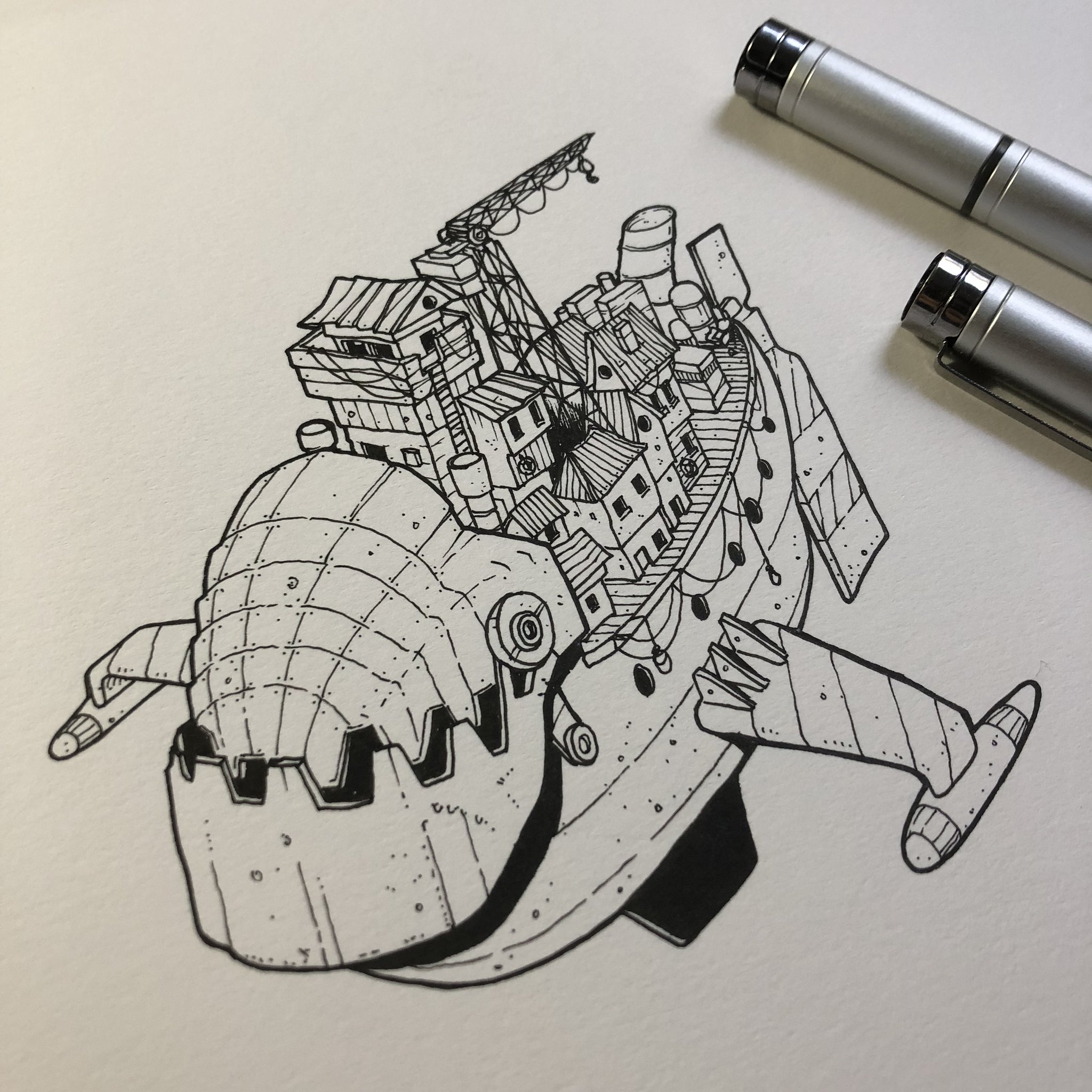
To which Jamie, the Scholastic design manager, said “Ah! I know just the chap!” Rob Turpin is an illustrator and designer from Yorkshire who has been living and working in London for the last twenty years. Mainly working in science fiction and fantasy, Rob has a love for spaceships, robots, imaginary places, and the colour orange…
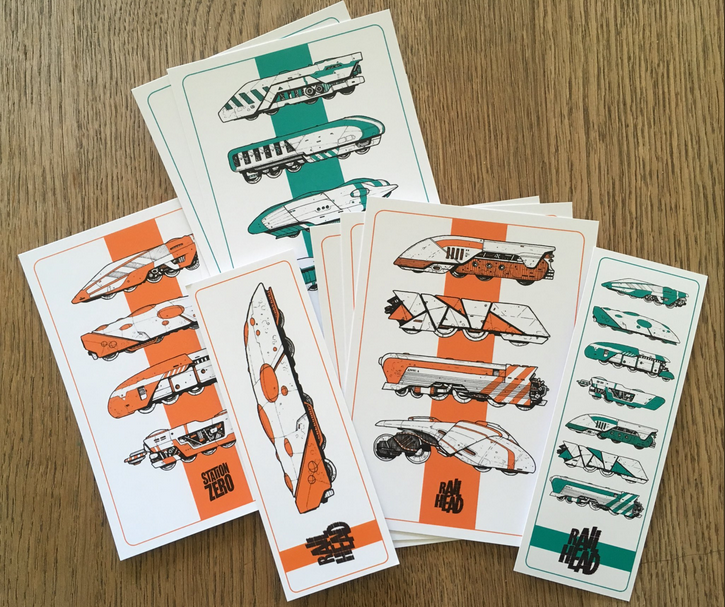
He also did a nice set of Railhead postcards for Philip.
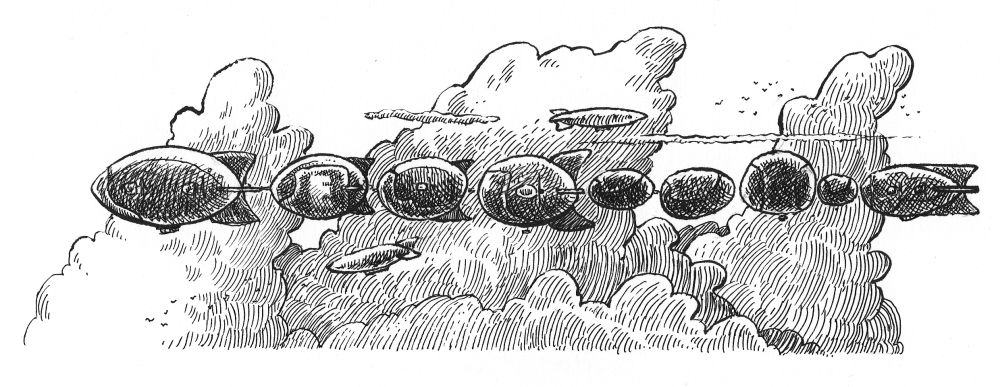
Rob’s lovely little cities, full of detail and personality, crowd the book and are all laid out in the endpapers. In particular, he’s taken on all the more bizarre experimental cities, like Panjandrum, Vyborg, Borsanski-Novi and Havercroft. Probably my favourite of these is the Nuevo-Mayan piranha town. We originally envisioned these as smaller than the first version he sent in, only about the size of houseboats, but the one he sent was so lovely we had to keep it in anyway, with a little squadron of smaller friends. And, absolute gentleman that Rob is, when I said it was my favourite, he only went and sent me the original art…
Rob is thisnorthernboy on a lot of sites: Twitter, Instagram, WordPress, and ellipress where you can buy prints of his work. Give them all a look!
U is for Uncertainty, or Unsolved Mysteries – it’s all one.
The IWOME answers a lot of questions. Readers will come away knowing how London got from the end of Scrivener’s Moon to the start of Mortal Engines, how Tractionism spread to India, which was the largest moving city ever built, what on earth is actually going on down in Australia, and who originally used Nuevo-Mayan Battle Frisbees. They will also have a much better idea of the geography of parts of the world and how much the Sixty Minute War really reshaped things, which has been a source of great speculation and interest in the fan community.
But it doesn’t answer all of them. This isn’t an exhaustive encyclopaedia or comprehensive atlas; we have no interest in naming every Traction City ever built and categorising them all. The book leaves a great deal up to the reader’s interpretation and imagination; it’s a history as seen by people inside the world, which is still full of mystery and uncertainty. Hopefully, we’ve left a world that feels wider, rather than narrower.
V is for Philip Varbanov
As mentioned in Exploded Diagrams in the first blog, something we were anxious to include from the very beginning was artwork which captured both the scale and the detail of a Traction City. And for that, Philip Varbanov’s work exceeded all our hopes.
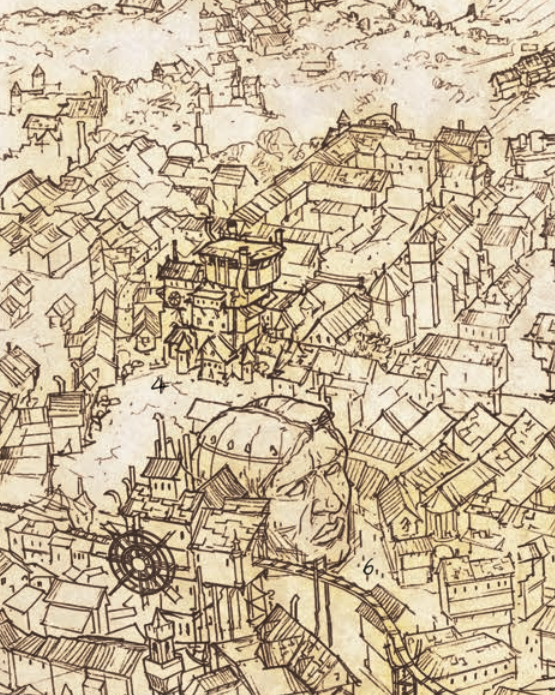
Detail of Philip’s Pre-Traction London, feat. the Barbican and Godshawk’s Head.
Philip is a concept artist and illustrator with a background in fine art and graphic design. He’s based in Sofia, Bulgaria, and works in the entertainment industry, specialising in environment art and production drawings. He illustrated the “Evolution of London” series at the start of the book, as well as several helpful cutaways of traction cities, an illustration of the Municipal Darwinist food chain and a stunning Jenny Haniver.
Philip’s works are striking for their great attention to realistic-looking mechanical detail. His drawing of Fever’s London on pages 10-11 is a masterpiece – we were worried it wouldn’t be possible to get central London, Nonesuch House (which is well away from the centre, on the edges) and the Orbital Moatway (which is far off on the horizon) all into the same drawing satisfactorily, but Philip used space and perspective so cleverly the whole thing just works.
Chances are if you’re a fan of Philip Reeve’s worlds you’ll already be familiar with the works of David Wyatt. He’s responsible for the charming black-and-white illustrations of the Larklight series and, closer to home, a series of Mortal Engines and Fever Crumb covers (along with the Haunted Sky comic-that-never-was.) His covers are exactly how I imagined the world of Mortal Engines as a little boy, and the IWOME simply wouldn’t have felt right without him involved.
David’s huge full-page illustrations are scattered through the IWOME. All his works have an incredible sense of atmosphere: contrast the rain-slick, overcast landing pad of the 13th Floor Elevator with his light, airy Brighton, or the calm of his Zoffany-like art gallery with the oppressive, chaotic Battle of Three Dry Ships, where a three-tiered London grinds implacably into view over a blood-red battlefield. I also adore his Nuevo-Mayan traction city chase, which is like the cover of a Mortal Engines book that never happened – it’s so close to what I had in mind when writing the brief it’s spooky.
David is a prolific illustrator (I hadn’t realised quite how prolific until, looking at his portfolio, I found half the books of my childhood were in his covers – everything from The Hobbit to The Amazing Maurice and his Educated Rodents), and recently won the Blue Peter Book Award for The Legend of Podkin One-Ear alongside Kieran Larwood. Like Philip Reeve, he lives on Dartmoor, and you can see evidence of its mossy hillocks, windswept tors and curly, spooky old trees in his art here. More of his IWOME art (among many wonderful other things) can be found on his blog here.
X is for Xanne-Sandansky
…one of the many, many Traction Cities mentioned in the Quartet, but which never got its own entry in the IWOME. I’d love to come back to it – there are plenty of ideas for cities which we never quite got round to.
Xanne-Sandansky is best known in the IWOME as the eater of Borsanski-Novi, a catch so crammed with spare parts and useful machined goods that its Gut bosses had a spring in their step for months thereafter.
Y is for whY can’t I think of anything for the letter Y?
It’s a copout. But I really can’t. Suggestions in the comments section, please…
And finally, Z is for Amir Zand.
Although he’s last in the alphabet, Amir Zand was one of the first artists involved in the IWOME. Amir is an Iranian illustrator and concept artist, specialising in cover art and promotional illustration. He’s been featured in numerous magazines and books, including Spectrum 25: The Best in Contemporary Fantastic Art, and has illustrated more than 35 book covers.
Detail of Bayreuth – get the book for the rest!
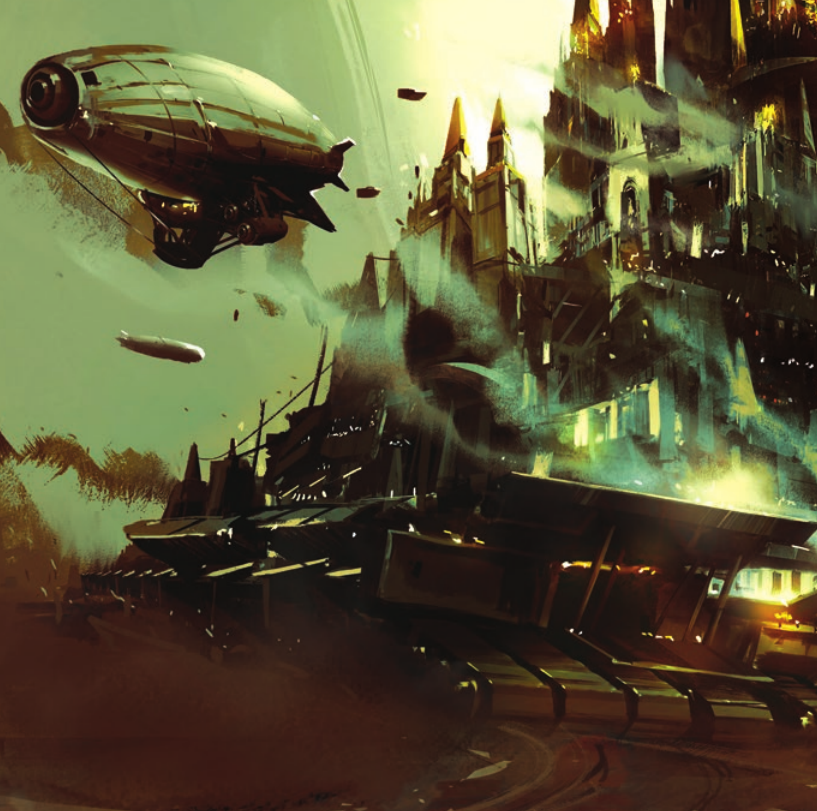
Amir contributed all sorts of works to the IWOME, providing a marvellous set of mutant creatures (his Maydan Angels look rather a lot like shoebills, which are easily the most malevolent-looking birds in the world) and a lot of static settlements as well as a wonderful variety of cities (his Juggernautpur, continuing the “person in front of Traction City” theme of the Ian McQue covers, also looks like the cover of a book which hasn’t been written yet.) Amir’s works are all incredibly evocative: you can feel the chill of his winter-dawn Kometsvansen, the heat of the sun on his gleaming Zagwan city, and the aching stillness of his wreck of Motoropolis, lit from below by scavenger’s spotlights in the purple night. One of my favourites is his Panzerstadt-Bayreuth, a huge, intimidating silhouette wreathed in smoke and scattered with lights, and you can get a sense of how Londoners must have when they saw it bear down on them in Mortal Engines.
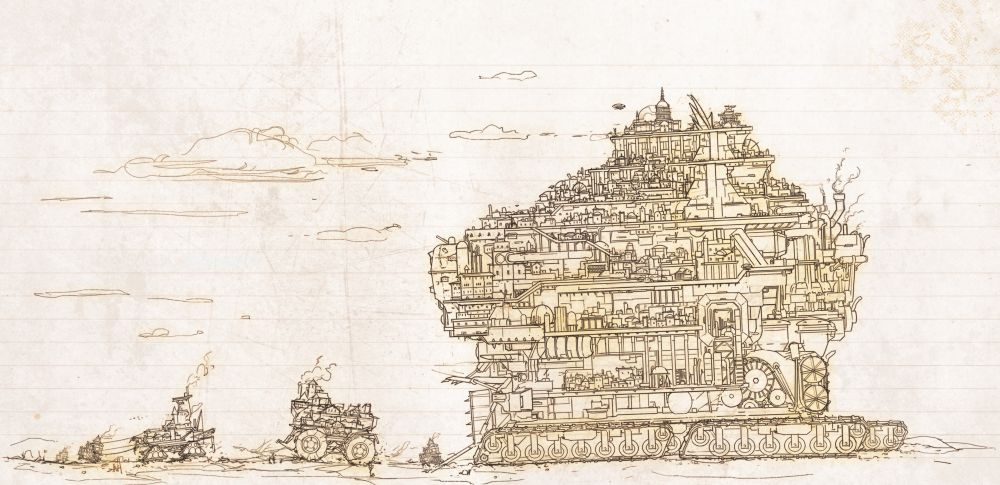
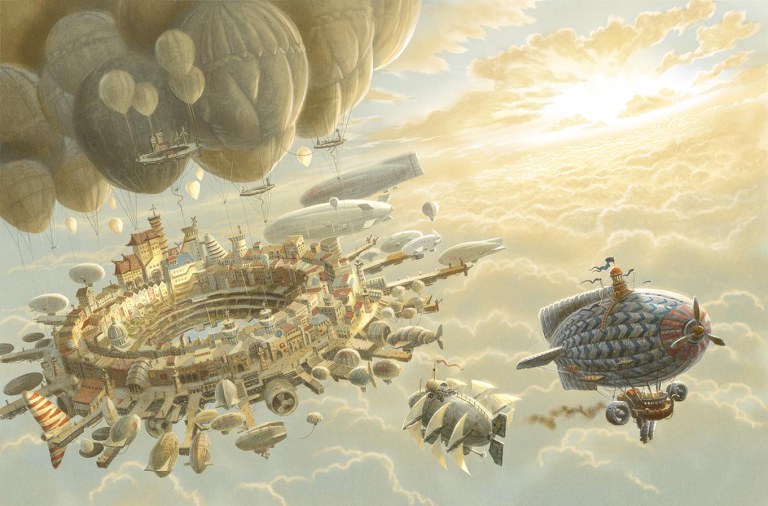
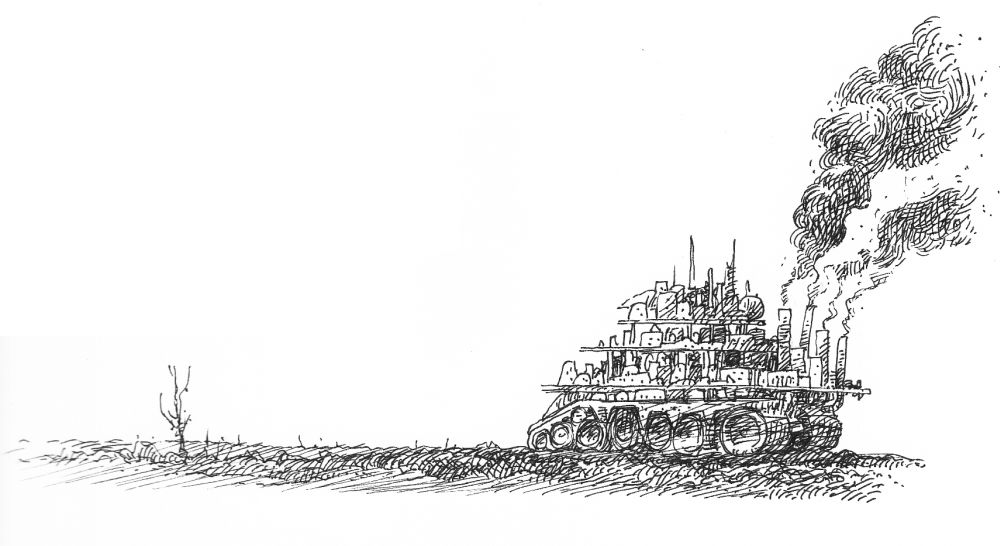
Pictures in order: Piranha suburb, Railhead postcards and Kom Ombo, by Rob Turpin; Sky-train, by Philip Reeve (originally for the Traction Codex); detail of pre-Traction London and Diagram of Municipal Darwinism , by Philip Varbanov; Airhaven and Nuevo Maya, by David Wyatt; Traction City, by Philip Reeve; Arkangel, detail of Panzerstadt-Bayreuth, and Tunbridge Wheels, by Amir Zand.
This was originally posted on Philip Reeve’s blog here. Philip’s blog has been overrun with malware so all four posts are now on my own site: Part 1Part 2Part 4
To mark the publication of The Illustrated World of Mortal Engines, my co-author Jeremy Levett has put together an A-Z guide to what it is, how we wrote it, and who did all the lovely artwork. The first part is here, the second is here, and now for the third:
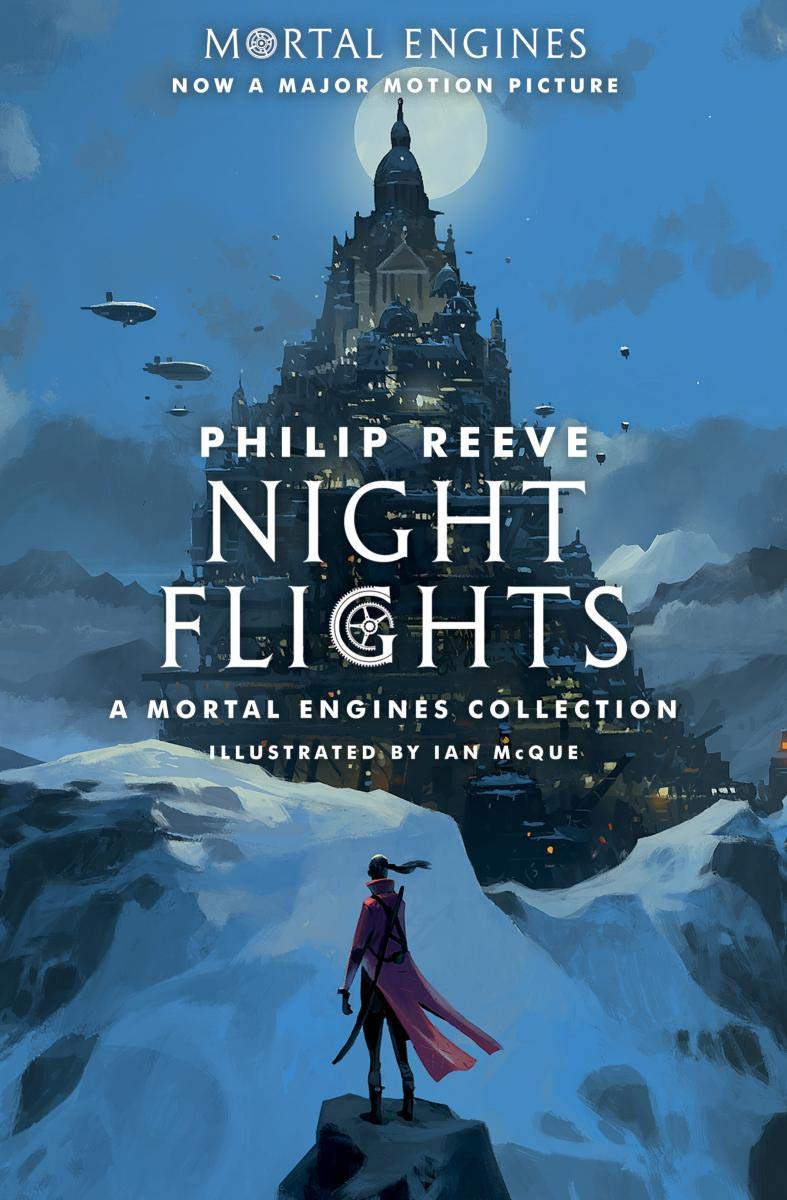
Night Flights is very much its own thing – most of it came from old stories and ideas Philip had about Anna Fang – but one story, The Teeth of the Sea, drew on an idea that came out of the IWOME *: Fastitocalon, a very peculiarly adapted aquatic predator city. You can see David Wyatt’s gorgeous illustration of Fastitocalon in action here, and another version by Ian McQue in Night Flights itself.
* To give time for all the illustrations, the manuscript for the IWOME was actually finished by autumn 2017 – it’s been difficult keeping a lid on it all this time!
O is for Old-Tech A problem with setting things in the future that refer back to the present is that the present won’t stand still, and episodes of Black Mirror keep coming true. Most of the stuff being dug up in the world of Mortal Engines is old tech right now. Fever Crumb found herself standing on a floor tiled with iPods in Scrivener’s Moon, which is about all they’re useful for now. When Tom first found a CD in Mortal Engines, they were common, but here in 2018 they’re now less popular than vinyl, for some reason. How long until they’ll need explaining to young readers, as if he’d found a VHS or a 5″ floppy disc? (Perhaps this is why the film seems to have replaced it with a toaster…)
It’s mad to think about now, but back when the original Codex was written hardly anyone actually had a smartphone, the quintessential Screen Age device. Of course, these feature (our archaeology is bang up to date), but perhaps future editions of the IWOME will have to keep with the times. I’m looking forward to some sort of hands-free brain implant replacing smartphones, which a) will mean no more fiddling around with perishing touchscreen keyboards and b) will neatly explain where Stalker-brains came from…
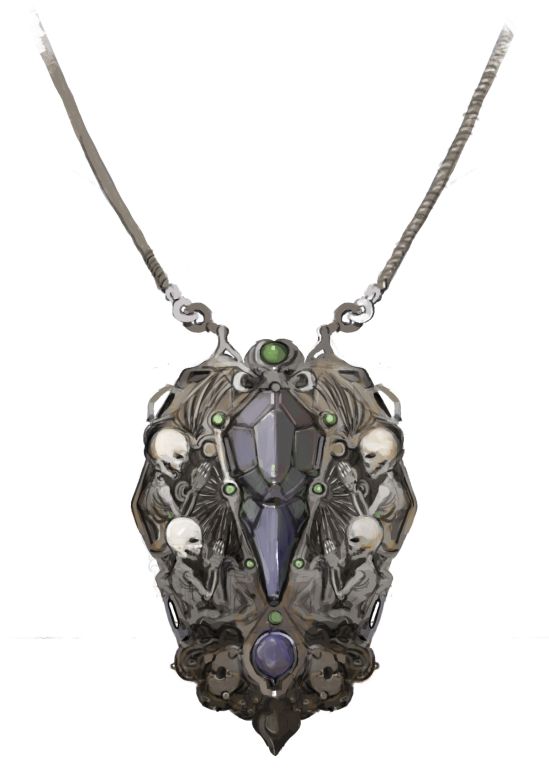
Some of the Old-Tech actually belongs in the future, and as well as the carefully preserved modern remnants being loaded into the 13th Floor Elevator, you can read about artefacts from lost civilisations like the Electric Empire or the Blue Metal Culture (which everyone seems to think is a reference to some obscure musical movement – it’s really just a civilisation which made lots of things out of an attractive blue metal.)
P is for Maxime PLASSE
…who illustrated all the IWOME’s maps. Maxime has been a role-playing gamer from an early age and always had an interest in fictional worlds, mythology and ancient history; he found his way into graphic design through part-time work for a French RPG publisher, alongside his career as a social worker. He now works full time as a graphic/layout designer and freelance cartographer, working on RPGs, video games, historical magazines and for a range of other clients.
Maxime has a very versatile style, and put all sorts of beautiful details into his IWOME maps: an Aboriginal pointillist pattern surrounding Australia, an Mayan-influenced one for Nuevo Maya. As well as depicting places like south India, Australia and Nuevo Maya, he’s produced a military-style campaign map of the Zagwan Deluge and a lovely, highly stylised representation of the Bird Roads.
You can see his website here and his deviantART page here.
Q is for Ian (Mc)Que
(sssh, it’s a difficult letter.)
Ian McQue was born in Sunderland and worked on the Grand Theft Auto games before becoming a freelance concept artist and illustrator. He now mainly works in the film industry, and lives with his wife and an assortment of cats in rural Scotland.
Ian is one of Philip’s favourite artists, and has worked on covers for the Railheadbooks as well as illustrating Night Flights and the new set of Mortal Engines covers (you can see some of the new cover art in the IWOME!) Ian has a gorgeous style, filled with stark light and mechanical intricacy, and you can almost feel his cities bearing down on you. As well as giant mechanical things, he’s also very good at character art, and all the little portrait pictures in the IWOME are his work.
You can follow Ian’s twitter here (he shows a splendid appreciation of funny little specialised airport vehicles), find him on Instagram here and buy his artwork here. And if you want to experience his work in a non-Mortal Engines context, give the spookily beautiful game The Signal from Tölva a play.
R is for Realism
Realism is something a lot of people get hung up on, particularly in a science-fiction context, and especially these days now that internet forums allow one to rage to an appreciative audience about how hearing things in space is Stupid, or try to calculate the velocity of an asteroid from how big a half-second explosion in a movie is. This sort of “realism” demands copper-bottomed mathematical working-out of every detail. There’s a place for this – “hard sci-fi” is a popular genre for a reason – but it’s an unhelpful mindset to apply to everything.
I was brought in on the Codex and IWOME partly because I have enough of a reasonable basic engineering knowledge of guns/planes/airships/tanks etc, but the moment scientific reality gets too far in the way of a plot point or a good pun we ignore it, especially if there isn’t a good “OLD-TECH DID IT” handwave.
Something much more important than realism is verisimilitude, in the sense of “internal realism”. The world of Mortal Engines isn’t really a “realistic” one: it’s based around machines that are probably impossible and has immortal cyborg zombies. But it obeys its own internal logic, and, importantly, the humans inside relate to it in a believable way. There are some very, very silly things going on in the IWOME, but it’s not completely implausible that people would think, for instance, that a bouncing city would work (it does for kangaroos!)
S is for Spoilers
How, in a history book where the end of Mortal Engines is one of the more significant events in recent history, do you get around the fact that, well… Mortal Engines has an end? Referring darkly to “the MEDUSA incident” could only get us so far. We ummed and ahhed about how to address the rather important point, and finally decided to take the bull by the horns on the very last page of the IWOME, set against a full two-page rendering of Ian McQue’s cover for A Darkling Plain.
Hopefully, few people who get to the last page of the IWOME will find what’s written there as a surprise – and those that do will go off and read the book to find out how we got there.
This series was originally jointly on my blog and Philip Reeve’s, but his has been overrun with malware so all four posts are now on my own site: Part 1Part 3Part 4
I’m immensely chuffed to announce that the Illustrated World of Mortal Engines, the actual, factual, physical, gorgeous, expanded and wonderfully illustrated version of the Traction Codex Philip Reeve and I worked on together back when I was at uni… launches TOMORROW (though it’s turning up in bookshops and letterboxes already). I haven’t talked about it here yet, because honestly I haven’t talked much about anything other than travelling since I started getting real jobs which don’t like you talking about them online. But it was Very Cool to do.
To commemorate the launch, and talk a bit more about the process of creating the book, I’ve put together an A-Z of the Illustrated World. The first part is on Philip’s blog here, and there’ll be two more after this one. Had a look at the first part? All settled? Read on…
Part Two: G-M
G is for Green Storm…
…who readers will know are very important in the later books, but are most conspicuous here by their absence.
The IWOME developed through a long period of writing, hashing out ideas and improving the general structure. One of the issues which emerged, which we never really found an answer to, was that going into the Storm and their war with the cities was a big distraction from the original story of Mortal Engines. Worse, due to the limit on the length of the book and the time pressures of getting illustrations for all the other new stuff in, there wasn’t really time or space to do the Green Storm War justice. So the Storm, and the war, are alluded to but don’t feature heavily in the IWOME.
But! We have the early drafts of lots of material – hydrofoil swarms and shaped-charge lancers, the Battle of the Bay of Bengal, increasingly grotesque and ludicrous applications of Stalker technology – and on the Traktionstadtsgesellschaft side, a heap of mad flying machines, armoured fighting towns and an effort to create the Longest Possible German Compound Noun (“Traktionstadtsgesellschaftstandardausgabeverteidigungsreihenfeuerpistole”). Perhaps, one day, we’ll get to come back to them, and the world will see a beautiful professional illustration of the abortive “Stalker walrus”.
H is for Historians and their Disagreements
The phrase “Historians disagree” will be familiar to any readers involved in academia. In the real world, if Historians Disagree, it means right now someone in an archive somewhere is furiously typing up the latest volley in a protracted battle of books and monographs with other people in other archives, all of which will then be glibly summarised in one sentence by an undergrad who’s skim-read half of them. (Possibly, they also will say that the aforementioned battle has generated more heat than light, or something like that.)
But when writing a fictional history, it’s a marvellously useful phrase. Historians will Disagree when we want to allude to something the reader already knows but people in the WoME don’t, or when we haven’t written the relevant backstory but want to speculate on it, or when we have two or three equally good ideas for what might have happened and want to use all of them…
We owe the Historians of the WoME a great deal, and gave them Puerto Angeles for their trouble, a cheerful historian party city where the museums and the samba clubs are both 24/7.
I is for International Productions
The IWOME travels widely across its fictional world, but the people who helped create it are spread all across the real one! Many of us, like Philip, are based in the UK, but work came in from as far afield as France, Bulgaria, Iran and Indonesia (an artist from the USA was going to be involved but couldn’t participate in the end – I’m told this was due to a commitment clash rather than finding out what happened to their homeland in the books.)
I think it’s a real shame we may never get everyone who worked on this book into a room together – but such an international cast of creators is a cool, strange part of putting something like this together in the modern networked world. (And hats off to poor Jamie Gregory, who had to stay up late and work with people in all these timezones!)
I is also for Influences, and I thought up a great long self-indulgent post about all the stuff which in some way made it into the IWOME, but it was too mechanical and not very funny. So I’ll just mention Simon Winder, whose description of the actual Schloss Runkelstein/Castel Roncolo in Danubia painted such a compelling and side-splitting picture it earned its own tribute city (well, fort). If I’m ever able to write observations half as canny and funny as his, I’ll be very happy.
J is for Jokes…
…which are Very Important. The IWOME isn’t really a “reference book” for other books – we worked hard to make it something which people will actually enjoy reading in its own right (there’s not much point in writing it, otherwise), with the same sense of humour that runs through the Mortal Engines books. There are… well, quite a lot of bad puns.
Actually, the hardest part in all this was reining the jokes in – humour is important, but it also has to be something that works even if the reader doesn’t get the joke (some of the punchlines are pretty obscure); a jokey double meaning is bad if it makes the original meaning too hard to understand. (Philip has discussed in-jokes in his splendid Railhead A-Z.) And some had to be pruned because they were too gratuitous – we toyed with a mitre-shaped Traction Vatican City, with a lot of popes called Urban (white smoke from the exhaust stacks when a new one was elected) but it was just Slightly Too Silly. So please appreciate the horrible jokes, because there are plenty more on the cutting room floor.
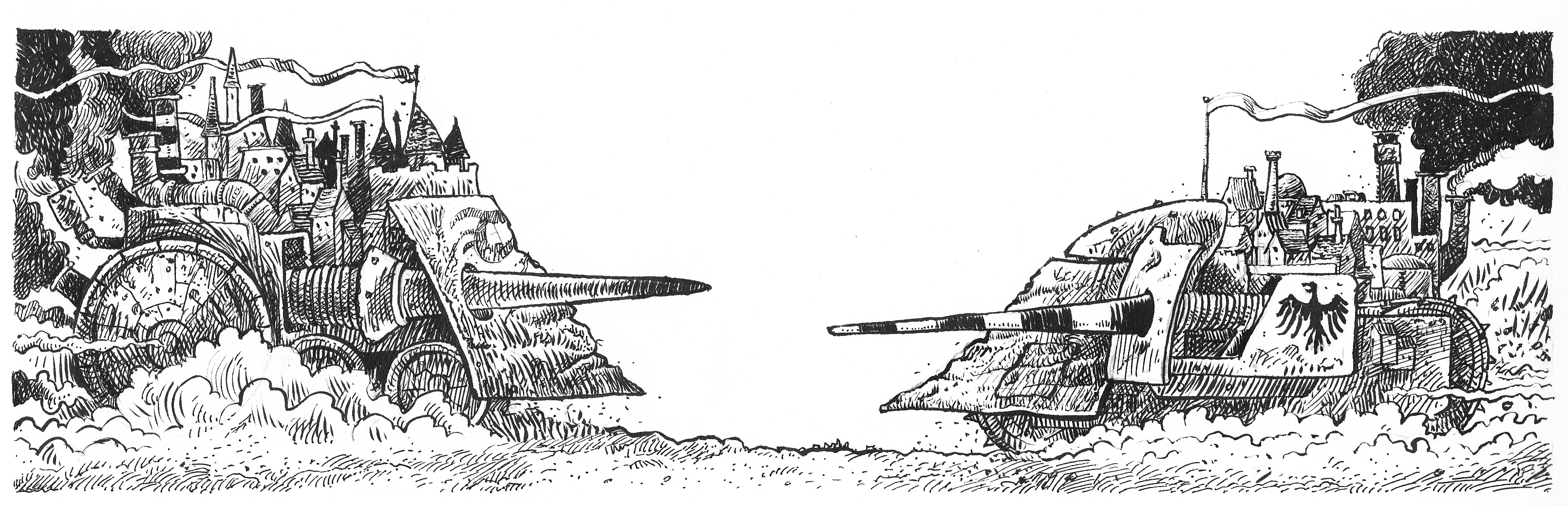
Traktionturnieren, of course, is not a joke. Traktionturnieren is ABSOLUTELY SERIOUS.
K is not for Characters, but will have to do
There’s plenty going on in the IWOME with all these maps, cities, wars, histories and amusing pictures, but what about the people who inhabit them? There are loads of little character portraits throughout the IWOME, illustrated by the excellent Ian McQue (I hadn’t really realised before this book Ian was a dab hand at character art as well as all his robots, flying ships and traction cities.)
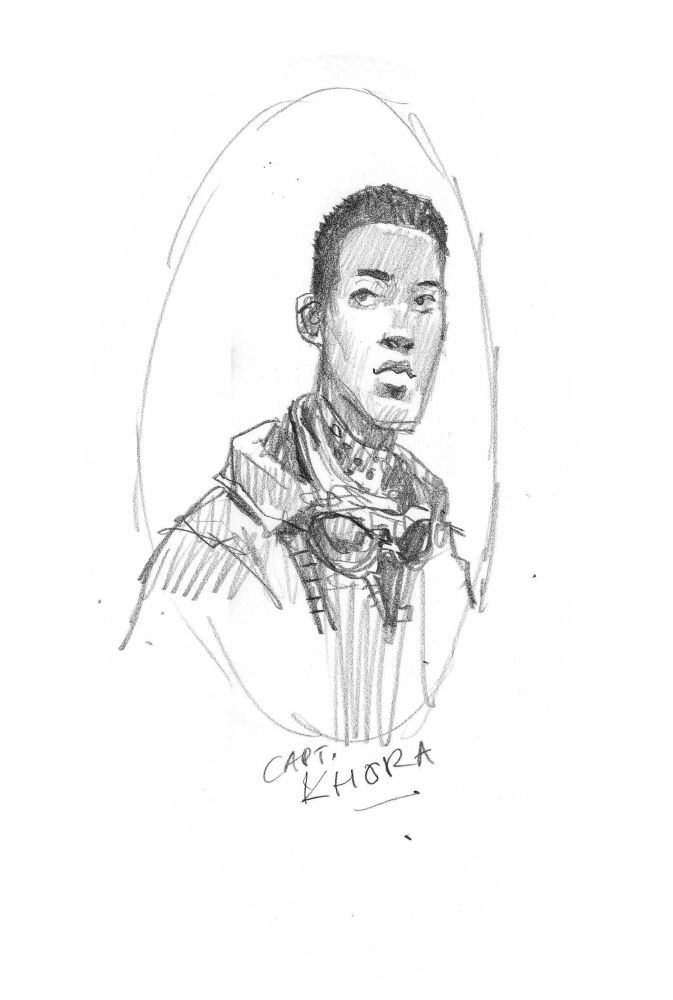
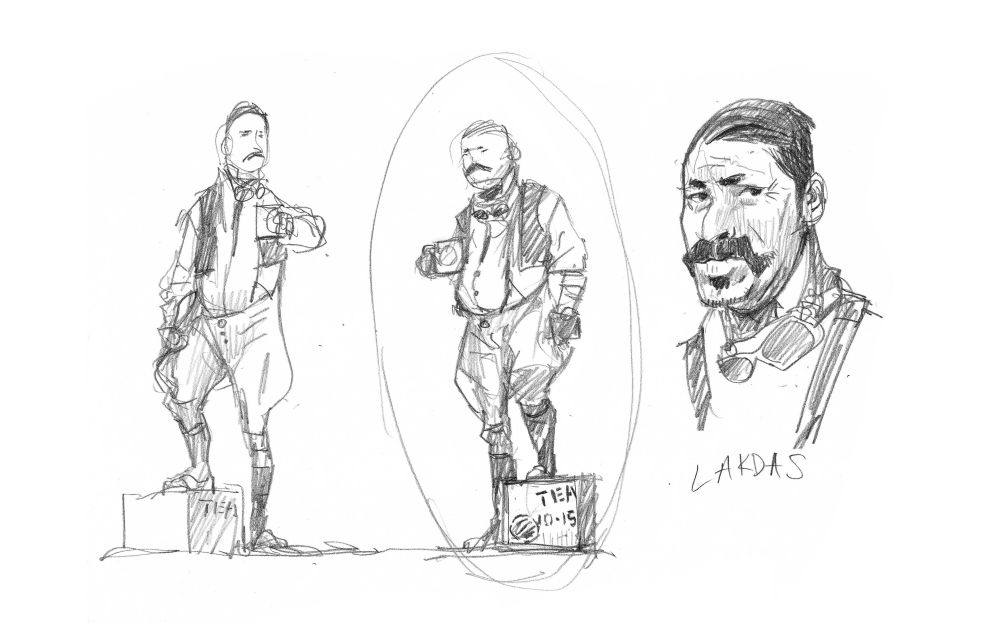
Some people, like Thaddeus Valentine and Freya Rasmussen, are familiar; some, like Madzimoyo Khora, give familiar names a bit more of a background, and some are brand new, like Woolloomooloo Smith (credited with introducing Australian culture to the Great Hunting Ground). Some of them address unanswered questions (like how Anglish-speaking cities in the Hunting Ground have ready access to tea when presumably all the good tea plantations are in League territory – Lakdas Weerasinghe, captain of the blockade runner Invisible Worm, will be very happy to answer that). Others, like pioneer air rustler El Condor, or Niccolo Tornatore, the Doge of Brighton’s arch-rival Venice, are just there as people and stories who can give a little more human texture to the world.
L is for Jeremy Levett
which is to say… me. I’m far too self-conscious these days to write this sort of thing about myself, but Philip had some kind words…
From the moment the iWOME was first suggested I knew I couldn’t write it alone, and I knew that the person I wanted to write it with was Jeremy Levett. He’s a longtime fan of the books, but his mind works in a completely different way to mine – I’m interested in things because of how they look and how they make me feel: Jeremy wants to know how they work. So where in the books I had the Green Storm develop giant military airships because giant military airships are cool, and then had their Tractionist counterparts build rickety flying machines because rickety flying machines are fun, Jeremy instantly understood that the real reason is that the Storm’s mountain heartlands contain good sources of helium to provide huge air-destroyers with lift, while the Tractionists prefer hydrogen, which their heavily industrialised cities can easily split from water – but this makes their airships kind of explodey and drives a move to heavier-than-air solutions.
Faced with this kind of top-notch historical analysis, I can only nod and agree and pretend I planned it that way all along. And Jeremy also has the ability to write all this stuff in a way that’s both funny and informative (just check out his travel blogs). He has a glittering literary career ahead of him if he wants one, and I’m proud that it began in the WOME.
A Picture of the Writer in his Natural Habitat.
M is for Maps
Maps of fictional worlds are very popular, from Tolkien’s Middle-Earth to Keith Thompson’s world of Leviathan, based on actual First World War propaganda-y maps.. However, the WoME has a slightly complicated relationship with them. One problem is that Traction Cities, the primary landmarks, move around. Another is that committing to a map leaves you a bit boxed in story-wise as to where things can or can’t be (I remember Brian Jacques had to keep extending the Redwall map in new directions to tell new stories).
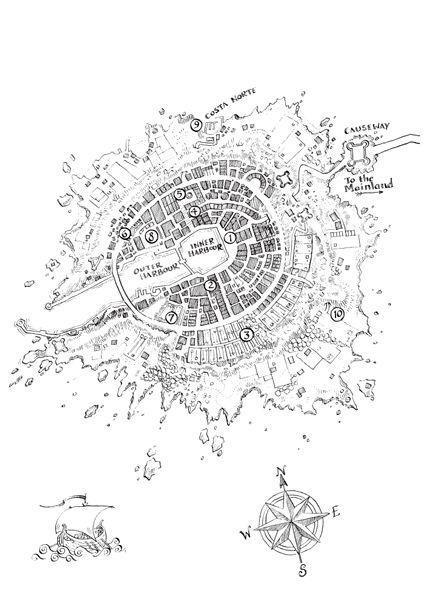
So the maps we do have in the IWOME are mainly places that don’t feature heavily in the story (there is a map of the general shape of the Great Hunting Ground, but it’s very scuffed-up): southern India, South America, Australia. We were given a lot of help creating them by cartography expert Lowtuff, a regular on the Mortal Engines Discord server, who gave a lot of detailed thought to plausibly answering mad questions like “what if we just tilted the whole continent west a lot?” and produced excellent outlines which our artist Maxime Plasse turned into the final maps.
An interesting issue we discovered with the maps, playing around with sea levels and continental plates, is that you can do some absolutely horrible things to continents and and they still don’t actually look that different. Take Nuevo Maya here: most of the important rivers have completely changed course, a million square miles of slightly salty pampas have risen out of the sea, the Falklands are no longer islands and the Panama isthmus is no longer anything… but it’s still instantly recognisable as South America. But, put it side by side with an actual map of South America, and you’ll see quite how different they are.
One which came together particularly well at the eleventh hour is the Dead Continent. Many of its coasts are guesswork, and the interior is a great black patch of terra(/or) incognita, with the only light cast by the paths of scientific expeditions – some of which come back, while some head inland and are lost in the darkness.
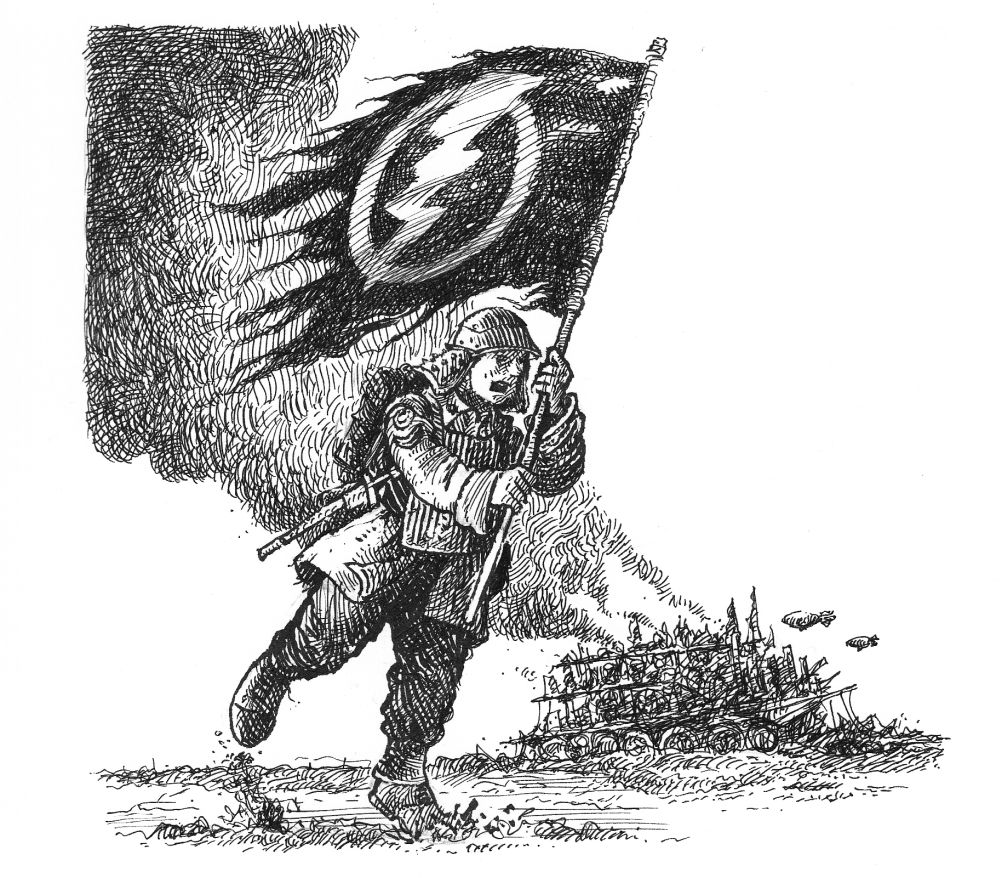
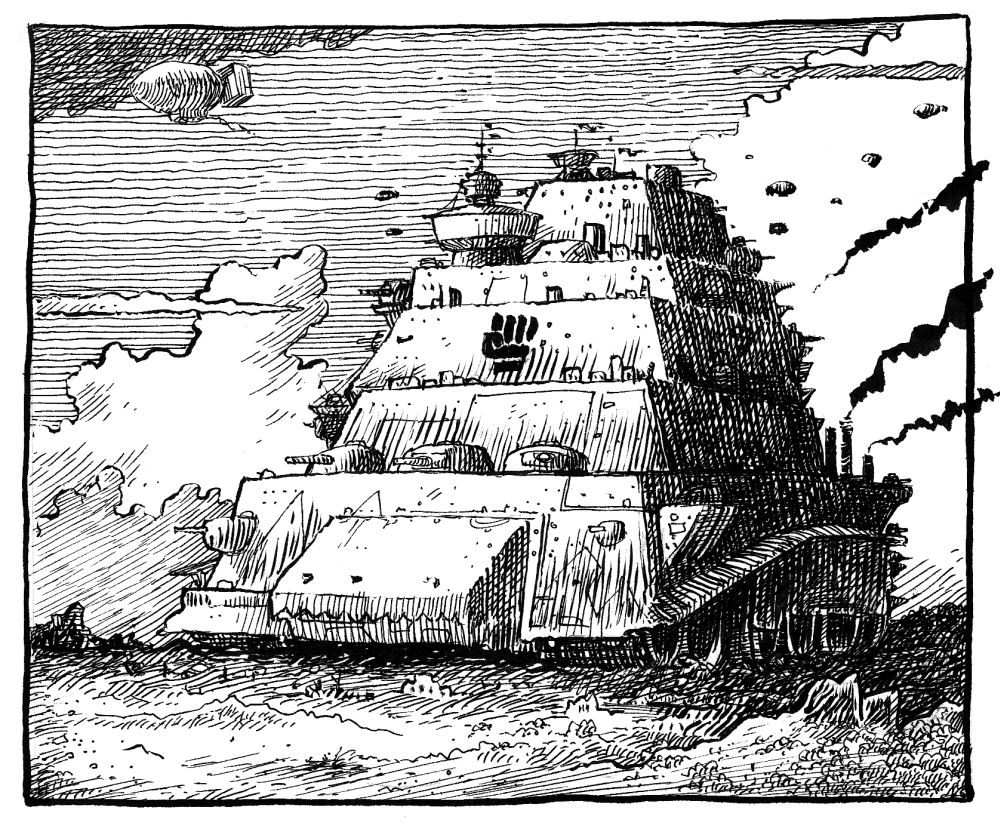
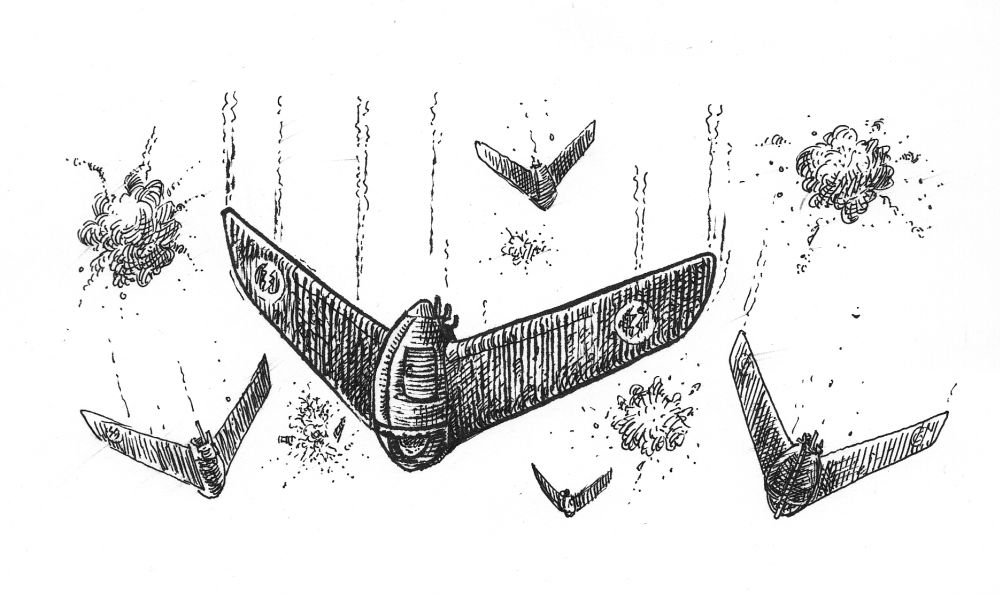
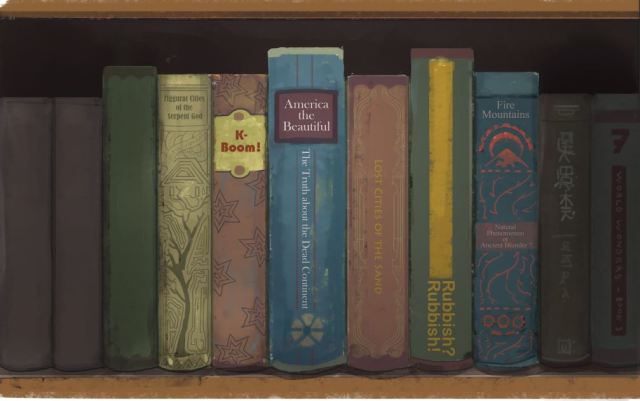
Pictures in order: Green Storm Soldier, Panzerkampfstadt and Green Storm Tumblers, by Philip Reeve (all originally for the Traction Codex); Bookshelf, by Aedel Fakhrie (due to multi-language printing issues, this hasn’t quite been done justice in the printed version, so here’s the original); Danubia cover pinched off the book’s Amazon page – READ IT; Traktionturnieren by Philip Reeve; Captain Khora, Smoke Jaguar and Lakdas Weerasinghe sketches by Ian McQue (the final versions are in the IWOME!); selfie with 12″ railway gun, by me; Nuevo Maya map, cartography by me and Lowtuff, final art by Maxime Plasse.
This series was originally jointly on my blog and Philip Reeve’s, but his has been overrun with malware so all four posts are now on my own site: Part 2Part 3Part 4
The Illustrated World of Mortal Engines is published this week. It was written by me and Jeremy Levett, with Jeremy doing the bulk of the actual work while I just fired suggestions for weak puns at him from Dartmoor and Iceland. It’s also lavishly illustrated by what can only be described as a glittering galaxy of star illustrators.
To mark the completion of this epic project, we’ve compiled the following A-Z guide…
Part One: A – F
A is for Art
A very important part of the Illustrated World is right there in the title: ILLUSTRATED. The original Traction Codex had a number of lovely drawings by Philip (some of which we’ll be putting up in these blogs – only one made it into the final IWOME), but the IWOME has seven different artists from all across the world: Aedel Fakhrie, Ian McQue, Maxime Plasse, Rob Turpin, Philip Varbanov, David Wyatt and Amir Zand. Ian and David have already been involved in Mortal Engines before (both have done a set of covers, Ian illustrated Night Flights and David illustrated Philip’s Larklight series). These artists all have quite different styles, and you can find at least four different versions of London in the IWOME.
Jamie, the design chap at Scholastic, managed a great back-and-forth of illustration briefs, sketches and final artwork between us and the artists to make everything just-so. It was very cool seeing the ideas we came up with given form by such skilled artists, especially when some of said ideas were really quite silly…
It was an interesting process: a number of times an artist came back with something that wasn’t exactly what we imagined but was actually better. Some needed a bit of changing, and a couple of pieces took ages of back-and-forth email to get right. But hopefully, you won’t be able to tell which…
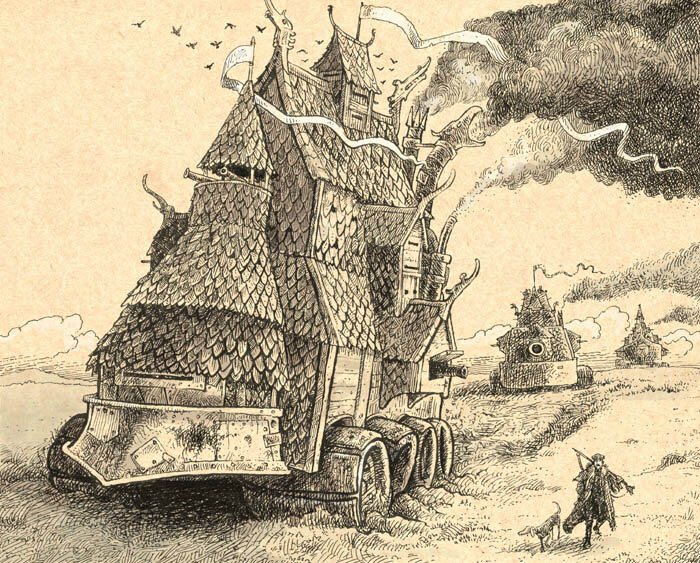
Weaponised stave churches on the move, around 350 TE
B is for Black Centuries “…a savage age, when life was cheap, and most people would happily have sold their own children for a tin of rice pudding.”
The Black Centuries occupy most of the time between the world we have now and the world of Mortal Engines. They’re a period of horrible upheaval and universal misery, punctuated by lots of localised problems which made moving around all the time a logical way of life. They’re also a Dark Age about which very little is known or understood, as people were too busy eating radioactive cockroaches and worrying about runaway climate change* to write much down.
The properly-worked-out history of the Mortal Engines world is a self-contained timeline lasting around a thousand years, with the Fever Crumb books happening halfway through, and the Mortal Engines quartet at the end. But something which often comes up in online discussions is: how far in the future? What’s 1TE in AD? We never worried about an exact answer to how long the Black Centuries lasted – some people within the world of Mortal Engines think they know, but some of them are also convinced people coexisted with dinosaurs.
From a narrative point of view, the Black Centuries are a very useful way of drawing a thick (black!) line underneath the world-that-was and setting the scene for something else. But how many Centuries there really were is open to interpretation…
* This is a suggestion, as well as a descriptor.
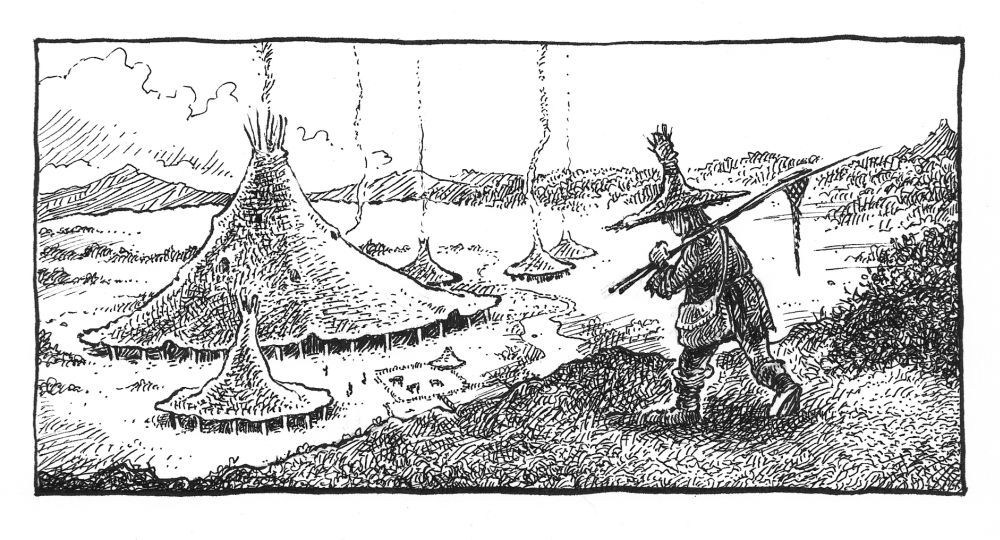
Everyday life in the Raffia Hat Culture
C is for Canon…
…and Continuity, and Contradiction, and all those other words about the ambiguity which creeps into worlds written across many years or spread across different media adaptations.
Ambiguity is quite fun and, from a writing perspective, can be very useful! But it can also be pretty frustrating when the pieces don’t fit together. We’ve done our best to make it all work, but it’s probably inevitable there’ll be a list of “Differences between the IWOME and the Mortal Engines books” up on the (really very good!) Mortal Engines wiki soon.
The IWOME should be seen as an “in-universe” book, one whose writers don’t know everything (as you’ll see from entries like Anchorage). It’s quite possible they’ve got things wrong. So if the IWOME contradicts the books, the book is the one that has it right.
Relatedly, C is also for the Traction Codex, the little ebook which the IWOME was partly built from. The IWOME uses many parts of the Codex but doesn’t invalidate it – if there’s a direct contradiction, the IWOME takes precedence, but if there’s something mentioned in the Codex but not in the IWOME (Sydney’s cork fenders, for instance) they’re probably still there!
(Oh, and while we’re at it, the short story Traction City Blues in Night Flights supersedes the World Book Day story Traction City. There were some specific requirements for the World Book Day book; this is the short story without them, and is quite a bit closer to the original idea for the story.)
All sorted out? Excellent.
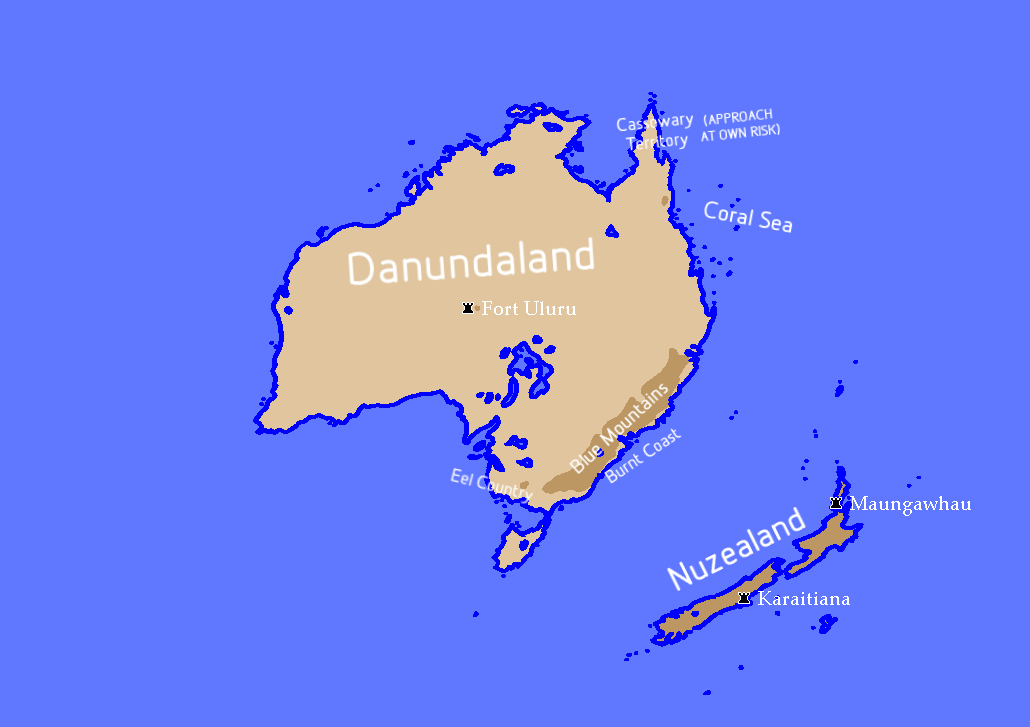
D is for Danundaland
Australia, along with much of sub-Saharan Africa, wasn’t hit as hard in the 60 Minute War as America, Europe or China, although it still suffered heavily from the war’s indirect effects.* Not having quite the same geological upheaval or tempestuous weather, there was no practical reason for Australians to embrace Tractionism – but, when the word reached the continent they did, with enormous enthusiasm.** Much like actual Australia, evolution has led to all sorts of bizarre specialist creatures unknown anywhere else.
Australian cities, from the billabong-dwelling bunyips to the flying-squirrel-like drop-boroughs, are often so heavily adapted as to be unrecognisable to visitors from the Hunting Ground. But as they say on the proud city of Darwin (which regularly reconfigures itself for an advantage over the leaping/burrowing/semi-submersible/intermittently airborne predator towns of the great red interior,) the Australian city is more highly evolved…
A draft map of Danundalund, by Lowtuff,
* Nevil Shute’s On the Beach is a disturbing tale of death creeping down to Australia from an apocalyptic war in the Northern Hemisphere, although even the weapons of the Sixty Minute War weren’t as all-destroying as the radiation cloud Shute imagines.
** Having lived in the Outback for a little while I’m not hugely convinced that it would take that much to turn it from a huge, barren expanse full of absurdly large vehicles driven by cheerful sunburnt people into, well…
E is for Exploded Diagrams
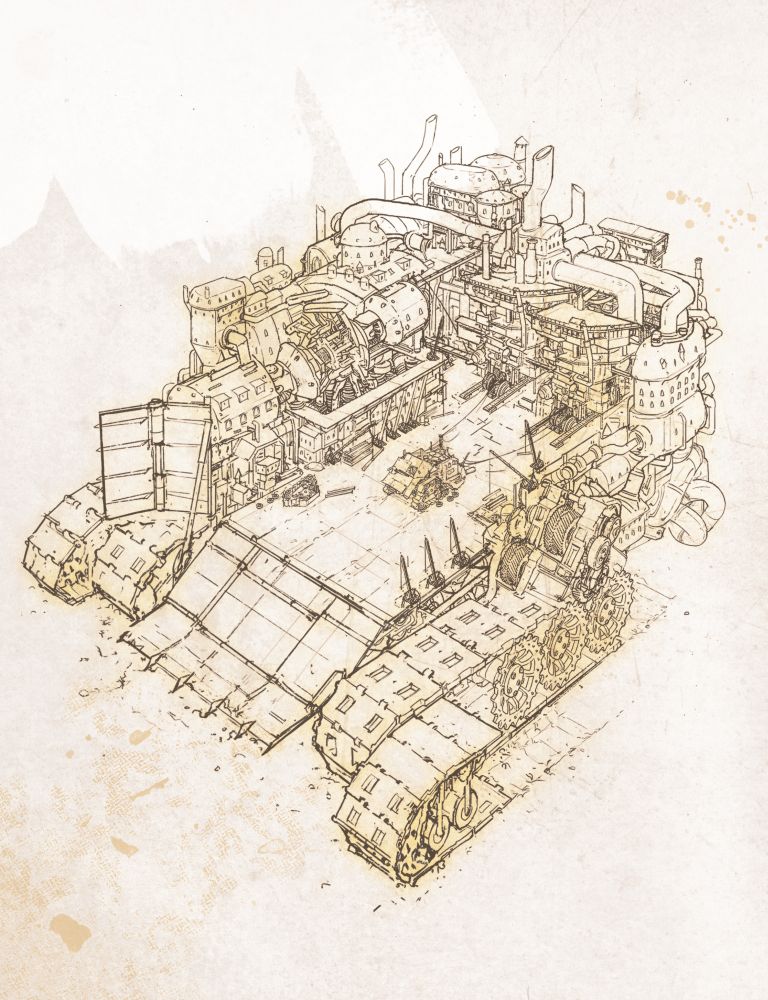
One of the things we had in mind when putting together the IWOME were all those interesting Dorling Kindersley visual dictionaries and books of cross-sections. These books show things like a vehicle or a castle, often with cutaways so you can see what’s going on inside, with all the individual parts and their functions labelled.
Doing something like for an entire city is very ambitious, but the hugely talented Philip Varbanov stepped up and created some beautifully detailed illustrations, including the Jenny Haniver and three different stages of London’s history. (And arguably Ian McQue’s gorgeous picture on pages 186-7 is a very exploded London…)
F is for Film
The IWOME is not a film tie-in – it’s based on the books and follows their “canon”. Airships have propellers rather than great big Podracer jets, Engineers are bald and Hester Shaw has one eye. But the people behind the film are very clearly big fans of the series, and (from what we’ve seen!) the world they’ve created is very faithful to that of the books. Hopefully, people who haven’t read the series should still be able to appreciate the IWOME (although they should of course then run off and read the books!).
We also owe some thanks to Peter Jackson, Philippa Boyens, Christian Rivers and all the other people who’ve worked on the film- without it, and all the attention it’s drummed up, the IWOME would probably never have happened. We look forward to seeing it on the big screen!
F is also for Aedel Fakhrie, who has illustrated a variety of things in the IWOME – Old-Tech items and artefacts, vehicles and cities in the IWOME. Aedel hails from Indonesia and owns 17 cats and a cool jacket.
Aedel’s mechanical details, creative city designs and earthy, lived-in colour schemes make for some really distinctive art, and contrast nicely with the black and white cities of Rob Turpin and Philip Varbanov. His Tin Book of Anchorage is fantastically detailed, and his Bunyip is a particularly creepy machine you can absolutely envision roaring unexpectedly out of a billabong (an earlier version with legs was rejected for being slightly too terrifying.)
This is the last post in a series! You can start from the beginning in Kutaisi here, or browse the whole Adventure in reverse order using the tag here. And as ever, click the images for full-size versions.
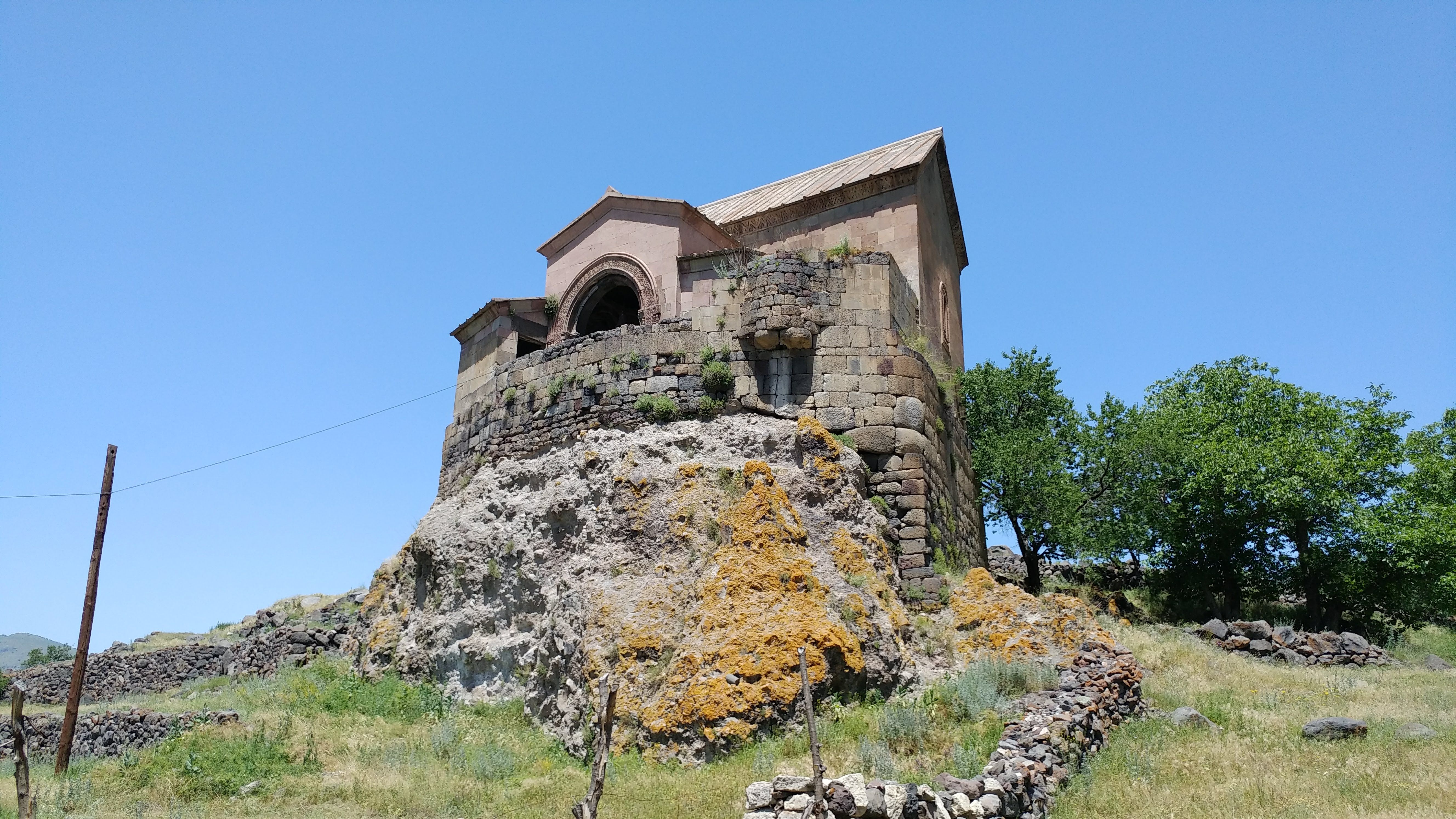
The 12th century Tsunda church: locked to visitors, with an alcove by its hearth stained with the soot of centuries of votive candles.
Breakfast was a truly scrumptious mix of local fruits, veg and preserves, cheeses, fresh bread, and good black tea (with milk, even!) Unfortunately Arpi was still Very Sick and couldn’t eat, so half – well, a third – of it went back uneaten. I scrubbed the transport arrangements to Batumi, cancelled the nice-looking airbnb there, agreed another night with our lovely hosts, and asked them if the offer to drive me around the ancient monastery and fortress complexes was still open. It was. So myself, the guesthouse owner and the 12-year-old daughter went off on a ROAD TRIP.
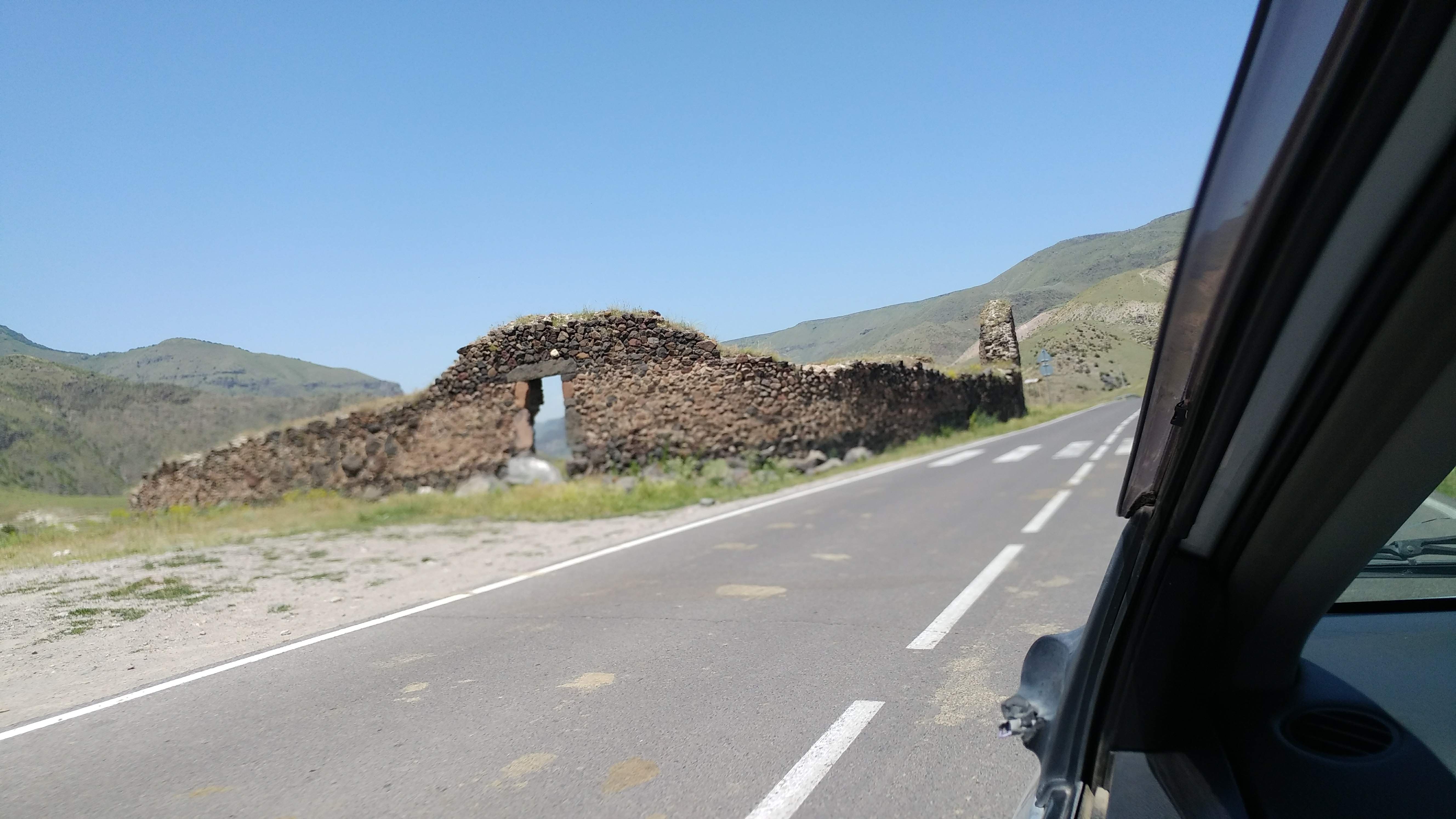
Southeast of Akhaltsikhe, on the way to the Turkish border, the Kura has eaten deep into the stone of the Caucasus mountains.* There are flat valley floors here, rectangles of green and yellow like elongated chequerboards, but it’s mostly a rugged landscape of high hills and scree. Huge building works were going on near the road, vast concrete pilings and silver pipes reaching down from mountaintops; we discussed what was going on, eventually reached a shared understanding of pumped storage. Bright sun beat down; the constant hiss of the crickets mixed with the rush of the airstream, changing in tone as we jinked around crags and big holes in the road. There were more cows about than cars, and it was difficult to get a sense of how busy this place must have been in its heyday. But the relics of a past Georgia were everywhere: a beacon-tower from the time of Tamar; a church one thousand years old; a fort that had once been sacked by Alexander.
“There was a market here for selling people. Is that right?” “Slaves?” “Yes. A slave market.”
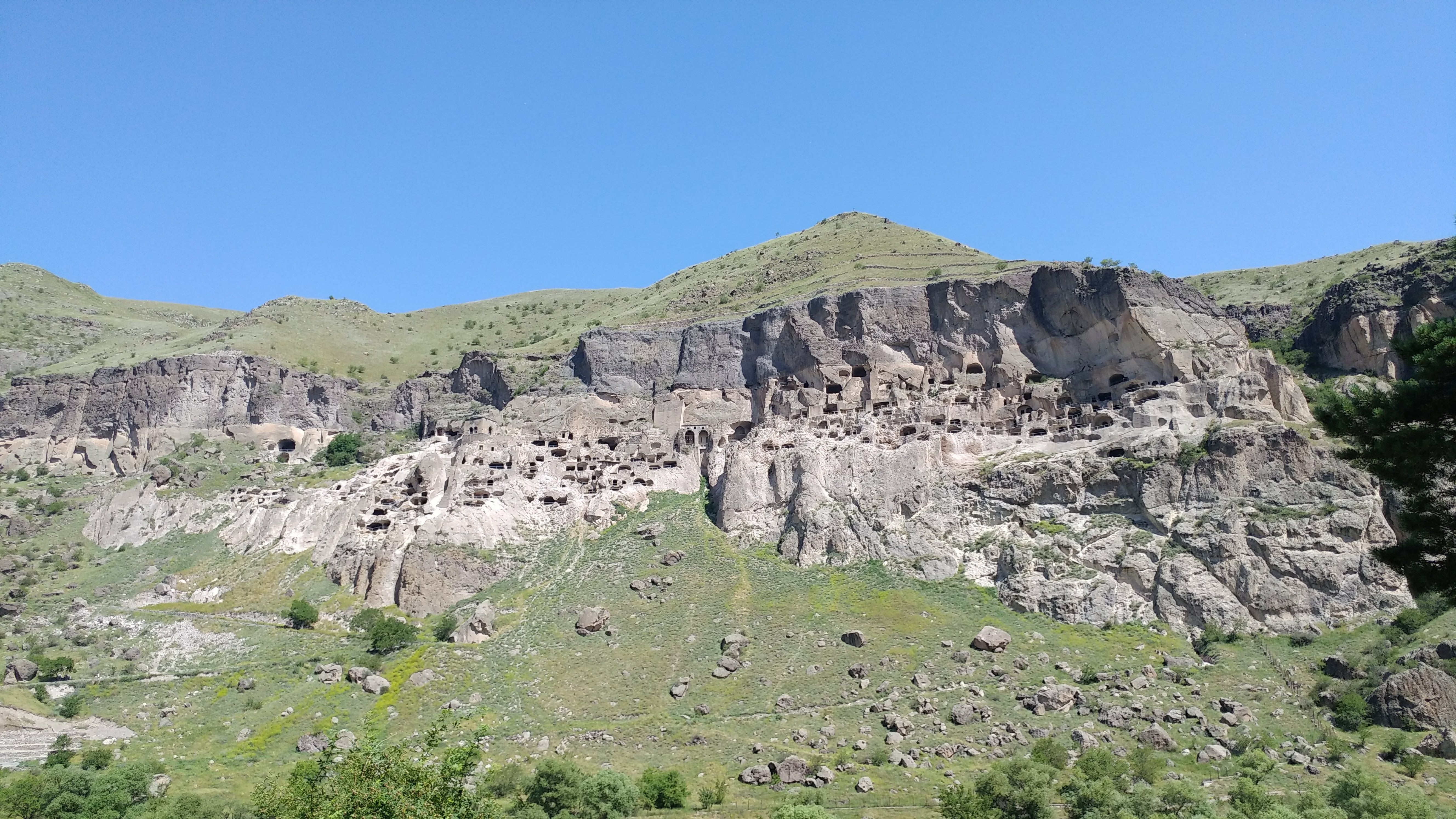
Past the confluence with the Paravani river, the land takes on a different character. Like Dartmoor, evidence of sustained, intense human activity is just beneath the surface everywhere: step-farm wine terraces abandoned for centuries; cliffs riddled with mysterious, too-regular holes; remote domes perched on crags; the high, romantic silhouette of the earthquake-slighted Tmogvi fortress, its ruined towers merging into the mountainside. Eventually, most dramatically of all, we came to the monastic cave-city of Vardzia.
Dramatic Vardzia Reveal. But if that doesn’t work for you, there’s a photo here.
From a distance, Vardzia looks like a termite mound with the side kicked off, if termites could carve out entire mountains. A quake in 1283 did terrible damage, and the whole site was abandoned after an Ottoman invasion a few centuries later. Around three hundred chambers survive of a supposed six thousand. The guidebook at the guesthouse said that it only has four levels now, from an original eight; the audioguide I rented (in good, slightly breathless English) contended that the original number had been nineteen. Much of the city’s structure can only be guessed at, but if you start from the idea of a well defended fortress-monastery dug into the hillside, with a supporting town in its skirts, the picture comes together.
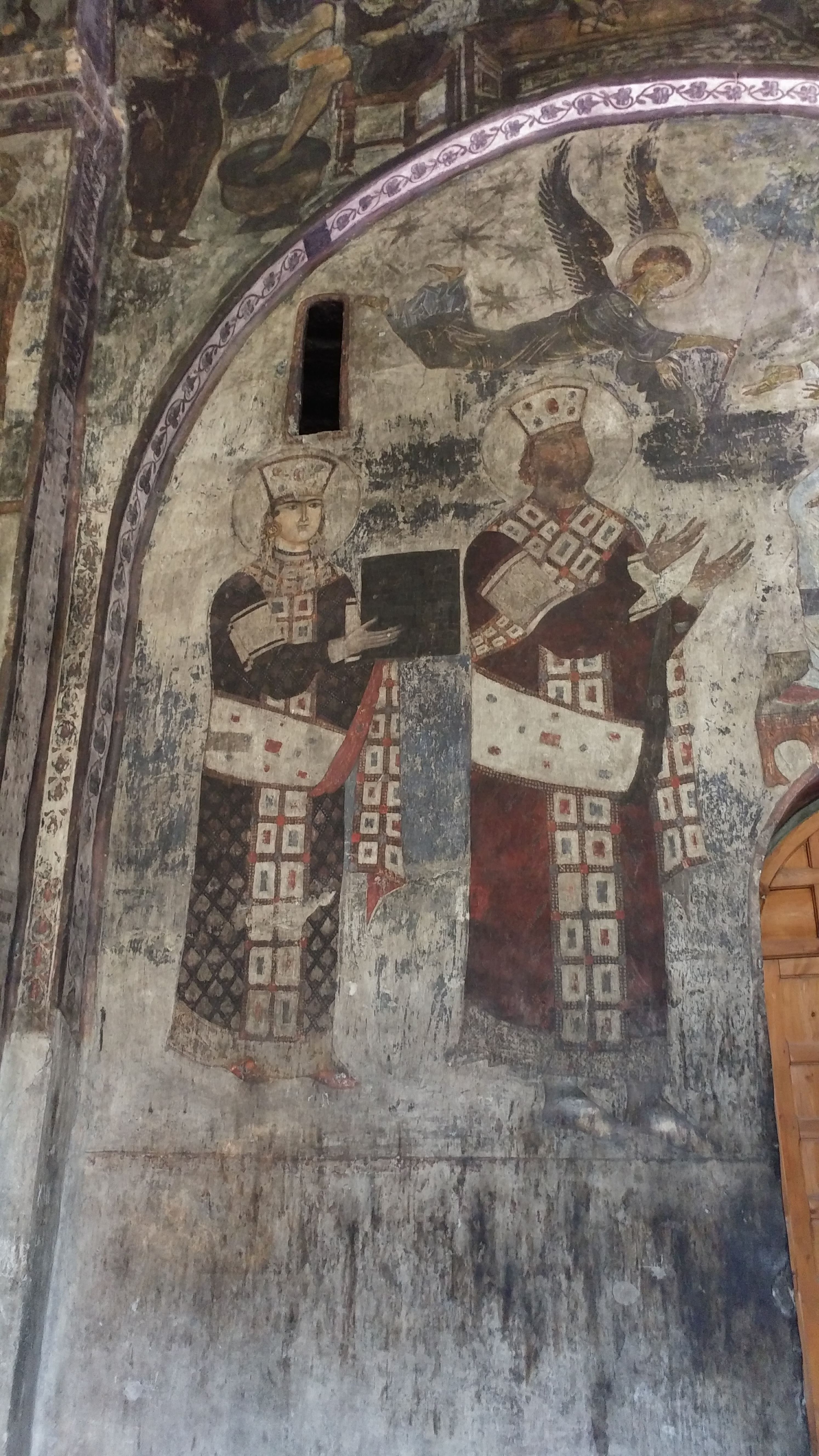
I hiked up the hillside to the base of the complex, rather than wait for a minibus; there were a handful of other tourists there, some American, some Russian. The exposed architecture is weathered to abstraction, and I needed the guide to explain most of the chambers. There were buried stables, refectory chambers similar to those at David Gareja, rooms with huge ceramic wine vessels buried in the floor. A belfry with martens nesting in its carved eaves is one of the rare parts of Vardzia which was actually meant to be above ground. Deep within the mountain, accessed only by a hundred yards of bent-double crouch-walking, a clear spring next to a floodlit chapel gave a real, rare sense of serenity. The audioguide was filled with explanations of sneaky ways the locals would wall themselves off in times of trouble (with only one main entrance and exit to the city). And wonderfully, the core holy site and the most artistically important part of the whole complex has survived very well: the Church of the Dormition, with its ancient but decently-preserved paintings of angels, saints and Tamar the Great.
Tamar occupies a similar position in the Georgian national pantheon as Elizabeth I does in the English: a much-celebrated queen** ruling over a golden age of cultural achievement (with her chronicler Shota Rustaveli an independently-legendary writer of Shakespearean renown***), their reputations shining all the more brightly owing to reigns bookended by periods of darkness and horror. Her depiction at Vardzia is the oldest and most famous, dateable very precisely to within a year of 1185. In a fantastically detailed royal costume, she’s moon-faced and tough-looking: narrow eyes, strong brows and a pursed mouth might indicate character, might depict courtly formality, might be the 1180s Caucasian ideal of female beauty, or might just be the result of an artist used to painting human faces in a martyrdom context. A long, winding, dusty stair took me back to the valley floor; my Georgian guides, who had seen it all before, were chilling by the river. We refilled our water bottles at a fountain, and rode on.
The Vanis Kvabebi complex (“Vani’s caves”) is if anything even more interesting than Vardzia, because it’s easier to understand how it worked in its golden age. A triangular settlement, two sides defined by a deep V-shaped notch in the canyon, one a massive fortification still impressive eight hundred years later. The open-air buildings are mostly now outlines and wildflowers, but the cave dwellings remain in decent nick. A segment of the dome of a fallen church is visible above an altar; in the caves, ancient wine-vessels cut ceramic-lined circles in the floor. Above it all, a tiny dome perches like an eagle’s nest (see if you can find it in the pictures), supposedly lined with ancient calligraphy. My guide was eager to show it off, and borrowed a key from a bearded monk who seemed to appear from nowhere, but a long, steep, rickety pathway and a makeshift ladder later we were wiggling it without effect in a lock. Maybe the lock needed oiling; maybe the monk didn’t like our faces.
Last point on the journey back was Khertvisi Fortress, which stands where the fairly dramatic Paravani River meets the extremely dramatic Kura. Legend says Alexander stormed a predecessor of this castle – plausible, it’s a supremely defensible point even by the very high local standards. As with most of these places, imagination is required regarding the contents, but the keep, the towers and the gingerbread-man-hand crenellations all stand on their own, huge and impressive.
We came back into Akhaltsikhe via a moneychanger – an interesting thing I’ve learned on travels into similar economies is that you get better exchange rates in the back of beyond than you do in the big cities – and I tried, with only partial success, to pay my hosts properly for the wonderful journey. I can’t remember what trifling amount they eventually accepted, but it wasn’t enough. I roused a still-ill Arpi, wrapped up our belongings, and we headed for Kutaisi and the long journey home.
* One plausible etymology for the river’s Georgian name is “gnaw”, as in “gnaws through mountains”. ** There are lots of modern English-language references to Tamar as “King” rather than “Queen”, and half-baked suggestions that this is a unique honour or that she somehow had a masculine kingliness. But Georgian doesn’t have grammatical gender, so her title is genderless – “monarch” or “sovereign” would be more appropriate.
*** If you really want to stretch the point, The Faerie Queen and The Knight in the Panther’s Skin are also roughly equivalent, being famous era-defining literary works which are also thinly veiled political allegories about the queen. But that’s a bit tortuous.









 A problem with setting things in the future that refer back to the present is that the present won’t stand still, and episodes of Black Mirror keep coming true. Most of the stuff being dug up in the world of Mortal Engines is old tech right now. Fever Crumb found herself standing on a floor tiled with iPods in Scrivener’s Moon, which is about all they’re useful for now. When Tom first found a CD in Mortal Engines, they were common, but here in 2018 they’re now less popular than vinyl, for some reason. How long until they’ll need explaining to young readers, as if he’d found a VHS or a 5″ floppy disc? (Perhaps this is why the film seems to have replaced it with a toaster…)


 We owe the Historians of the WoME a great deal, and gave them Puerto Angeles for their trouble, a cheerful historian party city where the museums and the samba clubs are both 24/7.












 underneath the open sky