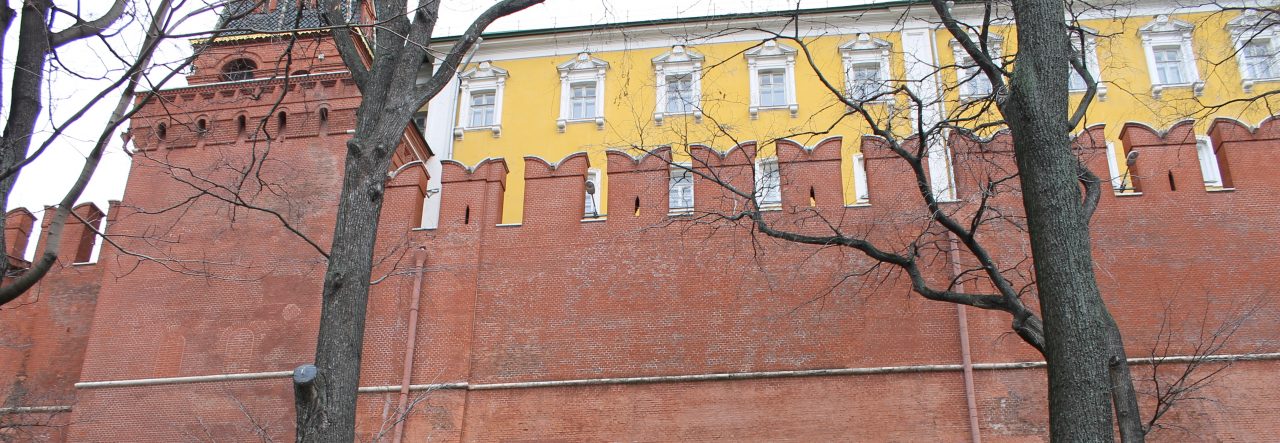
among the wars and the waters

A BRIEF INTERLUDE ON THE HISTORY OF TALLINN from which, at a glance, the most impressive thing about the place is that it’s independent at all. The Estonian state in its modern incarnation has existed for less than 45 years, in two non-consecutive periods, and already has two independence days, both celebrating getting away from Russia (the first in February, celebrating the 1918 independence; the second, in August, celebrating the 1991 independence, in a “for real this time” sort of way.)

Tallinn has been around for a long time, as raiders’ outpost, Hanseatic trading port, fortified naval base, and eventually capital of its own country. But it is mainly a history of being batted about, invaded and occupied by the dominant regional power of the time, and there have been a lot of those in the Baltic. The extensive and wonderful medieval city walls surrounding the Old Town, the enormous trace italienne fortifications surrounding them, the monstrous coastal ex-fortress (“Patarei” means “battery”) and the fancy seaplane hangars are all parts of the Baltic power game.

Estonians are related ethnically and linguistically to Finns (and thus, going a very long way back, to Hungarians) – the ancient Estonians existed as one of the many seafaring, sometimes-trading sometimes-piratical groups operating in the Baltic through the Dark Ages, which we English inelegantly give the catch-all name “Vikings”. They were one of the last pagan groups in the Baltic, principally because neither the Catholics on one side nor the Orthodox on the other wanted to set off a holy war with the other, and fought variously with Danes, Swedes and the Republic of Novgorod (the northern proto-Russian state which was later subsumed into the Grand Duchy of Moscow) as well as ignoring and, er, possibly eating various luckless Catholic missionaries from the German states. They built hill forts and stone castles, including the basis for the later Toompea Castle on the Tallinn citadel. In the 13th century the Christianised Danes, sick of Estonian raiders, allied with the Teutonic Order to launch a Northern Crusade into the area, slaughtering the loosely confederated pagan tribes, wrecking their hill forts and eventually (in the face of some violent revolts) establishing a state called Livonia, run by a Christian knightly order called the Livonian Order, or Sword Brethren.

A variety of horrible wars – Sweden, Denmark, Muscovy and the Polish-Lithuanian Commonwealth being the main players – swept over Livonia for the next three centuries, but Tallinn itself mostly did fine. Known as Reval at the time, it had become part of the Hanseatic League, an immensely influential semi-formal association of merchant towns, which ran most trade in northern Europe from the thirteenth to the eighteenth century. Serving as a natural point for trade between Muscovy and everywhere else, Reval was coining it, and this period was when the town hall and the main late-medieval fortifications, including Fat Margaret and the Kiek in de Kök, were built – both protecting the city’s wealth, and displaying how rich they were to be able to afford this sort of martial bling. Fancy walls and Hansa status weren’t an invincible defence, however, and with the rest of Estonia Tallinn mostly-voluntarily came under the power of Sweden in 1561. The Swedes, then an up-and-coming power who cemented their Baltic pre-eminence in the apocalyptic Thirty Years War of 1618-1648, considered Reval an excellent base to bottle up the Russians, and invested a staggering amount of money into defensive upgrades – the enormous bastions, redoubts and ravelins that surround the medieval walls to this day.

Sweden’s Baltic dominance and ownership of Tallinn lasted until the Great Northern War (1700-1721), when Peter the Great of Russia kicked the shit out of the Swedes and took all of Estonia as war booty. (True to form, Britain involved itself on the weaker side for postwar concessions, switched sides halfway through and generally enjoyed watching everyone get wrecked.) The improved fortifications were never tested – the horrific plague outbreak that ravaged the Baltic during that war reached Tallinn in 1710, just before a Russian army did, and after losing two thirds of their population to the plague the survivors collectively went “sod this, not worth it” and opened the door to Ivan.

Tallinn was part of the Russian Empire for the next two centuries, and went through the same general developmental upheaval as the rest of Europe, but retained its prosperous trade, its medieval old town and its German mercantile-urban elite, the last only leaving in the 1890s. British and French ships blockaded it during the Crimean War, but didn’t attack. In the run-up to the Great War, it was a key component of the enormous Russian effort to block off St Petersburg from the sea with coastal fortresses in Estonia and Finland, and Royal Navy submarine squadrons used the port for raids on iron ore convoys from Sweden to Germany; and, during the utter chaos of the Russian civil war, the Eestis took advantage of everything falling apart to declare an independent state, with its own democratic government and adorable little excuse for a military.

Russia invaded again in the 40s, twice: the first time, in the aftermath of Molotov-Ribbentrop Pact, they annexed the Baltic states, abducted the existing governments, military, police etc and deported them to Siberia in cattle cars to die, set up puppet governments claiming to be “popular fronts” and legitimised them through rigged elections, shot anyone who resisted, and generally made such a horror of themselves that when the Nazis attacked in ’41 they were welcomed as liberators. The Nazis, of course, did their usual thing with Jews (not that there were many in Estonia by that point) then, as the Eastern Front moved so decisively westward in 1944, the Soviets returned, kicked the Nazis out and killed or deported everyone who had cooperated with them and anyone else they found slightly threatening. They again installed a puppet government as the Estonian Soviet Socialist Republic, then carried on doing their general repression thing until the mid 50s, breaking resistance through mass deportations, conscripting the young men for forced labour, sending dissenters and people with money to the gulag etc – all of which was partially reversed with the Khrushchev thaw. Then, when the USSR collapsed, Eesti got independence again in 1991, and threw in with the EU and NATO as quickly and enthusiastically as it could; you spend Euros in the shops now, and there are semi-permanent NATO deployments there. I didn’t get any impression of tension while there – Tallinn has a huge Russian-speaking minority, most tourists there are Russian, and if anything we got treated better having a Russian friend than we did just speaking English – but the country is clearly on Putin’s shopping list, and sabres are being rattled on both sides of the border.

Tallinn 2015

Old Town and Toompea Linnahall, Patarei Prison, Seaplane Museum – A Brief Interlude on the History of Tallinn – St Olaf’s, Fat Margaret, Old Hansa

tall olaf and fat margaret

IMG_20150705_134904

St Olaf’s is a curious building to look at. In style, it’s just a fairly simple church, with a plain sloped roof over the nave and a square tower supporting a sharply pointed spire, all in that boxy, whitewashed Baltic style. But in scale it is enormous. Getting to the top, through an amazing assortment of different rickety wooden steps and winding stone spirals that hide in those white walls, was an adventure in itself.

IMG_20150705_135835

The viewing gallery is at the base of the staggeringly tall spire, whose steep sides are a patchwork pattern of old green and new brown copper, narrowing to a sharp point aimed straight up at heaven.* Health and safety measures are refreshingly Eastern European, and only a waist-high metal fence and a narrow wooden pathway stop you sliding down that hot, curved copper to oblivion on the cobbles. From the tower, you can see all Tallinn: the red roofs and white walls of the Old Town, bounded by marching lines of medieval watchtowers; the glass and concrete of the newer city, shining in the hot white light; the huge, clear shapes of the coastal giants; the tarmac expanse of the port complex, as it embraced a pair of Baltic cruise liners; a smudge on the far coast we fancied was Finland, under the cobalt-glass sky. A party of game old Japanese ladies passed us as we came back down the vast tangle of stairs, and we privately wished them luck.

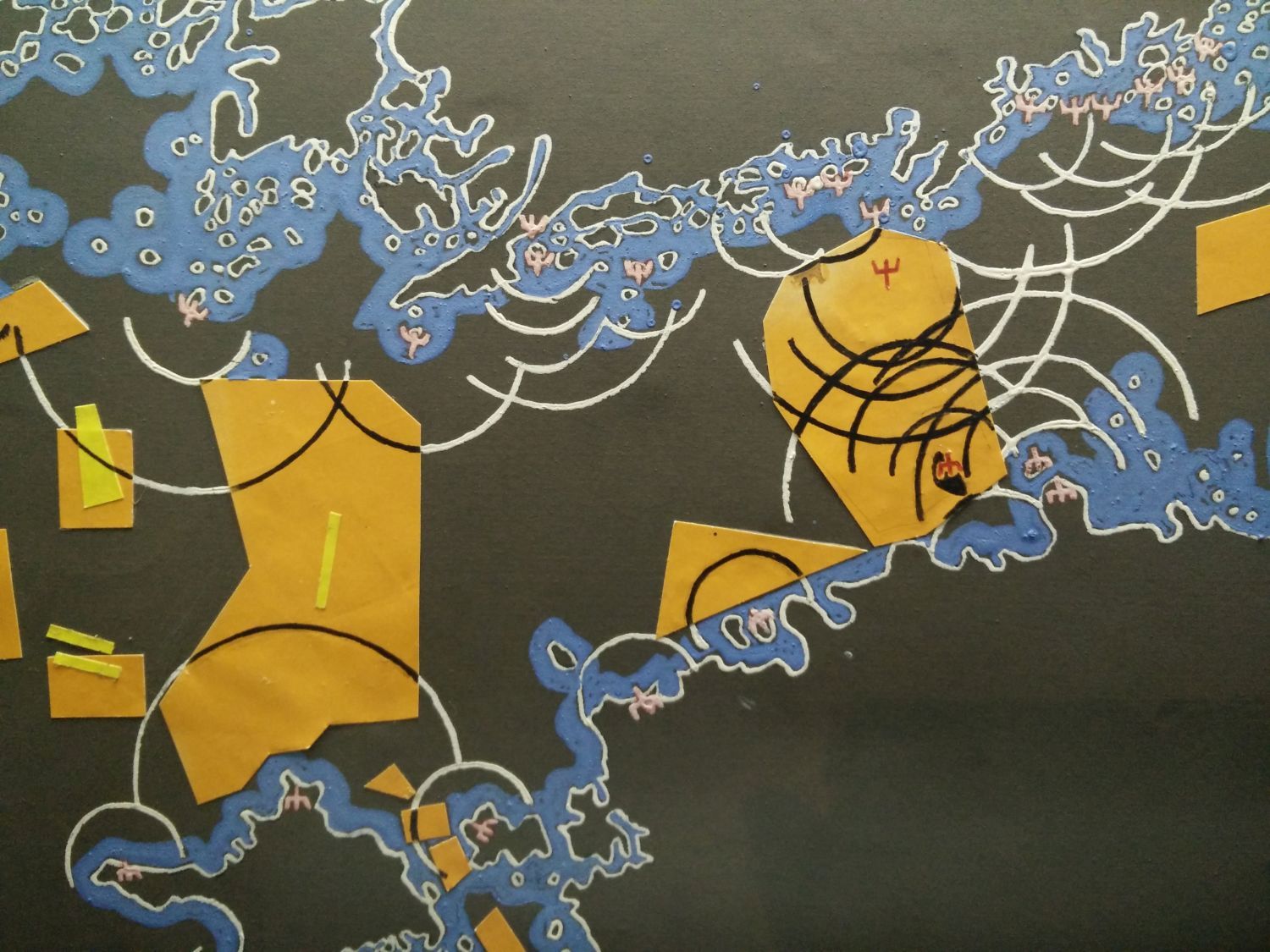
Back when cartography was FUN.

Next was Fat Margaret, a short stroll through shady cobbled alleys later. She is, as you might expect from her name, a stout old thing, stony-faced and round-bottomed, with a neat stone arch linking her to her little sister, and three decks of gunports running through her two-metre-thick walls to cover the harbour. Plaques on the street outside said nice things about the British and the Royal Navy.  An excellent video display on her first floor showed the history of Margaret, who was once known as the “Rosencrantz Tower”. The Meremuuseum inside is run by the same group as the seaplane hangar, and the big-ticket items have been moved there, leaving behind a lovely, intimate history of Estonian sailors, traders and ice-fishermen, full of model ships, spyglasses, two-headed eagles, a century and a half of black-and-white photos and a millennium of mad old maps. On the roof, a number of picnic tables sat under parasols, and a lady manning the little bar there provided us with milkshake floats and supporting evidence for Russian stereotypes about Eesti slowness.**

Early 19th century map of the various Russian batteries and minefields securing the Gulf of Finland.
Map of early 20th century Russian defences securing the Gulf of Finland. Yellow stands for high-density minefields, orange for low-density minefields. The greatest concentration of gun batteries, to the left, is between Helsinki and Tallinn.

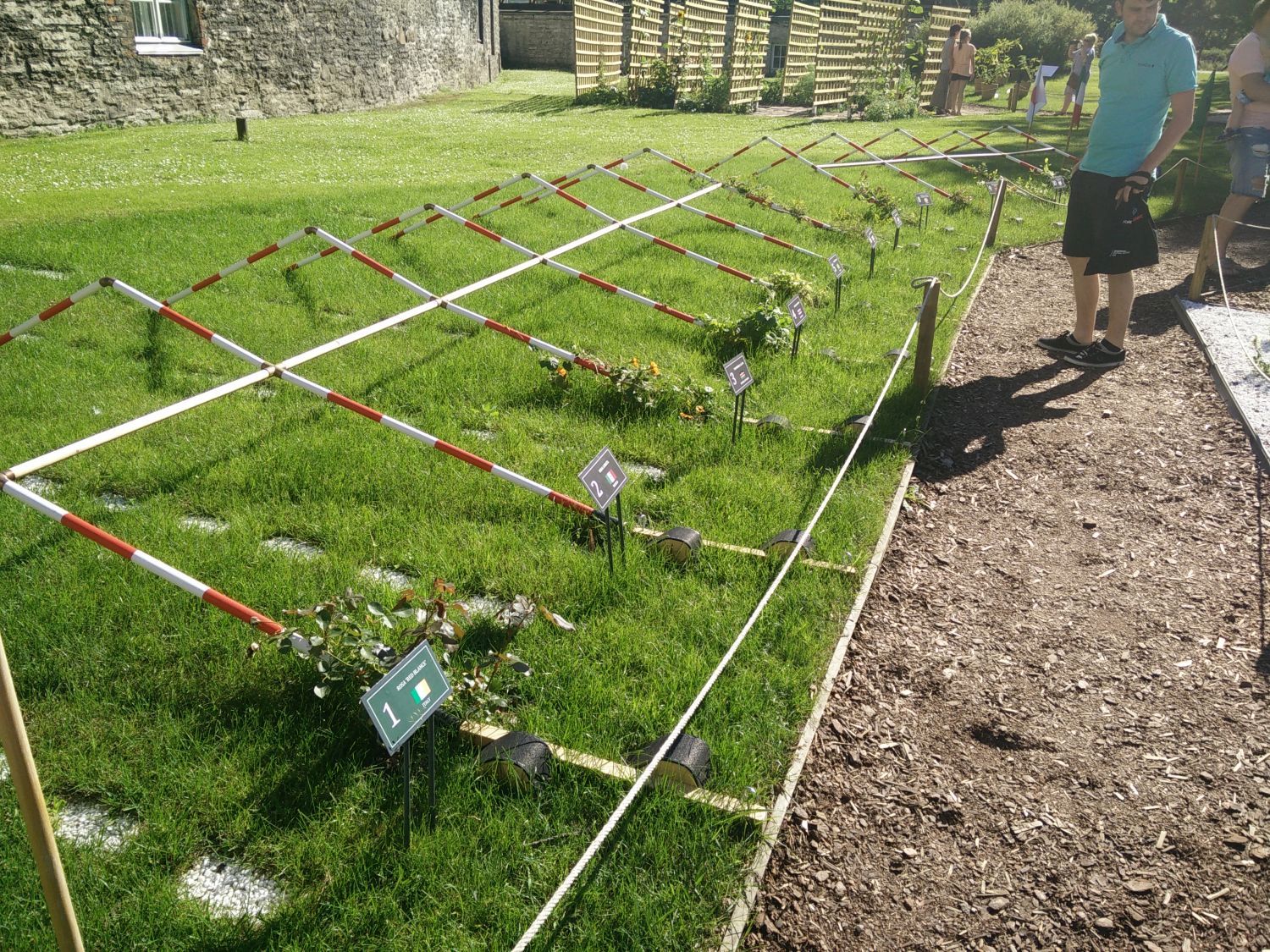
Outside the walls, on the west side of town, were lawns, flowerbeds and curious public art installations: giant ants, weird abstract shapes, curious mirrors. Someone had set up an “Olympics of Creepers”, an assortment of climbing plants from around the world, each with their own bamboo cane to “race” along.*** (Eesti slowness jokes at the end, please.) Getting a little footsore, we strolled back through the new(er) town, certain landmarks now familiar – the weird, cool, shining gold apartment block with the luxury shops in its cut-back lower levels, the amazing, oppressive brick Art Deco oddity, the scrappy car park which always seemed to have some new kind of vermin in it – to Liivalia and a bolognaise dinner.

The Creeper Olympics. No, not the internet kind, the plant kind.

But Misha doesn’t seem to need sleep, and after filling up we went back out again to the Old Town, locating “Catherine’s Passage” and investigating the tat shop hiding in a cellar there; and to Old Hansa, dark and full of guttering candles, for honey beer in big earthenware tankards. At another tat shop, I bought a tiny Estonia lapel pin and a fridge magnet made of Baltic pine and amber. The streets were deserted late in the evening (“after dark” would be inaccurate; white nights, remember) and we found ourselves back up on the Toompea, looking down on the city as it glittered with a hundred thousand points of light. I watched one enormous red dome-shaped building on the eastern horizon, could swear that it actually seemed be getting bigger – but it was only after a few minutes that I realised it was the moon, full and red and enormous.

IMG_20150705_212545


* It is believed the spire has been struck by lightning at least ten times. It’s rude to point.
** A Russian joke:
An Estonian waits at a railway station. Another Estonian passes by, pumping a hand-car. The first one asks: “Iiis iit faaaaarrrrr tooo Talllinnn?” “Notttt verrryyyy faaaarrrr,” the other answers. The first gets onto the car, and helps work the pump. After two hours of silent pumping, the first Estonian asks again: “Nooowwww iis iit faaaaarrrrr tooo Talllinnn?” “Noooowww iiitt iiiis verrrryyyyy faaaaarrrrr.”
*** The American plant was a clear winner with the Japanese one fairly close behind. The British creeper was pathetic and hadn’t even started.


Tallinn 2015

Old Town and Toompea Linnahall, Patarei Prison, Seaplane MuseumA Brief Interlude on the History of Tallinn – St Olaf’s, Fat Margaret, Old Hansa

only the dead have seen the end of counterculture

(Click the images for higher resolution versions!)

We rose late-ish, and went out for breakfast. Misha and I had coffee and kebabs at a 24hr kebab box (whose keeper spoke Russian, but not English); Rog regarded this as Sick, and went for the little café round the corner instead. Once again, it was bright and breezy as, once again, we strolled past the glass security box outside the shuttered US embassy. I’m sure we’re on a watchlist now.

IMG_20150704_111854

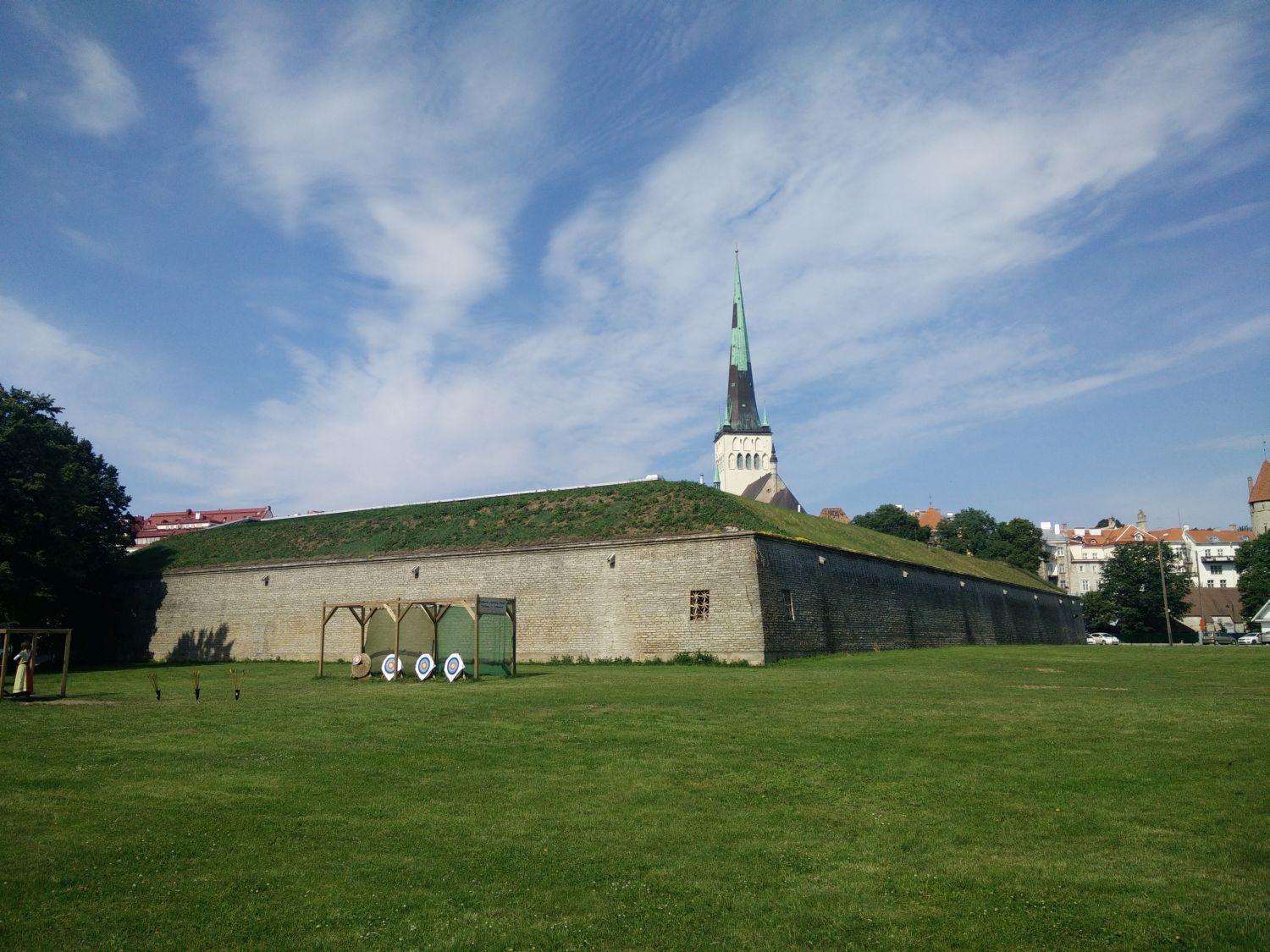
On the north shore, three very large, very different Russian structures stand silhouetted against the blue Baltic: the Linnahall, Patarei Prison and the seaplane hangars. Leaving the Old Town, walking past the little archery range next to the massive northern bastion, we espied the Linnahall, an enormous brutalist ziggurat of broad staircases and desolate plazas. It was once known as the V.I. Lenin Palace of Culture and Sport, and is now crumbling and clearly unloved; the only parts still in use are the car park and the jetty, where the fast ships to Finland dock. There were a few people wandering around it, clearly as bemused as us as to why this thing even existed; a young English couple overheard us talking their language and asked if we knew any beaches round here. We shrugged, professed ignorance, and indicated the fairly rocky Tallinn coastline and the catamaran to Helsinki.

Atop the Linnahall. Atop the Linnahall.

Heading west along the coast we stumbled across an open-air fish market, with more dried mackerel on display than you could shake, well, a fish at, and snacked on some little salty strips; then continued along a road which turned into a road-to-be, beds of heavy-grade aggregate lined with fresh new concrete kerb pieces. As it turned back into a road a few hundred metres away, we passing a young father with a pushchair, heading the other direction, about to make a terrible mistake.

DSC_0248

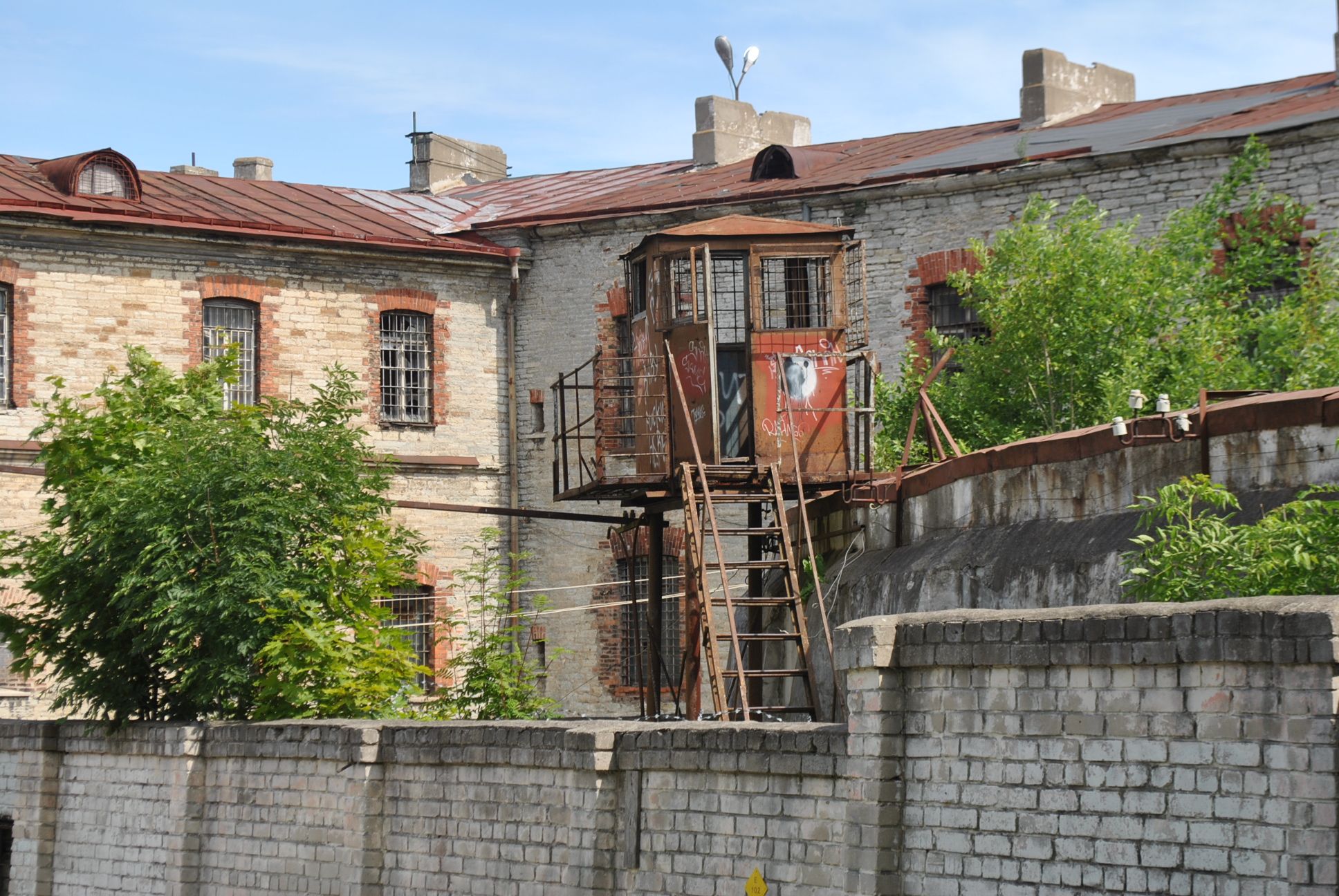
Patarei prison was also very reminiscent of a fortress, but that wasn’t a coincidence at all, because it was built as one. From above, the thing looks like a child’s drawing of a boat, a curved hull with a triangle sail sticking out of the top: the curved outer edge, which faces the sea, was built to be full of casemated artillery, the triangle inside containing barracks, ammunition, secondary defences against a landward attack, etc. Our shambling walk across the building site had taken us to the wrong corner, and trying to find a way through the high walls and barbed wire, we found only found a monument to French Jews deported to Estonia and murdered there during the war. Eventually we worked our way around it and found an entrance; the place was full of graffiti, and felt thoroughly run-down and achingly bohemian. A shack down by the water, on the little sandy stretch between and fortress and the sea, sold drinks and T-shirts to a mixed group of tourists, working men and local hipsters; the t-shirts turned out to be useful, as a bird had just crapped on Rog. We sat for a while under a parasol, watching little sparrows taking dust baths, and huge multi-coloured cruise ships coming and going from the port.

DSC_0289

An Estonian took our money (on whose authority, god knows, but we didn’t feel like arguing), and inside, the prison was cool and damp and fearsome. Nothing remains of the original military fittings; most of the gun casemates have been converted into cells, six or eight bunks with a tiny horrible squat toilet/shower unit in one corner, all locked up behind a serious steel door painted blue and stencilled with the cell number. The end of one wing had a creepy operating theatre, still with hypodermics and bits of smashed up autoclave lying around; the end of another had a lovely little library, with welcoming wooden shelves and a mural of the great moustaches of European literature. On the walls of most cells, prisoners had taped up magazine and newspaper clippings; women were occasionally in evidence (one individual cell’s occupant clearly had a massive thing for Dana Scully), and one guy had a whole bunch of tea and banana stickers, but the main theme on display was cars –not even fancy cars, just really boring generic ones (the Citroen Xsara was a mainstay in many cells, to Rog’s intense disgust.)

IMG_20150704_140608

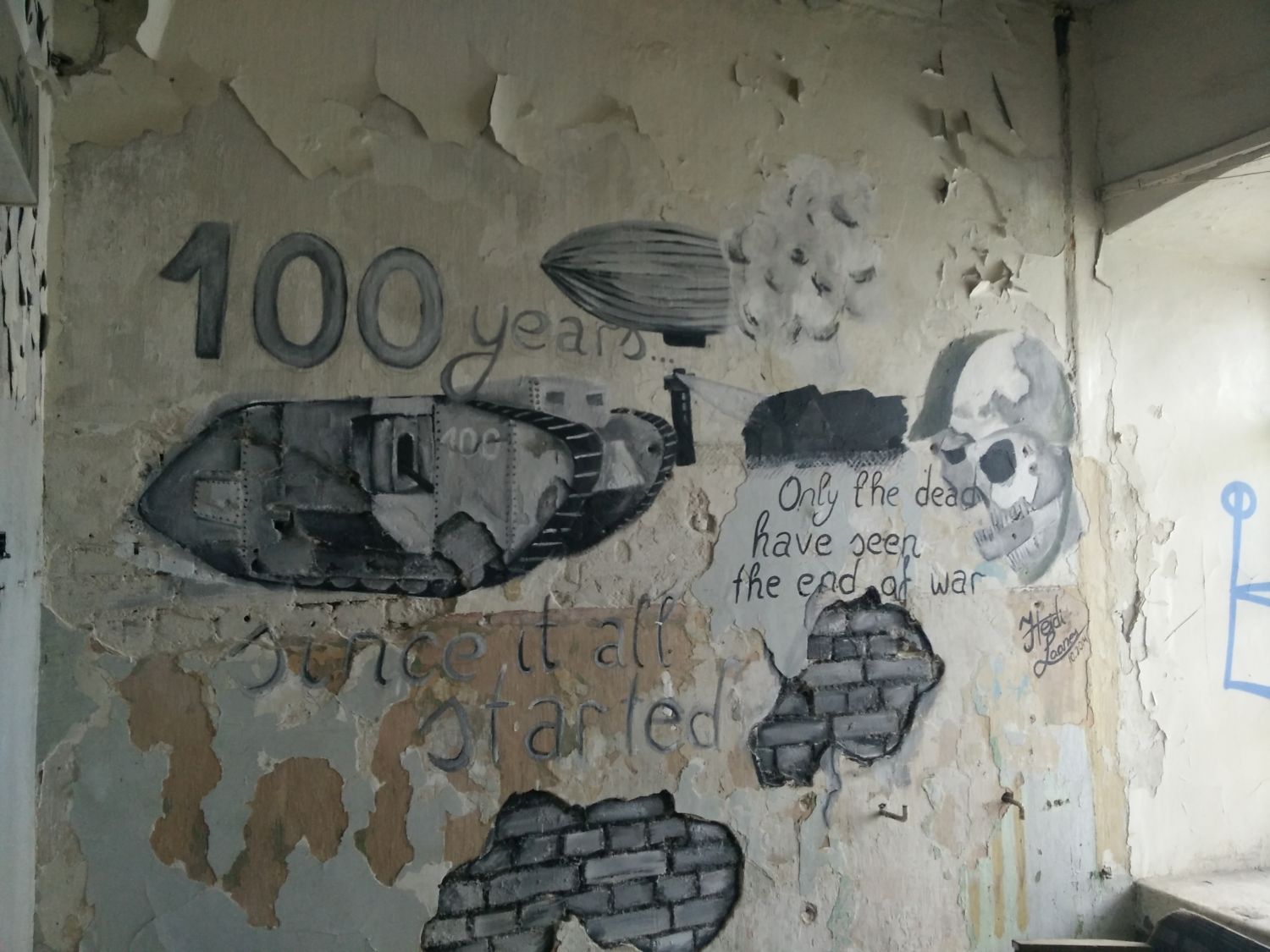
As a big empty building redolent with symbolism, the prison attracts street art like a pond attracts scum. Highlights included a lovely Art Deco woman at the top of a staircase, welcoming one to hell; a room full of strings on which someone had hung paper aeroplanes; red stencils on a staircase insisting that the spirit of Marx and Lenin; and a bunch of random fire extinguishers hanging on one landing. The graffiti intensified the higher we got; on the top floor, it had reached the status of full-blown Art Installation, covering entire rooms with things which ranged from trite “countercultural” white noise to some really quite accomplished and evocative pieces. Looking down into the courtyard, we could see the little concrete boxes with barred roofs where prisoners could take the air. The execution chamber was quite small, plain, and quietly disturbing.

DSC_0335

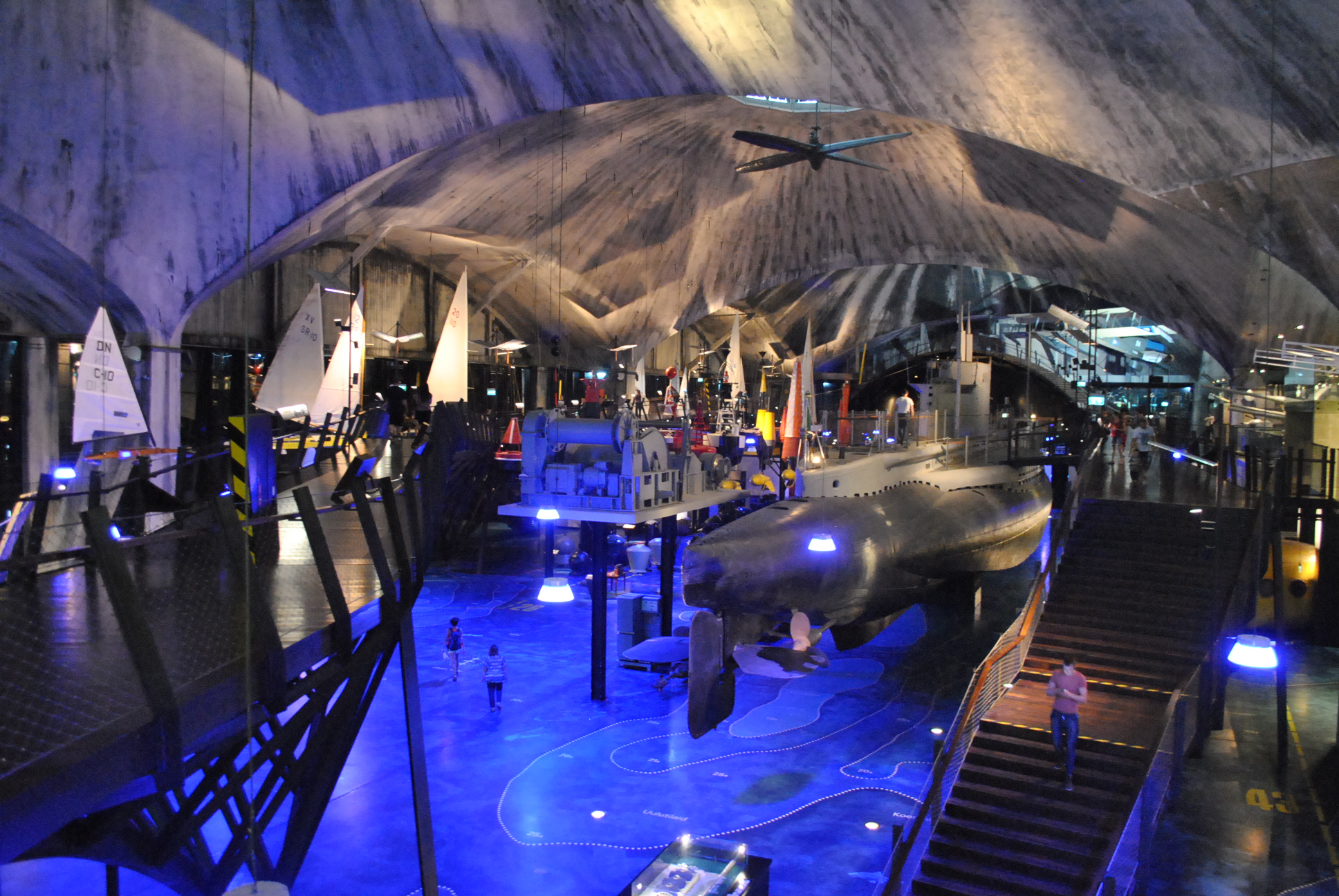
Back out into the warm midday air, we walked to the seaplane hangar. It’s a modern museum done right: a glossy, blue-lit marriage of shedloads of EU heritage money to a legitimate one-in-the-world curio. The hangar buildings, built as part of the network of Baltic defences in the final years of the Russian Empire, are of an (at the time) incredibly futuristic concrete shell construction, and are absolutely unique. After the Battle of Tsushima, Tallinn was the cornerstone of the new Baltic defences protecting St Petersburg; its cornerstone, laid by the Tsar himself, indicated exactly how seriously they took these things.*

“There’s one like that at the Lester Aldridge building in Bournemouth! It was laid by Michael Heseltine.”
“Hezza isn’t exactly Nicholas II, though.”
“No?”
“They shot him, and poured acid on his face so no one would recognise him, and threw his corpse down a mineshaft.”
“There’s still time!”

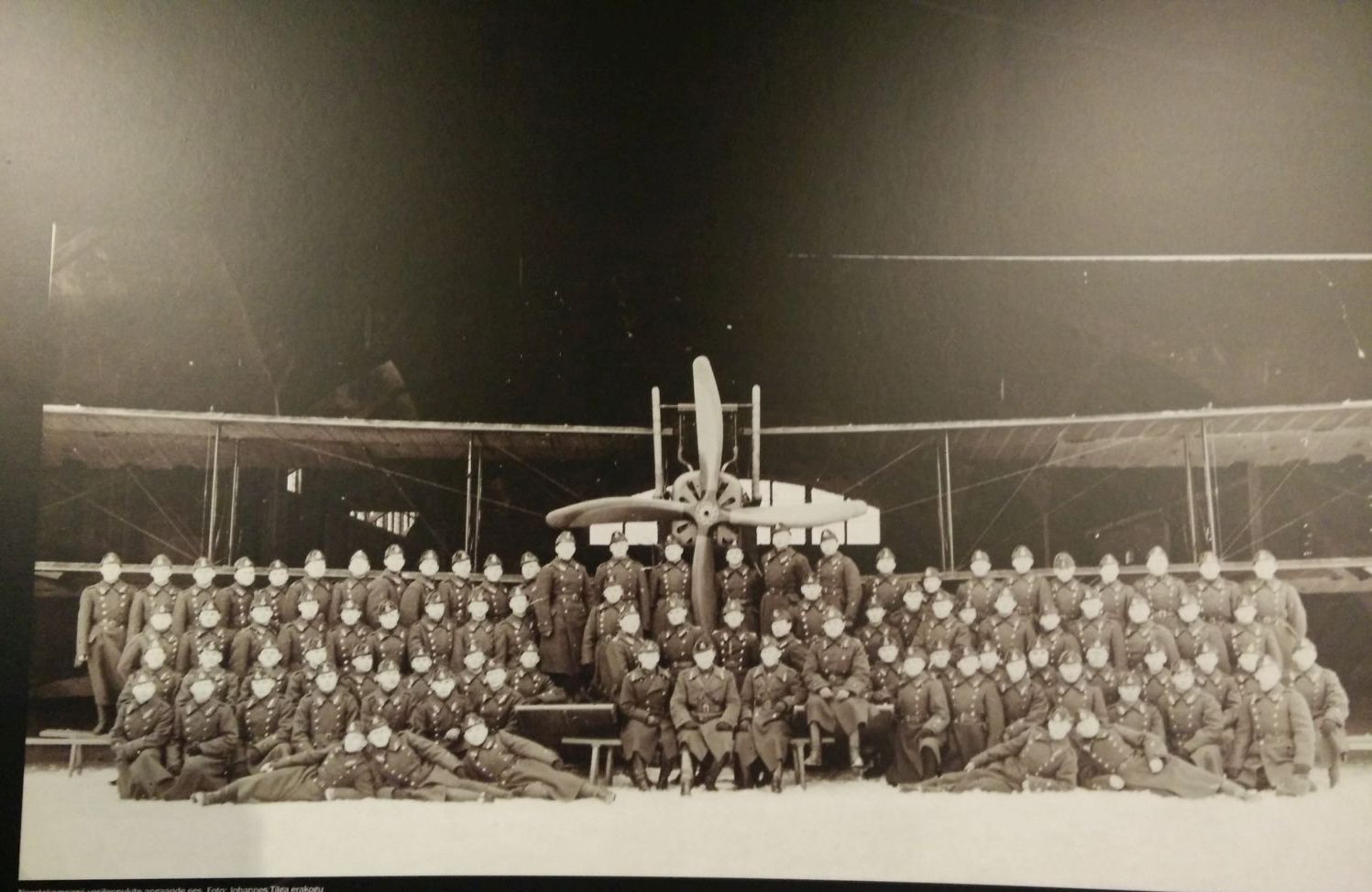
The Estonian air force, and their plane. The Estonian air force, and their plane.

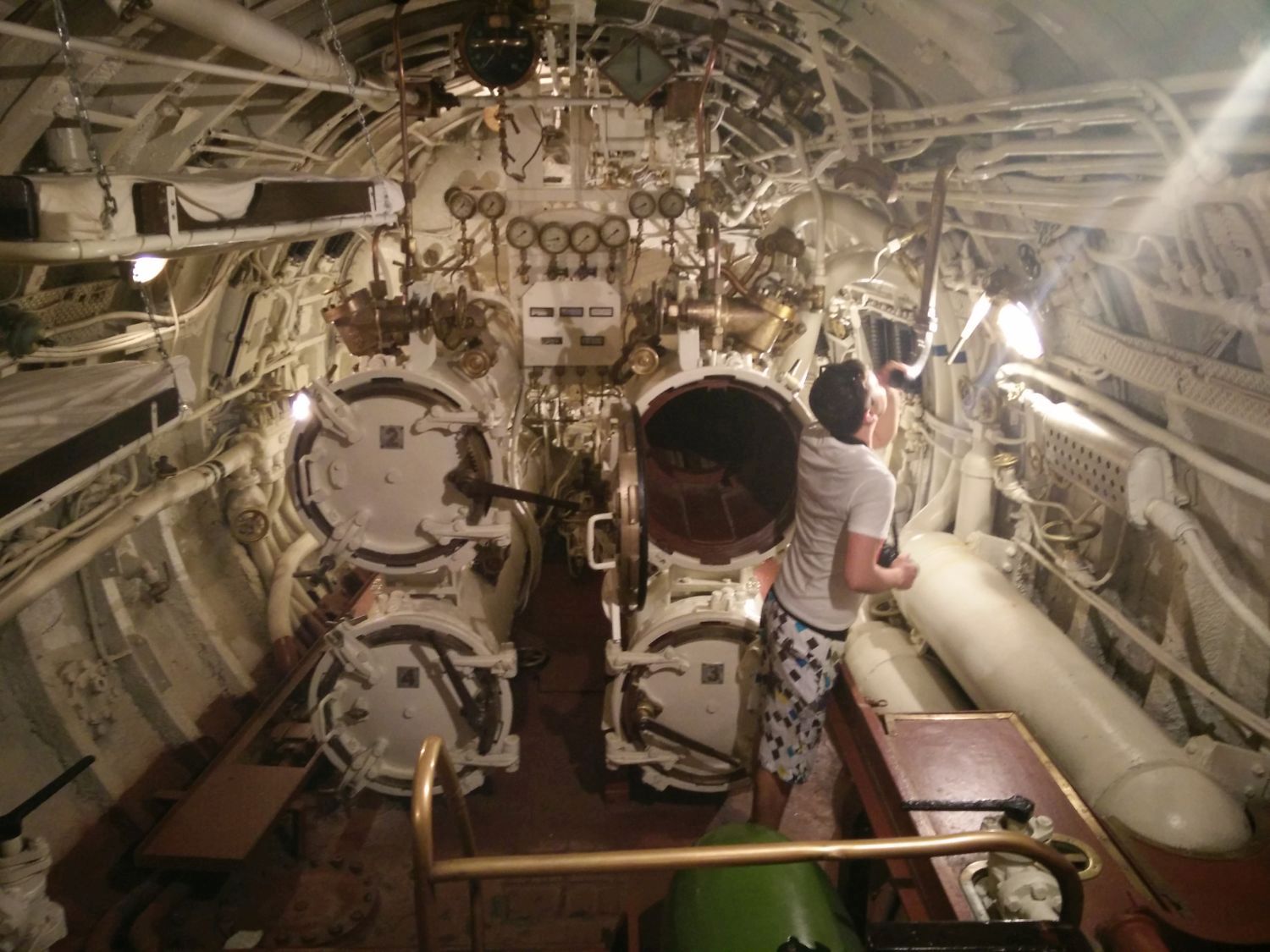
We had a pricey but tasty lunch in the cafe, enjoying our tea and the weird sight of a full-sized submarine inside a building, before proceeding. A catwalk took us through a suspended exhibit of buoys through the ages, traditional fishing boats and “ice yachts”, lethal-looking little combinations of ice skates and sails, before descending to the ground floor. Digital displays provided thoughtful and well-translated information about everything on request; best of all, our ID cards had little RFID tags in them which let us email particular articles to ourselves for later reading. The military history component, a mixture of big explanatory boards and hefty cast-iron sea-mines, with the huge submarine Lembit looming above it all, was fascinating, and didn’t suffer at all from Estonia’s military history consisting mainly of “having invaded and overrun all of Eesti in a couple of hours, the Russians/Swedes/Finns/Germans then built this really cool thing”, or, at best, “lacking the industrial capacity to build much fancier than a signal buoy, the Eestis bought this cool thing from the British.” So it was with the lovely replica Short biplane hanging from the ceiling, and the Lembit itself, built in Barrow-in-Furness, annexed into the Red Banner Baltic Fleet during the Soviet invasion, ending up rusting up a creek in Nizhny Novgorod (!) until a group of her old Russian crewmen banded together to get her restored as a museum ship. The interior has been very carefully put back together; like HMAS Diamantina, it’s a real labour of love. Above it, a curious line of gun turrets (with most of their barrels replaced by wire skeletons, the originals sabotaged in wartime or melted down for scrap) were backed by a surreal and deeply upsetting anti-war mural, many-armed monsters with clockwork arms and guns for eyes picking up and devouring hapless little top-hatted people by the dozen.


"Fire two, Ensign Misha!" “Fire two, Ensign Misha!”


Back into the welcome sunlight again, we toured the harbourfront: a line of old Soviet torpedo boats and military sundries sat on the quay, and all four ships of the Estonian Navy were currently moored behind the museum; minesweepers, with yellow torpedo-like sweeping equipment on their grey decks.** Dwarfing them all was the antique icebreaker Suur Tõll, which our tickets let us explore; it reminded me somewhat of the Mikasa (which is fair enough; they were contemporaries.) Eesti health and safety sensibilities are definitely more Eastern European than Scandinavian, and we got to climb around the engine room, scurry around on the bridge and almost brain ourselves on fuel hoppers in the shadowy furnace rooms.

The three giants of the Tallinn coastline couldn’t be more different, in style, history or current status, and each tells a different part of the story; the vast icon of Communism, newest and largest yet rejected and irrevocably dead; the abandoned fortress turned abandoned prison, a beautiful carcass crawling with symbols of old horrors and new hopes; and the pristine, expensive collection of relics, so thoroughly European in character – it appears to be a celebration of the past, but is more than anything an icon of the future Estonia wants to be part of.


* In 1904, with the Russian Pacific Squadron either bottled up in Port Arthur or wrecked in the Yellow Sea, the Tsar sent his Baltic fleet to fight the Japanese. After spending a hilariously awful six-month naval comedy-of-errors sailing all the way around the world, Togo annihilated this “Second Pacific Squadron” at Tsushima in a matter of hours – the Mikasa was his flagship. With St Petersburg now undefended, the Russians decided sealing their capital off behind minefields and guns was the best option until they’d rebuilt their fleet.

** Which is perfectly fair. and practical  One or two corvettes can achieve nothing against anyone – you may as well take the Danish approach*** – but mines still litter the Baltic, and are still lethal after all these years.

*** “Denmark does not need a military. Denmark needs an answerphone which says ‘we surrender’.”

Tallinn 2015

Old Town and Toompea Linnahall, Patarei Prison, Seaplane Museum – A Brief Interlude on the History of TallinnSt Olaf’s, Fat Margaret, Old Hansa
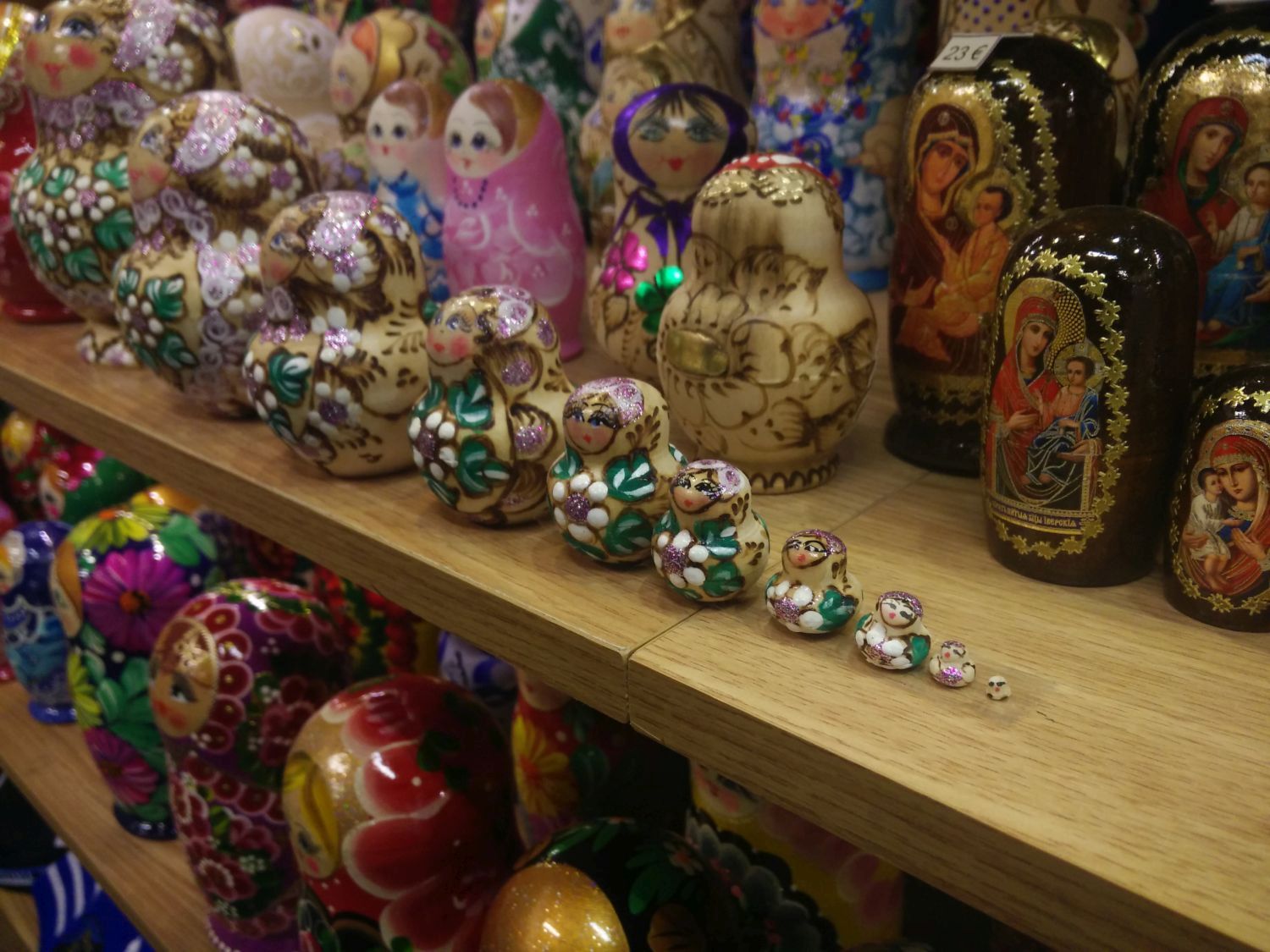
 

blue seas and white nights

(Click the images for higher resolution versions!)

IMG_20150703_143033

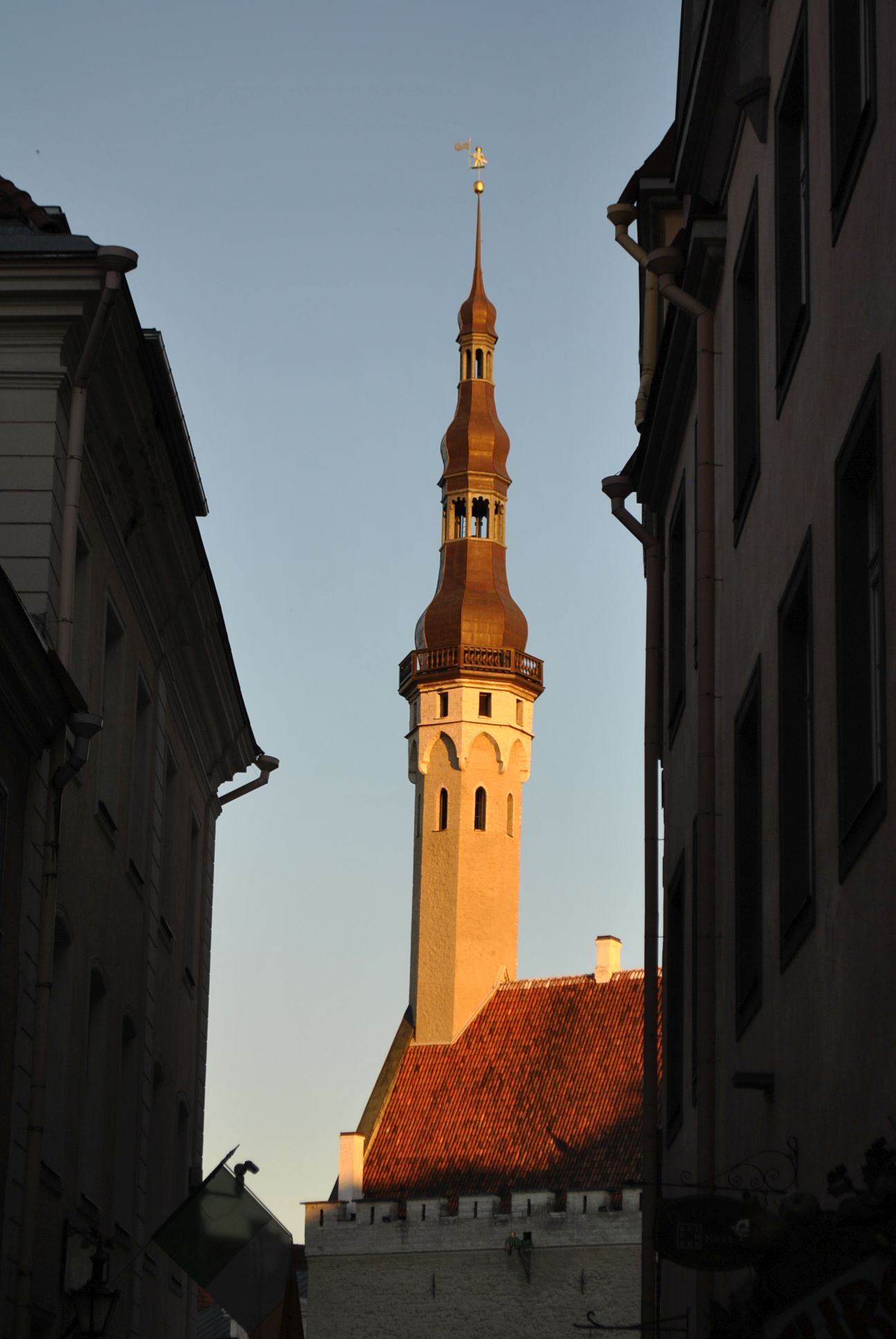
Tallinn has the misfortune of sitting in a strategically useful position between the Scandinavians, the Germans and the Russians. As a result of countless invasions, migrations, trade settlements and the general turmoil which is European history, it’s a weird, lovely overlap of all three: the people have pale skin, pale hair and round Finnic faces, speak Russian almost as much as Estonian, and live in a city whose architecture is pure Hanseatic League. One of the very few European capitals which has never burned, it basked below us in a bright Baltic sun and the current unusual, aberrant state of peace.

Ryanair only operate Boeing 737-800s, because when your business model is pouring as many humanoids as possible into flying boxes for the lowest possible overhead there are major benefits to standardising said boxes. I despise everything about them: the ugly, exploitative nickel-and-dime-you-to-death business model (if Rog hadn’t reminded me to check in online they’d have charged me £35 to print off my boarding pass), the naked tackiness of the wipe-vom-clean plastic seats (safety cards glued to the back), whittled as thin as possible in order to cram an extra row of punters into the most knee-bashingly tiny space allowed by the Geneva Convention. The only thing I will ever say for the airline is that they got Rog and I to Estonia for astonishingly little money.*  A stag party in custom t-shirts exchanged bants a few rows in front of us.

Cultural.
Cultural.

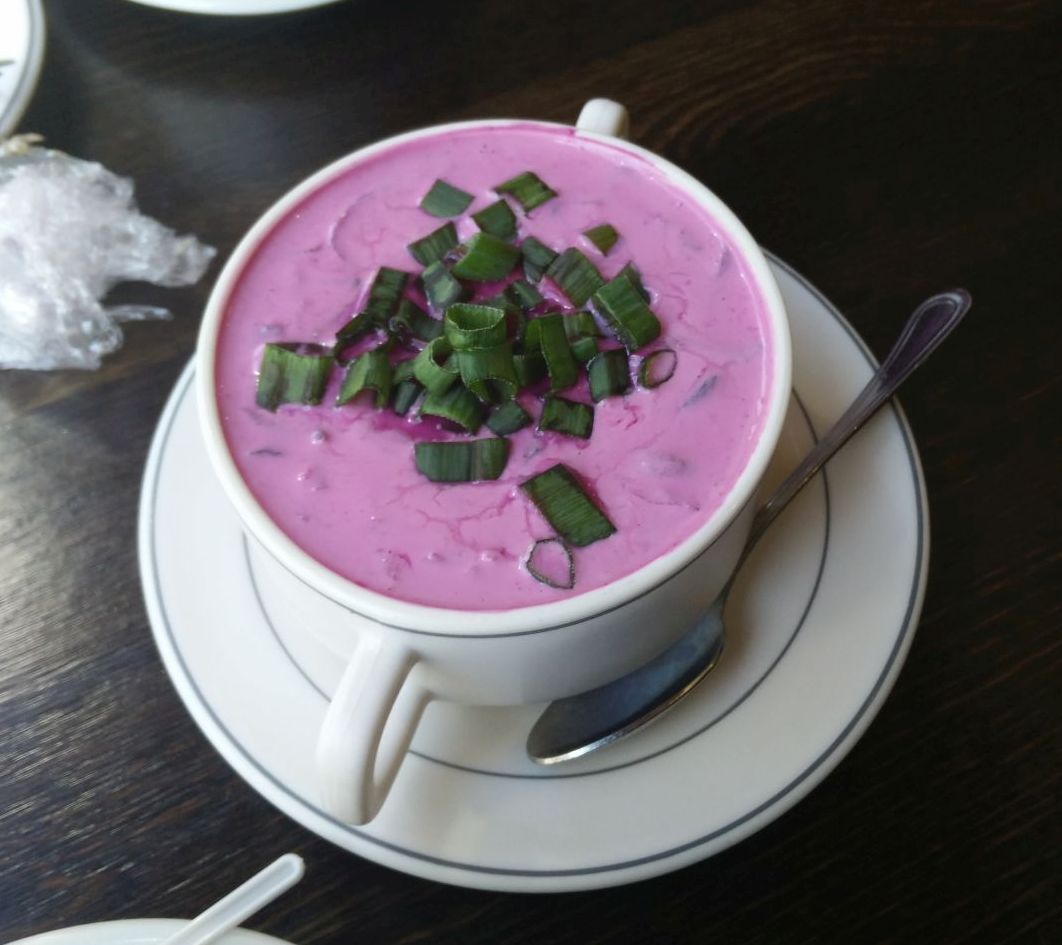
Tallinn Airport has joined Emerald on my very short list of airports that don’t feel like every other airport in the world; it feels like an eco-lodge, or an Ikea showroom, all shiny roofs, blonde wood and fast free wifi. We got a #2 bus into town and located our AirBNB flat, in a huge shiny block on “Liivalaia”, the main ring road – but we were two hours early and didn’t want to be impolite, so found a cafe which did us little open-faced pork-cutlet-and bun things, and tea (you can get proper black tea with milk in Estonia; a civilised nation). I tried to be cultural by ordering a bowl of pink stuff, which came cold and tasted of beetroot and fish. Refuelled and still with time to kill, we located a park on a map and strolled down past the US embassy to sit on a shady bench, where it rained spiky chestnuts with every gust, and a tractor with mower attachment giving the place a long-overdue trim rammed our bench and tried to kill us.

We linked up with Misha, moved into the very nicely appointed little flat, and then it was into town (past the US embassy, again; past a “Sex Box” and a number of interestingly named lawyers), in the blazing sun. At the edge of the city walls, a huge crucifix made of glass stands over a square, representing one of Estonia’s independence struggles against the Russians. Past it, climbing over an immense bastion, we came to Maiden Tower and the “Kiek in de Kök” (“Peek in the Kitchen” – me neither), a fairytale tower home to a small and enjoyable museum of Tallinn, complete with a floor map covered in tiny watchtowers, a small but excellent armoury, and props – swords, pikes, replica muskets – you could actually play with. The guide’s Russian was better than her English, so Misha translated the story of why a group of German noblemen had taken a black man’s head** as their symbol and emblazoned it on centuries of collected livery, military equipment and crockery. Beyond the museum, a stroll along part of the city wall took us through an empty cafe full of replica helmets, and into a tiny museum of confectionery, with lovely old packaging and an exciting range of marzipan moulds.

Sweets!
Sweets!

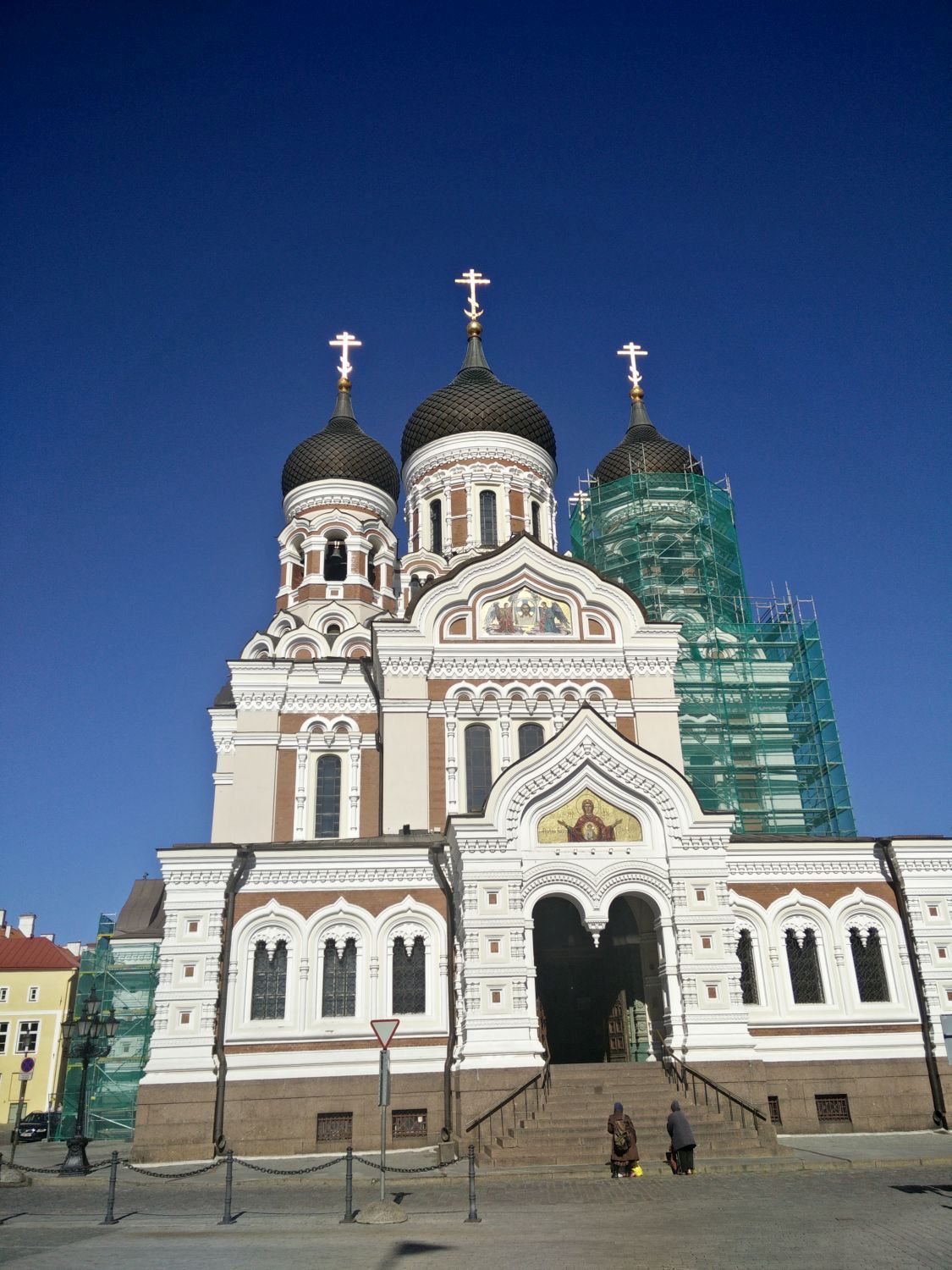
The Old Town is a pristine Hanseatic maze of white walls and red roofs, double-wrapped with medieval curtain walls and Renaissance trace-italienne fortifications; overlooking it is the even older “Toompea”, a fortified plateau containing a tiny town of its own, full of winding cobbled alleys, amber shops and viewpoints crowded with loud, attractive Russian tourists. Some walls boasted vaguely countercultural graffiti in English; one had a bronze bas-relief honouring Boris Yeltsin. At one end of the Toompea, nestled in the walls of an ancient castle, was the least imposing parliament building I’ve ever seen, a little pink mansion with an Estonian flag flopping vaguely under the deep blue sky. Opposite it stood the Cathedral of Alexander Nevsky, a surprisingly restrained but extremely Orthodox pile which we immediately dubbed “the onion house”. The views across the deep-blue Baltic, with strands of low green peninsula framing the gaudy cruise ships as they came and went, were beautiful.

Onion house.
Onion house.

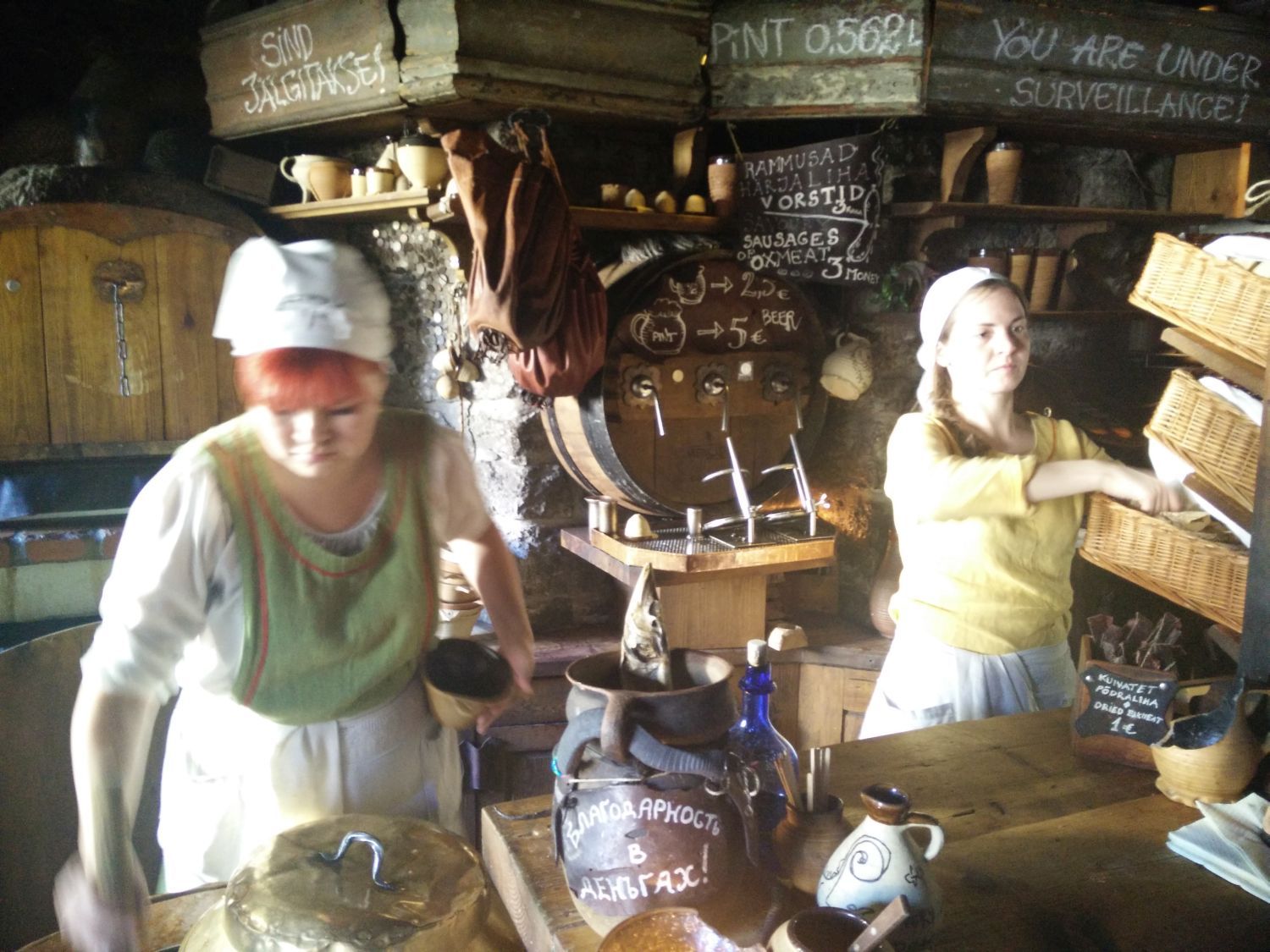
Descending to the Old Town, down a long cobbled passage lined with painters both producing and selling their works (two gunports from a casemated battery at the top are now AC grills for a bistro), we came to a central square lined with restaurants. Under the sign of the “Draakon”, a carved wooden shield advertised a “DECENT BOWL OF ELK SOUP” for €2, and the dark building within gave a wonderfully medieval experience – simple meaty snacks served brusquely by authentically sarky waitresses in period dress, big rough earthenware bowls, a barrel of spear-your-own pickles, animal skins on the wooden benches. We had some decent bowls of elk soup, and some sausages and little pastries beside.

IMG_20150703_161841

The Old Town is milking its history for all it’s worth, with people in medieval clothes selling roast almonds from stalls or handing out vouchers for restaurants with Hanseatic stylings – lots of tourists, lots of Russian overheard, lots of short sundresses and long white legs. But even with the odd awful British stag party, it manages to be charming rather than aggressive, and after our moosey supper we wandered the narrow cobbled streets for a while, and ended up back up in the Toompea as a long, slow dusk set in. On a summer evening here, it never really gets dark. “White nights”, they call them: the angle of the world is such in summer that these northern latitudes don’t get proper nights, and we stood at a viewpoint in the half-dusk, watching the light dip and change colour, but never quite die.

DSC_0156
This was taken at 11pm, believe it or not.

* I don’t know if the grim, Ikea-like wipe-clean plastic interior is standard, but I’d bet good money on the absurdly tiny seats being so. They would then charge me a £5 card fee, £5 transaction fee and £10 “because we say so” surcharge against my winnings.

** Not severed or anything. Just a head. They liked St Maurice a lot.

Tallinn 2015

Old Town and Toompea Linnahall, Patarei Prison, Seaplane MuseumA Brief Interlude on the History of TallinnSt Olaf’s, Fat Margaret, Old Hansa