dance of the aurora

(Click the images for full-size versions!)
Downtown Reykjavik was cold but alive: a high street of hideously expensive hipster boutiques and tourist tat floggers, almost all in that earnest modern “artisan” style. Iceland is a curious (but uplifting!) example of how a country can have reasonable prosperity and opportunity for all without… actually producing anything. I mean, they have basically limitless free lava energy, but also they’re in the Arctic Circle and need it. But a side effect of this is that their currency is hilariously overvalued (and this from an Englishman). The first thing I saw in the window of an average-looking restaurant was bread, for £13; mains started at about £50.
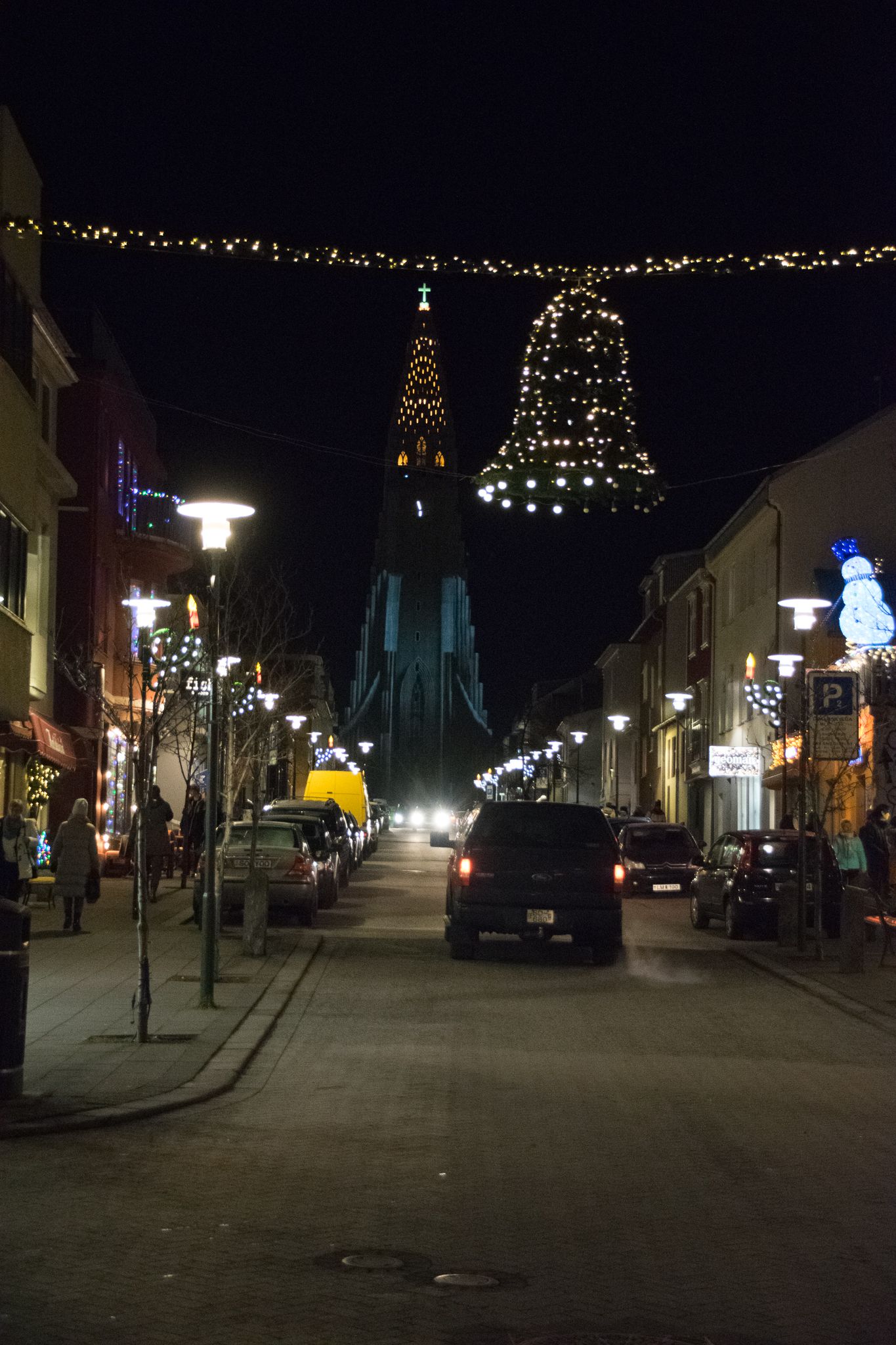
Church looking very dramatic there.

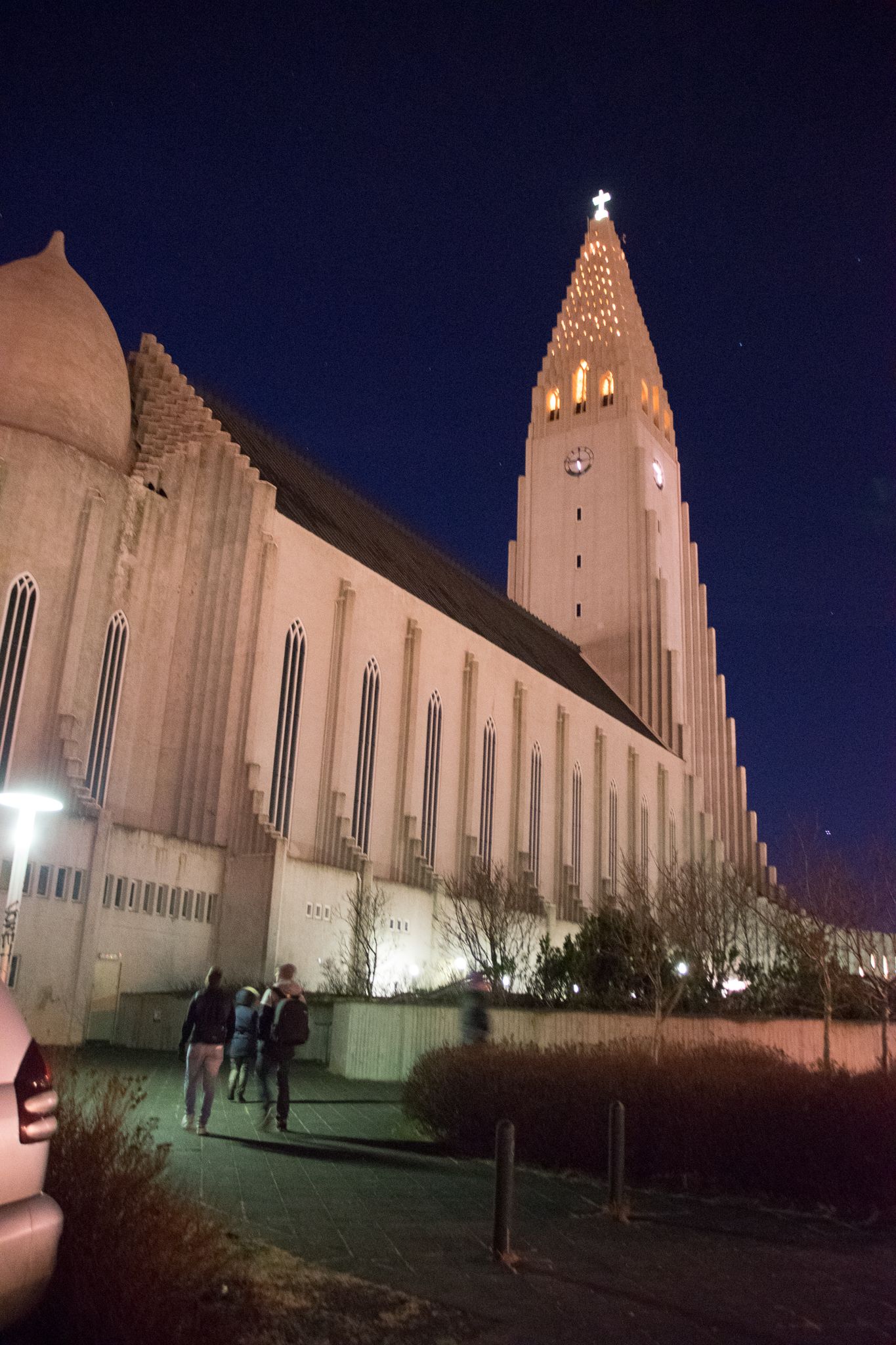
We parked at Hallgrímskirkja, Reykjavik’s chief church, whose perforated spire looks somewhat like a decorated Christmas tree from a distance. The cathedral is a handsome, interesting piece of postwar architecture, with a bell-shaped dome at the southeast end of the nave, and buttresses that look like Giant’s Causeway basalt columns propping up its sides and sweeping down from the spire to give it a very distinctive silhouette. Amnesty International had some stalls in the courtyard and were projecting the names of donators onto the front of the church – it reminded me of nothing more than a video game livestream. THANKS FOR YOUR SUPPORT!
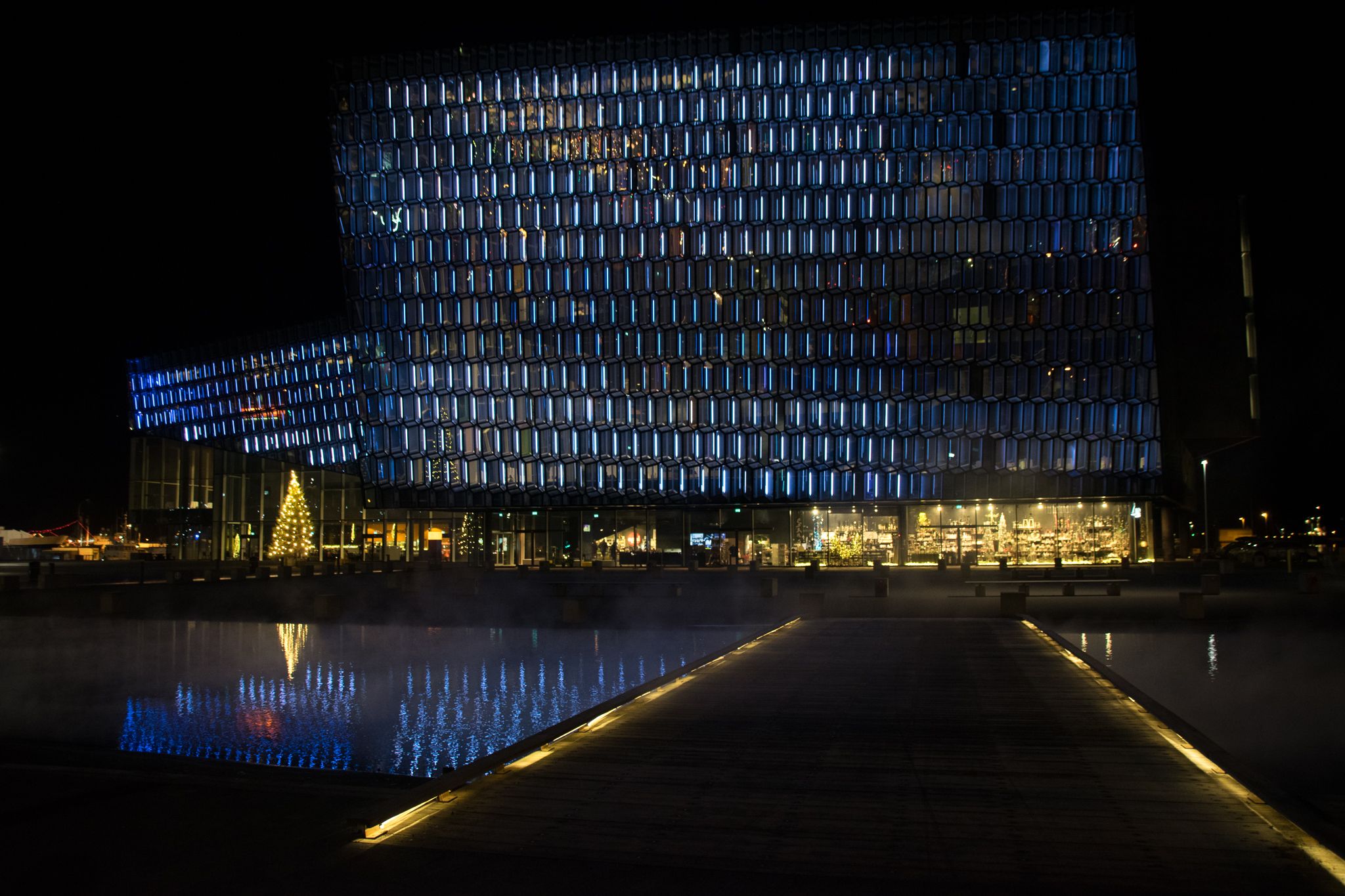
Prosperous, but generic.

The most distinctive thing about Reykjavik is that there’s nothing really distinctive there. There are basically no old buildings, no trademark style or trademark substance. They’ve managed to keep the chains off their high streets (mostly; there was a Subway, charging £9 for subs) but the less obvious components of globalisation are still everywhere. There’s almost nothing uniquely Icelandic about the rest – corrugated buildings, an ugly set of “Yule Lads”, stuffed puffins for a hundred thousand ISK. Take away the weird letters and the lakes you can walk on, and it could honestly be Islington.
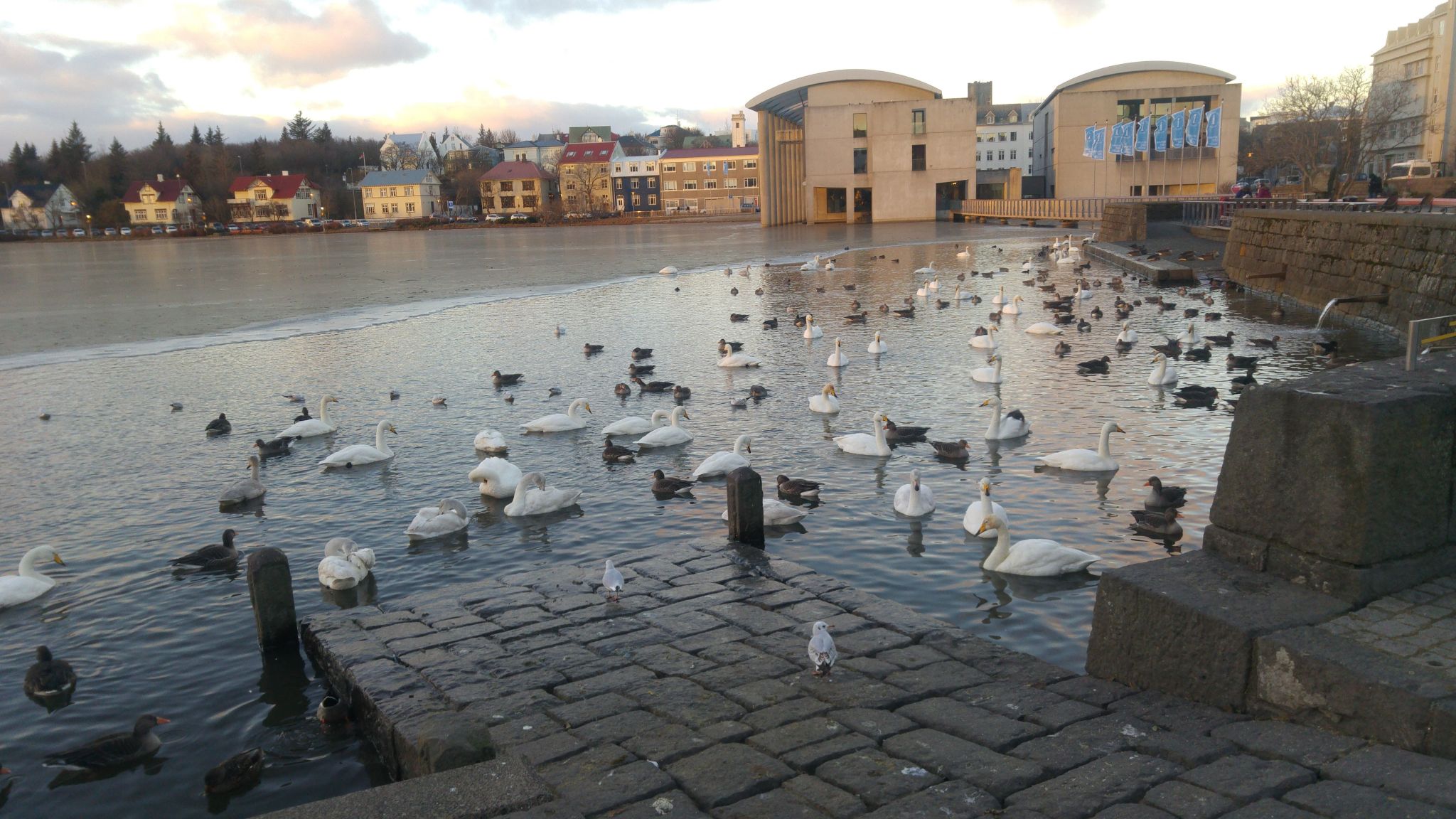
The Tjörnin (it means “pond”) had iced up until all the waterfowl were paddling about disconsolately in the remaining liquid corner.


The National Museum is a pleasant place (though on the outside, an unfortunate combination of decently inspired Art Deco form, and vile grey pebbledash) and holds an extremely attractively put together collection. There are convincing reasons why, for most of its thousand-year habitation, Iceland hasn’t had much in the way of wars or architecture; life was so impossibly hard that simply living took up most people’s time and productive capacity. The museum’s collections are mainly wood carvings: communion dials, Christs and kings with long, mournful faces. Churches were built and maintained by farmers and chieftains, rather than an independent priesthood; a doughy-faced bishop and his three wives took up the frame of the only old painting. There were fish hooks ranging from “small” to “gigantic”, scrimshawed horns, a chalice made of a polished coconut shell which must have been impossbly exotic little brooches of bronze and gold. On one wall was what the museum half-proudly claims is the only weapon ever invented by Icelanders: a hook for cutting British trawl lines, like a many-armed nautical box-cutter.
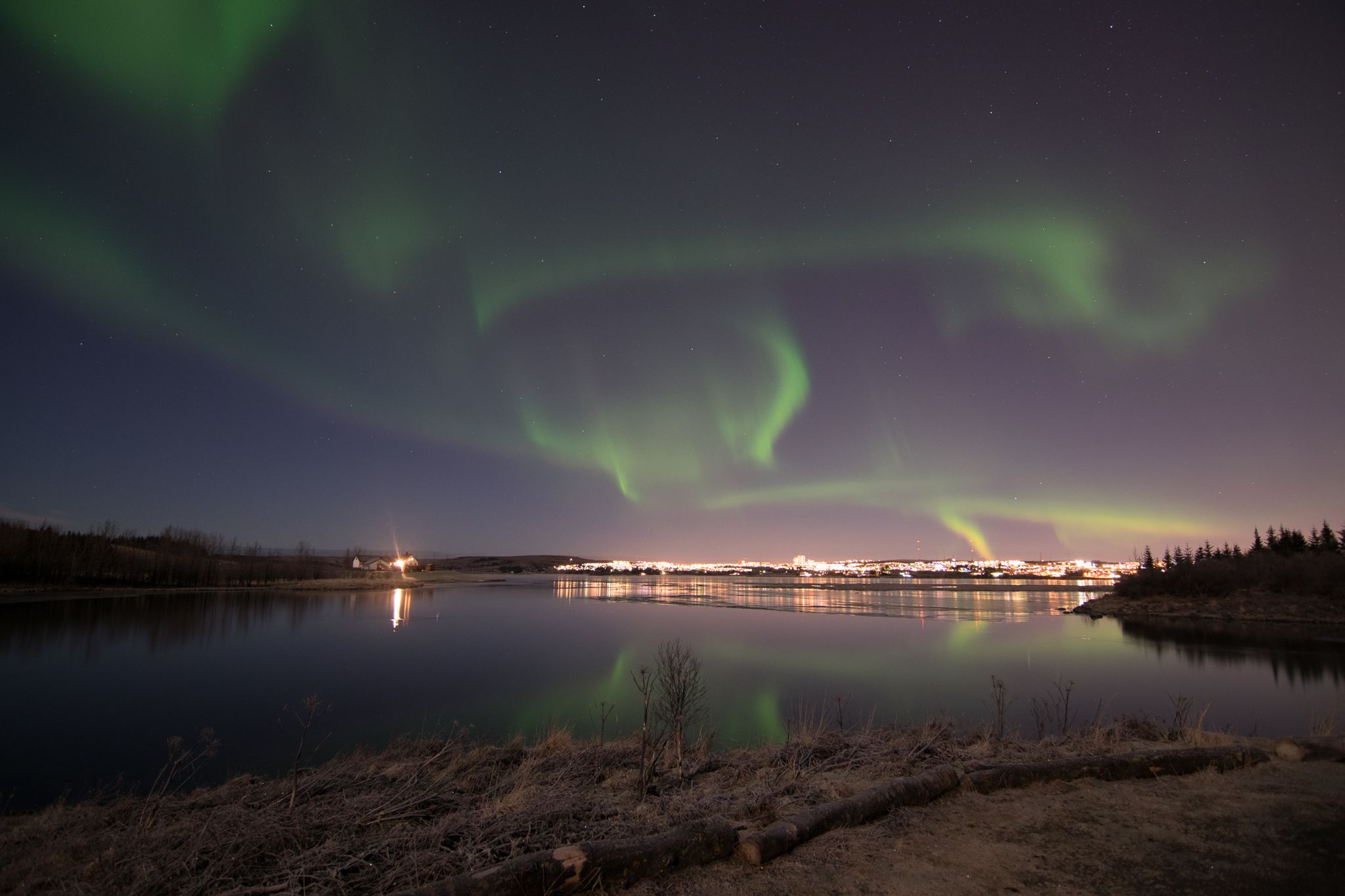
 

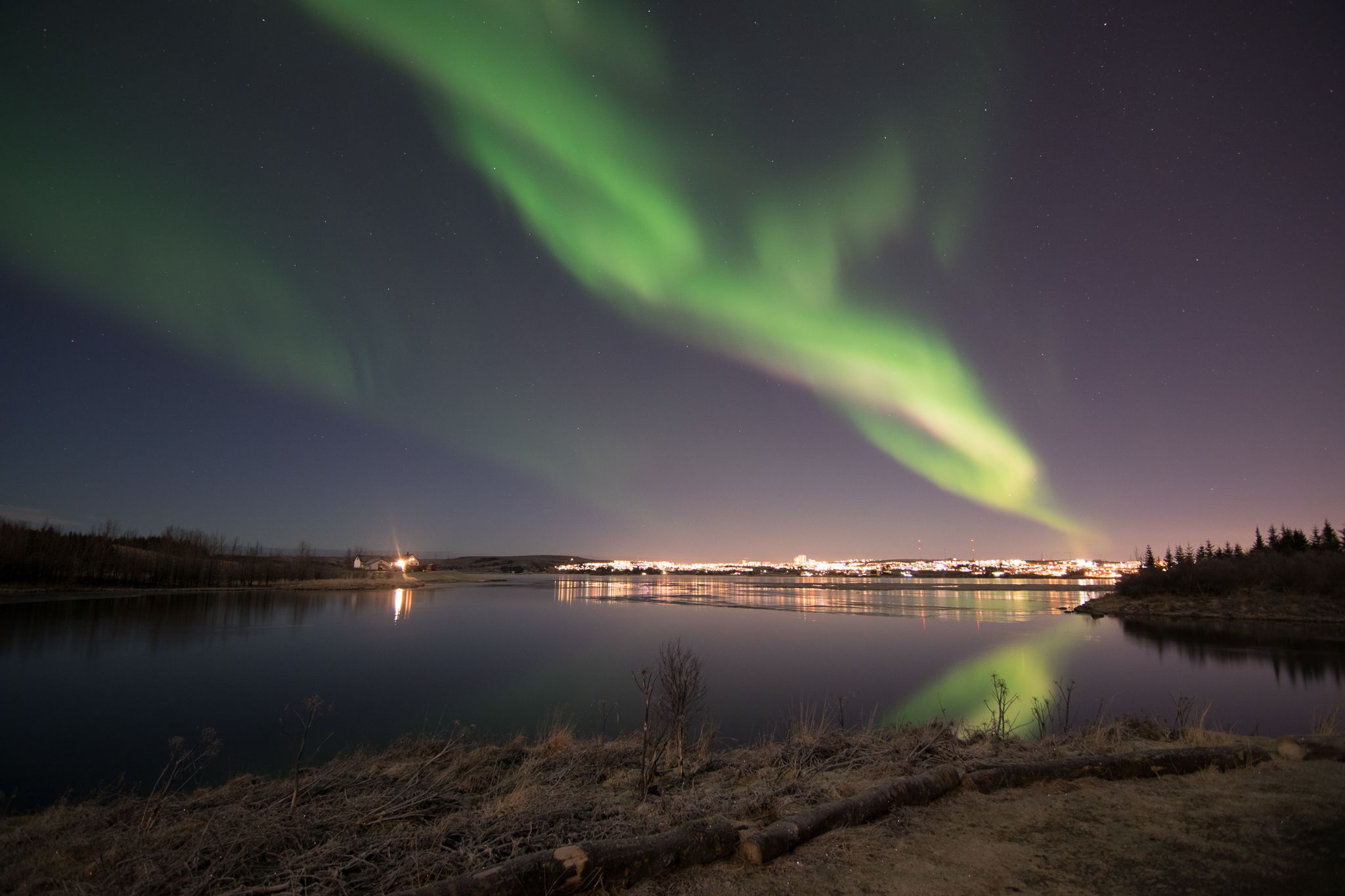
We drove a little way past Thing to the edge of a semi-frozen lake, in hopes of the aurora. We were not disappointed. Long camera exposures showed it as the familiar bright luminous green, but to the naked eye it’s a little less impressive – gobs of washed-out grey-green ectoplasm, more like clouds behaving in weird ways than the emerald nebula it’s generally portrayed as. There’s a hint of green, but also a general vague chromatic uncertainty to it, like a half-seen waterfall haze. It moves in the most startling ways – whole sections suddenly drizzle into sight, like dust trickling through a projection; a great wheel of particularly bright light whirled and swirled around in an entirely random way; at one point a whole long section appeared and half-disappeared, like a curtain drifting in and out of reality. Less beautiful and less defined than the photos make it seem, but entirely unique and absolutely unsettling.
 

*

Iceland 2017
Waterfalls, glaciers & black beachesThingvellir, Geysir, GullfossGrindavik, Keflavik, Blue LagoonReykjavik, aurora borealis
isk isk baby

(Click the images for full-size versions!)

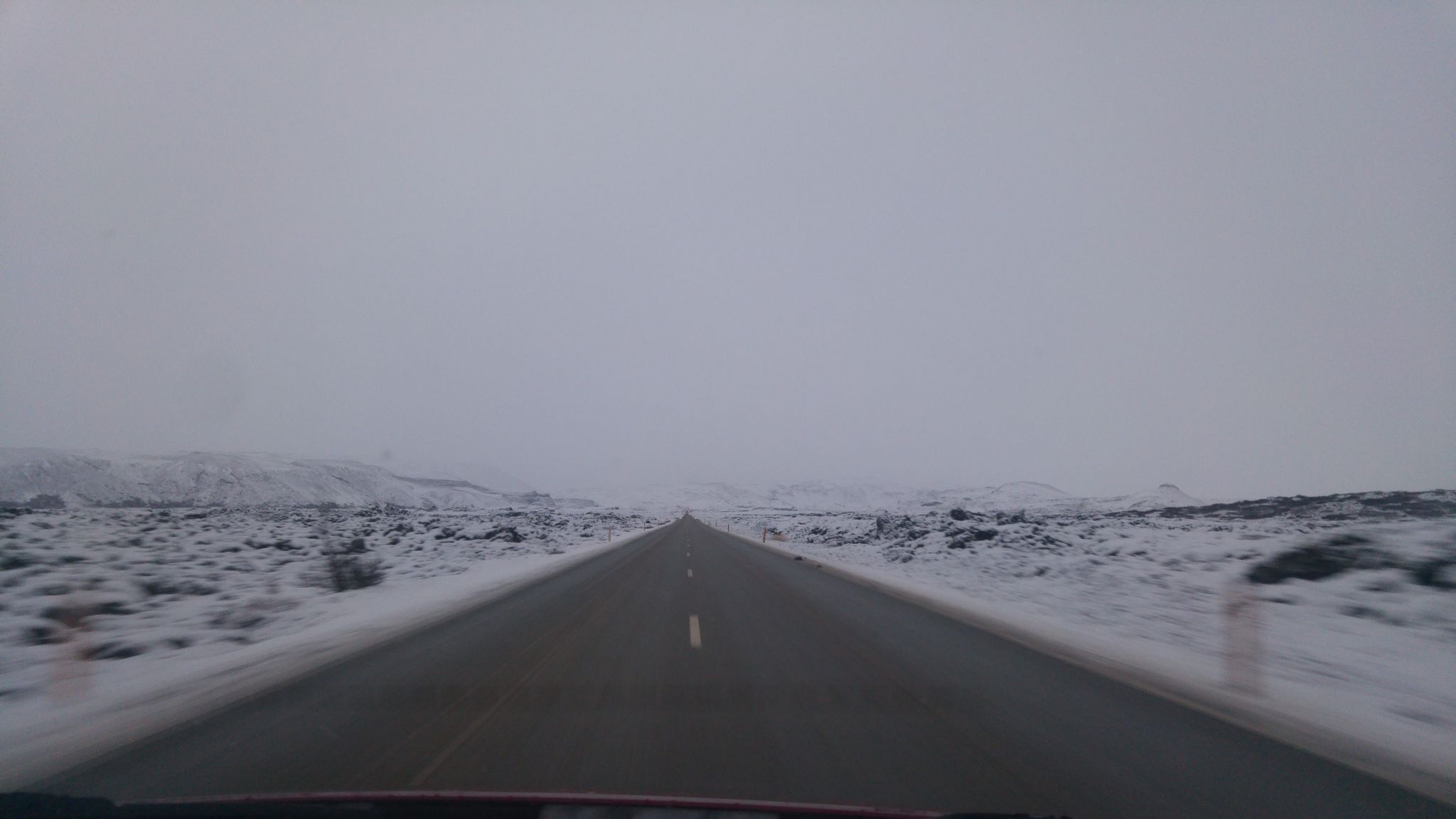
the road goes ever on

Another new landscape, another direction out of town. Snow had fallen overnight, was still falling as we retraced our tracks through the dock area. Here, rather than the Bauhaus suburbia, it feels like what all those despairing Siberian cities are aspiring to be – clean, functional, and prosperous in a narrow technical sense, though still quite bleak and set against an entirely hostile background. We tailed a yellow bus for a while, the first I’ve seen with actual people in it.

That is still the road, yes.

Abruptly, the black tarmac turned to a white gravel road, and the landscape washed-out white; we thanked our lucky stars for the studded snow tyres, and pressed on, up and down small hills, along the shores of the iron-grey Lake Kleifarvatn through sudden streaming snow. At no point was it actually scary – Ben is a highly conscientious driver – but it was certainly one of the more interesting drives I’ve had in a while.

blpblpblp

We pulled up at the Krýsuvík geothermal site (known to us as Steamy Boardwalks), alone in the car park apart from a carpenter’s van, which had presumably transported the distant hi-vis figure we could see doing something to one of said boardwalks. Krýsuvík was a bit disappointing after Geysir, because it basically is Geysir but less so, a rotten clutch of mucky mudpools blupping and farting listlessly into the swirling snow. Snow: it was everywhere, hiding the far side of the valley, blowing in ethereal streaks and snakes across the road, curling and swirling in eddies behind the few passing vehicles like their own tiny auroras. When we drove off again, it passed the windows in flashing warp-speed starlines.

Icelandic gothic.

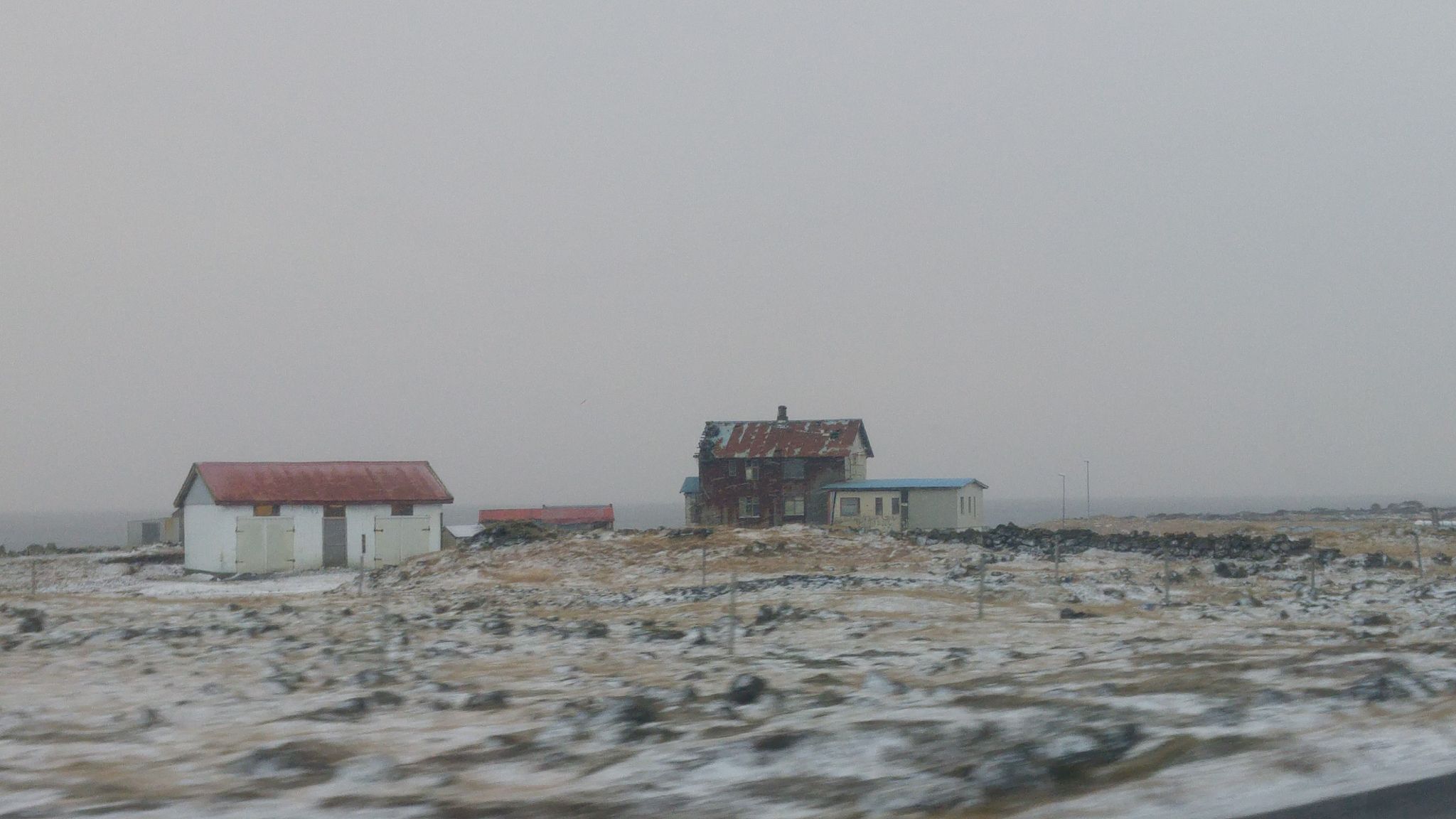
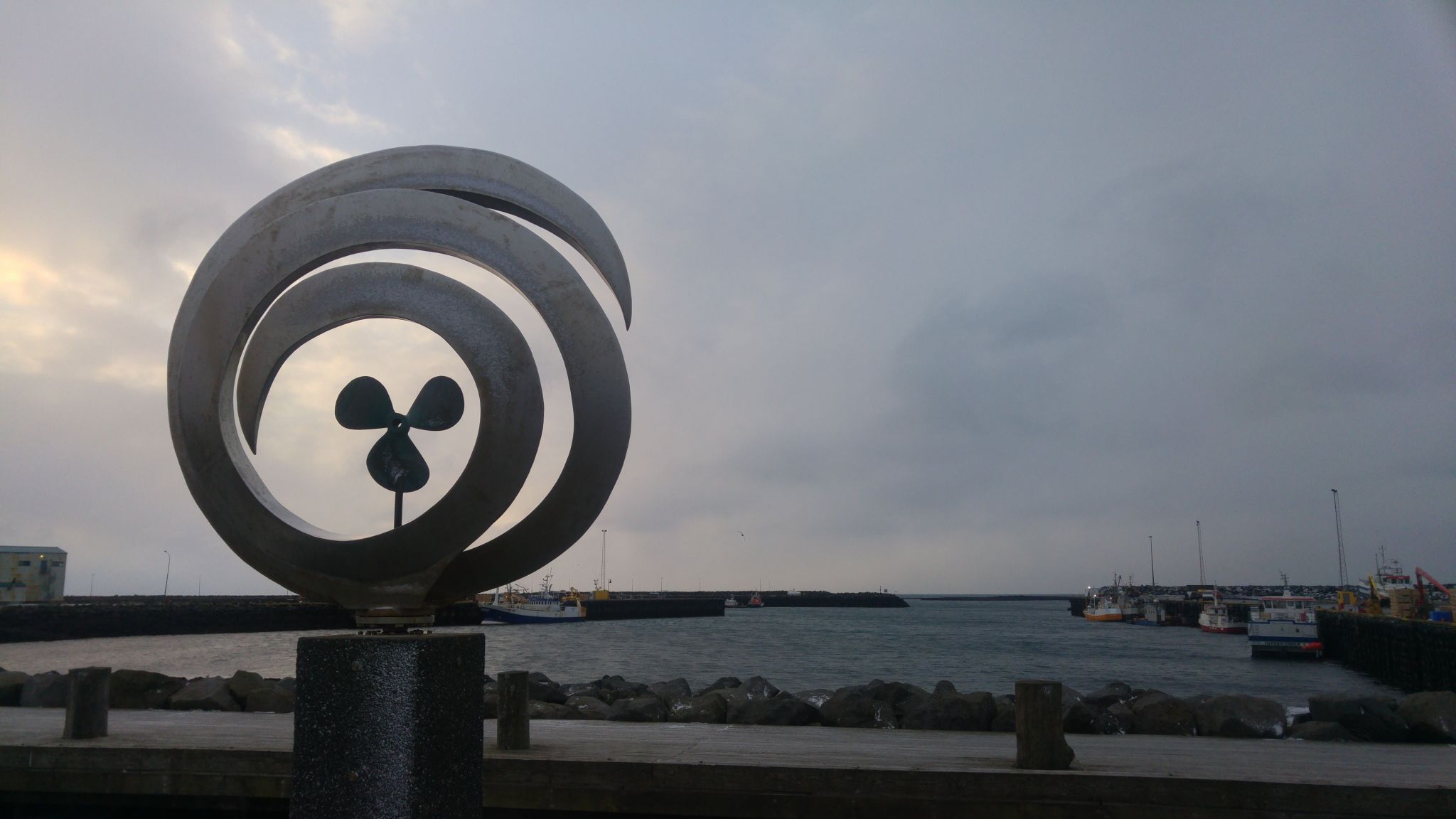
Grindavik, on the coast – a scatter of despairing corrugated huts, a few modern and well-kept looking houses, a few empty warehouses, two giant radio masts striped red and white looming above it all. Christmas decorations on the traffic lights, modern art in the roundabouts, but empty lots full of discarded breezeblocks, a definite sense of wasteland. Some anchored metal pylons of uncertain purpose, behind high wire fences with dire warnings in several languages – NATO, presumably. Along this more benighted part of the south coast, the ruggedness of the black volcanic rock, the grey light and the shaggy feldgrau-coloured moss combine with rusty, run-down signs of human habitation to create a truly depressing landscape.

At a first glance these things are deeply tacky, but in such an entirely benighted (literally and metaphorically) landscape they have a strange charm. We saw a few from far off at night.

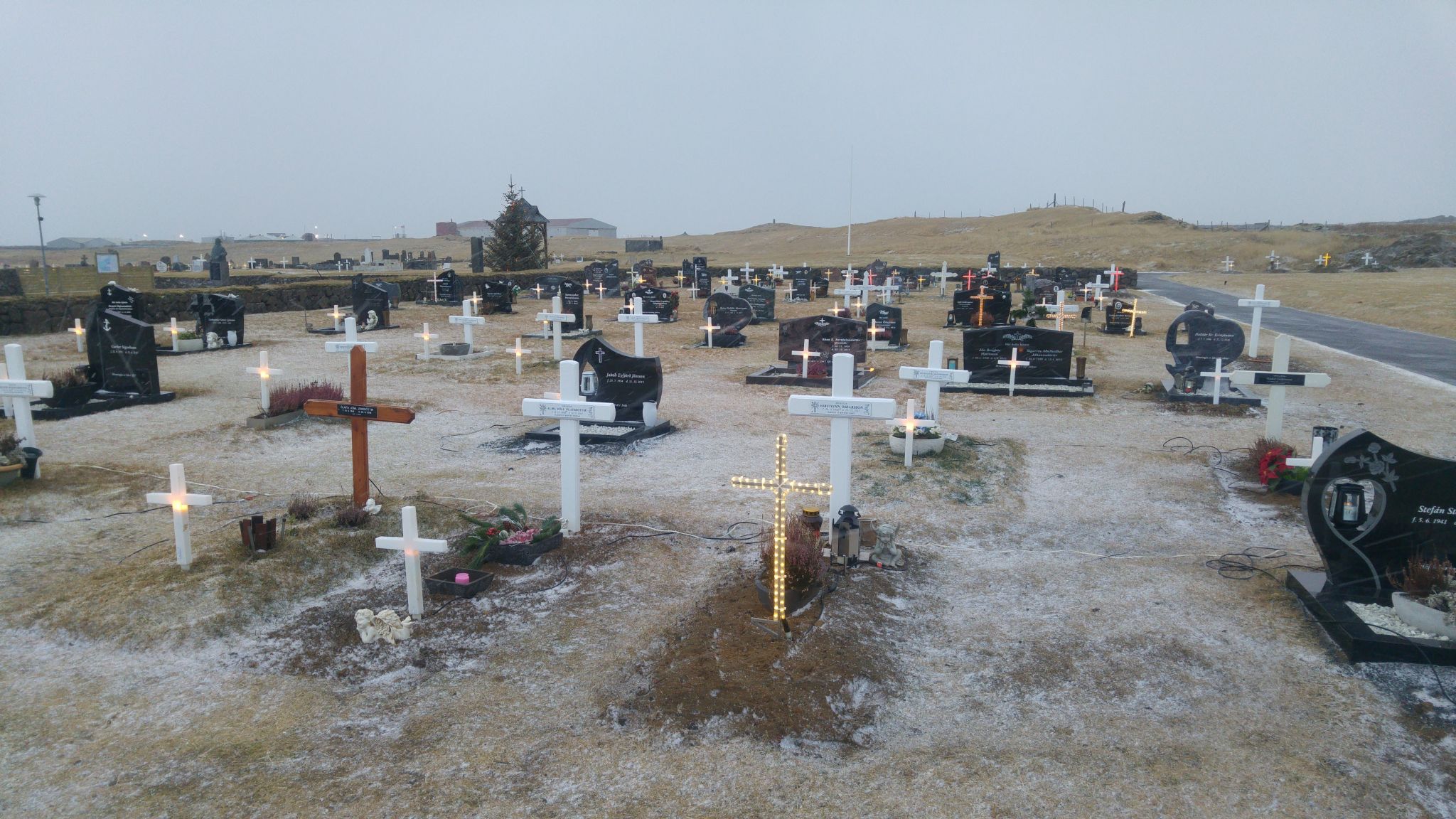
At a graveyard near the sea I confirmed the light-up crucifixes are actually run on mains power, with untidy great cables scattered across the neat cemetery (but to be fair, what the hell else are they going to use? Solar?) Several of the graves were fresh; they still bury people in this country, possibly for a lack of firewood. The cord at an empty flagpole beat out a regular rattle. We retreated to the warmth of the car.

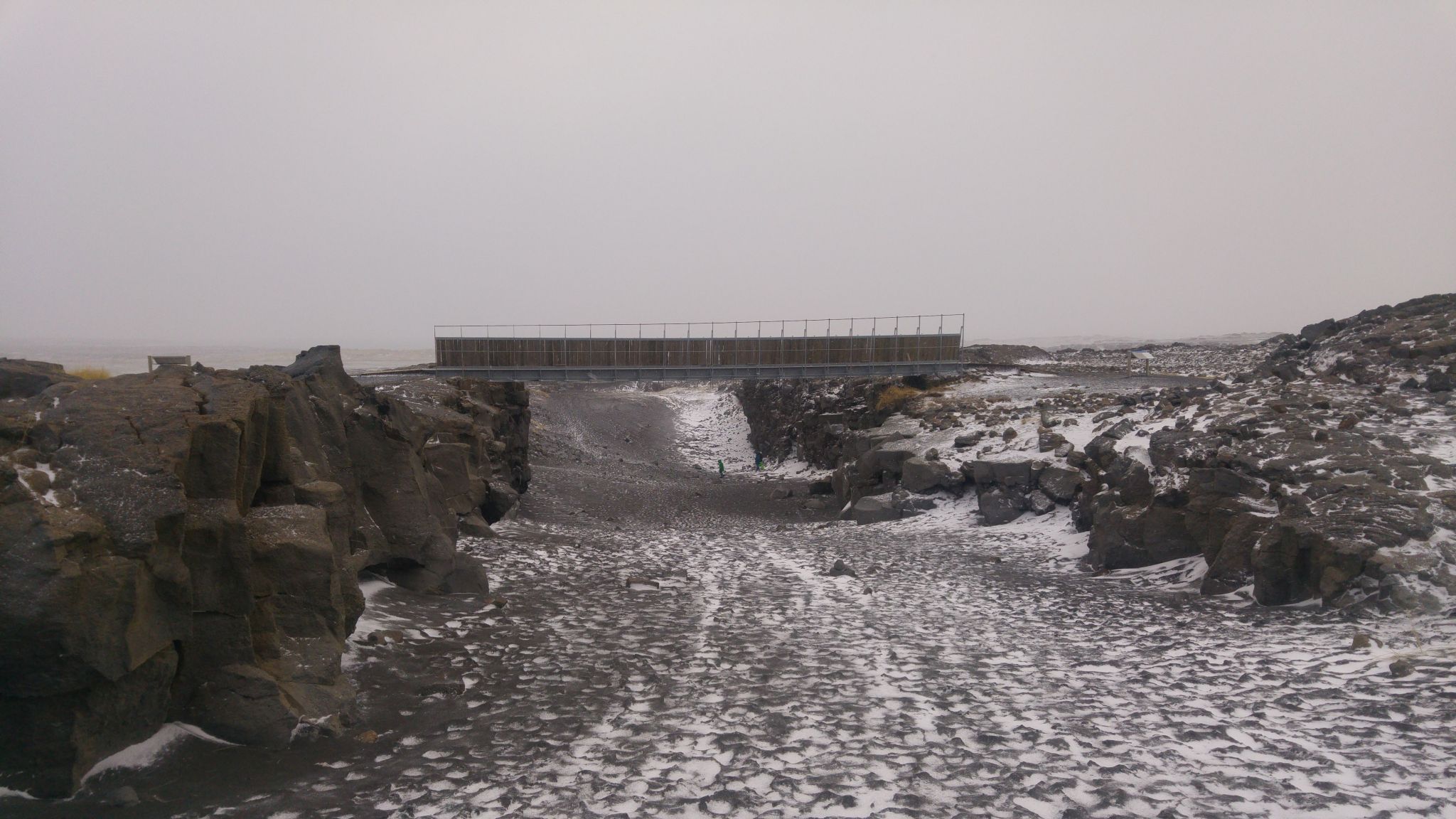
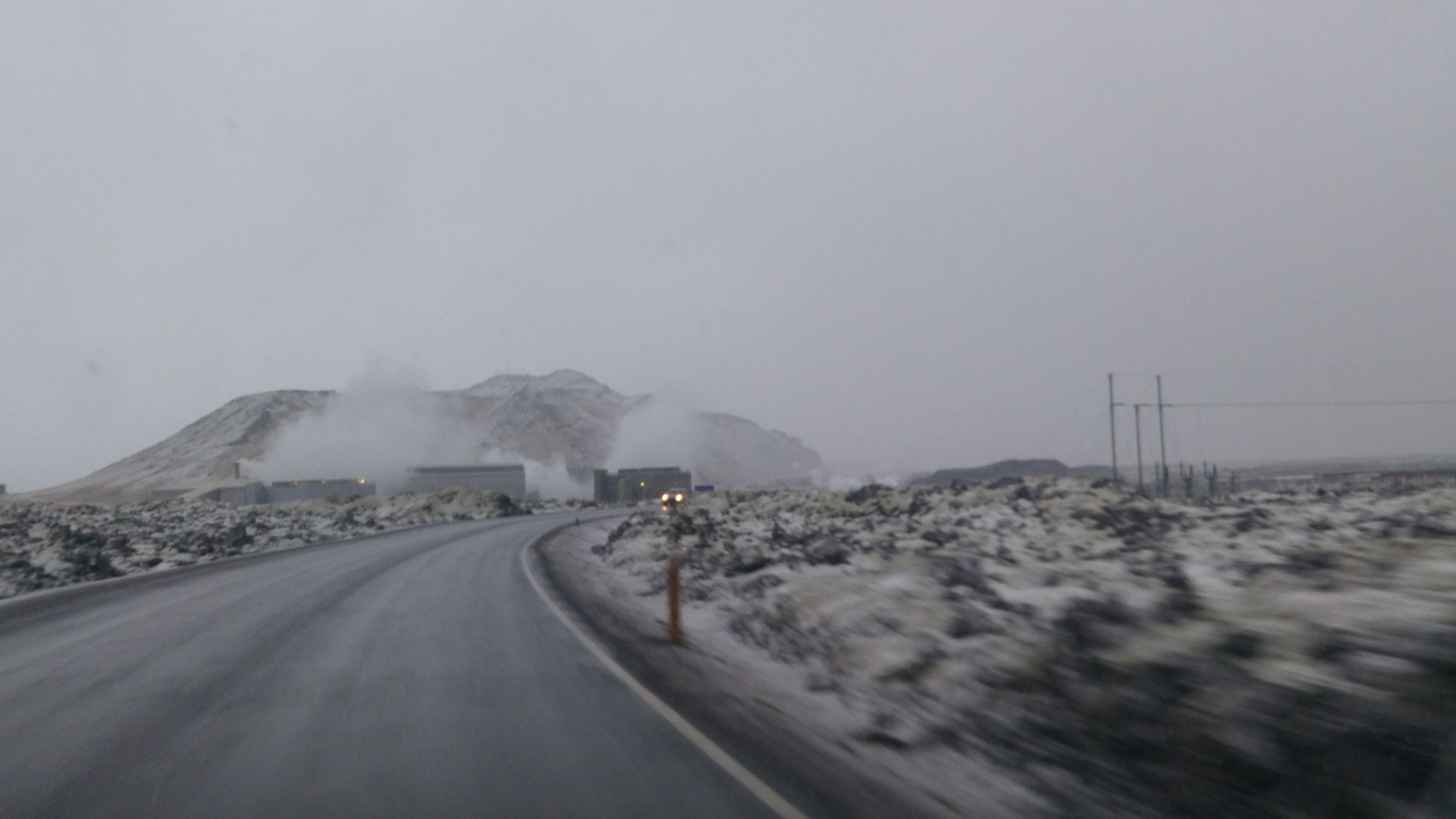
The “Bridge Between Continents” was also a disappointment, but one we’d been readily expecting, as it’s just a small footbridge across a gully which claims to span the Eurasian and North American continental plates. You walk across it, and then under it, trying to stop the wind whipping too many sharp snowflakes into your eyes. Much more intriguing was the geothermal plant a little to the south, enhancing the sense of a blackened moonscape by resembling some sort of space colony – all intriguing stainless steel buildings linked by silver pipes – but police cars patrol it ceaselessly and the wind was bitter.

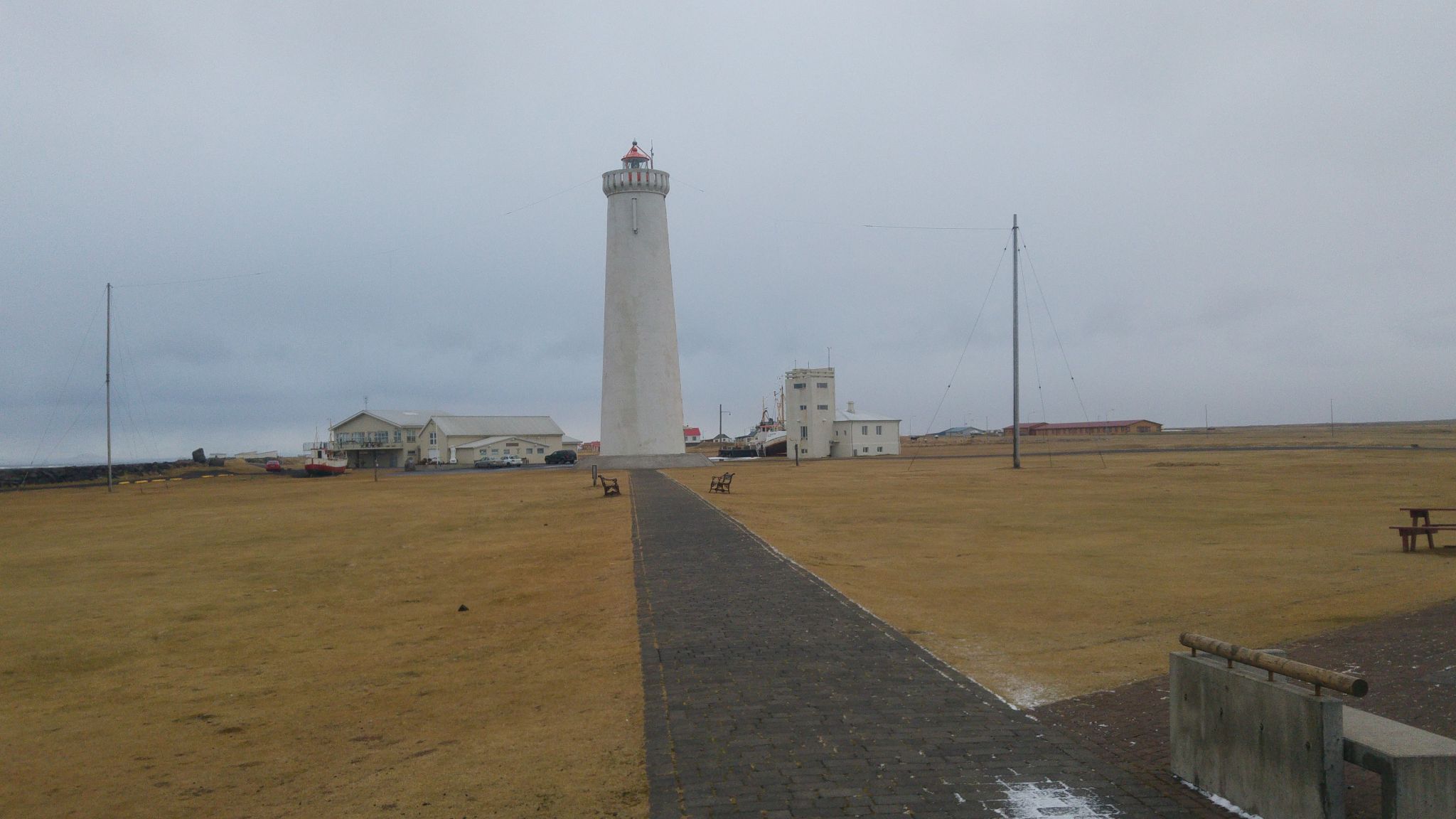
On up the coast, through rarefied little villages, to the northernmost point of the Keflavik peninsula, where a couple of lighthouses stand – a little old square Victorian one, and a much stouter, later round affair. A local had warned us that with wind chill we’d be feeling -20, and he did not exaggerate; the wind was so relentless that individual pebbles had snow built up in their lee, and we could scarcely cross the bridge to the older lighthouse (which was, it seemed, a café in the on-season). We withdrew, and had a (cheap, for Iceland) burger at a desolate little town, before heading back inland a little to the Blue Lagoon.

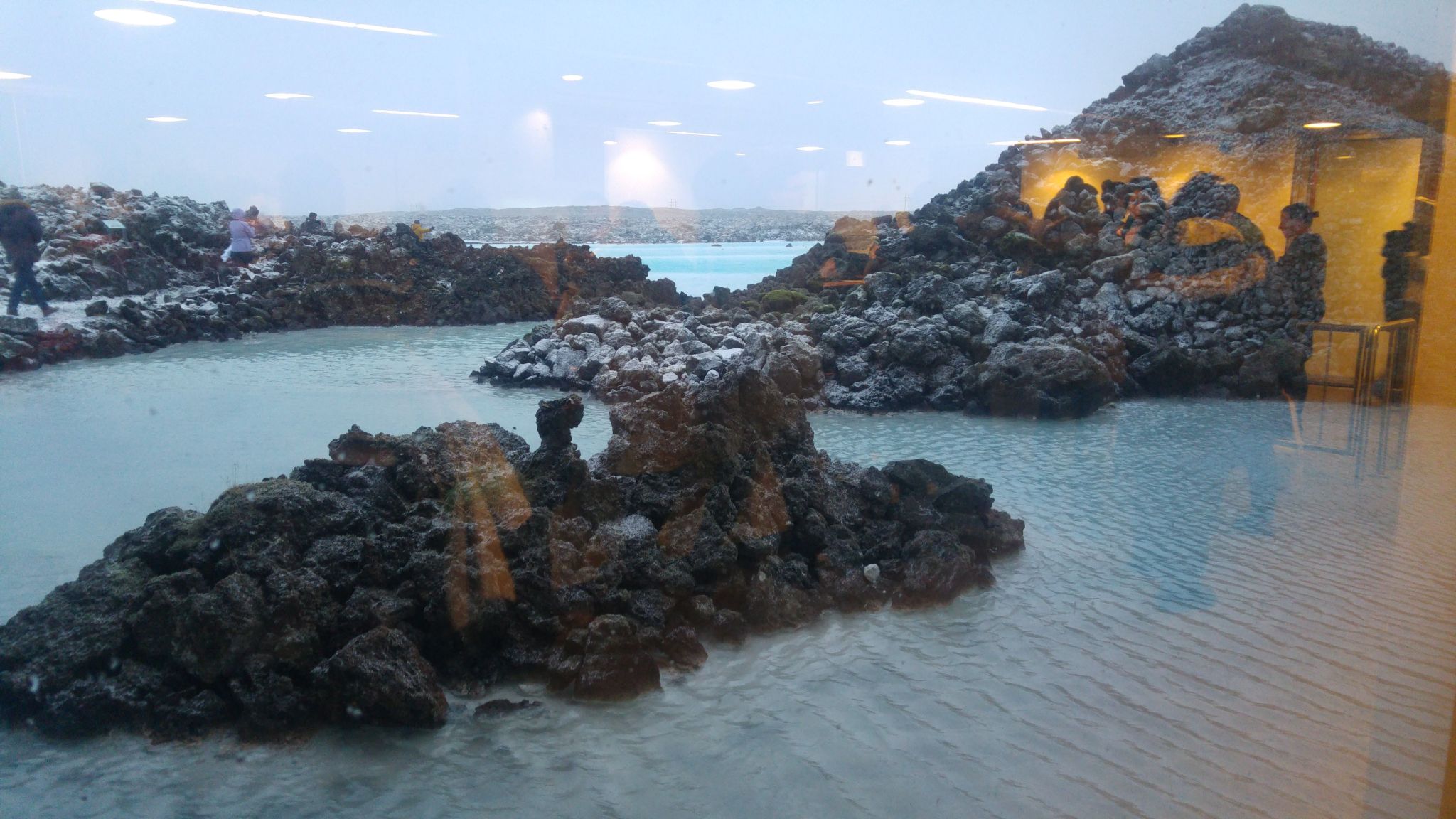
The Lagoon is one of Iceland’s chief attractions and, very much in the spirit of the country more generally, it is clean, modern, thoroughly artificial, eye-wateringly expensive and powered by volcanoes. Despite some vague pretensions at the traditional spa fraudulence, it’s actually an adjunct to a geothermal power plant and has only been around for a couple of decades; Iceland’s legit hot springs are more in the Geysir/Krýsuvík line. You book ahead, queue, are issued a wrist token thing, and pass through the surprisingly small changing rooms to enter a huge pool of milky blue water, hemmed in by volcanic rocks and open to the sky. The water is blood-heat, but the air is frozen cold, so great clouds of steam are excited off the surface by the wind, and when the snow intensified it led to the curious feeling of a body in a hot bath and a head catching flecks of snow.

The water is salt, and impregnated with a white silicate which gives it its colour; there are various bits round the side – a float-up bar, another float-up bar which smears mud on your face, some saunas, a fantastic sort of waterfall thing (the only part which smells of sulphur) which massages you with relentless hoses of hot water, to a sound like pebbles clacking together. We spent a merry few hours paddling in it as the wind and snow came and went, watching the sky darken and then clear, so that when we left – a clean, exfoliated trio of pink prunes – it was below the gleaming stars.


*


Iceland 2017
Waterfalls, glaciers & black beachesThingvellir, Geysir, Gullfoss Grindavik, Keflavik, Blue LagoonReykjavik, aurora borealis

the golden circle

(Click the images for full-size versions!)

North and inland, a different landscape to the south coast, this one smooth and fully glaciated, green-yellow grass striated with snow. I once described the rolled-over Scottish Highlands as like a mite’s-eye-view of a camo jacket; this was the same, but a winter jacket. As we moved upland the white gained dominance, with the odd pathetic little spinney of tiny Christmas trees.

We were following the “Golden Circle”, the Grand Tour of southwest Iceland’s high-profile tourist destinations – all three of them. It’s shocking just how little there is in this country; the island manages to stay a pristine eco-paradise partly due to fairly strict anti-rambling policies (driving off the roads attracts a fine of half a million ISK) but also because, let’s be honest, it’s 99% wilderness which is lovely to look at from the inside of a heated car but unpleasant/pointless to interact with in any more meaningful (or destructive) way.

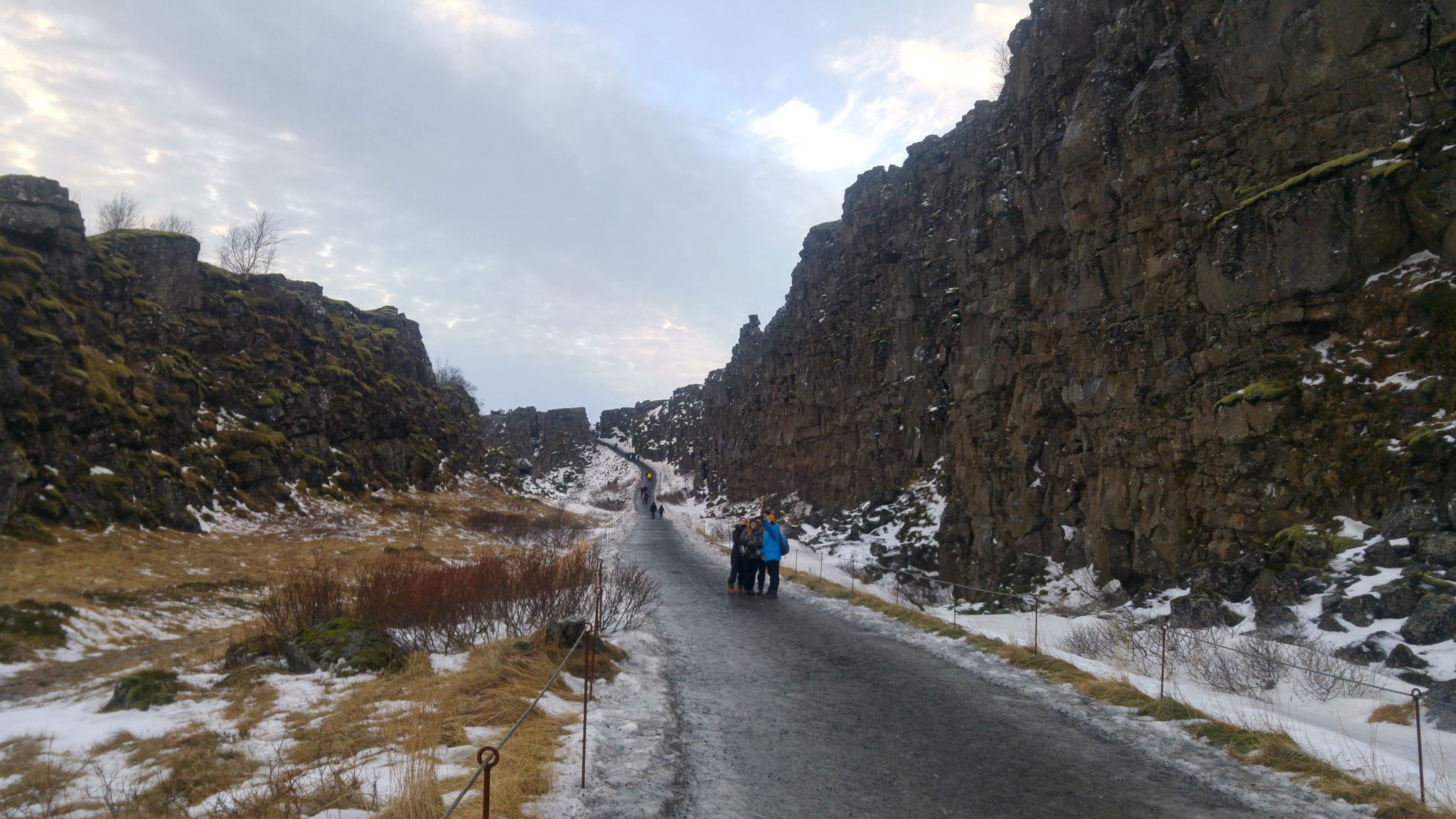
Thingvellir.

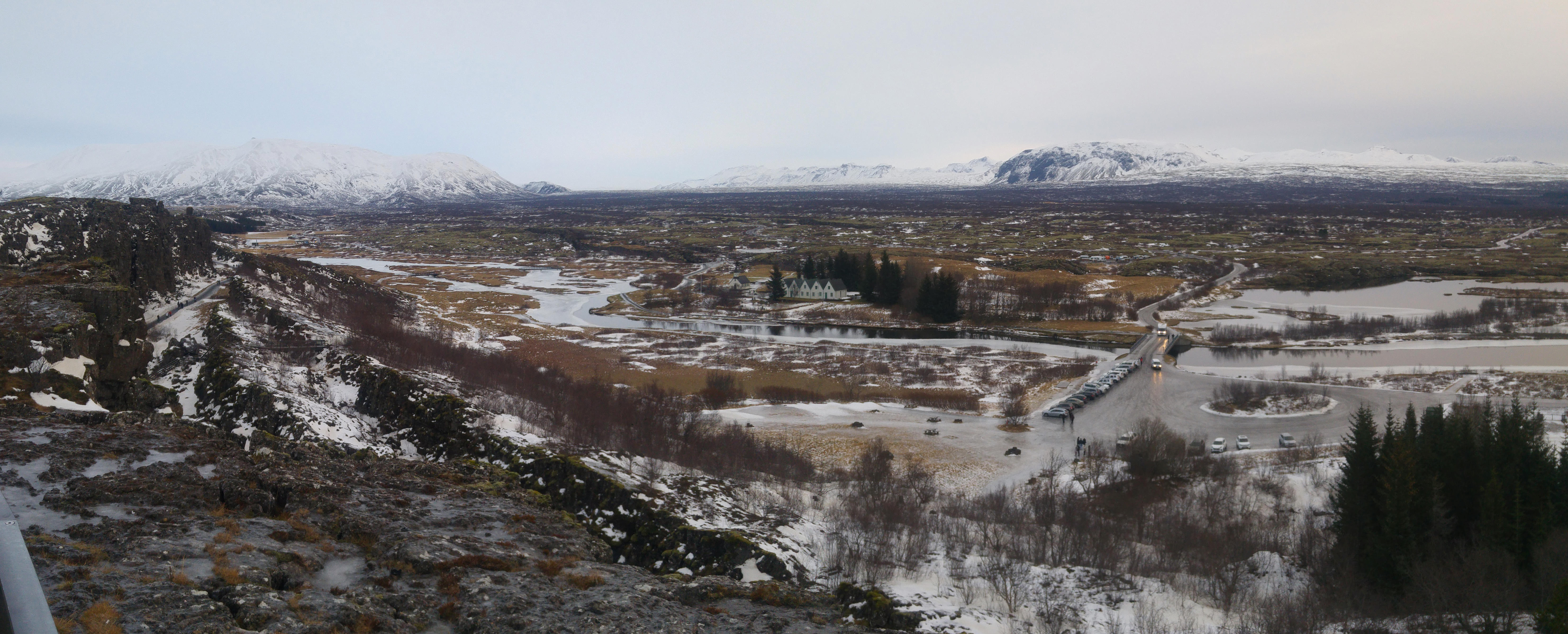
First on the Circle was Þingvellir, where the visitor centre was absolutely rammed with people trying to get in out of the driving cold. This Thing, even at the height of winter impassability, combines the usual highly interesting geology with one of Iceland’s few real historical sites: it’s a rift valley, with steep basalt trenches like the walls of some dark fortress overlooking the site of the “Althingi”, which they like to style as the oldest parliament in the world. The ancient site of the “Law Rock”, where chiefs and freemen assembled to hear the Lawspeaker recite aloud all the laws in force at the time (now wouldn’t that keep your statute book short?) isn’t clear, but it’s still very cool both historically and just as an incredibly striking site.

Down the rift, past signs which requested no underwater photography and talked in a rather deadpan fashion about the three fish you could find in Lake Thingvallavatn (“biodiversity in Iceland is limited”) stood a little corrugated church which could seat about sixteen, a tiny row of incredibly unimpressive houses which apparently comprise the summer residence of the Prime Minister of Iceland, and a graveyard which successive freeze-thaw cycles had turned into a bath of thick ice. Actually, all the pathways and most of the roads were covered in inches-thick ice, but the canny locals had scattered enough black grit over them all that they were more or less usable, although unnerving. The paths which hadn’t been gritted were horrifying rinks of deep translucent blue-green, as was one of the picnic areas we encountered. For some weird reason our breath, and the tea we bought at the visitor centre, produced no mist in that air.

A different landscape again as we headed east: a wilderness of small rounded basalt boulders, in tumbledown cairns rather than high big outcrops, shaggy with thick piles of grey-green moss, and everywhere low scrubby despairing outlines of bushes. Above it, the highest hills were pure snow white. The original Geysir, which gave the English language that word, doesn’t blow much any more, but its little sister Strokkur does, and draws great crowds. The whole thing is wonderful – bubbling pools puffing out eggy steam, trickles of water lined with oddly-coloured mineral deposits and signs warning “this is hot, don’t touch it, the nearest hospital is 62km away, DON’T STICK YOUR FINGERS IN YOU PILLOCKS.”One of the ponds wafted sufficient hot steam up to distract from the bitter cold; another had a worrisome-looking cave in its clear blue depths, as though a dragon was going to climb out at any moment. Every few minutes Strokkur exhaled, blowing out plumes of white steam as high as a house (a proper house, not an Icelandic two-storey cube).

Onwards, through another countryside again: a tremendously wide flatland of scrubby yellow grass, horizons rimmed by black and white peaks. We stopped to see some little fat ponies, and I admired the shelving of ice in the clear depths of a solid pond. Before long we had reached Gullfoss, a three-stage waterfall feeding a river from a wide meander into a steep basalt ravine; in its wintry setting of glistening pillows of green-blue ice it was immensely impressive, although I felt the noticeboards comparing it to Niagara were coming it a little high. The path to the overlook was solid ice, ungritted – but despite the lethality of the paths here and elsewhere I neither saw nor committed any pratfalls. I feel there’s a certain fairly pragmatic kind of tourist drawn to Iceland, not a cheap-thrill-seeker (the country being neither cheap nor thrilling) but inclined to dress sensibly, obey safety warnings, take small steps and gain proper enjoyment from a really good vista or huge frozen waterfall. Good company to be in.


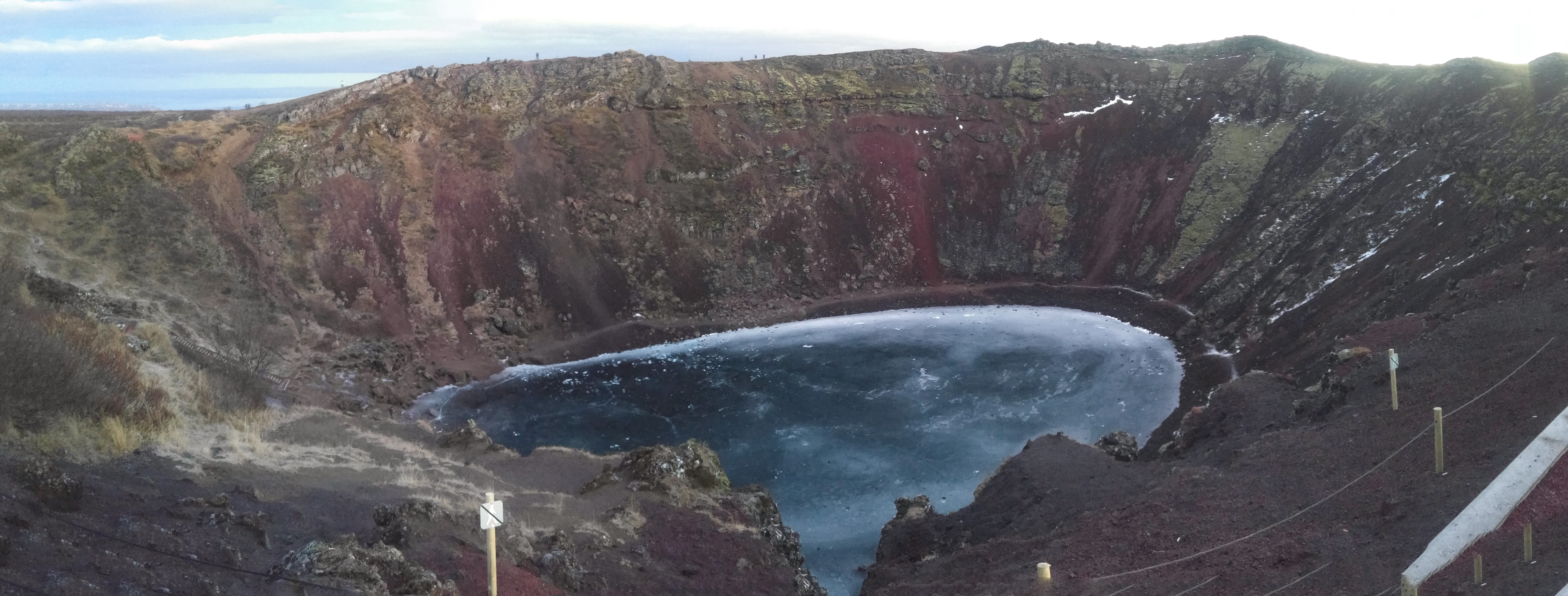
Turning back west to Reykjavik: ahead, a long pink-bellied sunset, behind, mountains fading into a dark grey haze. Two stops remained on our journey back: the cathedral of Skálholt, tall and lonely, unremarkable but for its absolute remoteness, and the crater at Kerið, which we approached just as the sun was finally properly setting. This is a cindercone whose core solidified and then subsided, leaving a far larger and more dramatic crater than the volcano itself would have had. There’s a booth which would charge entrance, but the attendant packed up and left as we arrived, and I was free to walk down the steps into the crater itself, standing on the iced-solid caldera as the dark deepened around me.


Iceland 2017
Waterfalls, glaciers & black beachesThingvellir, Geysir, GullfossGrindavik, Keflavik, Blue LagoonReykjavik, aurora borealis

there are no rails here

(Click the images for full-size versions!)

We arrived in darkness, passing without friction through the echoing eco-lodge of Keflavik airport. Our first sight of Iceland was made surreal, ethereal, by the combination of deep darkness, ground fog and strange assortments of electric lights. A lighthouse in the middle distance wagged alternating fingers of green and white across the horizon, over the blazing swoop of the runway path-lights. Streetlights made the weird undulating haze in the middle distance seem almost solid, and when another plane tore in its hull was concealed by the dense glare of its landing lights, like a backwards comet. The houses – low, square, mostly very modern-looking – had Germanic Christmas decorations, little peaks of coloured LEDs; beside a tin tabernacle, a cemetery was filled with light-up crucifixes, which would look gaudy and absurd if they were a little less spooky.

Hæ!

We dined at “Olsen Olsen”, a faux-authentic American style diner, done quite convincingly apart from the panels displaying Icelandic poems about the fair folk and the £65 bill for three burgers (!!!). We headed on, in an evening full of orange streetlamp haze-cones and the tearing bubblewrap sound of studded tyres in motion, to our hired flat, located in a district called Þing which, yes, is pronounced “Thing.” It was uncompromisingly modern and minimalist: smooth, uncreaking floorboards, a geothermal rain-shower which smelled of sulphur, and very comfy beds.
Alright, here’s the thing.

In the long pre-dawn of the next morning, Þing presented a weird science-fiction landscape: black soil, yellow plants, lakes of ice; the architecture entirely square-cornered ultra-modernist cubes lit up erratically by Christmas decorations. But it’s a clean, prosperous science fiction world, rather than a bleak retro used future. There is something weirdly Planned about the whole landscape here. The houses are almost all detached, which in such a cold environment would be ludicrously wasteful were it not for their unlimited geothermal heating (and I bet they insulate well, too).

Dawn lasted an hour, a gradual cranking up of the ambient light which did nothing to change the overall sense of dreary gloom. Through it, along Iceland’s #1 road (the country has not a single railway, although since it also has only one plausible town and doesn’t produce anything heavy, it makes sense) we entered an endlessly broken landscape of black, white and dark green; unweathered rocks, patchy snow and dense moss. Every few miles, high plumes of white steam and an eggy sulphur smell announced the presence of geothermal vents. Off to one side, an airstrip, a windsock, high black hills streaked with snow, a mysterious structure like a lighthouse – a single black finger of stone tipped with a radiant light.

“There’s three different designs of pylons there, in parallel, following the same route. Do they have privatised utilities?”

Our first really stunning vista came at an icebound viewpoint overlooking Hveragerði: painted houses and orange-lit polytunnels, trickles of steam coming from the town and the black cliffs above it, a vast haze creeping across the flat plains to the south. Then we were down among it all, and the cliffs that loomed above us faded to smoke-grey insubstantiality at their bases. The long horizontal jib of a tower crane floated in the mist like a ghost ship.

A long drive southeast, along flat roads that cut through a featureless yellow landscape: the occasional headlights of a passing car, the occasional skeleton of a waiting pylon. The only signs of life were little fat ponies and huge, slow-flapping ravens. Passing along through the tiny, functional towns, depressing signs of globalisation were everywhere – Subway, Domino’s, KFC (it’s svooo gott). But we’re not here for the culture. Narrow bridges crossed streams with black gravel banks; huge panes of blue-green ice, six inches thick, lay on them like stranded whales.

Towards the coast, the land becomes more dramatic, big scree-sided crags rising from the flat plain. It was hard to tell if Eyjafjallajökull was quietly fuming or just shrouded in low cloud, but we flipped it off vengefully anyway.

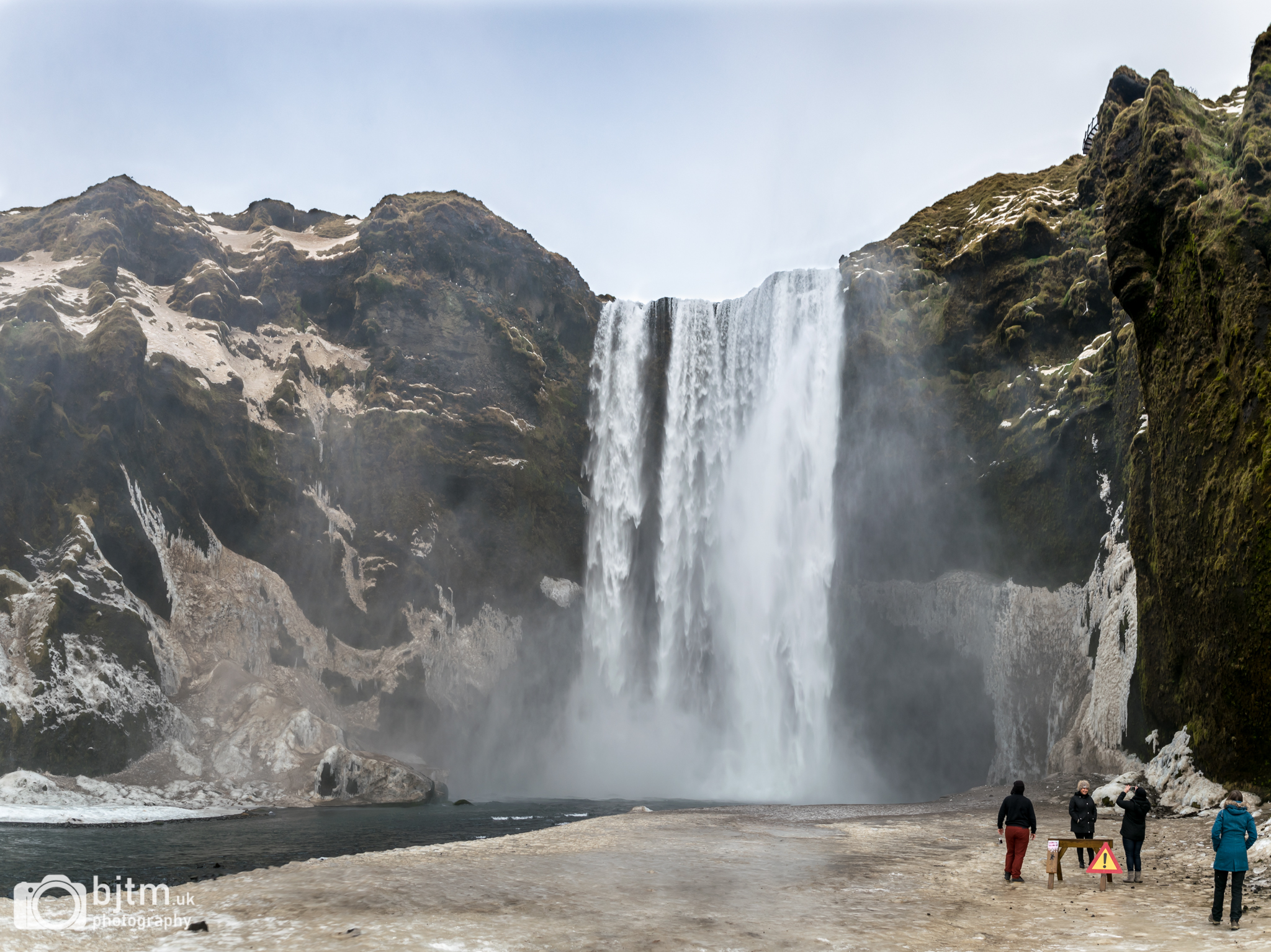
At Skógafoss, the satnav had some sort of brainfart and kept repeating the place name twice with different pronunciations. There, a great tall waterfall drops from the old sea-cliffs, drenching the tourists who trek over the ice to get closer to its base. Around its plunge pool, the overhangs are bearded with ice from fall-spray that sticks and freezes to their undersides. Drones soared high above the waterfall, the honesty-box toilets and the signs saying NO DRONES in several languages. Even at high noon, the sun could barely bring itself to creep much above the horizon.

Skógafoss, by Ben.

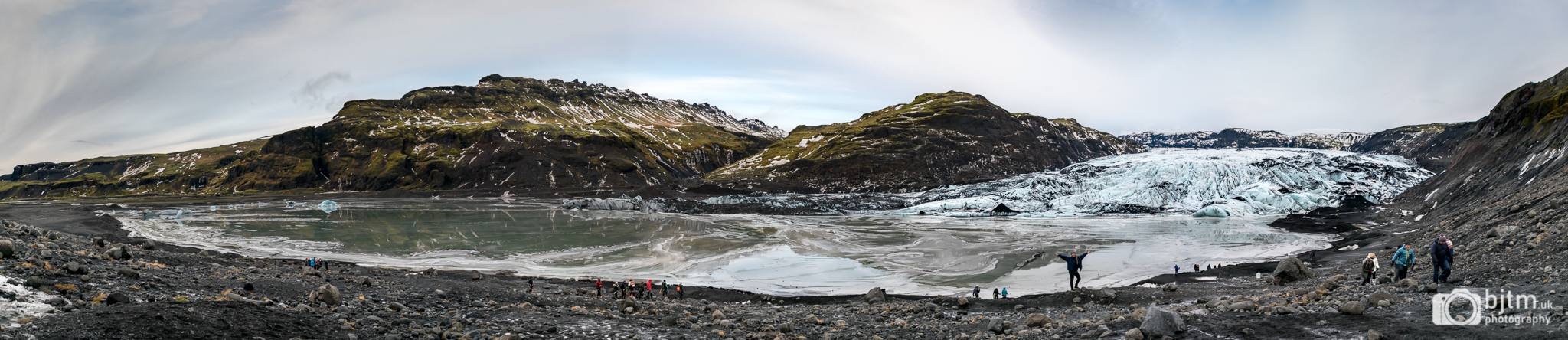
We came to the base of Sólheimajökull, the southernmost glacier in Iceland, a tongue reaching down from the huge Mýrdalsjökull ice cap (yes, I’m pasting all these names). The glacier was immense, silently threatening: a towering head of cold blue marble, filthy with black sand, feeding into a many-times-frozen cappuccino swirl of grey and black ice strata. Down by the rumpled shore, among the drumlins, sheets of ice had been shoved up into a jagged foot-high wall. Some had melted there, leaving a dry, crumbly fault line of muck.

Glacierorama.

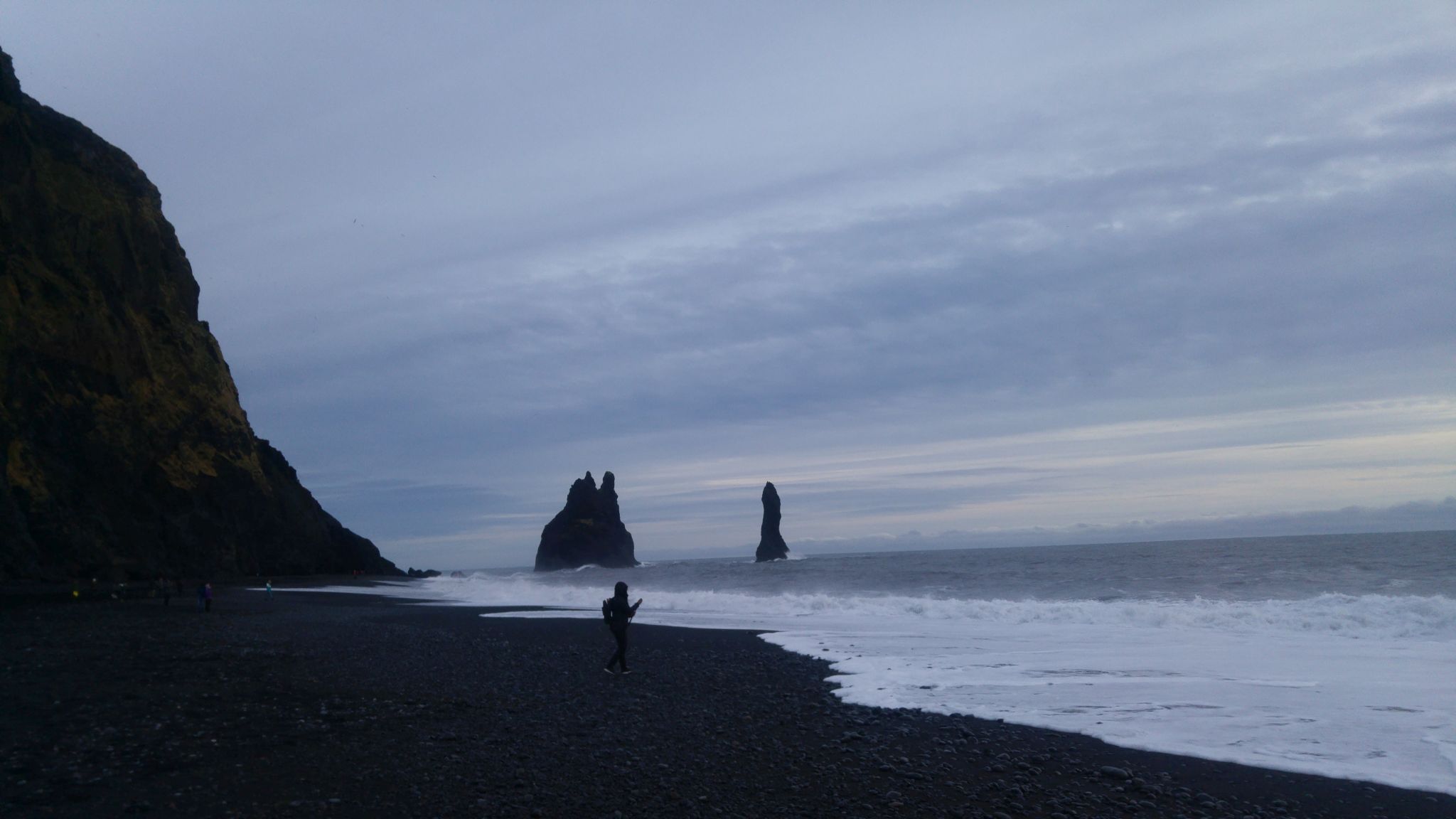
Off in the distance, we would sometimes see individual long-armed excavators doing something or other – digging out ditches, shoring up a riverbank, building a breakwater at Vik. They were distant, lonely, alien. At the black beach of Reynisfjara we joined the surprising number of tourists freezing their faces off to the cry of the gulls and the roar of north Atlantic rollers. There’s a great finger of rock poking out of the sea, a whale skull outside a visitor centre, and most interestingly a little section of Giant’s Causeway basalt columns. Some arch off to form an intriguing cave, where underneath the regularity of the hexagonal prisms dissolves into a gooey fondue of dark stone.

“So I’ve been thinking – ReykjaVIK, KeflaVIK –“
“Vik is clearly just the suffix for town.”
“Right. So since we’re ging to a town which is just called Vik…”
“You wonder how boring it’s going to be?”
“Yes.”

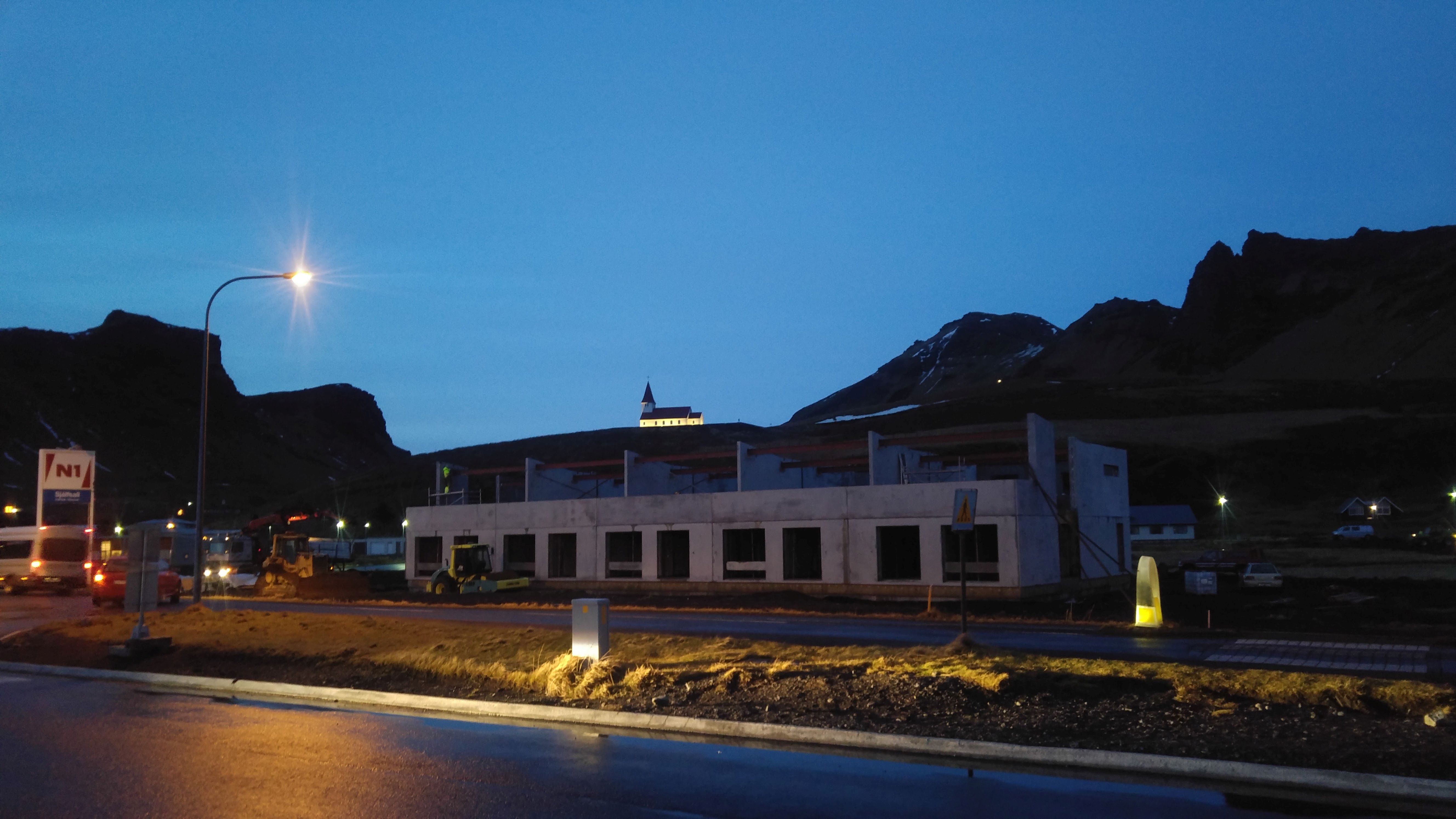
Vik.

Answer: quite. A little red-roofed white church, with more lit crosses in the cemetery; a few shockingly expensive Icelandic groceries, and we headed back west-north-west in the slowly gathering dark. Towns ahead showed on the bellies of low cloud as islands of orange light as we stopped for Ben to photograph an enormous yellow moonrise. And then, looking up through the clear air above us, the strange strand of luminescence suddenly brightened into a hazy curtain of ethereal green, our first glimpse of the aurora.

*

Iceland 2017
Waterfalls, glaciers & black beachesThingvellir, Geysir, GullfossGrindavik, Keflavik, Blue LagoonReykjavik, aurora borealis