dobranoc, cracovia

(This is the last post in a series! You can start from the beginning in Warsaw here, or browse the whole Adventure in reverse order using the tag here.)


Most of the Kazimierz district south of the castle (named for Casimir III) was Jewish before the 1940s, but it was in the Podgórze district on the south bank of the Vistula that the Nazis decreed their ghetto. Zgody Square, where Jews were assembled before taken away to death camps, was scattered with big empty bronze chairs, each representing a thousand souls. At its edge the Eagle Street pharmacy is preserved as a museum, standing out as a gentile-run business in the ghetto and a piece of humanity among the general horror.
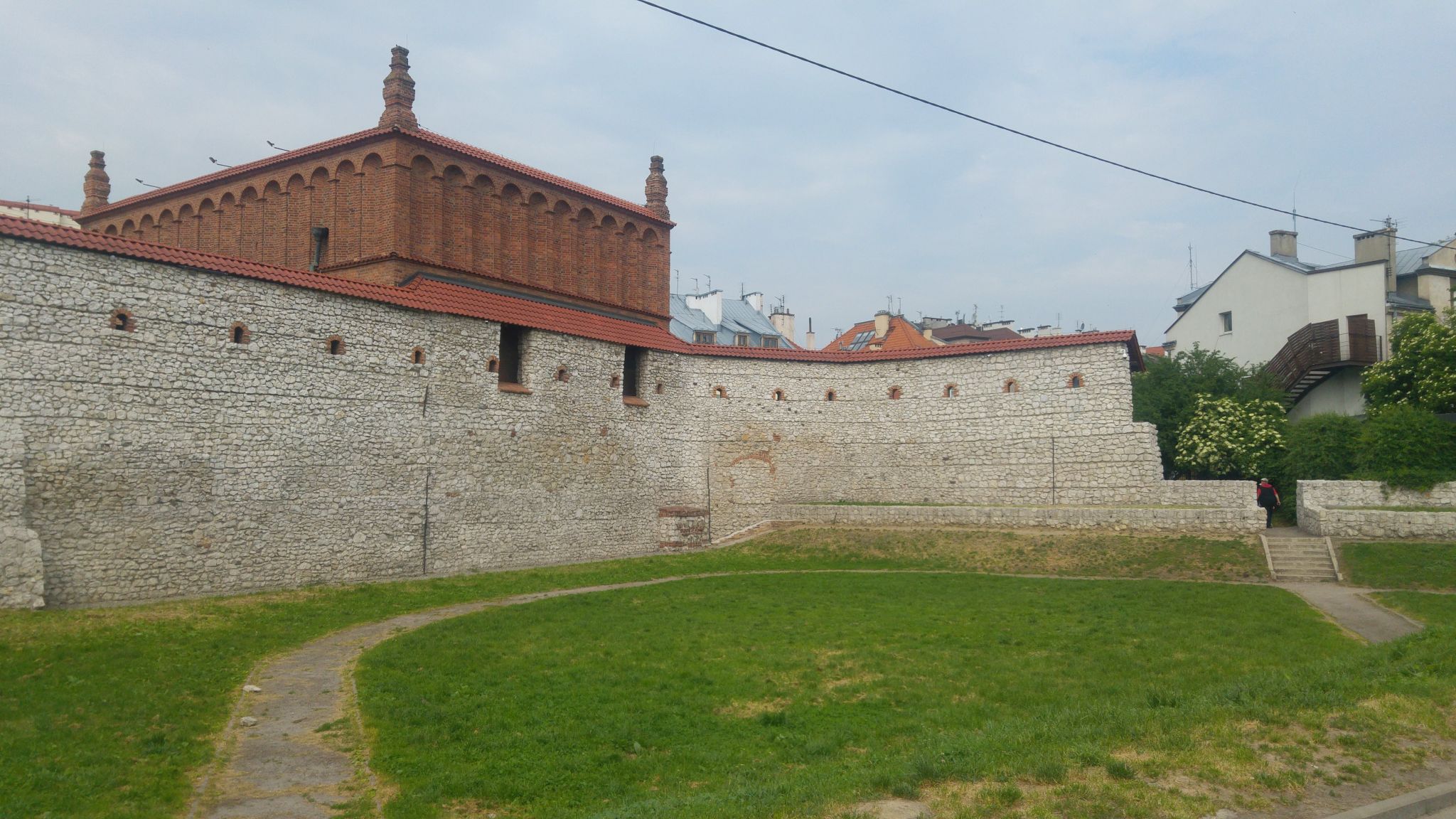
The Old Synagogue.

We headed back north across the Vistula, wide and slow and brown between its white stone embankments, into Kazimierz. The 15th century Old Synagogue stood out from the other buildings, with its high, small windows and bleached stone courtyard walls. We breakfasted at something called Bagel Mama: pastrami and cheese, chicken and bacon, a chilli wrap with sour cream. You will note that none of these options are kosher. This is Ashkenazi food filtered through New York and brought back across the Atlantic to appeal to tourists; vaguely Yiddish-accented, but really reinforcing the point that there are no actual Jews here any more.
Kazimierz is still full of life: electric touring wagons like stretch-limo golf carts in the lanes between big but unobtrusive synagogues, trendy cafes with sewing machine tables, Belgian chip bars, a street market selling medals and Soviet-era pin badges I had to physically drag myself away from. We had a castle ahead, and not quite enough time.

Wawel is so big, and the conservation efforts there so earnest, that they sell tickets for individual sections of the complex, in limited numbers you can see ticking down on a big board behind the kiosk. The old lady who sold the tickets had good English and a friendly, patient style that made it clear this is something which has to be carefully explained to a great many tourists.
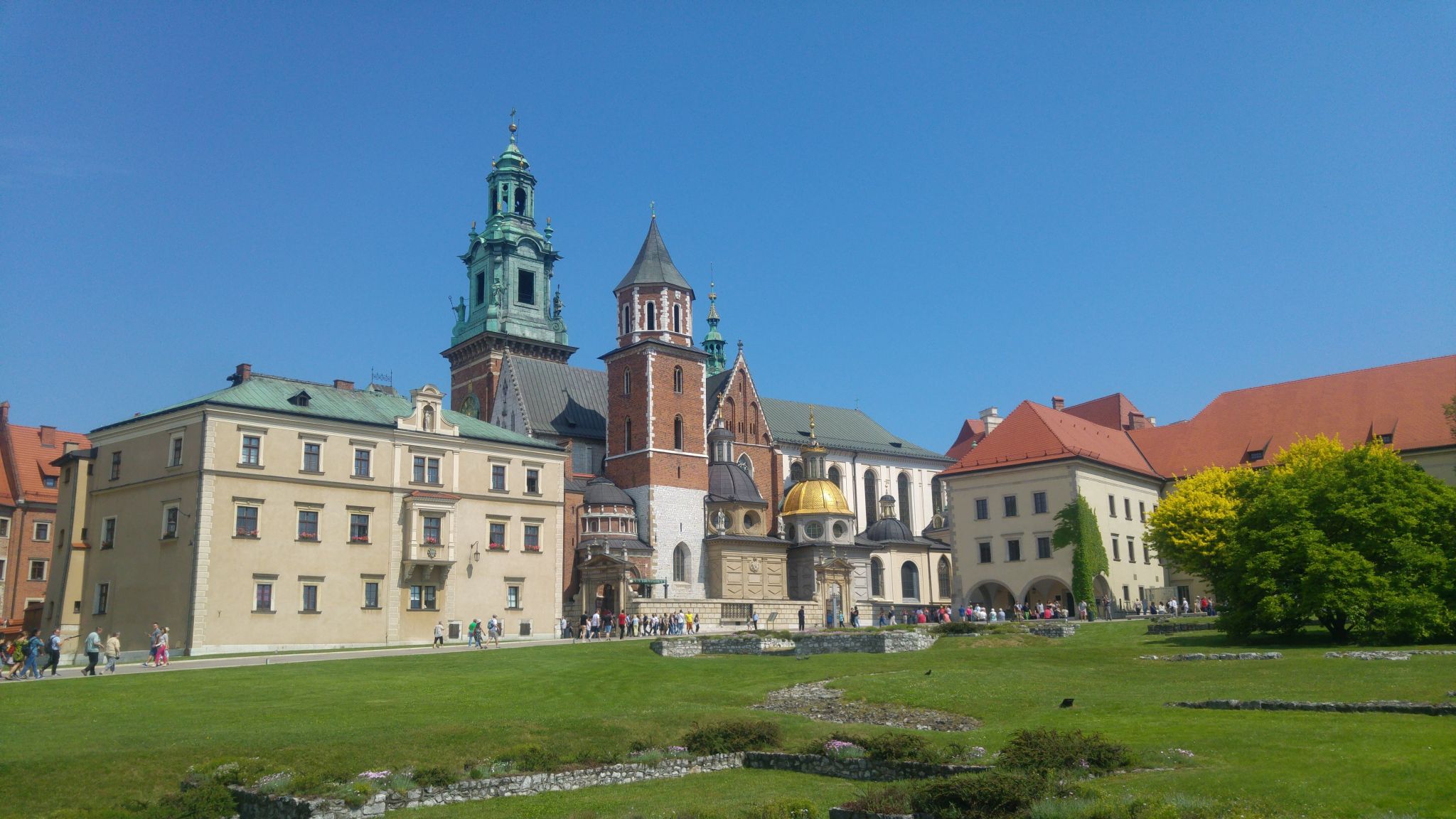
Wawel Cathedral, seen across the central courtyard of the giant castle complex.

For most of Poland’s glory days as one of the largest, richest and most powerful states in Europe, Krakow was the capital and Wawel was the seat of its kings. The castle is a vast complex of Gothic, Renaissance and Baroque palaces and fortifications, with the combined cachet (and probably the combined bulk) of Westminster Abbey, the Tower of London and the National Gallery rolled into one. In the Abbey portion, the massive silver reliquary of Saint Stanislaus sits as a centrepiece under a glorious wooden throne. Accompanying it are the graves* of Jadwiga, whose marriage into the Jagiello family helped create the Polish-Lithuanian Commonwealth; of Jan Sobieski, who can fairly reasonably claim to have saved European Christianity through deciding to come to the Habsburgs’ aid at the Siege of Vienna; and of Kosciuszko, who died in exile in Switzerland. Above the door of the cathedral is a whale jaw and miscellaneous large bones in iron chains. One of the ever-present tourist guides gabbled something to his crowd about Poland falling if the chains break.
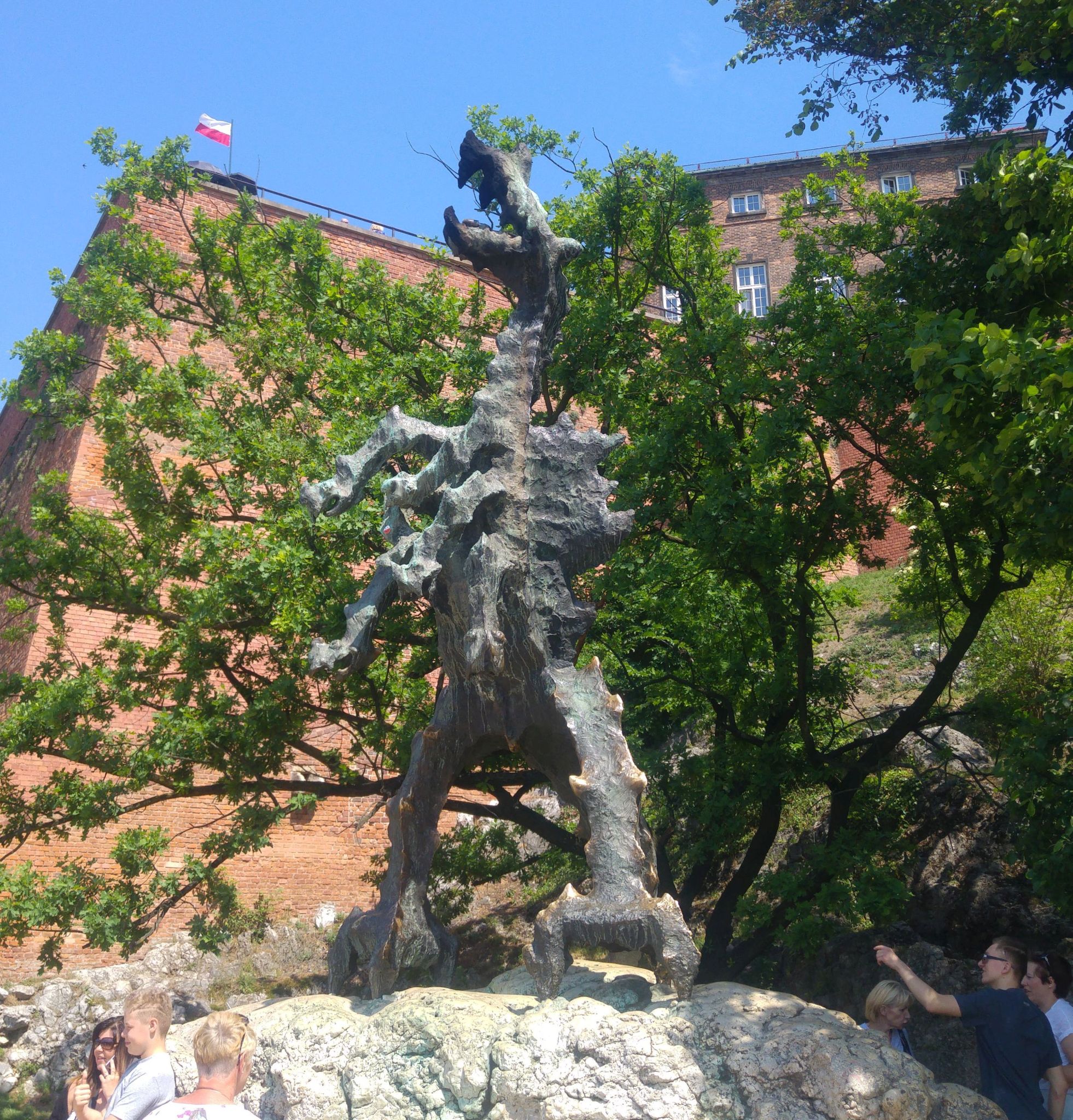
grr arg

Crowning its almost limitless coolness, Wawel is built on a series of ancient limestone caves, which according to legend housed the dragon Smok (hence his presence on much of the tourist tat.) We didn’t see one inside the caves, but there was one outside, a gruesome bronze six-armed creature twice the height of a man, who spewed fire as we emerged from the cold cave back into the hot daylight. Next on our ascent was the treasury/armoury, full of gilt masterpieces and crazy-ornate clocks and table boats, the armoury half packing the usual splendid mix of moustachioed helmets, wavy-bladed zweihanders and crossbows with pom poms. Standouts were a glorious set of Turkish kit captured in 1683, a fabulous suit of winged hussar armour, and the gigantic sword and even more massive hat the Pope gave Sobieski.
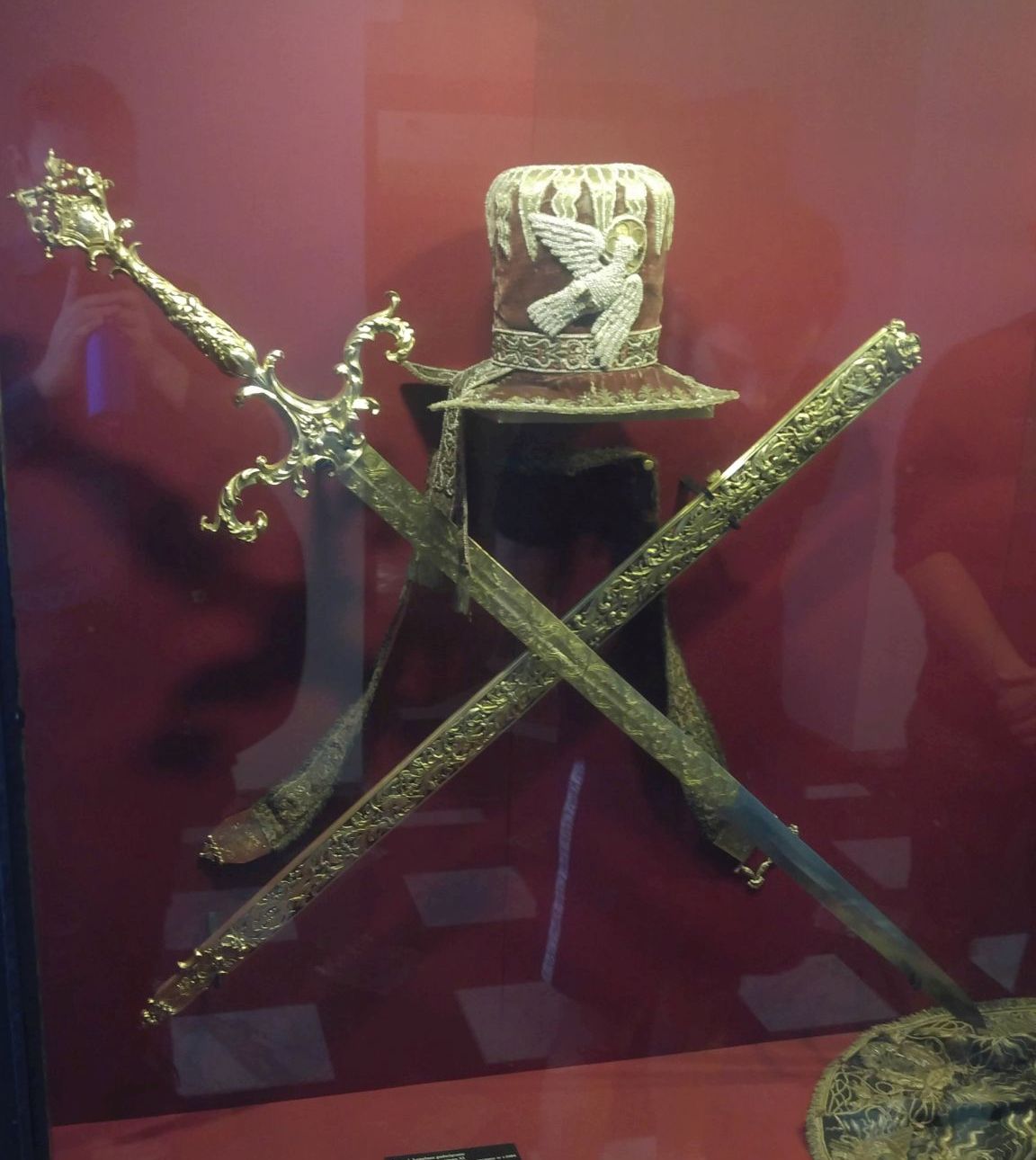
“I saved Christendom and all I got was this awesome hat.”

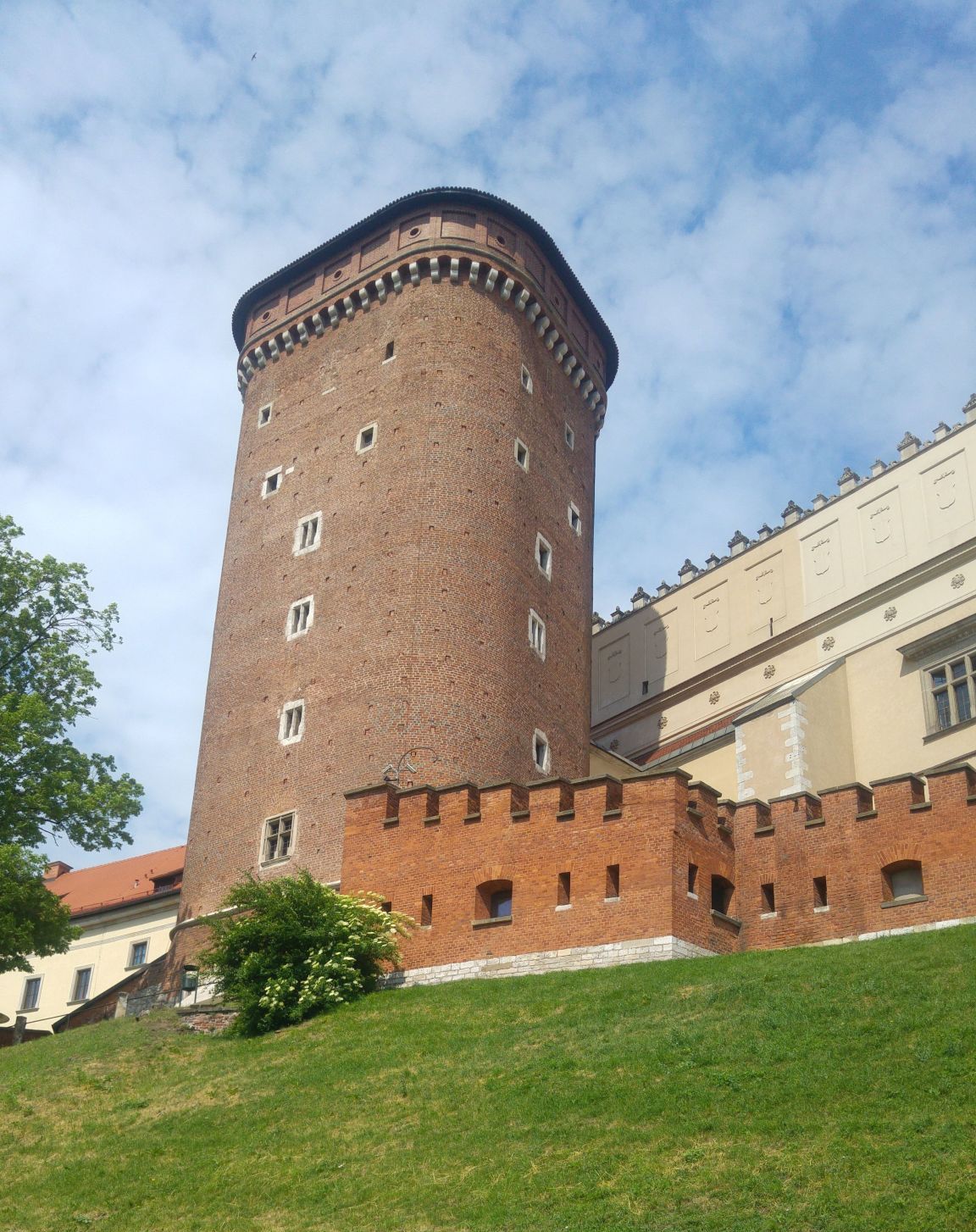
We had cake in the courtyard. Misha lured a pigeon close with crumbs, then caught it with his bare hands.** Our guide around the royal apartments was calm, clear and immensely knowledgeable, running through antique tapestries (“one square metre would take a skilled craftsman one year. Look at this and judge how long it took”), Augustus the Strong porcelain (“they had many alchemists – that’s why this wing was rebuilt – and although they did not find gold, this was worth its weight”) and (“these passages were for receiving unofficial visitors. It must have been lonely here.”) The older rooms are huge, with high, beautiful wooden ceilings and tile stoves in the corners. Sobieski looks the same in all his portraits, a chubby, slightly self-satisfied chap with a good moustache on his round pale head, and seems enormously likeable.
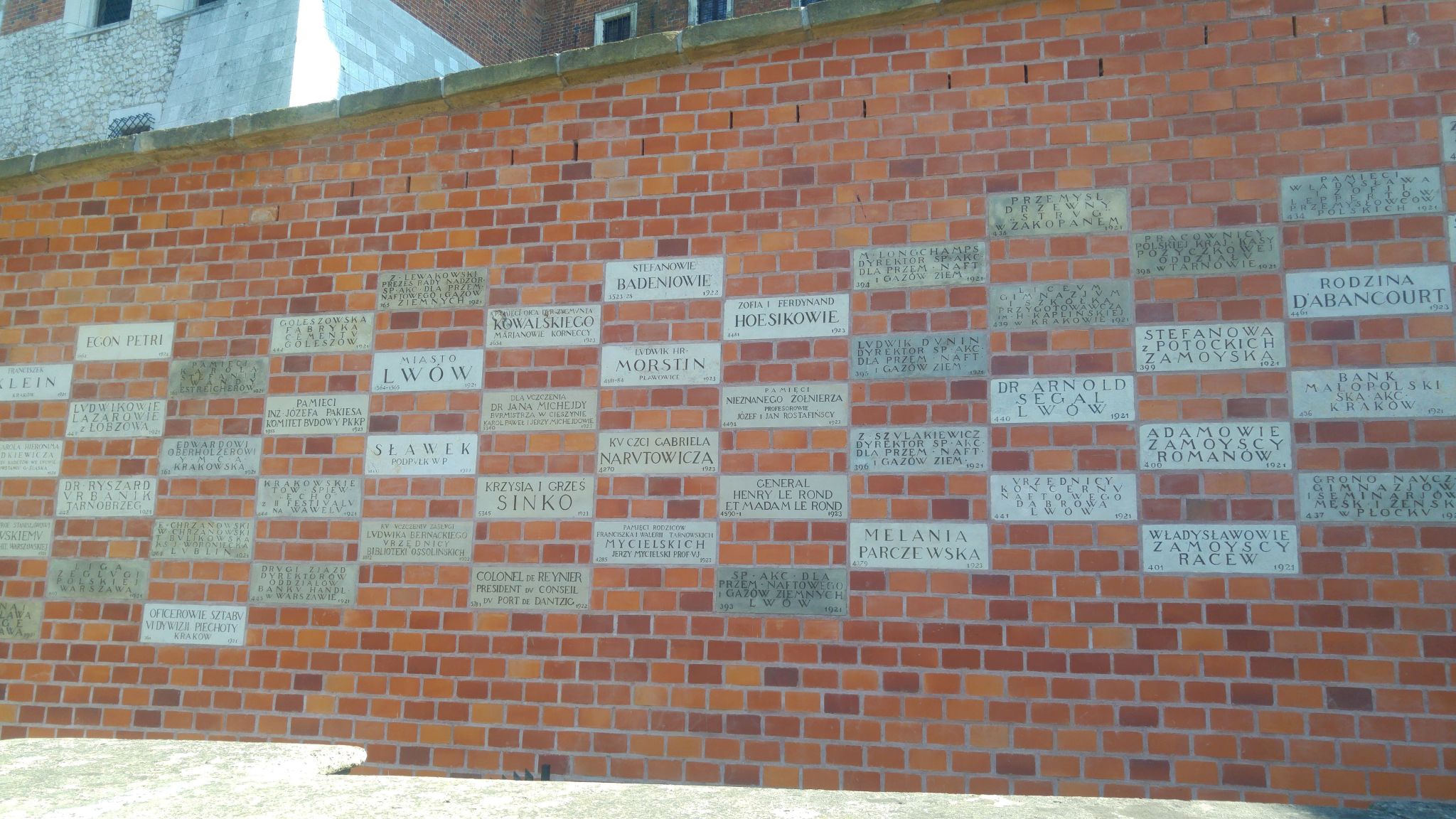
The names of a great many Polish families, on stones heading down into the town: donors to the restoration of the castle. Poland as a national project in the 1920s is both inspiring and an almost impossibly tragic thing to think about for long.

Back along the Royal Road for a last meal with the Russians and a sad sendoff, Rog and I found ourselves in the cloisters of a Dominican monastery, filled with stone monuments and horrible propaganda renditions of Turkish excesses against Christians and vice versa. We climbed the clock tower, enjoyed the limited views but leaving with little idea of why it had its odd piebald colouring (there wasn’t much info in English, although there were many fun illustrations of coronation parades). We went back to the kasha place for honey beer, strolled the cloth hall for souvenirs.
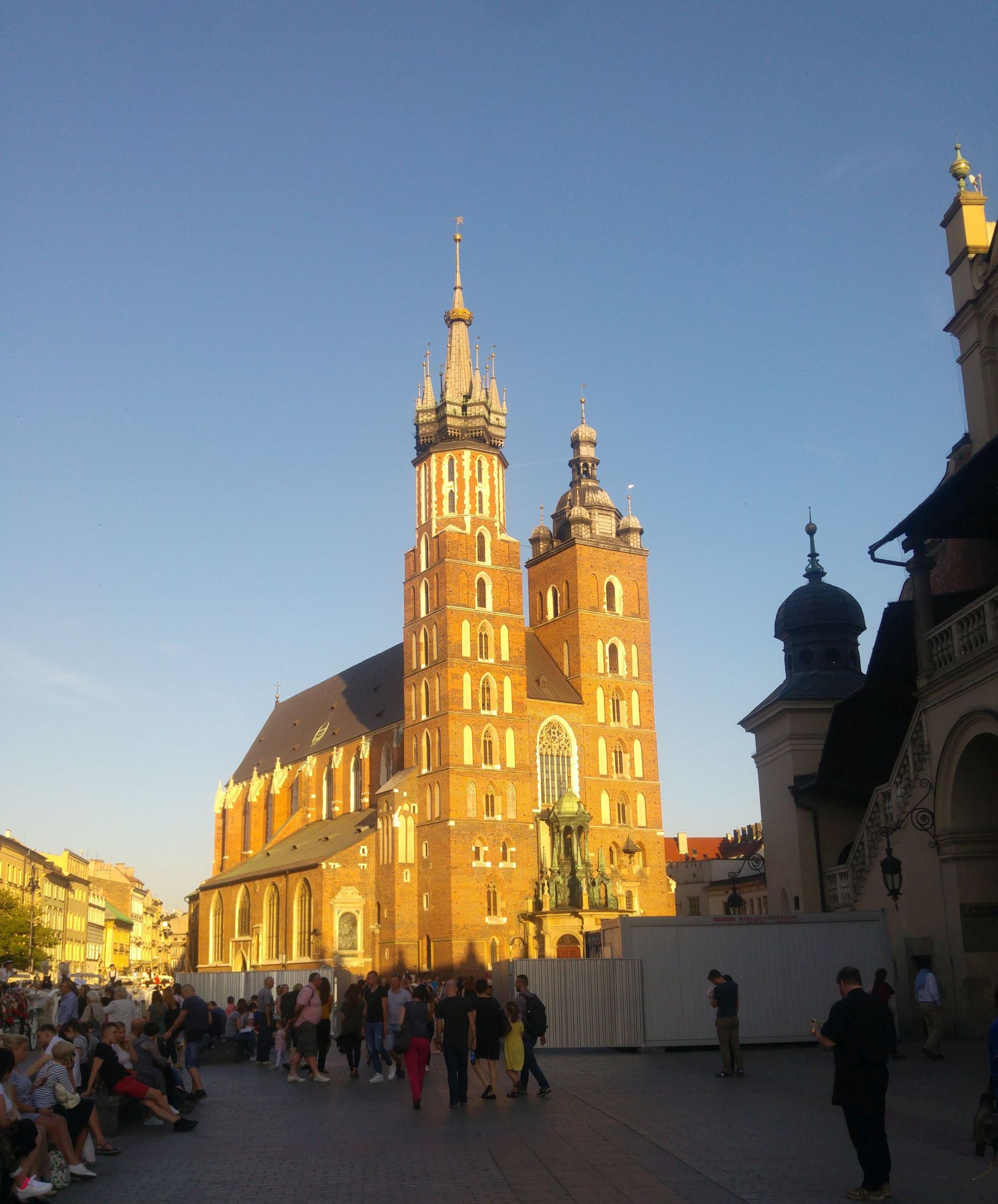
St Mary’s.

As dusk came down, we went to the foot of St Mary’s to hear the trumpet play the hourly hejnal. The popular story behind “the Trumpeter of Krakow”, of a watchman sounding the alarm and being cut off mid-note by an arrow in the throat, is apocryphal, historically doubtful*** and almost certainly invented by an American author. But that doesn’t make the call itself any less lovely: a sad, plaintive tune, cutting across the chatter of the cafes and the awful rock blaring from south of the cloth hall, played once to each compass point, never finishing.

* Plural; she was exhumed from one fancy marble box and put into a metal one underneath a hideous, dribbly Christ-crucified that legend claims spoke to her.
** I know. I don’t want to dwell on it.
*** I say this because I speculate that a Mongol shortbow would be rather hard pressed to kill someone in that tower even firing from its base, and because I know the tower was built after the Mongol invasion.

Poland 2018

Warsaw Old TownPoznan & CitadelPoznan Museums, Wroclaw by nightThings of Wroclaw – The long road southZakopanoramaKrakow & Wawel

hejnal mariacki

Tatras. Slovakia is the other side.

In seeking dinner we had found, to our surprise, that hidden behind all the wood Zakopane boasts a fully equipped high street with chain stores that wouldn’t be out of place literally anywhere else in Europe. The mixed grill for dinner, however, was very much local: a mutton sausage, a white sausage quite like Bavarian ones, roasted black pudding, and gammon (although Misha’s steak was terrible). I have overeaten terribly this holiday, and am not sorry. Our lodgings were a set of little wooden rooms run by a lady with dyed carrot-coloured hair, who found talking to Olga and Misha easier than Rog and I. “She thinks she can speak Russian” was all they would say. Waking up, we could clearly see a snow-riven knuckle of the Tatra mountains looming high above.

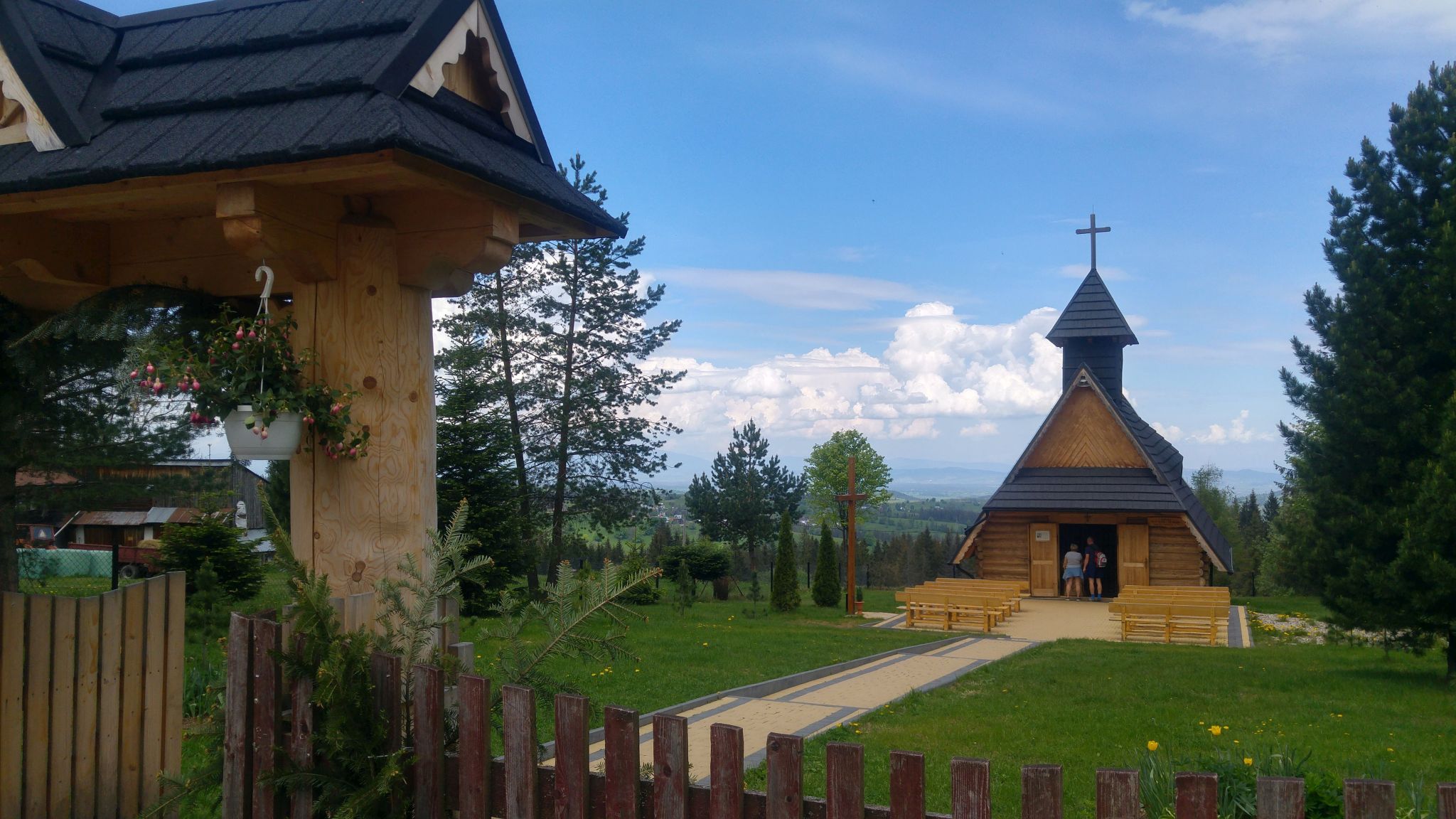
Wooden church atop Gubalowka.

We considered options for getting the most out of Zakopane, ably helped by some tips from Gosia, who knows the area. One was Morskie Oko, the “Eye of the Sea”, a picturesque tarn accessed by a hike the heavily pregnant Olga didn’t feel up to. One was the cable car up to the Kasprowy peak on the Slovakian border, which looked fantastic but… wasn’t operating that week. The last was the funicular up to Gubalowka, the other side of the valley, which we went for.

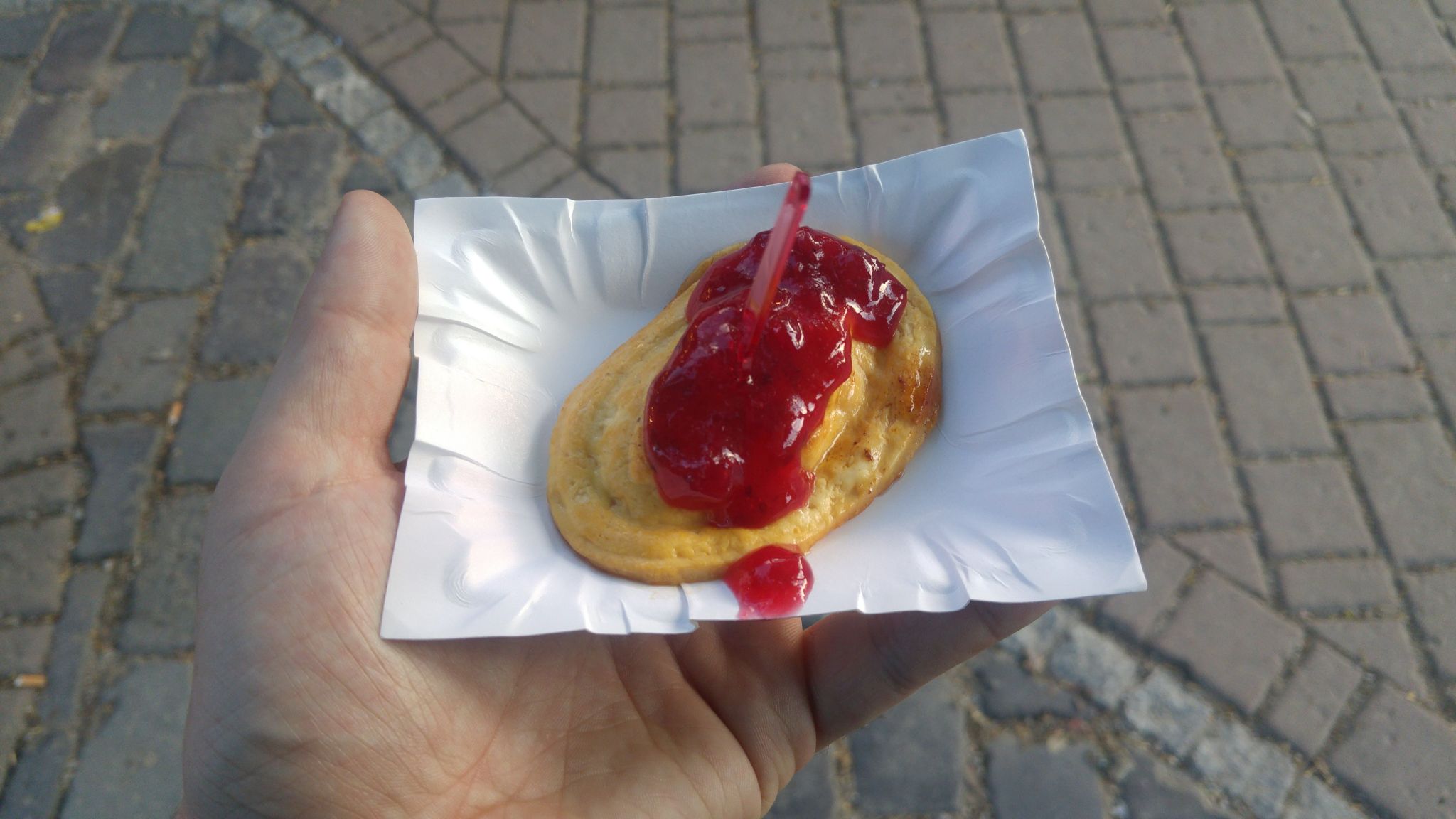
Squeaky cheese!

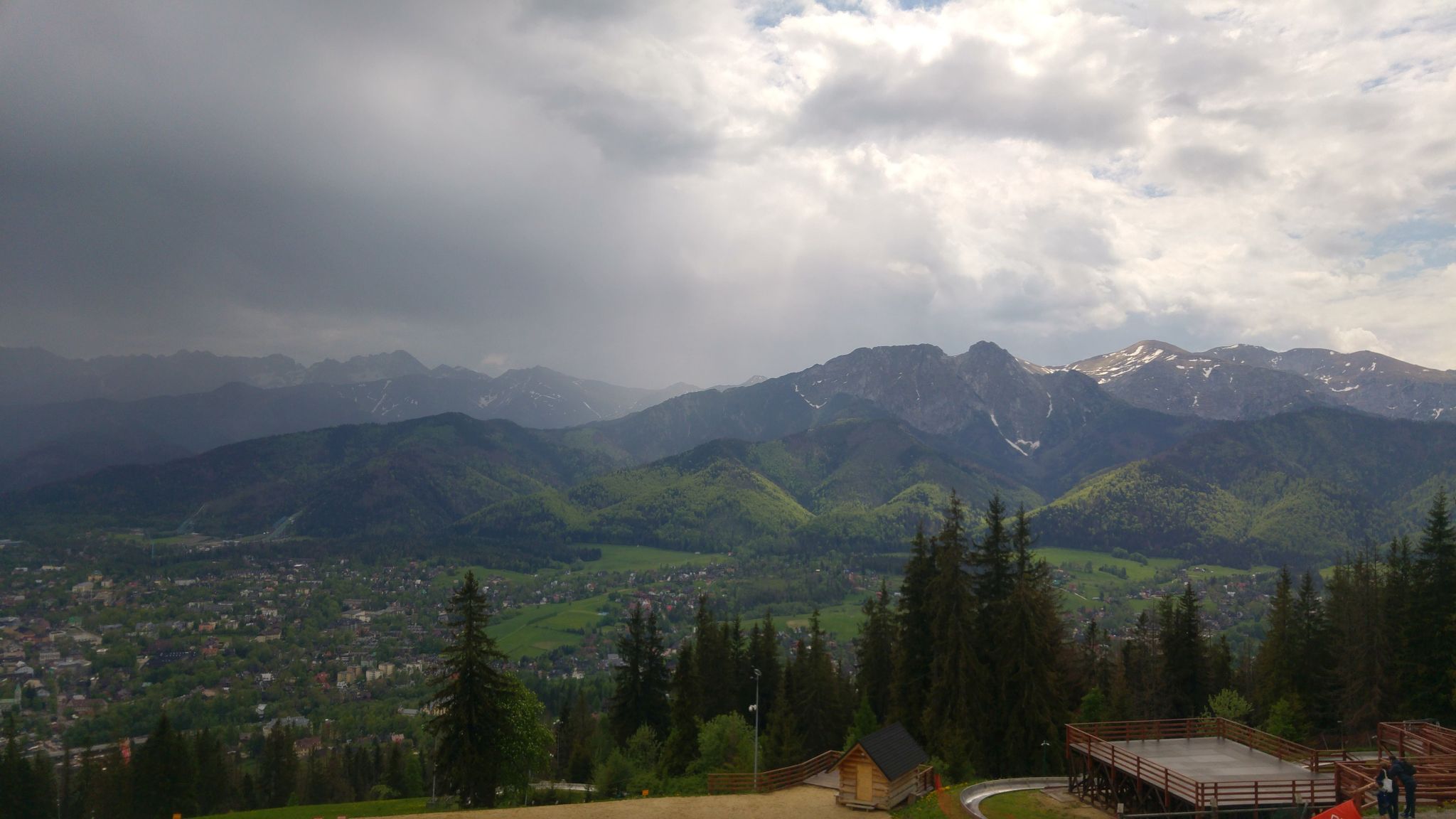
By day Zakopane and its tourist-tat markets had slightly less charm than by dusk; a massive expensively overengineered underpass in the town centre, rather than a simple pedestrian crossing (which might slow the cars) left no doubt as to who was more important here. The funicular was a clean new box in the colours of the Ukrainian flag, and positively zoomed up the mountain into a complex of more tat stalls and tourists. From 1,100 metres up, however, the Zakopanorama was magnificent. We had a long stroll along the ridge of the hill, enjoying the clear air, and watched a rain squall coming in over the mountains from Slovakia as we lunched on grilled sheep cheese and sauerkraut soup. The steel toboggan ride near the funicular was great fun.

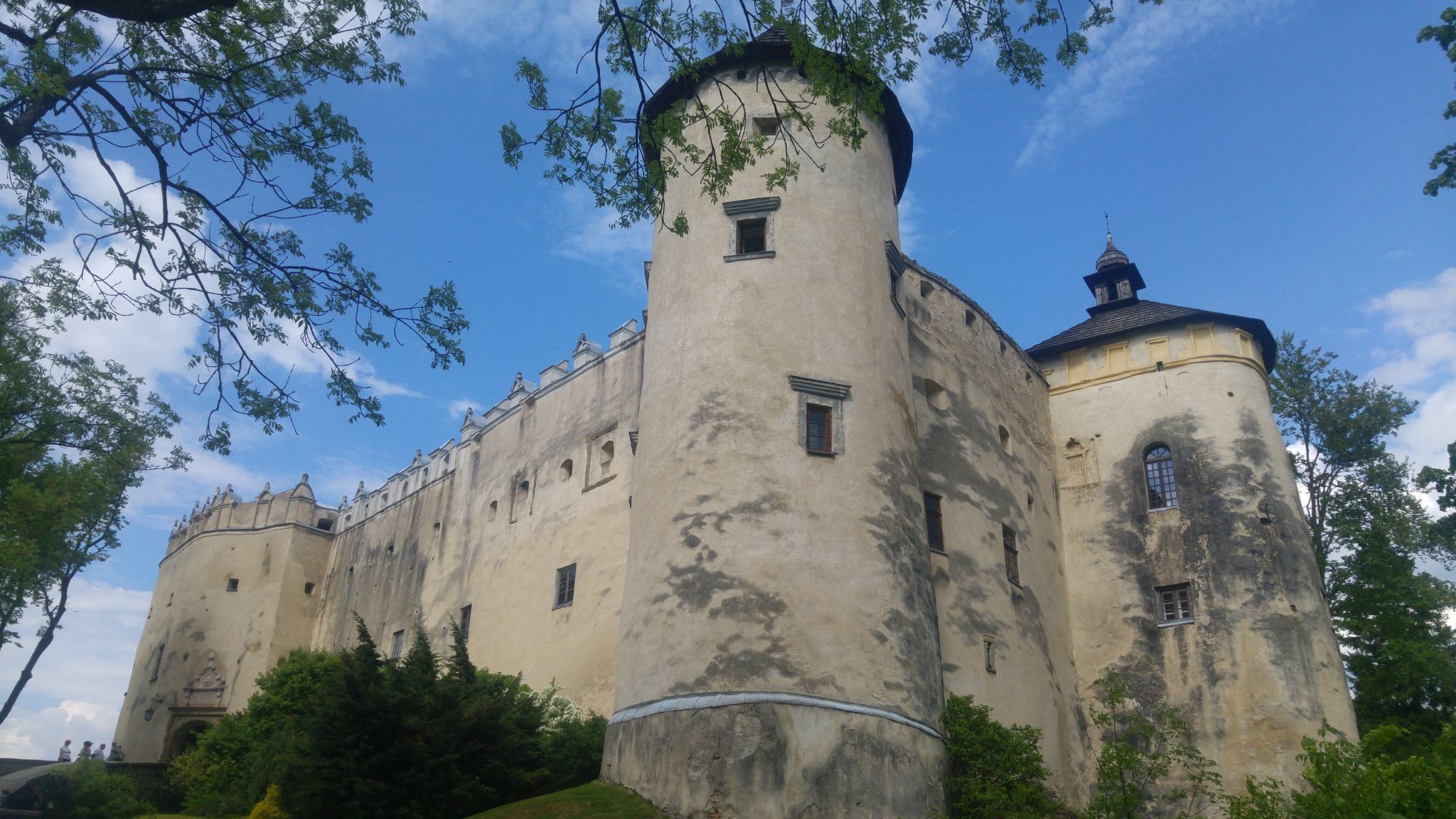
Castle Dunajec.

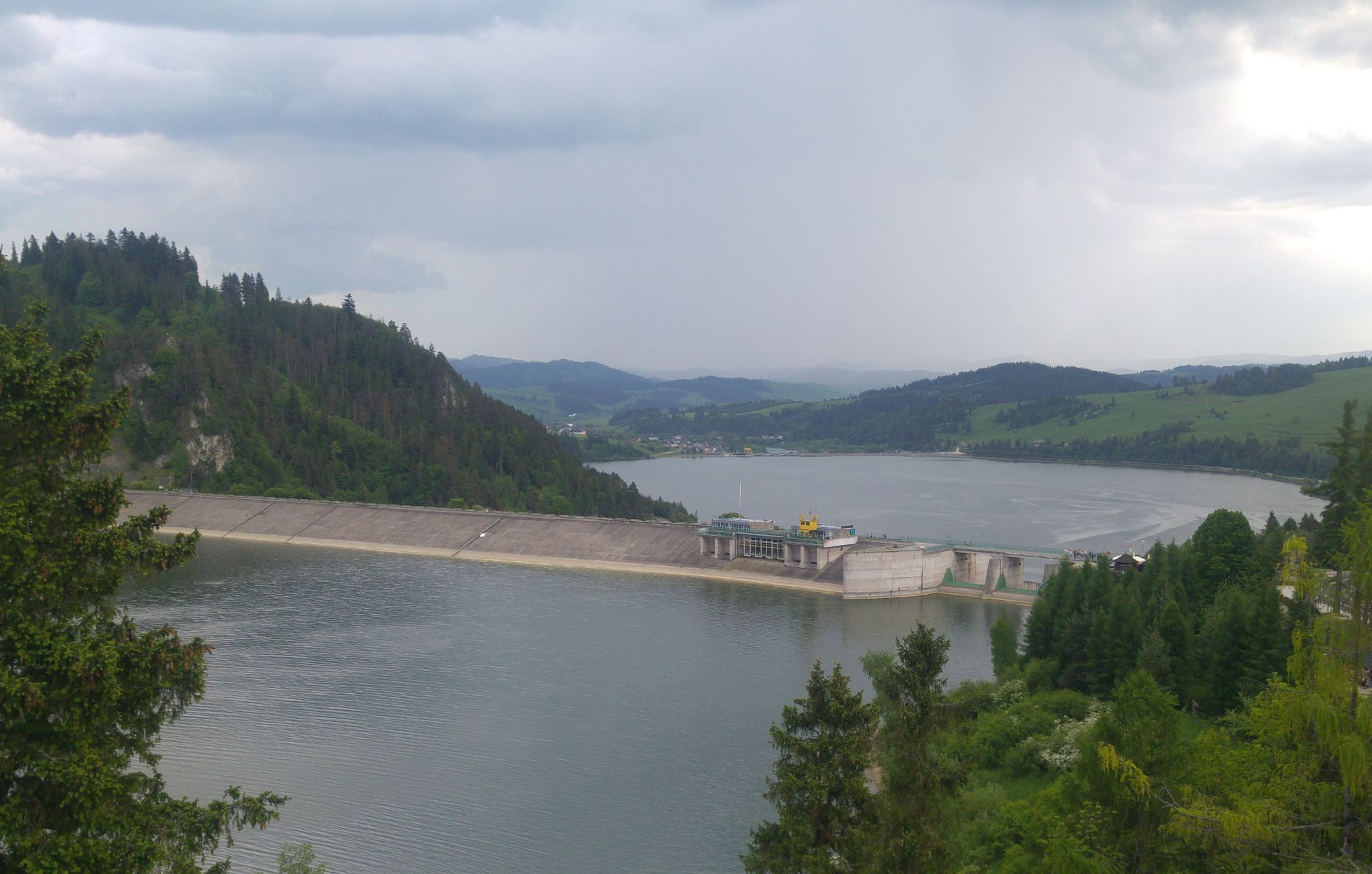
Onwards to a castle – named Dunajec for the river it commands – Hungarian-built and mainly Hungarian-owned up until the post-WW1 treaty of Trianon. It sits across the artificial lake of the dammed Dunajec from the ruined Polish Czorsztyn Castle, and pleasure boats pootled across said lake as we explored the castle’s limited but charming contents and fantastic views. Another rainstorm arrived as we had a look at the dam, big fat slow raindrops that burst heavily around us. It was time to move on. Through the rain-streaked windows, the now-lakeside town of Frydman cowered behind a massive levee, like latter-day city walls.

well dam

Getting into Krakow was, predictably, hellish, although we got a good look at the highly impressive Wawel Castle on the way in. Our accommodation this time was a handsome thirties apartment block, its interior full of Instagram-bait modern decor, cutesy to the point of tweeness but very well furnished if you look past the faux-Scandi-packing-crate flooring and the LOVE <3 here and there. It was on the outside of the double ring of roads surrounding the Old Town, where we made our way in search of dinner.

An old town, but a young clientele – hardly anyone out and about looked under 30. After much wrangling we finally found a place doing kasha based meals (think couscous but with buckwheat groats). Across from us was a huge hollow bronze head; behind it, the odd piebald clock tower, patchy with brick and marble in a way that defied obvious explanation. The glorious Polish baroque cloth-hall stands in the middle of the square. Behind it, the Basilica of St Mary’s lopsided towers are crowded with multifarious mini-spires. In the market below, we found that while Krakow’s proper crest is three towers, the thing on all the fridge magnets is a dragon.

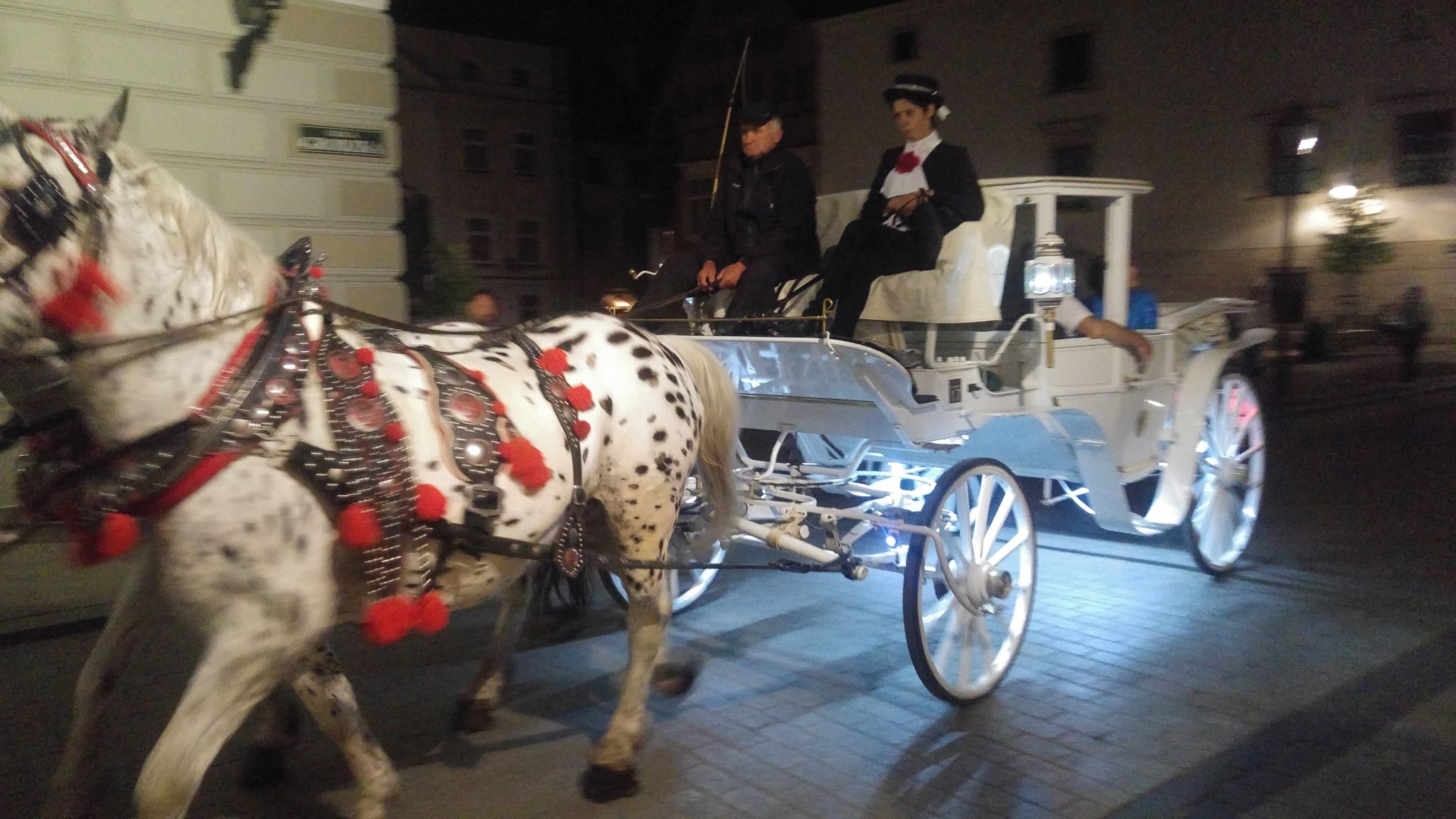
“I like this city. Very cosmopolitan. But this can be a bad thing. It means more Russians. And English.” We weaved through the market stalls and happy crowds, onto the Royal Road. Buskers were playing “Hallelujah” – they were actually very good, but it was the third time in the third city we’d heard the song and it was already tiresome. White coaches with gloriously caparisoned horses clopped past, fitted with under-carriage lighting which looked jarringly gangsta, as we admired the Basilica of Peter and Paul and the variegated immensity of Wawel Castle, and then turned for home.


Poland 2018

Warsaw Old TownPoznan & CitadelPoznan Museums, Wroclaw by nightThings of Wroclaw – The long road southZakopanoramaKrakow & Wawel
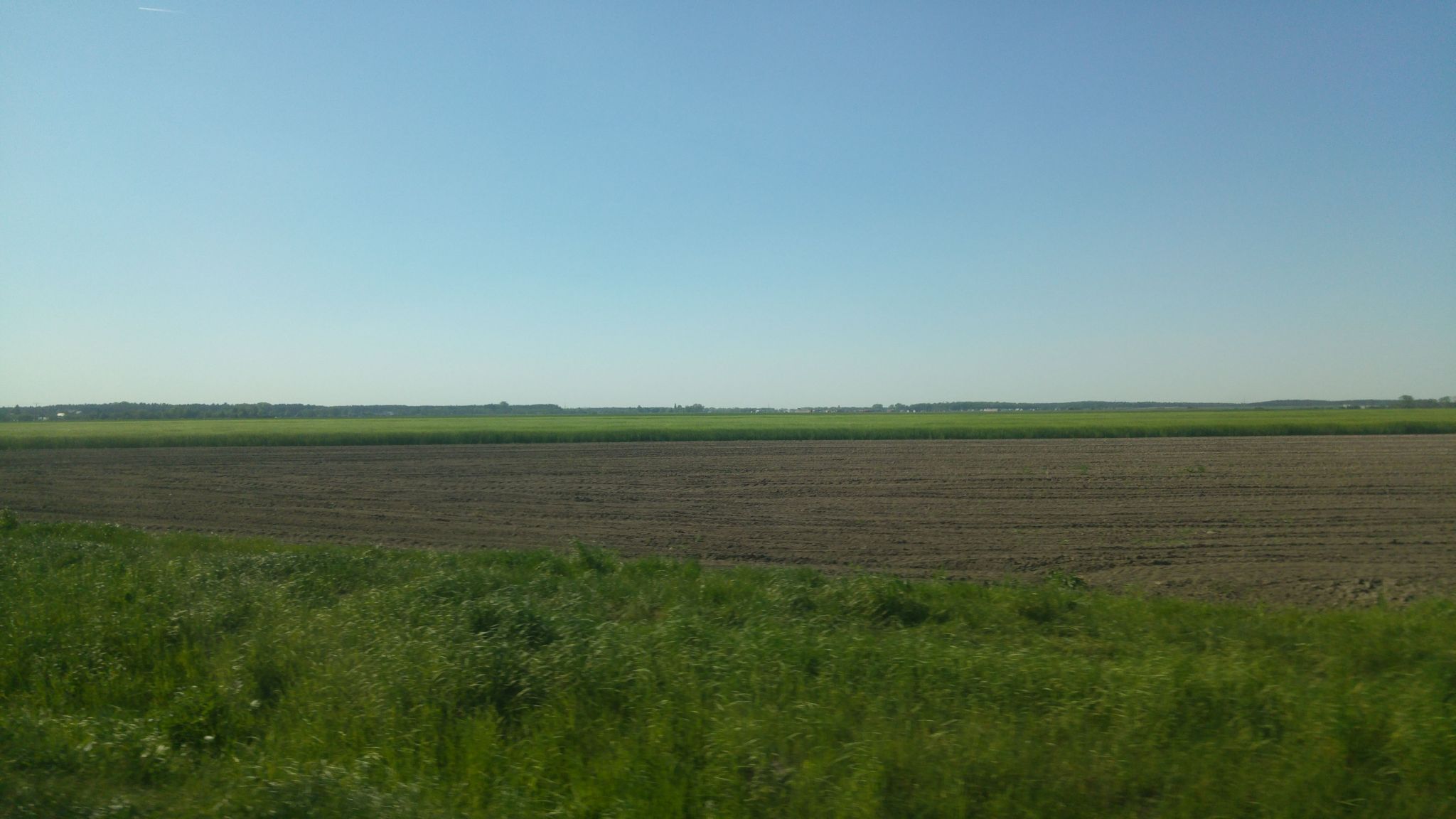
the rain in Zakopane falls mainly in the drain

A picture-light road trip episode as we spent almost eight hours driving from Wroclaw to Zakopane. I have said from the beginning that this is a bloody stupid way to get around.

Onto the road south from Wroclaw, clogged as they all, always, seem to be. A lunchtime servo did a rather bony kielbasa with chips for 8zl. The land still flat, but gradually getting less monotonous. The roads are well-maintained; this is presumably funded by the regular tollbooths which make this an expensive as well as stupidly protracted way of getting around. A few hills, some mineheads and heavy industry around Katowice; more dilapidated and Iron Curtain-ish industrial buildings, like memories of Romania. Every so often I recognise the name of a battle or a massacre on a road sign.

On one side of the road, the first sign pointing to Auschwitz. On the other, the surreal sight of an American-themed leather clothing outlet with a fence made of motorbikes. Regular churchyards, with so many fresh flowers on the graves (and people laying more as we passed) the vast proliferation of flower shops suddenly makes sense. Crossed the Vistula again, much narrower than at Warsaw, between high levees. More Soviet spacey-looking architectural leftovers: a cantilevered bus station, a leisure centre with cool flying buttresses. Big empty factories, the vague shadows of potential mountains on the horizon.

Suddenly, a proliferation of theme parks: roller coasters and fibreglass dinosaurs everywhere. Mud-coloured hayricks, little old tractors, bored teens on their phones waiting for the bus. Here and there, among the gradually increasing hills, huge quarries and cement works. Here and there, clusters of pretty little buildings with brightly painted corrugated steel roofs. The huge marching concrete legs and piers of a new motorway, ready to render this slow, winding road and its surrounding villages to oxbow-lake irrelevance.

Untilled land, bus stops that looked like stave churches, huge adverts for plastic surgery, painted plaster saints under delicate wrought iron roofs. The Tatras began as wispy blue shapes, but by Nowy Targ they’re hard dark outlines, striated with snow. The houses have changed again, less generically Eastern and more distinctively Slavic, wooden houses with tall, steep roofs sporting downward eaves and extra folds in their shingles like complicated paper planes. We’ve been running alongside a single-track electric railway, a very Soviet piece of expenditure: who goes to the extra capital costs of an electric line for a tiny minor branch rather than running a diesel? A planned economy mass-stamping pylons and electric trains by the thousand, that’s who. At Poronin a train went by, a handsome old red piece with boxy pantographs that needs a lick of paint and probably has done since 1990.

Zakopane, our final destination, is a charmingly incoherent sprawl of ornate wooden lodges, wooden fences, wooden churches and woodsmoke. At the base of the high street, wooden stalls sell wooden charms. They also sell a kind of grilled sheep’s cheese thing with cranberry sauce, which is fantastic. We arrived at the Sanctuary Church as a service finished – the last strains of incense and organ music, and the last nicely dressed parishioners, came out as we went in. On the outside it’s a standard handsome stone Polish church, with the inevitable plaque from Jan Pawel II’s visit (is there a single church in Poland he didn’t hit up at some point?). But on the inside, it’s quite an unexpected treasure, with the usual beautiful but ludicrous Victorian painted murals of hardy mountain folk praying, a priest taking confession in a shedlike mobile booth, gilt flowers and mournful rainbow-winged angels on the arches. An ancient white-bearded man, bent over like a shortbow, knelt before the altar in a traditional Polish waistcoat embroidered with flowers.


Poland 2018

Warsaw Old TownPoznan & CitadelPoznan Museums, Wroclaw by nightThings of Wroclaw – The long road southZakopanoramaKrakow & Wawel
“why didn’t you invest in Eastern Poland?”

counterfeit head of john the baptist

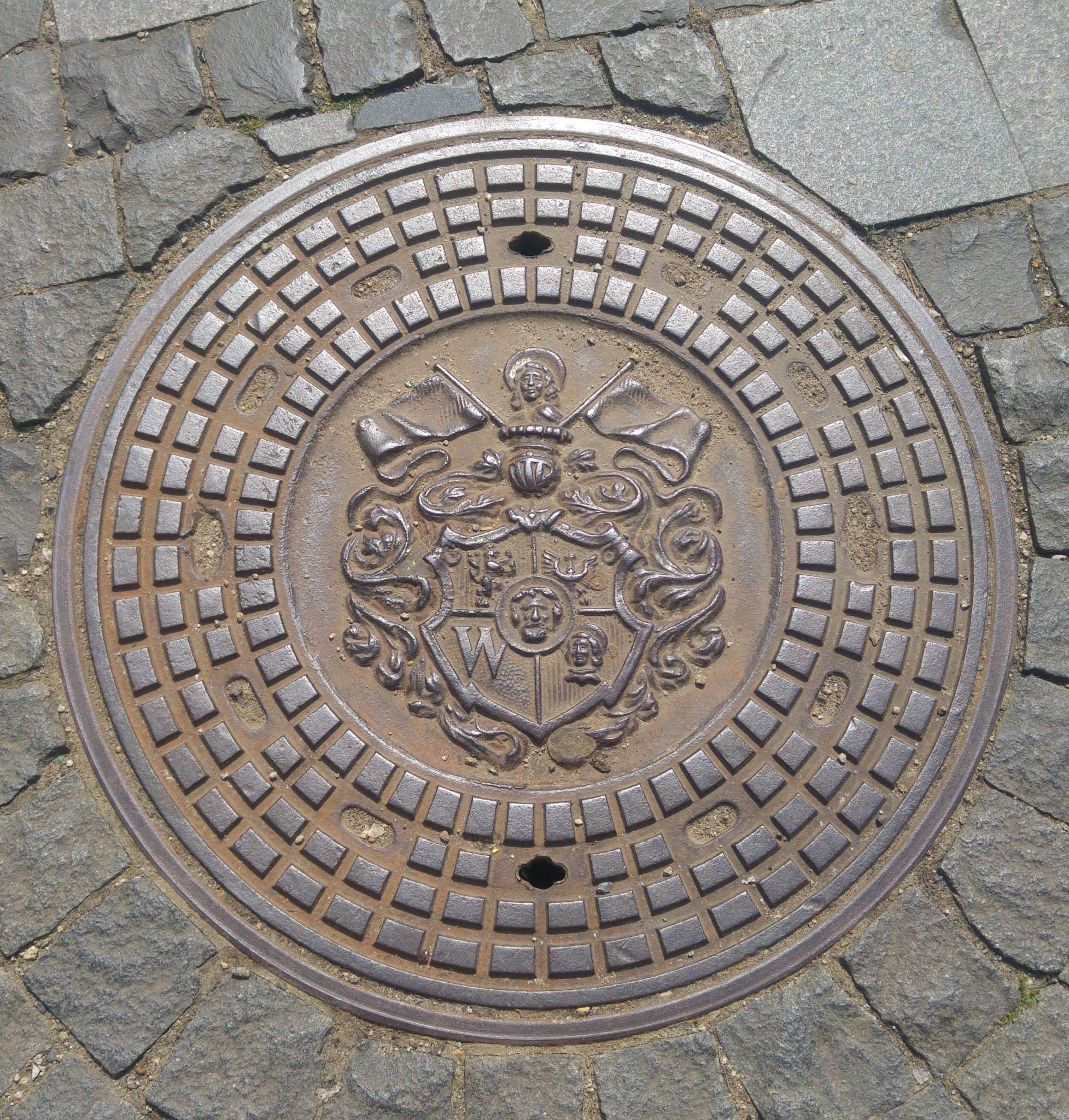
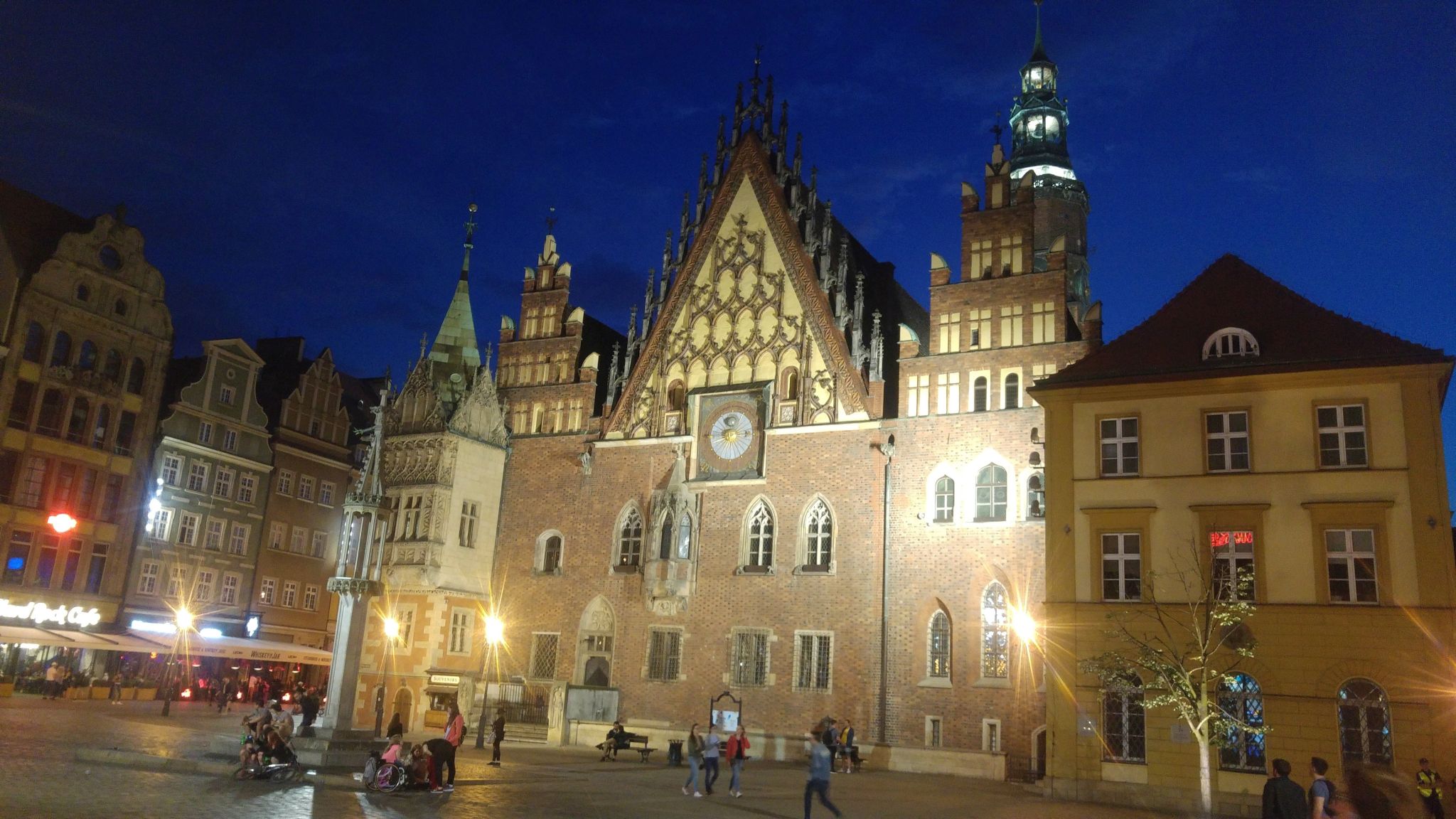
The forecast said that Wednesday would be overcast and grey. It lied; the same baking sun beat down all morning. The crest of Wroclaw has a tiny miserable severed head in the middle of the shield (presumably John the Baptist?) which once you notice it is everywhere, and quite upsetting. I preferred the mermaid and the goats. The ornate curly stonework of the rathaus is absolutely full of nesting sparrows, feeding their cheeping babies.

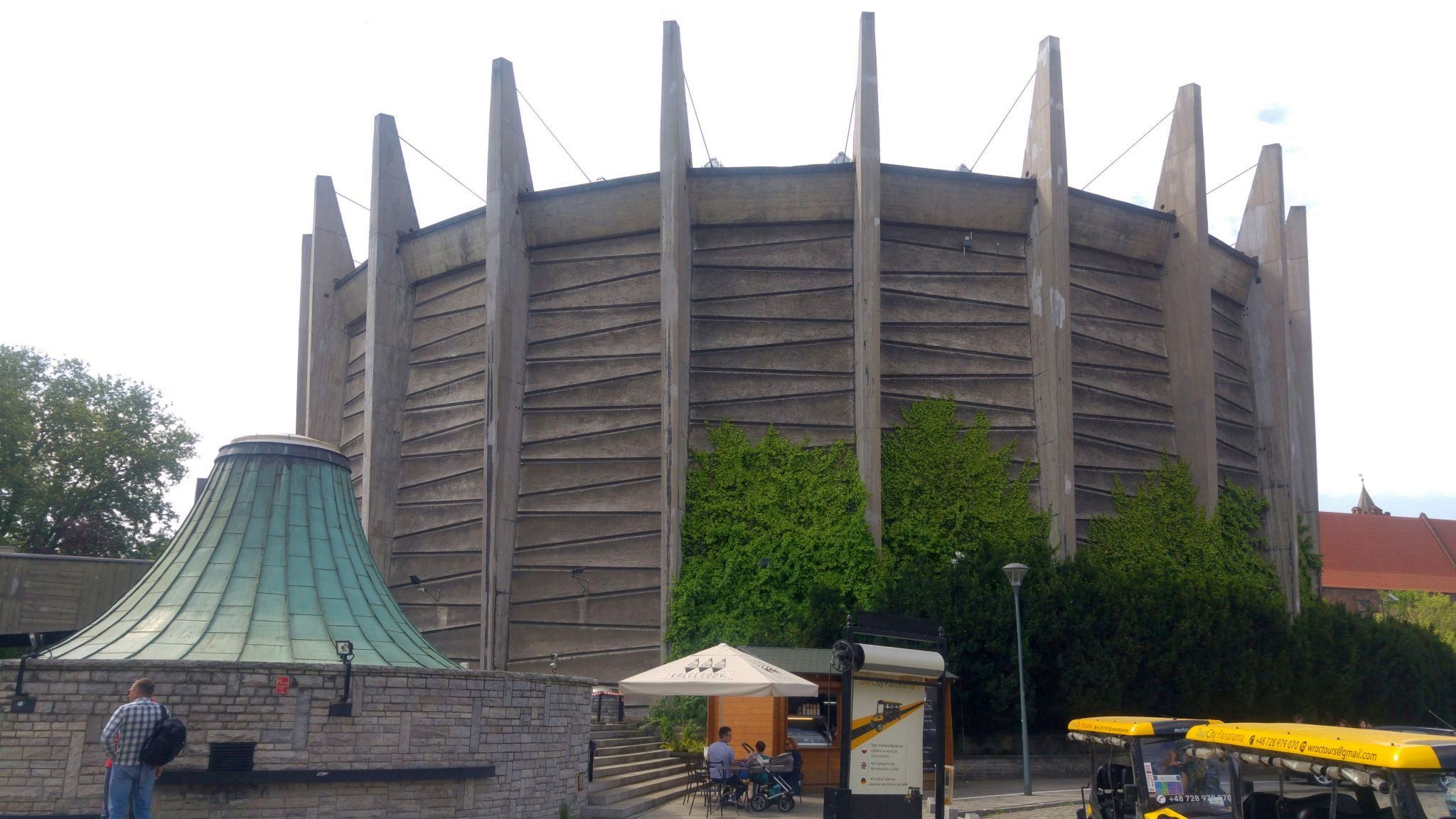
The rather Mordor-esque panorama hutch.

One of the “Things to Do in Wroclaw” highlighted on Tripadvisor was the Racławice Panorama, a gigantic painting of Kosciuszko’s failed 1796 rebellion against the Russians. I’m embarrassed that I’ve still not seen one of these 19th century propaganda IMAX presentations, and this seemed a good opportunity to have a look at the 114-metre painting in its purpose-built rotunda. Unfortunately, this wasn’t the day:

“No ticket.”
“What? Why? Are you not open?”
“No ticket.”
“Will you open later?”
“No ticket.”
“Tomorrow?”
“Tomorrow no ticket.”

Down by the water. Note tiny evil gnome.

So I took off back down the riverbank, a wrecked Prussian bastion on one hand, a shiny new shopping centre on the other, and down to the waterfront, which felt like a fancy modern regeneration but somehow without the windswept wipe-clean quality these things have back home. I’m warming to Wroclaw: it feels like a Proper City, neither as twee as Poznan or as Stalinist as Warsaw, with nostalgic pre-war echoes. It has everything a Proper City should have: electric trams, riverboats puttering up and down, variety and grandeur in its big, handsome buildings but without one era dominating. In other words, a well preserved early 20th century German city… which it essentially is. I ducked into one huge redbrick railway-station-looking edifice to work out what it was and found an amazing covered produce-and-flower market. Rather than the interior ironwork I expected from the Victorian facade, it was supported by great spans of elliptical reinforced concrete arches, very modern-looking even now.


Wroclaw is scrappier, too, than Poznan or the parts of Warsaw I saw: more graffiti, some of the riverside palaces derelict, some of the tram tracks filled in with tarmac. A Thirties hydro station had a stylised river god on its gate, summoning lightning with turbines. I found the arsenal, which is a military museum of the old style, basically just racks of weapons and meaningless to anyone not me. But I am me, and the collection was incredible: swords used at Leipzig, bent-barrel machine guns for fortress purposes, a cutaway of a DShK action, an anti-tank rifle claiming to be bound for Uruguay (an interwar ruse, Dan informs me), a mad helmet collection ranging from Portuguese WW1 lemon-squeezer helmets to NATO gas masks, with Viet Cong pith helmets in between.


The tower of the Garrison Church had a great many steps, and its interior too was concrete, a result of one of its many rebuildings (most of the church was covered in scaffolding.) Eighty metres above Wroclaw, I could see the chessboard red-and-green churches, the stripy chimneys of power plants, a splendid duck/salmon ladder by the hydro plant, multicoloured accommodation blocks on the edges of town, the huge cylindrical Wroclaw Sky Tower.

When I am king everyone responsible for this will go to the wall.

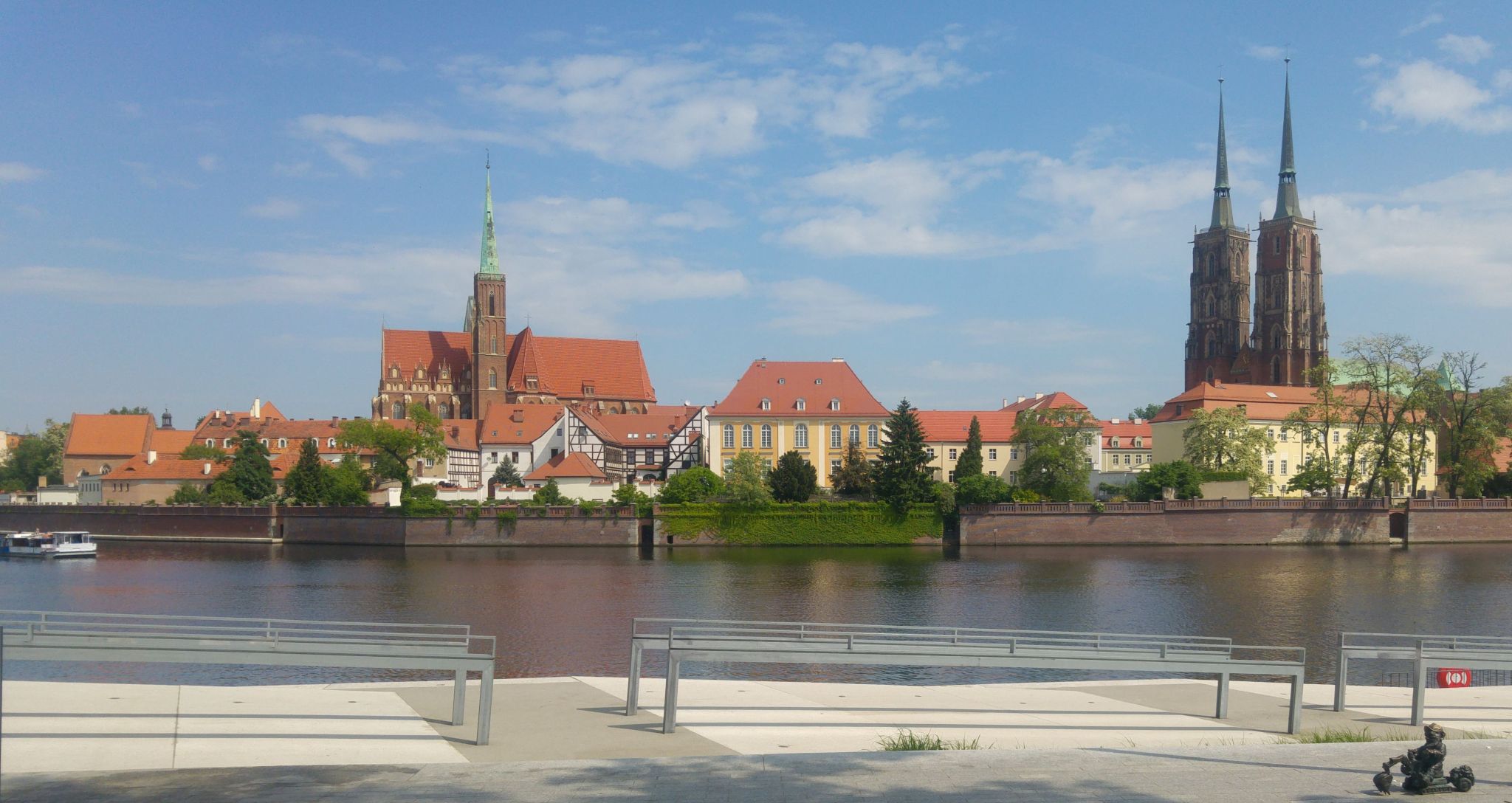
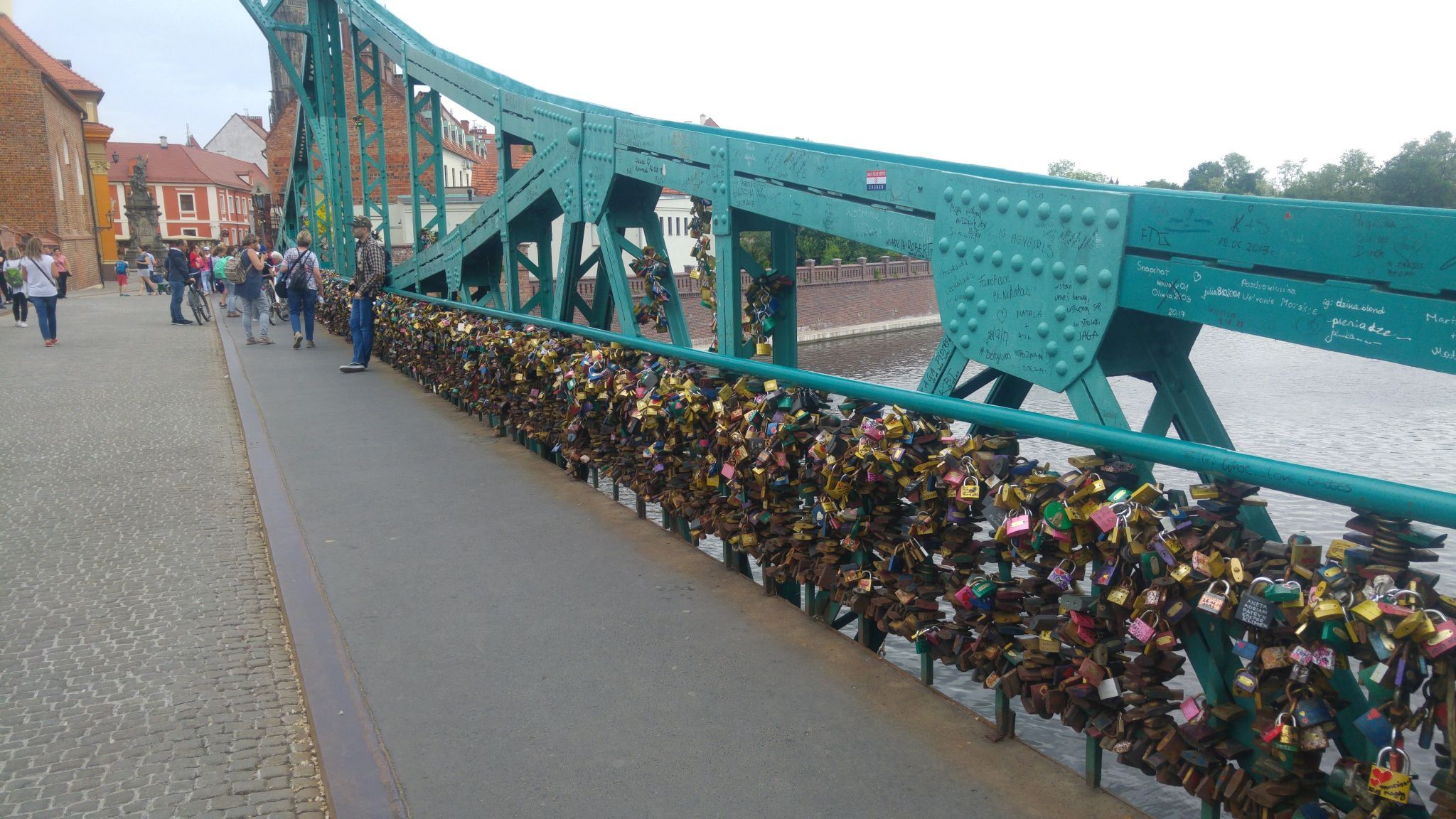
We came to the Ostrow Tumski (another one), the cathedral district, full of sparrows and fragrant flowers. A pretty iron bridge was creaking under the weight of those awful couple padlocks, an information board told us about conservation efforts in the Oder and the floodway system, including the incredible line “the river is primarily water”. The quiet cobbled streets of the church district had more of an Old Town feeling than the actual old town, full of signs with Polish words for “basilica” and “archdiocese”. The Catholic Church of the Holy Cross was noisy with boy scouts and spare of detail, a couple of glorious side altars standing out oddly among the redbrick and whitewash. The Archcathedral of St John the Baptist was cut from the same cloth, but darker, busier, more atmospheric, lined with shadowy little reliquary altars and stained glass in riots of glorious colour. Priests in smart black cassocks and violet stoles crossed the square in front of the huge German Empire seminary.

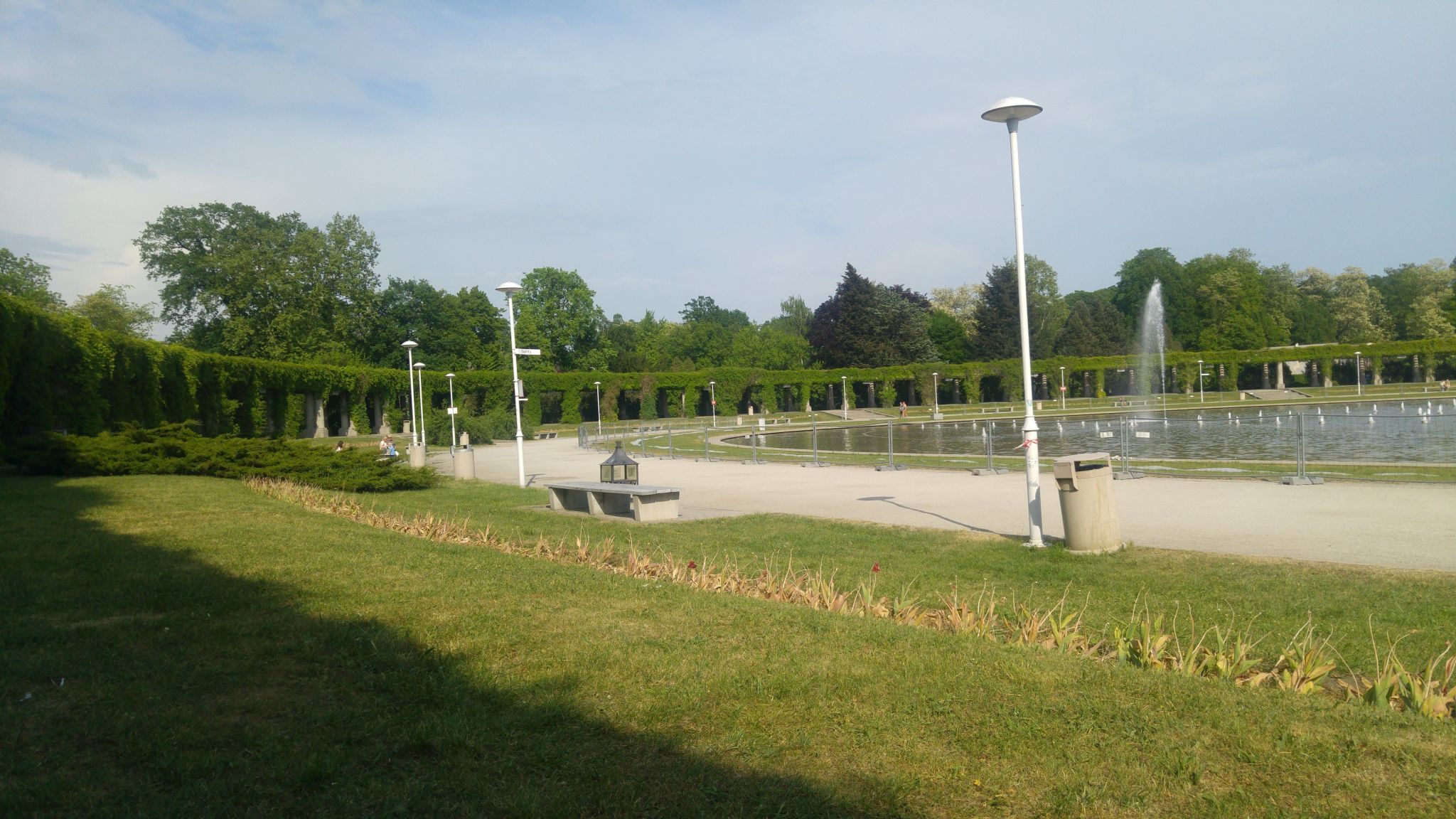
We rode a tram out to the huge park in the east of the city, finding late lunch at a pizza shack opposite the zoo, where disused tram lines trailed intriguingly into the woods. 24zl bought a pizza simply too big to eat: I didn’t need dinner, or much breakfast. The Centennial Hall nearby was a amazing building, a sort of modernist Albert Hall finished in 1913 to commemorate the centenary of the battle of Leipzig (this being Breslau in the German Empire, of course). We didn’t get inside, but interior photos showed the same vast concrete ribs as the market earlier, and it had the same sense as the seaplane hangars at Tallinn. I can imagine it being shockingly modernist in its time, but now it’s wonderfully of its era, with a grand pergola of concrete Doric columns supporting leafy arbours around a “multimedia fountain”.

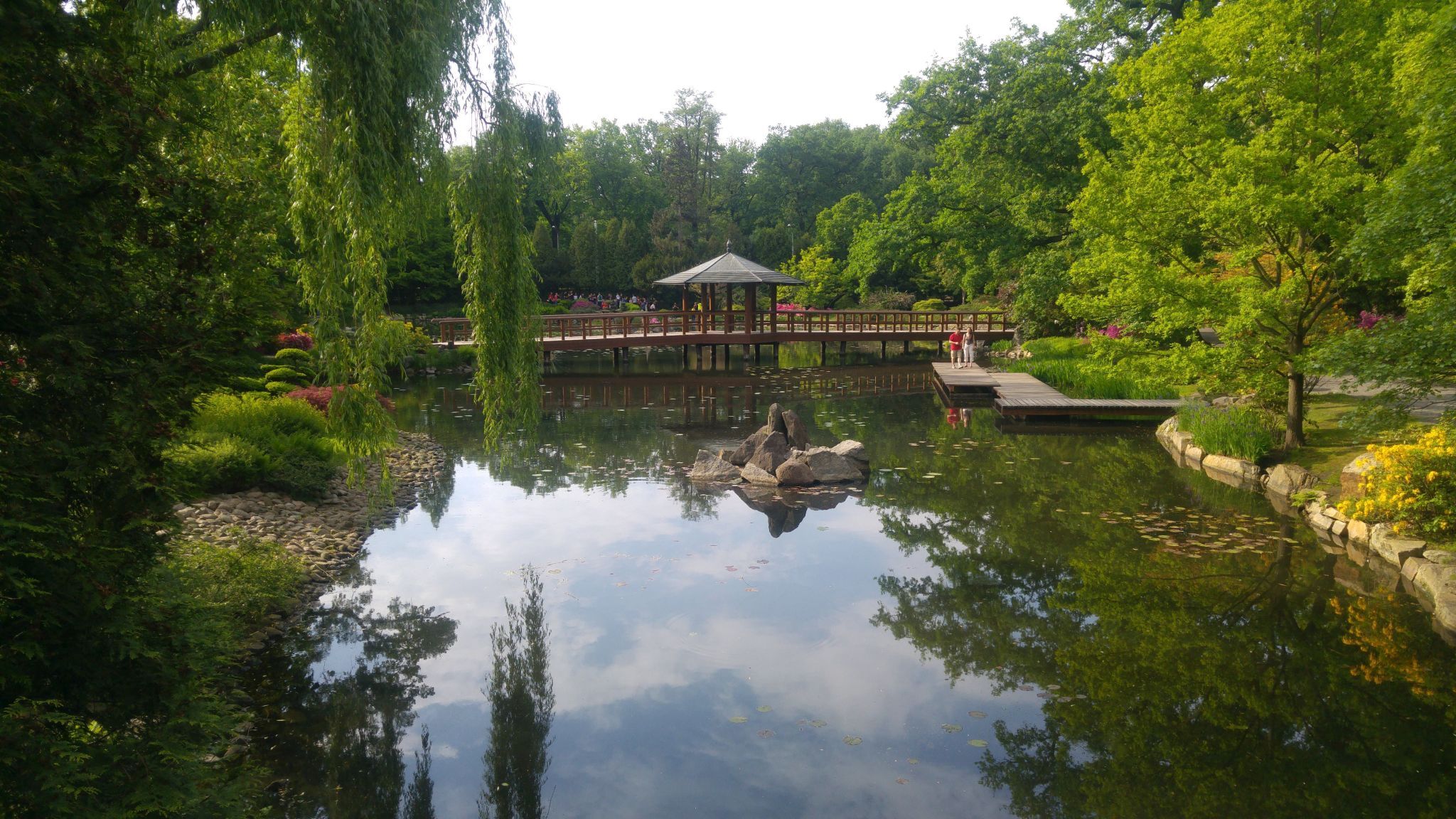
North of that is a true oddity for Poland, a Japanese garden, also from German Empire times. The lake was a little scummy and the plants a little busy compared to the ones in actual Japan, but it was entirely serene and quite beautiful, and we spent a good while sitting and chilling. Dark clouds crowded in from the north, and a sudden wind set all the leaves shivering and clouded the air with blown dust. Little falling things pattered down all around as we ran the pergola back towards the tram stops, but not rain, seeds knocked by the wind. The Polish flag on the dome streamed out, fully extended. We made it under a bridge and grabbed a no.10 tram back to town as the rain, at last, streaked down.


Poland 2018

Warsaw Old TownPoznan & CitadelPoznan Museums, Wroclaw by nightThings of Wroclaw – The long road southZakopanoramaKrakow & Wawel
*

happiness is a warm goat

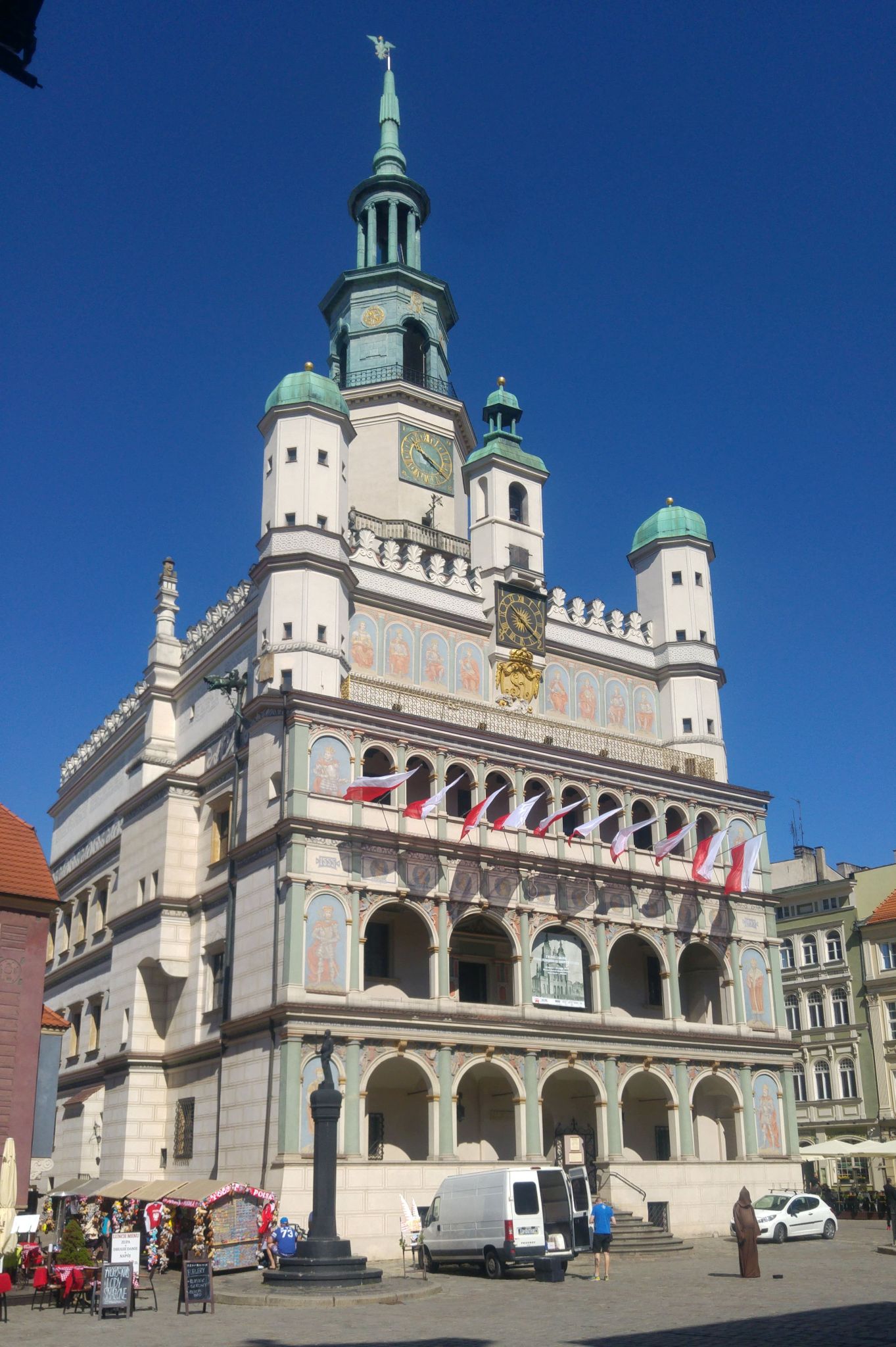
Poznan ratusz. Note the malign figure in hooded brown robes out front, who loitered doing nothing but clearly expecting money, like an even creepier version of all those fucking Pikachus.

In Poznan, they keep the front doors of museums closed, which is something that reduces Rog and I, as Englishmen, to paroxysms of polite self-doubt. Fortunately, Misha lacks our compunctions and goes straight in.

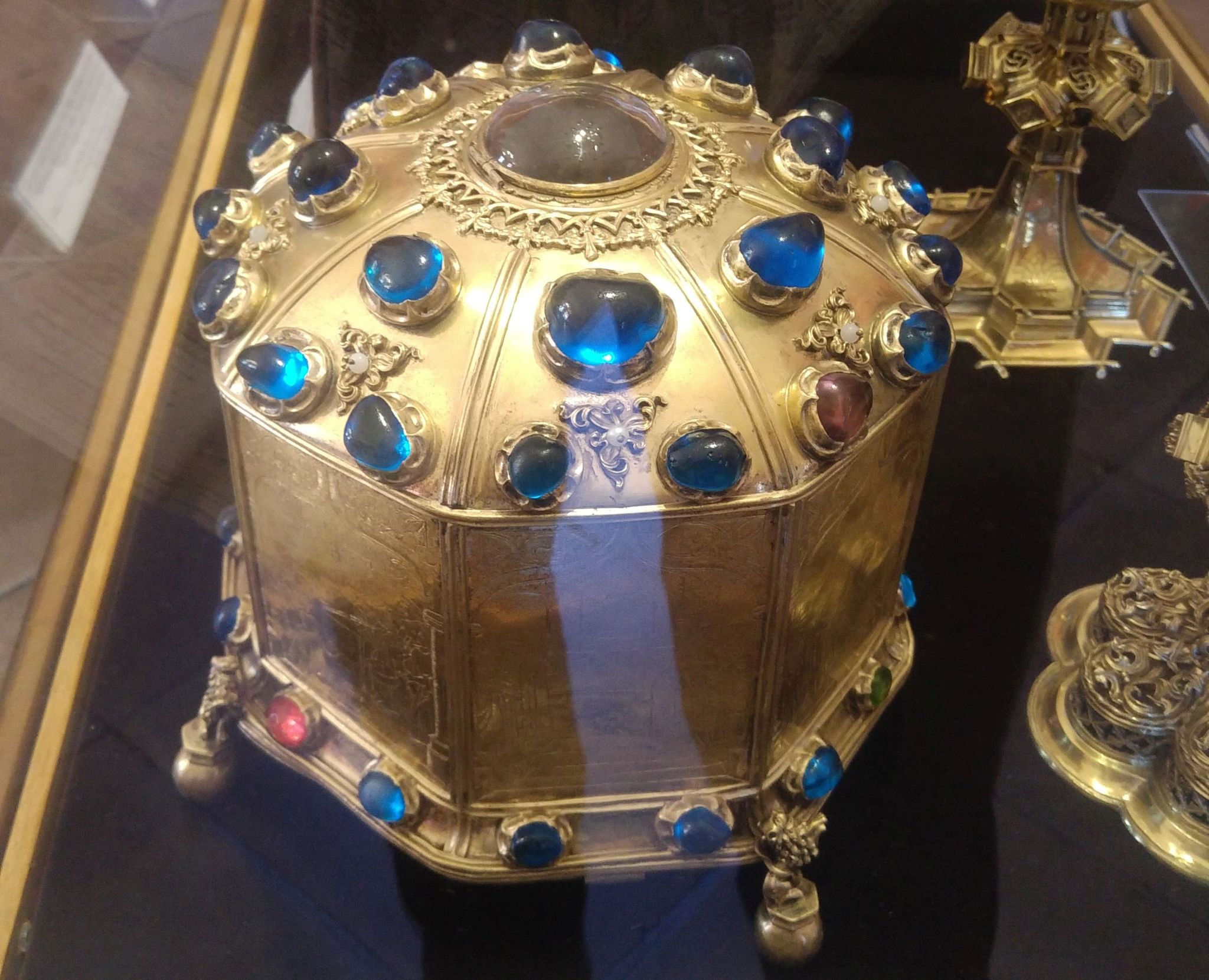
Reliquary box for the head of St Adalbert. A replica, thankfully. I wonder if there’s a replica head in there?

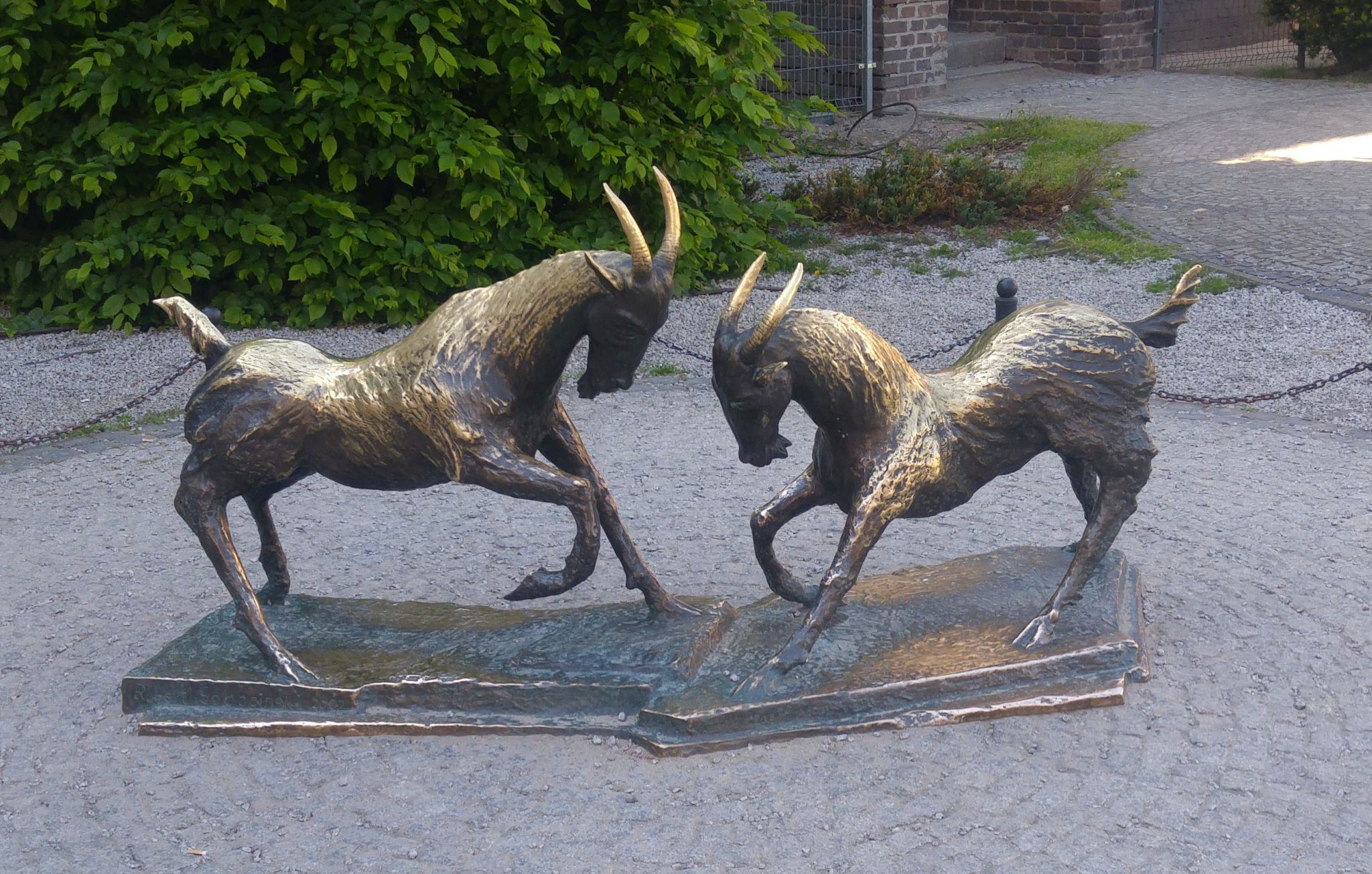
We found time to get pictures with the brass goats (which were warm and quite pleasant to sit on), before heading to the amazing ratusz (yes, Rathaus with a Polish accent), a 16th century Italian confection. The 7zl fee got us the expected (though still wonderful) guild artefacts – lovely painted targets from the shooting clubs, masterpiece silverwork, a heavy whip used for encouraging good manners in apprentice printers – but also a delightful look at Posen under Prussia, complete with a detailed map of the Citadel-as-was and a model of the grand synagogue built shortly before the Great War. Best of all was the original, somehow un-destroyed plaster ceiling with marvellous (which is not to say artistically very good, but marvellous) high reliefs of a tiny David smacking a huge Goliath, Hercules (unusually not in his usual club-waving, lion-pelt-wearing aspect smacking a hydra, but toddling off with pillars on his shoulders like a jobbing builder), mythical creatures such as the griffin, chimera and an imaginatively razor-backed “renocrvs”, and heraldry including a snake eating a baby which Rog recognised off the Alfa Romeo marque – sure enough, it was the Sforza crest.

Hercules on one of his less well known assignations.

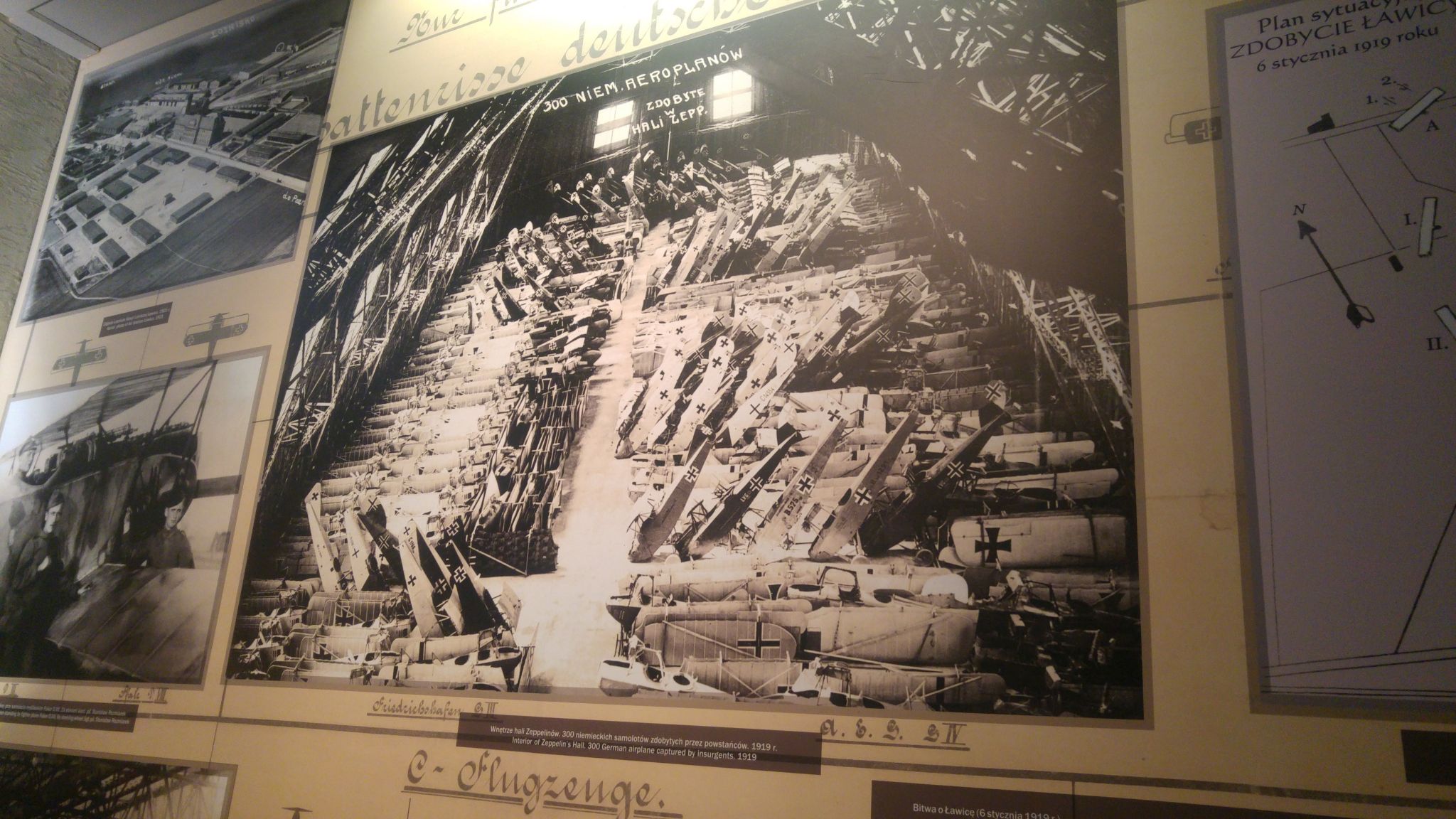
Out in the square, in the blazing sun, clouds of schoolchildren and cynical-sounding American tourists were beginning to gather for the noon goats. But I had 30 minutes so ducked off to the Museum of the Wielkopolska Uprising, a fun-size collection of early nationalistic sentiment, replica uniforms and photographs of earnest young Poles crowding around machine guns as the idea of Poland frantically tried to assert itself as the state of Poland in the general turmoil of the late Great War. I still need to learn more about the Polish-Bolshevik War, but I’m getting there.

Luftstreitkrafte planes captured in large quantities by the Poles.

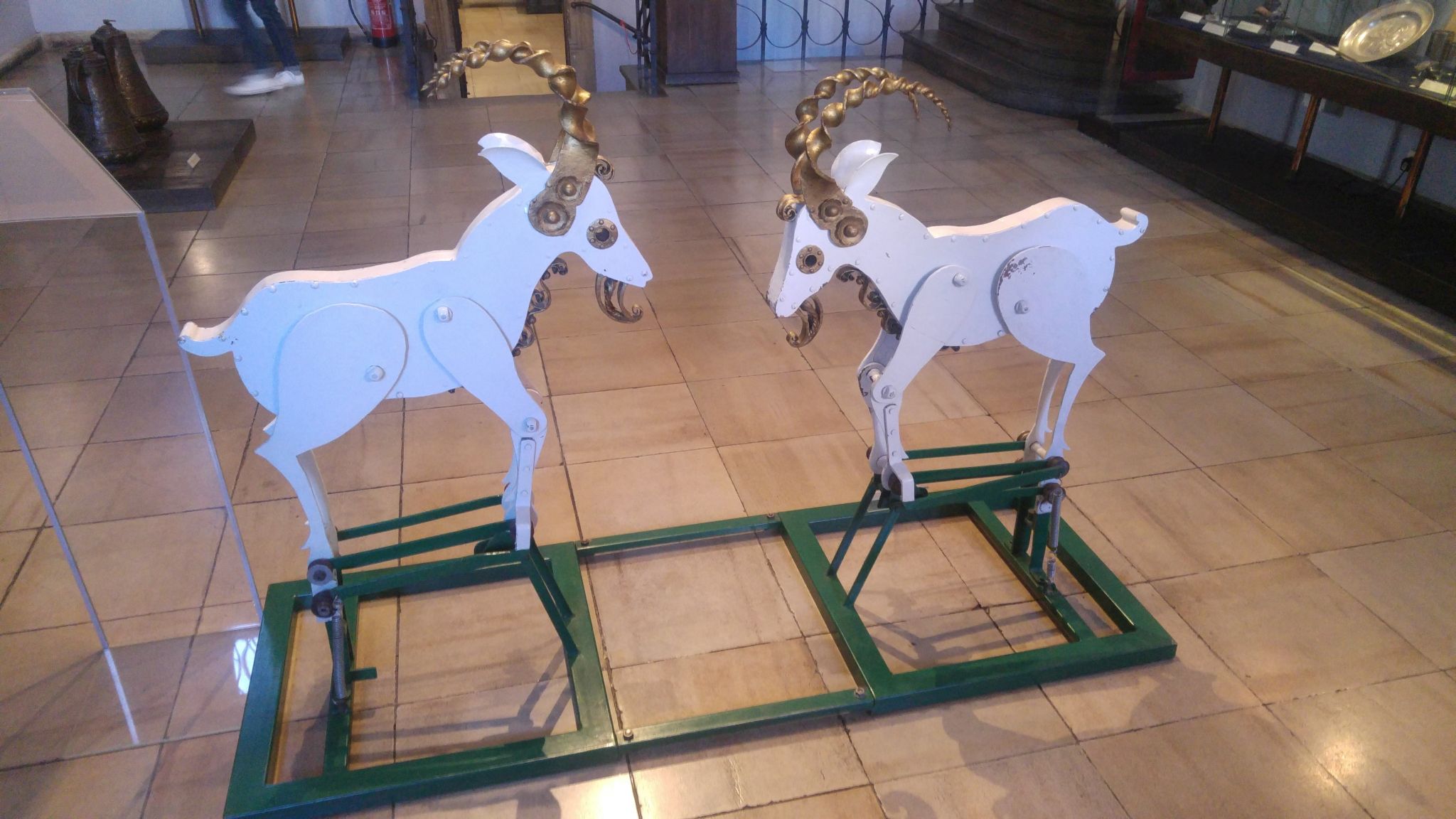
The crowd was now filling all the shady and comfortable parts of the square, and at the stroke of twelve the doors opened – unnecessarily slowly – and the metal goats, with a ponderous sense of absolute drama, creaked out (it must have taken almost a minute), assumed their positions (the suspense!) and clicked heads together a dozen times. Some people clapped. Some people videoed it. Some made sarcastic comments.

I didn’t feel like photographing the goats in the tower, so here are the ones in the museum. They are identical, and only slightly less active.

The Royal Castle is a 1249 tower with 2014 brickwork, wonderful but confusing. It’s free on Tuesdays, so we went up to the top and enjoyed views of the town – the true immensity of the Citadel district evident by tall buildings a very long way past it, a coal-fired power plant fuming smoke through its lollipop-stick chimney. We felt we didn’t have time for the Museum of Applied Art, or the National Museum (despite its excellent stonework and enticing “classical milfs teaching naked youths various arts and crafts” mosaic motif), so instead went to the cathedral where Polish Christianity and, possibly, the Polish state were born; a surprisingly austere, cold redbrick behemoth, with a splendidly shining golden room on the purported sacred spot.

The two-lane road to Wroclaw is utterly inadequate for the volume of traffic even early afternoon on a weekday; it took an hour to get to the outskirts of Poznan. Then, open country, fields of green grass and yellow rape under a cloudless sky. Flocks of shiny new Japanese earth movers were cutting the yellow subsoil and stacking aggregate for the foundation of a new road. We moved onto a previous section of their work, a serious motorway, with railways and bicycle lanes – both in some use – running parallel under the frequent wide wildlife bridges. An enormous white stork flew overhead.

The unbeatably diverting landscape of Wielkopolska Voivodeship.

Wroclaw appeared eventually. It is much better known for most of history as Breslau, and while until the nationalist chaos and general slaughter of the 1920s-40s it had – in common with most towns between Moscow and Munich – a multiethnic population with a strong Polish contingent, it’s very obviously a German city.* We arrived into a dense tangle of rivers and industry, blue trams and massive redbrick edifices. It had a vibe of Berlin, or Manchester – cool and youthful but inhabiting the buildings of a previous, more confident age.

Wroclaw Rathaus. No, I didn’t spell that wrong.

From our rented flat – sharing a mixed-use-ish office block with enterprises including two escape rooms – we went out for dinner and exploring. A bear with a big brass tongue stands in the shadow of the rathaus/ratuzs, a collection of bronze gnomes infest corners and have their own gift shop. We found a brewery-pub and had cherry beer under the stars (other patrons were being accosted by a man dressed as a swamp, who didn’t bother us) and watched as some hippie-looking street performers got out their xylophone, double-ended flaming torches, hula hoops with fiery bits and a device that can really only be called a pyrobrella, and managed to perform a bunch of tricks without serious injury. That earned them a few zlotys.
* The (surviving) Germans were forcibly evicted en masse by the Russian occupiers as part of the wholesale move of Polish borders westward, and a new Polish population shipped in from the eastern Polish provinces they’d themselves been evicted from. One of the craziest things about the mass postwar gunpoint resettlement is that nobody these days seems to remember that it happened. But perhaps it’s for the best that modern Europe is content to break the cycle of recrimination, and focus on weakening divisions and borders rather than redrawing them.

Poland 2018

Warsaw Old TownPoznan & CitadelPoznan Museums, Wroclaw by nightThings of Wroclaw – The long road southZakopanoramaKrakow & Wawel
Festung Posen

Poznan’s trademark goats, doing goat things.

We headed for the airport, not to fly but to pick up the hire car (I would have very much preferred to get a train or coach between cities, but I was outvoted), winding our way past stations whose chains of trams queued up like big yellow caterpillars. On the road to Chopin Airport, the splendid Aviator Monument stands on his plinth, his face set in brassy contempt for death and gravity.

Eventually, our car hire man arrived and drove us over to a dusty bit of waste ground full of sheds and cars (some burned out), where he offered us forms in a freshly painted office with two new Ikea desks; the whole setup had something of the seedy, improvised atmosphere of a low budget porno set. But the car (some sort of “crossover” thing which managed to be both grotesquely huge on the outside and quite uncomfortably cramped inside) was new and functional, and it whisked us away through the universal modern sub-suburbia, where the big box superstores stand, cultural and architectural vacuums sucking money from the town centres and into the dividends of venture capitalists.

We went onto a motorway, which, in common with all motorways in all countries, was boring, not helped by the largely flat and featureless Polish plain. Eventually, we arrived in Poznan, and found our “ApartHotel”, excellently furnished and very cheap in a lovely location on the edge of the old town. Highly aware that our museumable hours were cut down to about two, I grabbed a town map and directed everyone straight to the nearest attraction, the church of St Stanislaus.

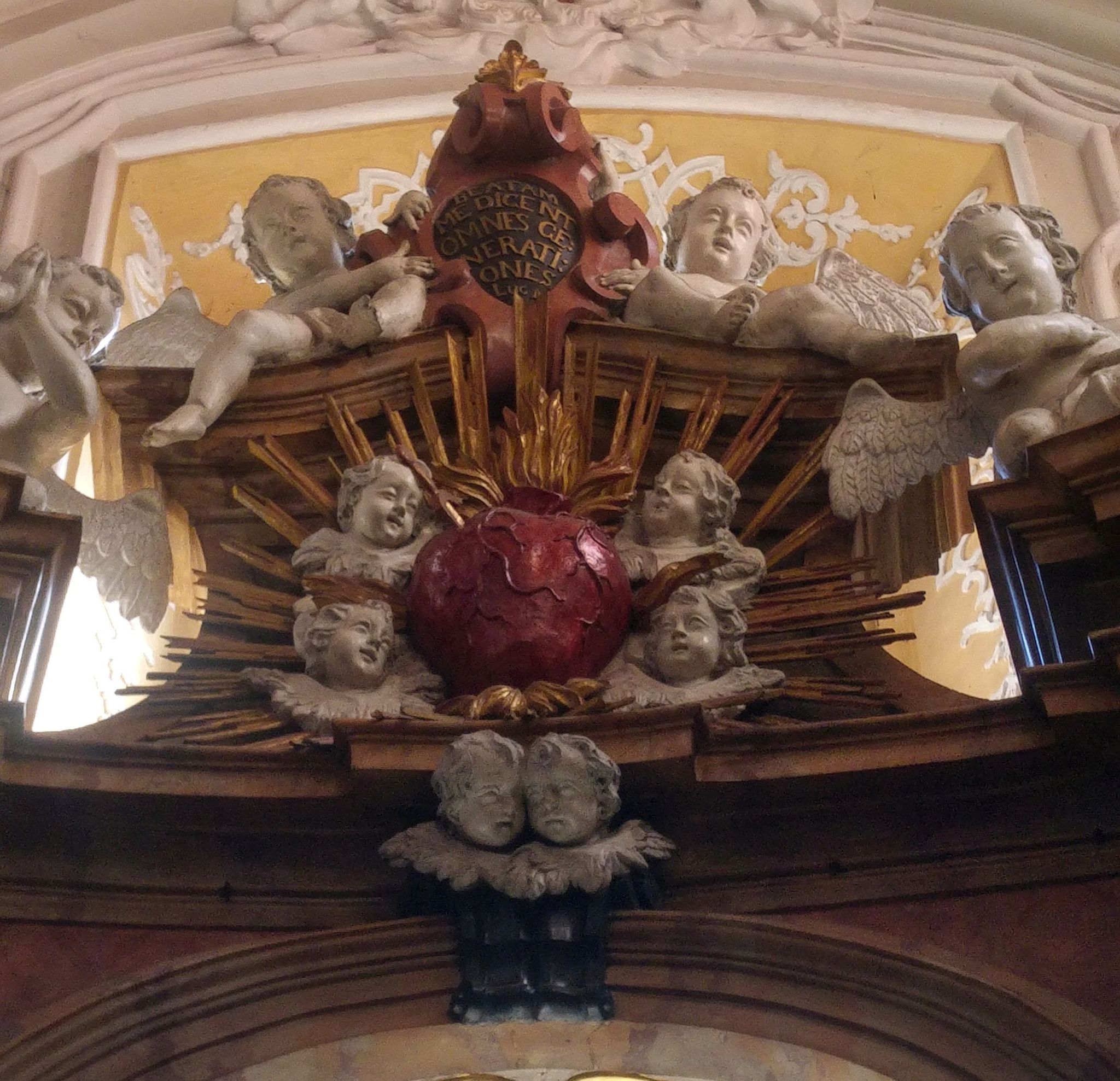
Yes, it’s a heart surrounded by flying baby heads.

St Stanislaus is pure, overwhelming Jesuit Baroque, vast columns of red and green marble capped with finials of white stucco and gold leaf, sacred hearts and winged baby heads everywhere. Outside, piano music came through the windows of the ballet school, and a pair of brass goats – the symbol of Poznan – butted heads. The town square was exquisite, with a terrace of multicoloured houses below the town hall reminding me somewhat of Bristol. Buildings here are decorated with an interesting sort of inch-deep relief cut into their external stucco.

20th century dragonslayer.

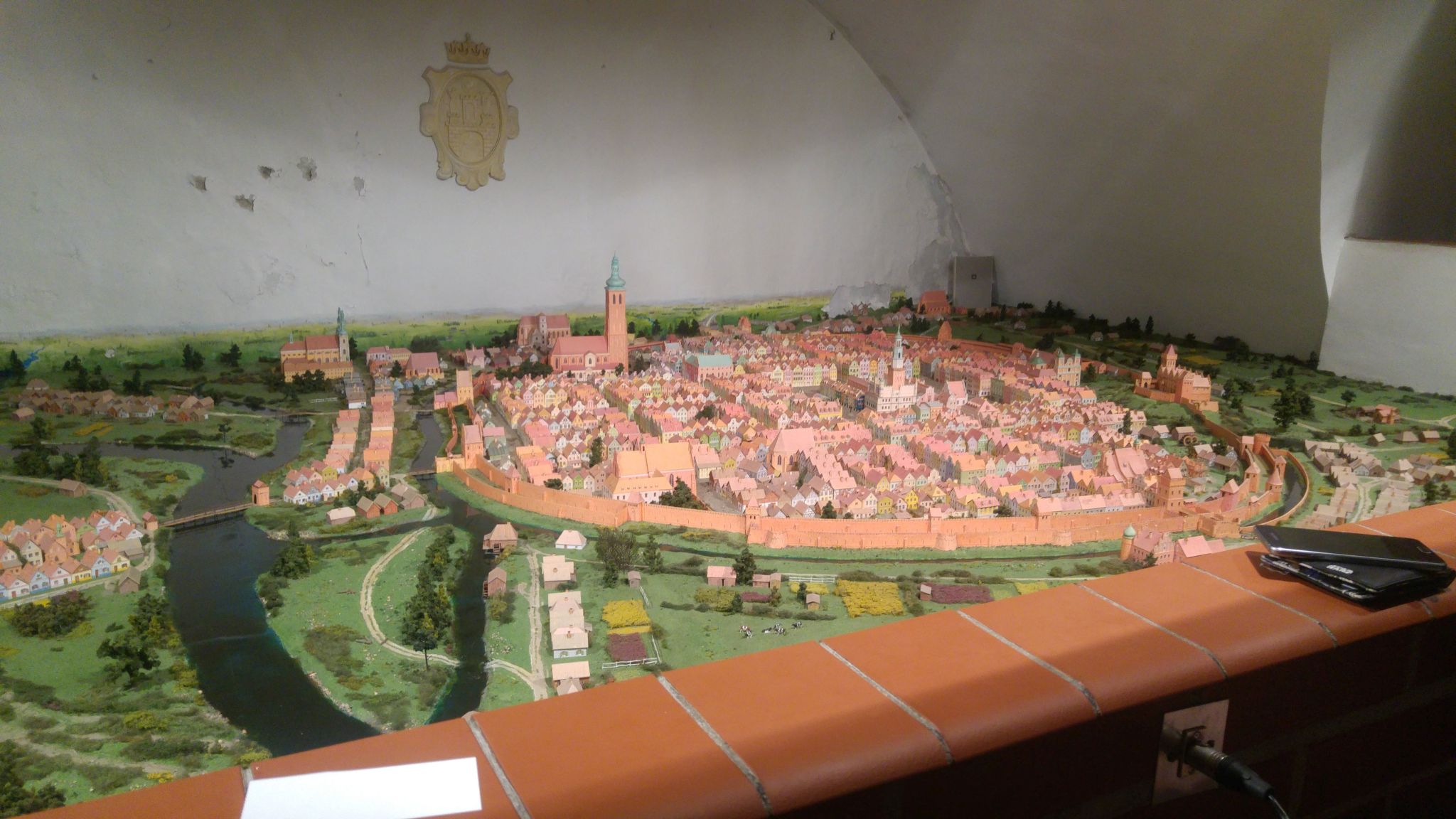
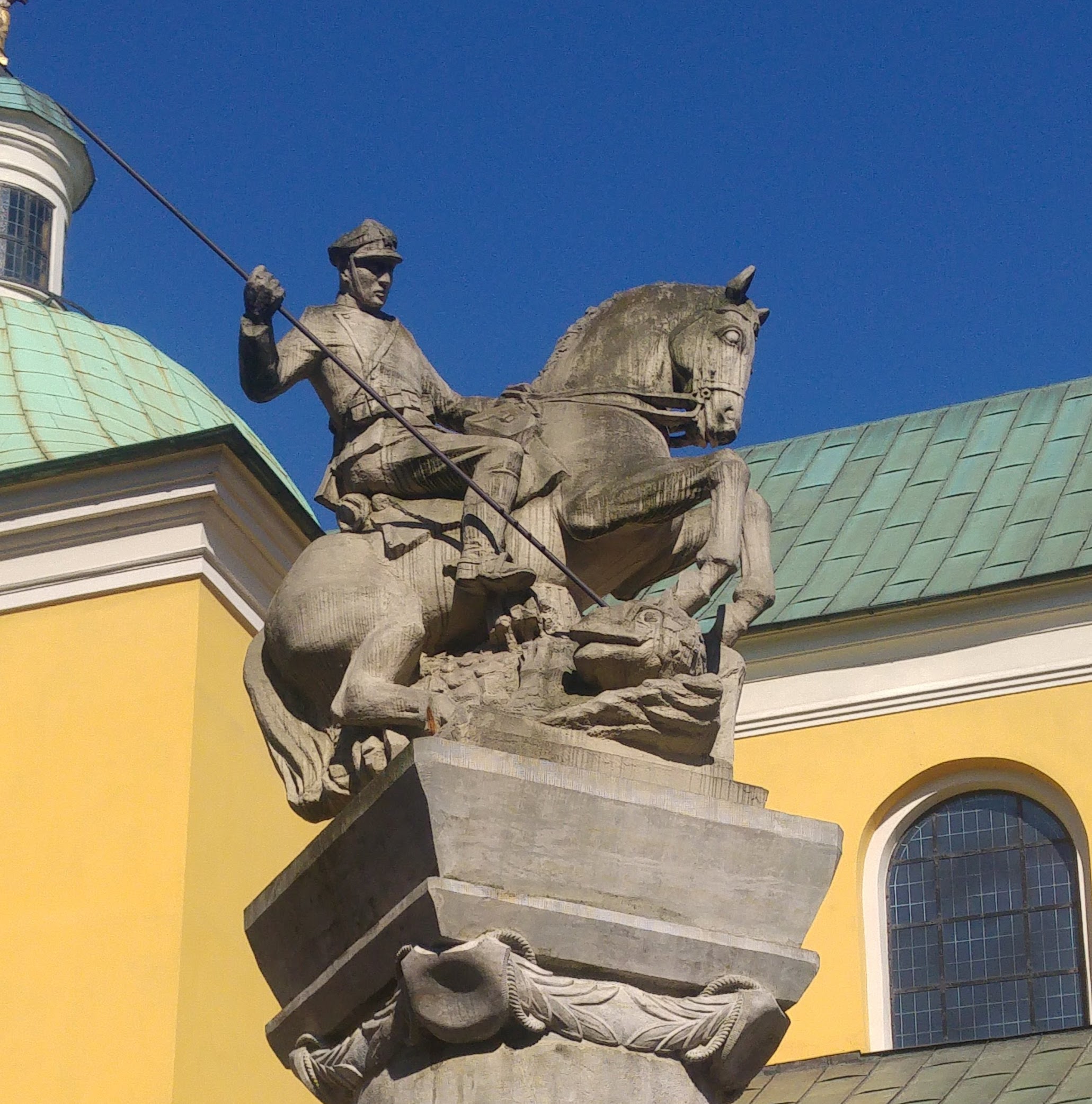
Up the hill, near the brand-new replica of a 13th century castle that now houses a Museum of Applied Art, we tried to find the next thing on my attractions map, a historical model of the town. We found the Franciscan church above it – one which went all the way over the line from “baroque splendour” to “completely tacky”, with iridescent metallic accents on the pulpit that recalled a bunch of Quality Street wrappers. Underneath the church, in a musty-smelling crypt, a stroppy woman totally failed to communicate that the Makieta show would only work in one language at a time (Misha heard her say “Russian”, launched into Russian, and met with total confusion.) So, we wandered off past a violinist in a tracksuit, a equestrian statue of an uhlan with a bolt-action carbine spearing a dragon, and dozens of brass plaques depicting noble Poznanites. After 45 minutes relaxing by an interesting novelty fountain, enjoying the sun and the general atmosphere of this summery, studenty city, we headed back to the Makieta, where the huge model of Poznan was accompanied by an Audio-Visual Experience, a loud, weird commentary that slewed breathlessly through centuries of being wrecked by Swedes and Prussians to strobing lightning-flashes and slightly plausible fire effects.

Imagine this thing with disco effects and a rather shoutily earnest professor.

Largely out of curiosity, we went to a workman’s café, a “bar mleczny” (milk bar, originally). Interesting history behind these things, serving basically as work canteens for people who didn’t have canteens at their actual jobs. It was cheap, but also very, very bad, with a despairing Iron Curtain vibe to the venue, the service and especially the food. My cutlet and chips were merely on the level of bad school dinners, but the spinach blinis Misha and Olga bought had a factory-stamped sense to the pancakes and a lake-bottom quality to their contents. I felt bad sneering, as cheap cafes doling out hearty food is something I am ideologically and practically in favour of. But… it was really pretty heinous. Olga cried a bit.

The Russians wanted a proper dinner, and Rog wanted a proper sit-down pint, so I took the opportunity to head north to the Park Cytadela, at Justyna’s recommendation. I tried to get one of the bike-sharing stations to work, which would have turned a long hike into a delightful wheeled bimble, but although I could get the app to sign in and recognise me, I couldn’t get it to take my money or speak to me in English. So off I walked.

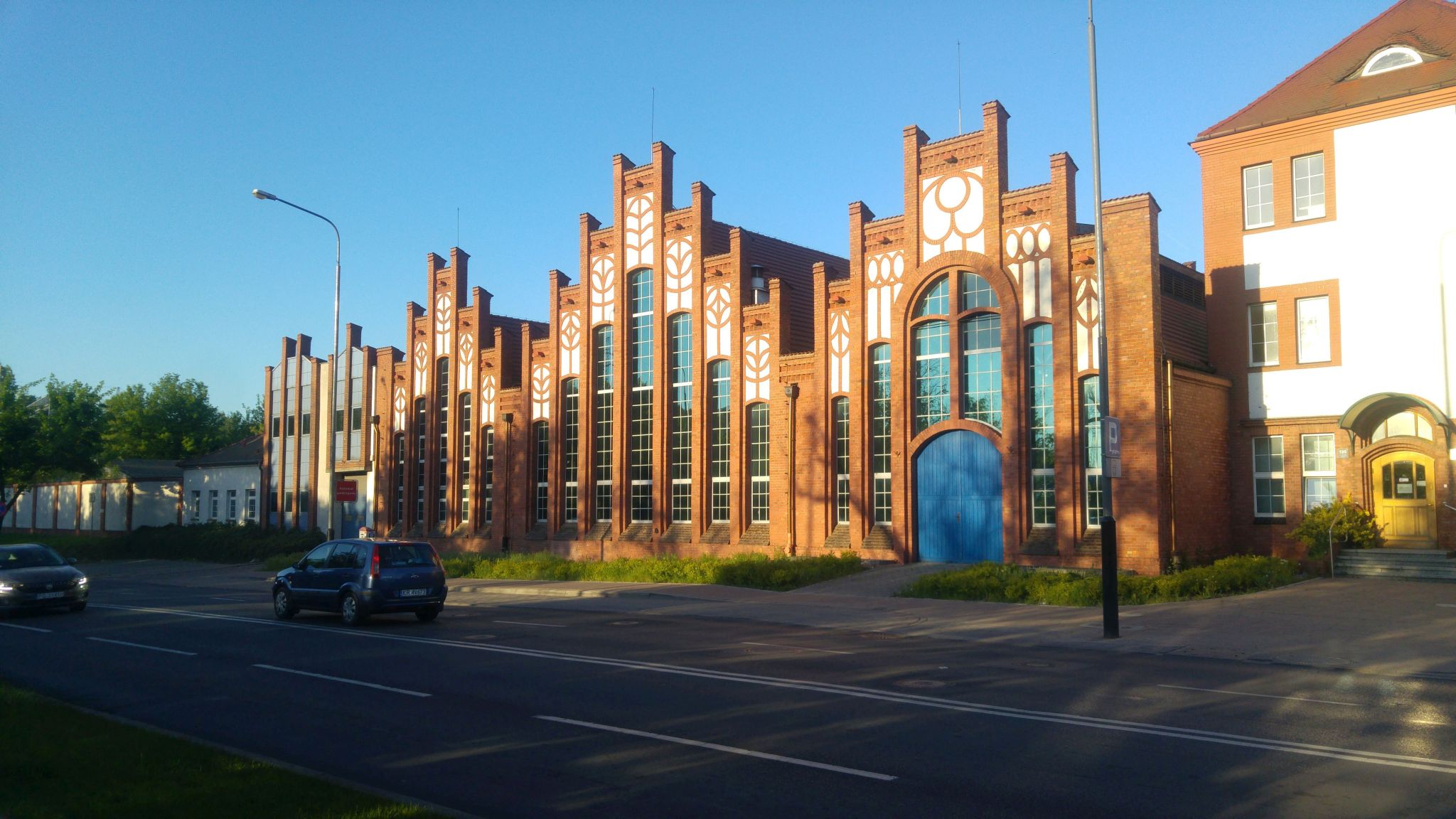
An interesting building on the way out to the Citadel.

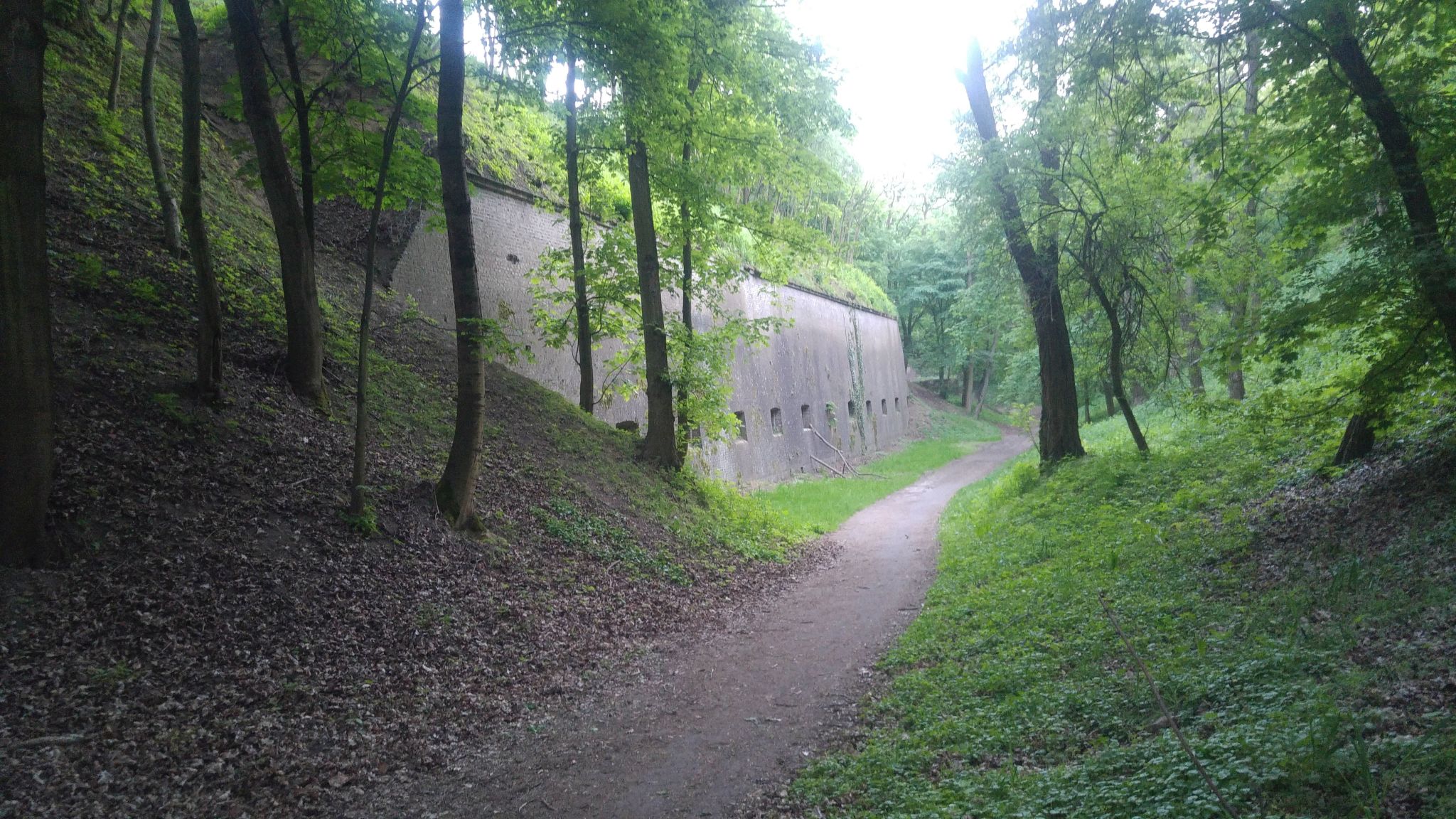
The gigantic Prussian Fort Winiary, keystone of “Festung Posen”, was built big enough to drop the Old Town into three times: one of those insane 19th century citadels where unprecedently powerful states responded to unprecedently powerful artillery by building fortresses of totally inhuman scale. The fortress was violently and comprehensively reduced in 1945, and is now a hundred hectares of park. The parts that remain are too overgrown and too individually massive to make much collective sense of them, and it takes a good map to work out the original layout, but the artifice of the thing is inescapable: a stand of trees grows out of a half-buried row of massive brick arches, a natural-seeming gully is suddenly lined by a gunported brick wall ten metres high and a hundred long. There are birds everywhere, and it’s beautiful and quiet – fully enjoyed by young Poles with dogs, bikes, rollerblades and children, but much too big and open to feel at all busy. One of the surviving above-ground parts is a museum (closed when I arrived) with a standard set of Soviet killing machines sporting the red-white chequer of Definitely The Polish People’s Army, Not A Russian Catspaw.

On my wander back, hunting for a sculpture I never found, I ended up completely alone in the military cemetery on the southern glacis. It’s thoroughly overgrown, feeling as natural as the rest of the park, and the names are barely decipherable on the older stones; it’s come about organically, generation by generation, with rows of graves from different wars. Some are ornate, some plain and coffin-shaped, some cruciform with red and white ribbons; most name individuals, some bear the names of whole families of brothers, many are simply marked NN – unknown and unidentified. The citadel itself was one of the last, and fiercest, battles in a theatre which mainly regarded the Polish as irritants and obstacles.

I found a bus, and went back to the Old Town as the sun set.


Poland 2018

Warsaw Old TownPoznan & CitadelPoznan Museums, Wroclaw by nightThings of Wroclaw – The long road southZakopanoramaKrakow & Wawel
the Things of Warsaw

Click the images for full-size versions!

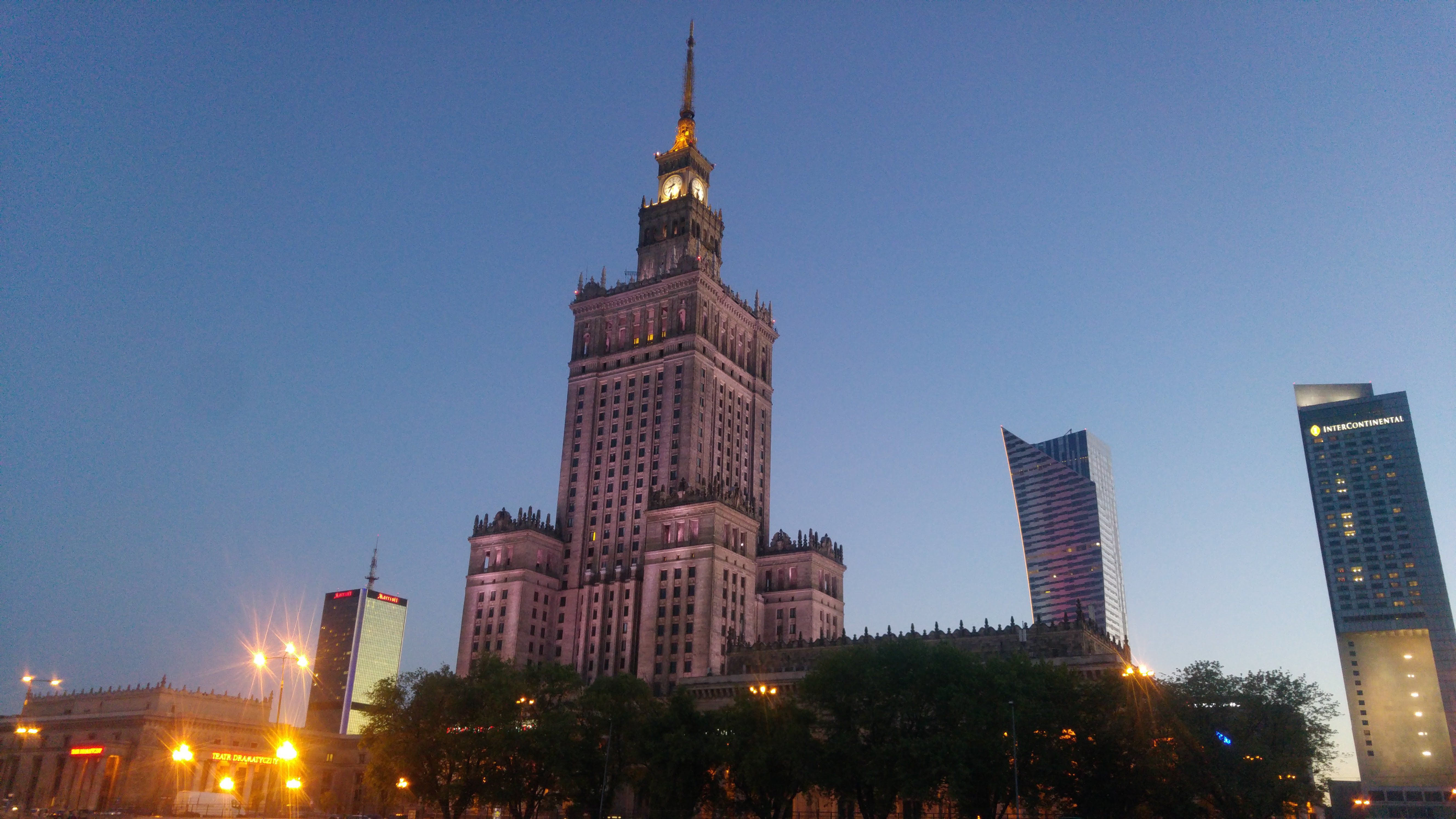
Palace of Culture.

I had elected not to pay Ryanair an extra £5 for a window seat, so my first actual look at Poland was from the cramped middle-seat view about fifteen seconds before we landed. A wide, flat landscape of strip farms was scattered with small, regularly spaced farmhouses, like an ultra-rarefied suburbia. The landing was inept and bouncy, but our Polish fellow travellers (who made up probably 90% of the flight) applauded our safe return to earth anyway. Modlin airport belongs in the same category of dishonestly-named airports as Venice Treviso, and is a tiny little thing: our plane was the only one on the tarmac, outside a stainless steel single-span building like a glorified Anderson shelter. The border control was direly undermanned (just like back home!) and several Hilarious Misunderstandings ensued regarding the right bus into town, but after three hours and various motor vehicles, we made it to the flat the Russians had booked for us all on the northern edge of Warsaw’s Old Town.

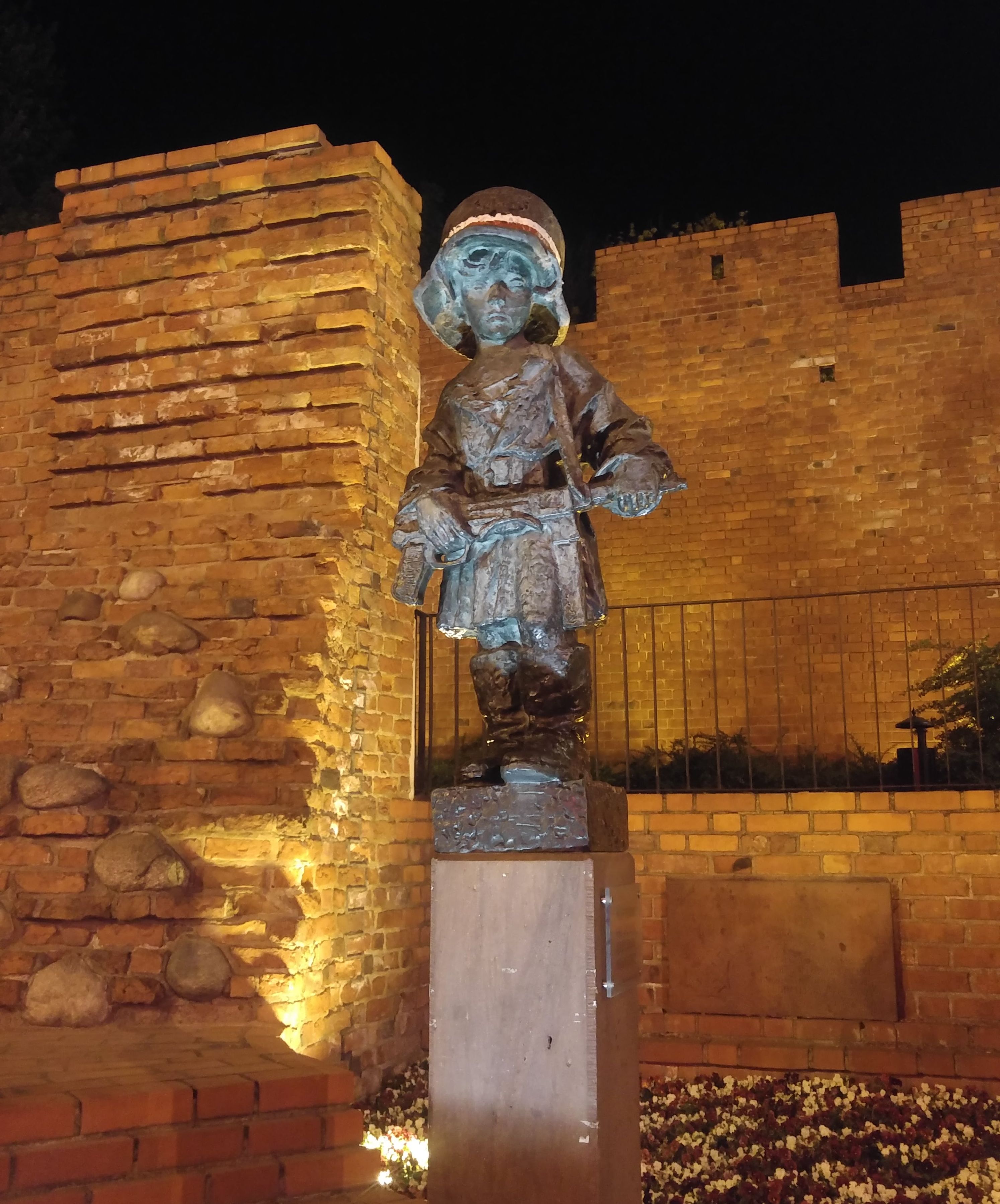
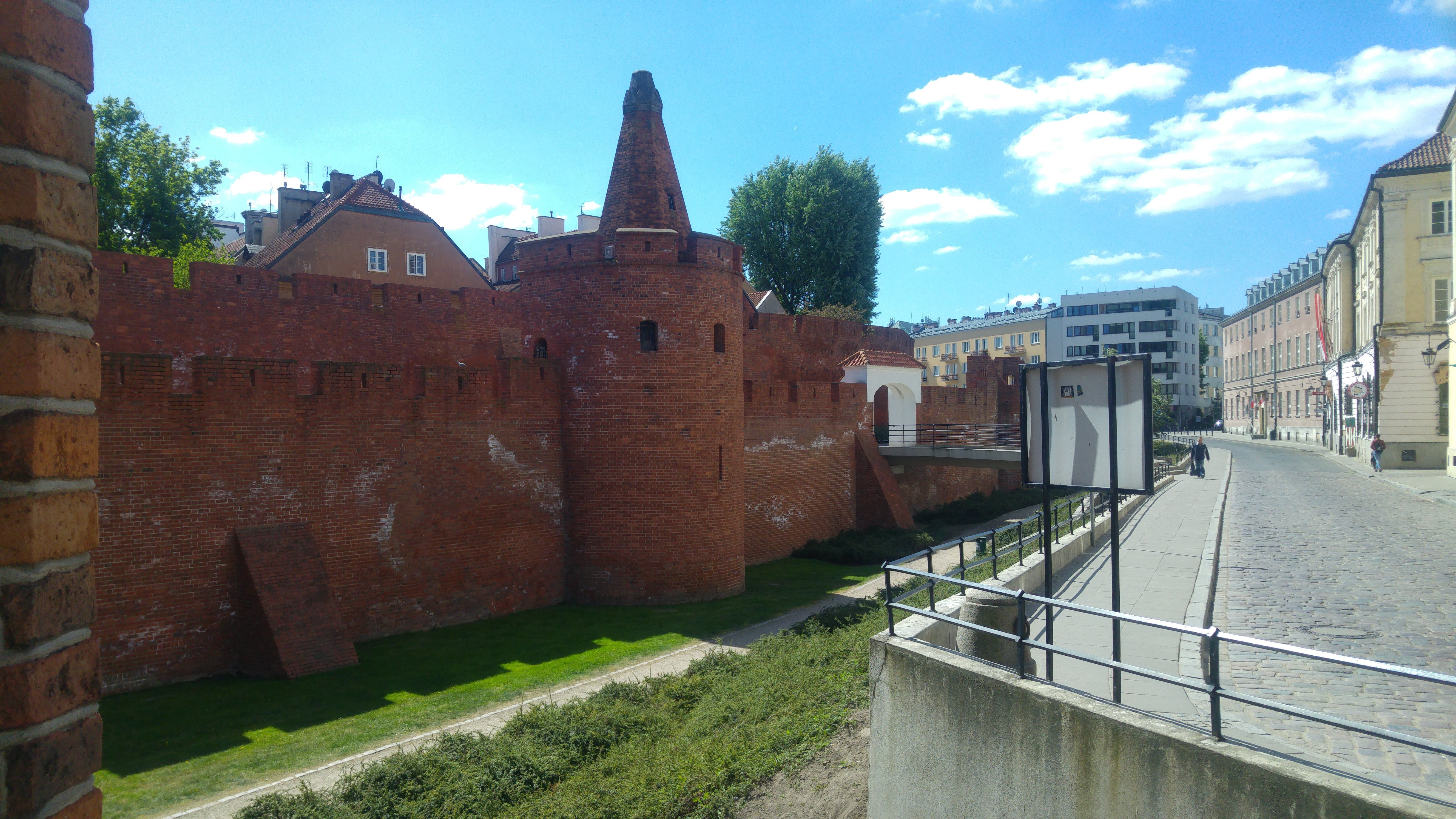
The Old Town mostly isn’t very old, because it – along with the rest of the city – was more or less completely erased in the Second World War, and although the reconstruction of 17th and 18th century buildings with 1950s materials and craftsmanship is faithful and appropriately decorative, it’s not quite convincing. But it’s clean and cheerful and full of life, with a Monastiraki-like vibe of happy people of all ages having fun into the night, and for dinner we found a restaurant doing astonishingly reasonable sausage and pierogi (although for some reason our waitress kept creasing up with laughter.) Strolling the Old Town itself we found a monument to, of all people, Herbert Hoover; I learned he was a key part of the American relief effort to the fledgling Poland after the Great War and is regarded as something of a national saviour around here. We walked past the replica royal palace and a statue of King Sigismund III on a column, and back around the rebuilt red brick city walls. Near the barbican is a statue of a child, perhaps ten or eleven, wearing a helmet with a red-and-white stripe and carrying a German submachine gun: all the more heartbreaking for knowing it wasn’t imagined.

We breakfasted on the same Old Town drag as the previous night’s dinner – a “sausage breakfast plate” included many kinds of ham and cheese along with the sausage for really not very much money. Misha inexplicably stirred some butter into his latte and claimed it was called a “bulletproof coffee.” On Sunday, the churches are actually full in this very Catholic country; bumper stickers in the foyer of the church we passed declared that God hates abortions in English and Polish. Every street was scattered with sparrows and tree-fluff.

Rebuilt Old Town walls.

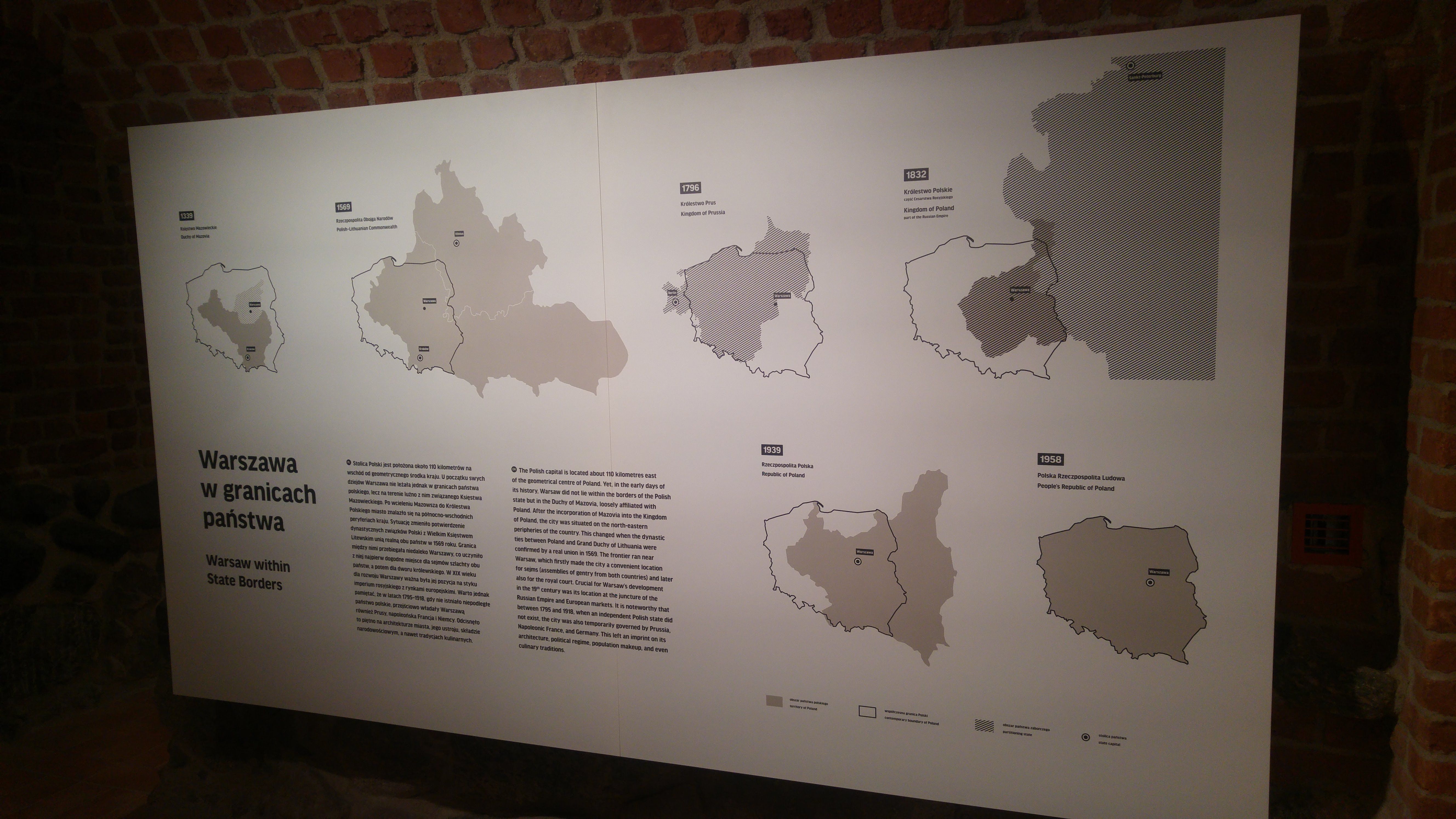
The Old Town museum, subtitled “The Things of Warsaw,” was in the process of being refurbished, but the 30% of it currently operating was still deeply impressive. In the cellars, modern infographics cheerfully served up intriguing and hideous facts about Warsaw and quite how much it’s changed (and been knocked around) over the years; demographic charts with deep, deep cuts were accompanied by maps of modern Poland being overlapped by various sprawling forms of German and Russian empire, its modern boundaries bearing no relation to any of them.

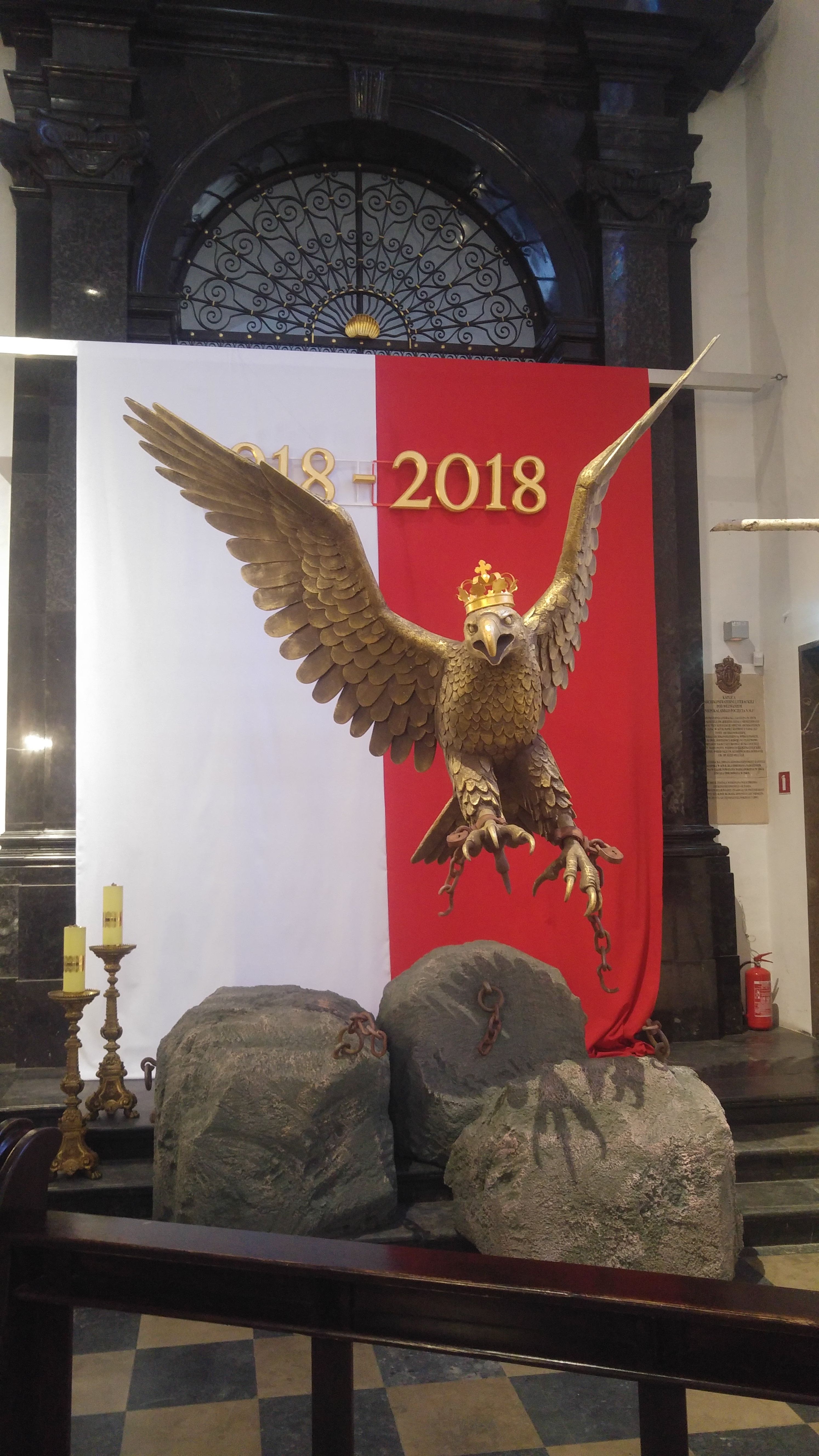
The museum was one of those excellently constructed Museum of London style setups which provides the exact right balance of artefacts and information to make quite mundane facts interesting and relevant; the audioguide was superb. The buildings themselves – some of their fabric was original, and had survived 1944 – took centre stage at points. Highlights of the collection included some absolutely gorgeous silverware, some quite bad portraiture and dozens of different stylised portrayals of the Warsaw mermaid, which I didn’t know before today was the city’s emblem. When we emerged into the light, the barrel organ man with a real parrot had been replaced by a pair of puppeteers rather desperately jiggling their papier-mache Beatles to random rock music. Also in the Old Town are an externally gorgeous but internally austere (which is surely the wrong way round for Jesuits) Jesuit church, and the glorious raw gothic Bazylika Archikatedralna, a wonder of redbrick and whitewash, the walls lined with memorials to WW2 fighter squadrons and a side chapel dominated by a big, furious wooden eagle freed from its chains. More anti-abortion propaganda filled the lobby.

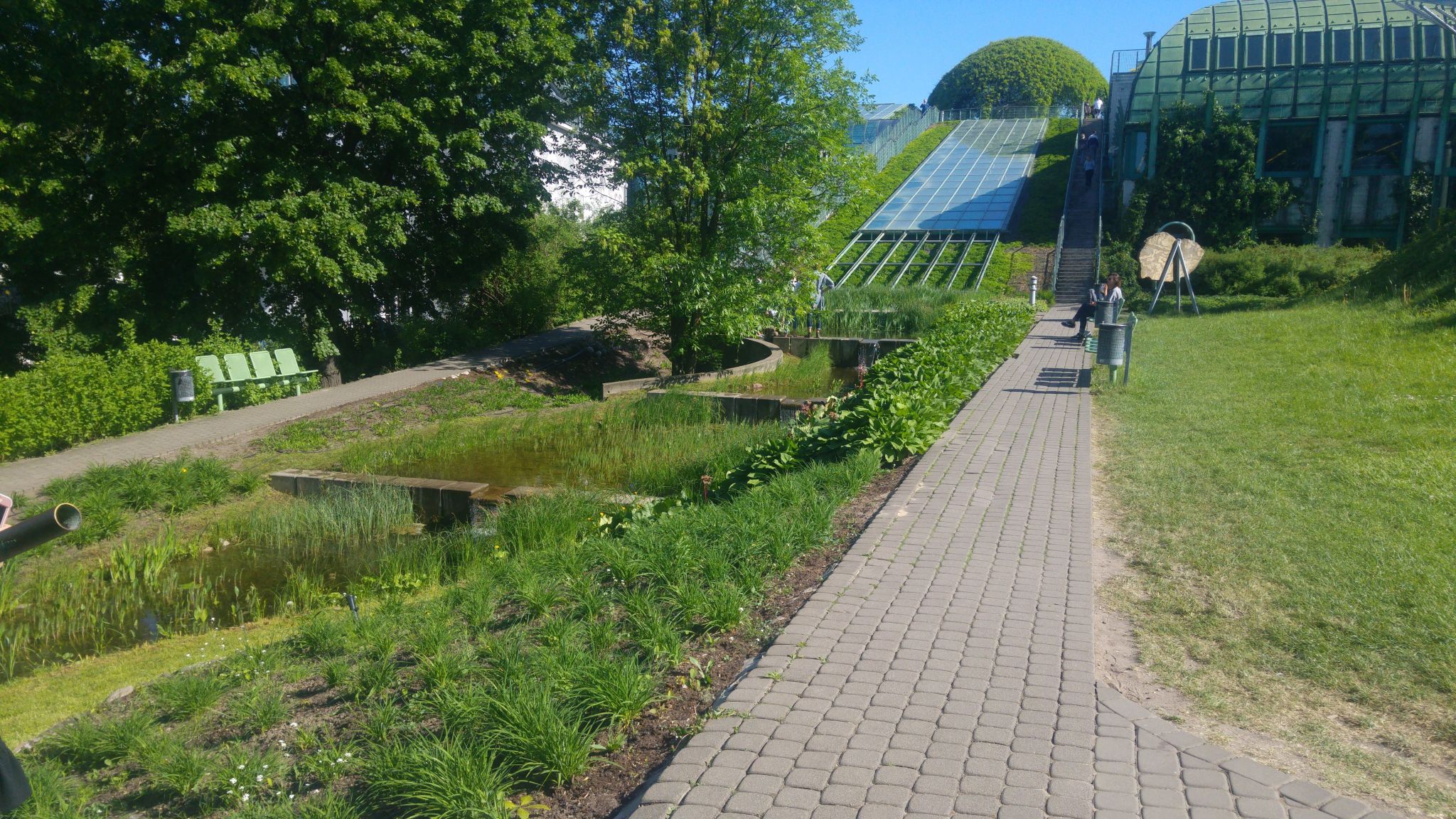
Down by the river, Warsaw University Library was an utterly unexpected, utterly delightful creation and one of those rare modern buildings which is both aesthetically and functionally perfect – a huge complex of tarnished copper and pale green paint carefully constructed so the gardens of its grounds almost flow over it, with trellis and wire arches built to encourage greenery around the louvred AC vents and over the glazed domes. It doesn’t feel natural, not in the least, but like a very careful combination of nature and artifice bringing out the best in each other. The grounds were full of dust-bathing sparrows, glossy starlings and big grey crows, and through the peepholes and skylights we could see students at their desks.

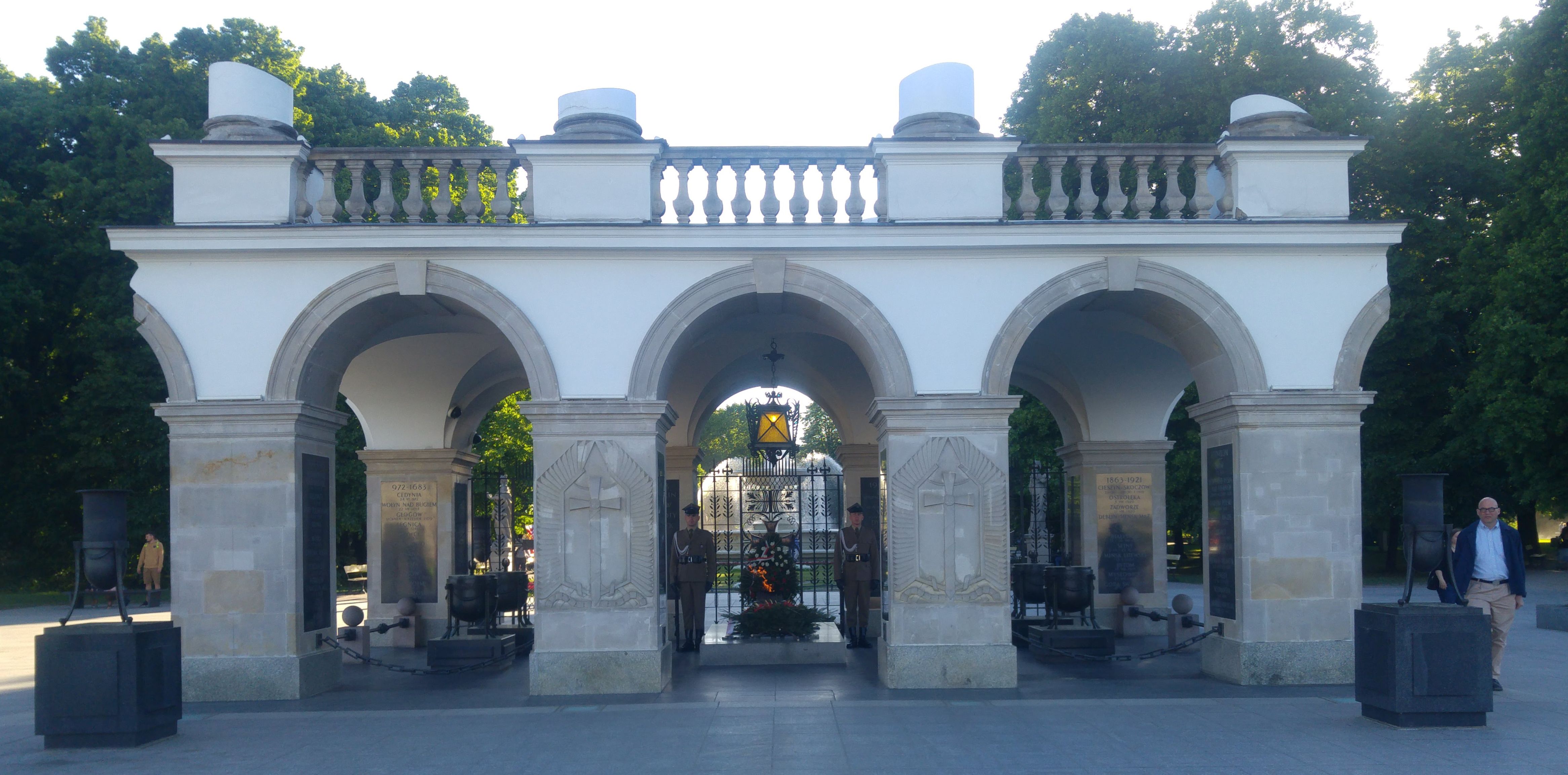
We wandered down the bank of the Vistula, looking briefly at the Copernicus science museum – it looked fun, but it was at this point 5pm, and we have science back home, so we instead headed through the Old Town towards Saxon Park, apparently the oldest public urban park in Europe. The big open expanse of Saxon Square has housed various buildings from various oppressors: a magnate’s palace, a Prussian headquarters, a Russian cathedral (only completed in 1913, looted and burned during the war and pulled down five years later). Now there is, very pointedly, nothing, except a small bit of surviving colonnade, which houses Poland’s Tomb of the Unknown Soldier. Two soldiers guard an Eternal Flame, and grey granite panels are lined with places and dates; most of the places within Polish territory, most of the wars either existential struggles, or fought by Poles for a Poland which didn’t then exist.

Poland is not yet lost.

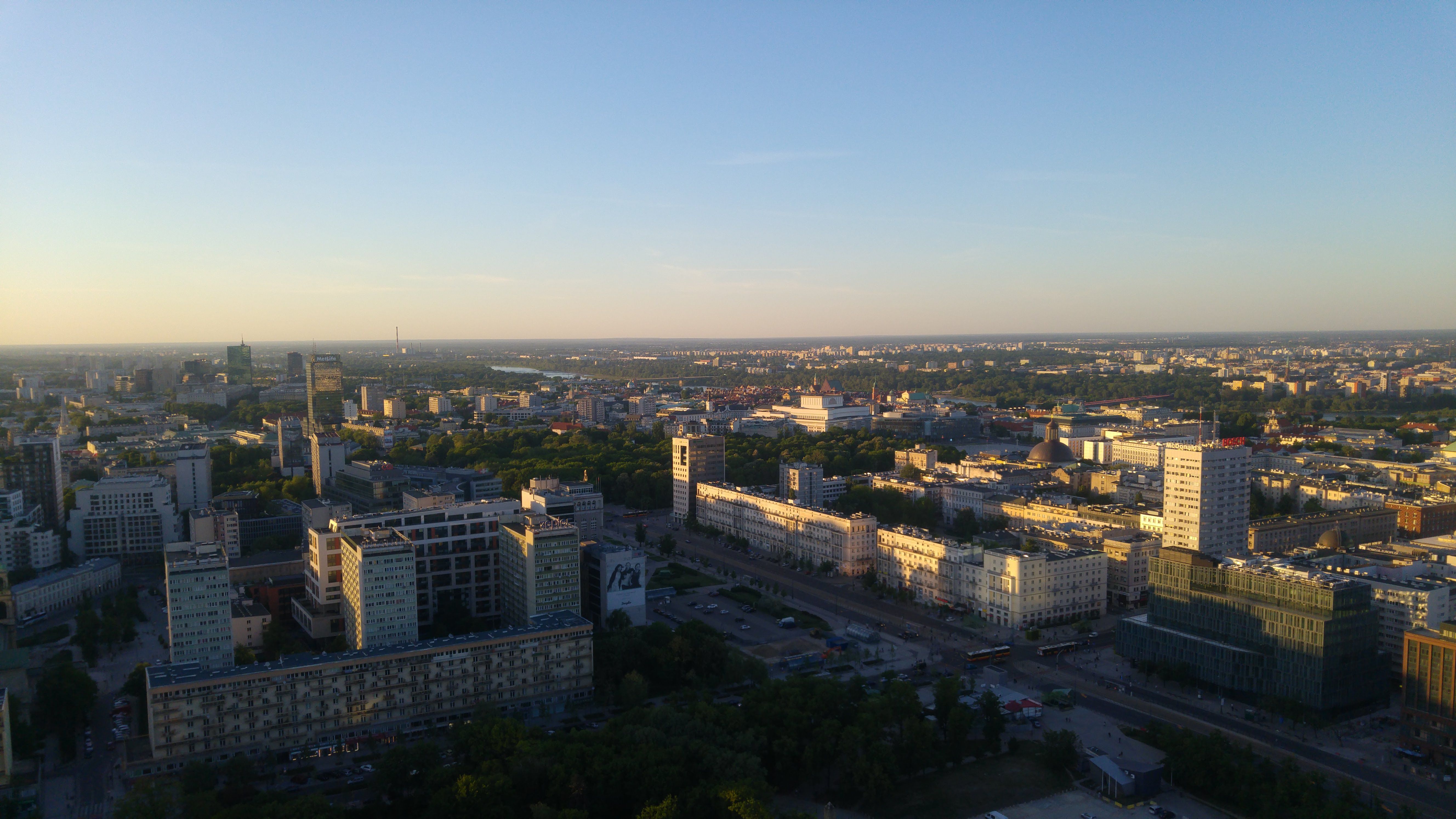
Not that Warsaw lacks occupation buildings. The Palace of Culture, a giant Stalinist skyscraper much like the Seven Sisters in Moscow (it’s as high as Moscow State University, although looks smaller) looms over a downtown area unmistakeably Soviet in its vast open spaces, grid pattern and monolithic, regularly spaced tower blocks. The building itself is, of course, gorgeous in the Stalinist style, its interiors filled with electric chandeliers, gleaming brass fittings and off-white marble cladding. A lift whisked us up to the observation deck the on the thirtieth floor, where three facts became absolutely clear: this ancient city genuinely has no old buildings; Poland is very, very flat; and Warsaw is huge. The Old Town, which hitherto had been our entire point of reference, was a tiny cluster of red roofs lost in square white tower blocks, which themselves faded out into a wooded horizon.

A tram took us back to the Old Town, where we had various Polish meats at a restaurant with swinging seats, and a Russian family brought their own KFC next to us to round off the evening in surreal style.


Poland 2018

Warsaw Old TownPoznan & CitadelPoznan Museums, Wroclaw by nightThings of Wroclaw – The long road southZakopanoramaKrakow & Wawel