Assuming nothing else goes wrong this year, I’ll be going on a much longer, more involved sea fort adventure this summer, but enjoy these for now…
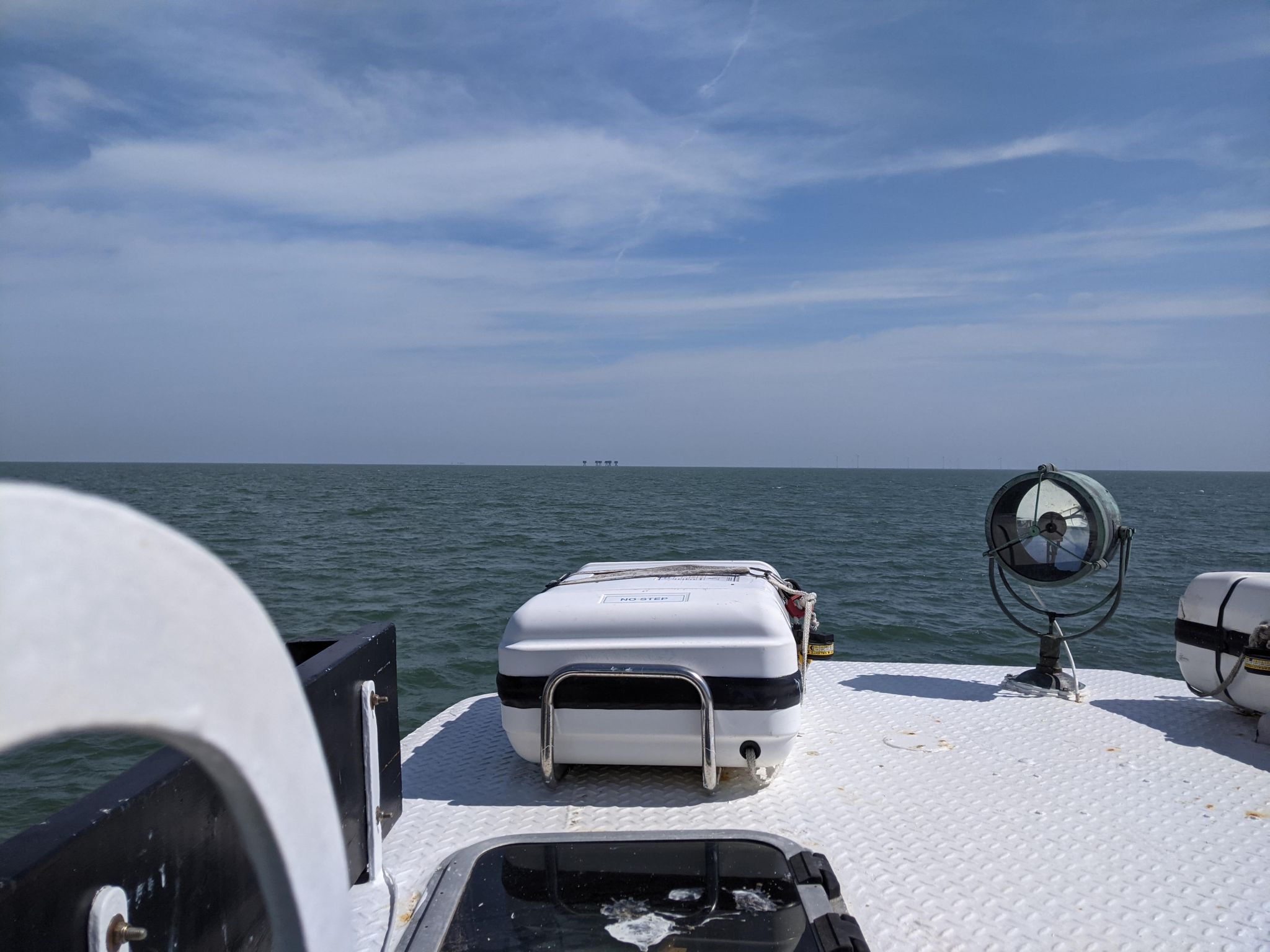
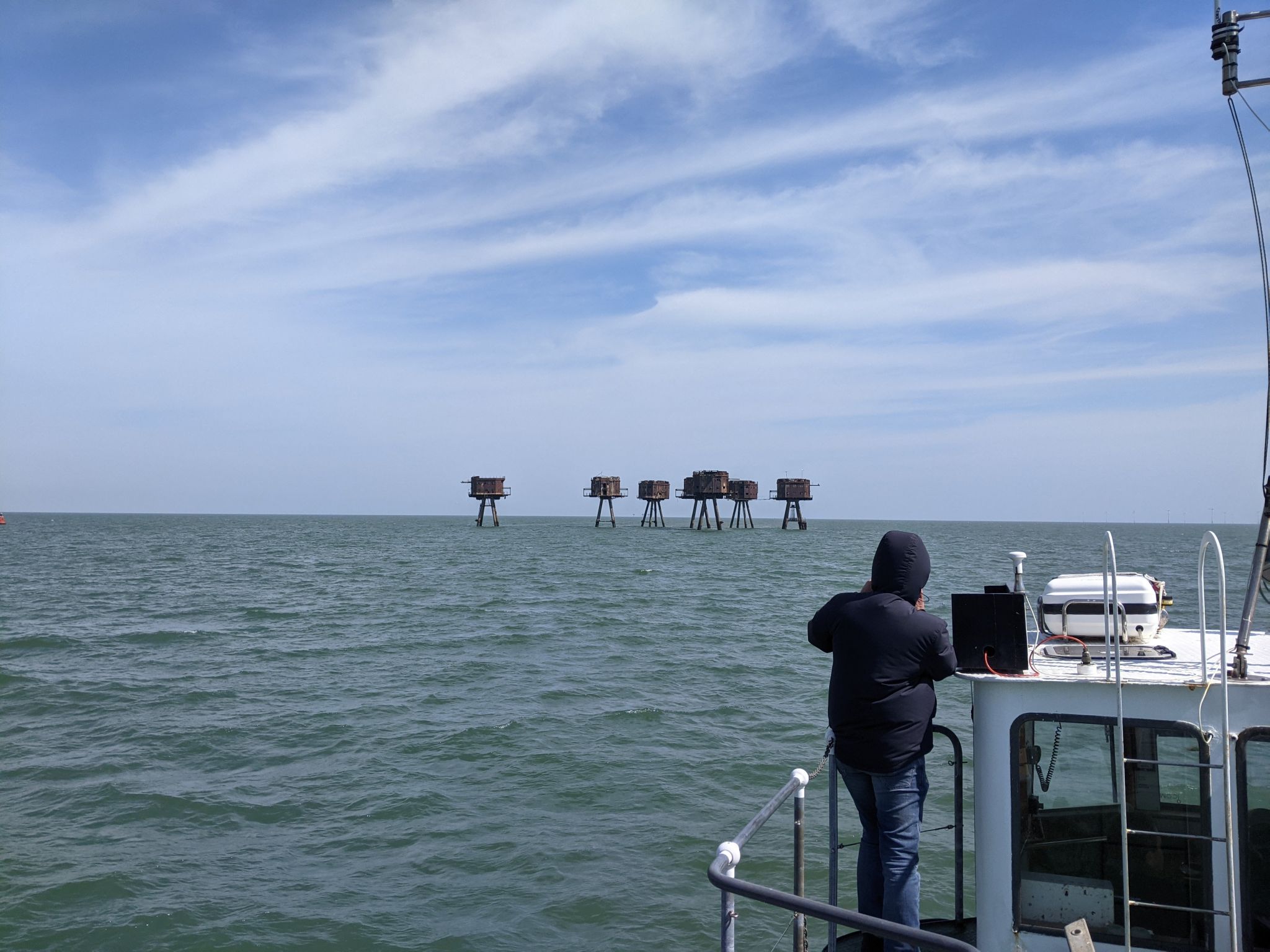
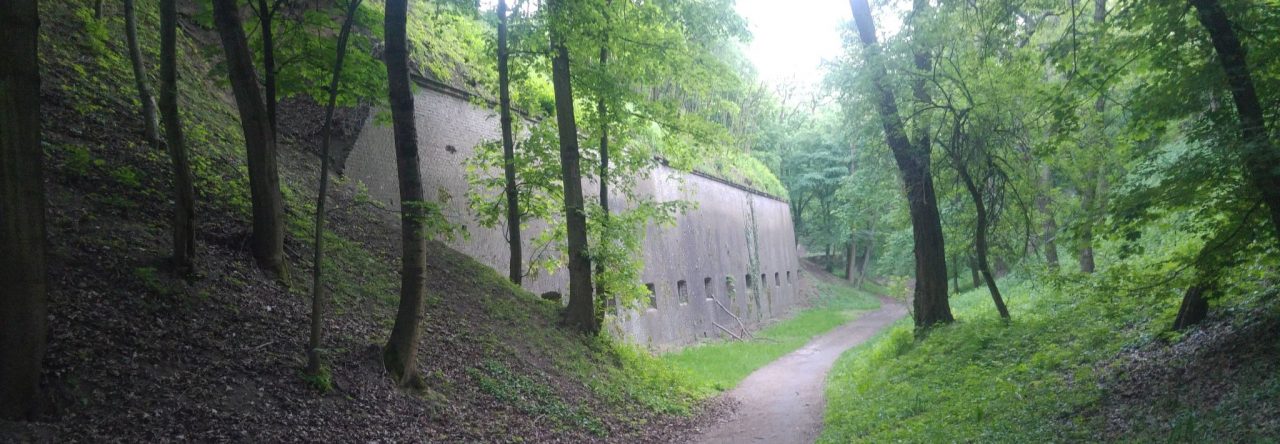
Assuming nothing else goes wrong this year, I’ll be going on a much longer, more involved sea fort adventure this summer, but enjoy these for now…
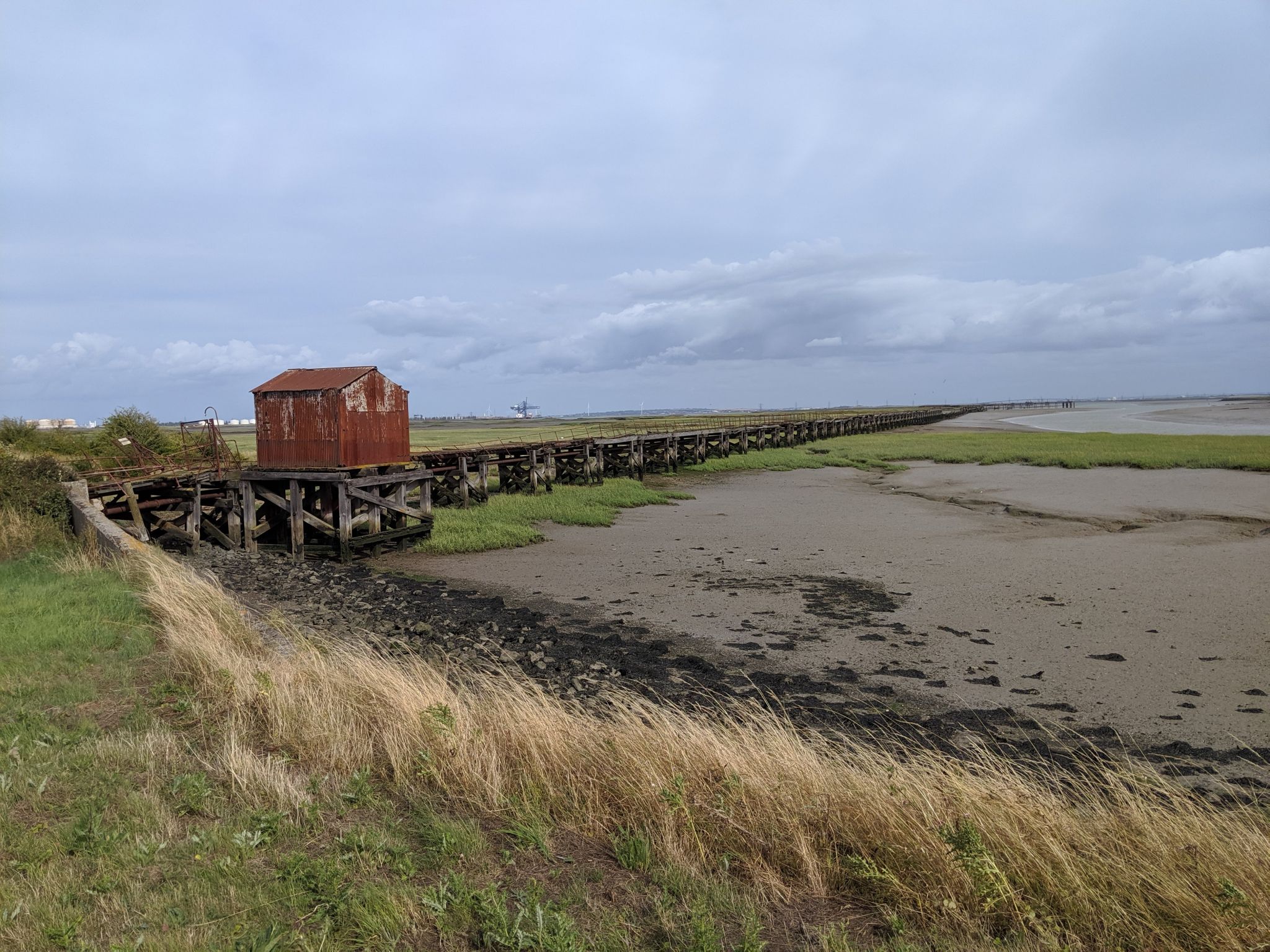 We fortified ourselves with sweets and Irn Bru and set out north and east to Hoo: a low-lying tongue of land between the Thames and the Medway, fringed by tidal marsh. It’s a weird, windswept, empty landscape – there are very few trees, so only low scrubby bushes obscure the cyclopean structures that loom on the horizon, made more intimidatingly huge by their distance: a rank of cranes, a clutch of gigantic storage tanks, a petrogas* power station, an Amazon fulfillment centre. A place of low land and low land values, populated by big, cheap things which London needs but doesn’t need to see. We parked the car on a stub of unfinished roundabout and found the Bee Ness jetty.


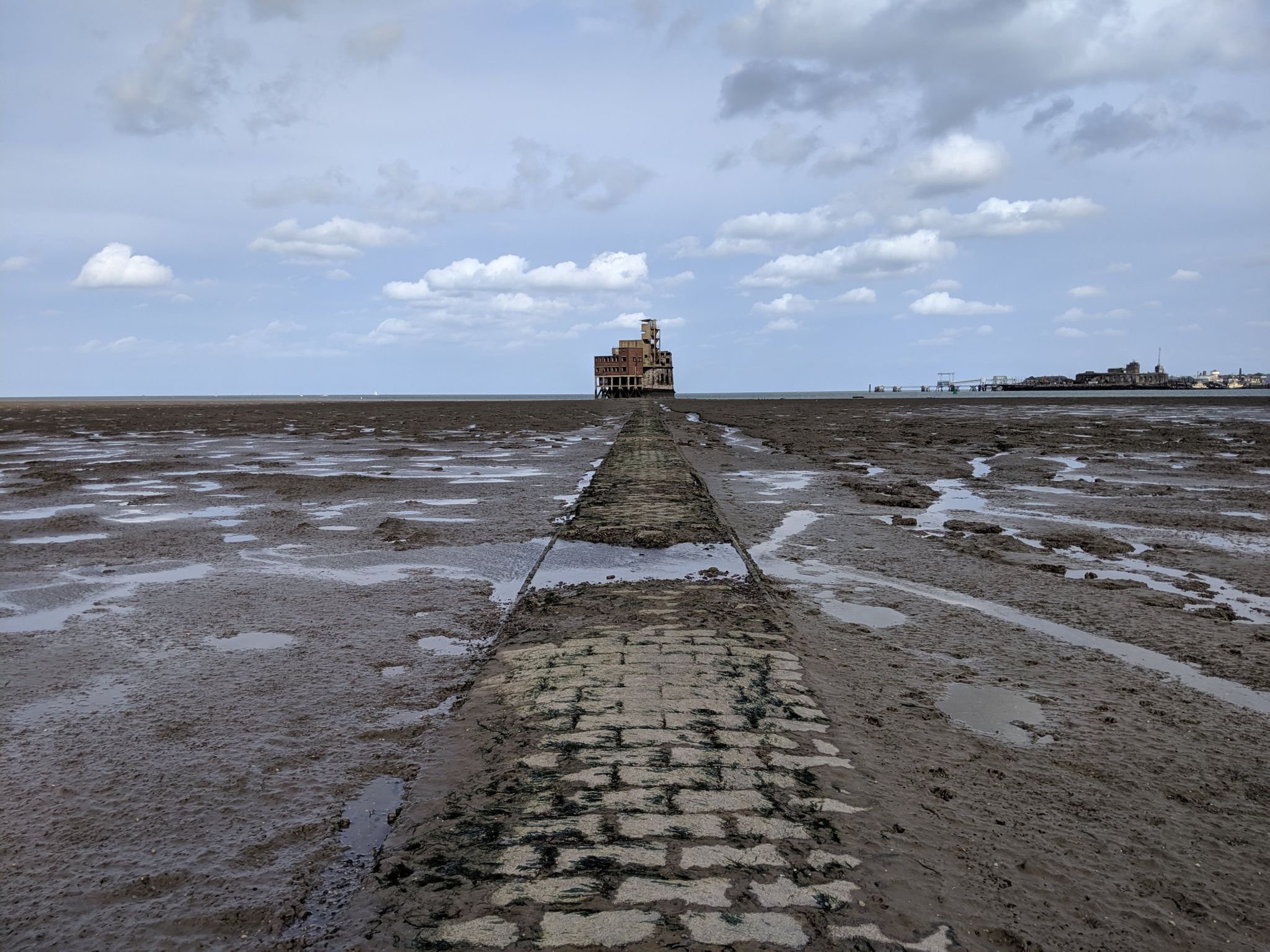 We continued east to the coast and the village of Grain. Grain Tower, like a pocket-sized knockoff of Mont St Michel, is reached by a causeway across a tidal mud flat: the causeway is made of wide, rough-grained bricks secured into their mortar by diamond-shaped undersides, except where it isn’t and is just mud. The Tower itself is a small but solid example of the “Palmerston forts”, whose frowning granite gunports and cast-iron shutters are scattered all over the Channel coast. Like many of its siblings, it has some extensions slapped together in a hurry during the World Wars; a brick barracks on stilts and rickety-looking concrete observation post leave the tower looking like it’s wearing a backpack and a stupid hat. There’s no ground-level access (it would be sea-level at high tide), but some kind soul had secured an aluminium ladder with a loop of plastic rope, next to an enormous barnacled chain wrapped around the tower’s base, which was once a boom chain running to the Garrison Point fort at Sheerness, cutting off the mouth of the Medway.


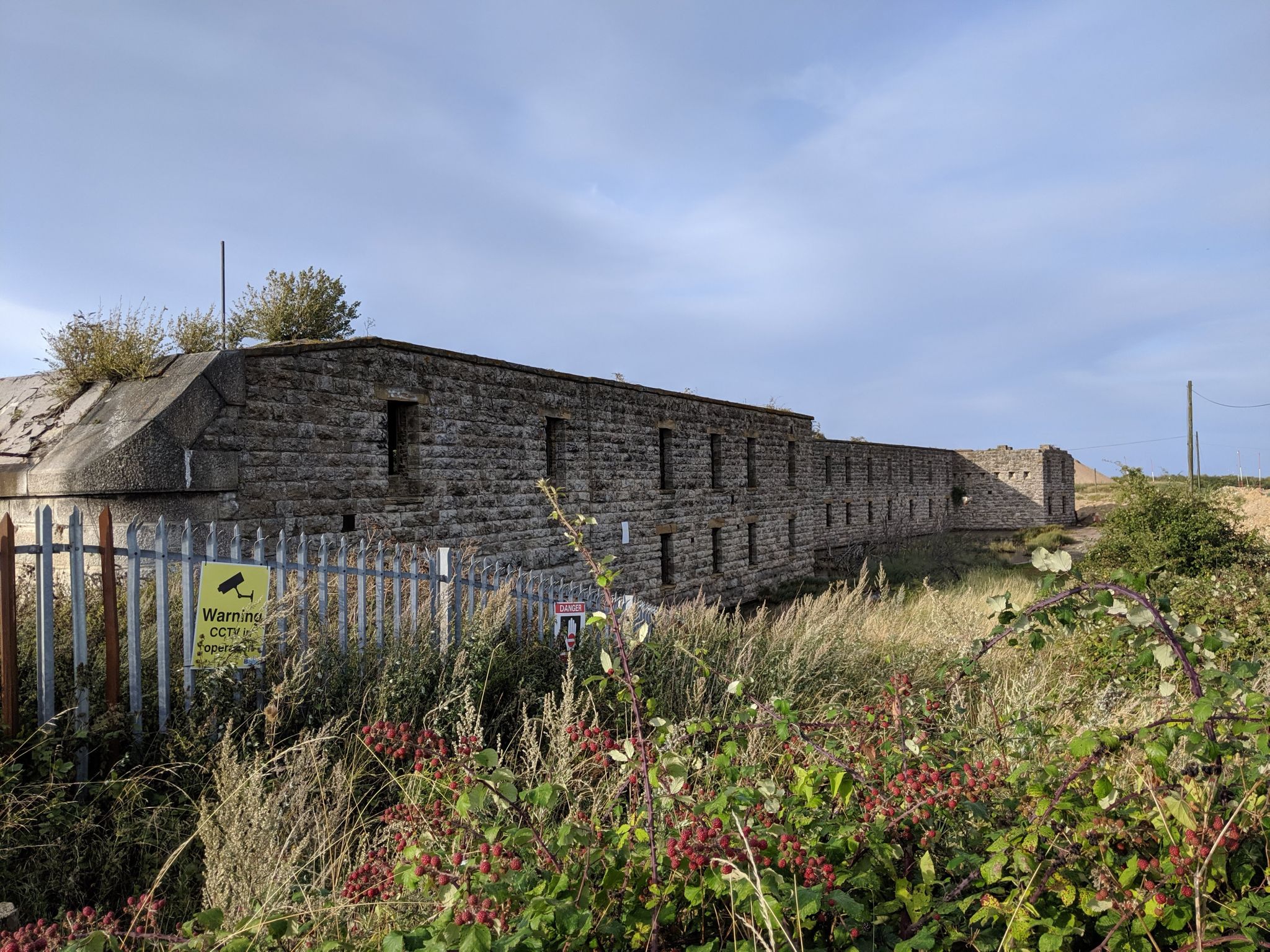 The fort is fenced off and meant to be inaccessible. In the matter of Victorian gun forts that normally means “challenge accepted” to me, but we were quite tired from a full day of Exploring, and the barking dog of a quarry security contractor who shouted at us to stick to the path in broken English and the half-sunken fort looked genuinely difficult. Fortunately, there were some very interesting accessible curios: the wooden guts of a derelict ship and the launch rail of a Brennan torpedo, a curious Victorian guided weapon powered, counter-intuitively, by pulling two wires out of its rear end at high speed.


Being the first part of an account of a lovely day trip in August of 2019, now written and illustrated properly in… 2021.
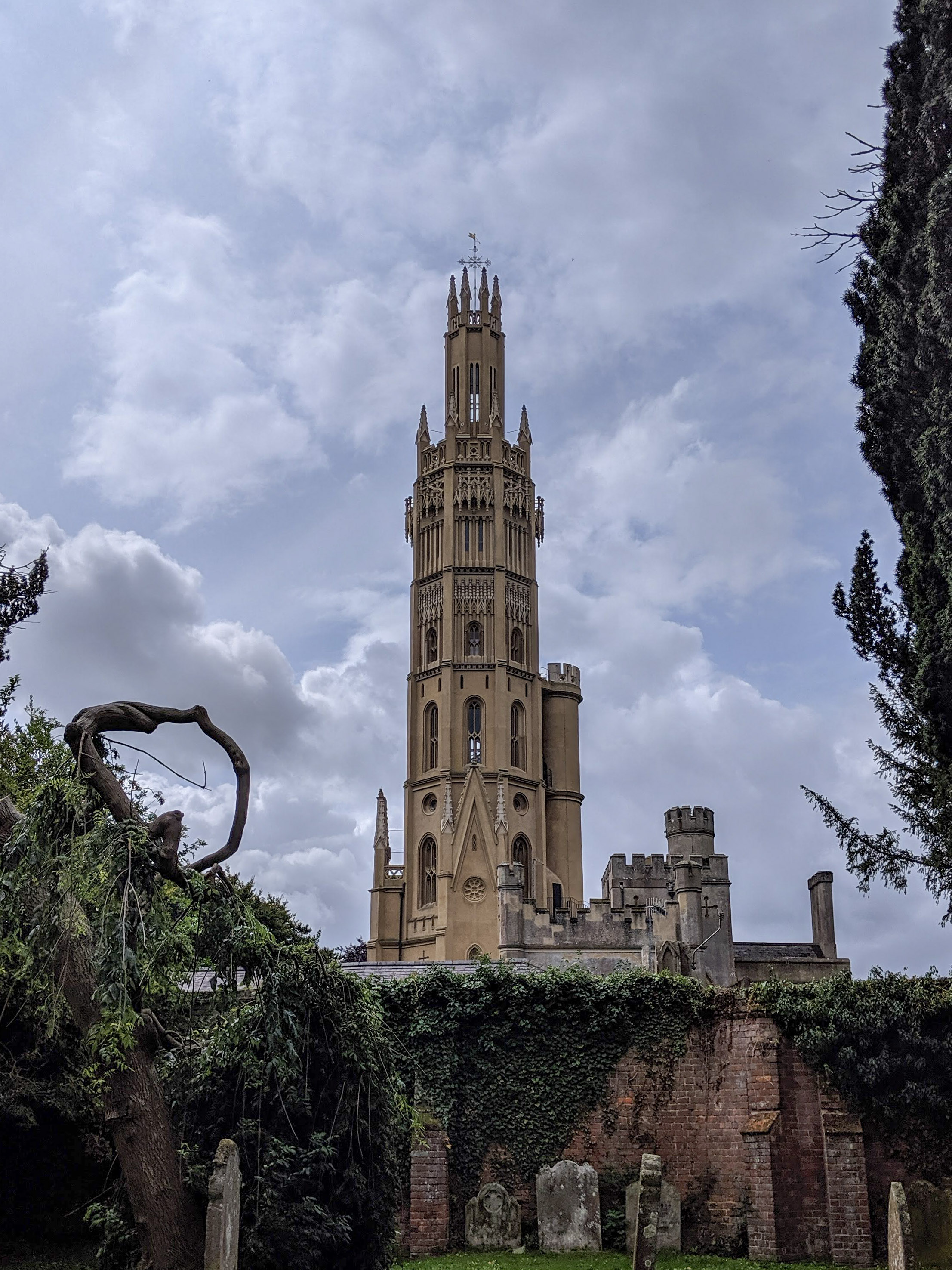
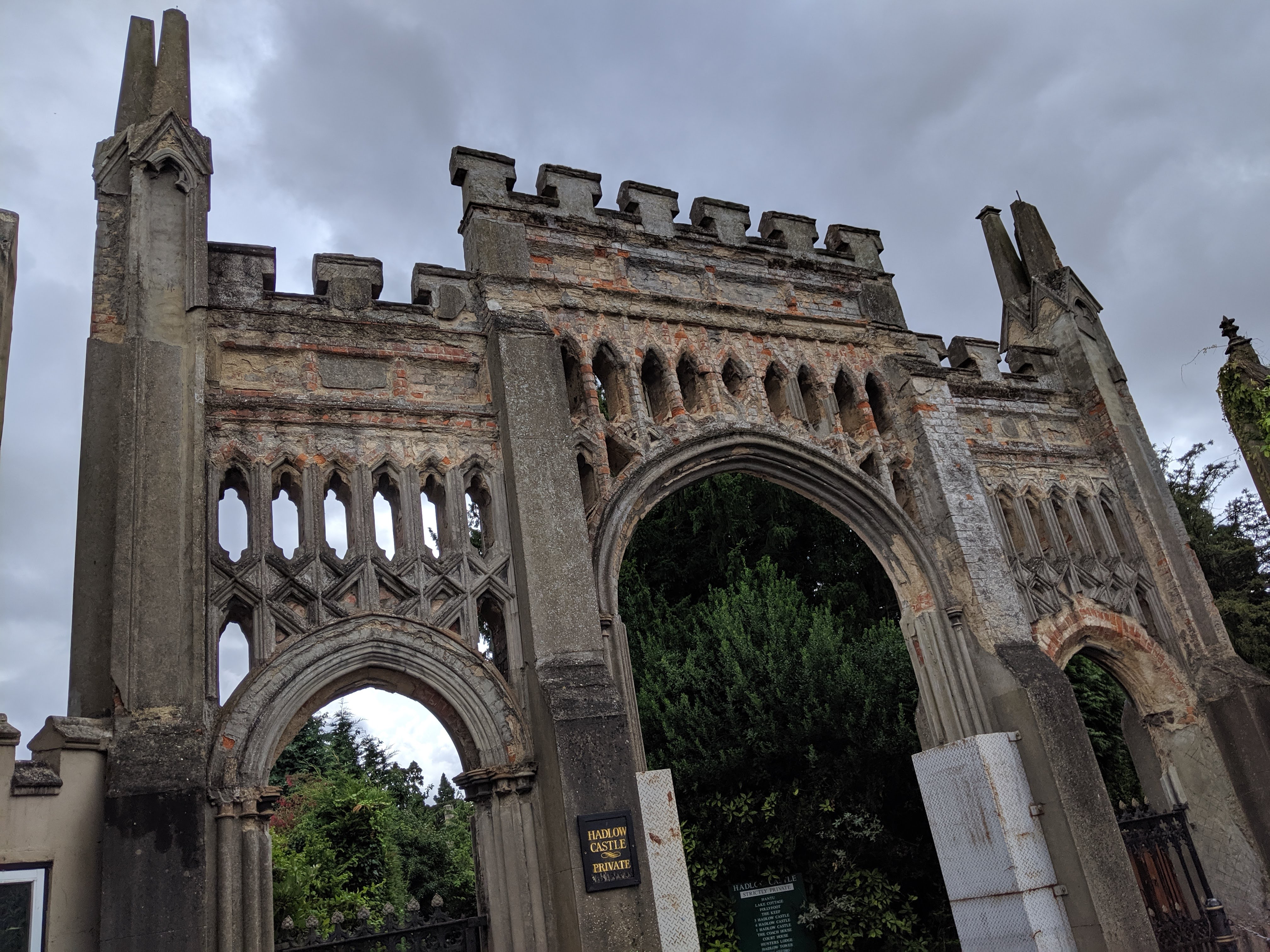
The day out started for me with a train to Redhill and a huge full English at a place called Poppins near the station; it almost continued, having met Charlie, at Ightham Mote, but a rammed car park early in the morning and a knowledge of many highlights yet to come kept us on the road. So the first real sight of the day was the Barad-dûr like spire of Hadlow Tower which, since the fall of Fonthill Abbey, is the premier example of the Gothick Ludicrous architectural style in the British Isles.


The tower is best viewed from the nearby parish church (a very nice example, and one which felt well loved and relevant to its community.) A churchgoer told us how the current owners did the tower up with lots of Heritage money (we looked up the interiors; they’re hideous) and then stopped letting people in. It’s now on sale again for three times the asking price. Yuck.
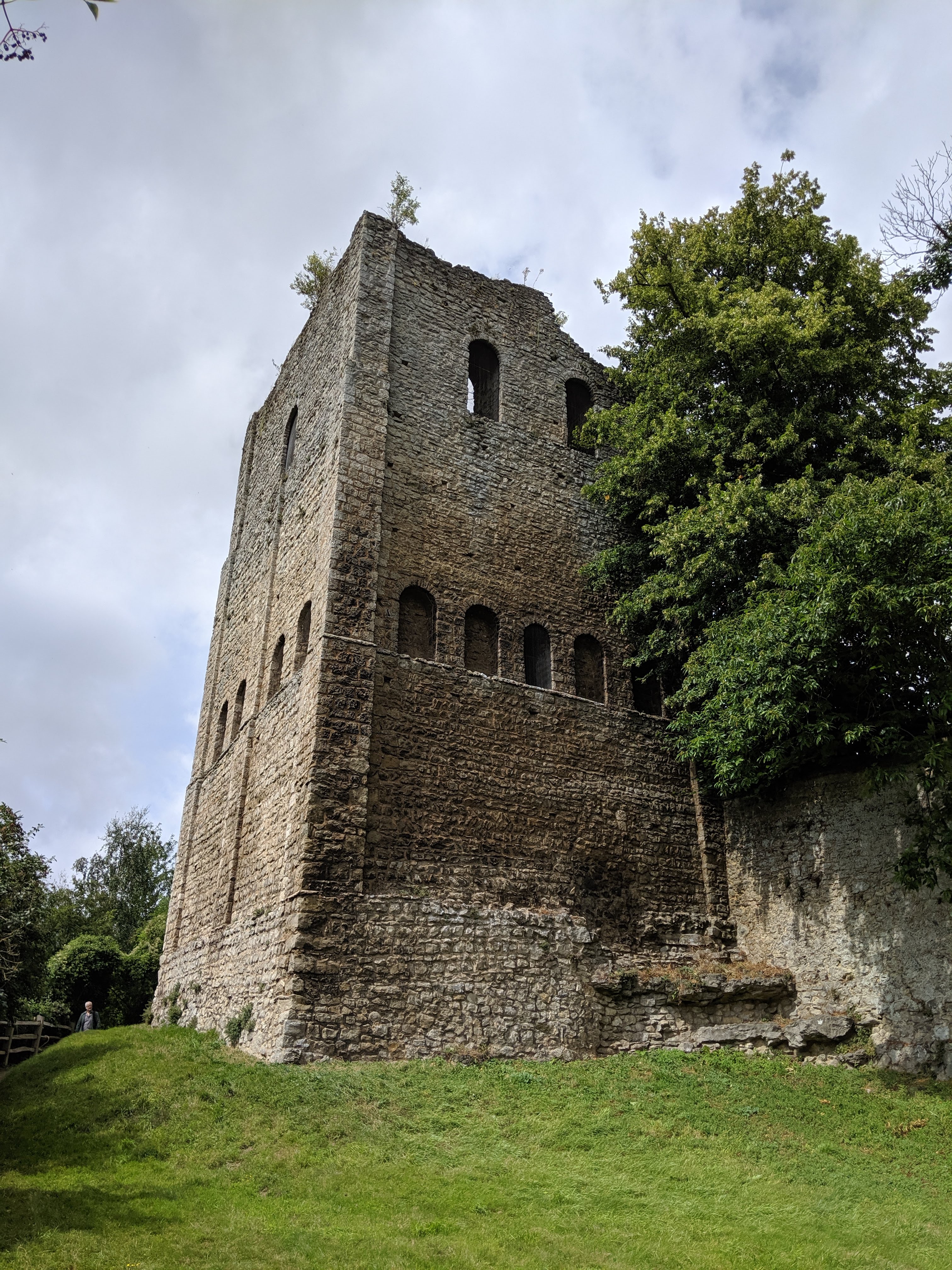
The next stop was St Leonard’s Tower, one of the many bits of fun 11th century oppressive architecture constructed across England as William of Normandy consolidated his invasion (although, as a helpful English Heritage board pointed out, the building’s lack of serious defensive features indicated it was probably more of a symbolic and administrative fort than average). There was nothing inside to see, but we agreed it was a very fine tower.
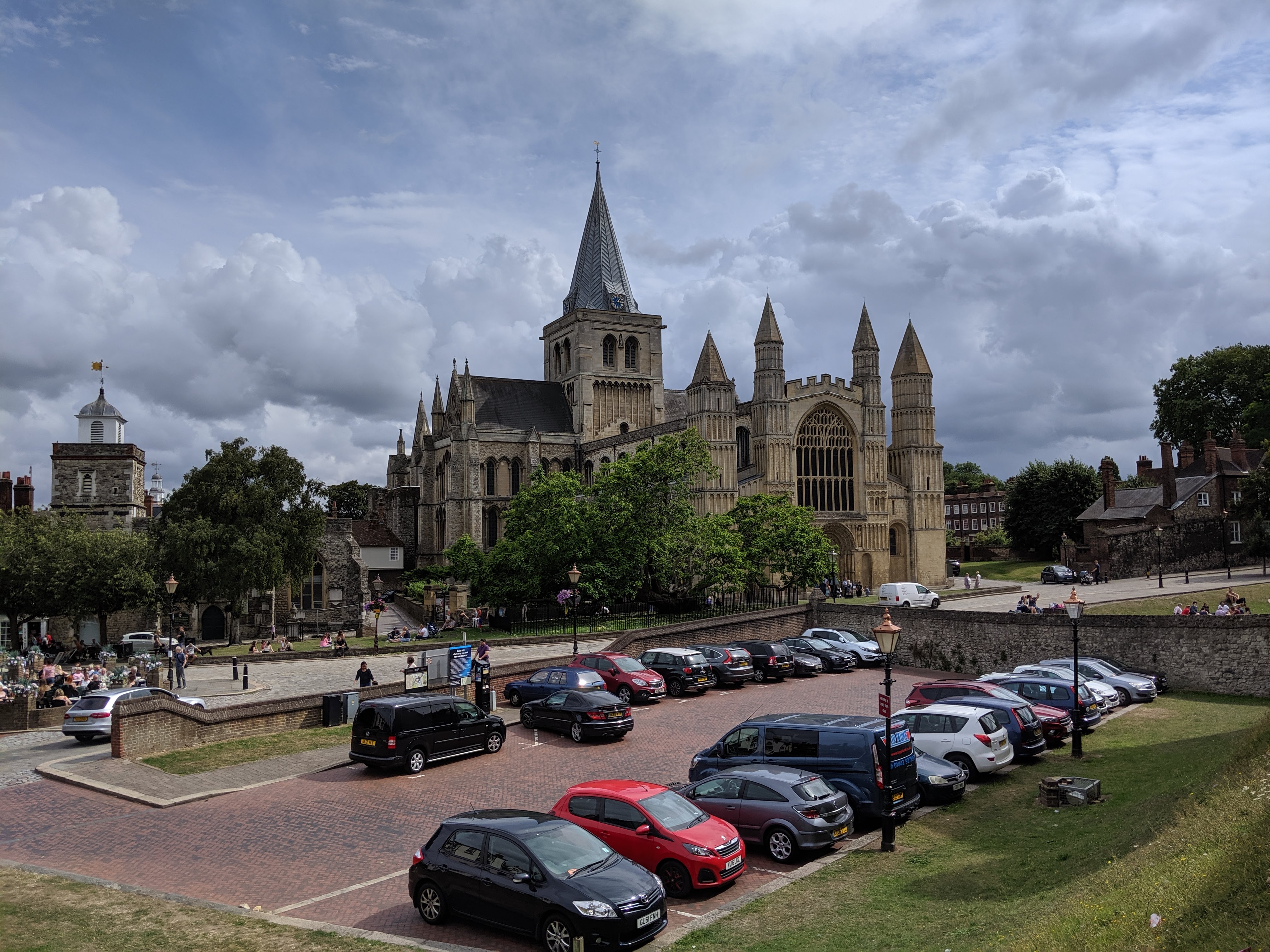
Then, we came to Rochester. Half the reason for this Expedition had been hearing that there was mini golf going on in the cathedral there, so we came for the memes, but we stayed for the really beautifully distinguished interiors.


I have had the good fortune to see a great many cathedrals, and this was an excellent example of the genre. There was a great mural with a very Eastern Orthodox feeling to the art (which made perfect sense when we saw in an info board that named the artist as Sergei Fyodorov – who had hidden a little picture of himself peeking from the side of the corbel, in true medieval style); memorials to men of Rochester fighting and dying in every corner of the world; an atmospheric crypt, glorious ceramic tiles. (We didn’t actually fancy the mini golf, so skipped it.)
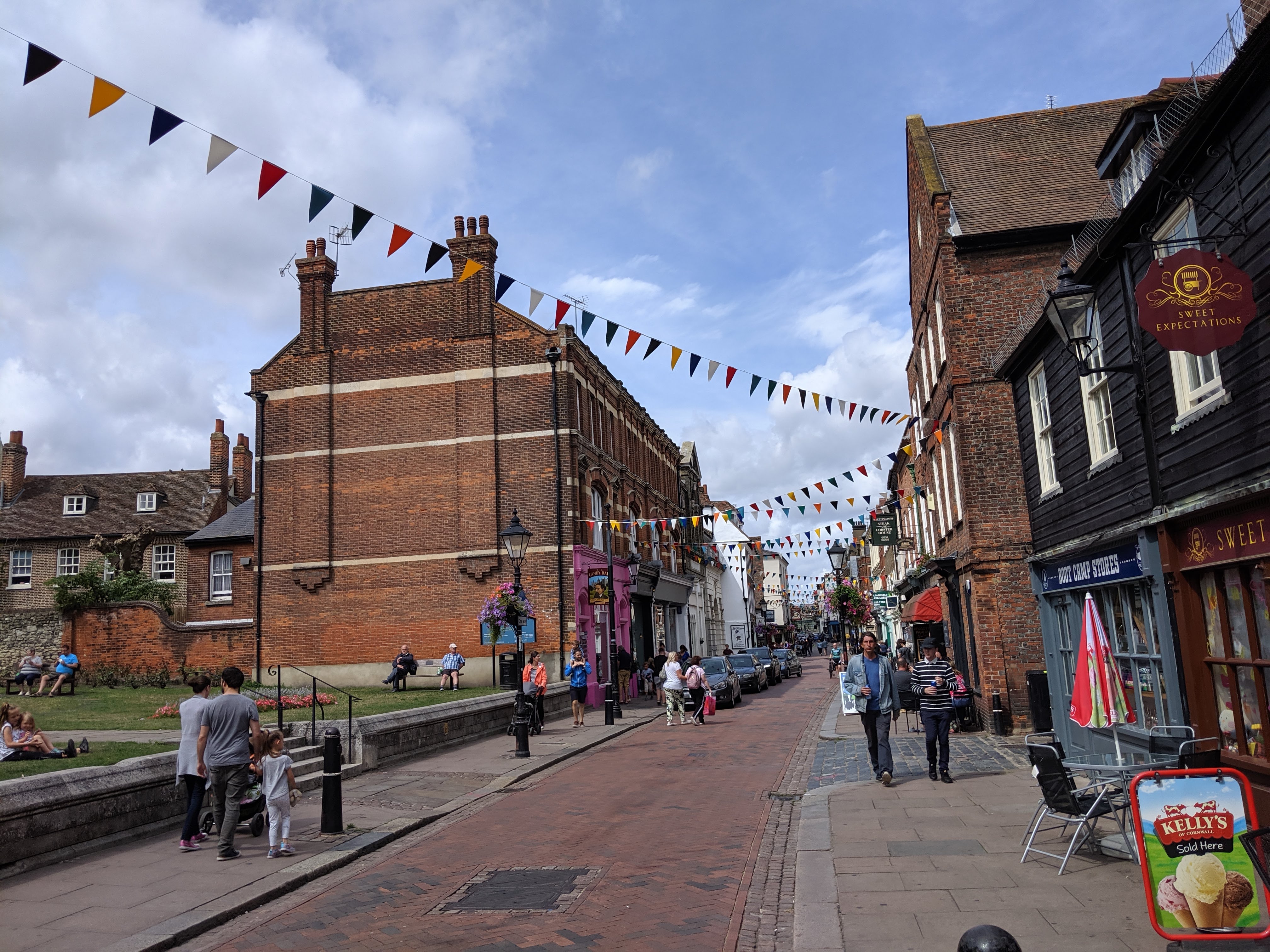
The High Street was very cheerful and active on a bright sunny day; we had fish and chips, and Charlie bought a mosasaur tooth. We took a turn around the excellent Guildhall museum – a perfect little town museum, made with absolute love and interest in the town’s considerable historical pedigree, with just enough budget to make it really work (a replica deck of a prison hulk padded out with mirrors was a high point.)


The High Street also boasted one of those huge, wonderful Hay-on-Wye-esque bookshops, which I escaped having spent only 10 with a book of architecture and an Ian Hogg illustrated history of artillery. Then, to the castle; I actually bumped into a work colleague on the way there – my CSSC membership doubles as English Heritage, so that’s me and a plus-1 in for free.
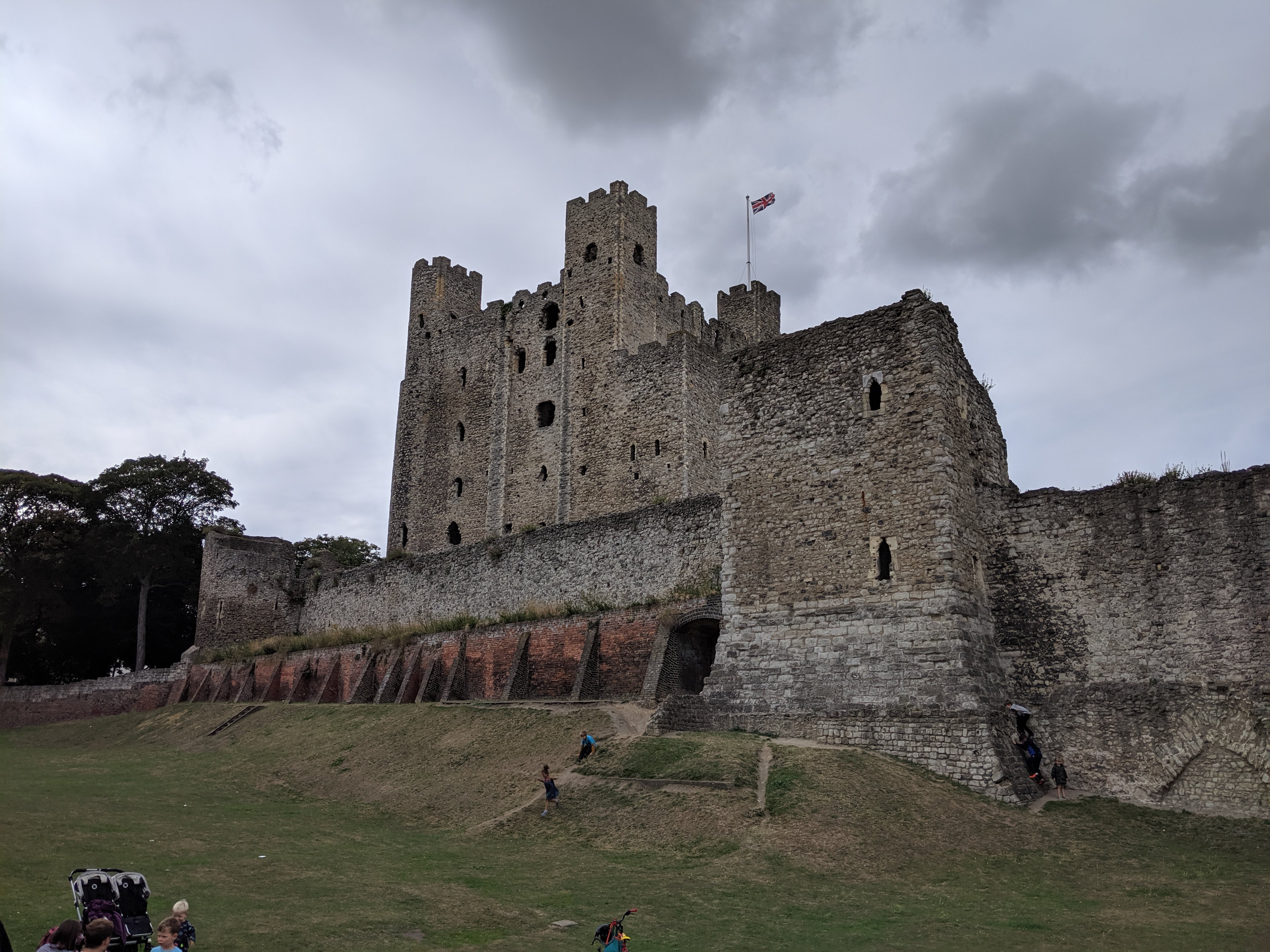
The castle is of the same basic design language as the Tower of London (although built a fair bit later): a huge solid militaristic cube with towers at each corner, within later rings of concentric defences. It’s in considerably poorer nick than the White Tower, having had fewer prison/mint/arsenal side gigs in the intervening centuries and being completely obsolescent in its main role a fort by the 17th (which may have spared it from Cromwell’s general castle-vandalising after the Civil War). But this means that the interior hasn’t been mucked about with much, and, thanks to the lack of floorboards, you can see five storeys of gorgeously carved Norman arches and immensely impressive columns in the middle all at once. From the platform at the top, we can see the Garden of England in all directions, much of the visual interest coming from the Medway estuary with its rather lost-looking Soviet submarine.


Castled out, we returned to Charlie’s car for the second part of our adventure: north and west to the low, windswept Hoo Peninsula and its many fortresses.
 underneath the open sky