I’m going through my old Tumblr posts, rooting out those few that are worth saving (including a trip to Cornwall) and posting them here, tagged and backdated.
I feel this one was worth bringing back to the front page.

I’m going through my old Tumblr posts, rooting out those few that are worth saving (including a trip to Cornwall) and posting them here, tagged and backdated.
I feel this one was worth bringing back to the front page.
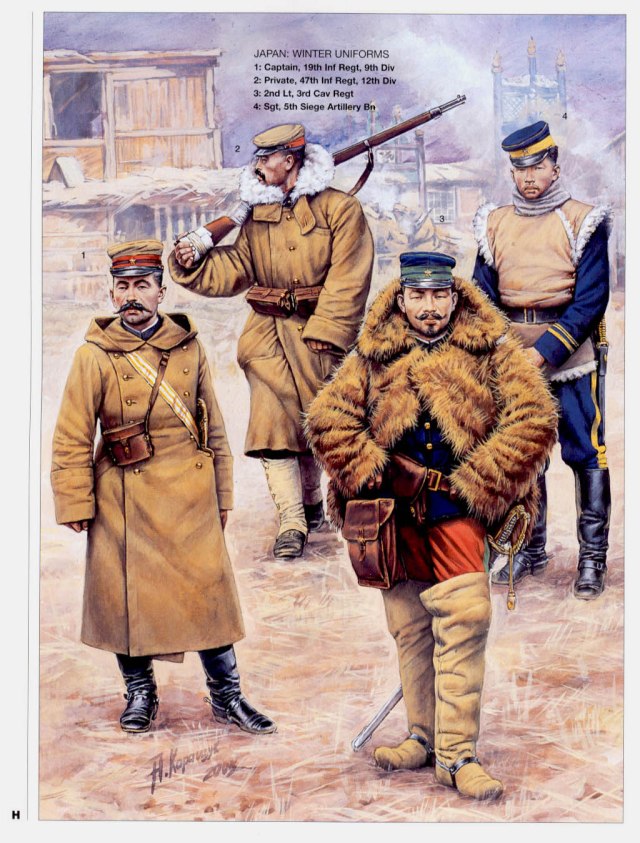
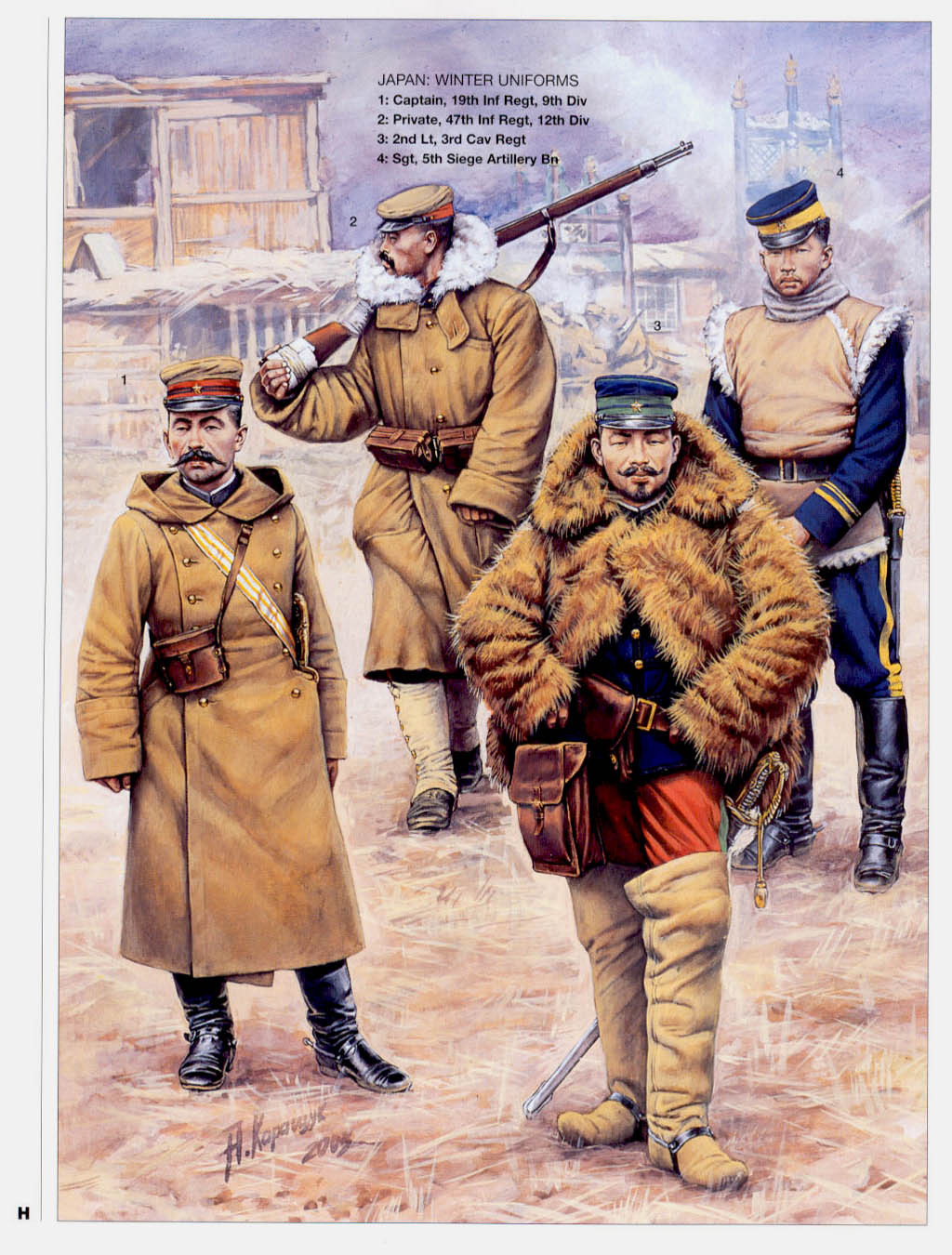
[11:55:48 PM] Parsley: anyway i’m actually about to go to bed, i need to get up early-ish tomorrow to go to france
[11:56:10 PM] Brosencrantz: before you do
[11:56:15 PM] Brosencrantz: http://25.media.tumblr.com/tumblr_maozc249aX1qigaa4o1_1280.jpg look at the man front right
[11:56:25 PM] Brosencrantz: think about him in your dreams.
[11:56:34 PM] Parsley: i’m aroused
[11:56:47 PM] Brosencrantz: I have hundreds like him.
[11:57:02 PM] Parsley: ooohh second lieutenant oooohhhhh
[11:57:12 PM] Brosencrantz: hello parsley
[11:57:18 PM] Brosencrantz: I have just returned to base
[11:57:27 PM] Brosencrantz: and I am looking so moustachioed
[11:57:42 PM] Brosencrantz: and my giant hairy fur coat thing opened?
[11:57:51 PM] Brosencrantz: let’s do it
[11:57:59 PM] Brosencrantz: and I will leave my thigh length woolly boots on
[11:58:14 PM] Parsley: meanwhile in a 20 mile radius of this event
[11:58:42 PM] Brosencrantz: ammo randomly cooking off
[11:58:48 PM] Brosencrantz: russians getting chills
[11:58:56 PM] Parsley: it was amazing
[11:59:02 PM] Brosencrantz: the end.
[11:10:21 PM] Brosencrantz: good hoax story went round tumblr today
[11:10:36 PM] Brosencrantz: involving samsung paying apple with 20 billion nickels
[11:22:50 PM] Hovercraft: 20 billion nickels would weigh 100 million kilograms
[11:23:21 PM] Hovercraft: http://answers.yahoo.com/question/index?qid=20081130131743AAFuroy
[11:23:23 PM] Brosencrantz: the hoax did involve a fleet of trucks
[11:23:35 PM] Hovercraft: “You can research this information easily by yourself on the Internet.”
[11:23:45 PM] Brosencrantz: that’s what he’s doing :D
[11:23:52 PM] Hovercraft: I googled “weight of a nickel” and got that page, yes
[11:23:55 PM] Hovercraft: what a fuckass
[11:24:46 PM] Hovercraft: how much do you think a truck can carry?
[11:25:06 PM] Hovercraft: http://wiki.answers.com/Q/How_many_pounds_of_freight_can_a_semi_truck_carry righto
[11:25:27 PM] Hovercraft: https://www.google.co.uk/search?q=how+much+can+a+truck+carry&sugexp=chrome,mod=13&sourceid=chrome&ie=UTF-8#hl=en&safe=off&sclient=psy-ab&q=75000+pounds+in+kilograms&oq=75000+pounds+in+kilograms&gs_l=serp.3…1369.8338.0.8453.25.23.0.2.2.1.138.1767.20j3.23.0…0.0…1c.bFaCccByV2c&pbx=1&bav=on.2,or.r_gc.r_pw.r_qf.&fp=e66a99fc09647756&biw=1858&bih=1019 okay
[11:25:43 PM] Brosencrantz: 34 tonnes!
[11:25:45 PM] Brosencrantz: not bad
[11:25:50 PM] Hovercraft: so about 3000 trucks would be needed
[11:26:02 PM] Brosencrantz: or a hundred journeys by 30 trucks
[11:26:15 PM] Brosencrantz: the logistics is not the biggest plothole here
[11:26:27 PM] Brosencrantz: the biggest plothole is why samsung has a billion dollars in 5c pieces
[11:26:50 PM] Hovercraft: do 20 billion nickels even exist?
[11:27:02 PM] Brosencrantz: I… dunno
[11:27:04 PM] Brosencrantz: probably
[11:27:23 PM] Brosencrantz: fucking coppers accumulate everywhere
[11:27:43 PM] Hovercraft: nickels are silver
[11:28:08 PM] Hovercraft: http://wiki.answers.com/Q/How_many_coins_exist_in_the_world FUCK
[11:28:08 PM] Brosencrantz: shit, so they are
[11:28:18 PM] Brosencrantz: probably not then
[11:32:12 PM] Hovercraft: http://en.wikipedia.org/wiki/United_States_Mint_coin_production hmm
[11:32:35 PM] Brosencrantz: are you a bad enough dude to copy that into a spreadsheet?
[11:32:58 PM] Brosencrantz: nickels have been minted since the civil war
[11:32:59 PM] Hovercraft: so they produce about 1 billion nickels per year, but don’t know how long they stay in circulation for
[11:33:05 PM] Hovercraft: probably several decades though
[11:33:18 PM] Brosencrantz: the hell happened in 2009?
[11:34:08 PM] Hovercraft: dunno, there didn’t need to be much of a top-up?
[11:34:28 PM] Hovercraft: so it’s feasible that 20 billion exist
[11:34:34 PM] Hovercraft: but getting that many in one place is absurd
[11:35:19 PM] Hovercraft: …why would I want to copy that into a spreadsheet?
[11:35:36 PM] Brosencrantz: I looked up a graph of the price of copper
[11:35:52 PM] Hovercraft: did it spike?
[11:36:05 PM] Brosencrantz: ish, it was at rock bottom early 2008 and climbed steeply, but carried on climbing
[11:36:11 PM] Brosencrantz: peaked mid 2010
[11:36:23 PM] Brosencrantz: looking at nickel now
[11:37:01 PM] Brosencrantz: nope, same story, very low through 08 then rising steadily
[11:37:38 PM] Brosencrantz: and nickel’s prices were highest in mid 06
[11:37:49 PM] Brosencrantz: when production was a billion and a half
[11:38:06 PM] Hovercraft: needs must
[11:38:25 PM] Brosencrantz: americans suck at seigniorage
[11:39:16 PM] Brosencrantz: I love that we can actually research this sort of shit effortlessly
[11:39:21 PM] Brosencrantz: for no better reason than because we’re BORED
[11:39:25 PM] Hovercraft: o/\o
[11:39:45 PM] Hovercraft: and to give us a sense of smug superiority over tumblr halfwits who swallow anything they’re told
[11:39:55 PM] Brosencrantz: like, in a shitty thriller twenty years ago researching this sort of information would involve an attractive harvard grad and a romance subplot
* Brosencrantz has changed their name to [cO/] Teasencrantz
* [COGS] Premasiri has changed their name to [cO/] Teamasiri
[cO/] Teasencrantz: I’M A LITTLE TEAPOT
[cO/] Teamasiri: SHORT AND STOUT
[cO/] Teasencrantz: HERE IS MY HANDLE
[cO/] Teamasiri: HERE IS MY SPOUT
[cO/] Teasencrantz: WHEN THE KETTLE’S BOILING
[cO/] Teamasiri: HEAR ME SHOUT
[cO/] Teasencrantz: TIP ME UP
[cO/] Teamasiri: AND POUR ME OUT
[cO/] Teasencrantz: o/\o
[cO/] Teamasiri: o/\o
My little bro is a pretty terrible person, but sometimes he shines.


Cornish is a weird mix of a lot of things. Like many languages, it mostly died out when the local lingua mercatoria (in this case, English) became the lingua franca and came to dominate; like a lot of silly little historical curios, it was subsequently revived in a romanticised, semi-fictionalised form by nostalgic Victorian types. How completely it died out, and how historically authentic the current form is, is a debate for Cornish nationalists and actual historians; I am neither.
Either way, it’s rooted in an ancient language somewhere between Breton and Welsh, and bits of it are subtly alien to the English ear. Cornwall was known as West Wales back in Heptarchy days (though that was “Wales” meaning literally “barbarian lands” rather than, er, Wales) and there’s a strange grammar to Cornish things, neither Latinate nor Germanic. Besides the approximately ten million towns here named after saints, Welsh-sounding place names like Trewellard and Gwithian are mixed up with immensely English ones such as Whitecross and Newquay, and there’s a category of pure Cornish: towns which sound like they belong in fantasy novels, like Zennor and Perranzabuloe (the latter is actually Latin, but spelled in weird Cornish phonetics.)
From this last comes the name of the minehead-turned-mining-museum at Geevor, just down the coast from St. Ives. One of the last tin mines in Cornwall to close, this has by the grace of charity and whopping EU grants survived as a very classy and quite unique little exhibition. It has an extremely well executed example of the standard geological museum and shiny collection, a nice Heritage Section about Cornishmen (“Cousin Jacks”) going off to dig holes all over the world, and collections of various artefacts relating to mining, miners and Cornwall: all the standard museum stuff which I love. I have been to plenty of museums full of arch nostalgia, weak collector-plundered collections and dumbed-down-too-far science/history. This is not one of them.
But beyond that, it has a near-complete, near-working mine and processing plant that has only been abandoned for a couple of decades. A few of the bigger machines had been torn out of the massive ore-processing works (interestingly, the great old sheds are largely wooden in construction; in a very wet working environment, right by the sea, and of a business where large pieces of machinery were often being moved and upgraded, using wood and having an in-house carpenter was apparently far cheaper than iron) but most of the workings were still there, the Victorian-looking crushers and grinders with fist-sized rivet heads and the great automated shaking-tables of wood and linoleum, flotation tanks outside gradually growing over with weeds hardy enough to weather the poison.
There was the usual gold-panning thing, which was actually made interesting by comparison with the machine versions in the next room along (also, a harvest of tiny shiny things!); there was a tour of an abandoned 17th century mine lying above the more modern Geevor workings, which I was far too tall for (even craned over massively I banged my head many times, and furiously sang Short People to combat the seething realisation that my girlfriend would have absolutely no trouble), and an amazing scale map made of wire showing the full, absurd extent of the labyrinthine tunnels under the land and sea. (Low-res phonecam pic to come.) The original workings are still there, and although the tunnels are largely flooded these days, they’re sealed off and could be pumped out one day, if it ever became profitable again.
“The Dry”, the changing-rooms for miners (so called because it was where they hung up their filthy, sodden mining clothes at the end of the day) had been left as it was the day the mine closed; an eerie Chernobyl-esque frozen snapshot of an eighties business rooted deeply (hurr) in a millennia-old trade. The too-apologetic intro bumf at the door hinted at treasures far more risqué than a distant Playboy calendar and a locker containing a home-recorded VHS tape marked “BIG BLONDES 4” in blue crayon, but the whole place was brilliantly evocative. There were grubby mud-stiff overalls, sarky blackboard notes, printed Polite Notices about the misuse of bandages, a locker covered in motorbike stickers with a helmet perched on top, clunky seventies tea machines. Everything smelled of soap and grease and history. Like the armoury at Shrivenham, I found it utterly wonderful to be in among the artefacts, rather than seeing them cloistered away behind glass and security alarms. Unlike Shrivenham, I didn’t touch anything, but it mattered that I could.
My parents and middle bro had arrived in Cornwall before me, and apparently had interesting enough times for Mum to fall over on some rocks and horribly injured her leg (and finger; the bruises are amazing), which has resulted in no lasting damage but a serious limp. My mum is a total trooper, and would probably walk to John O’Groats on a busted leg without complaining, but it still seemed prudent not to strain her, and so we found suitably close Cultural Enrichment in the form of the town’s apparently-renowned artistic establishment. “Thriving artistic community” usually means “wanker-oriented boutiques”, and there were definitely plenty of those, but the town also has two paid-up Establishment establishments run by the Tate, whose non-Modern corners have been acceptable to my appallingly old-school art tastes (17th century was best century for painting, all other centuries are pale imitations).
So the first item of Cultural Enrichment after I got off the train was a museum and garden devoted to the sculptor Barbara Hepworth, who I quickly learned was famous for her pioneering work in those odd-looking shapeless modern sculptures you’ve seen everywhere. The exhibition and garden were all very well laid out, in that rather pretentious artistic way, and there was some genuinely impressive craft involved (evinced by the incredible collection of fancy files the late Hepworth left behind), but the works themselves did little for me; I’ve seen so many different examples of that “vague forms” style (probably mostly inspired by her; possibly even her actual work) and none of them have evoked any interesting feeling in me. Still, I’ll happily call that subjective; this stuff is so generally vague that you can hardly come up with objective reasons for liking or disliking it (which is probably why I dislike it).
I can without qualification say that the second piece of Enrichment was just rubbish. The Tate St. Ives (one of those rare modern buildings with an actually attractive design, albeit one let down by tacky materials, very shoddy build quality and general neglect; the building has no corners, but they still cut them) had taken out all its actual art to run an exhibition by the painter Alex Katz. Now, credit where it’s due: he does bold colours well, and a couple of his paintings had a certain slightly evocative quality (possibly by random chance); but his work is hideously lacking in technical ability, imagination or at the very least some pretentious statement to rub into our faces. His composition is tedious, his proportions are awful, his subject matter is trite, his detail is childishly inept and he really can’t do hands or feet. (Google imaging his art mostly turns up better pieces than they had at the Tate, which means that either it gains something by being reduced to a hundred pixels a side, or the curators specifically picked out his worst pieces.)
For once my bro agreed with me on this sort of thing, and feeling thoroughly cheered by this mutual outpouring of cynicism and high-handed contempt we headed out onto the headland above St. Ives via one of the town’s impressive beaches, which was chocka with pasty people gradually sunburning. There’s an old gun emplacement on the spit (I’d guess Palmerston era), with one of the barbettes half-filled with concrete and another housing an incongruous little “Coast Watch” (volunteer Coast Guard, apparently) mini traffic-control-tower. We sat watching sparrows and starlings peck grass seeds from the tarmac for a long time, and then, as banks of mist suddenly descended on the sunlit town from landward, hunted down a tasty (if costly, and somewhat small) fish and chip supper on the waterfront, and wandered back home.


 underneath the open sky