Pin Post #5

#43 RIAT ’17
The Royal International Air Tattoo is an annual excuse for many of the world’s air forces to congregate and show their cool stuff off to vast crowds: a full long weekend of fast pointy things, military nostalgia and incredibly loud engine noises. It’s a delight, despite being near Swindon, and the only hard part is choosing just one badge to pick out of the thousands upon thousands on offer. I got this patriotic little Eurofighter after some internal consternation.

#44 HAMPTON COURT PALACE
The second (and last… for now) astronomical clock in my collection! This one, from Hampton Court, is from 1540 and still works. On the Thames upstream of London, Hampton Court is probably the best of London’s royal palaces: a huge, sprawling and extremely engaging architectural pile, half authentic Henry VIII Tudor bits, half Dutch William-era English Baroque (a 1690s refurb was cancelled halfway through owing to the death of Queen Mary II.)
#45-49 WELSH ADVENTURE 2017
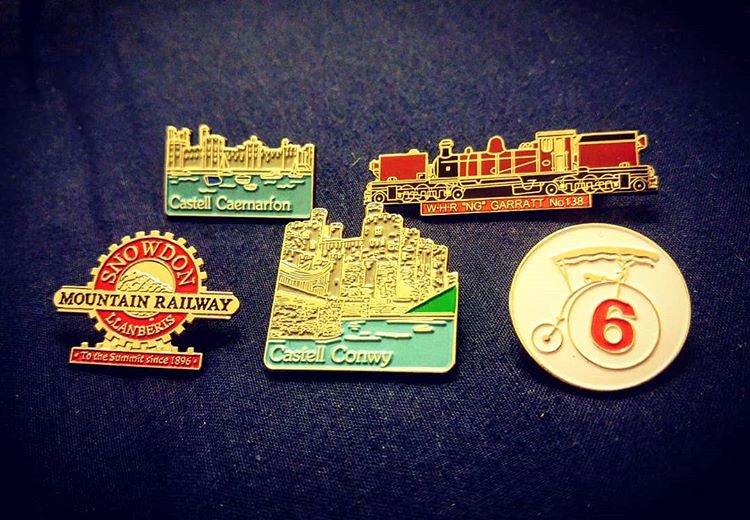
I went to Snowdonia with my parents and partner in the summer of ’17 and, well, went a little bit mad.
Cadw, the Welsh heritage organisation, produce custom badges for all their castles, with Caernarfon and Conwy shown. We climbed to the top of Mount Snowdon honestly but rode the Snowdon Mountain Railway down (it was raining and my other half has short legs). No.8 is from Portmeirion, where The Prisoner TV series was filmed, and the train is one of the mini-Garratts from the Welsh Highland Railway (the loco has a fascinating history, having been built to haul crops on South African fruit 5lines that were themselves built from surplus First World War trench railways). After this splurge I started restricting myself to one or two per holiday.
#50 NATIONAL MARITIME MUSEUM
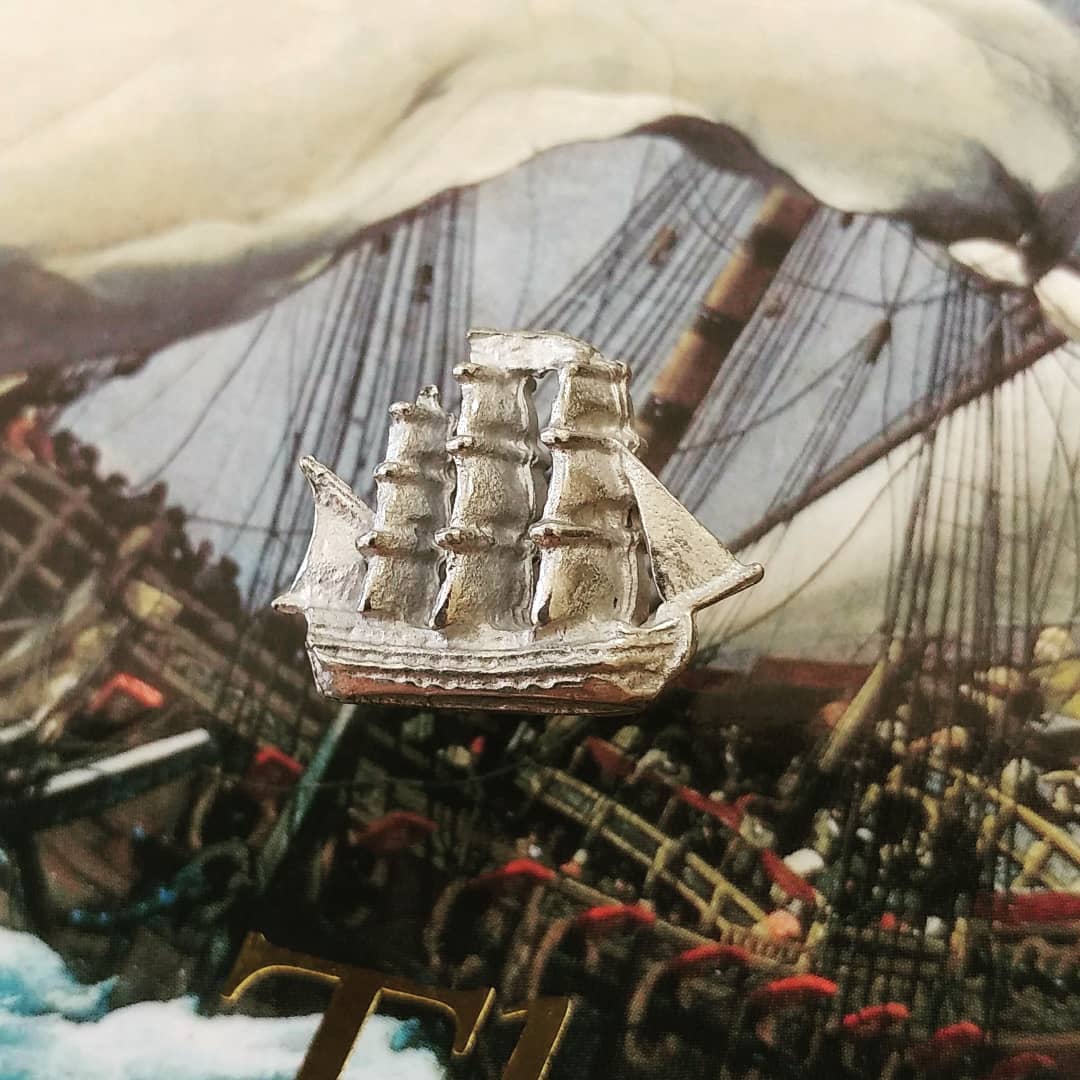
The National Maritime Museum in Greenwich has been knocked about a bit by a refurb and is quite difficult to navigate (I’ll always be bitter about the loss of the 20th Century Seapower gallery) but is still an unending treasure, especially the new Nelsonian and Empire galleries, which present nuanced and compelling histories of the period when Britain – for better or worse – ruled the waves. This little pewter ship of the line is a first-rate souvenir of the place. Background is NAM Rodger’s “The Command of the Ocean.”
#50A
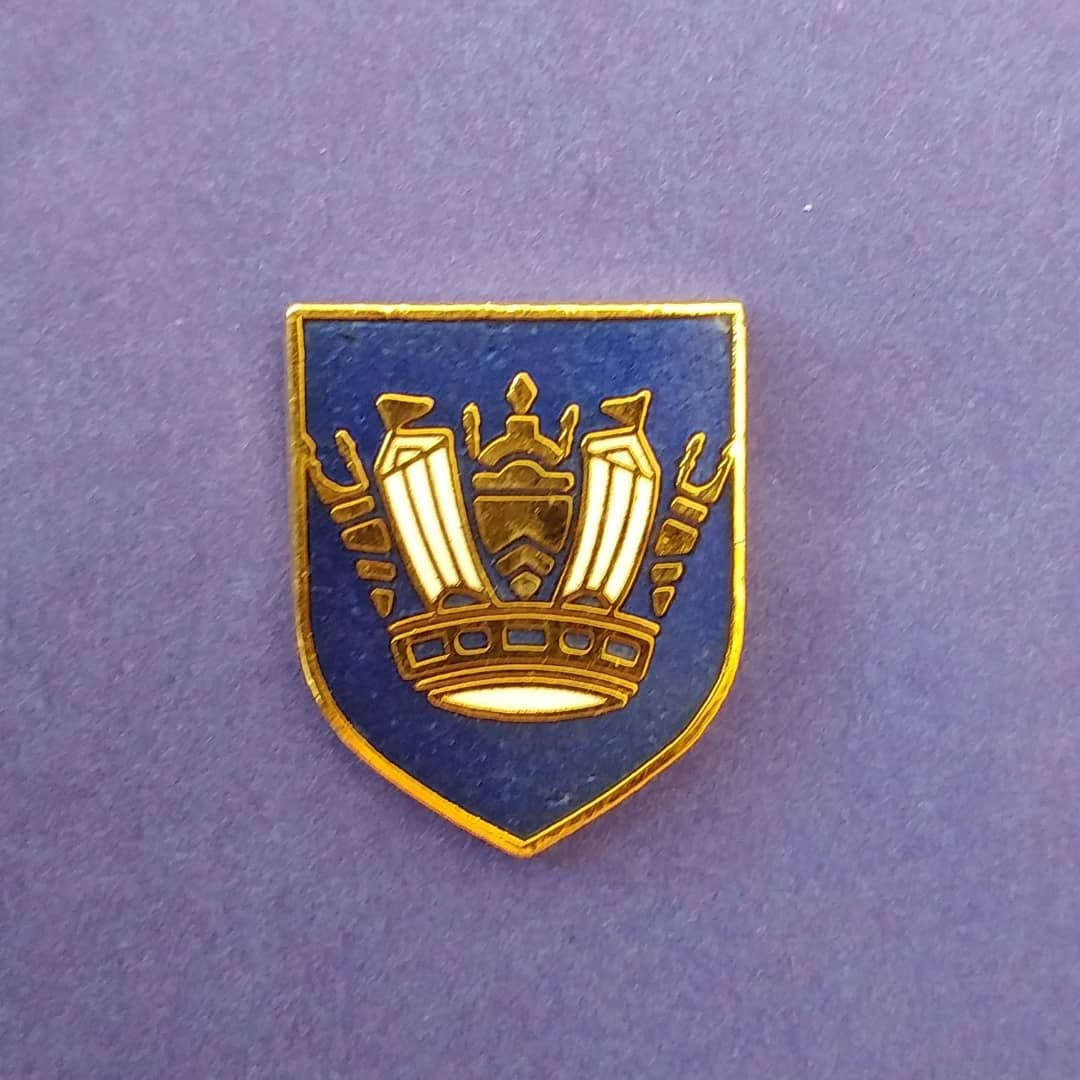
Some years ago I was struggling quite badly with a temporary job posting I absolutely loathed and which made me deeply morally uncomfortable. To cheer me up, my then girlfriend* got some DIY advent calendar boxes and filled them with little gifts, one for each day I had remaining in that job, each with a tiny accompanying letter. One of those was this badge featuring a naval crown – note that it’s made of sails and sterms – which has somehow ended up as a recurring theme in our relationship.

#51 LEAF (Dartmoor)
On a heavily delayed train west to Devon to visit the Reeves, I found myself chatting (as I commonly do on trains) with a lady across the table from me. She turned out to be the chief executive of the farming-environmental charity LEAF, and as I was working on a farming related policy area at the time we had an excellent and (I hope mutually) enlightening conversation about work. She gave me this LEAF badge as a present. Background is Philip’s book A Darkling Plain.
#52 & #53 VENICE & ROME
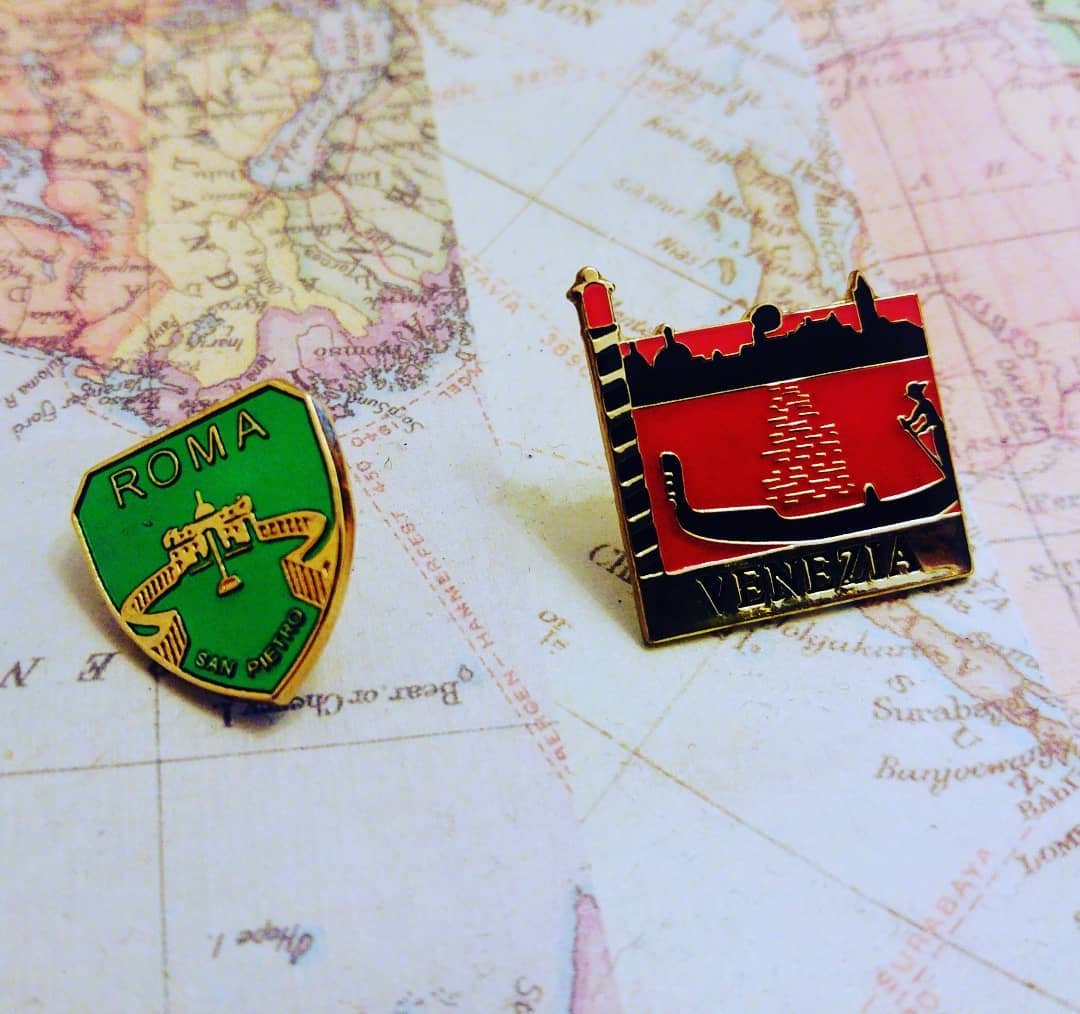
Back to foreign travel with this lovely pair of pins from a holiday to Italy and Rome. I adore the gold ripples on the water in the Venice badge especially. This is another of the holidays I travelblogged – you can read all about it here.
#54 BRUSSELS
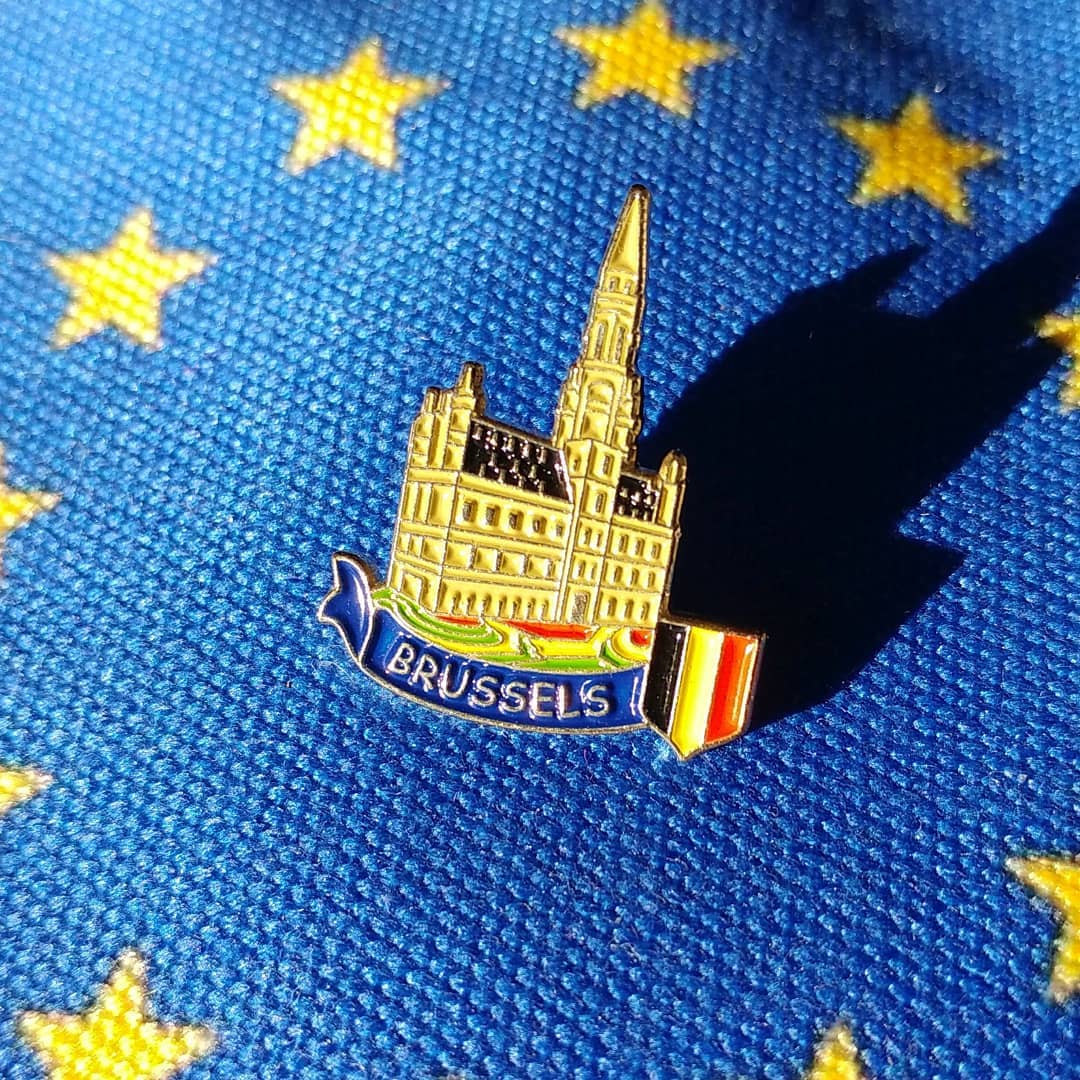
A work trip to Brussels coincided with getting to visit a friend and have a flying visit around the city (cracking army museum, appalling roads, highly advanced chip technology.) This rather lovely pin shows the city’s Brabantine Gothic town hall.
#55 PENIS

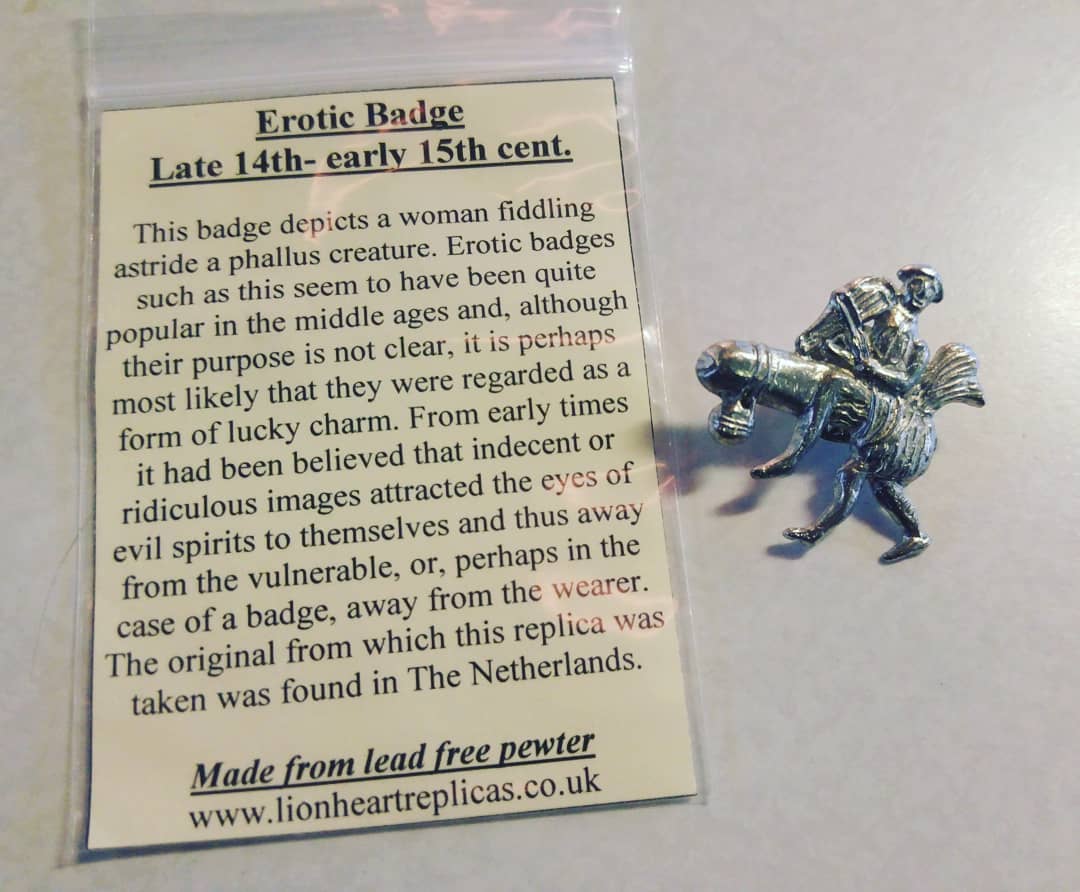
Presented without further comment.
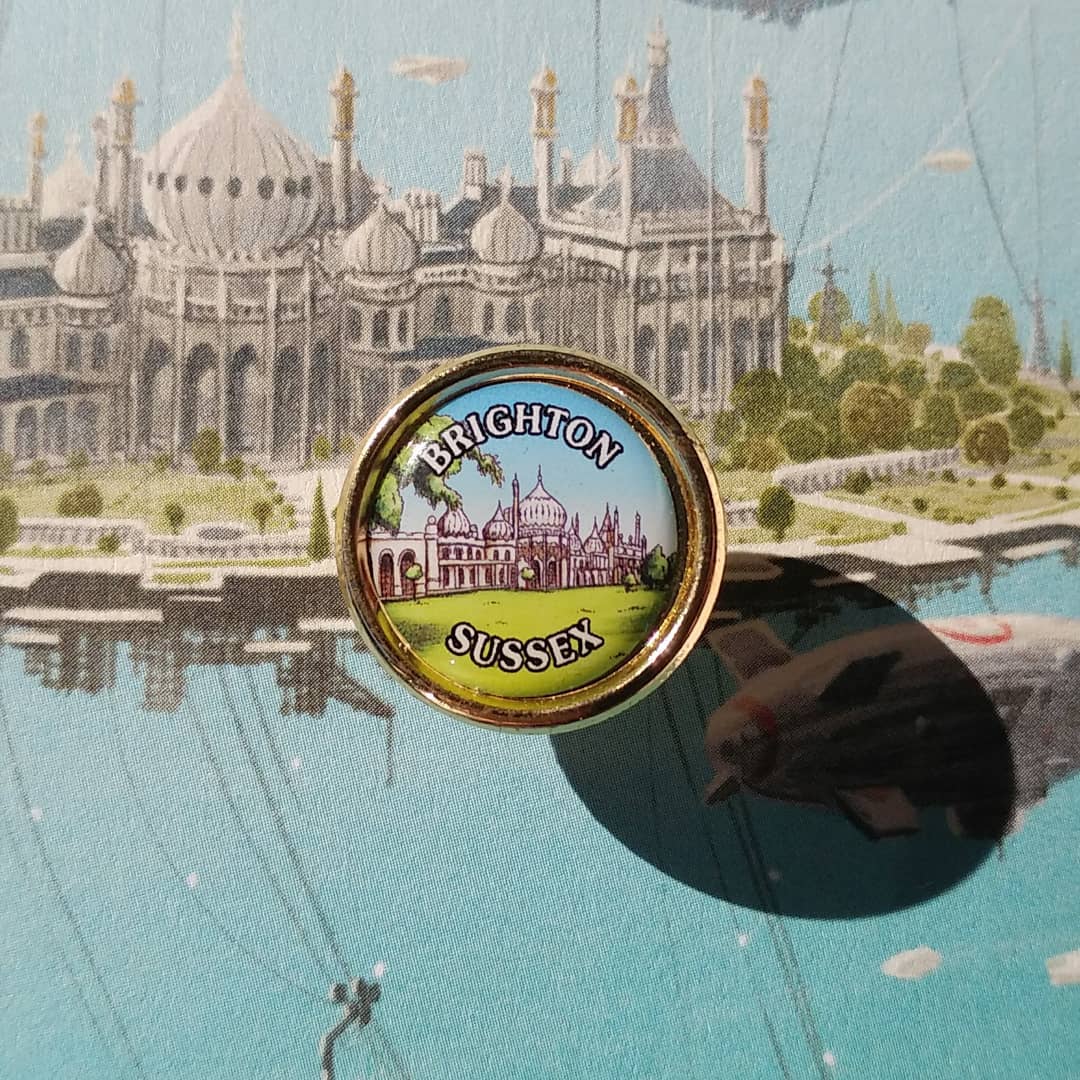
#56 BRIGHTON PAVILION
I went down to Brighton to see the opening show of a new run of The Ministry of Biscuits, by Philip Reeve and Brian Mitchell. A good time was had by all, and you can find the soundtrack here: http://thefoundrygroup.bandcamp.com
Before seeing the show, we went to see Brighton Pavilion, the mad oniony architectural fantasia shown on this little badge. Background is the alternative Brighton of the Illustrated World of Mortal Engines, illustrated here by David Wyatt.
#57 ICELAND
I don’t think I’ll ever again have an experience quite so much like visiting an alien planet: the weird palette (black soil, feldgrau vegetation, white snow), the rarefied human existence (small, spread-out towns; geothermal plants draping pipes across the landscape like silver nets; lonely earth-movers toiling mysteriously in the distance; the vast aching emptiness separating all of them); the strikingly hostile, alien landscape, experienced snatches at a time before retreating to the warm safety of a vehicle; the unique letters, the mad pricing, the steam oozing up through cracks in the ground, the otherworldly aurora dancing above.
I got this at Thingvellir, a very interesting landscape which is also Iceland’s most historically significant site – and kept travelogues of the whole trip here. (Some have pointed out that the logs sound a bit negative – I had a really good time, honest! Maybe it was just the darkness making me sarky.)
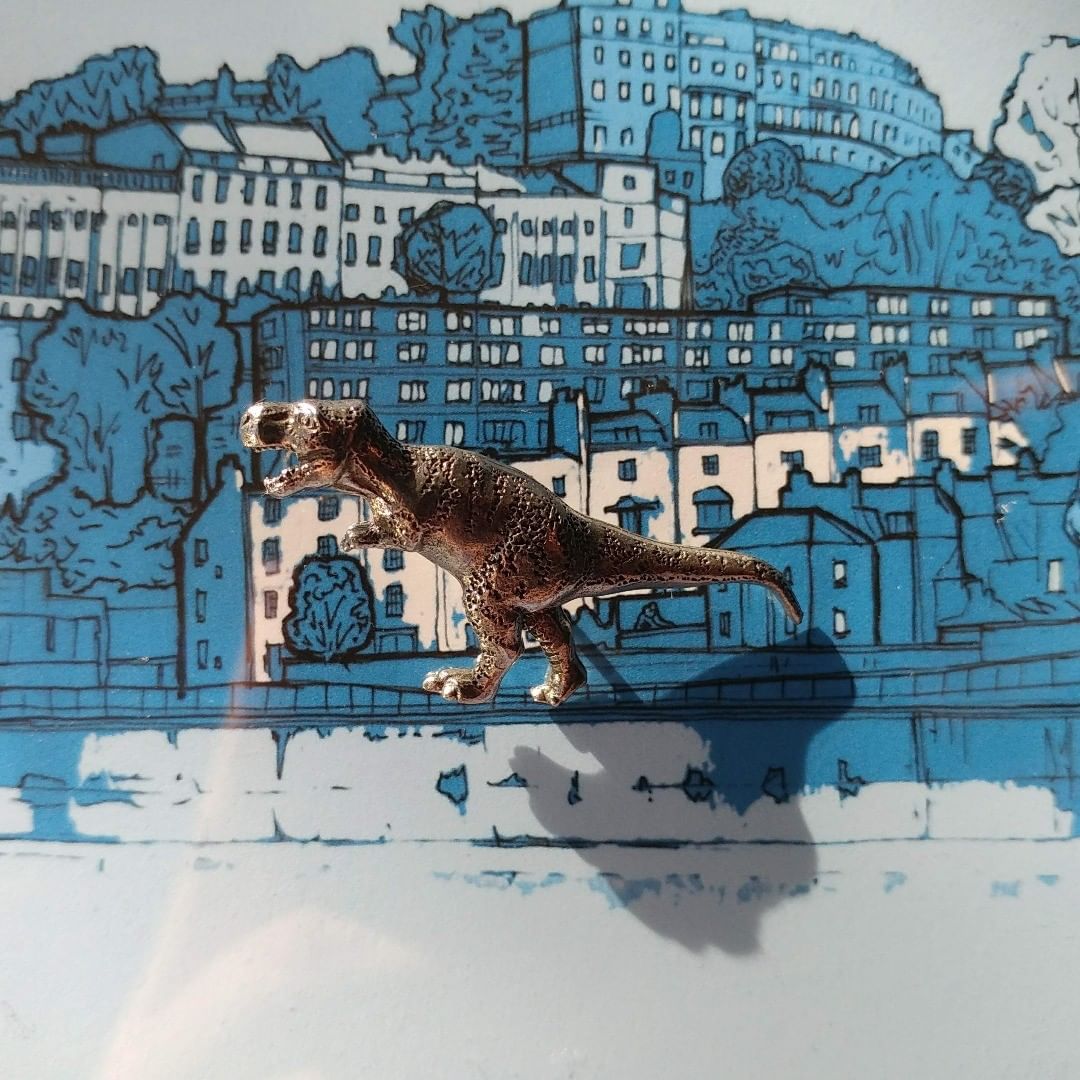
#58 BRISTOL MUSEUM
The city museum in Bristol is a perfect urban museum: it’s a handsome old Victorian building with high ceilings and mosaic floors and holds a little bit of everything. It has historic maps, local conservation, dead animals in glass cases, an incredible collection of shiny rocks, the mandatory Egyptians (and bonus Assyrians!), lots of paintings and interesting ceramics, and of course DINOSAURS. Of which this is one. Backing is a lovely Bristol print a friend gave me for Christmas.
Pin Post #4

#35 CHURCHILL WAR ROOMS
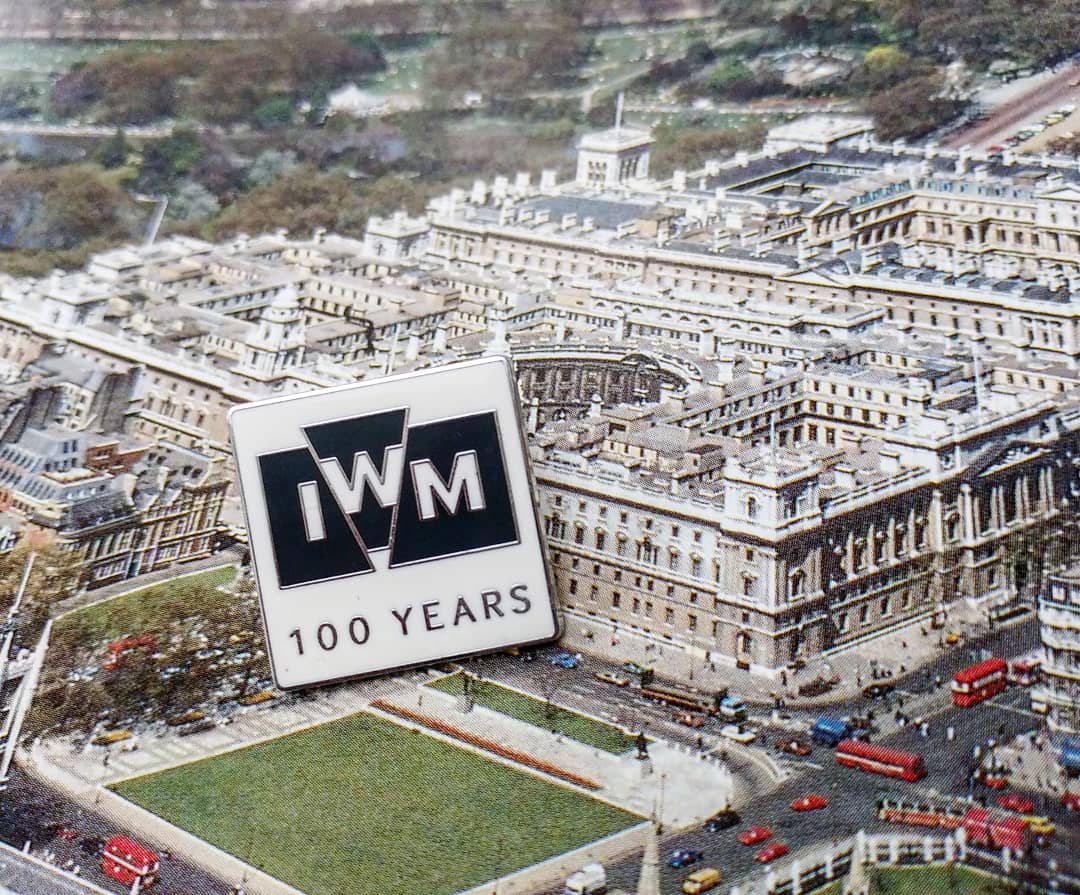
The Churchill War Rooms are a museum in the basement of the Treasury building in Westminster. Previously the Cabinet War Rooms, they’re now a part of the Imperial War Museums collection, hence the badge celebrating the centenary of the original IWM. I’m honestly a little uncomfortable with the weird Churchill-hagiography tone of what used to be a more even-handed exhibition focused on the (extremely cool) set of planning and operations rooms, but whatever gets the punters in.

Background is said Treasury building. Churchill announced Victory in Europe to a cheering crowd from the balcony on the right.


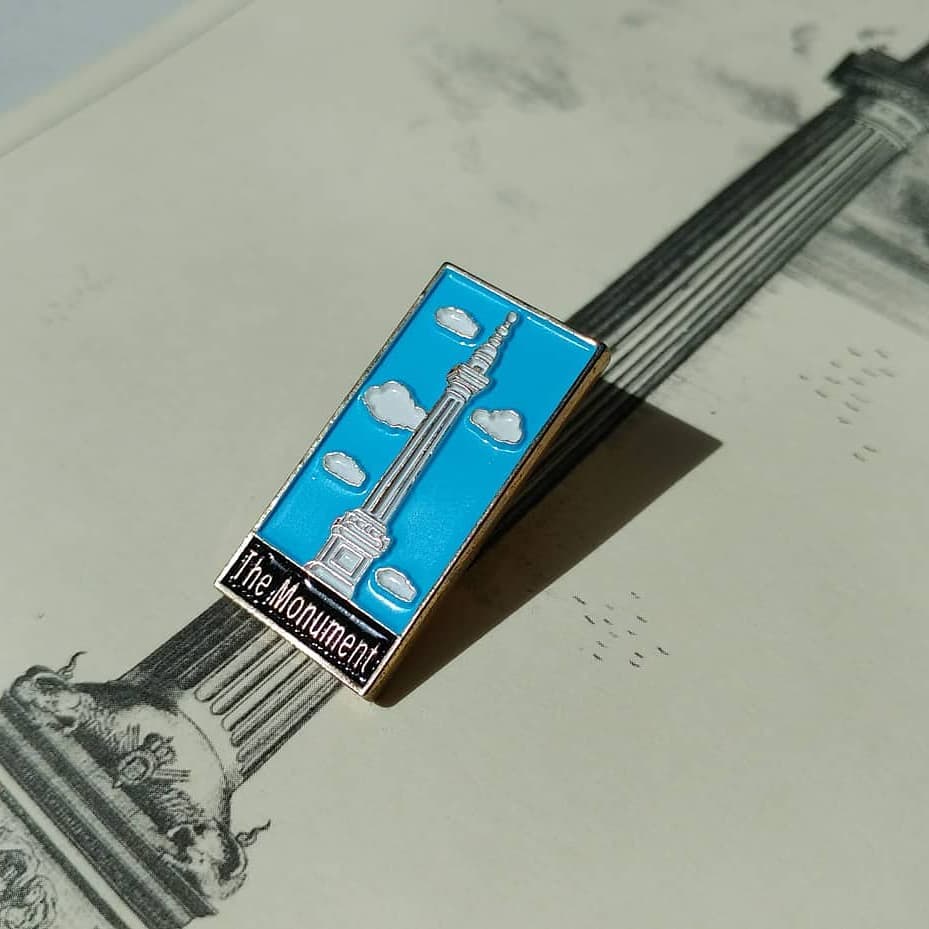
#36 MONUMENT TO THE GREAT FIRE OF LONDON
One of the more handsome custom pins in my collection! Once a major part of the London skyline, now almost totally obscured by the City skyscraper thicket, the Monument was built on the site where the Great Fire of 1666 started.

The backing is the certificate you are awarded for climbing the whole thing… (Fun fact: the inscription at its base originally blamed the Catholics for the fire, a bit of sectarian horror I’m glad we’re mostly past.)

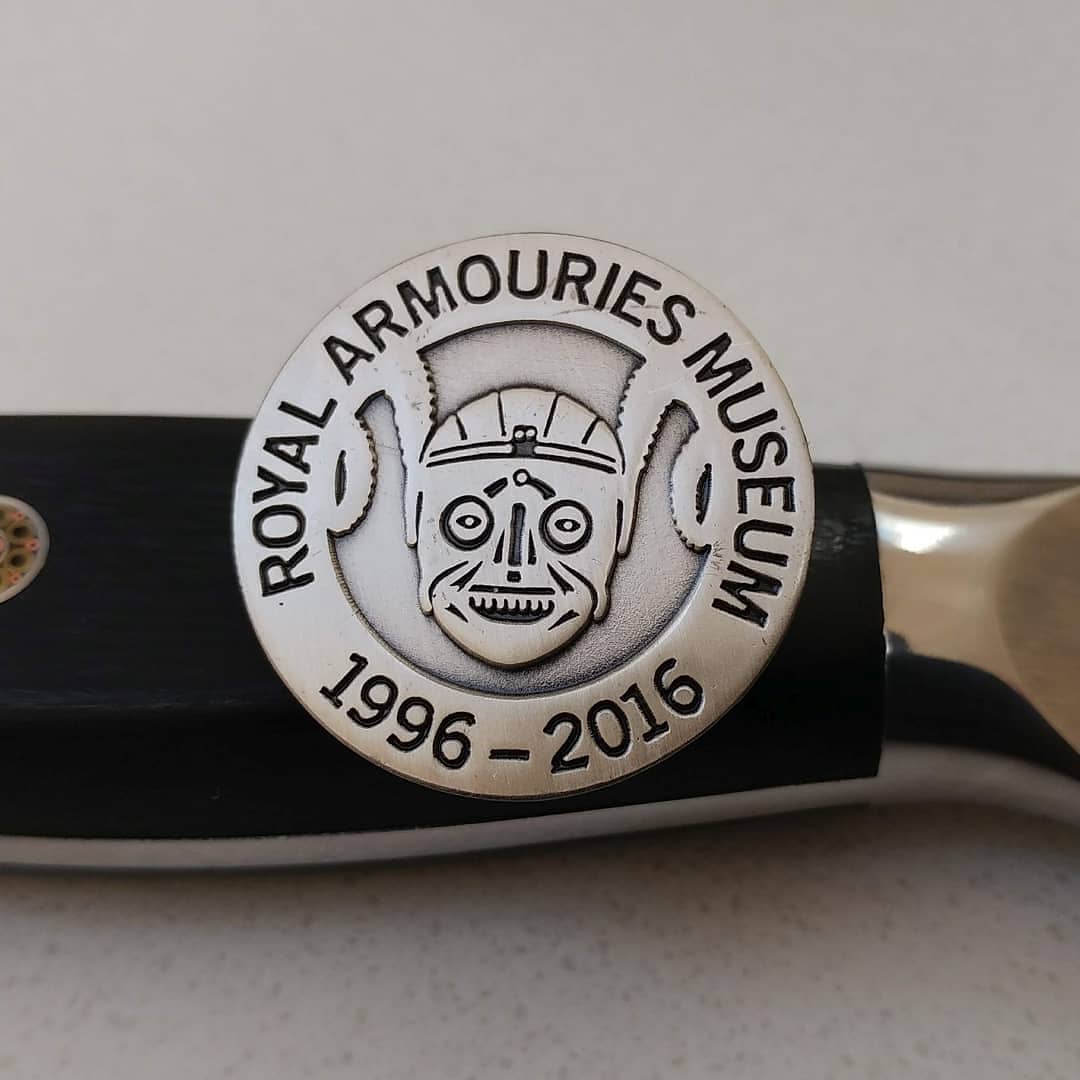
#37 ROYAL ARMOURIES
The unofficial symbol of the Royal Armouries, a totally bizarre grotesque helmet from the early 16th century with horns, spectacles and piercing leer. You can read more about it here: https://royalarmouries.org/stories/our-collection/the-horned-helmet/

The background is a really cool knife my brother gave me, which is honestly the closest thing I have to a sword.

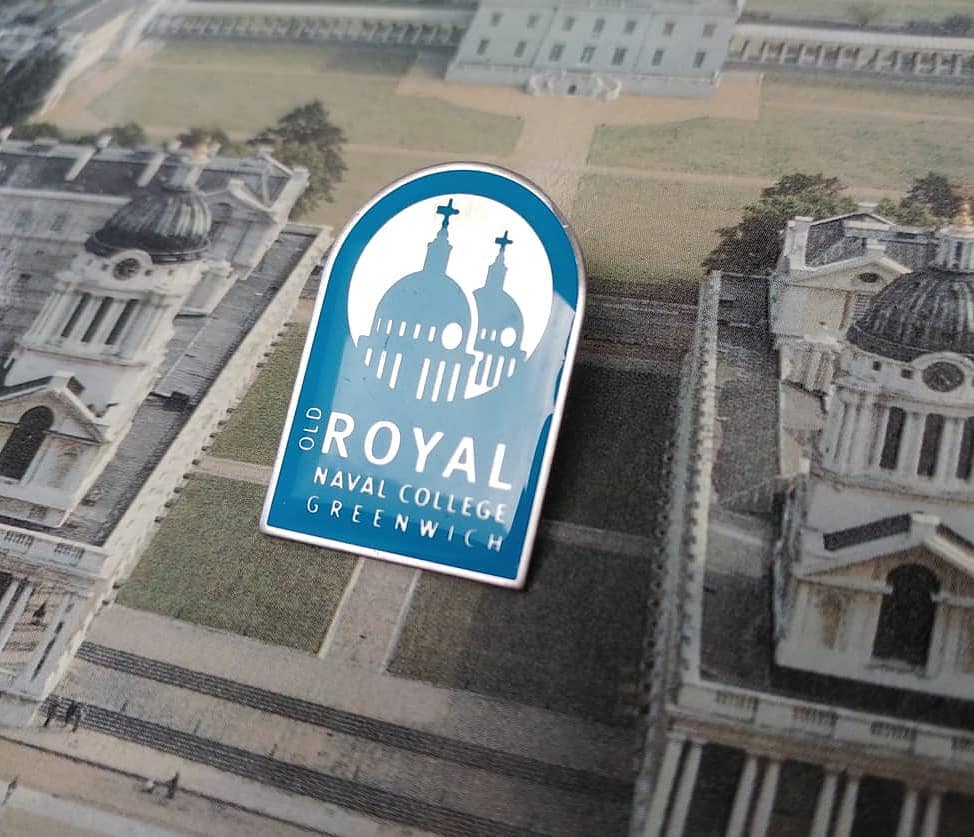
#38 OLD ROYAL NAVAL COLLEGE
Originally built as a retirement home for seamen, the Old Royal Naval College is the heart of the maritime Greenwich area (which also contains the National Maritime Museum, the Royal Observatory, and the preserved tea clipper Cutty Sark). It’s also an absolutely magnificent set of buildings in the English Baroque style, including the outstanding Painted Hall (which has now been refurbished – hurrah! – but they now think they’re charging £12 a head to visit what you could just walk into for free – not hurrah.)

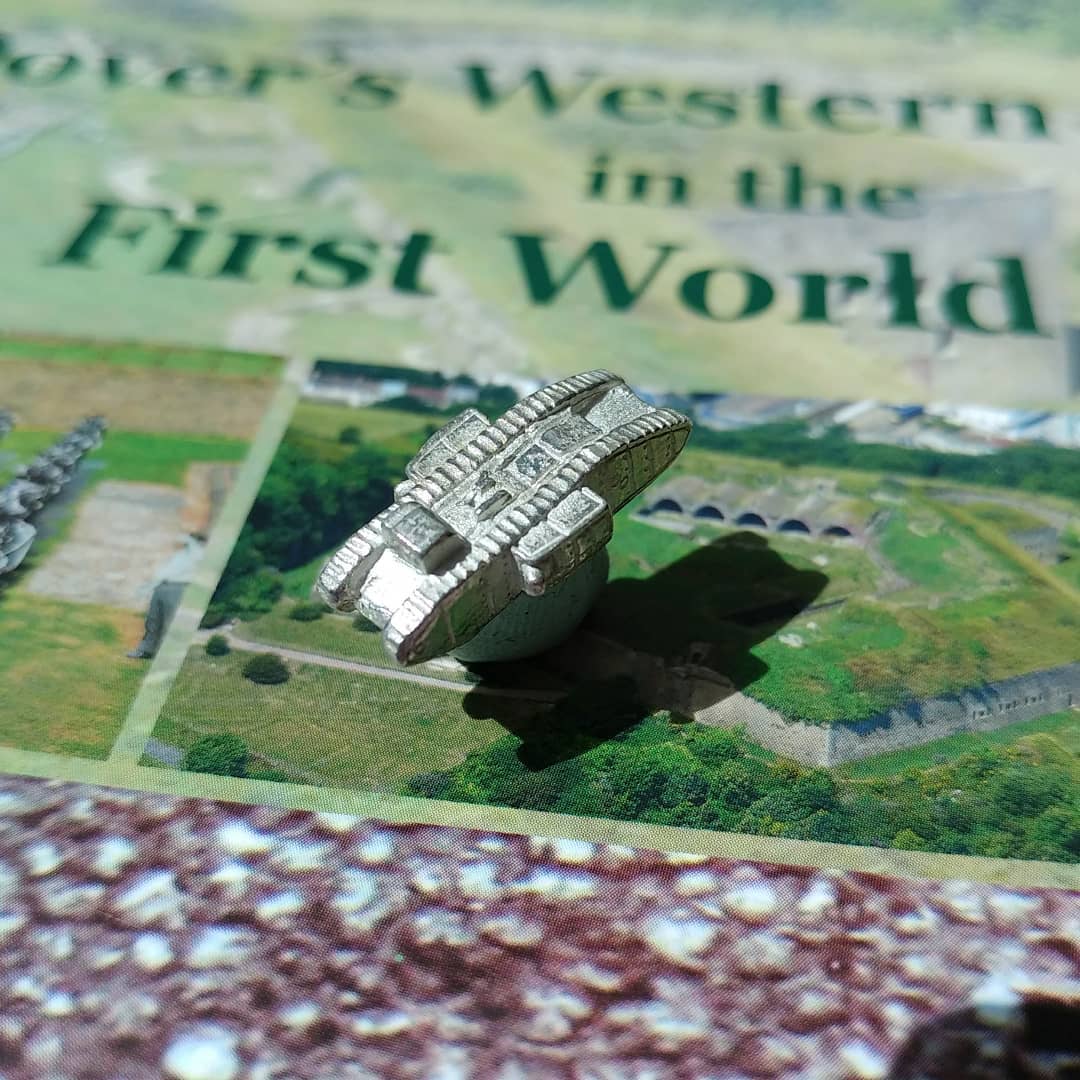
#39 DOVER CASTLE
As the closest piece of England to the Continent (and the classic enemy, France,) Dover Castle has been continually fortified and expanded over several thousand years. Pre-Roman earthworks have been found around the site of a still-standing Roman lighthouse; a Plantagenet keep at the heart is nine hundred years old, the immense Napoleonic bastions, Victorian casemates and WW2 ack-ack batteries are more obviously recent additions.
They didn’t have anything specifically Dover-y at the castle, but they did have this handsome little rhomboid tank. Background is a booklet about the Western Heights, a less well known but almost equally impressive agglomerate of fortifications, which until recently was the site of a Home Office immigrant prison camp.

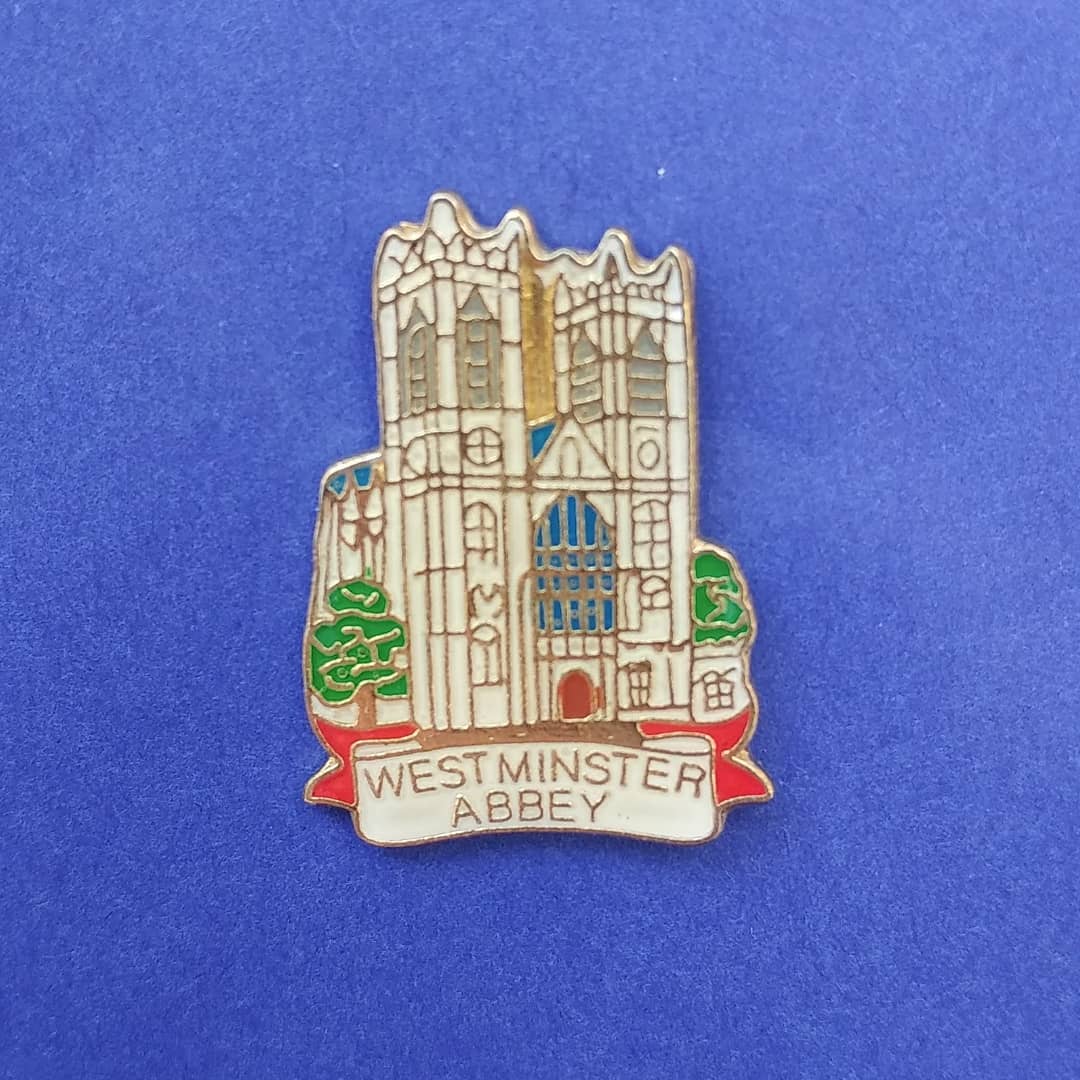
#40 WESTMINSTER ABBEY
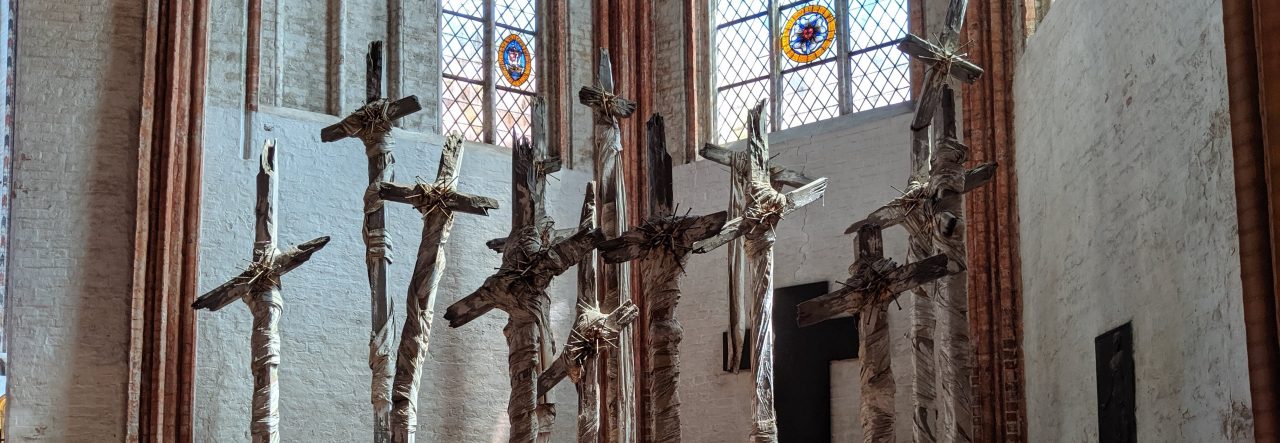
Westminster Abbey is one of the best churches in Britain, being absolutely chocka with dead kings and queens, poets and sea-officers. It’s also very near where I work. And yet I never visited until 2017! We fixed that with a visit from my Copenhagen friend, along with a ride on the (now defunct) London DUKWs.

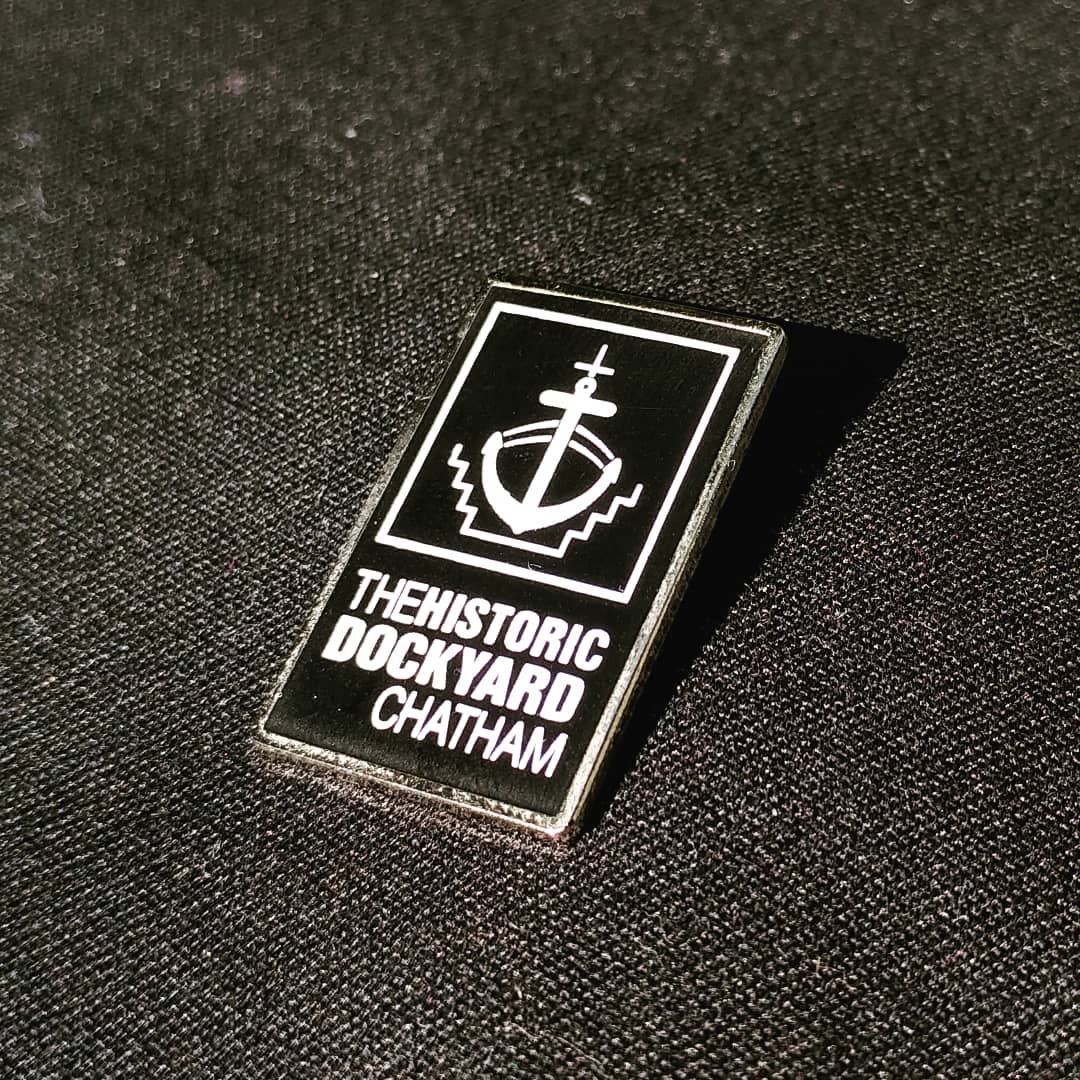
#41 CHATHAM DOCKYARD
Chatham, down among the many low-lying mud-flat spurs of the Thames estuary, was for centuries one of the most important dockyards of the Royal Navy. In the 20th century the increasing size and complexity of capital ships and the confines of the River Medway shifted the dockyard first to escorts and submarines, and ultimately closed it entirely. The historic dockyard there is both a fantastic museum of Warship Stuff and an artifact in its own right, with vast old hangar structures, preserved warships and a line of 18th century fortifications.

#42 KENSINGTON PALACE
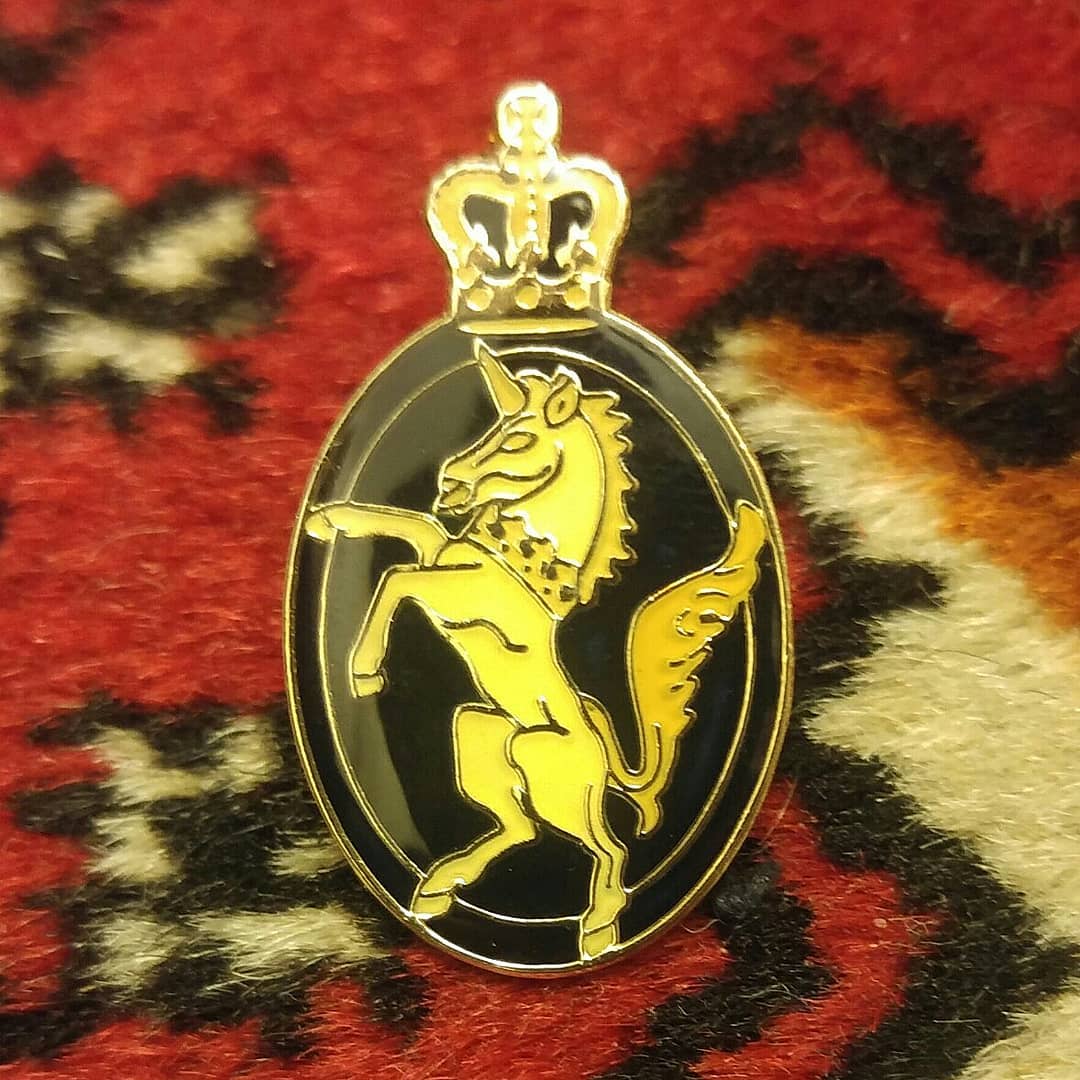
Kensington Palace sits at the far west end of the parakeet-infested Hyde Park, not far from Exhibition Road and various Prince Albert themed megastructures. It currently still officially houses Prince William and various pointless minor members of the royal family, but large sections are now a museum run by Historic Royal Palaces.

Its main draw at time of visiting was a Princess Diana fashion show (hard pass), a really excellent William and Mary exhibition, and some Queen Victoria apartments which did their best to ascribe some interesting and dynamic human qualities to Vic but still managed to paint a portrait of a rather sad, boring sex maniac. Lovely palace though.

Pin Post #3

#25 NEWPORT TRANSPORTER BRIDGE
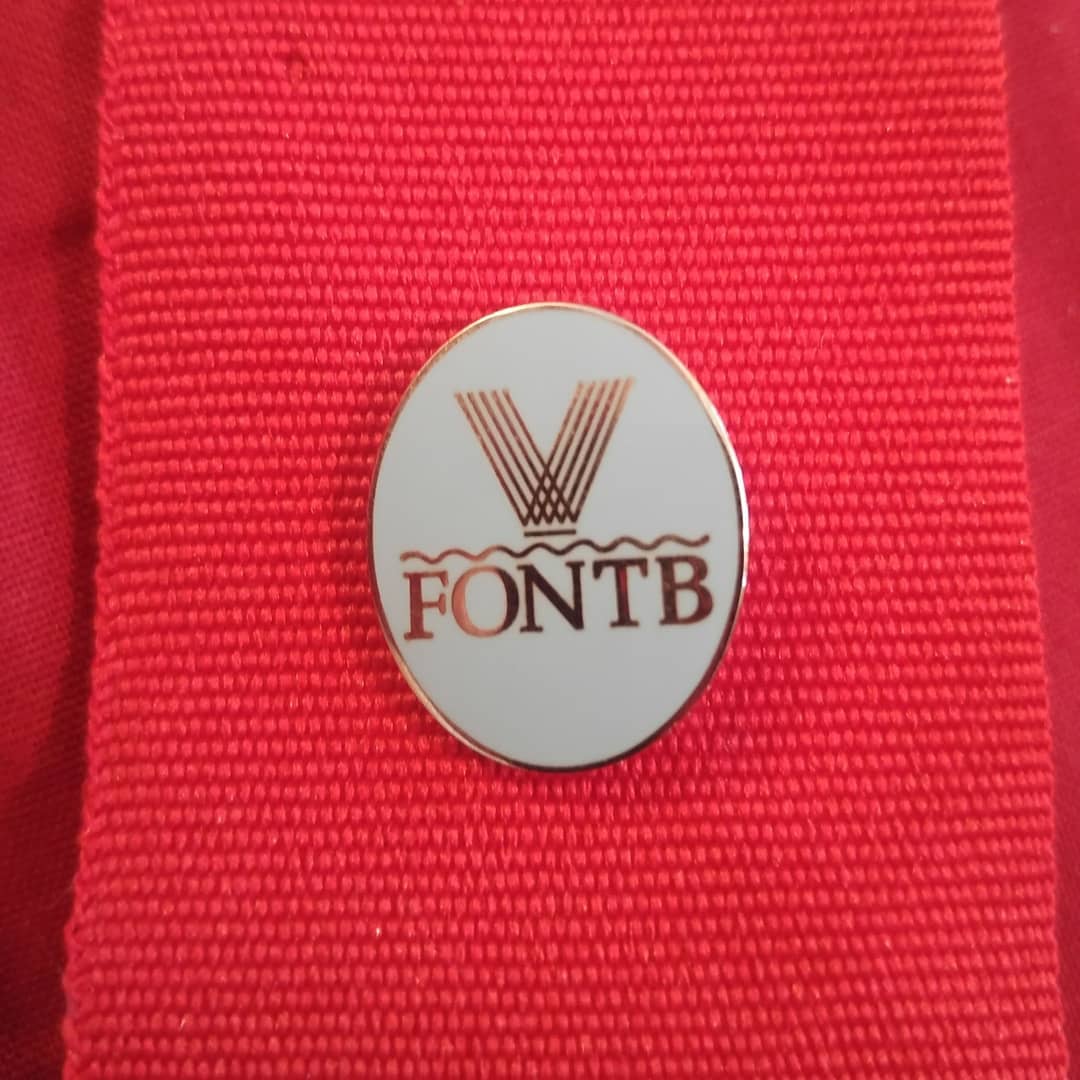
I had a job in Newport, South Wales back in late 2016. One of the city’s more interesting attractions is the Transporter Bridge, a wonderful, completely mad piece of Edwardian infrastructure (imagine halfway between a cable ferry and a chairoplane). In their gift shop was this little “FONTB” (Friends of Newport Transporter Bridge) badge.

GIFT: NEWPORT SHIELD
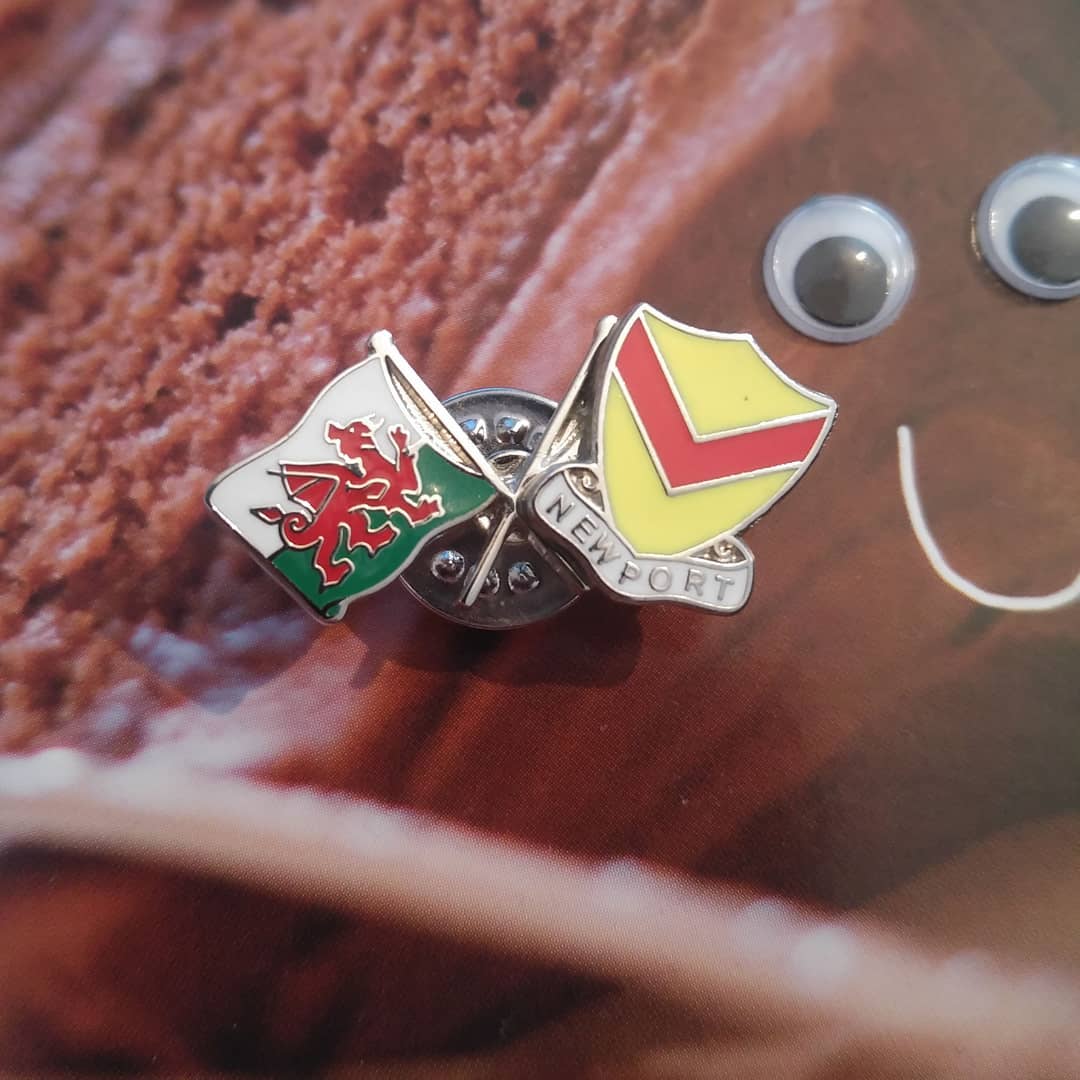
My team at work had cottoned on to my love of badges, and as part of my very nice leaving do they gave me this (the Newport crest appears to have been soldered onto a two-flags badge. I wonder what’s underneath…)

#26 UK SUPREME COURT
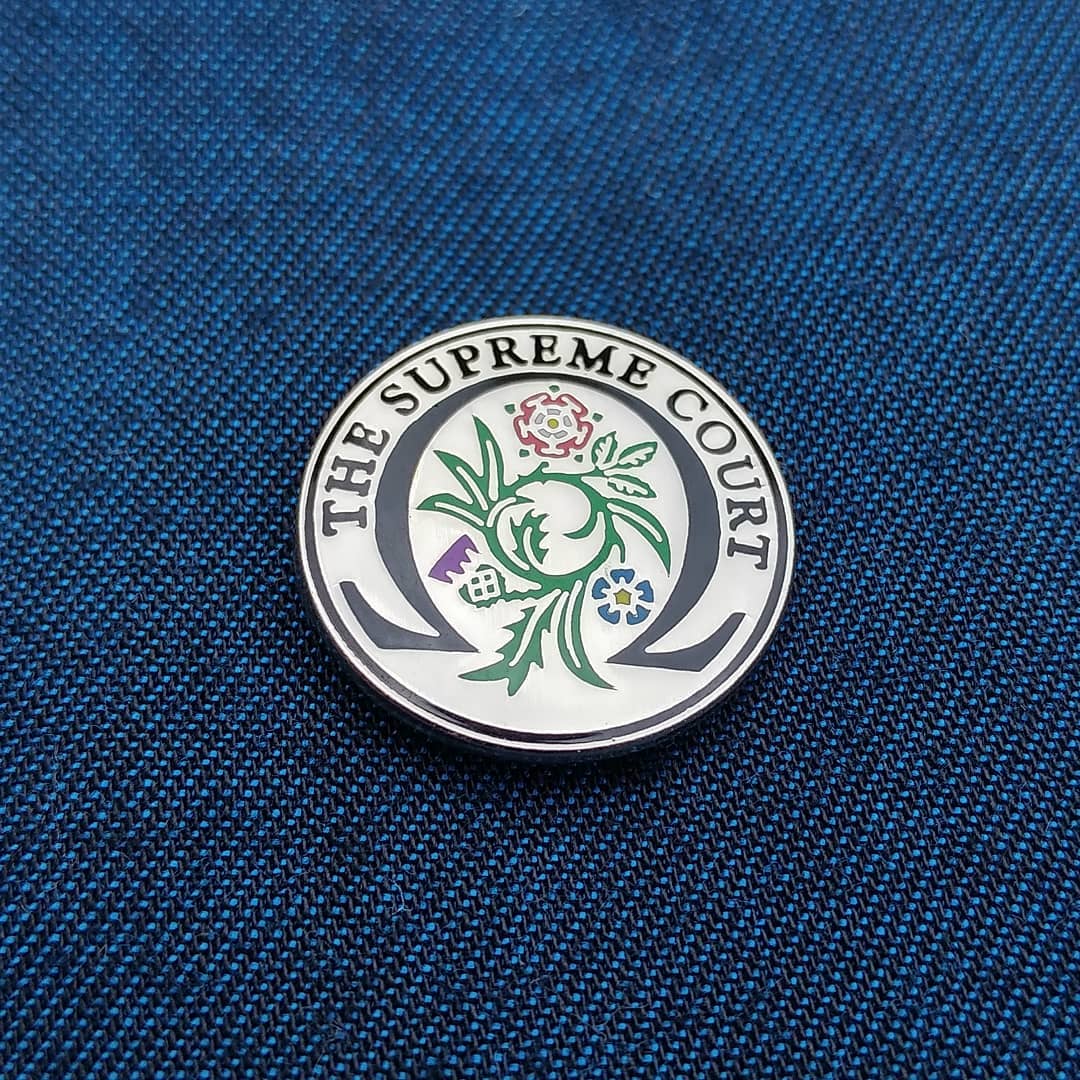
The symbol of the UK Supreme Court is to my mind one of the loveliest pieces of government graphic design. Note the omega (representing the court of last resort) which also resembles scales (justice), and the floral motif combining the national plants of England (rose), Scotland (thistle), Wales (leek) and Northern Ireland (flax). It’s free to visit, and well worth a peek around if you’re in Westminster.

#27 LOCH NESS
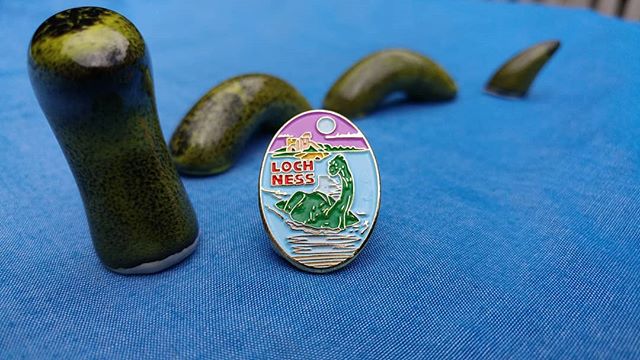
Nessie! Presented against a background of another, ceramic Nessie bought at one of the many gift shops that fringe the loch. Part of a trip round Scotland for New Year 2016/17.

GIFT: CUBA
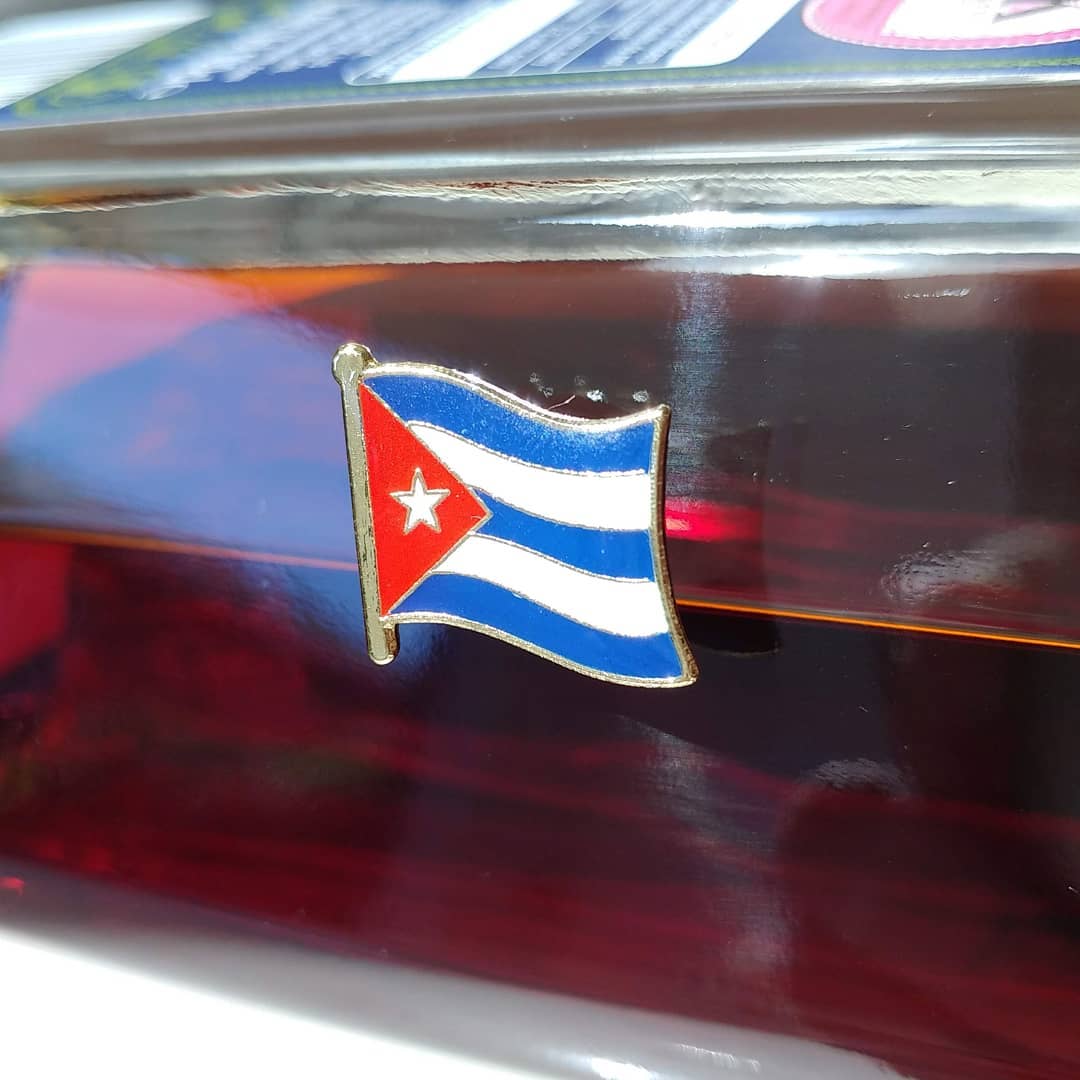
One of my friends on the Scotland new year trip had just been to Cuba, and gave me this little Cuban flag badge. I’ve never been, though I would like to one day. (I didn’t have anything Cuban in the house to serve as a background, so the backing here is the only thing even tenuously related: RUM.)

#28 CASTELL COCH
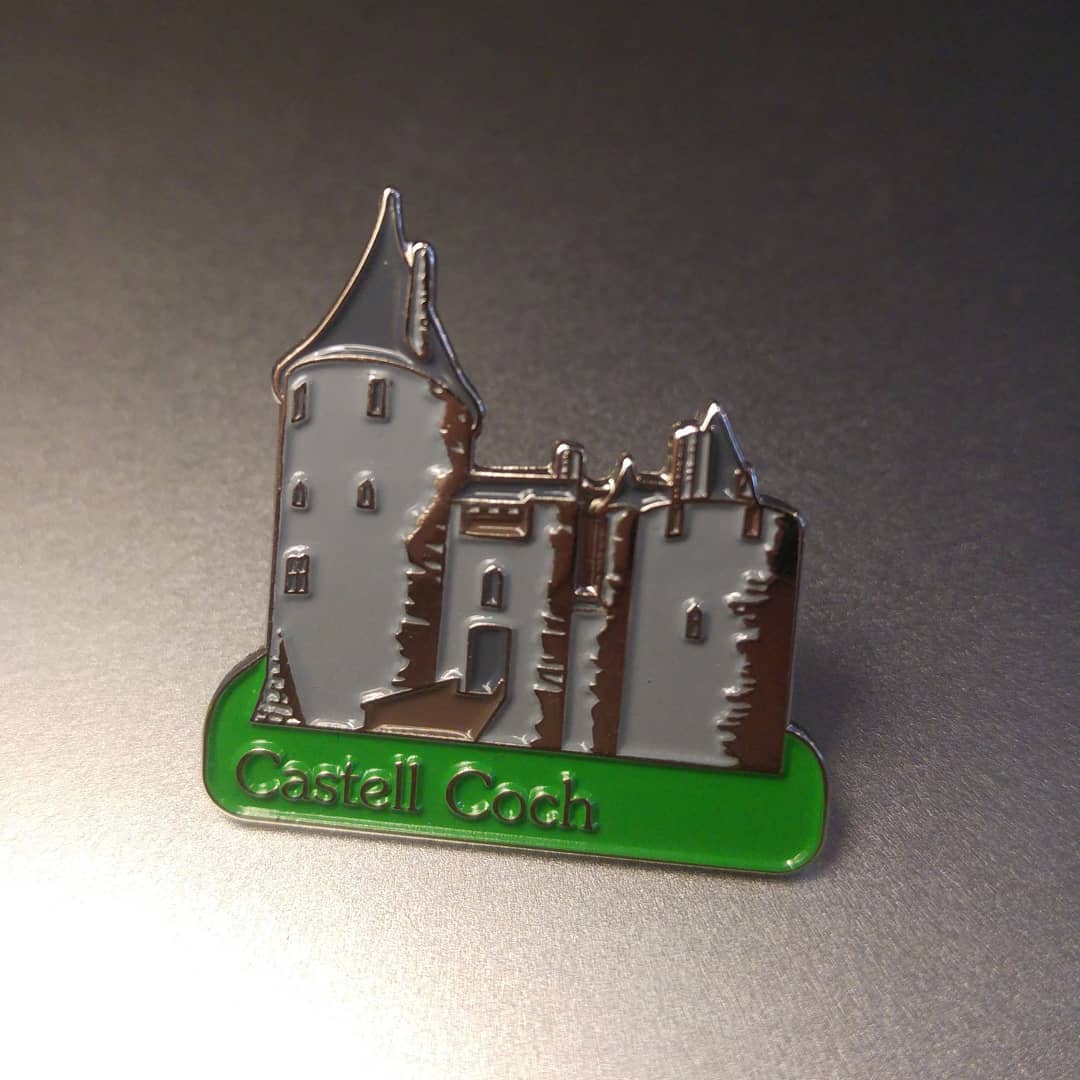
The Welsh heritage organisation Cadw have seized on the pin opportunities presented by looking after lots of castles (unlike English Heritage!) and produced pin badges representing each of theirs (you’ll see Conwy and Caernarfon later.) Castell Coch is a deliberate fairytale castle, built by eminent Victorian architect William Burges on the site of a much older fort. It has some of the loveliest interiors in Britain.

#29 BUDAPEST 3
The third (and last, I’d calmed down a bit by this point) Budapest badge. Stuck on an amusing dog that my Hungarian pall Lacc gave me (I met him IRL for the first time on this trip.) I really quite like the deep green going on here.

#30-31 – PRAGUE AND ČESKÝ KRUMLOV

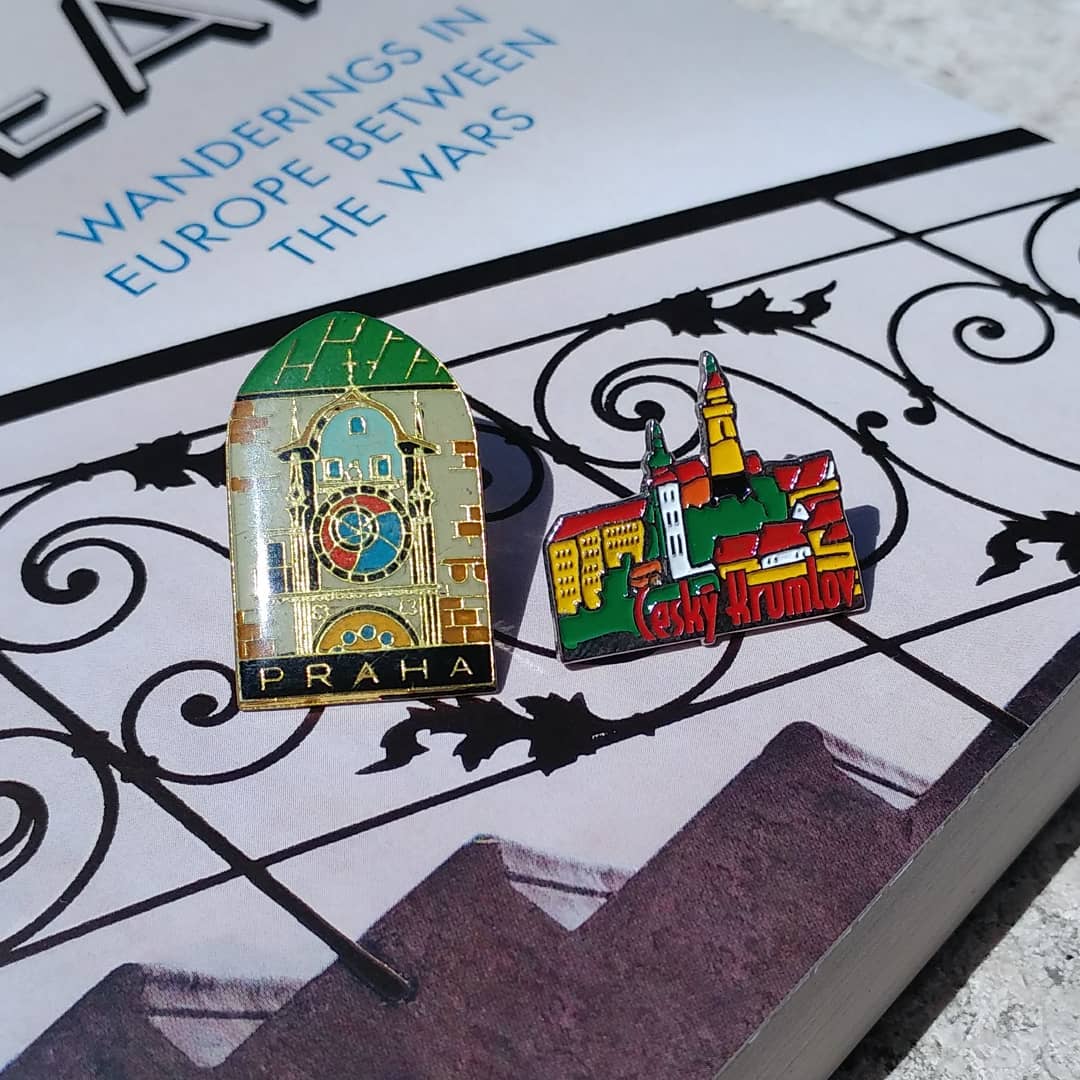
In Spring 2017 I attended a friend’s wedding in the Old Town Hall of Prague. If you’re at all interested in early modern history, Prague is one of Europe’s best cities, and one of its many many highlights is this 15th century astronomical clock, now the oldest functional one in the world. You can read loads about it here: https://en.wikipedia.org/wiki/Prague_astronomical_clock

As part of the same trip, we visited Český Krumlov, a town in southern Bohemia possessing what Simon Winder described as “a castle complex of ineffable charisma”. He’s right, you know.

I didn’t have a specifically Czech backing, so used a Joseph Roth anthology, a gift from my friend Alex.

GIFT: CHARLES BRIDGE
A gift from my friend Lilla, who was also in Prague in 2017. Another of Prague’s many wonders is the 600-year-old Charles Bridge. This badge shows the defensive towers (which saw actual combat during the Swedish occupation in the Thirty Years War) and the rows of baroque saintly statues. I saw this badge in town but went for the astronomical clock instead – glad I have both!
The backing is the cover of The Blonde Hurricane by Jenő Rejtő (another gift from Lilla, who is something of a blonde hurricane herself.)

#32 DOCKLANDS MUSEUM

One of the less well known treasures of London’s East End is the Docklands Museum in Canary Wharf. It’s an absolutely fantastic place, and highly recommended.

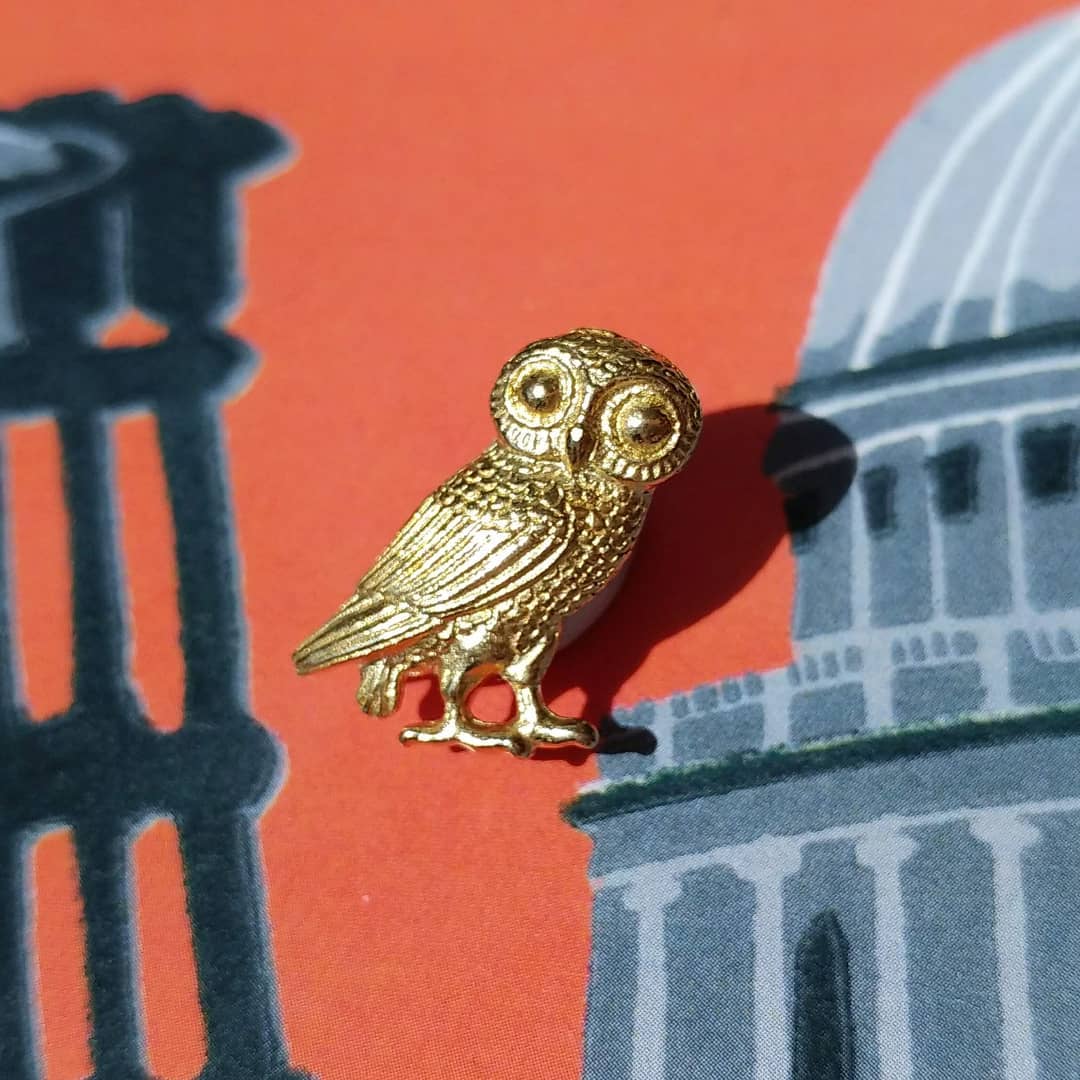
This badge is a Roman owl, symbol of the goddess Minerva. I don’t actually dislike the owl, but since buying this I’ve seen it in a number of other museums and realise it’s generic rather than specific to the Docklands.

#33 TAMWORTH CASTLE

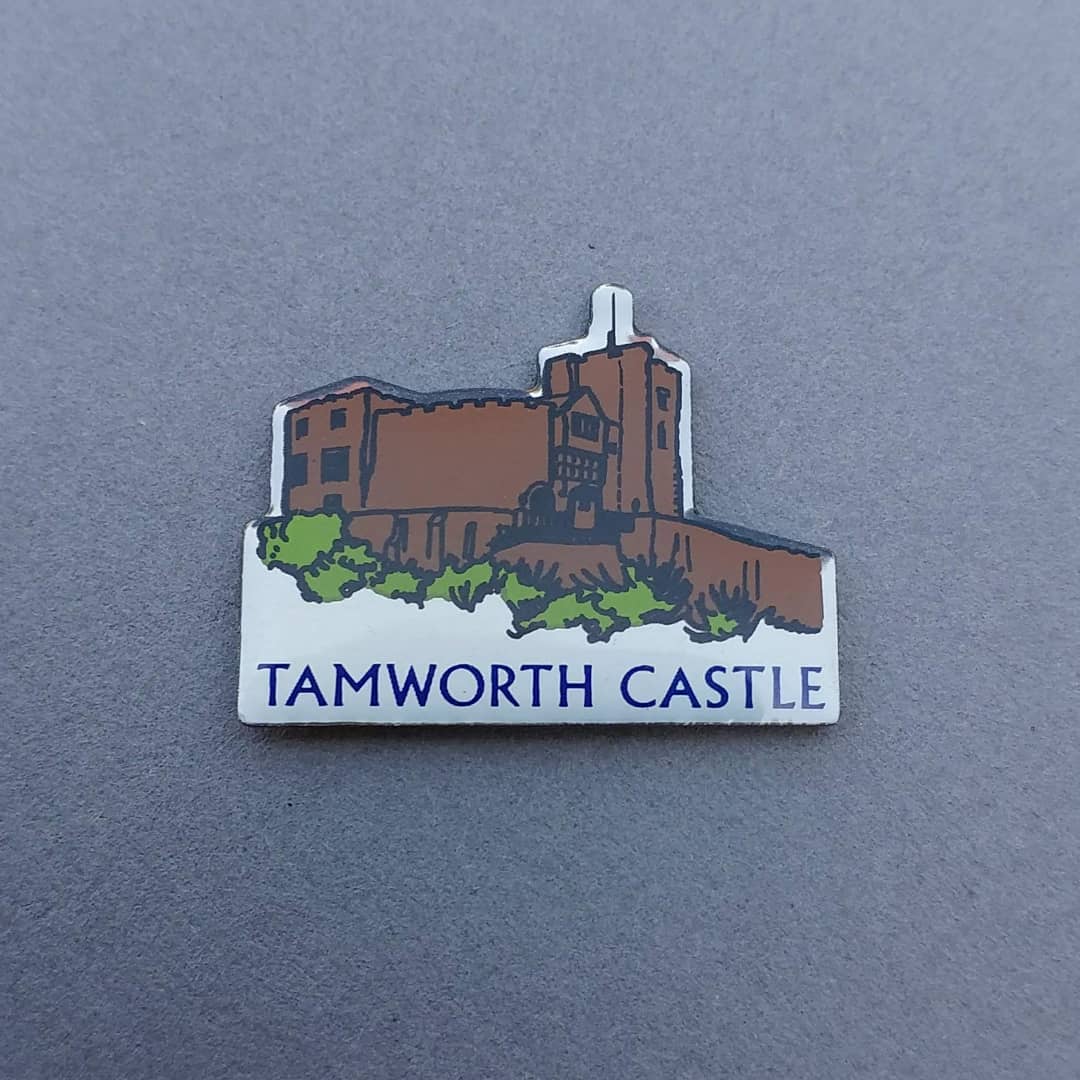
My partner used to live not far from Tamworth, which a thousand years ago was home to the kings of Mercia, ruling from their hilltop castle. Now run by the local council, its grounds are a lovely public park, and the castle interiors have been restored to also present Norman, Jacobean and Victorian periods, with many interesting artifacts (including, I recall, a lot of pottery jugs shaped like people, all of whom are really surprised to be jugs).

#34 CROFTON PUMPING STATION

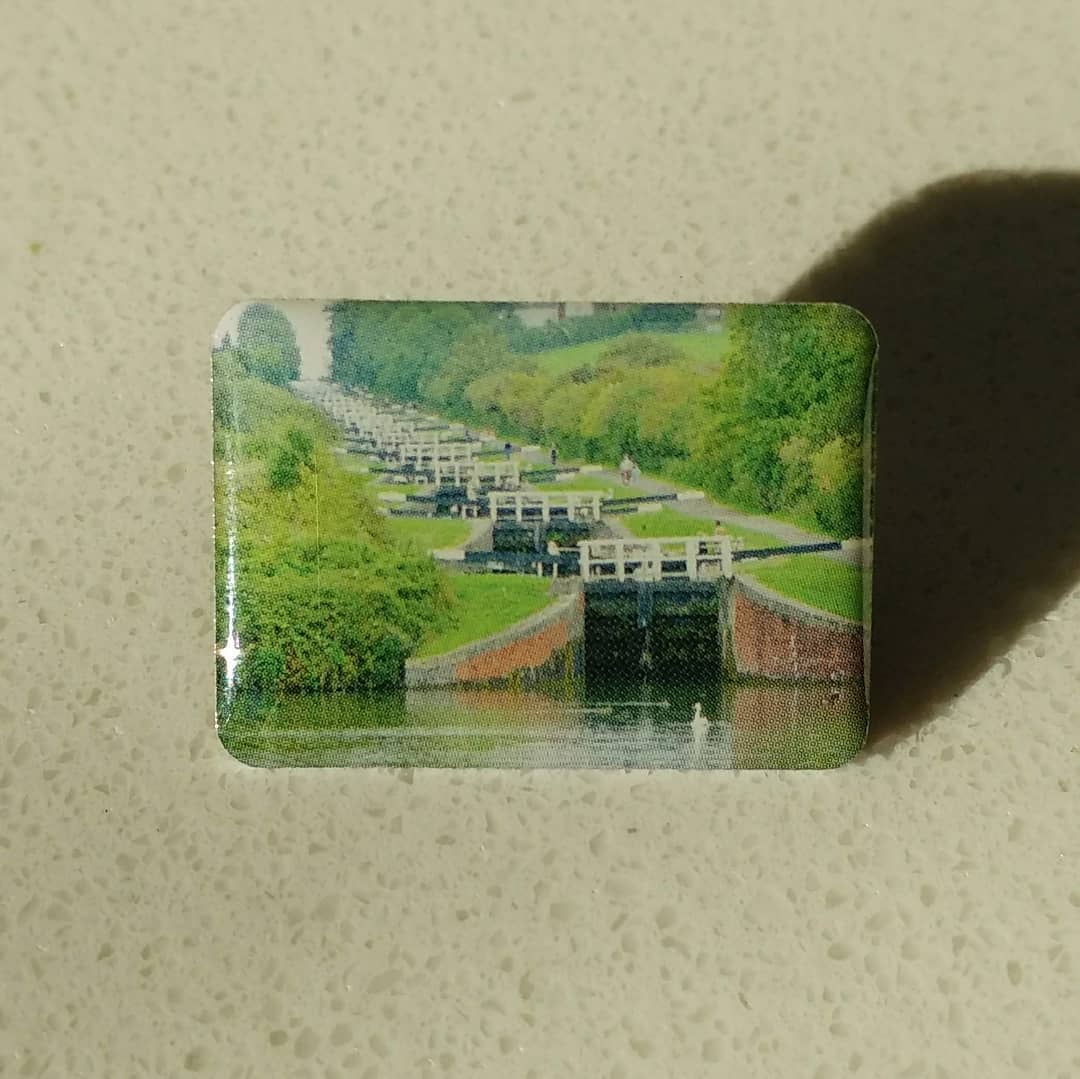
Driving from Bristol to London with a friend, we saw a plume of smoke from a very tall chimney and investigated. It turned out to be Crofton, a pumping station that kept the old Kennet & Avon Canal (which fell derelict with the advent of railways, but has recently been restored by volunteers) full of water. The station was operating an original 1812 Boulton & Watt beam engine, the oldest working one in the world.

This badge is another printed steel one, which shows a number of the canal’s locks.

Pin Post #2

#11 ST HILDA’S
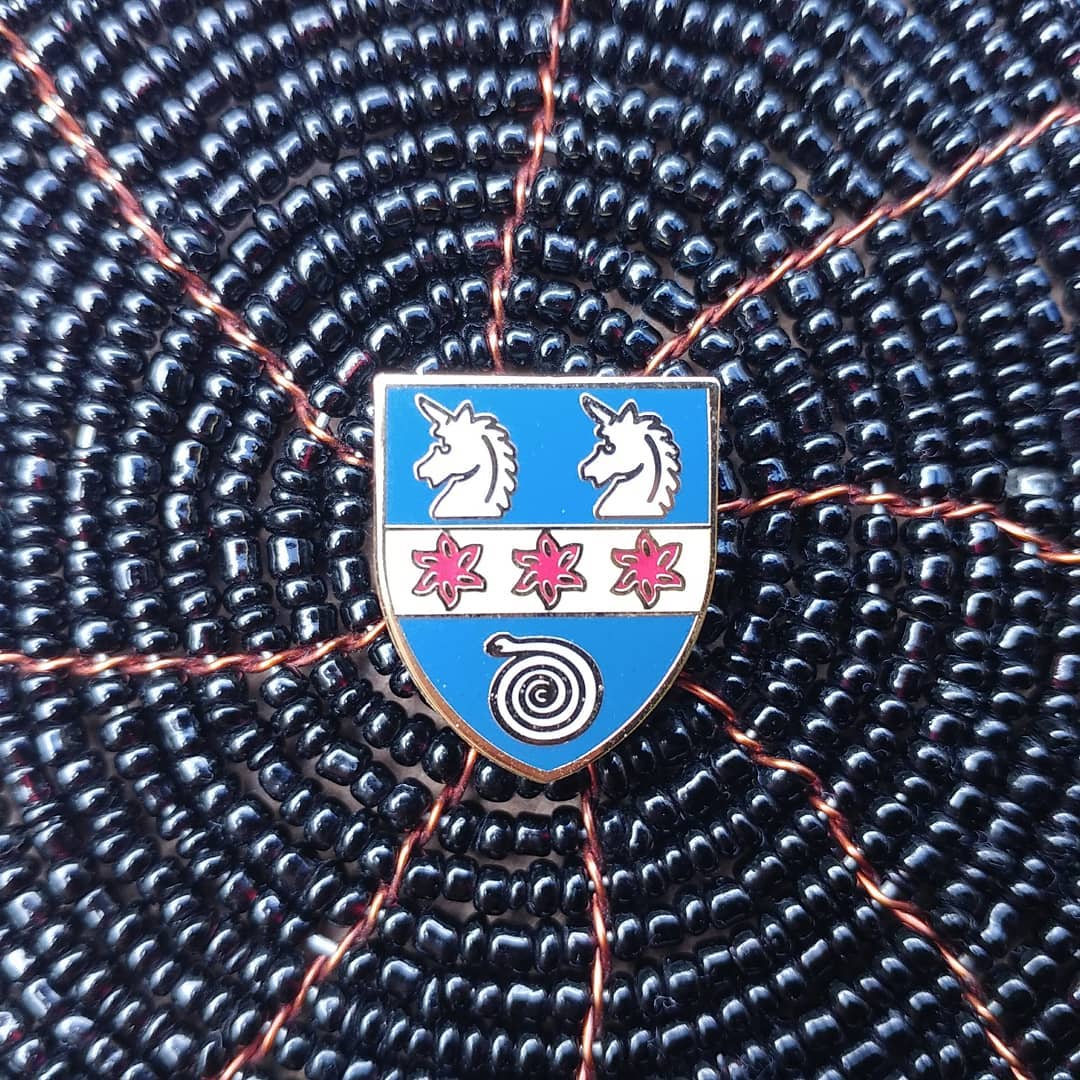
Souvenir of a visit to Oxford: this is the coat of arms of St Hilda’s College, where my mum studied. Note the coiled snake, which looks a lot like an ammonite. According to legend, Saint Hilda of Whitby turned a plague of snakes into stone; ammonites (which are found along the Whitby coast) often had snake heads carved into them as symbols (or souvenirs) of this purported miracle.

#12 PEENEMÜNDE
Some years ago I spent an excellent road trip going around northern Germany visiting huge abandoned Nazi structures: the rocket works at Peenemünde and the holiday resort at Prora (which you can see in the postcard behind it – a small section has been turned into a youth hostel, tho’ the overall structure is IMMENSE.) You can read more about the travels (and a third ruin-exploring adventure, the postwar Teufelsberg in Berlin) here.

#14 BRUGES
Bought while passing back through Belgium coming back from the trip which also involved badge #13. We climbed the cloth hall tower, stopped for moules frites in the square, and talked about what a fackin fairytale fackin town it is, how can that not be someone’s thing? (Not technically an enamel pin! A portrait pin, with a printout under an acrylic dome on a metal back. Nice in itself, but I feel not as interesting as the cloisonné style you get with enamel. Maybe I’ll go back some day and get another.)

#15 WHITE CLIFFS OF DOVER
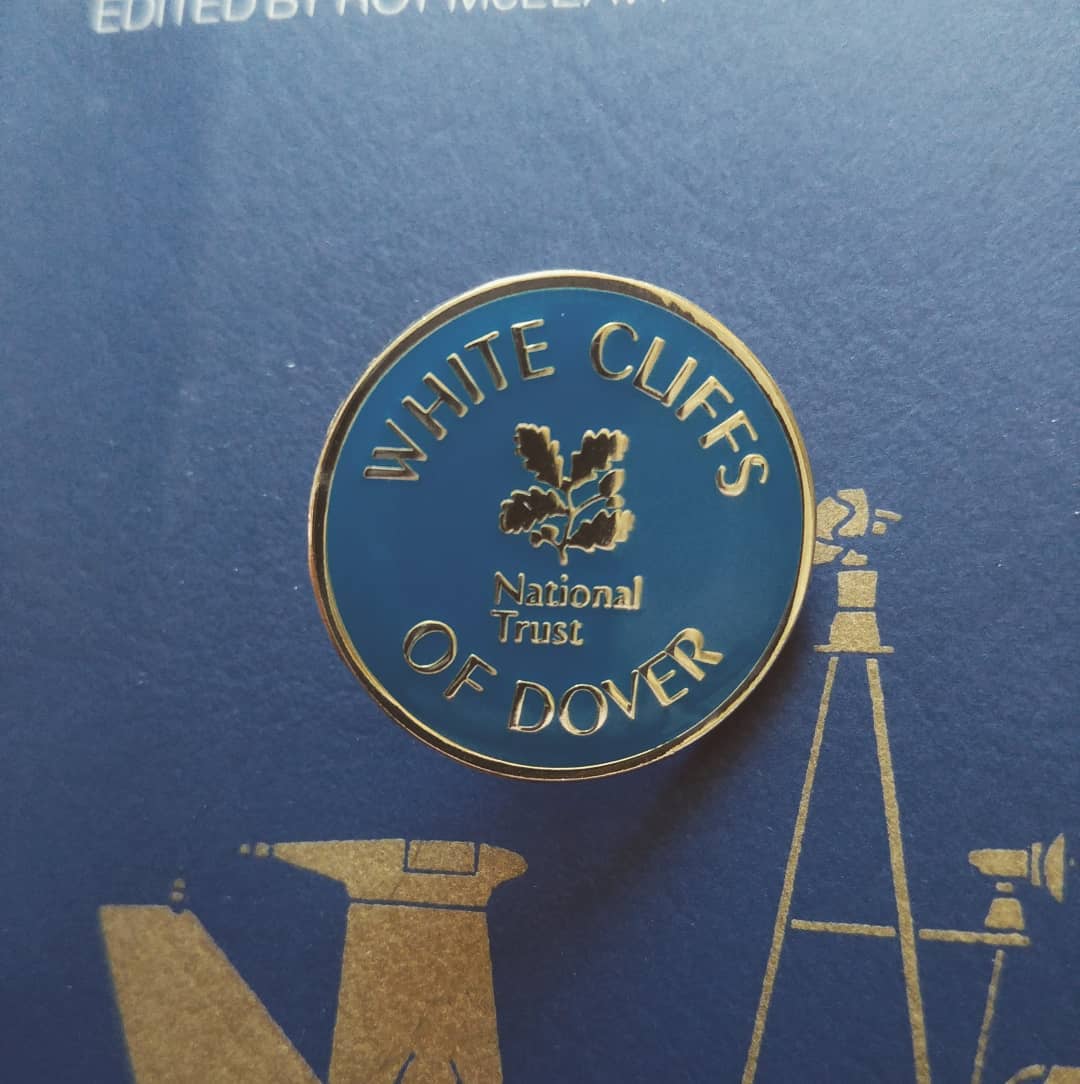
I bought this visiting my aunt and uncle in Deal, just up the coast from Dover. We explored the White Cliffs, visited the Fan Bay deep-level shelter and the acoustic mirrors used to detect aircraft and shipping there, and retired to the National Trust visitor centre for cream tea. As we were tucking in, a Spitfire flew overhead. It was possibly the most British moment of my life.
Background is a pocket Jane’s book of hovercraft my uncle lent me.

#16 ROMNEY, HYTHE & DYMCHURCH RAILWAY
Part of the same trip was a tour on the Romney, Hythe & Dymchurch railway, all the way along the coast to Dungeness. For those who don’t know it, the RH&DR is a charming 15”-gauge miniature railway that runs along the southern Kent coast. This badge shows “Hurricane”, which took me from Hythe to Dungeness power plant. You can see pictures of it here: https://www.rhdr.org.uk/locomotives/hurricane/


#17-20 WAR MUSEUMS

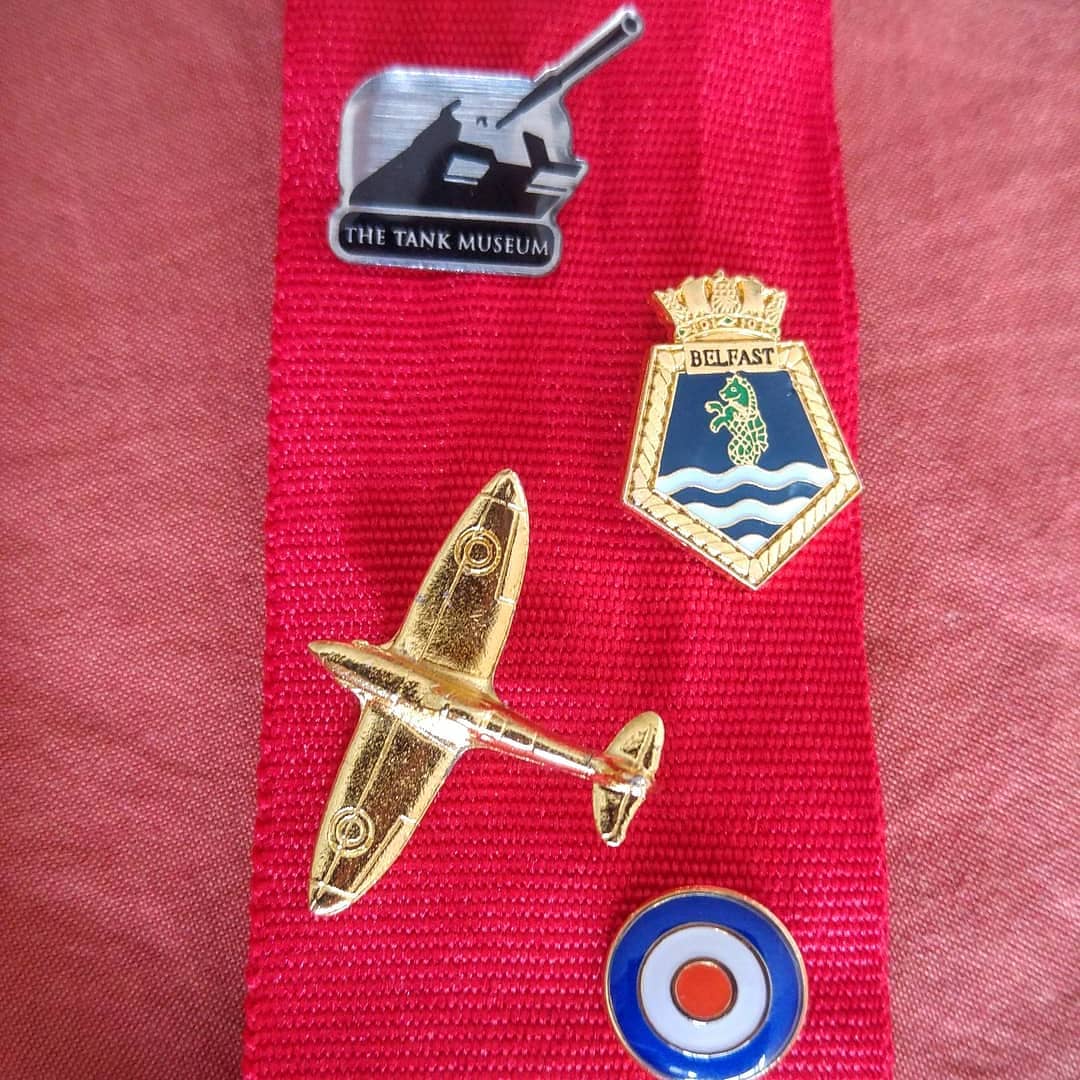
My favourite Hungarian visited me in London in the summer of 2016 and I was pleased to show him around all our best war museums. Top to bottom: The Tank Museum, Bovington; HMS Belfast; the Imperial War Museum in Lambeth and the RAF Museum in Hendon.

#21 BUDAPEST 2
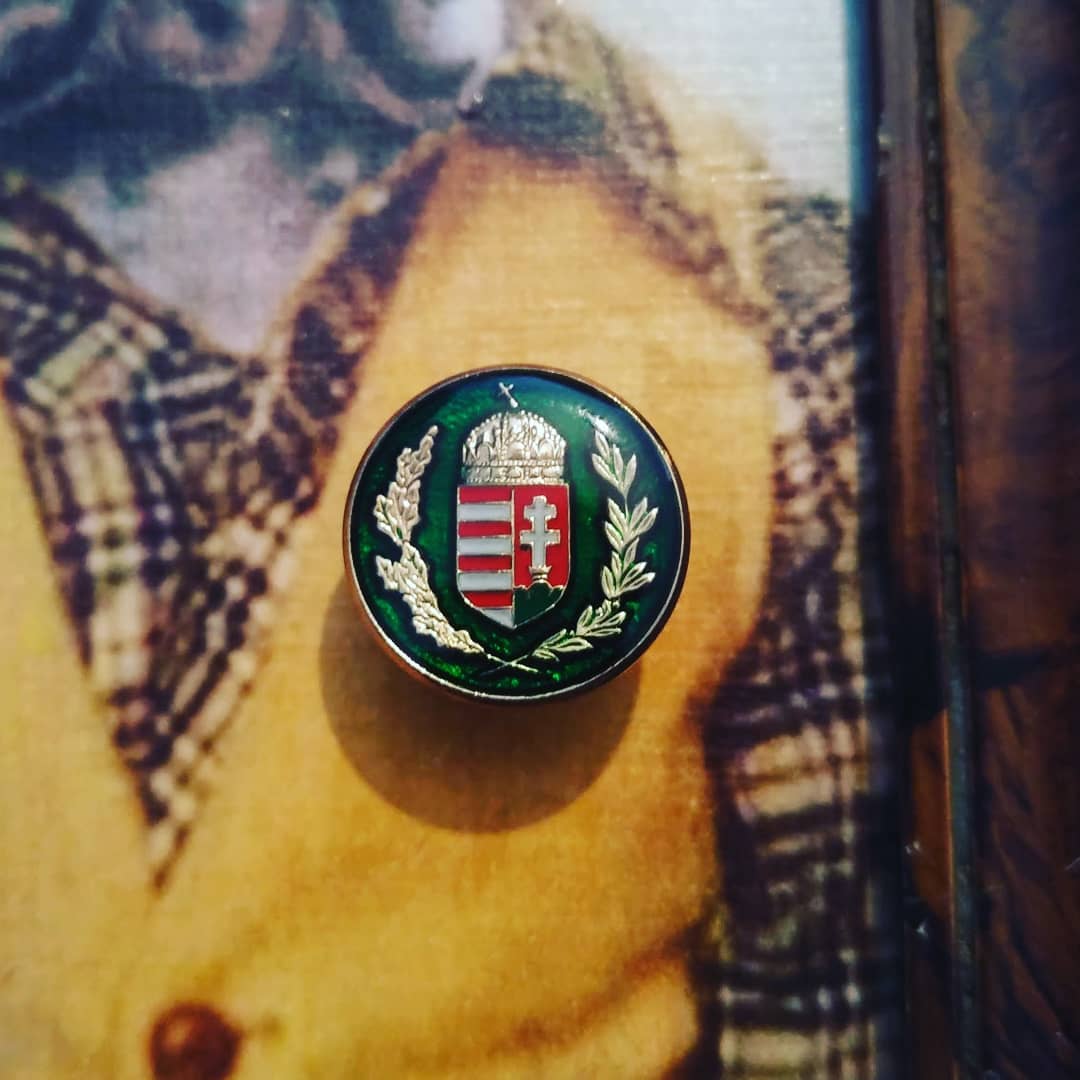
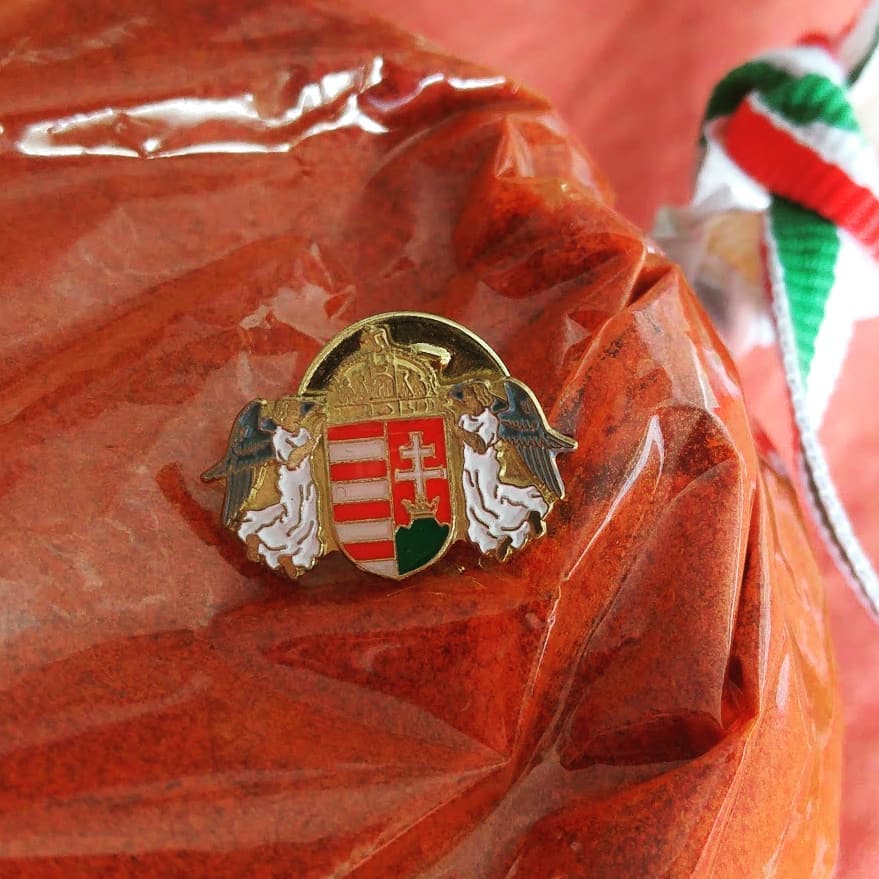
Another trip to Budapest. This is the Hungarian coat of arms (note the tiny tilted cross on top of the Holy Crown of Hungary), on top of a small sack of good Hungarian paprika.
#22 DARTMOOR
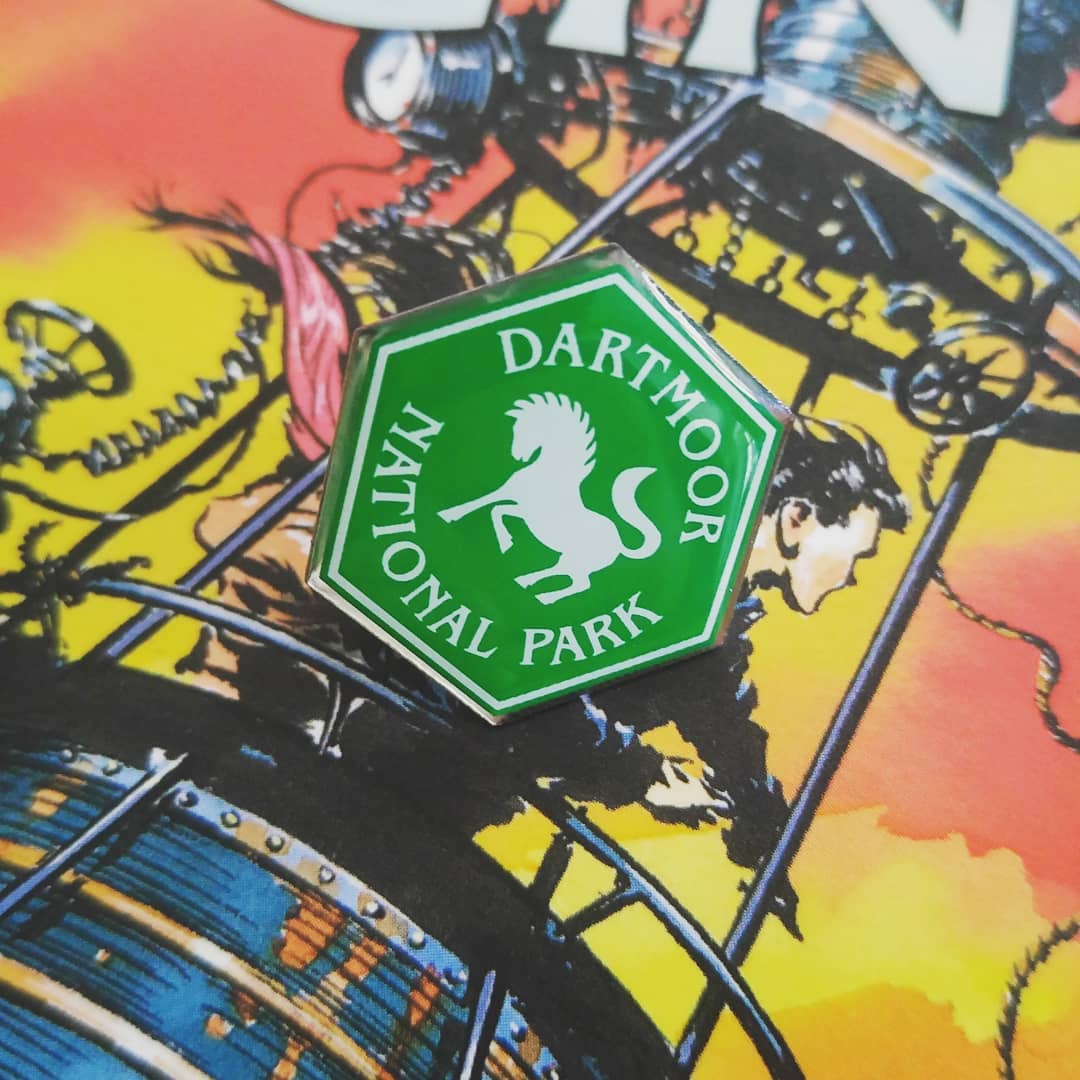
Souvenir of a visit to my author friend Philip Reeve. Dartmoor is one of the most interesting (not to mention beautiful) landscapes in England, absolutely full of wonderful old historical remnants – the beds of long-gone railways and stone-tracked tramways, mines and warrens and shooting ranges and powder-mills. Background is the cover of Philip’s first novel, Mortal Engines, through which we became friends.
#23 DENMARK
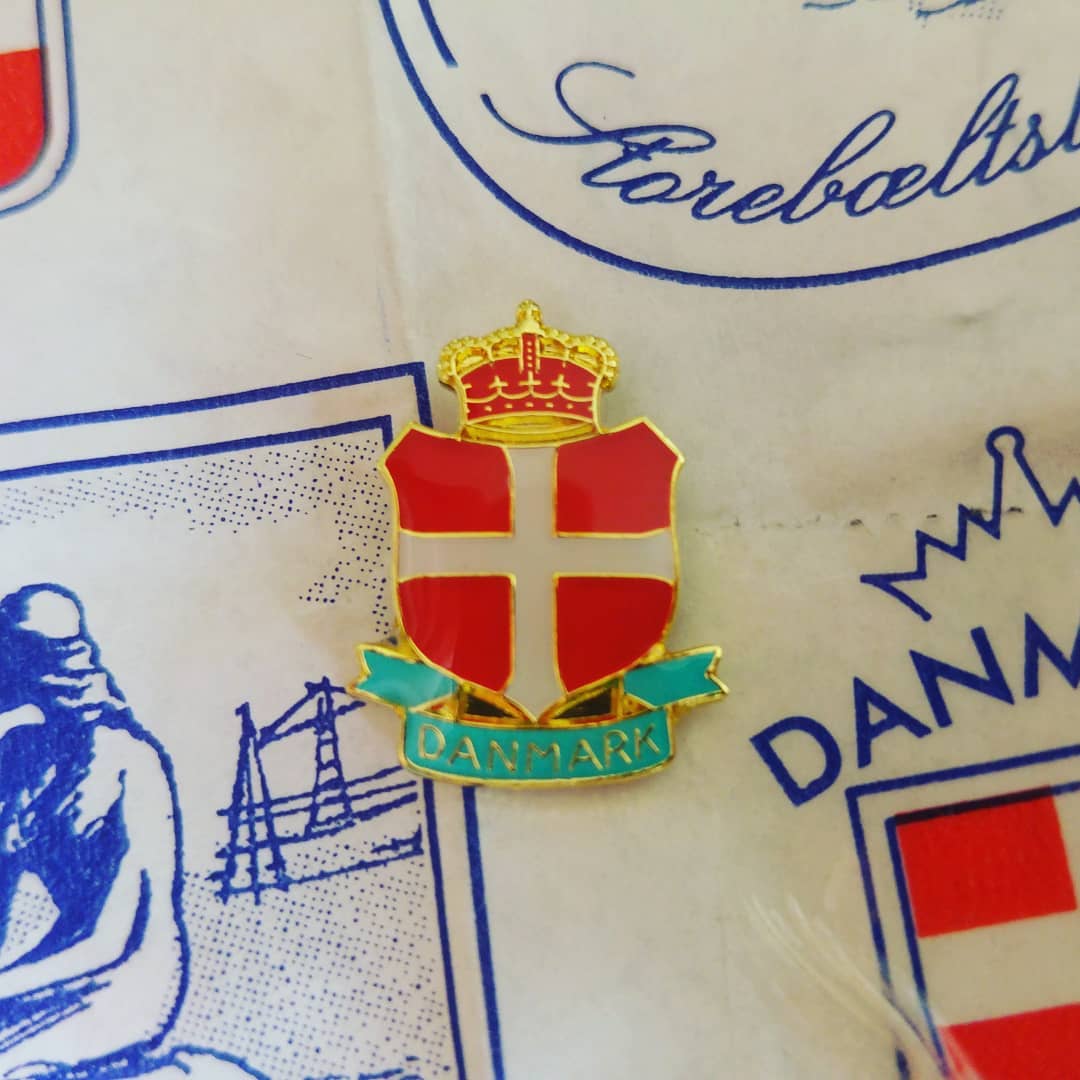
From a visit to an old Danish pal in Copenhagen, a pretty little badge with the Danish coat of arms. Background is the paper bag it came in – note the Little Mermaid statue.
#24 GREECE
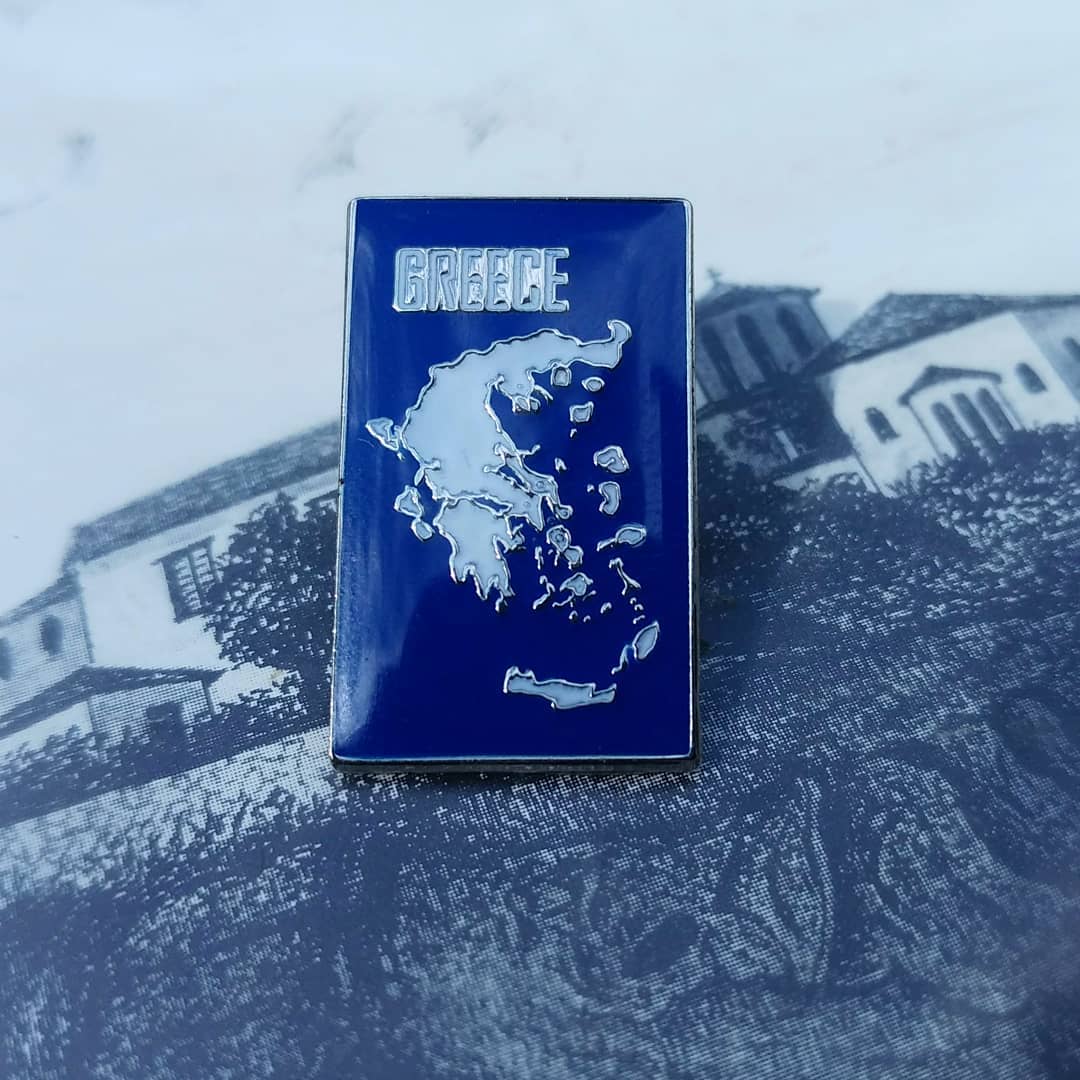
The pin habit had become well established by the time I bought this souvenir of my first proper holiday with my partner. We spent a week in Greece, spent largely in Athens but with day trips out to the Meteora (a poster of which is the background), the islands of Hydra, Poros and Aegina, and an unplanned but lovely extension in Kalamata caused by an air traffic controller strike.

Pin Post #1

Most of these were originally posted on my Instagram. I’m keeping them on my blog for posterity and because Instagram is an utterly horrible website.

#1 МОСКВА (Moscow)
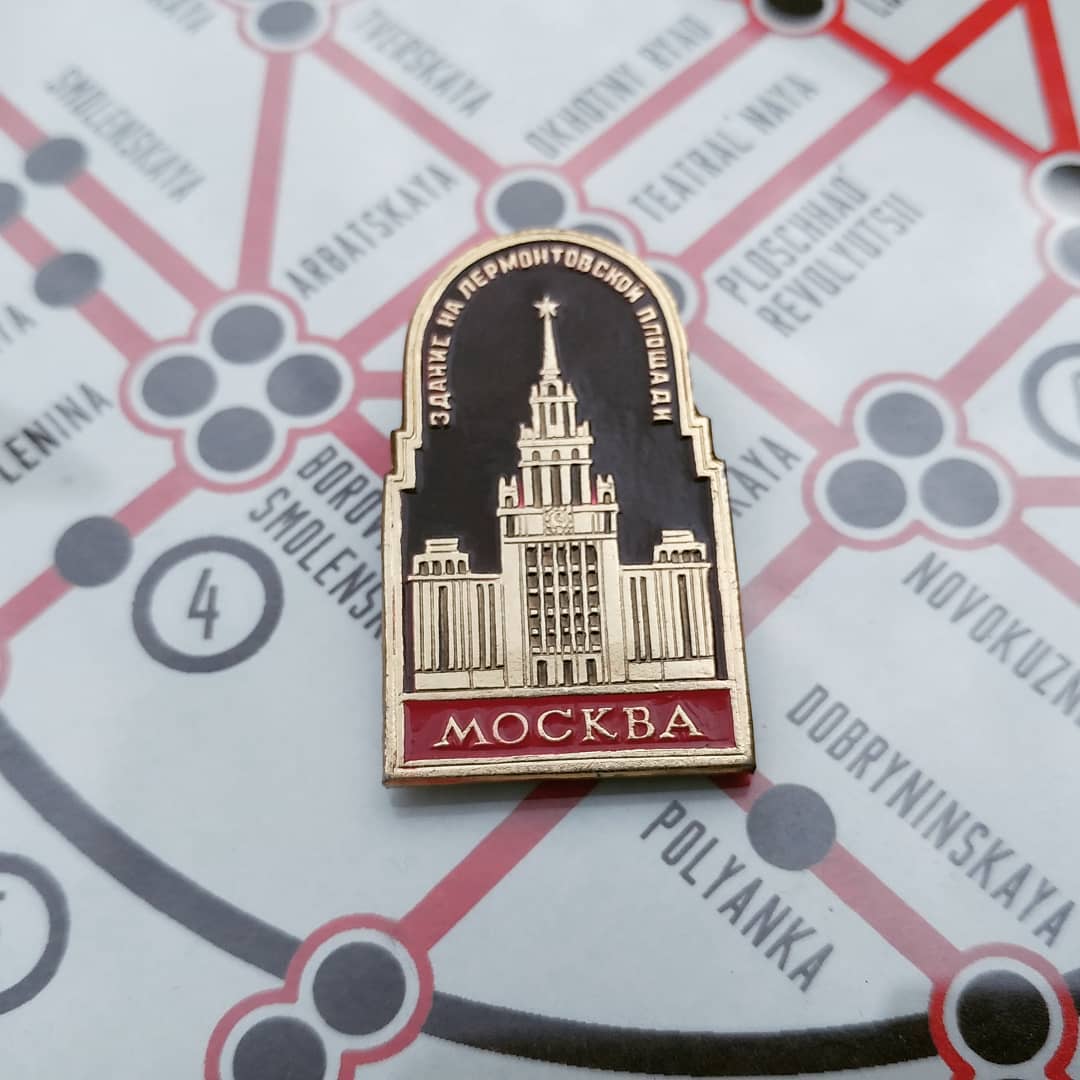
One of the largest badges in my collection! This is a Soviet-era badge depicting the Red Gate administrative building, one of the Stalin-era skyscrapers known as the “Seven Sisters”. The Cyrillic “здание на лермонтовскои площади” says “Building on Lermontov square,” the old name for Red Gate Square.
I visited Moscow in 2011 with two friends – you can read my travelogue here.

#2 TOKYO TOWER
Tokyo Tower is a bright orange knockoff of the Eiffel Tower (it’s actually several metres taller than the original, but rarely looks it in photos because it’s surrounded by big ol’ buildings), used for TV broadcasts and generally adding visual interest to the Tokyo skyline.
This badge was actually bought for me after the fact by my girlfriend, some time after I went out to visit her in 2012, spending a week in Tokyo and a week in Tendo.

#3 ORSZÁGHÁZ
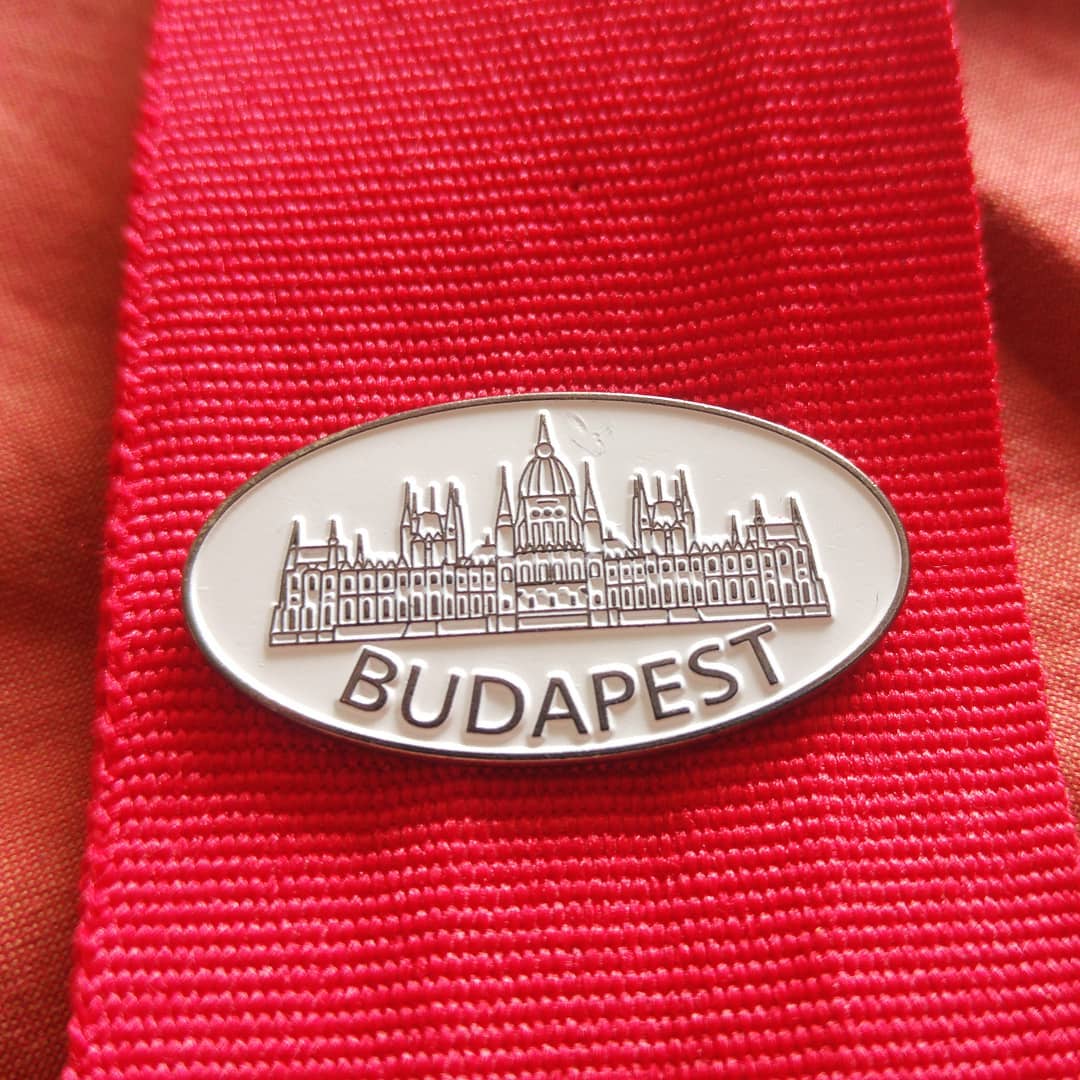
This badge shows the parliament building in Budapest, which for my money is one of the best buildings anywhere. I’ve been to Budapest quite a few times since (it’ll recur as I upload more of my collection), but this was from my first visit in 2013, which I wrote all about here.
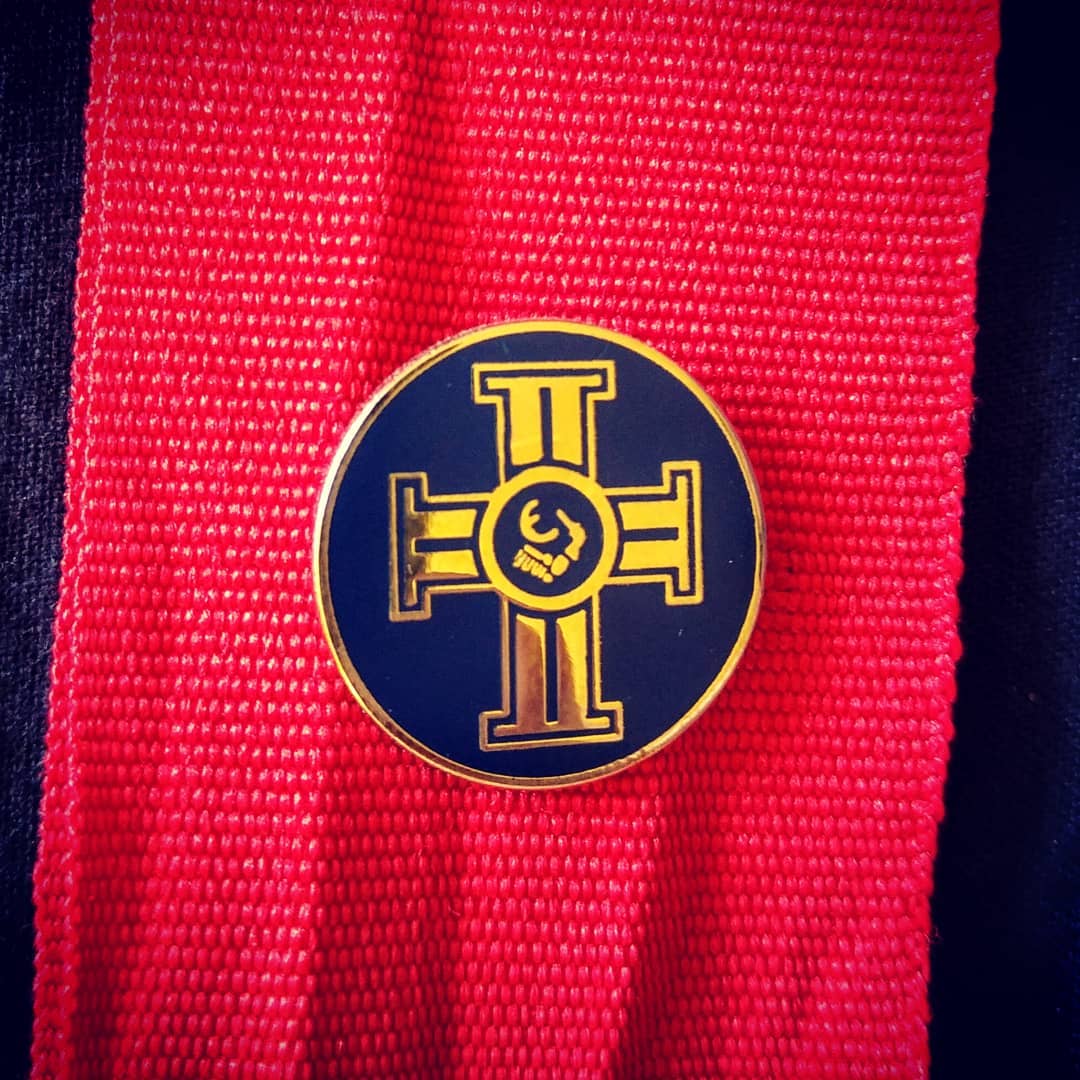
(This is quite an old photo, pinned to the red ribbon I used to display my badges before I started making cases to put them in.)

#4 VIENNA
The oldest badge in my collection, this one dates back from before the Great War to the Austro-Hungarian Empire – note the double-headed eagle. Little badges like this were popular souvenirs a century ago, as they are now. It’s resting against some Mozart balls from my Vienna-resident friend Alex.

#5 AMPELMANN
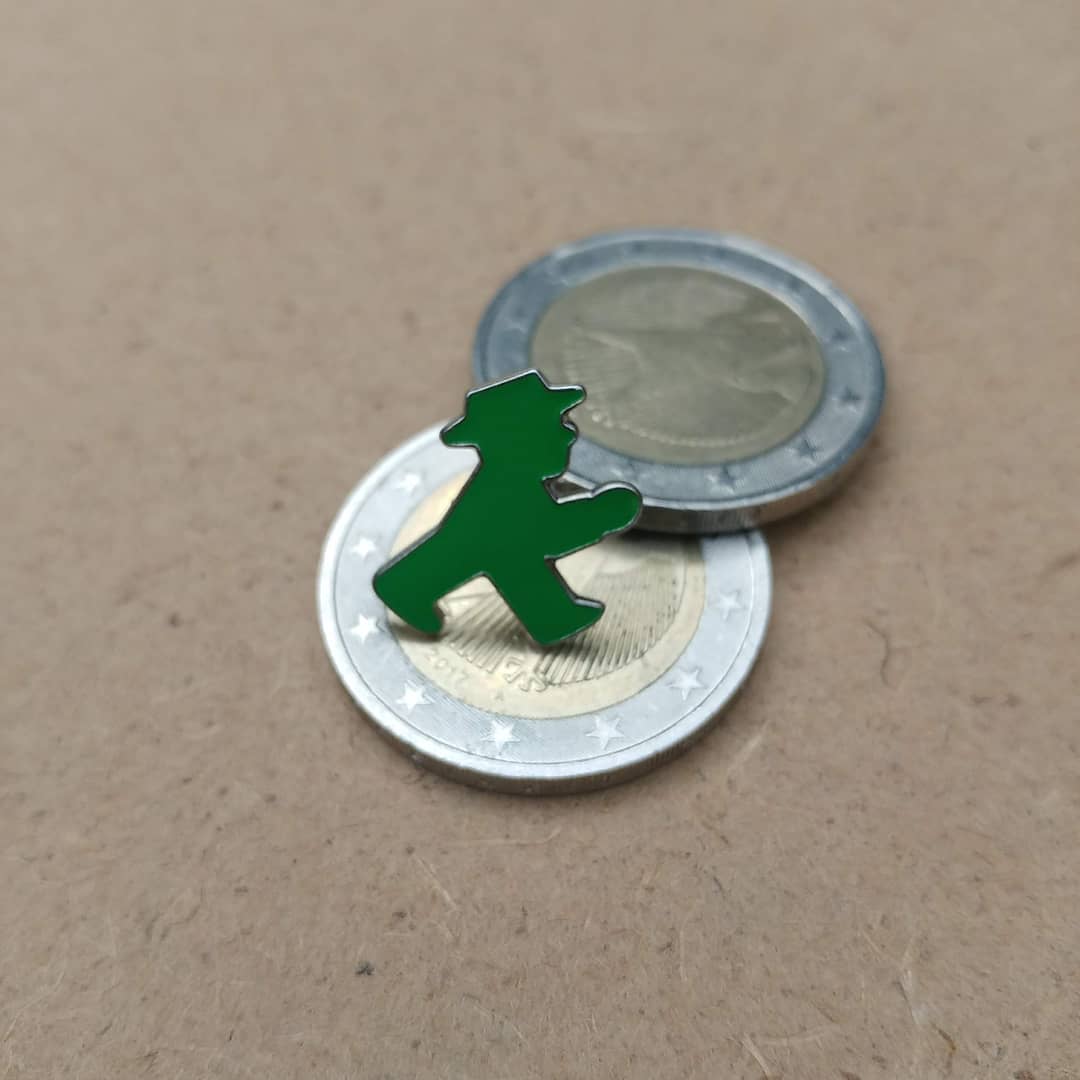
Ampelmann is the “green man” who was used at pedestrian crossings in Communist East Berlin. Nowadays, he’s a powerful piece of “ostalgie” (‘east-nostalgia’ – Soviet kitsch, basically) and has been marketed within an inch of his little green life – this badge was purchased at an entire Ampelmann-themed shop on Unter den Linden when I visited Berlin in 2014. More on that here.

GIFT: LANGER KERL
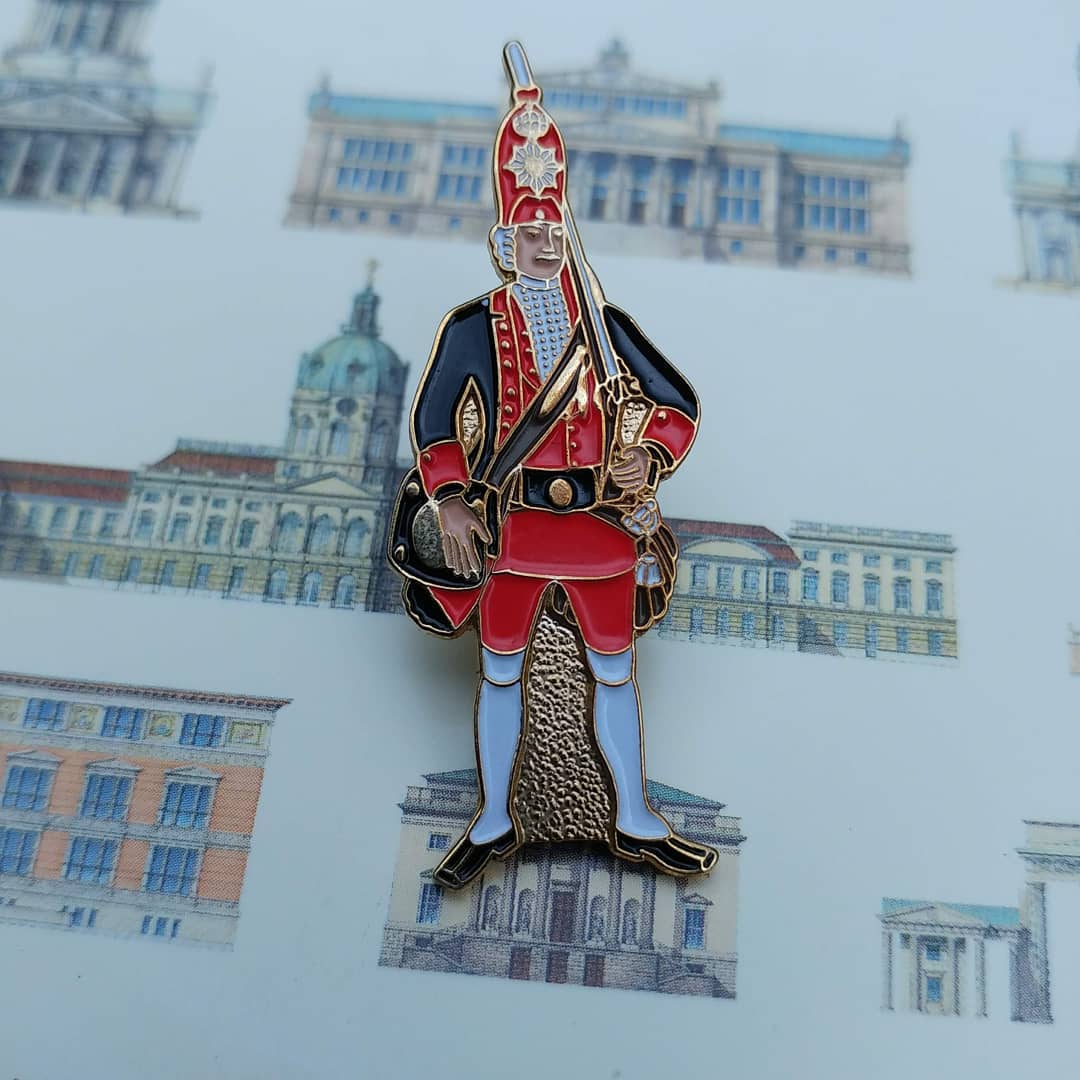
“The most beautiful girl or woman in the world would be a matter of indifference to me, but tall soldiers—they are my weakness.” This stern looking fella is one of the “Potsdam Giants”, Frederick William of Prussia’s absurd collection of larger-than-life-size soldiers. A gift from my friend Bill.

You can read more about the Lange Kerle (Long Lads), and see the painting this badge was based on, here: https://en.wikipedia.org/wiki/Potsdam_Giants


#6 TRANSYLVANIA
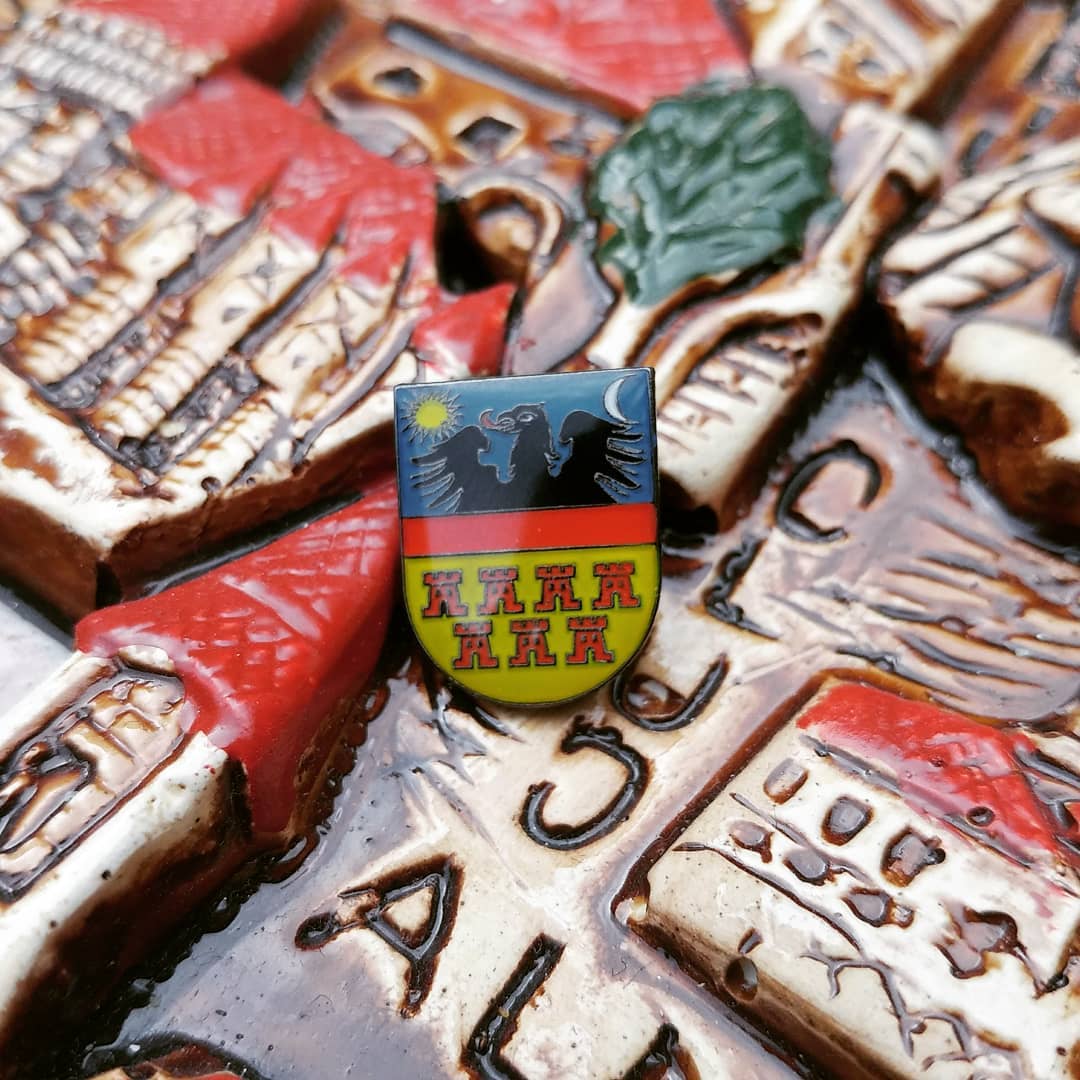
The crest of Transylvania – “the land beyond the forest” – has a black eagle between the Székely sun and moon, with seven red towers representing the seven cities of the region. The background is a wall hanging that Ionut and Adi, my fellow travellers on my Transylvanian road trip, gave me as a souvenir.

#7 TRYZUB
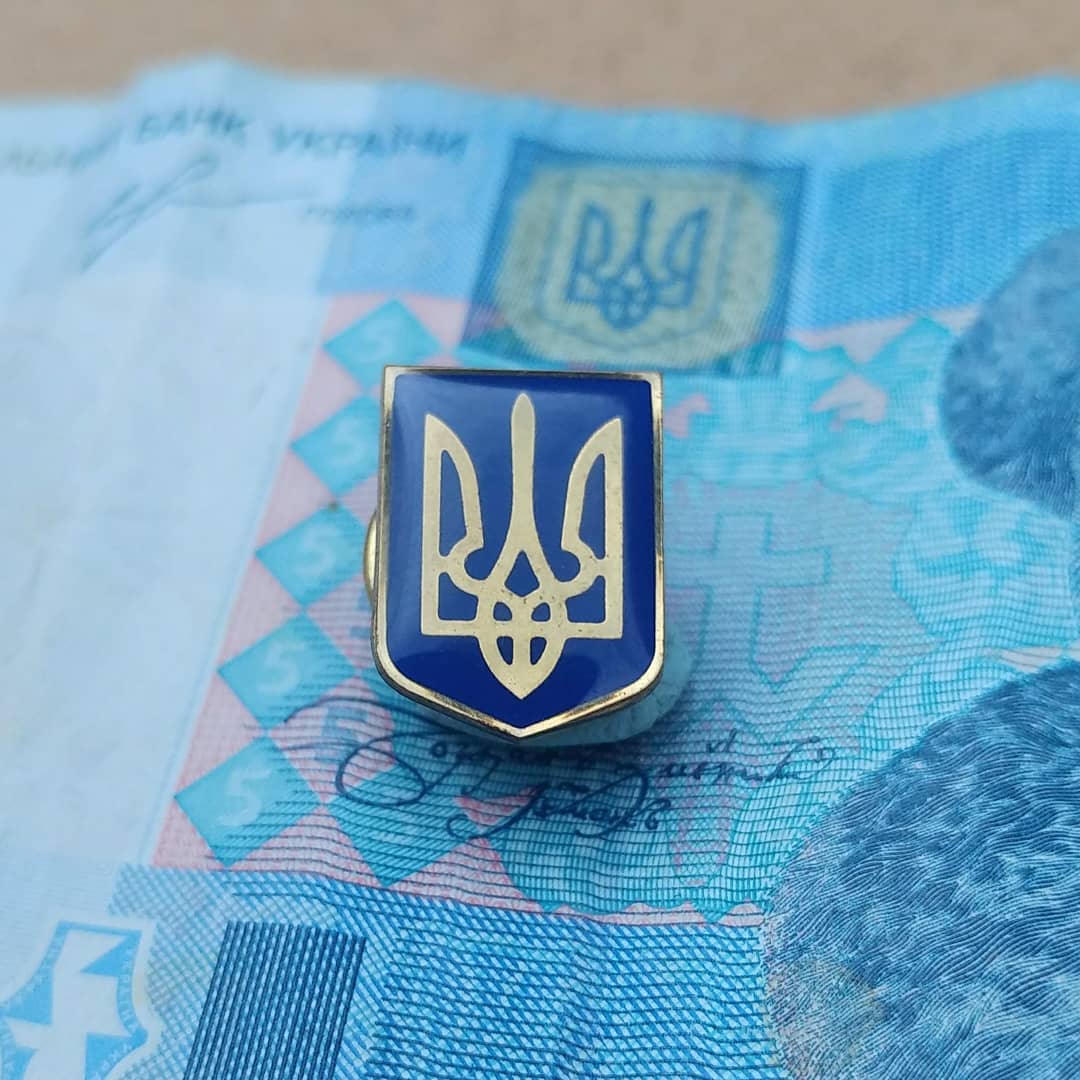
The official coat of arms of Ukraine (you can also see it on the hryvnia note in the background) is this gorgeous stylised Trident of Volodymyr. It’s an ancient symbol that goes back at least as far as the 10th century, although there is much debate as to what it actually depicts.
I bought this in Kyiv near the exquisitely strange St Andrew’s Church, as part of my trip to Chernobyl in 2016.

#8 VABADUSRIST
The only alternative to all the extremely kitschy Estonian-flag-plus-your-national-flag badges in the tat shops of Tallinn was this. It’s based on the “Vabadusrist”, or Cross of Liberty, a medal commemorating the *first* Estonian independence day from Russia in 1919. There’s a huge glass memorial cross based on it in Tallinn’s Freedom Square. https://en.wikipedia.org/wiki/Cross_of_Liberty_(Estonia)

#9 LENINGRAD
Another Soviet-era badge. I bought this in St Petersburg, but those who read Cyrillic will notice that it has the city’s USSR-era name, Leningrad. This badge shows the golden spire on the Admiralty building, one of the most famous and distinctive points of the Petersburg skyline. The background is a fridge magnet from my lovely hosts, Misha and Olga.
It’s not clear from the picture, but this badge is absolutely tiny – little more than a centimetre wide. I’m very impressed with the detail.

#10, #13 – AMSTERDAM/DEN HAAG
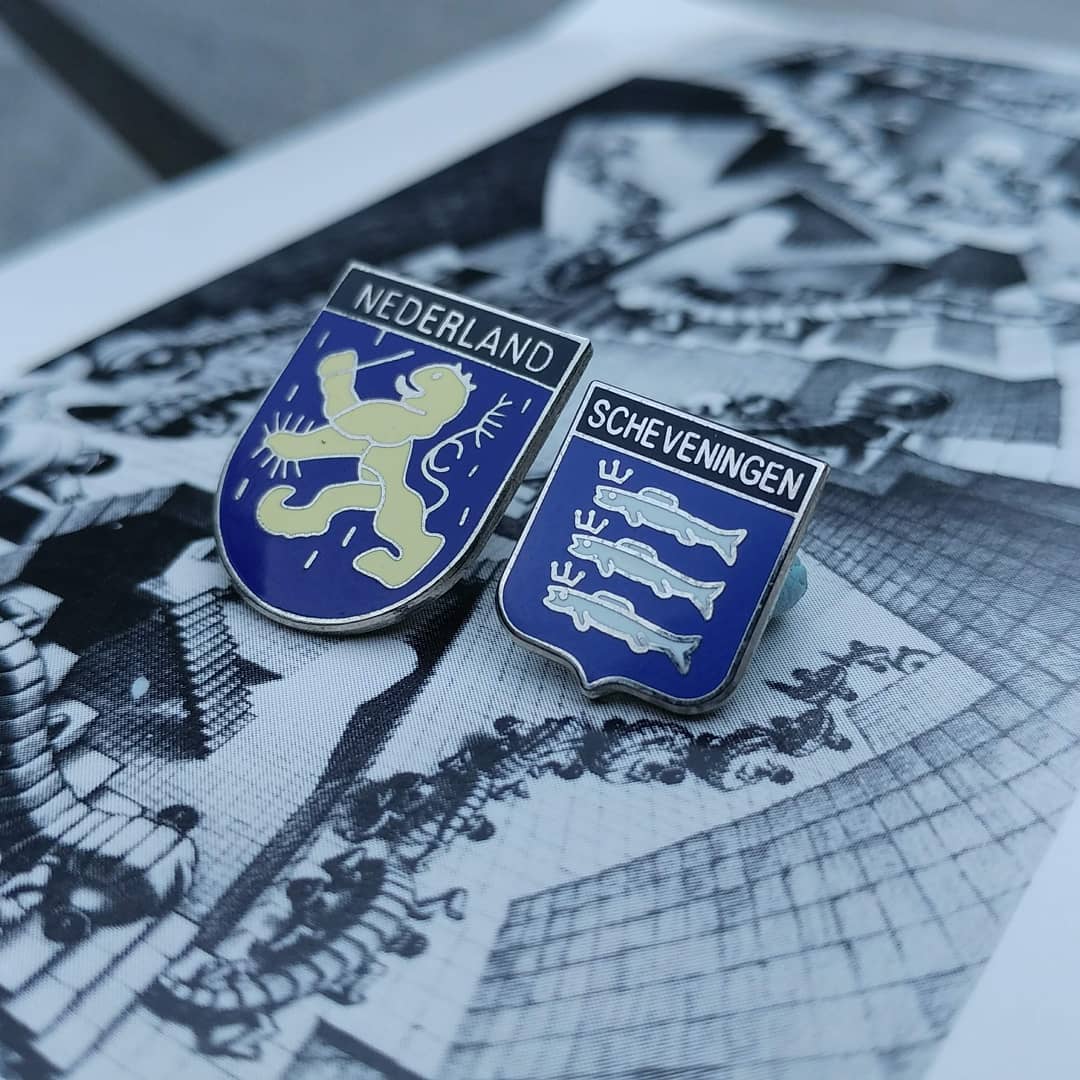
These are souvenirs of two separate trips to the Netherlands – the first from Amsterdam, the second The Hague. Scheveningen is the beachfront district of The Hague, featuring three herring with golden crowns. Why crowns? I have no idea.
The background is a postcard of Escher’s “House of Stairs”, from the Escher museum in The Hague.

Enamel Pin Kickstarter: Lessons Learned #2

Lessons Learned Post #2: Delivering On Promises

Reflecting on my successful first pin badge kickstarter with artist Rob Turpin. The results are on sale at my Etsy shop here. Posts: original spec, on managing the KS.

Lesson 7: People are actually pretty bright

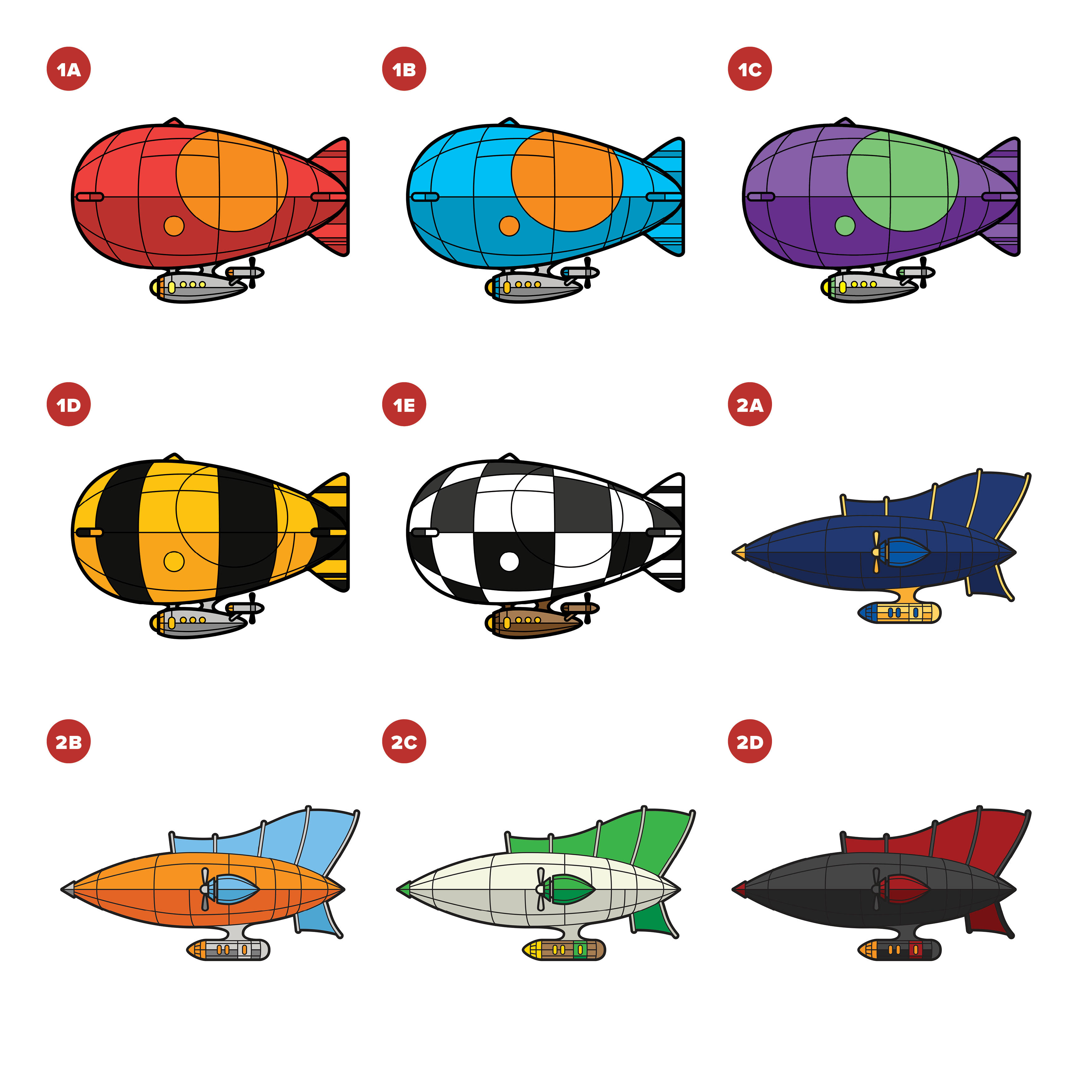
At the end of the Kickstarter, I sent out a survey to all backers to get their addresses and pin preferences, selecting from the grid above. I was quite worried that the wide variety of designs would cause my backers confusion. As it turned out this was no problem at all and everyone followed the instructions. A couple of people selected one too many pins; upon messaging they either changed it or were happy to pay a bit more.

However, for my own internal management purposes the tier structure I’d come up with was a nightmare. The way KS provides you with the data from your backer polls is broken up by tier, so the resulting spreadsheet the survey produced was very awkard to manage.

So next time I will: Poll buyers exactly the same way but design tiers to cause myself fewer spreadsheet migraines.

Lesson 8: Packaging 

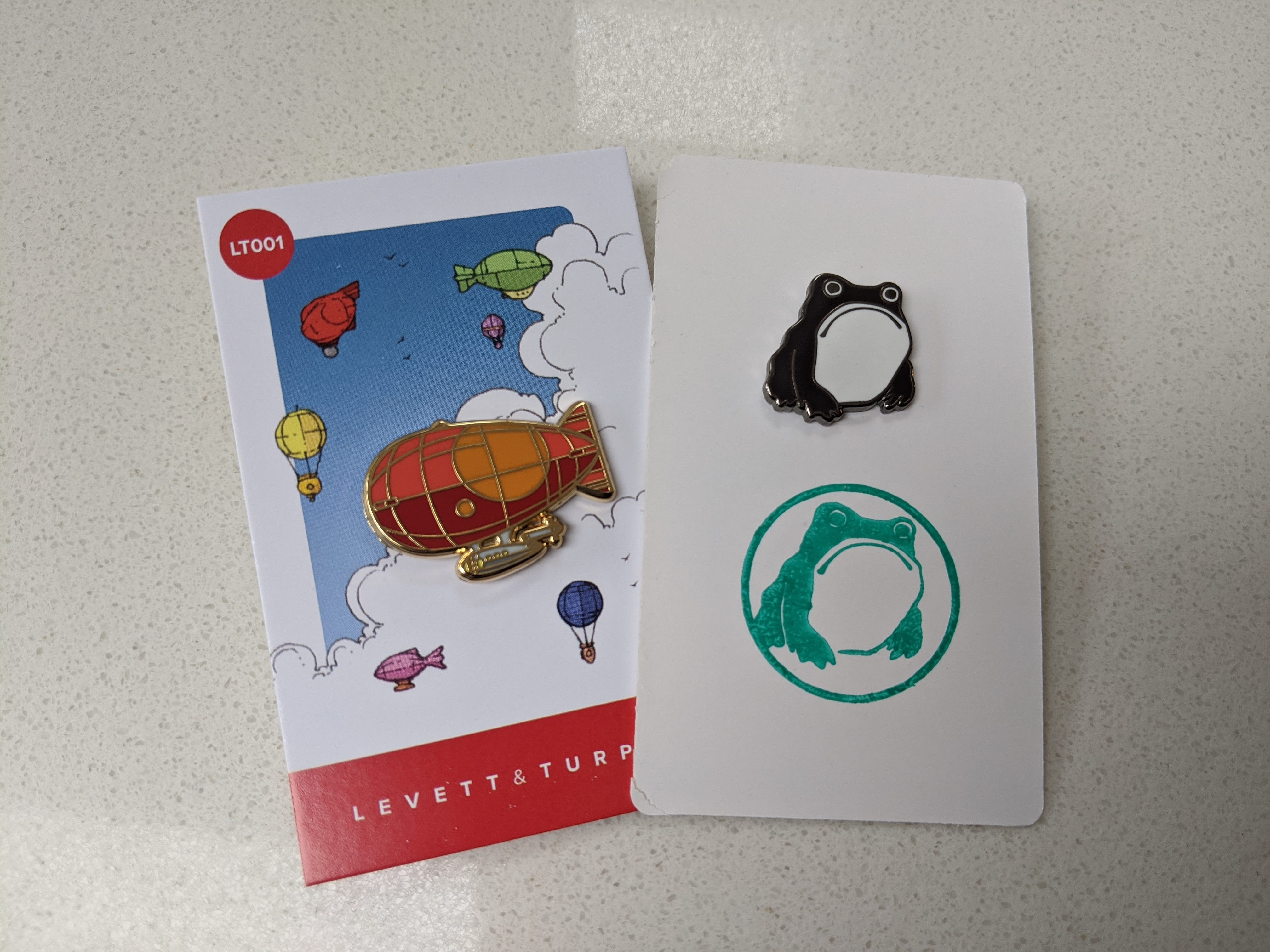
For my first foray into pin-selling I’d just stuck the frog through a card and put him in the smallest (110x165mm) jiffy-bag (bubble mailer to Americans) I could get my hands on. Most customers were happy with this but the only less-than-perfect reviews I got for my shop suggested that the clutch had been damaged in the post. Also, for early bird (and certain special customers) I was sending postcards, which could just about be jammed in but it wasn’t much fun for anyone. I ordered some larger (120x215mm) jiffy-bags, and some rigid cardboard boxes for the larger orders that were coming in, but that left the damage issue (worse, as I didn’t want anything in these bigger boxes scratched!)

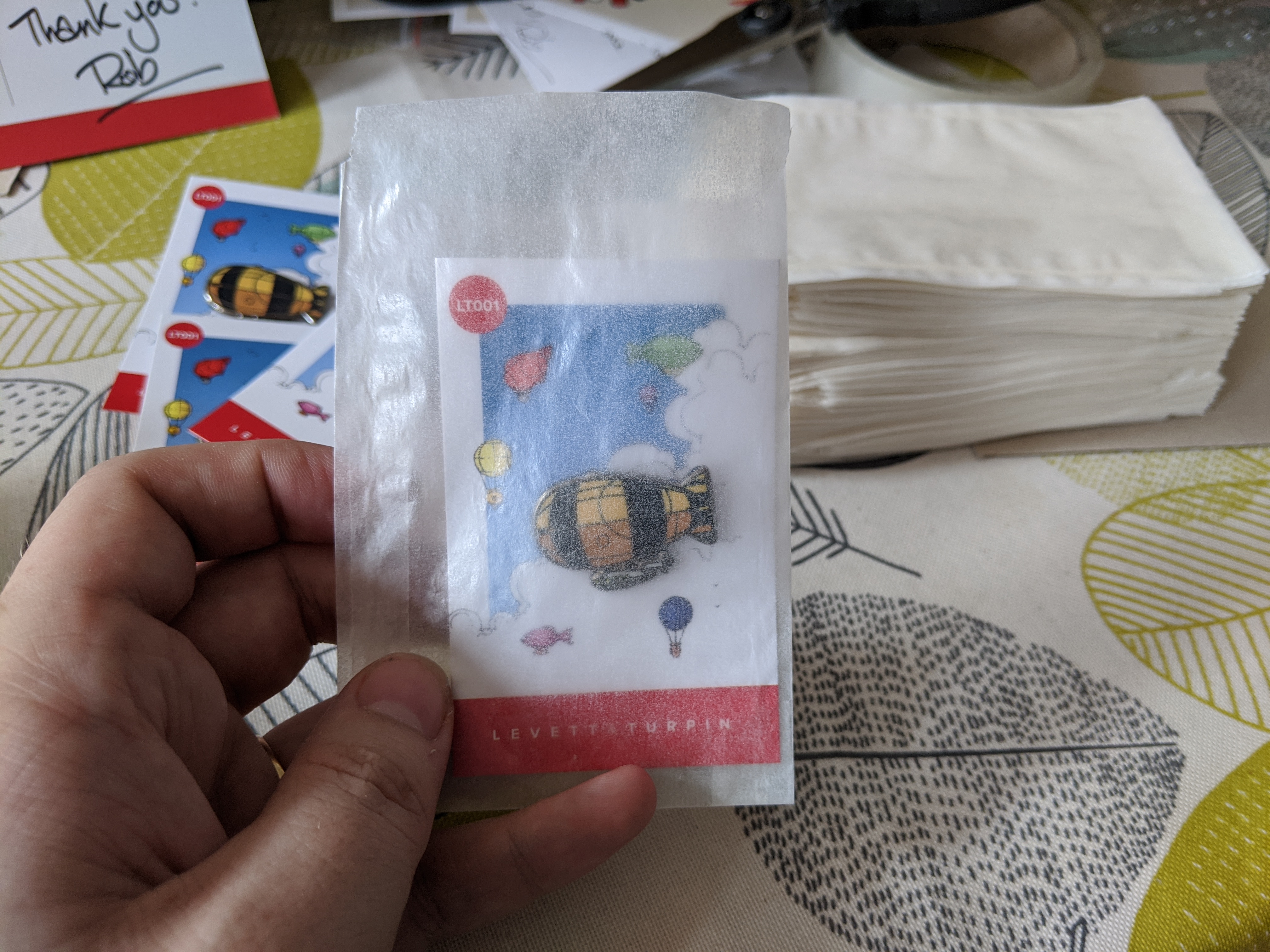
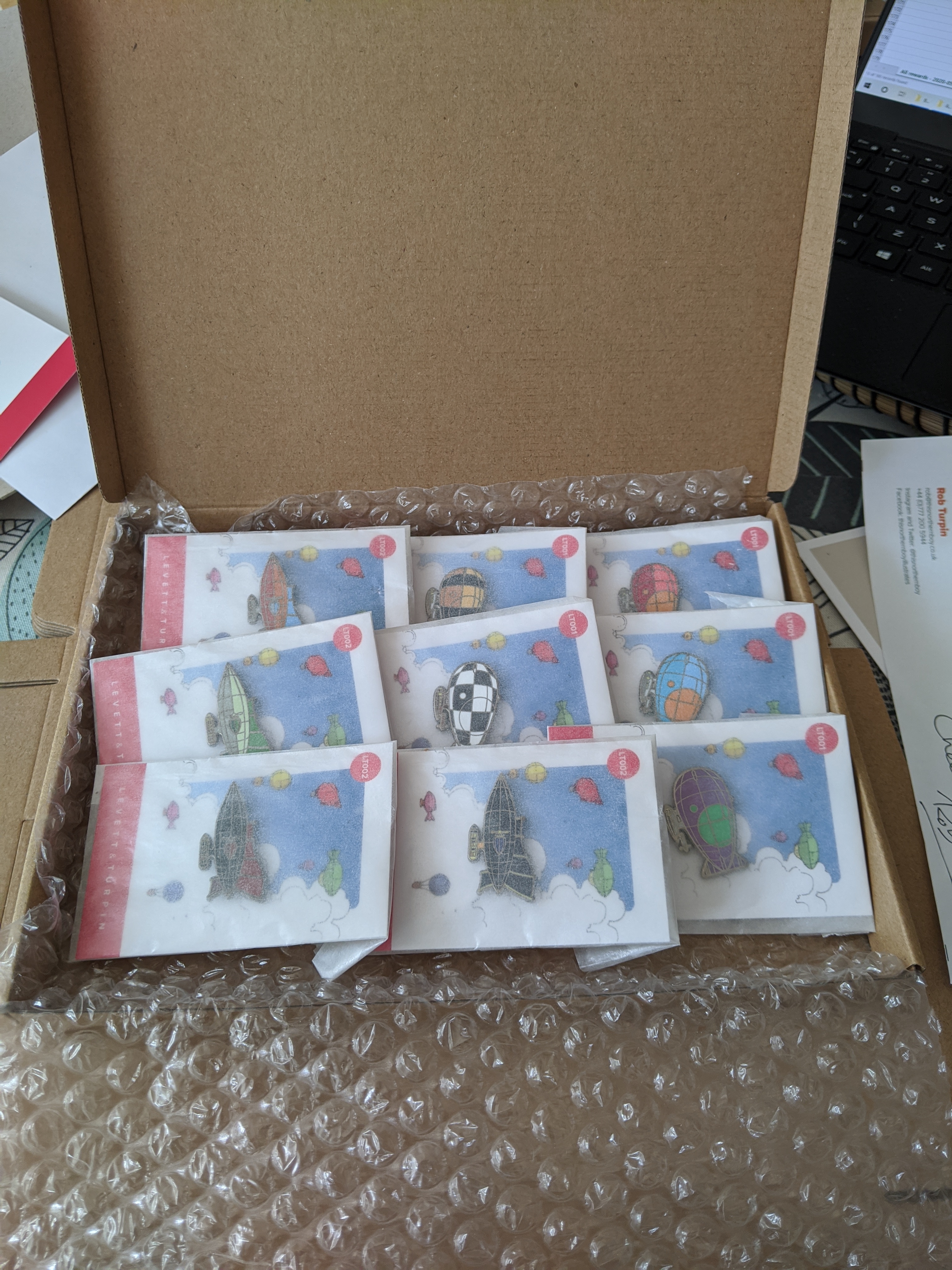
The solution was to wrap each individual pin in its backing card in a glassine paper bag. The glassine bags are pretty cheap (about 4.5p each, as I bought them) and I feel much happier about the level of protection they offer.

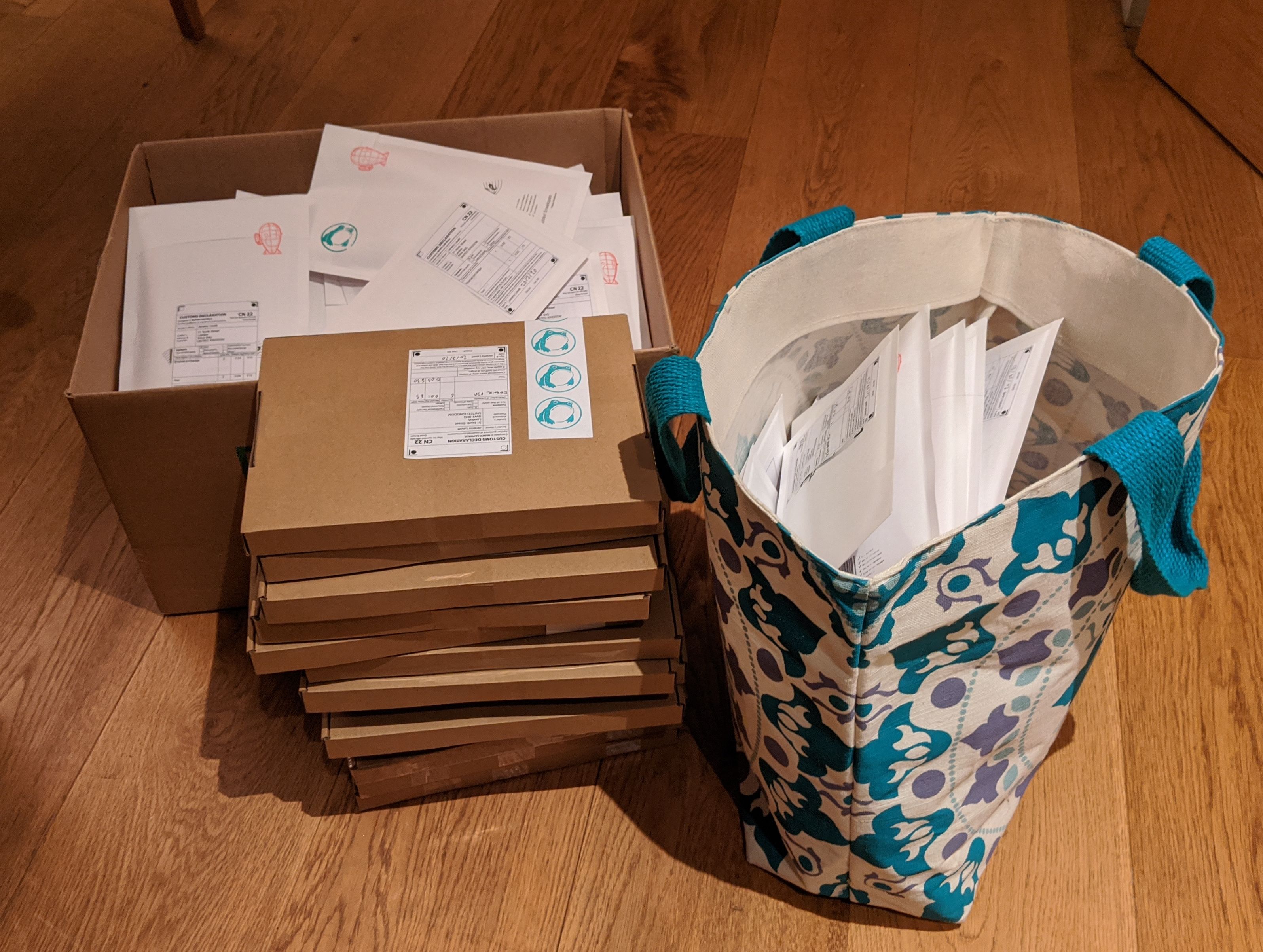
Box for one of the larger orders.

So next time I will: Make sure I have the appropriate packaging to hand to begin with – which won’t be hard as I have a load of surplus now! The jiffy-bags I’m using are “Enviroflute” which are all-paper and wholly recyclable and biodegradable, meaning apart from the tape and bubble wrap on the big boxes there’s no plastic involved at all.

Lesson 9: Pin Clutches & Backing Cards

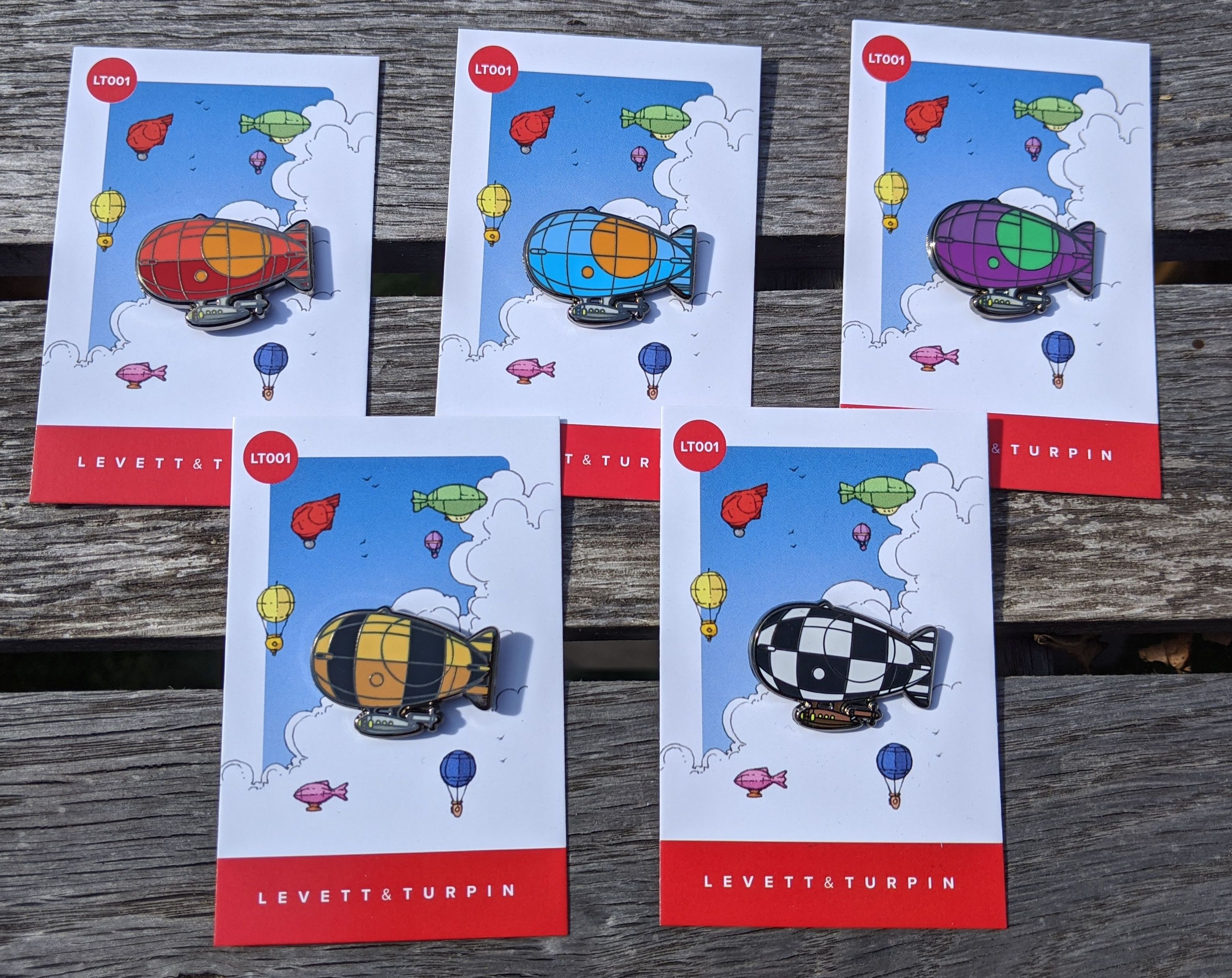
Pins on high-quality Turpin-designed cards.

My previous backing cards were, er, extremely low-budget, but for this one I had a proper graphic designer working with me. I used printed.com for the designs Rob produced, and it all ended up looking absolutely lovely. However! Adding a large number of pins to their cards was quite fiddly and time consuming. It was much more difficult, too, with the design #2 with its two pins, which had to be quite carefully aligned.

I’ve always been a bit prejudiced against the newer rubber pinbacks and preferred the butterfly style clutches, but I’m going to be honest, taking several hundred of those off pins, putting those pins through backing cards and then jamming them back on again was an absolute flipping nightmare and nearly had my fingertips bleeding at the end.

So next time I will: Get rubber clutches and look into labour-saving devices like this interesting backing card press someone recommended. Factor in a bit more time for packaging.

Lesson 10: Postage and Labels

I use the Royal Mail Click & Drop service to print my postage labels. It’s not that difficult to upload the bulk addresses Kickstarter extrudes into a format which the site can and print labels in bulk. I paid myself for tracking on large orders but charged for cheap, untracked International Standard postage which kept costs down for my buyers. I haven’t had to deal yet with any pins going missing (and may need to update this lesson as and when I do.)

Customs labels, Robespierre, and desperately needed tea.

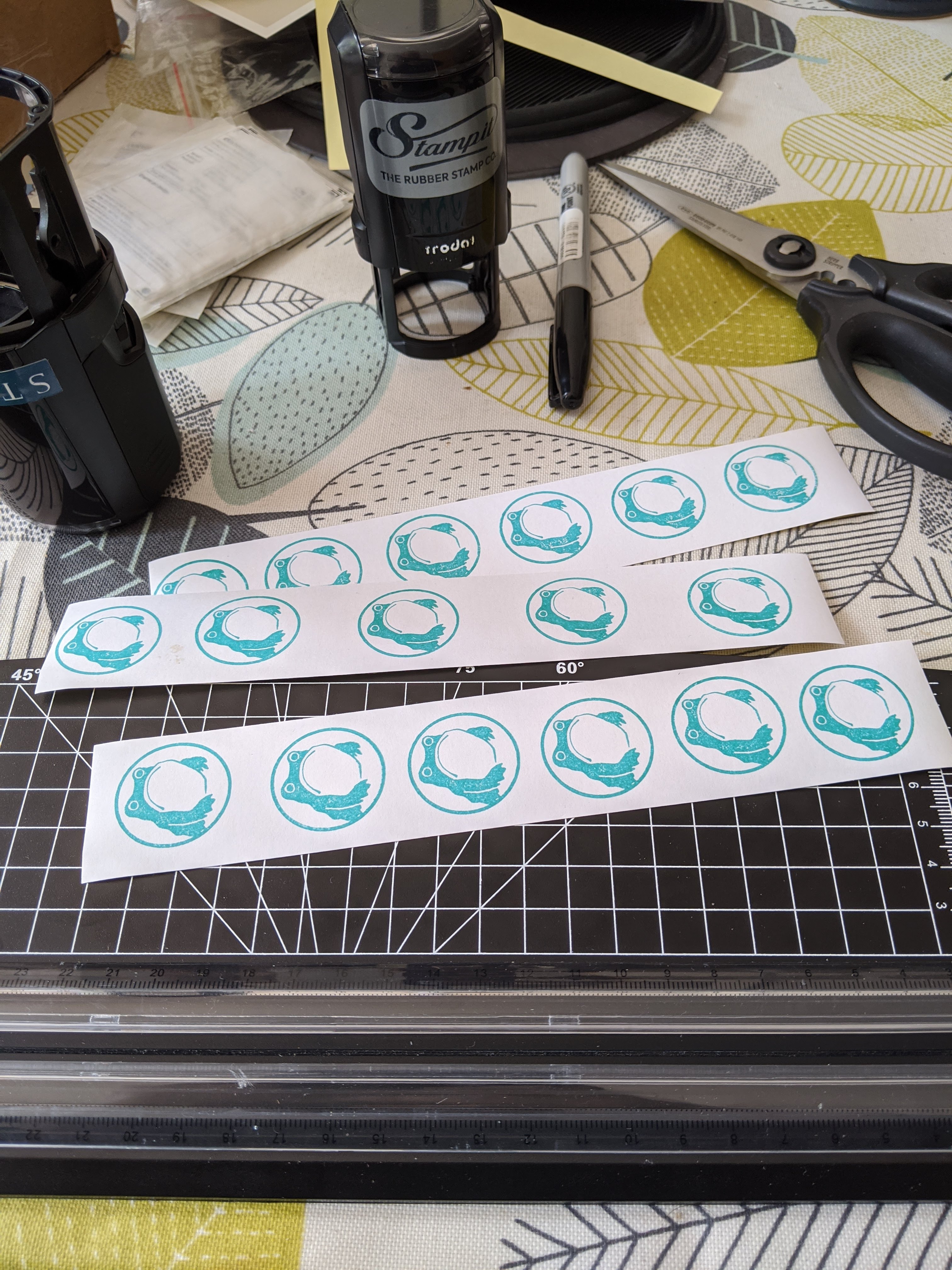
The labels are produced as PDF files; label printers are a bit outside my budget at the mo but I bought cheap sticker paper which would run through my home printer and printed them 4 to a page (regretfully I had to use Acrobat to print rather than my much-preferred SumatraPDF). These were then cut up with a £7 paper guillotine. I did the same thing for the CN22 customs labels.


Also, I used the label cutoffs to make FROG TAPE.


Easily the most fiddly and annoying part of this whole business was… peeling the labels off the backing paper. Seriously, it was a nightmare!

So next time I will: Grow out my thumbnails. And if I’m trying to make a business of this long term, look into getting a label printer – but for now printing and guillotining label paper is working just fine.

Enamel Pin Kickstarter: Lessons Learned #1

Lessons Learned Post #1: Running the Kickstarter

Reflecting on my successful first pin badge kickstarter with artist Rob Turpin. The results are on sale at my Etsy shop here.

Lesson 1: Preparation!

Before launching, I’d done some prep work drafting update posts and working up timescales, budgets and plans, but I hadn’t actually got every single post 100% ready by the time I pushed the button. A lot more could have been effectively prepared before starting, especially graphics, but I was in a hurry to start and made things up a bit as I went along. My original plan had been to do polls on second designs and extra colourways after the kickstarter finished, which I quickly realised was ridiculous as extra colourways were going to be the main draw for anyone buying more than one airship. The kickstarter immediately smashing all early goals meant I needed lots of extra colourways pronto and didn’t feel ready. The rush also meant I had to bother Rob for artwork at quite short notice (or cook up my own in Paint with very limited graphic design skills).

I’m working with a highly skilled professional illustrator! There’s no need for things to look this amateurish!

So next time I will: plan a schedule of posts, polls &c out carefully in advance, and make sure all necessary graphics and such are ready for all of them before I pull the trigger. Especially because…


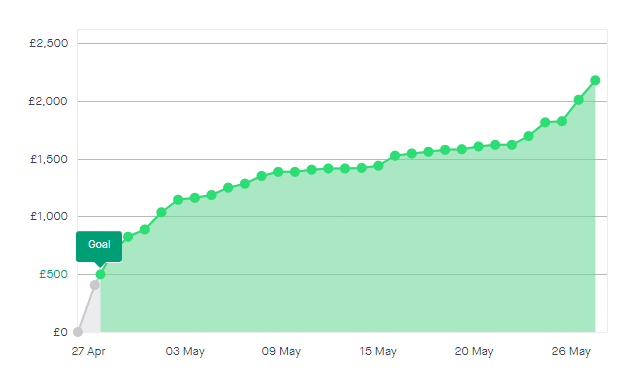
Lesson 2: Money comes in much faster at the beginning and the end.

NYOOooooOooooOMMM

I’d seen this before on other kickstarters so it didn’t come completely by surprise, but the “first week/last hour” thing is very real. I was mainly overwhelmed because the kickstarter did much better than I was expecting in the first week – not a bad problem to have! It then went pretty flat for the middle of the month. There was a genuine uncertainty a couple of days before finish about whether we’d reach the final stretch goal, but in the end it was smashed by nearly £200.

So next time I will: Do basically the same, but focus my publicity to push things at the very beginning and end, and consider this when planning stretch goals.

Lesson 3: Everybody Loves Democracy

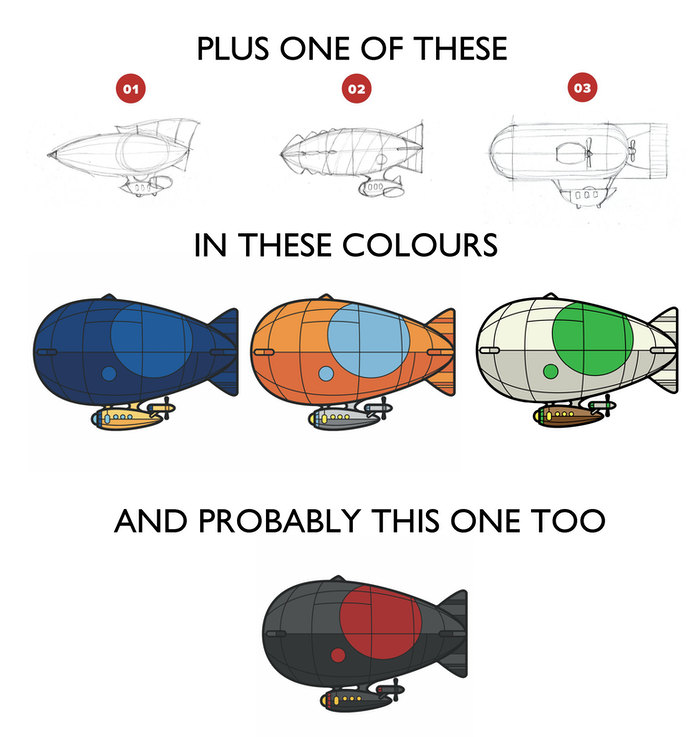
The different designs proposed, and…
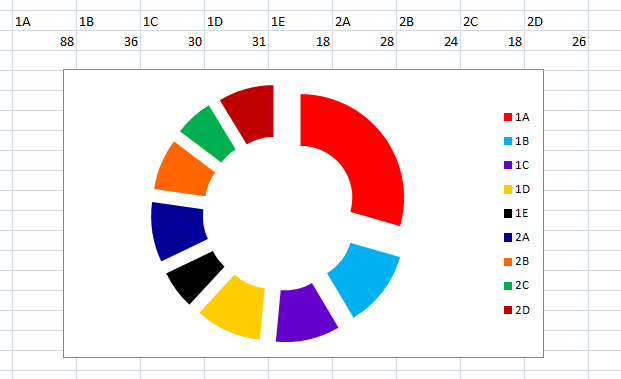
…how popular they ended up being.

There were LOADS of potential colourways for the airship (with my manufacturers, adding extra colours requires a minimum order but doesn’t add cost) which I had to narrow down so as not to get Silly. Running Doodle polls was a really easy way of doing this, and also a sort of free form of market research – the orange and blue combinations (which I don’t personally much like and wouldn’t have made on my own) proved extremely popular, so they ended up getting made.

Knowing the rough proportions of interest in each pin also meant I could prepare my order to my manufacturer before sending out the post-kickstarter survey to backers, saving everyone a week.

So next time I will: Do basically the same thing (if offering varieties of a design – if I know exactly what I want to produce running polls is a lot of time and effort.)

Lesson 4: Stretch Goals

Stretch goal #1 at £600, which was reached basically instantly.


The kickstarter broadly went quite well, but the initial few stretch goals were so close on the heels of the first deadline and so close to each other I was announcing them all being smashed almost immediately, making them meaningless. (They weren’t particularly ambitious or expensive goals to fulfil, but still.) I had to improvise a bunch – I was only originally planning on doing four or five colourways total rather than the nine I ended up with. The later ones were decently spaced out, but I think Design #2 was also reached too early as the minimum manufacturing cost wiped out any potential profit from the first £1500.

So next time I will: Spread out stretch goals further, bearing in mind lesson 2, and look at them with an eye for the budget. Stretch goals relate quite closely to…


Lesson 5: Budgeting and Profit

I’ve seen people recommend running pin kickstarters on the above “third” basis (ie 1/3 for minimum manufacturing costs to meet pledge, 1/3 for overheads – shipping and kickstarter fees – and 1/3 for profit/margin of error). The overheads and minimum worked out roughly right.  However, unlike most pin kickstarters I was also paying Rob fees, and really should have put the initial target up to reflect that – the budget was initially very tight. I ended up making no profit at all off the KS because I put all the profits into further pin manufacture to sell in the long run, but that was a deliberate choice rather than being forced on me – if I’d just made enough to cover orders there would have been a moderate profit, though less than 1/3.

So next time I will: Ensure goals which front-load profit a bit more and factor in in artist costs from the very beginning. As well as changing the goals, this could have been affected by better handling the…


Lesson 6: Pricing and Tiers

I wanted the pin to be cheap for backers, but given the budget I think I went too far and underpriced it for what it ended up being (particularly as it ended up costing a bit more to manufacture than expected). This wasn’t helped by a slightly silly pricing structure I came up with, where it was functionally £5 per pin at all tiers unless you bought one for £6 or early bird three for £14. Early bird tiers could have been distinguished a bit more – and I’ve seen postcards and stickers as nice extras which would be worth doing in future. The “airship+frog” tier sold out extremely quickly, to my surprise – having the option to buy another design is something that I’ll definitely bear in mind in future.

An unexpectedly popular match – my second and first commercial pin designs. Note the, er, significant difference in quality of backing card.

So next time I will: Either improve or do away with the idea of an early bird tier; have a slightly more profitable starting price and standardise it at all tiers except for quite large orders. (There are other good reasons for this – which I’ll discuss in the next post, about FULFILLING ORDERS.)


Red Airship Enamel Pin Badge

Pasted over from my first kickstarter

Overview

Would you like to own a lovely little red airship enamel pin badge? I know I would, that’s why I’m running this…

Rob Turpin and I met working together on The Illustrated World of Mortal Engines and I’ve loved his art from first sight. The design we’re manufacturing is original art commissioned specifically for this pin, of a little red airship. This will be the fourth pin design I’ve had manufactured, the second I’m producing commercially, and the first I’ve Kickstarted.

The Design

The design I’d like to make will be 25mm hard enamel with black nickel backing. Hard enamel means that it’ll have a smooth, flat finish (as opposed to soft enamel – there’s a good explanation here), which costs more to make but gives a lovely high quality feel. Black nickel means that the metal of the underlying pin will be a glossy black (rather than the more common gold or silver) which I think really suits Rob’s clear, detailed linework.

The final pin will look much like the one in the header image. Here’s a sketch from development.

Timelines

May 2020: Kickstarter will run, and hopefully reach its target.

June 2020 – Design and Ordering: I expect the process of finalising and ordering the design(s) will only take a week or so but am allowing a month. If I reach the higher stretch goals I’ll also use June to poll backers about what colour/designs they’d like.

July-August 2020 – Manufacture: Based on previous experience, it takes 4-6 weeks for the pins to be manufactured and to get to me. I’m allowing two months to be generous – I suspect nobody will mind if their pins come earlier. You can read more about the precise manufacturing timescales here.

September 2020 – Shipping: The pins come to me, and I post the pins to you. I use Royal Mail first class delivery in the UK and International Standard for the rest of the world, which rarely takes more than a week to get anywhere.

October 2020: Hopefully, everyone will have their pins by then!

 Relevant experience

This will be the fourth design I’ve manufactured and the second I’ve shipped commercially after one I sell on Etsy (you can read my reviews there!). The latter took quite a while to get around to making a profit, and I’ve commissioned the art professionally, so I’ve decided to run a Kickstarter so as not to end up out of pocket.

My previous pin designs. The one on the right is for sale.

I’ve had all my previous designs produced by The Enamel Pin Factory, and they’ve been very good at communicating promptly and producing high-quality products with no quality issues or “seconds.”

Budget and Postage

My initial goal is £500 which will support a minimum run of a hundred pins. Around half the goal money will go to manufacturing the pin and the rest towards paying the remainder of Rob’s artist fees. Pins are quite cheap to ship, but the price varies for me based on where you are in the world.I use Royal Mail first class delivery in the UK and International Standard for the rest of the world for orders of up to ten pins, and Royal Mail Tracked for larger orders. I’ll ship all pins in small recyclable jiffy-bags.

Stretch Goals

The initial goal is just to produce the pin itself, but I’ve had some ideas for what happens if I hit higher goal targets…

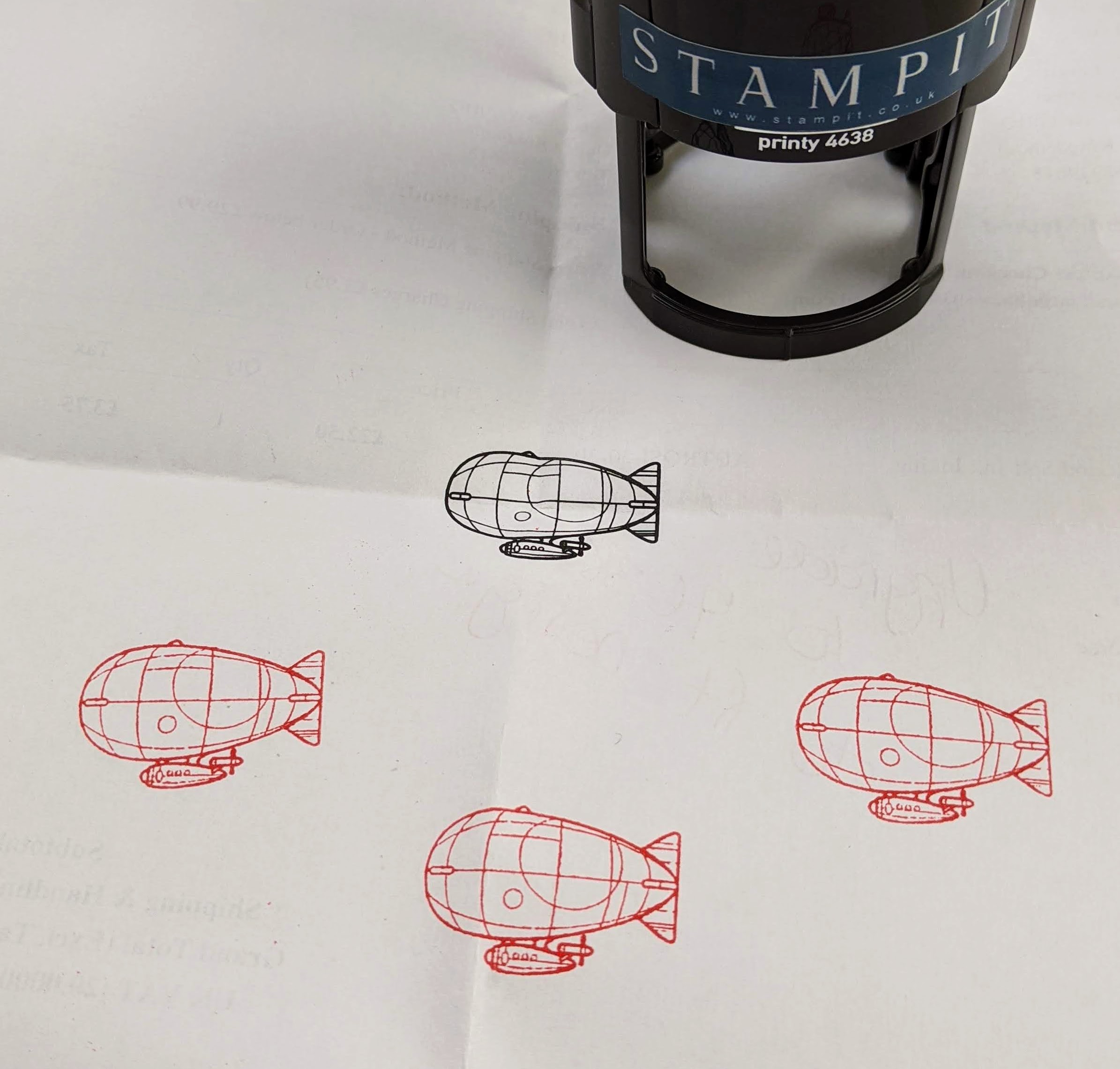
£600 – Stamped Backing Cards. I’ll get a custom rubber stamp made of the airship design, and put the pins into hand-stamped cards, as a slightly labour-intensive but cost-effective form of backing card. (I already do this with my Gloomy Frog pin.)

£700 – Printed Backing Cards. At this point I’ll be able to afford to have proper backing cards made up by the manufacturer. Rob is happy to produce art for this – I’ll post concepts as and when it looks like we’re getting to the target.

£800 – New Colour. Is red not your favourite colour? At this point I’ll be able to do a palette swap for the same design – I will poll to see what the most popular colour is, and backers will get a choice of the colour they want.

£1000 – New Design. Rob produced any number of lovely designs, some of which are below. At this point, I’ll look into commissioning him to finalising another. Again, backers will be able to vote for the design they like best.

Some of the many potential forms and shapes of airship.

Risks and challenges

Given the current coronavirus disruption, there is a chance that production will be delayed. The manufacturer’s latest update on this is here: https://enamelpinfactory.com/pages/covid-19-manufacturing-update

If the schedule slips at all I’ll keep all backers posted.