
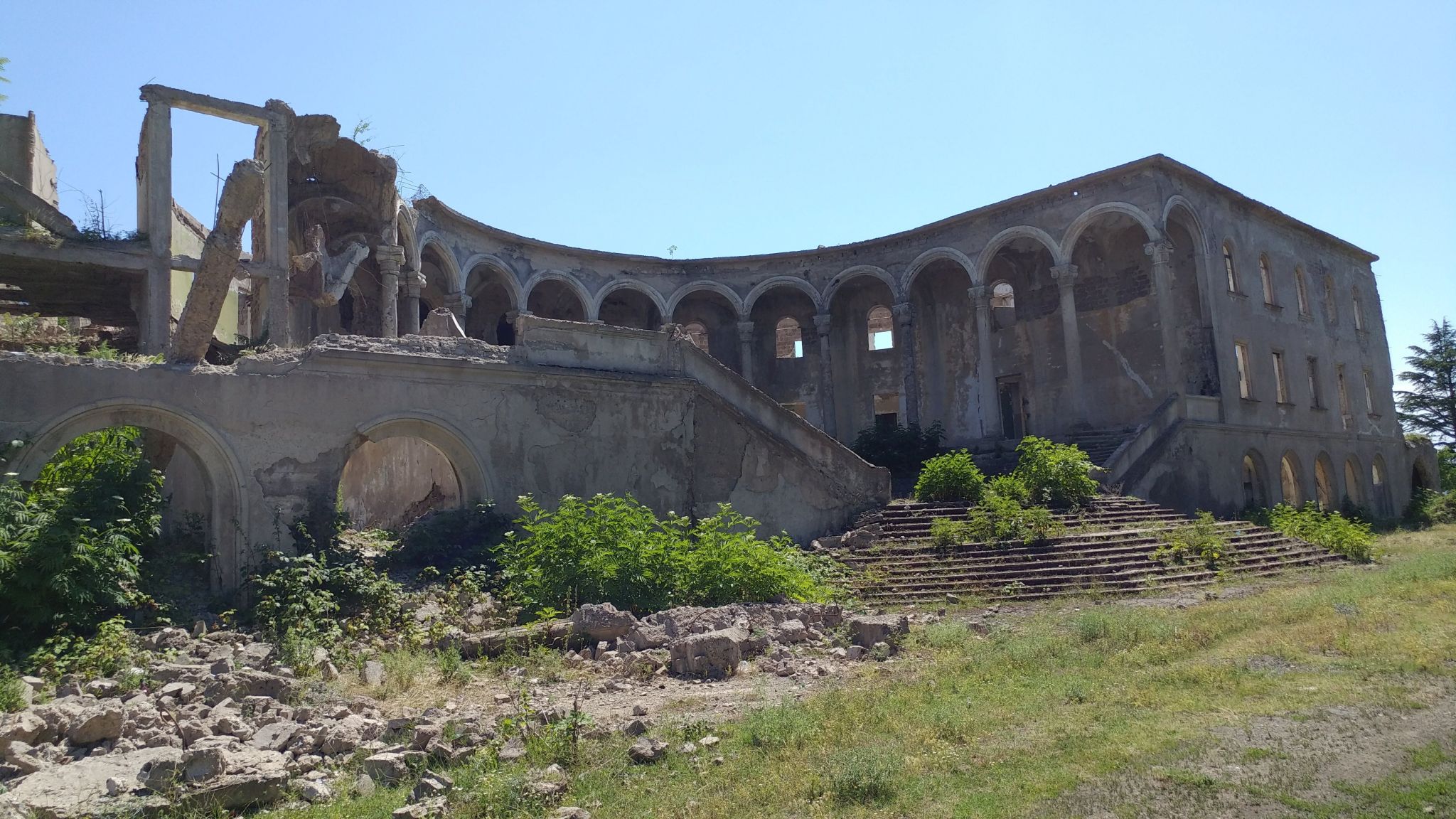
The Pioneers’ Palace in Chiatura was almost impossible to locate; I don’t think I spent nearly as much time researching any other part of the trip. I successfully located a Council of Europe plan for regenerating the area which gave longitude and latitude – but they’d screwed up the longitude somehow and the mangled references took me to somewhere in Saudi Arabia. Finally, I resorted to scanning the incredibly drab, low-res Google Maps of Chiatura (the aerial photos had clearly been taken on a snow day, through intense air pollution and an entire jar of dirty Vaseline) for a huge Y-shaped building and finally found it. Can you see it?
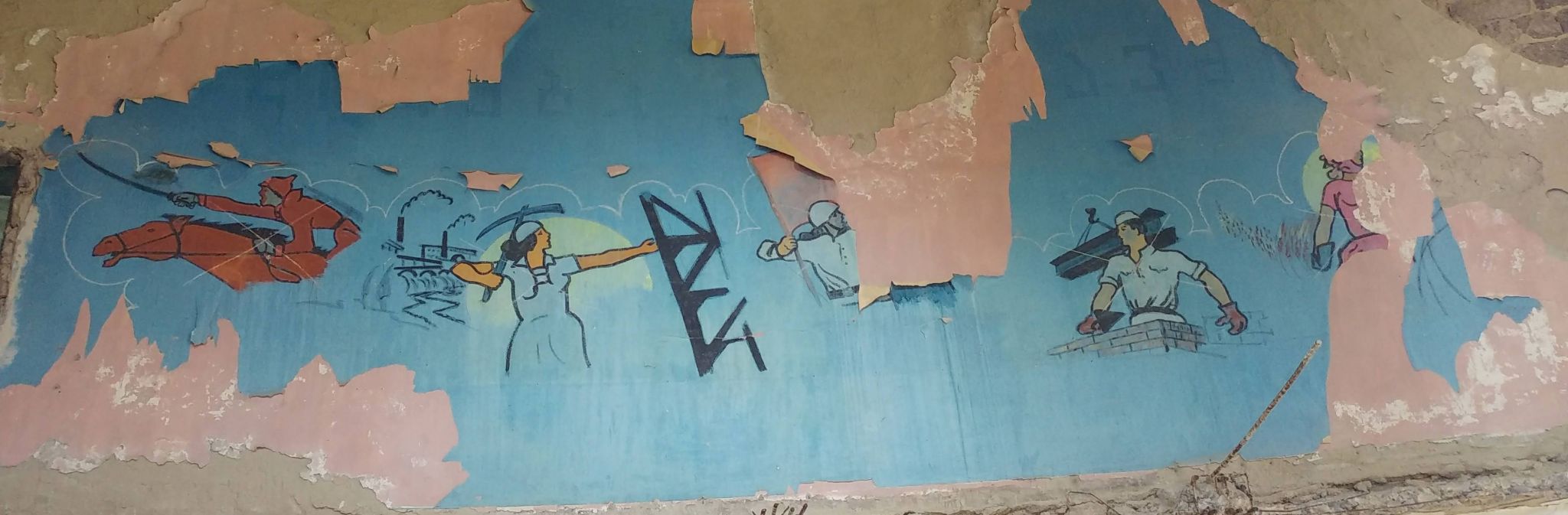
We had met two other travellers at the rooftop café, one Swiss, one Egyptian, and they were interested in tagging along, so we sorted a taxi through the very helpful waitress (who spoke excellent English, and told us how the owner of the place had married an Englishman). The driver spoke almost no English at all but offered us a very fair price to go up, wait a bit and go back down, and so we rolled up a switchback of dusty roads. The Young Pioneers were a sort of Leninist version of Boy Scouts/Hitler Youth, combining healthy outdoor camping activities with communist brainwashing, and the Palace was a sort of Stalin-scale youth/community centre. Now, it’s a huge collapsing pavilion of artistic 50s Soviet concretework in the utterly neglected Gagarin Park (cows at one end, sweetcorn at the other), and its ruined walls with their cartoonish figures of heroic workers and soldiers are like an early form of Pripyat.

The driver accepted our first tip, upon letting our new friends out at the cable-car station, but refused to take any more money for getting us to the marshrutka stop. I got my phone to thank him and wish him well (ძალიან დიდი მადლობა. კარგ დღეს გისურვებ. შენი მეგობრები ინგლისისა და უნგრეთისგან). The Gori marshrutka (actually to Tbilisi, but passing Gori) was a cleaner, more modern piece than Ulrich Kapral, and it wound along the valley through the skeletons of manganese mines, into the brighter country beyond. Then it broke down. We would have been worried, but it was a lovely day with a cool breeze, we were in no rush, and this presumably happens all the time and they have ways of dealing. Sure enough, after the driver disappeared under the bonnet for some time, we were up again. The landscape – rolling hills, dense maquis coverage, women in black headscarves selling fruit and the odd bloke napping under a tree – all gave it an oddly Corsican flavour.*

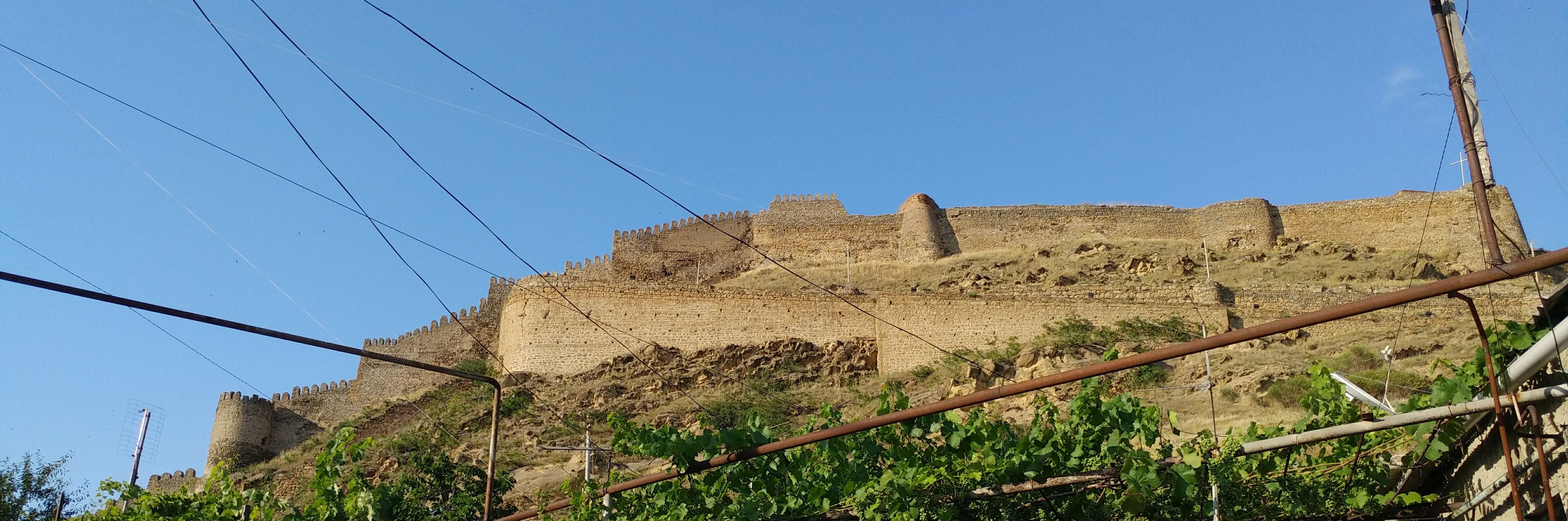
I napped (apparently through some cracking castles, and a friendly castle-informing elbow) and felt like I’d woken up in a different country: a wide, flat one with broad yellow fields and gentle hills which felt like at some point they’d been under either a glacier or a sea. The taxi driver picking us up from the motorway ripped us off, but only by £1, so who cares? In the middle of Gori, the castle is visible from a long way away, crowning a large ridge with a ring of brown walls and a flight of gatehouses like massive stone stairs. Coming close, we saw its rounded crenellations, like gingerbread man fingers.
“Relatively few people in the world cherish the memory of one of the 20th century’s greatest leaders, Joseph Stalin, but most that do live in Gori.” So saith Wikitravel. I don’t know what I expected from the Stalin Museum, but I still found the level of hagiography bizarre. They’ve built a shrine – there is really no other word for it – around the crummy little hut he was born in, in the spirit of the Holy House of Loreto and equally deranged.**

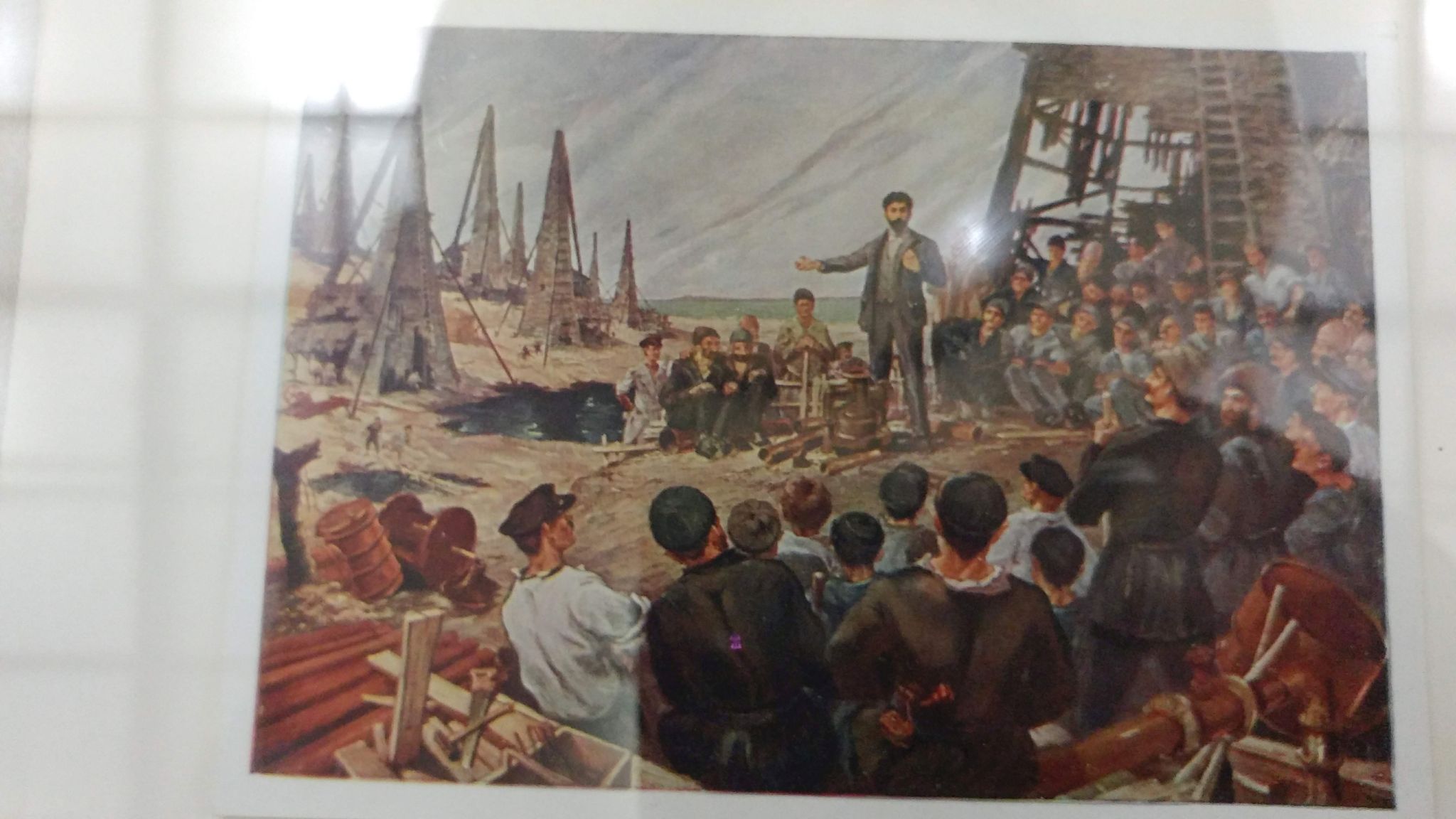
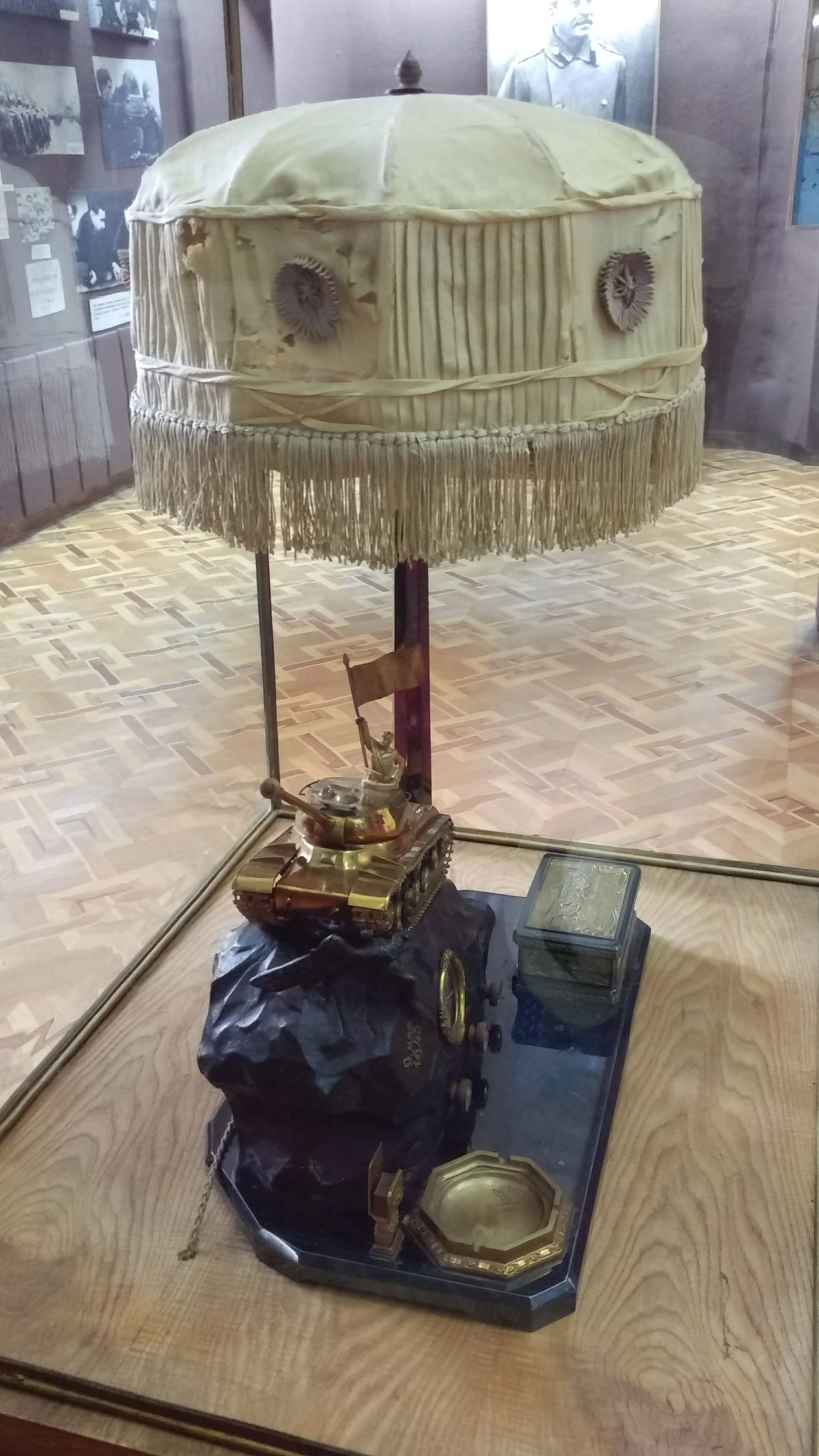
The museum is grandiose but thankfully not too big; we’d arrived with only half an hour to spend, and it was plenty. The museum itself is as much an exhibit as anything it holds, a bizarre living specimen of a cult of personality I thought Khrushchev had killed half a century ago. Stalin as the young, hunky revolutionary with red scarf and fierce hair; Stalin as the cuddly-looking patrician Uncle Joe; hardly anything in between, and not a Trotsky or Yezhov or mass grave or gulag in sight. Creepy early-Soviet postcards added even further to the cultic feel – there is something inescapably religious about the depictions of young Koba, a latter-day Jesus preaching to a crowd of slightly updated peasantry.
We had missed the last marshrutka to Tbilisi, but a solicitous taxi driver offered to take us for 70 lari (vastly more than anything else we’d paid in Georgia but still not actually very much money.) Road signs said things like “1294km to Tehran”. The driver was a younger bloke, and we exchanged despairing comments on the politics of our respective countries, and lurid tales of the Russian invasions in South Ossetia (visible across the valley). Eventually he turned on the radio, and we ended up having a little singalong, tearing it up at 130kph, windows down, belting out System of a Down songs together.
As we left the Stalin museum a little girl was having her photo taken with a statue of Uncle Joe, smilingly innocent of everything he was and represented. Thinking about it in Tbilisi that night, I decided that actually, it didn’t bother me. Stalin’s face has been smashed down from every wall in every country he once terrorised. The parts of his legacy which can be put right largely have been; the parts which cannot are better known and remembered than before; and if what’s left of his cult is as a weird, defanged tourist curio in a poor, obscure town with nothing else to be proud of, so much the better.
Or as we put it more pithily to his death mask, “stay dead, you cunt.”
* NB: I have never been to Corsica and am principally aware of it through the stereotypes presented in Asterix. Which this landscape exactly matched, apart from the flick-knives.
** The museum and an accompanying fountain park are aligned to the hut. The city is built in a grid pattern which more or less parallels the park, leading to the chilling thought that they might have rebuilt the city plan around this meaningless slum. Or maybe not. What can’t be said about Russia? Everything is true eventually.
Good morning, Kutaisi! – Museums and wine – Chiatura from above – Pioneers’ Palace, Gori – Tbilisi – David Gareja – Akhaltsikhe – Vardzia
 underneath the open sky
hello,
i tried but a can’t locate the Pioneer Palace even with your link, can you pin it for me on the google maps?
best regards,
Joana Baptista
Hi Joana,
Try these coordinates: 42.281349,43.283922
:)