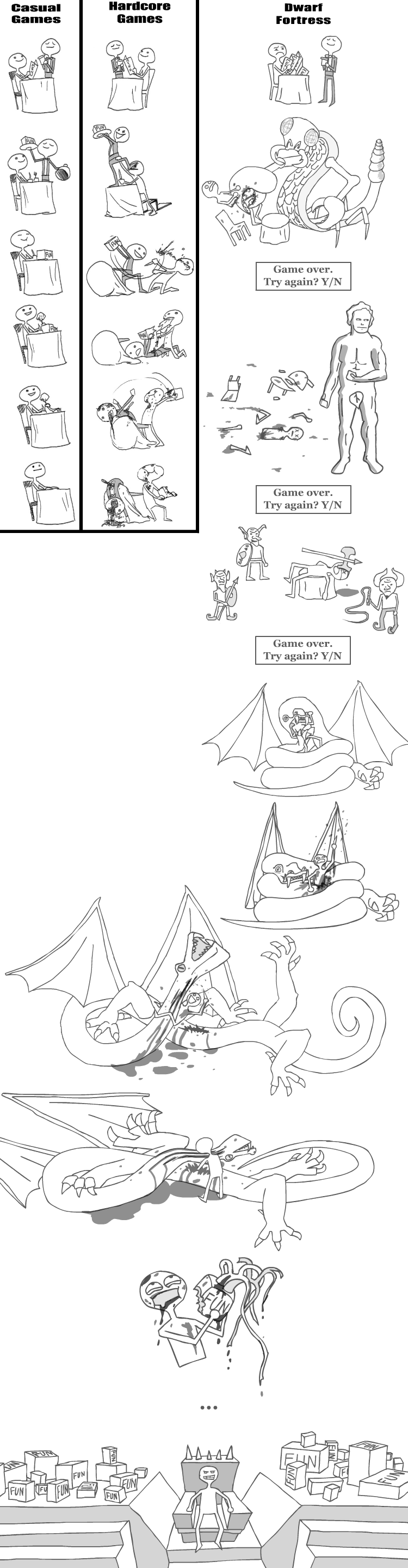
Workers and Resources: Soviet Republic is the most complex, and thus obviously the best, city builder ever made. For those who know the genre, consider the sophisticated supply chain optimisation of Factorio or Satisfactory plus the managing population demands of Banished or Surviving Mars (complete with oh-god-you-screwed-up-everyone’s-starving-to-death failure spiral) and a fair bit of the classic trains-and-logistics TTD gameplay. It doesn’t have a difficulty curve so much as a cliff, which makes the payoff of eventually getting everything working a lot like that old Dwarf Fortress comic about fun.
WRSR is an early access game made by a handful of chaps in Slovakia, and still under development. The essential conceit is that everything can be bought for money (you start with both dollars and roubles, and can earn more by trade with east and west), but also absolutely everything can be done for free if you apply – wait for it – workers and resources. This has gradations – for example, your workers need food. They get this by going to a supermarket, which can be built or bought. You can autobuy food in to the supermarket (paying a delivery premium); or you can buy a lorry to drive to a border post, load up on food and deliver it (cheaper in the long run, more complex and requires a lorry); or you can make your own food at a food factory. But wait! That food factory needs to be supplied with crops, which could be imported, or grown – but growing them means you need to build a farm and get tractors and harvesters for it and fuel them (you can of course make your own fuel, if you build an oil well and a refinery, which uses a lot of expensive steel which could be made…) And you can’t do it all at once. The eventual goal is self-sufficiency, but the main gameplay loop is working out an industrial strategy and sticking to it.
I’ve run a few successful republics of increasing complexity with the usual 1960s start, but for a challenge have decided to do a 1946 start with the objective of a building a massive 1950s “Empire style” city. The early start means the lorries are worse. I’ll be using lots and lots of modded buildings and vehicles, and have picked a map with a big river down it to use ships for long-range travel, rather than the usual railway-heavy gameplay.
Amusingly, the gameplay lends itself well to Five-Year Plans. So my first such plan is:
1) use my starting money to buy half a town, a small construction industry and a small vehicle production line;
2) use that construction industry and vehicles to build a larger town and a much larger construction industry;
3) use that to build a second, larger town, and an iron/coal/steel/power industry;
4) set up an export (bauxite looks good) for positive cash flow to pay for all the food and vehicle blueprints;
5) build factories to produce all my own construction materials (bricks, planks, cement) for the next Plan, and try to reduce imports as as much as possible.
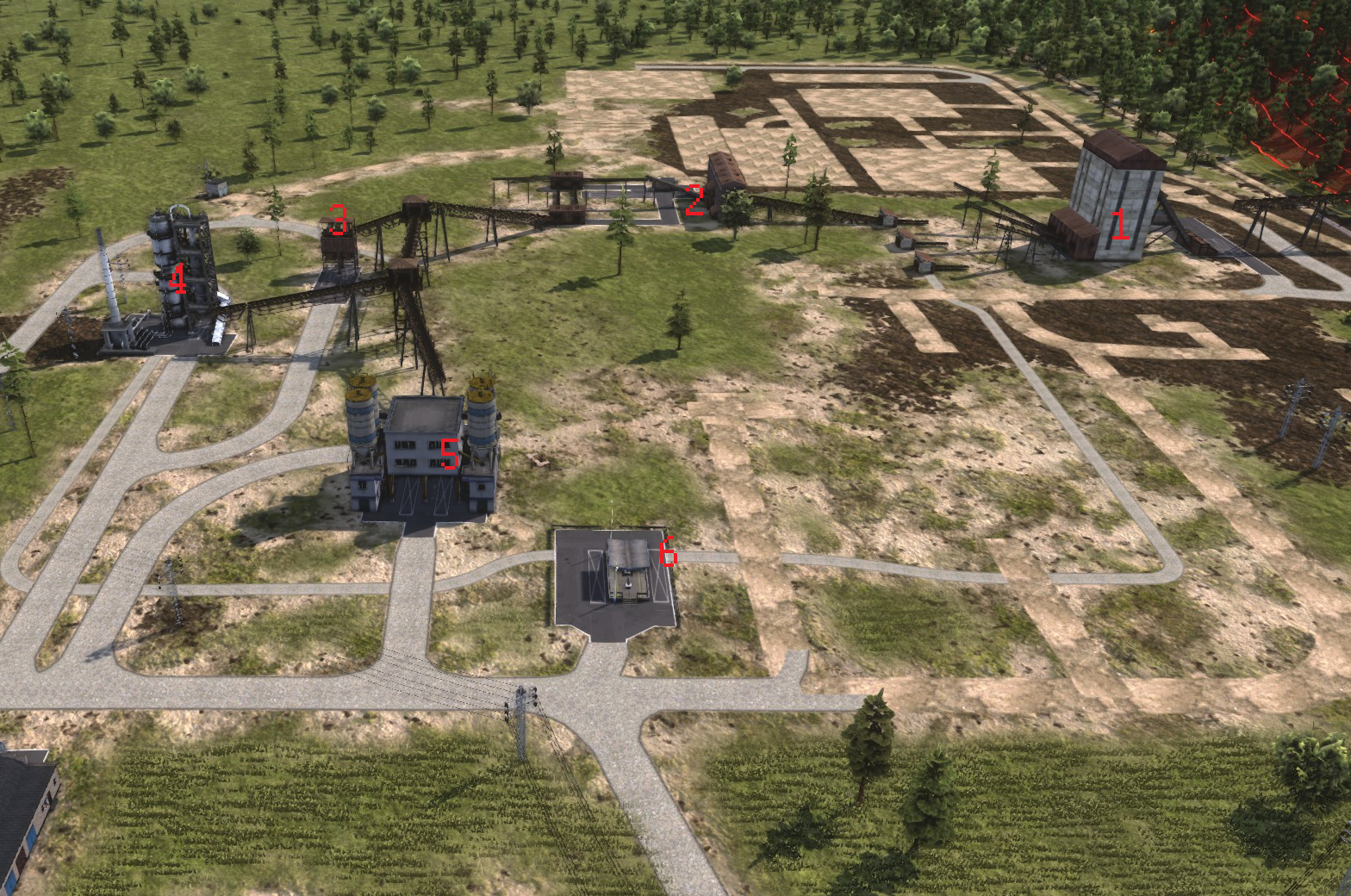
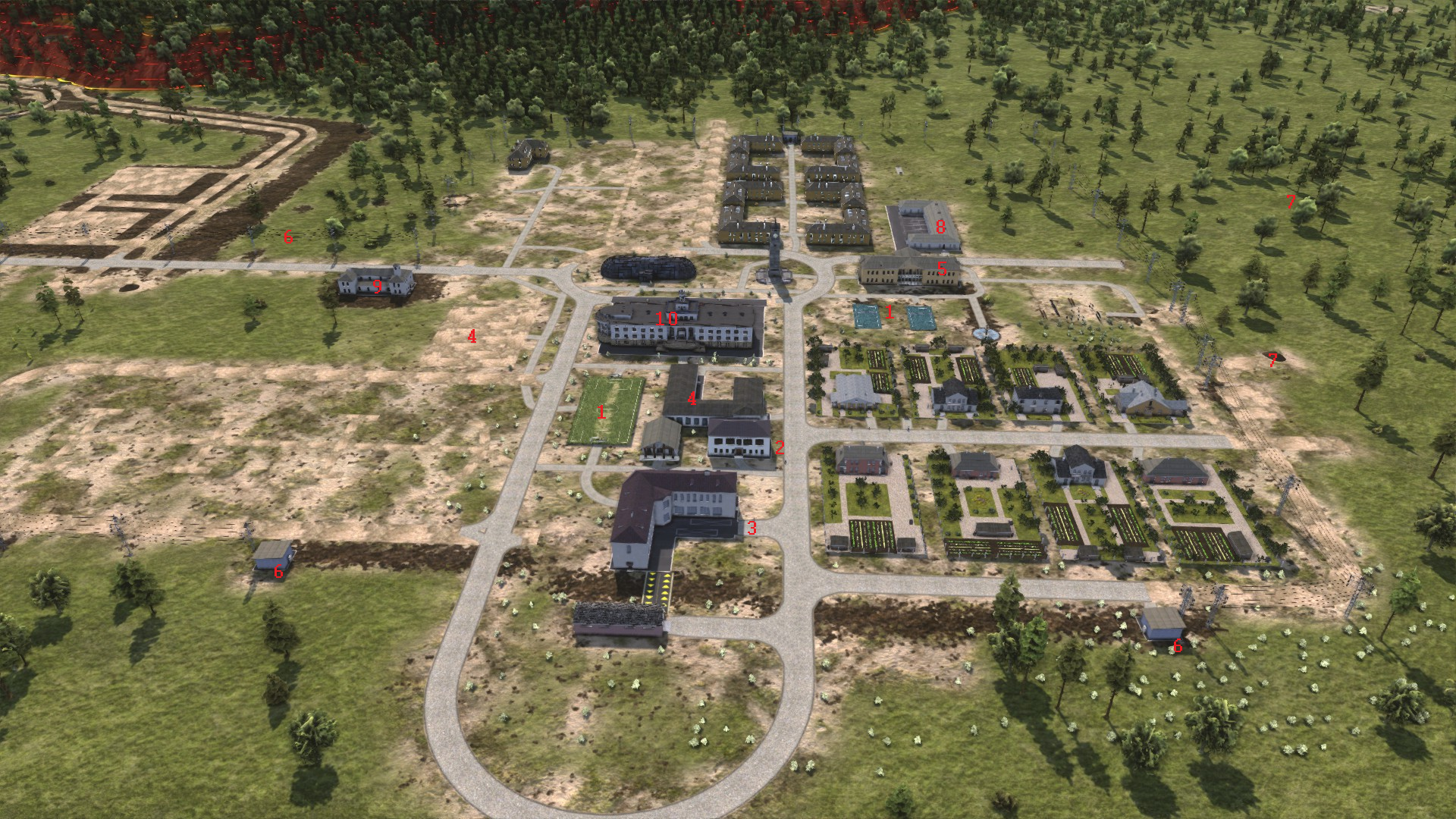
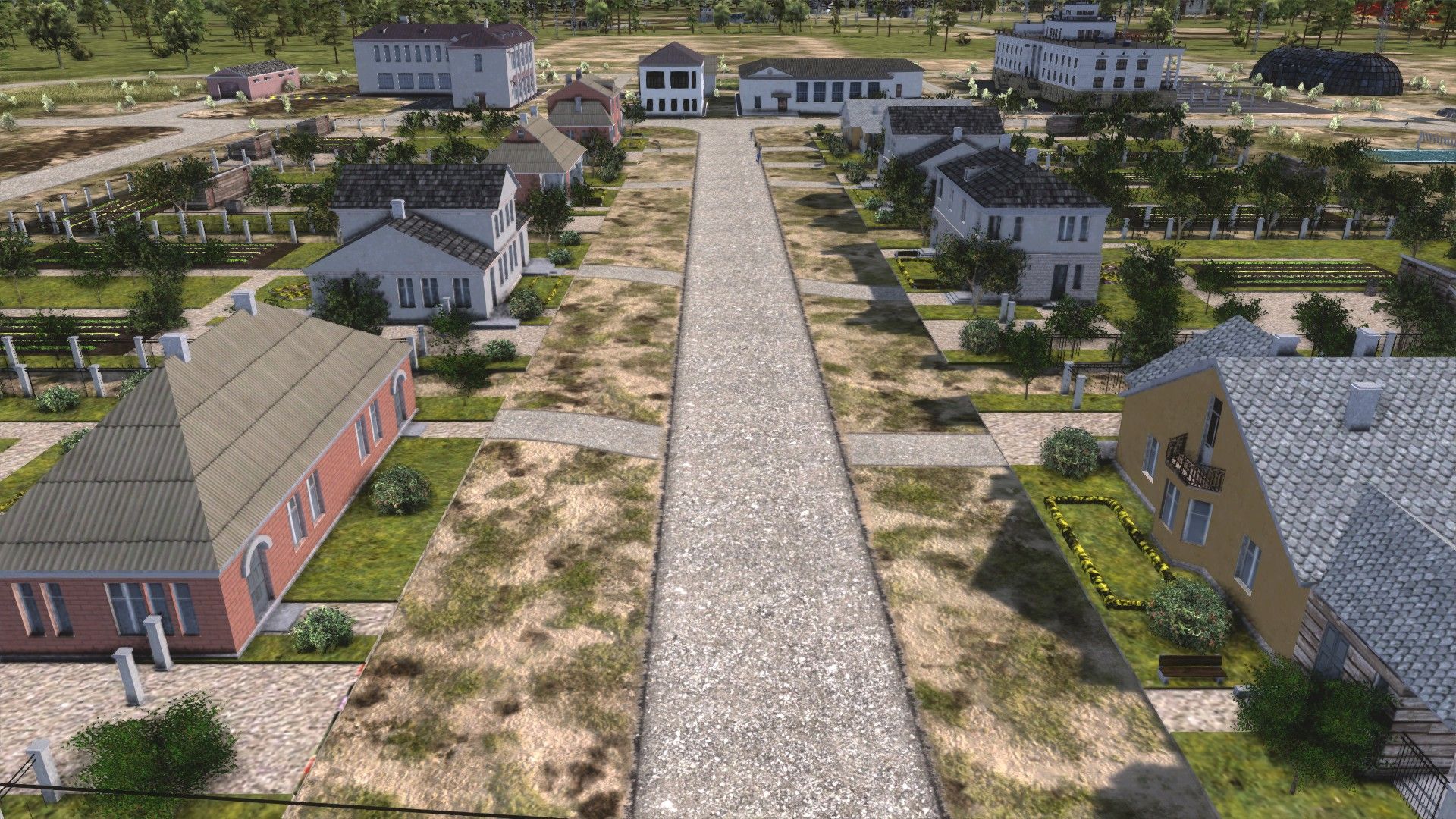
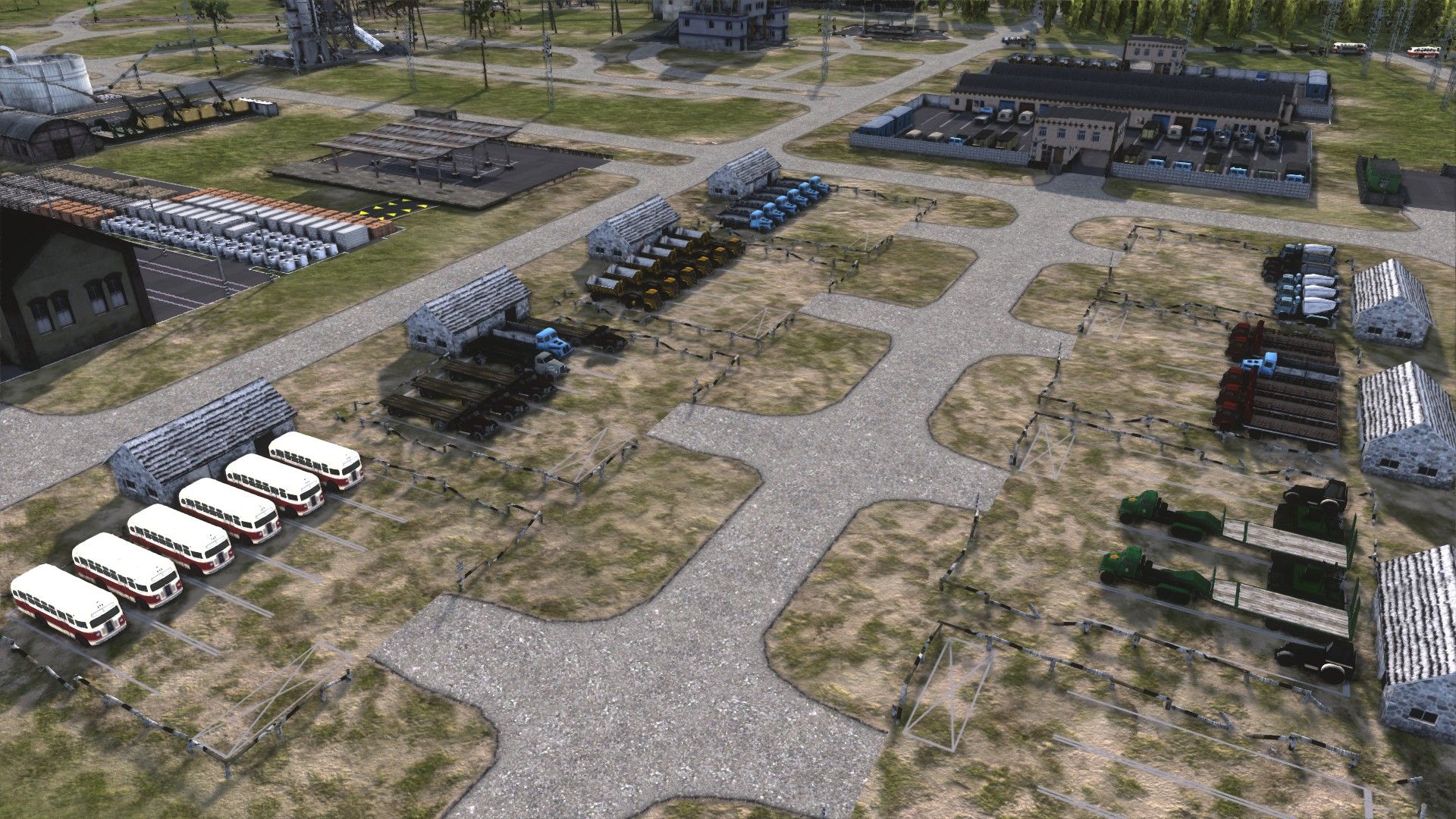
Because I’m modelling this with a 1946 start, vehicle options are limited. I’m buying a first bunch of the available Soviet lorries, but I’m also planning to build almost all my own vehicles from dollar blueprints.
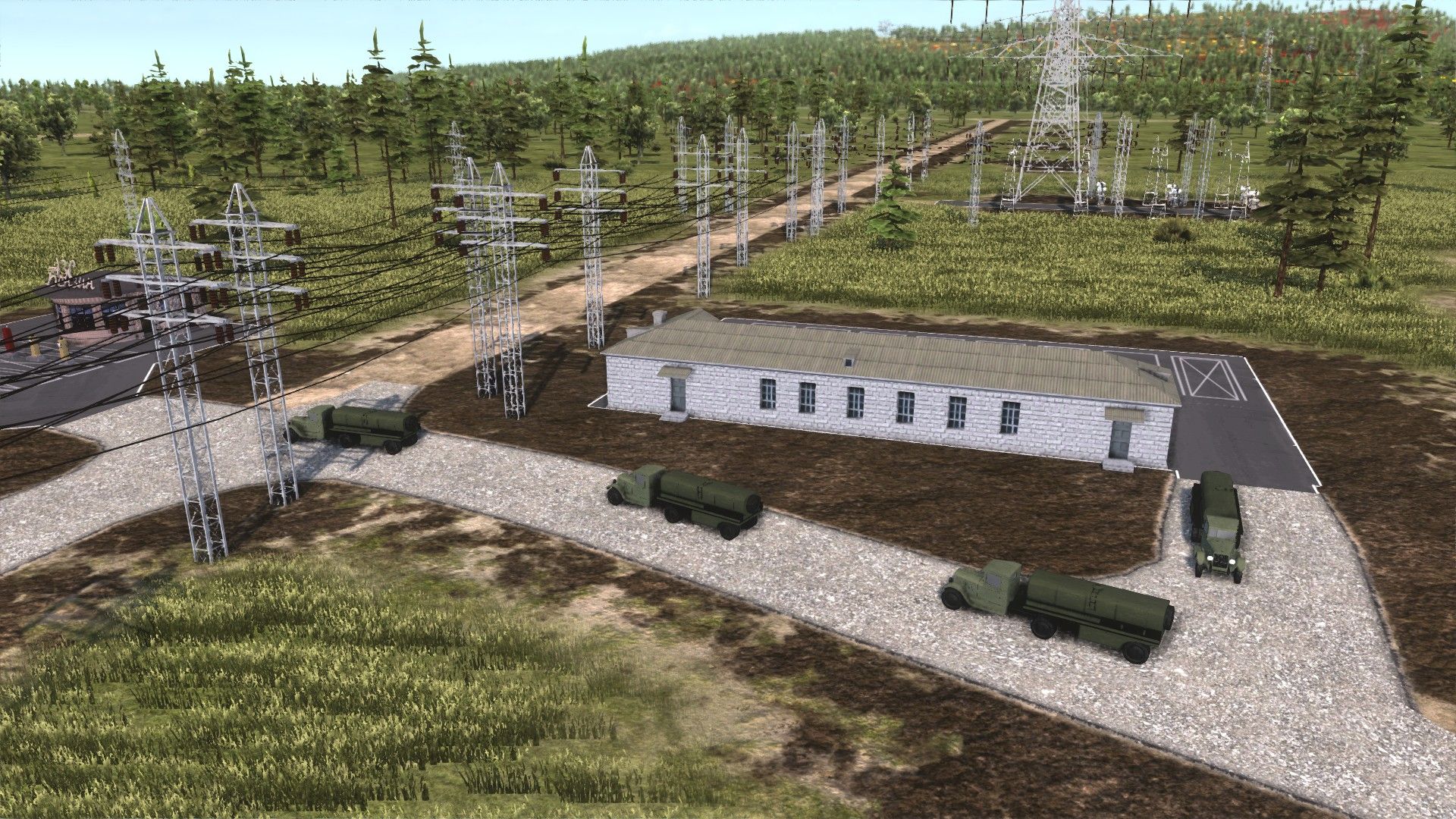
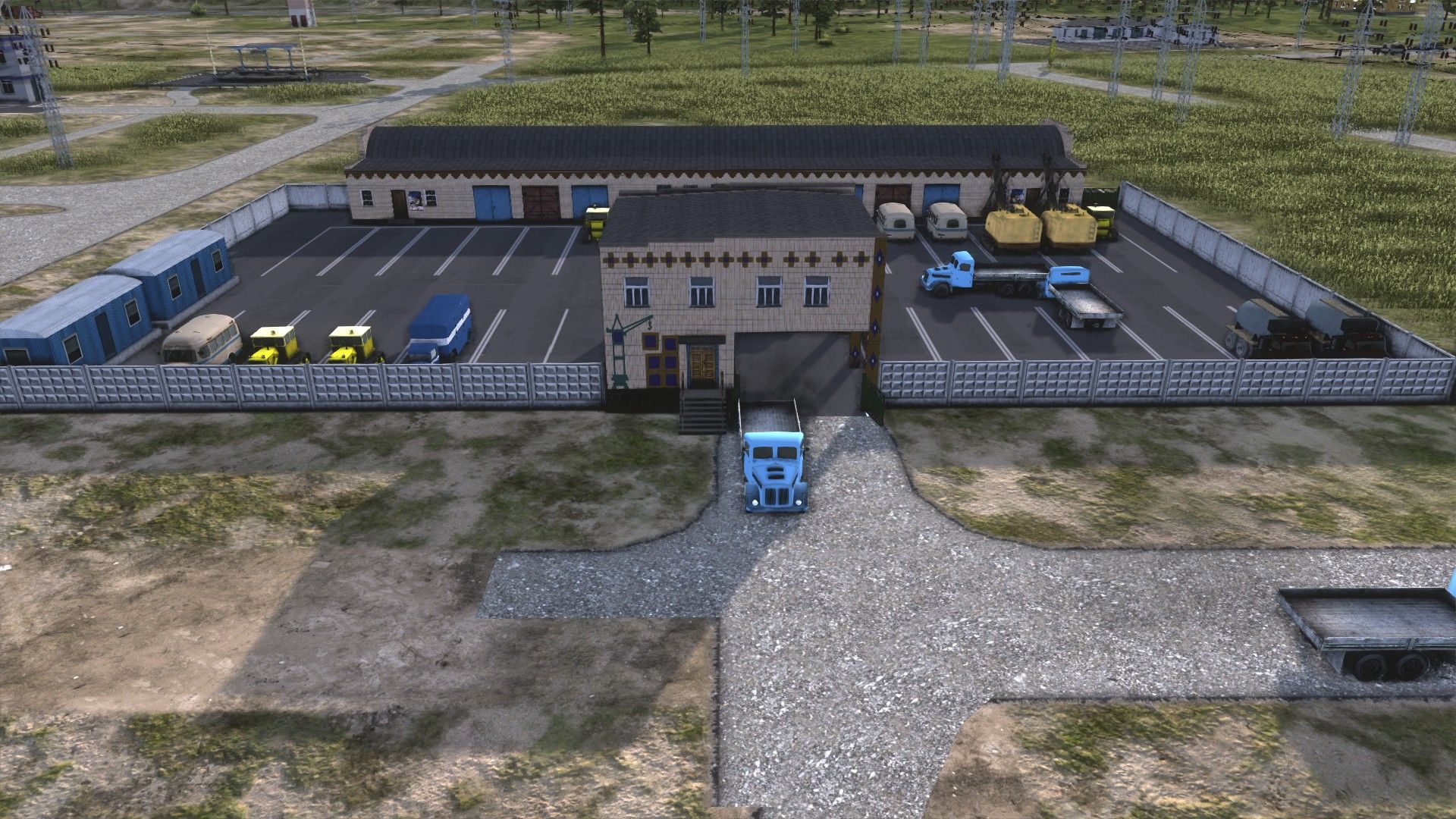
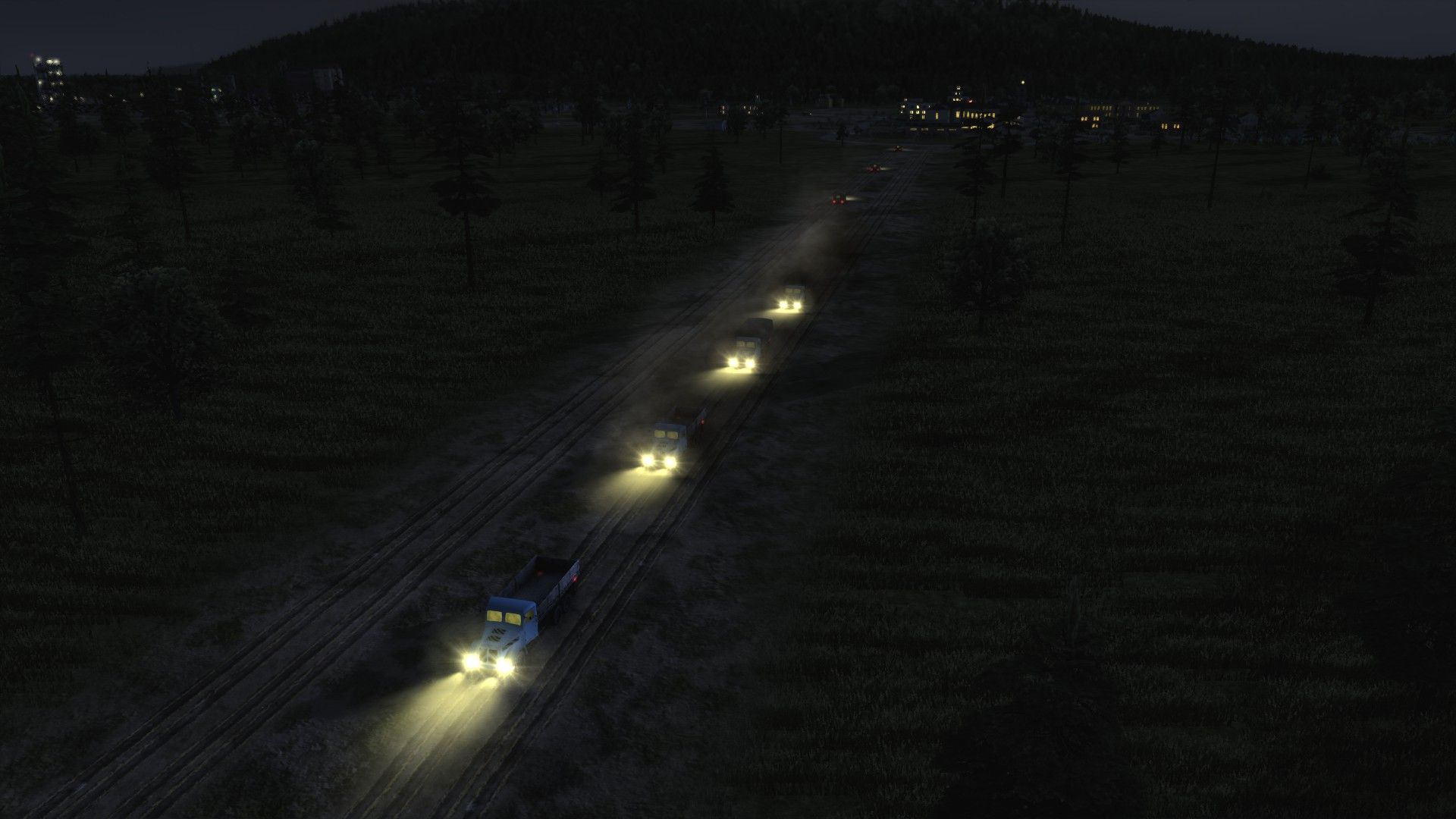
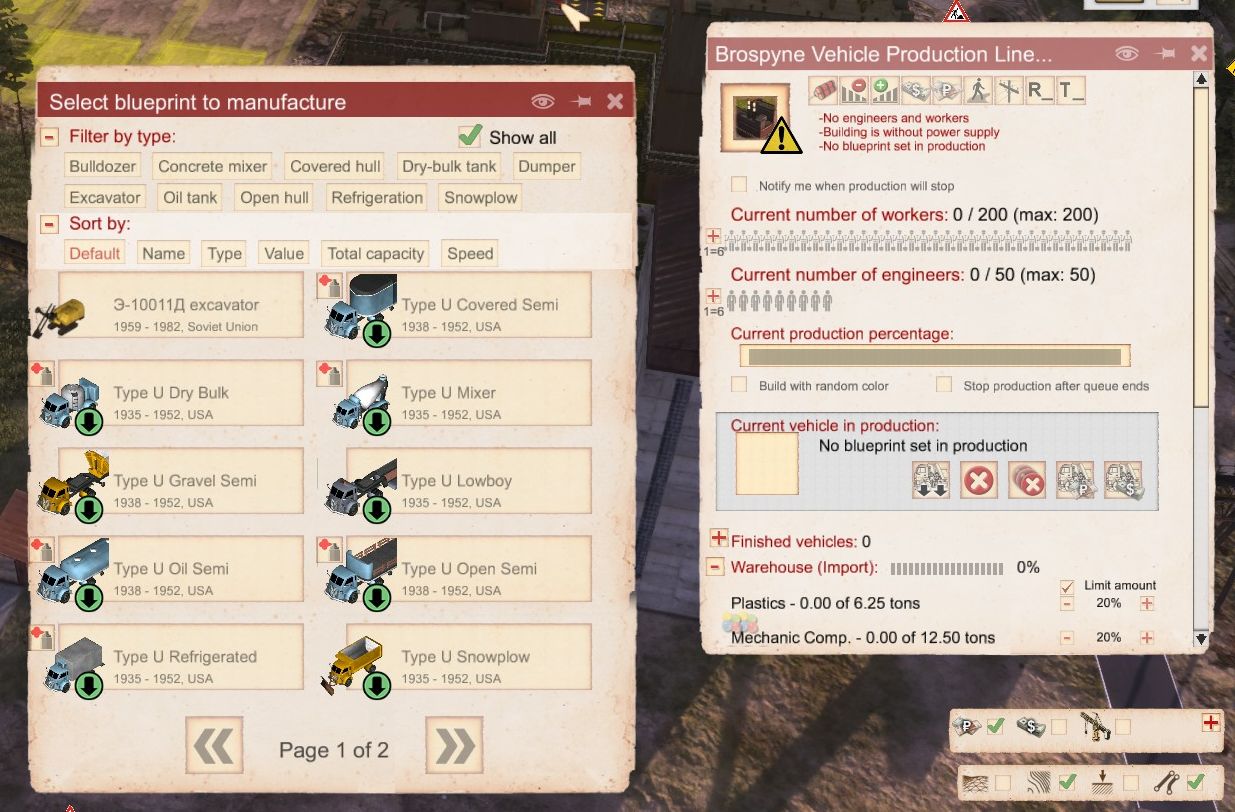
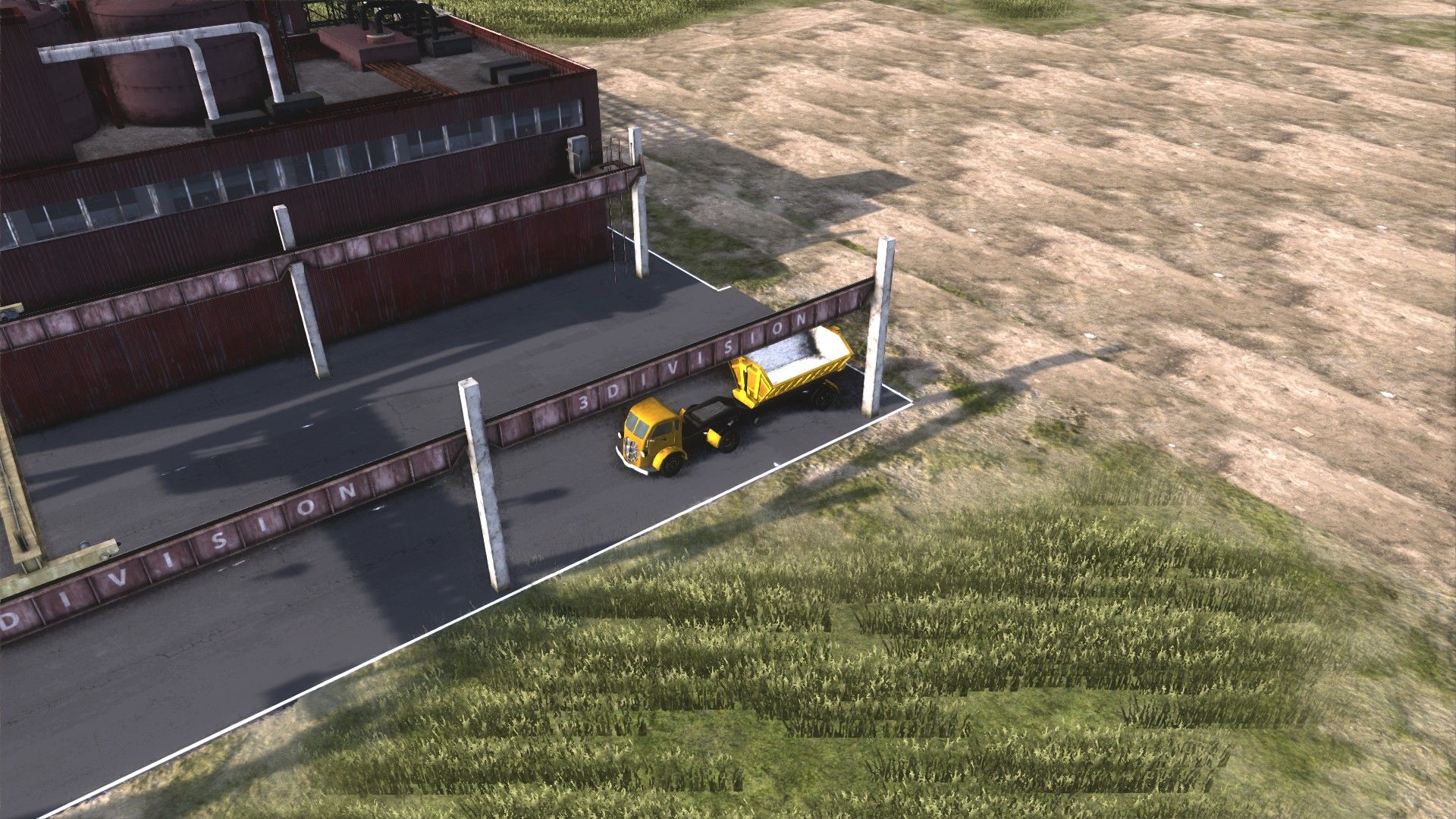
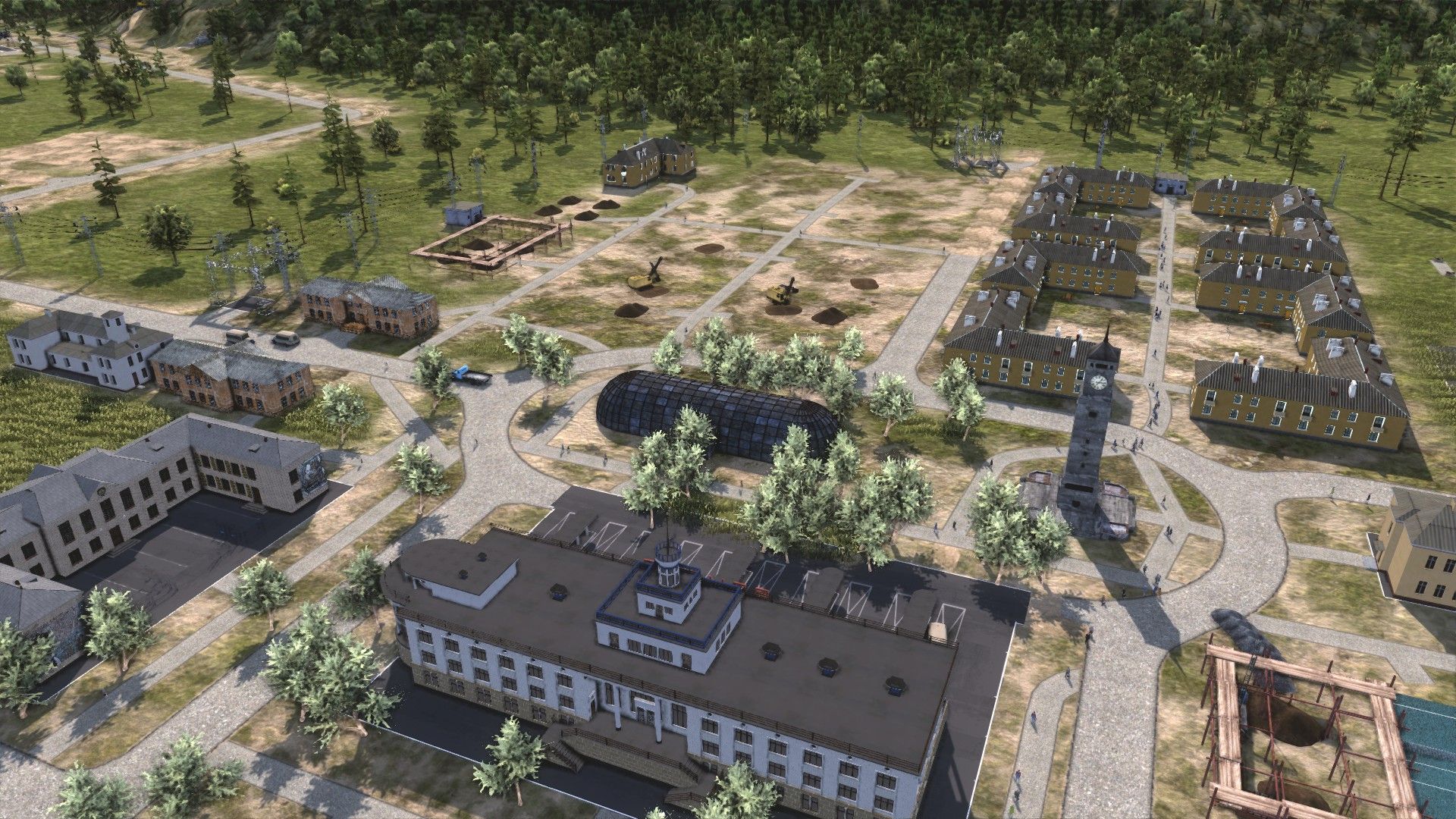
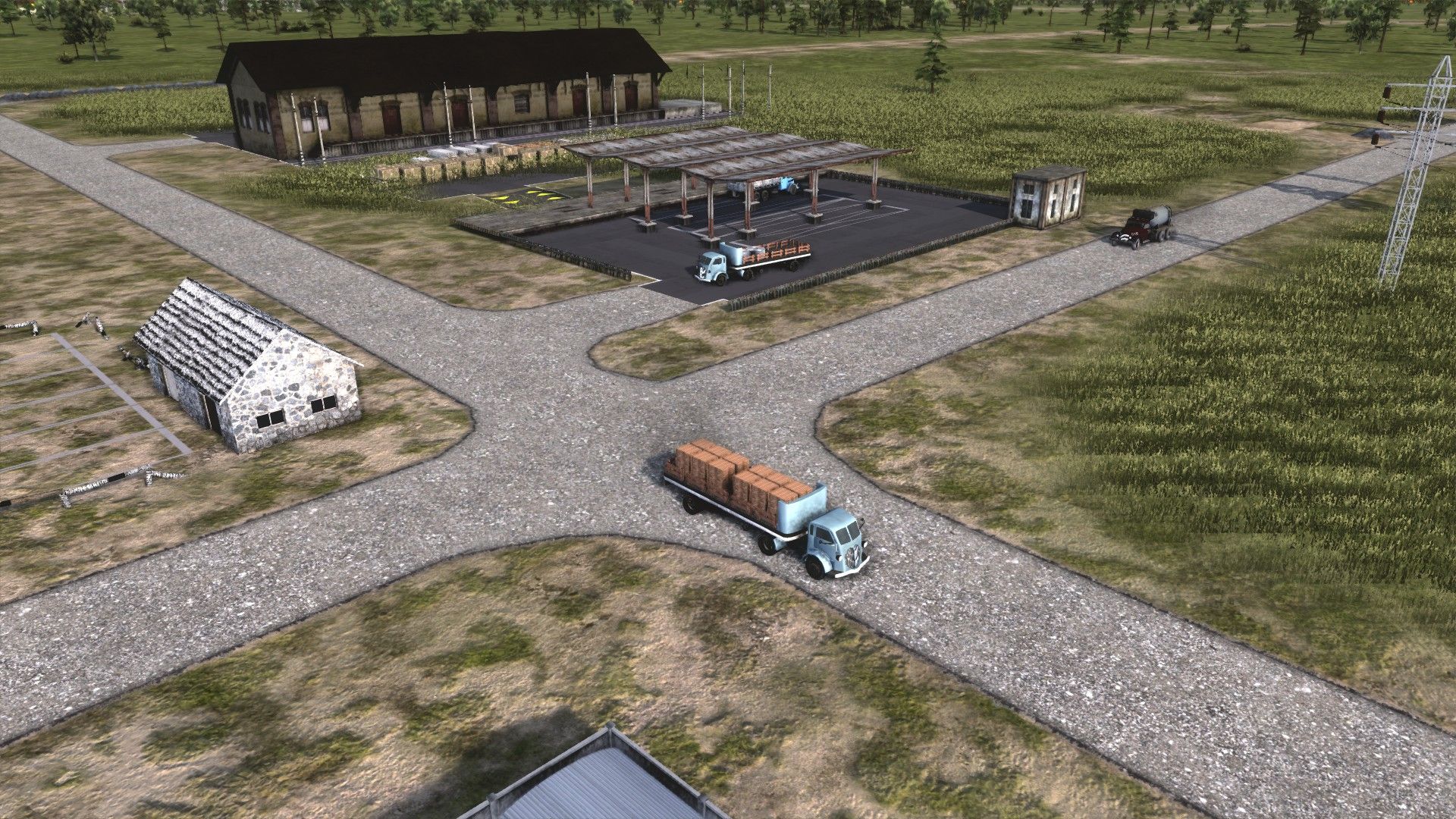
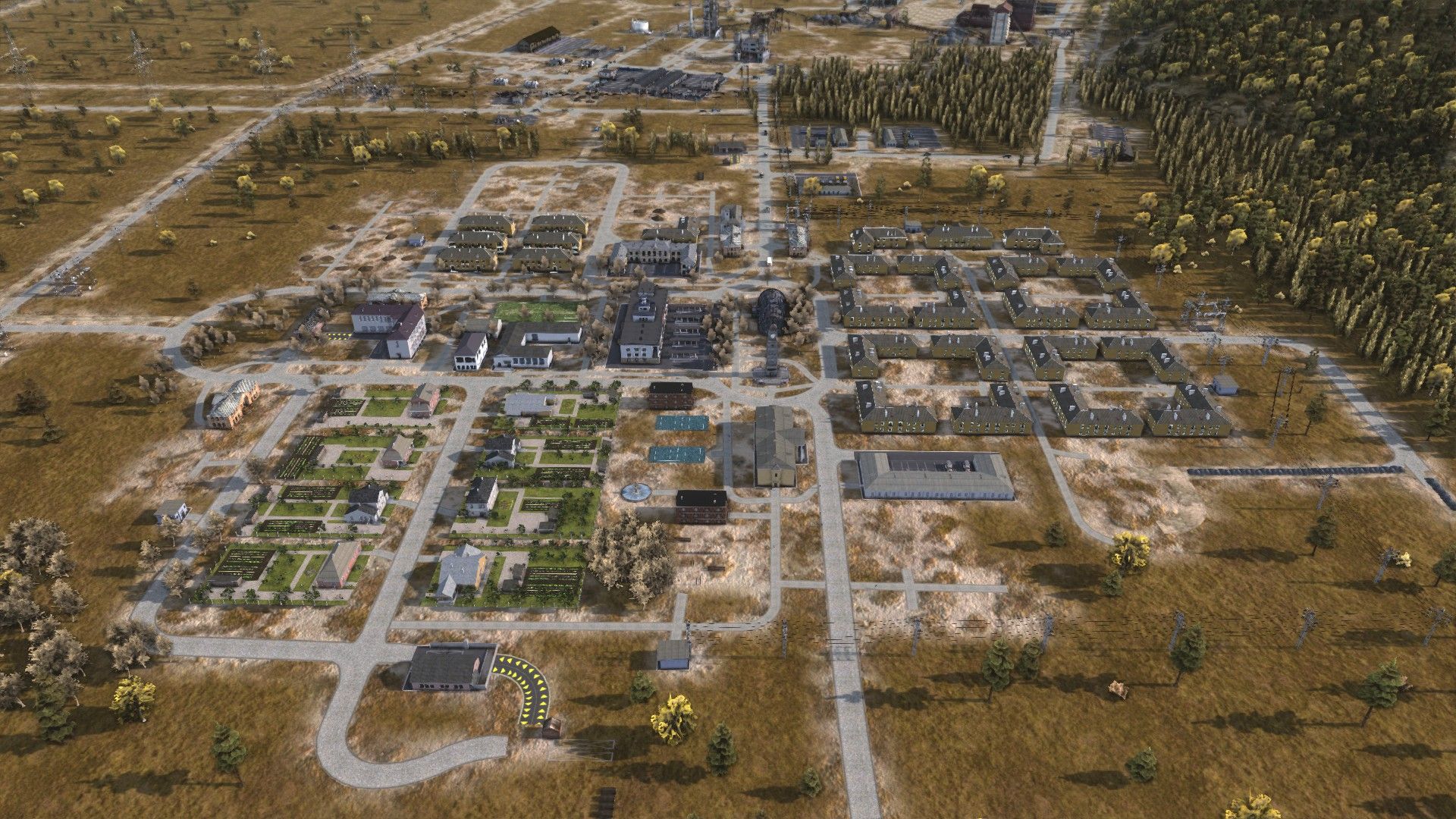
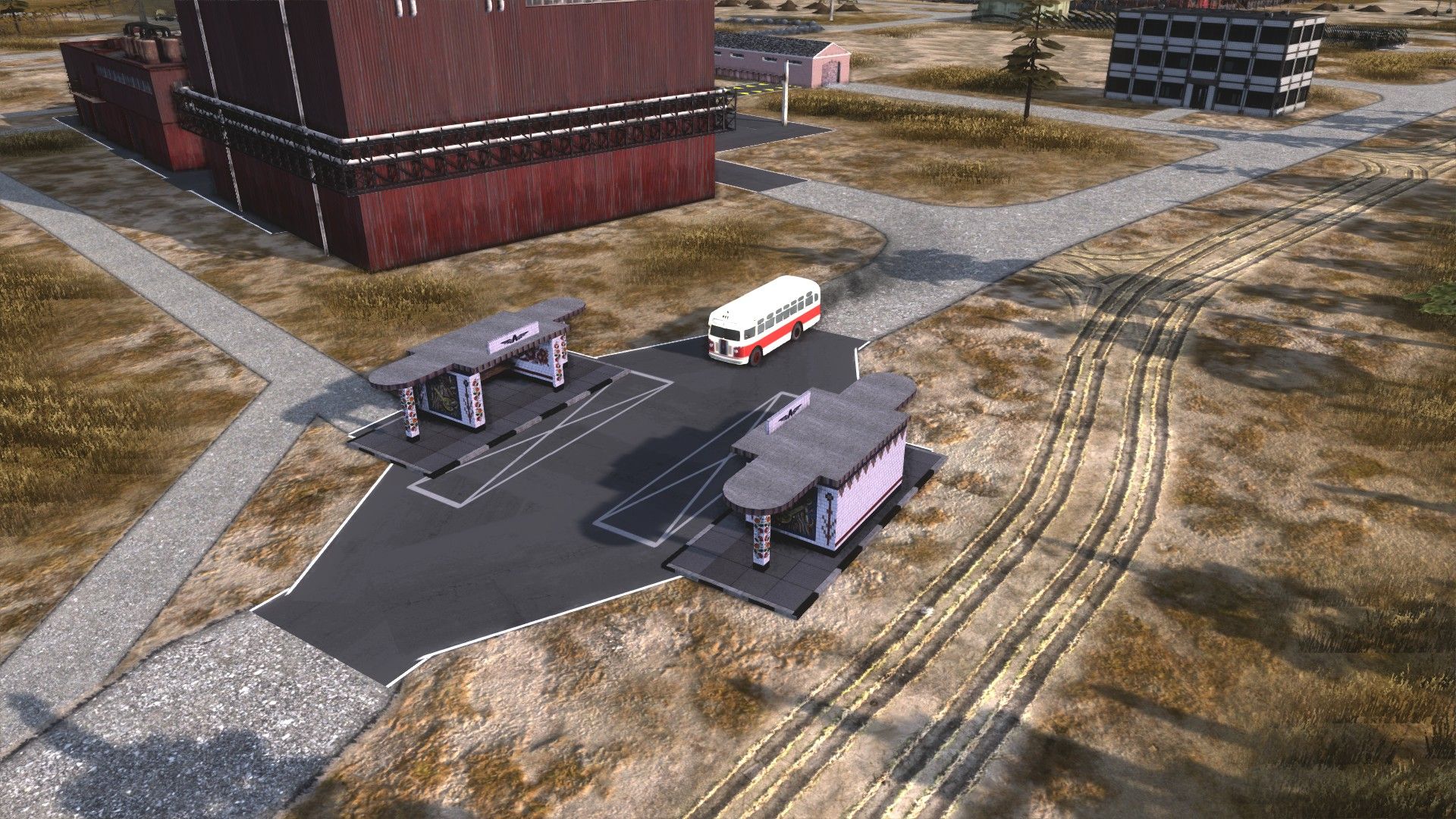
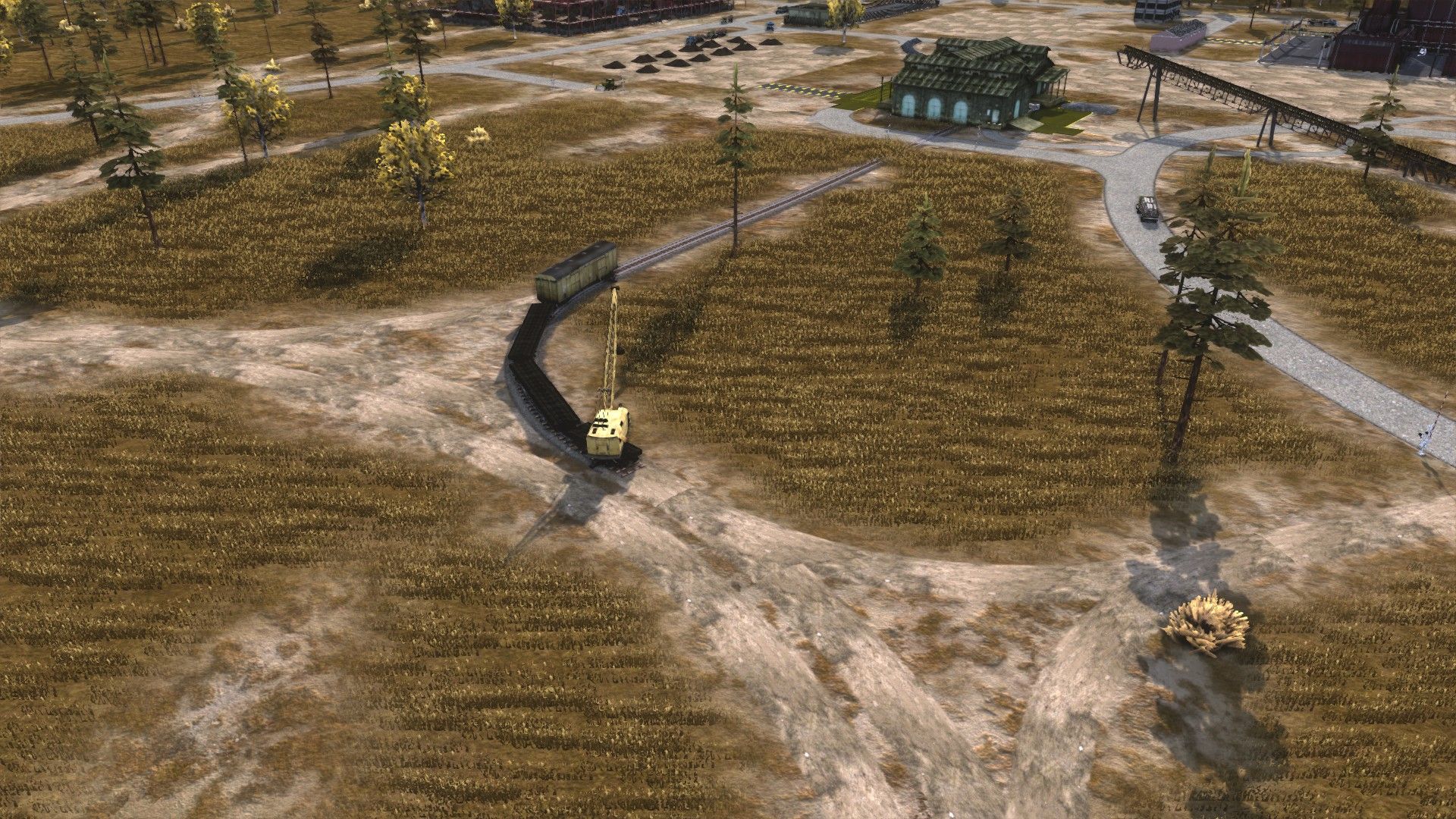
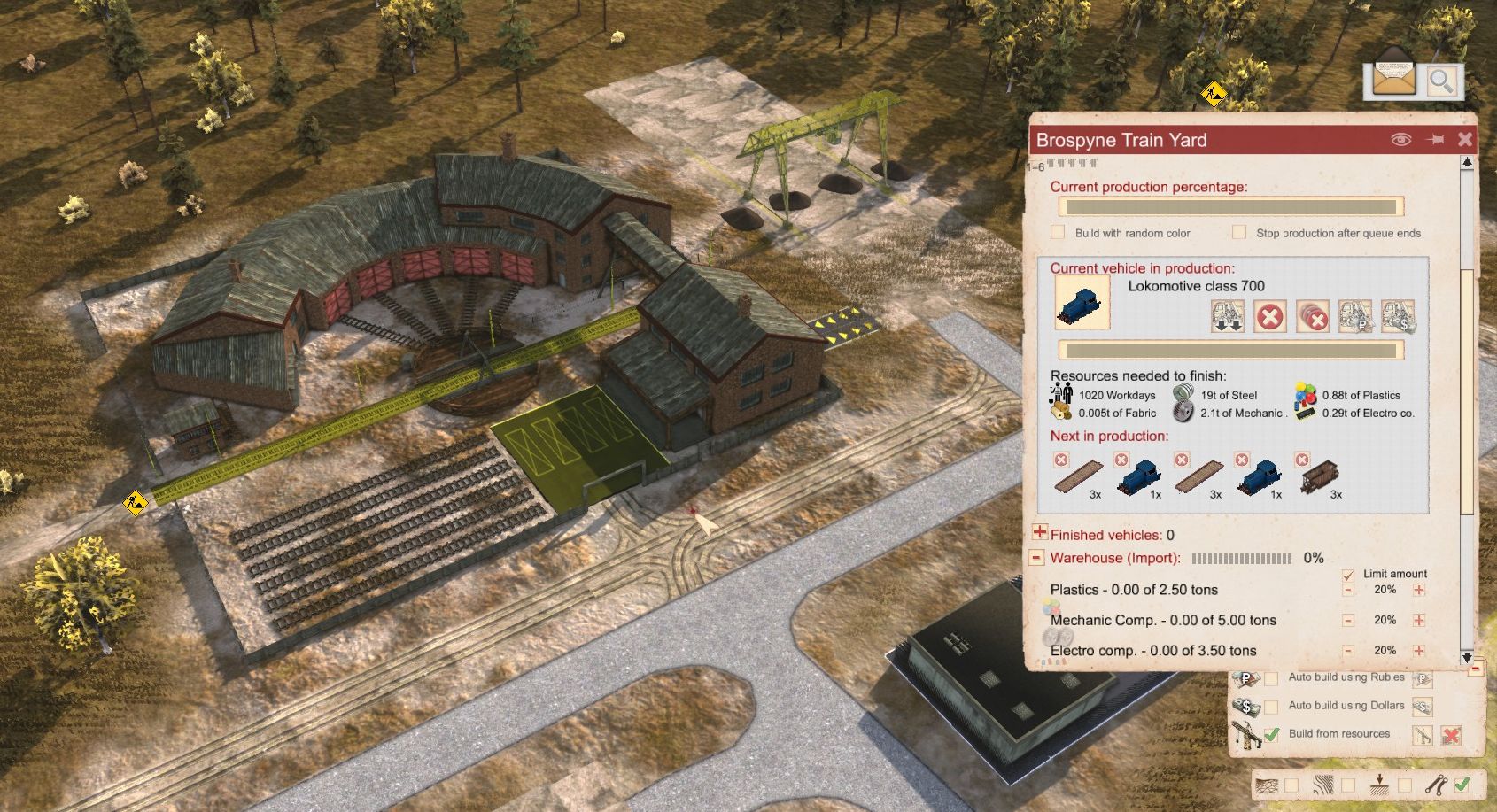
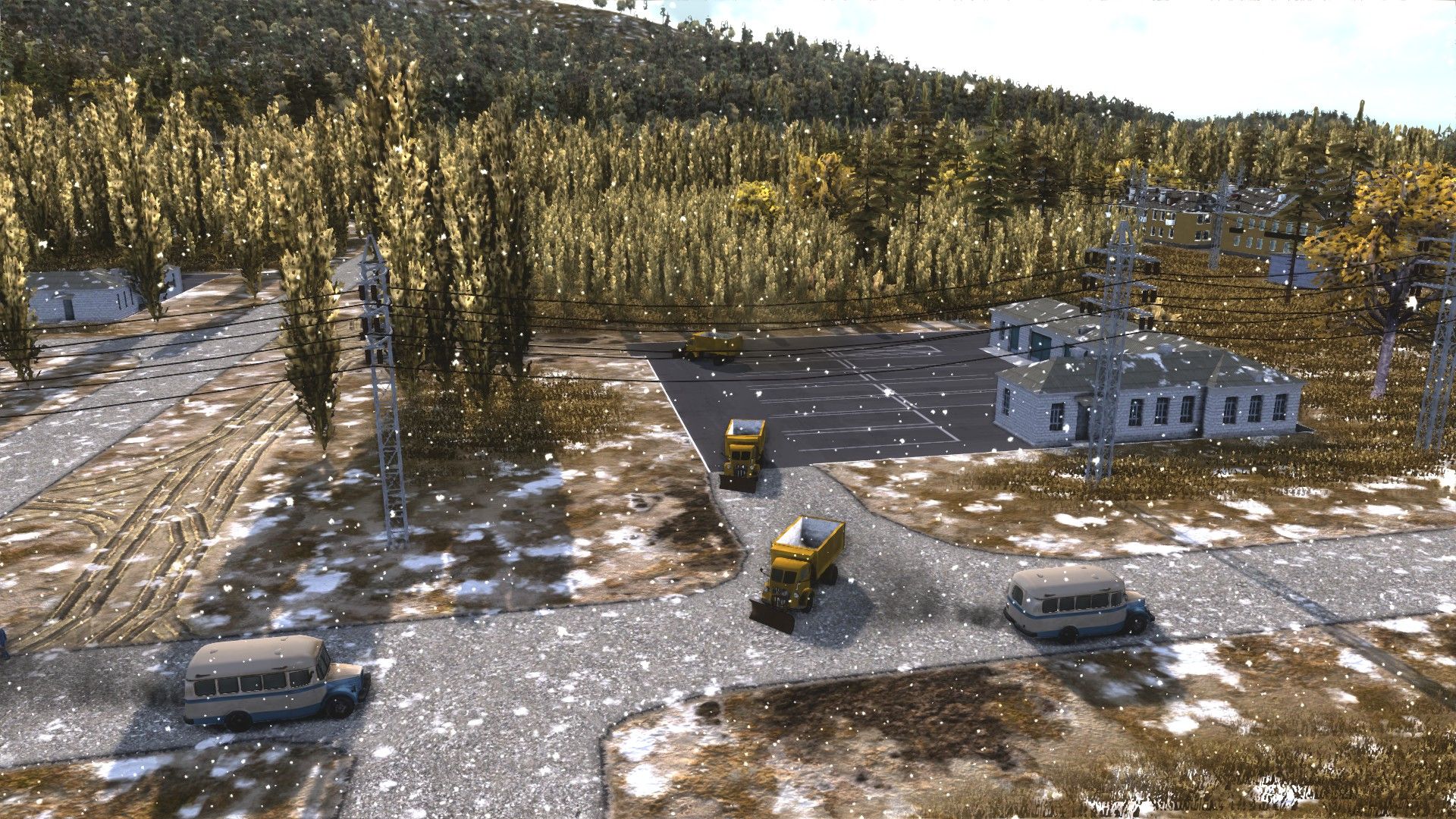
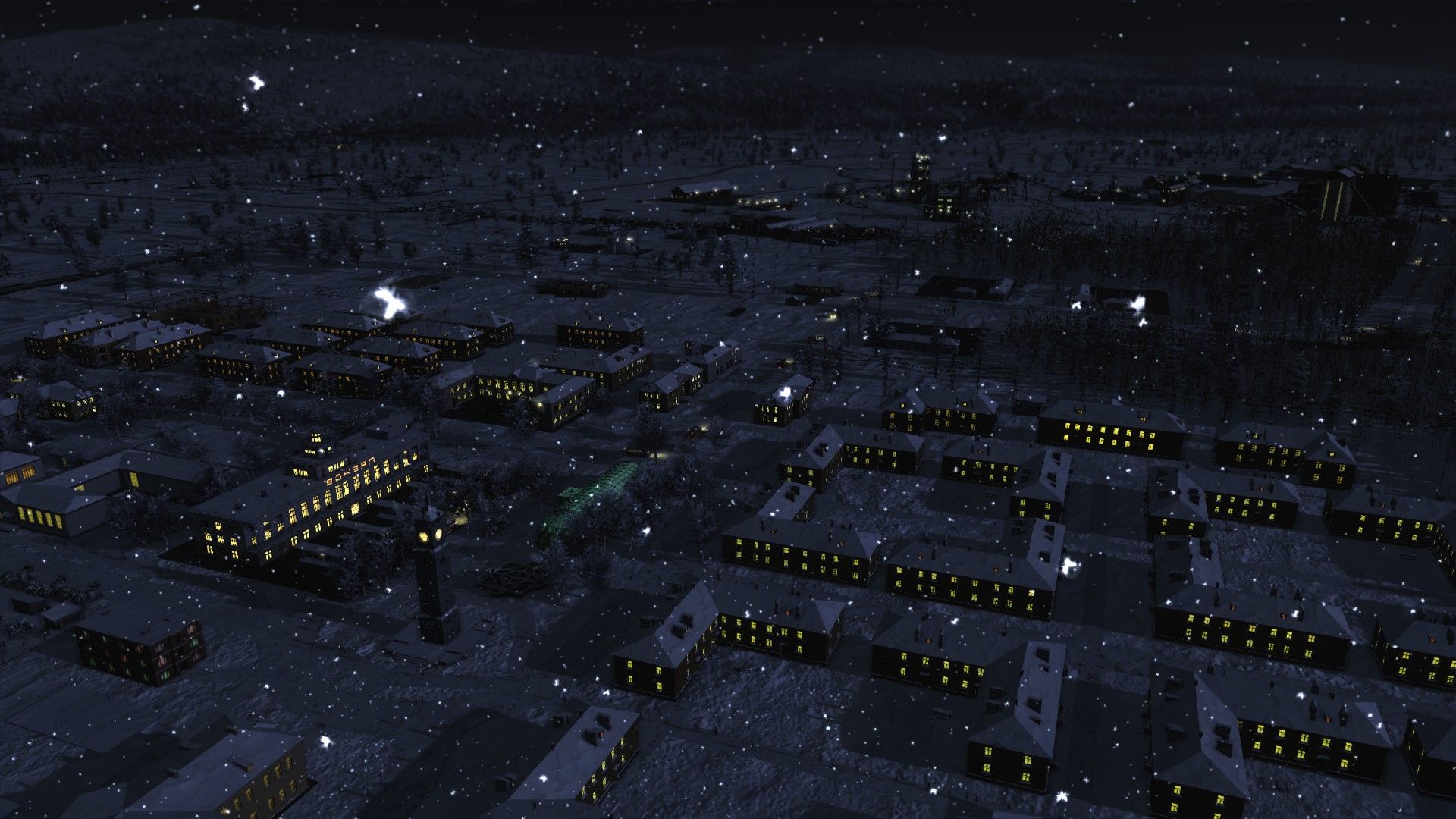
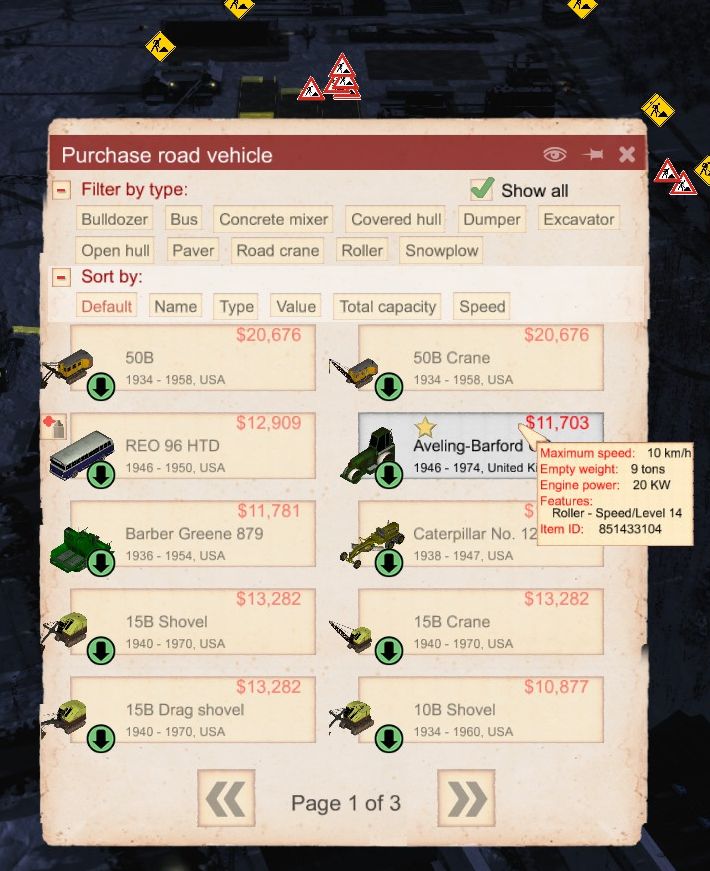
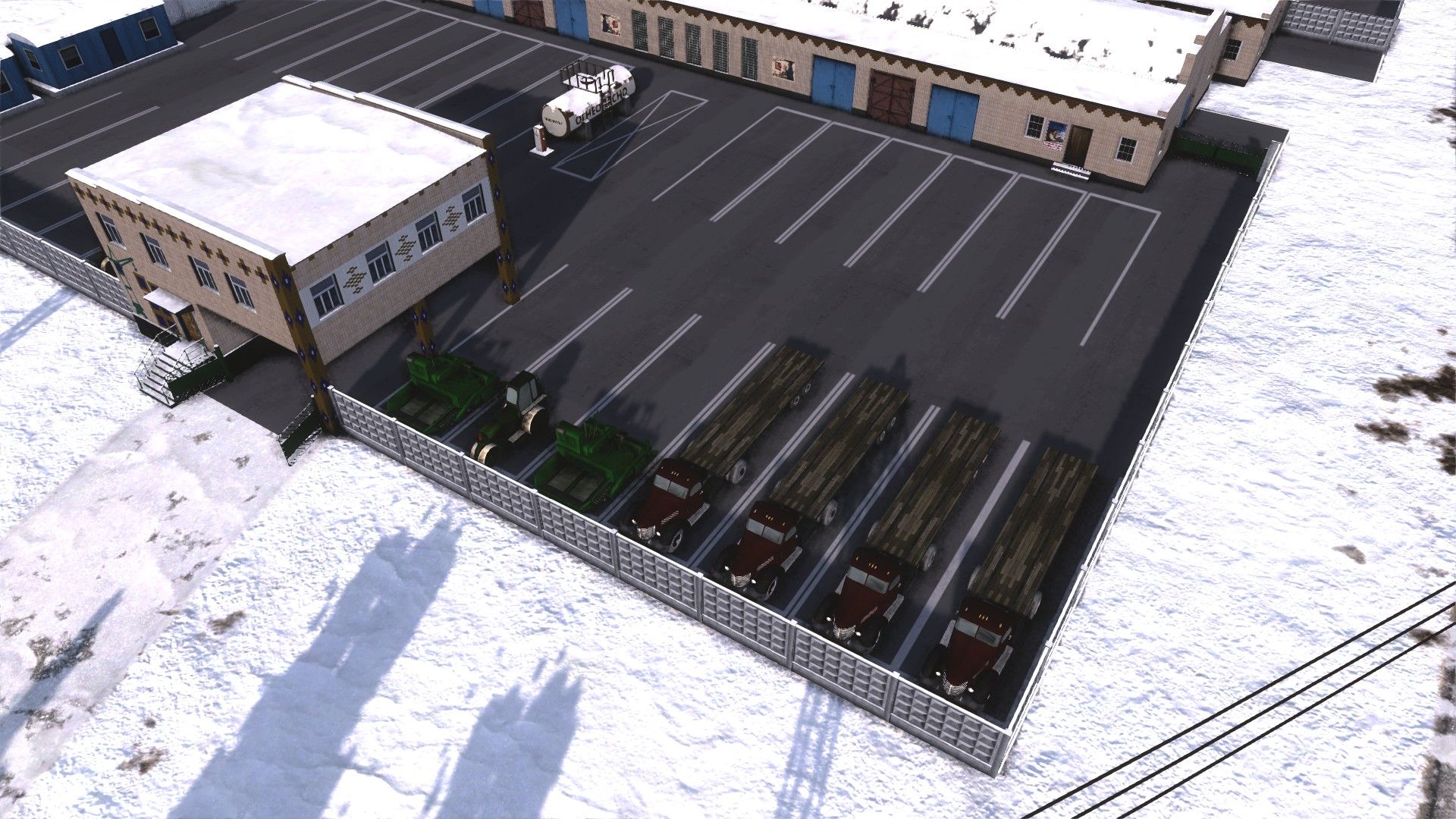
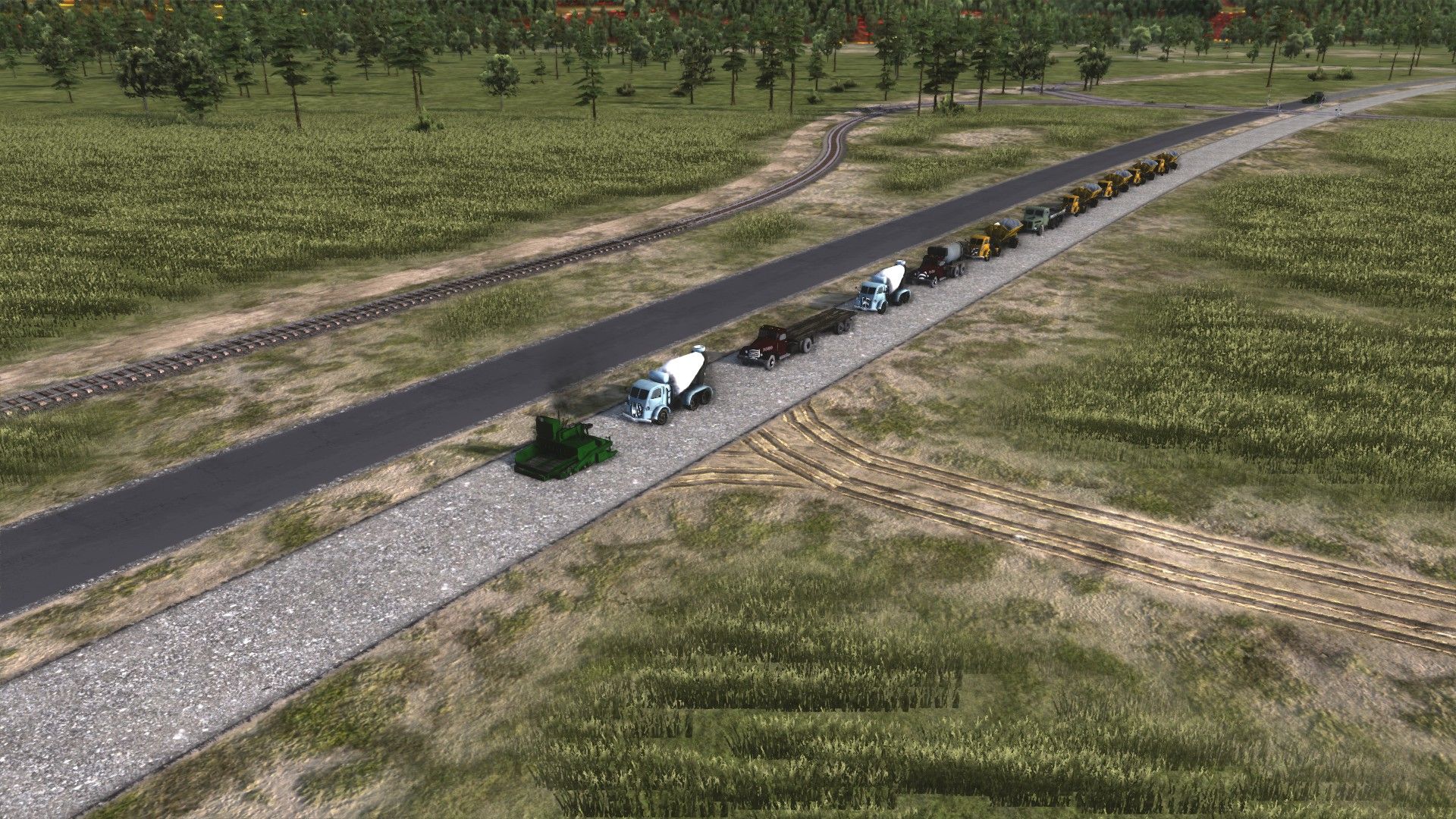
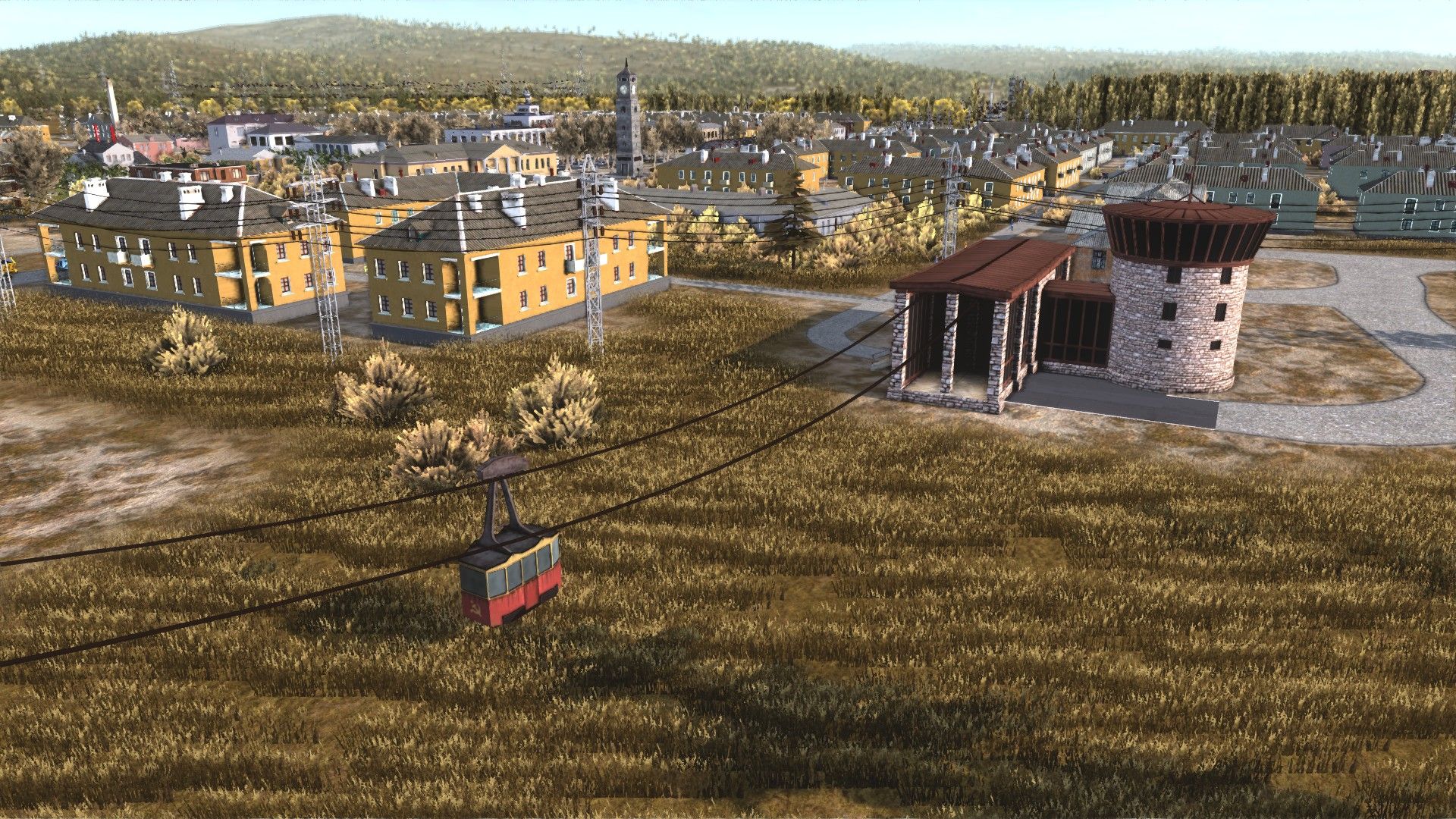
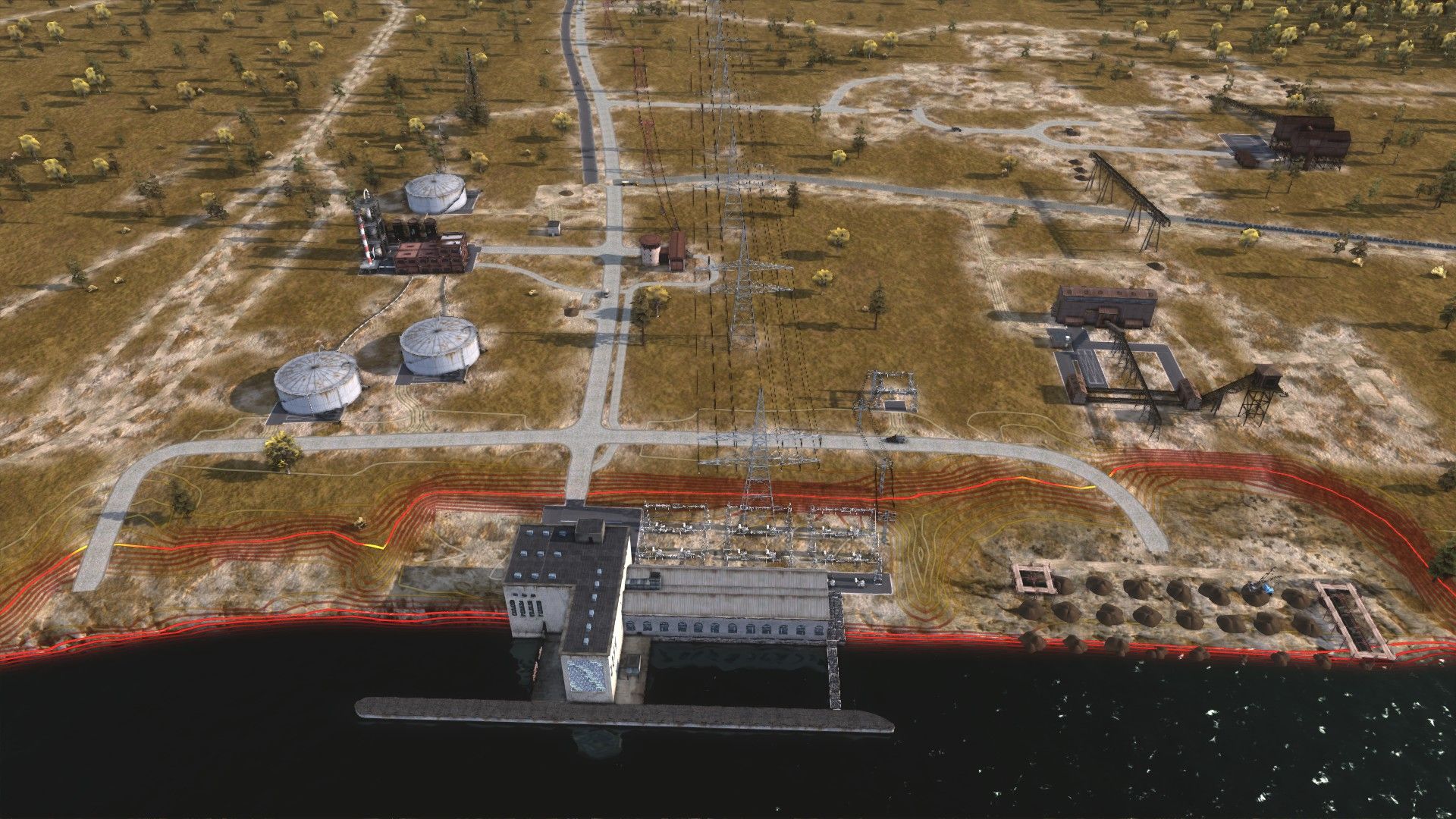
By the end of 1946 I’d built up all the construction industry and some of the vehicles necessary. 1947 was spent expanding the town and vehicle production (two road factories and a train factory total), building a railway construction office and some track, and getting up a hydroelectricity plant, some oil wells and a small fuel refinery to process and get all the bitumen (and most, but not all, of the fuel) I need. For the latter, rather than use buses, I built a cable car.
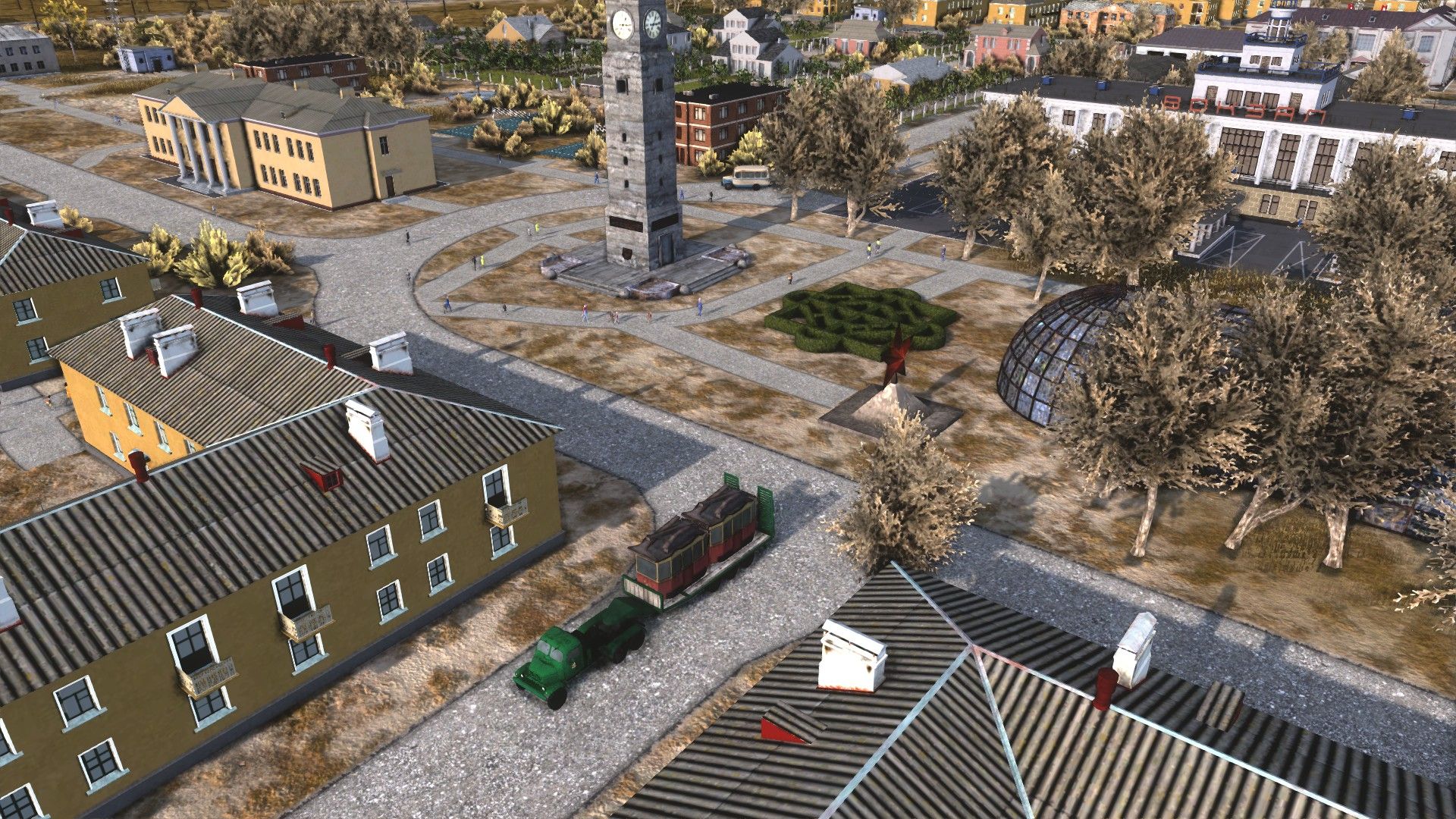
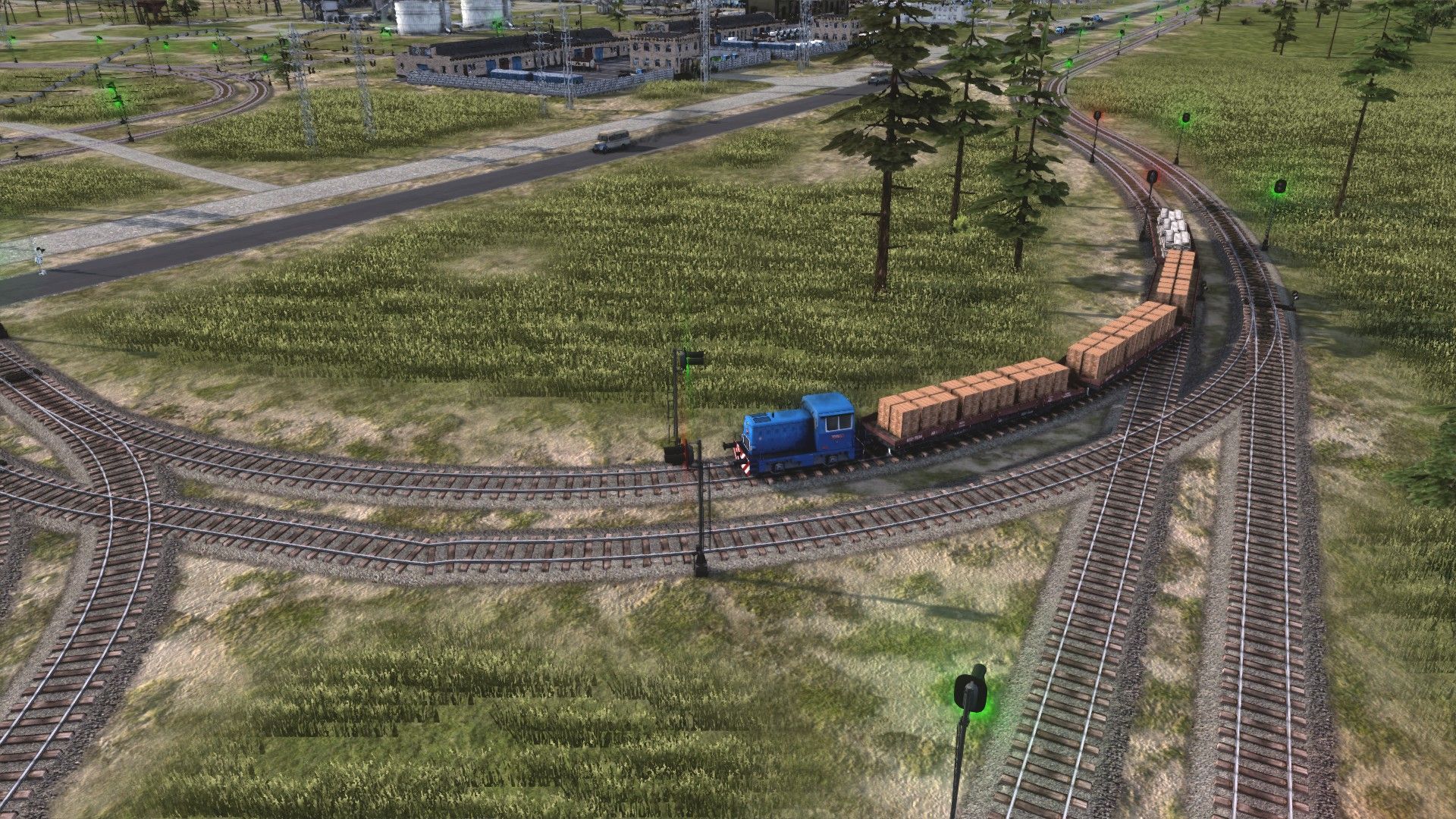
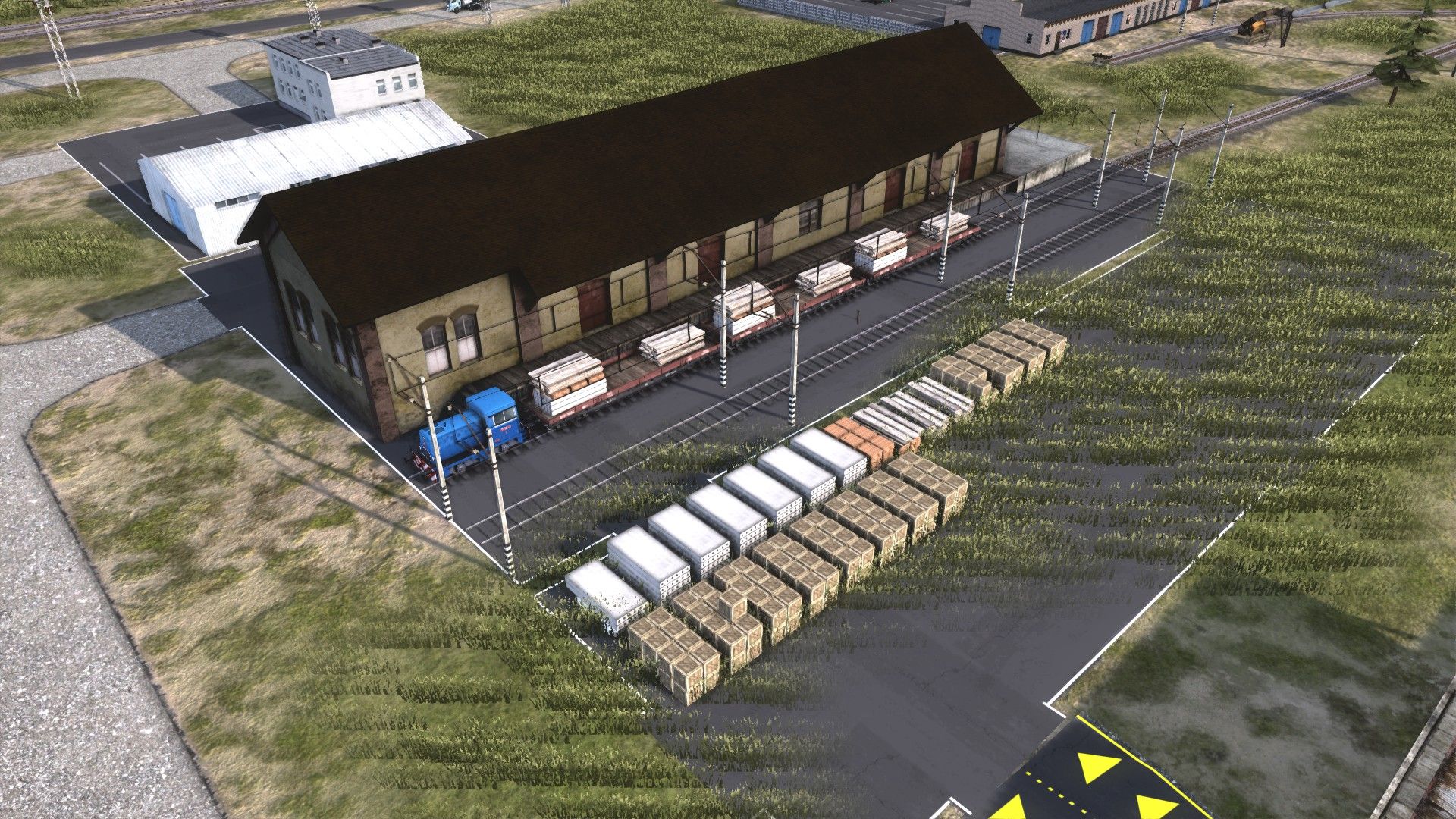 I’ve finished a railhead to the border, so small trains are importing bricks, boards and concrete panels, freeing up more lorries for construction.
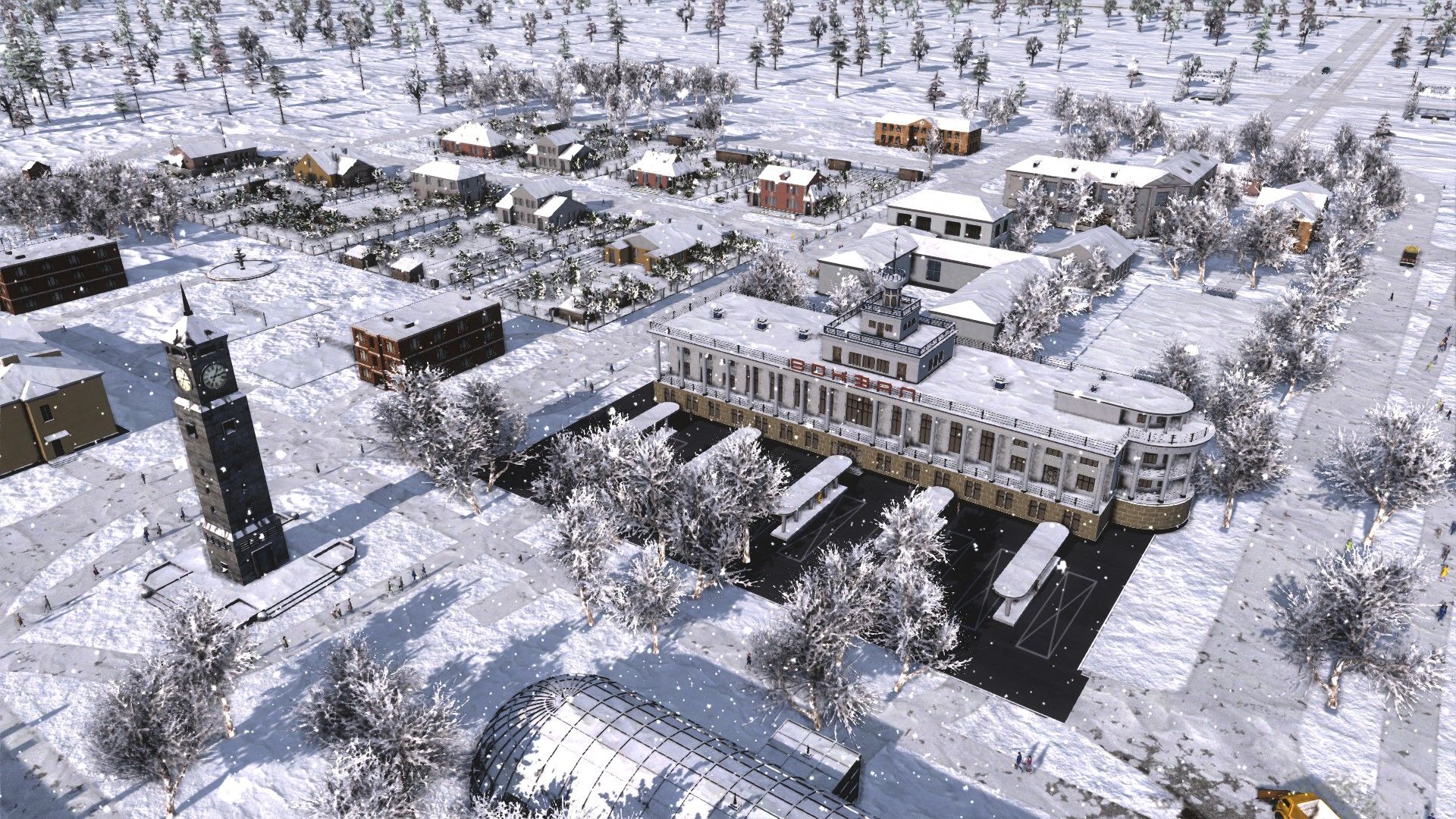
By spring of 1948 I had accumulated enough resources and capacity (most importantly lorries) to start on my second city. Much less garden-city-y and attractive than Alexandrov, Belogorsk is to be a huge collection of cheap workers’ barracks for iron and coal mining and steelworking, industries which need a lot of manpower.
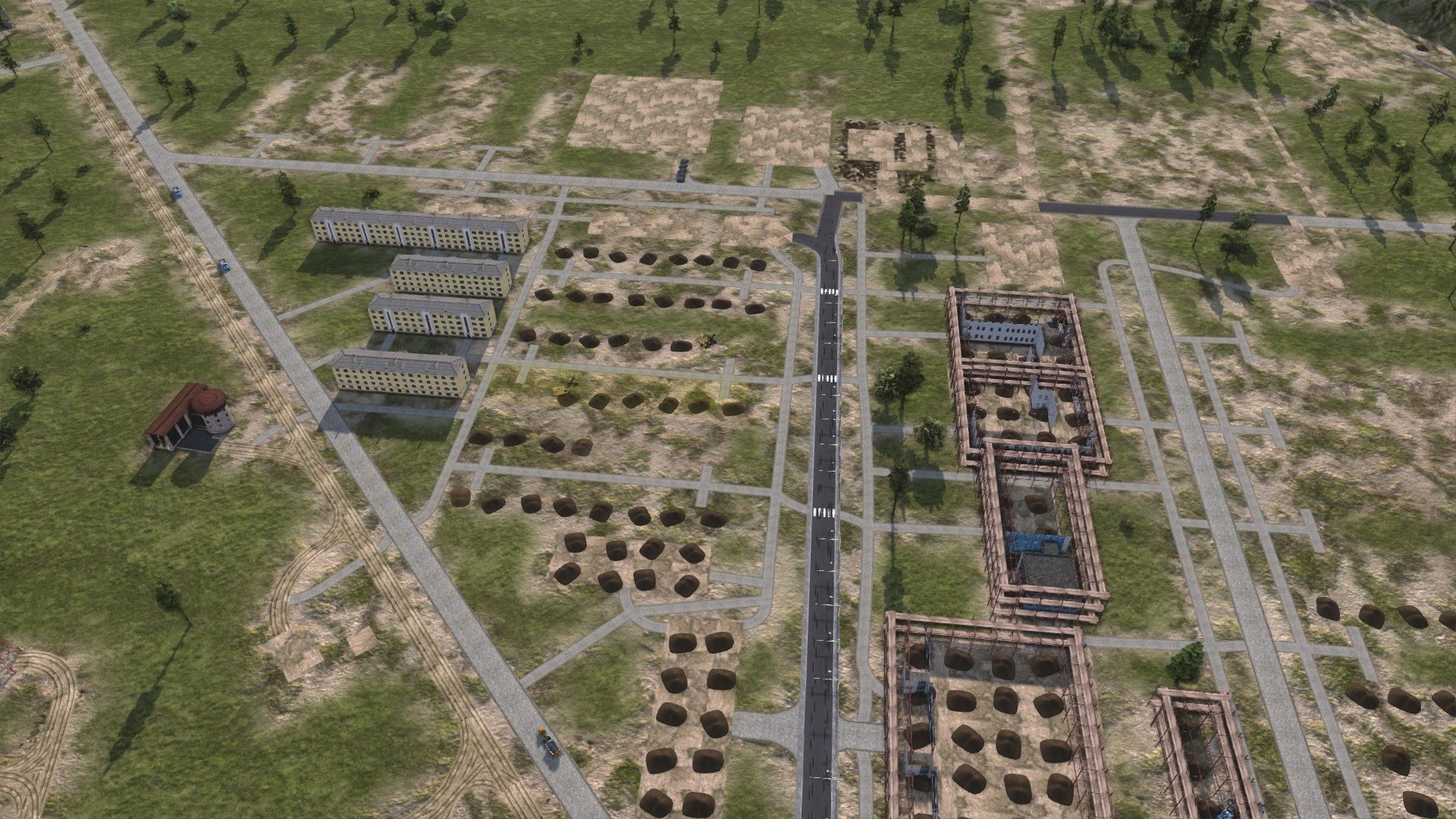
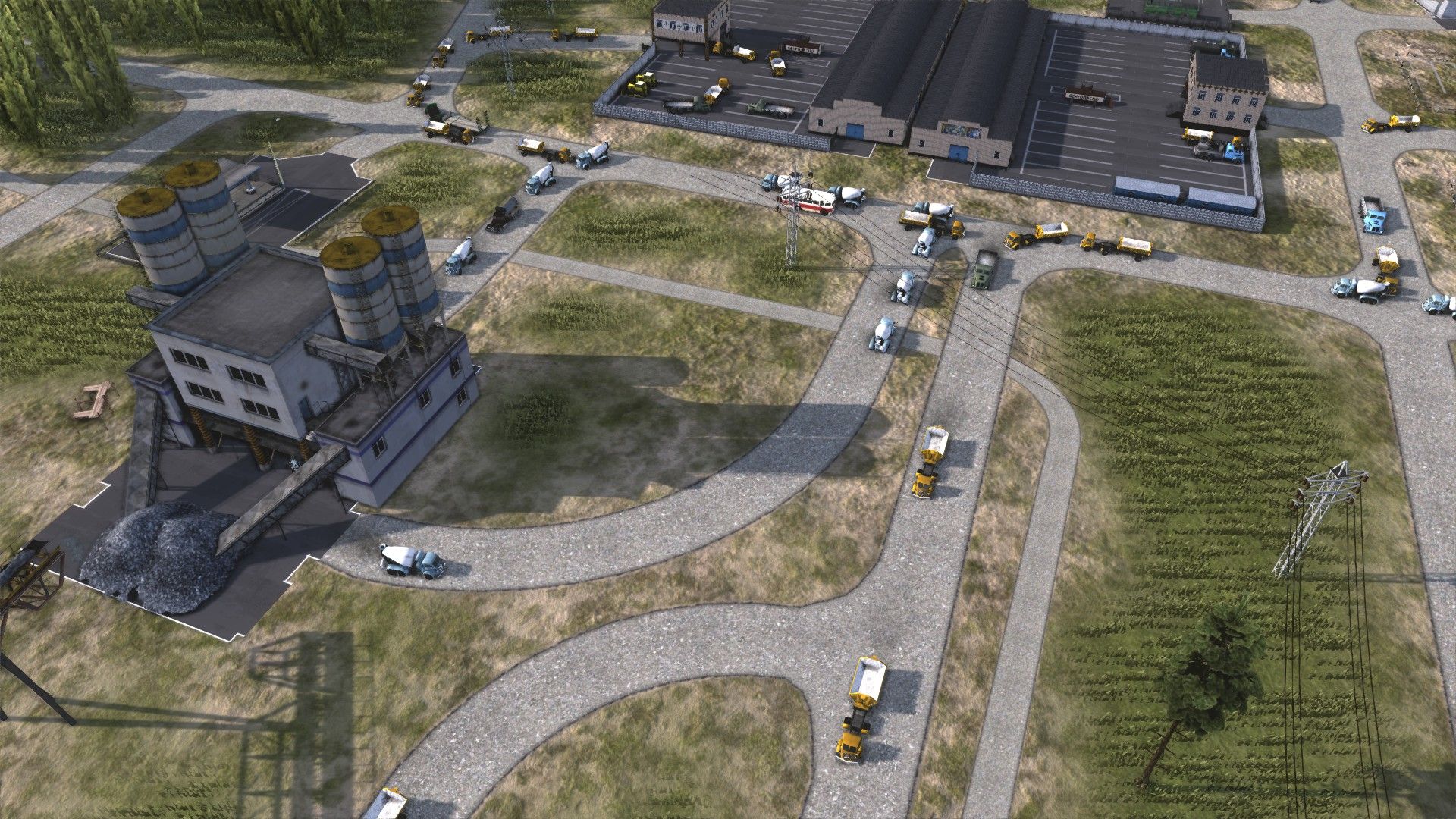
For massive construction works like this it’s been very useful to have a phased approach: build all the roads first (gravel and bulldozers; I built a little yard nearby to save moving the bulldozers around too much), workers only needed for tiny fiddly bits), then the groundworks of each building (dumpers, concrete mixers and excavators), then assign flatbeds to bring in bricks, boards, steel. Then you can assign the cranes and buses. The city can be built segment by segment, making fullest use of all the equipment.
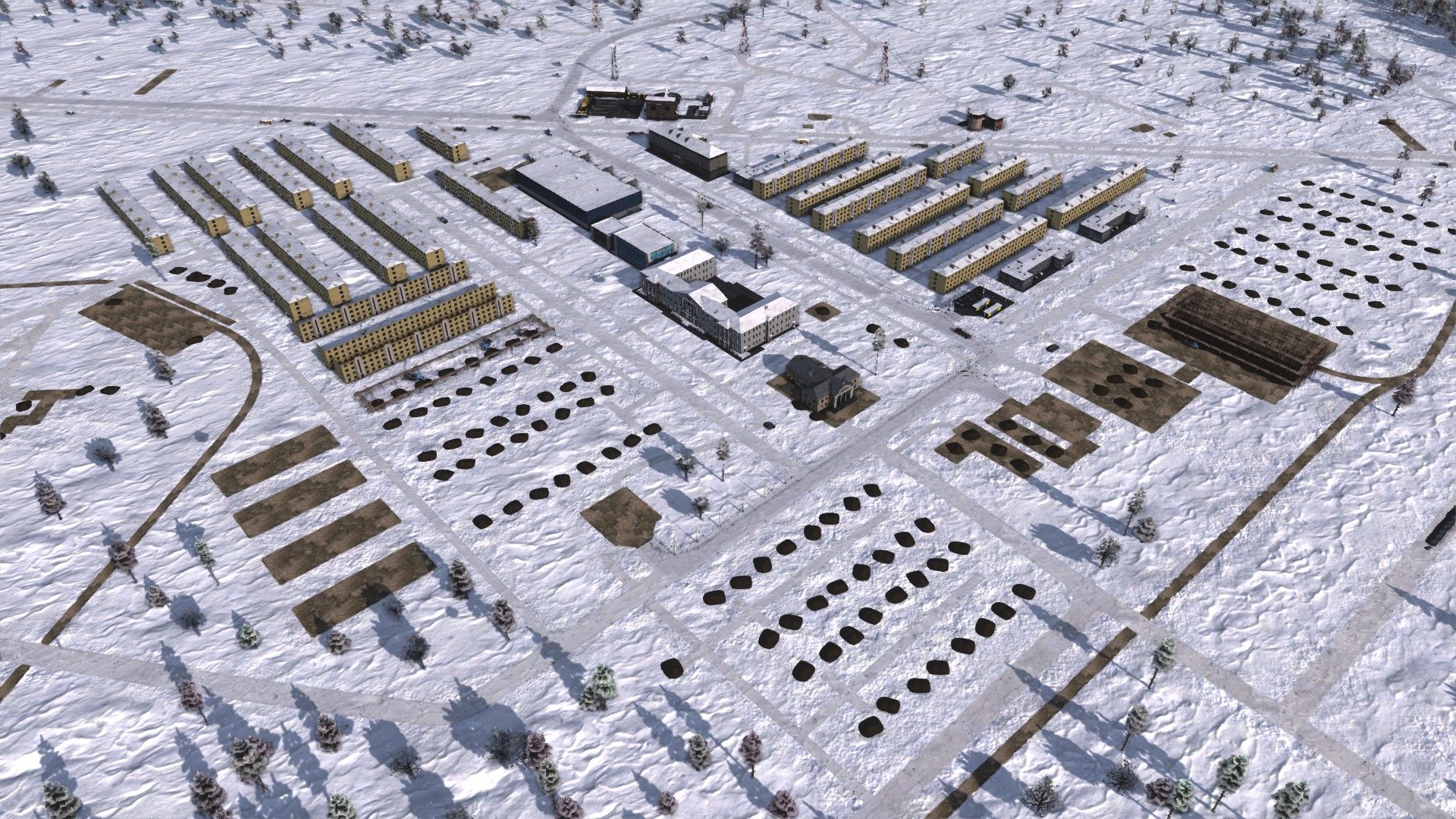
I got Belogorsk about 2/3 finished by the snows of late 1948, and focused on the steelworks (closer to the construction offices) through winter.
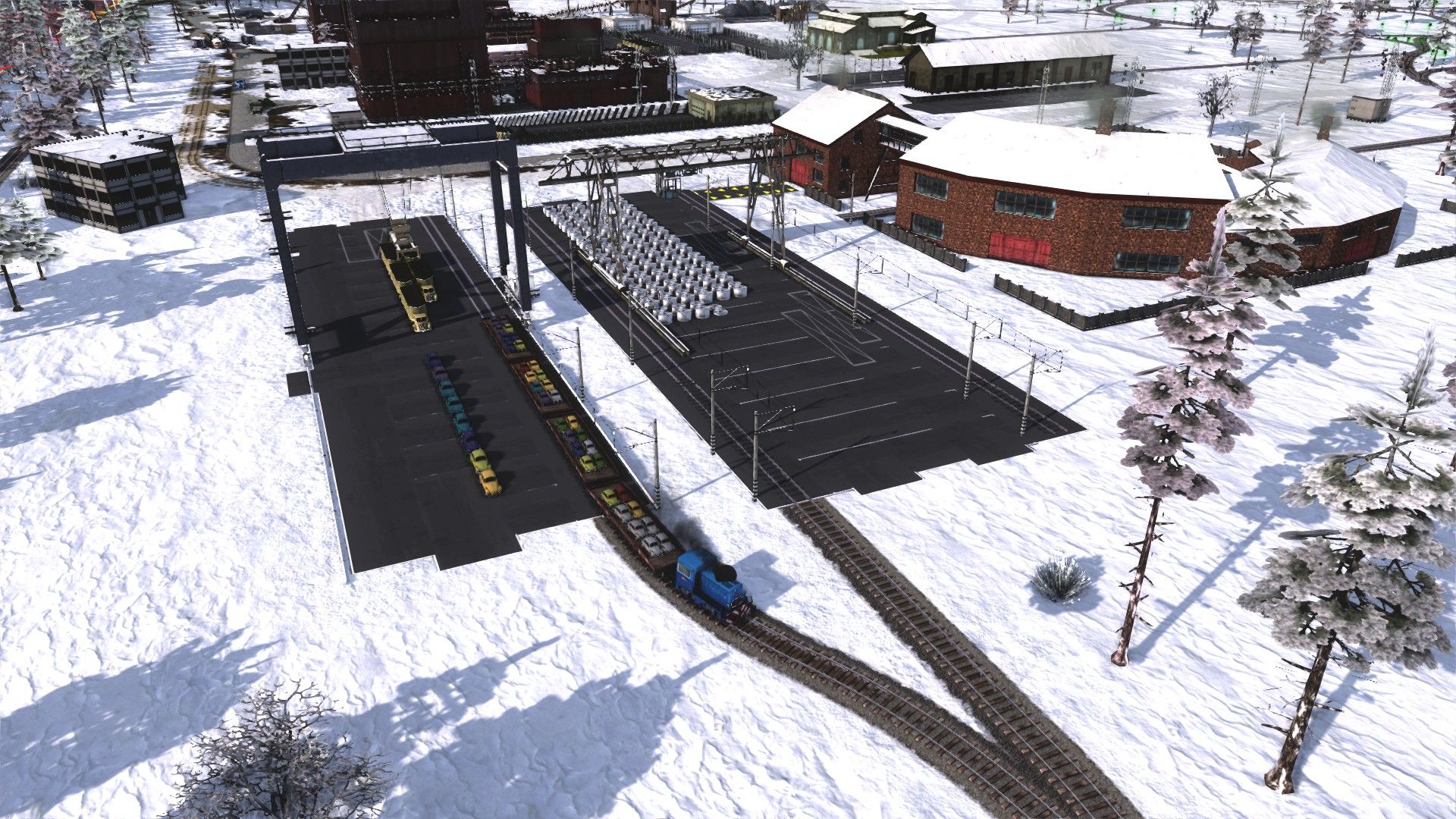
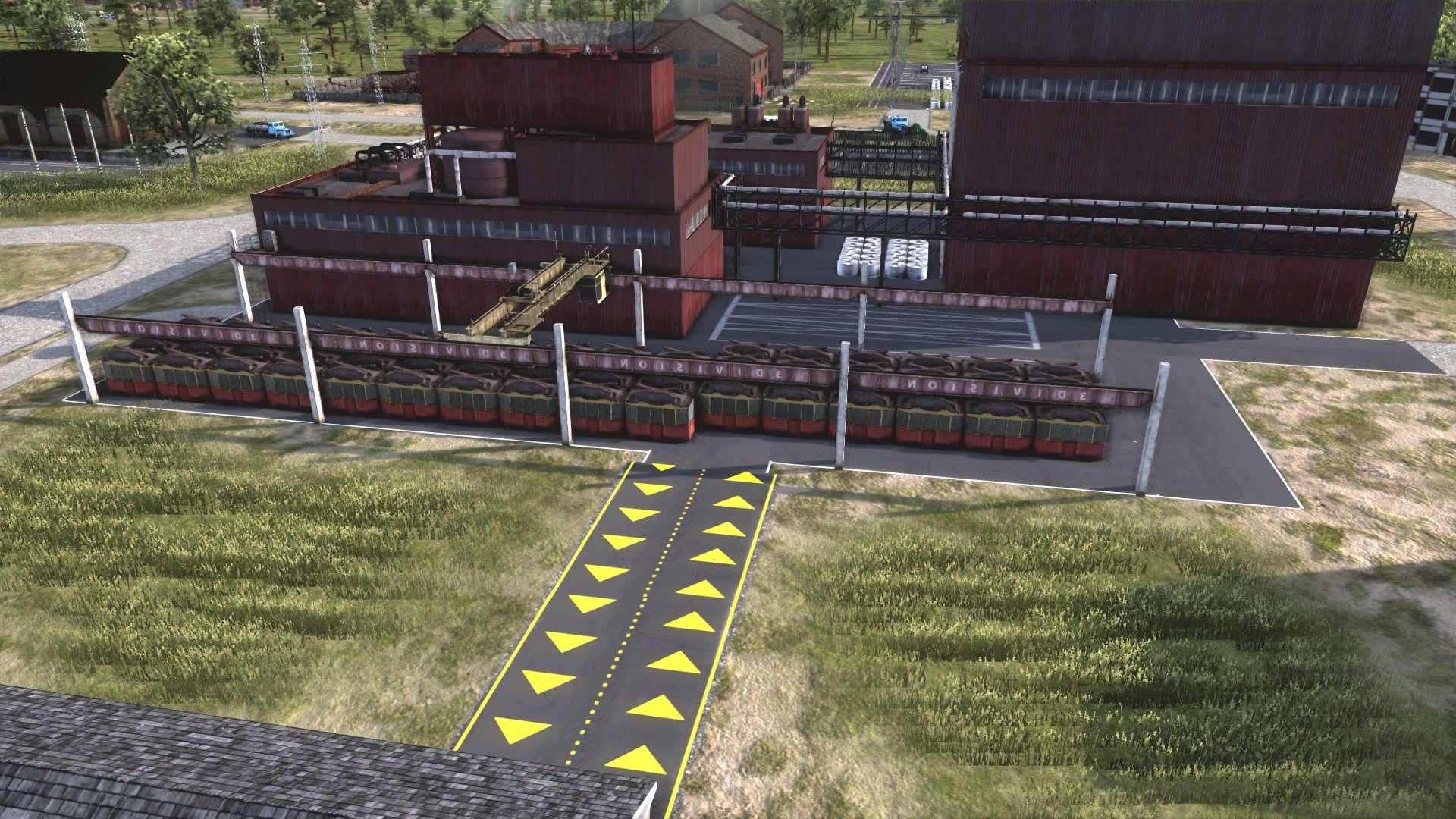
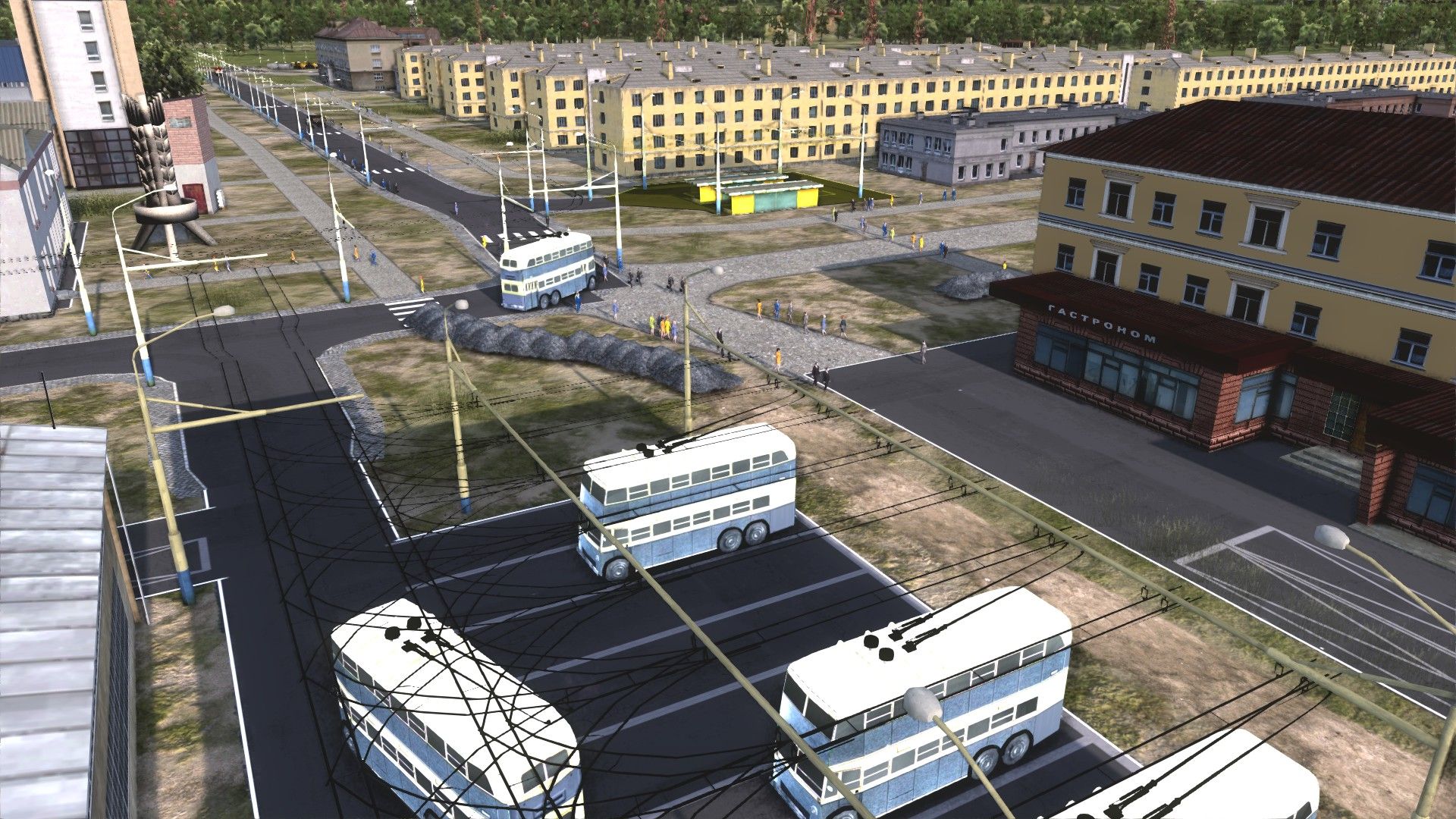
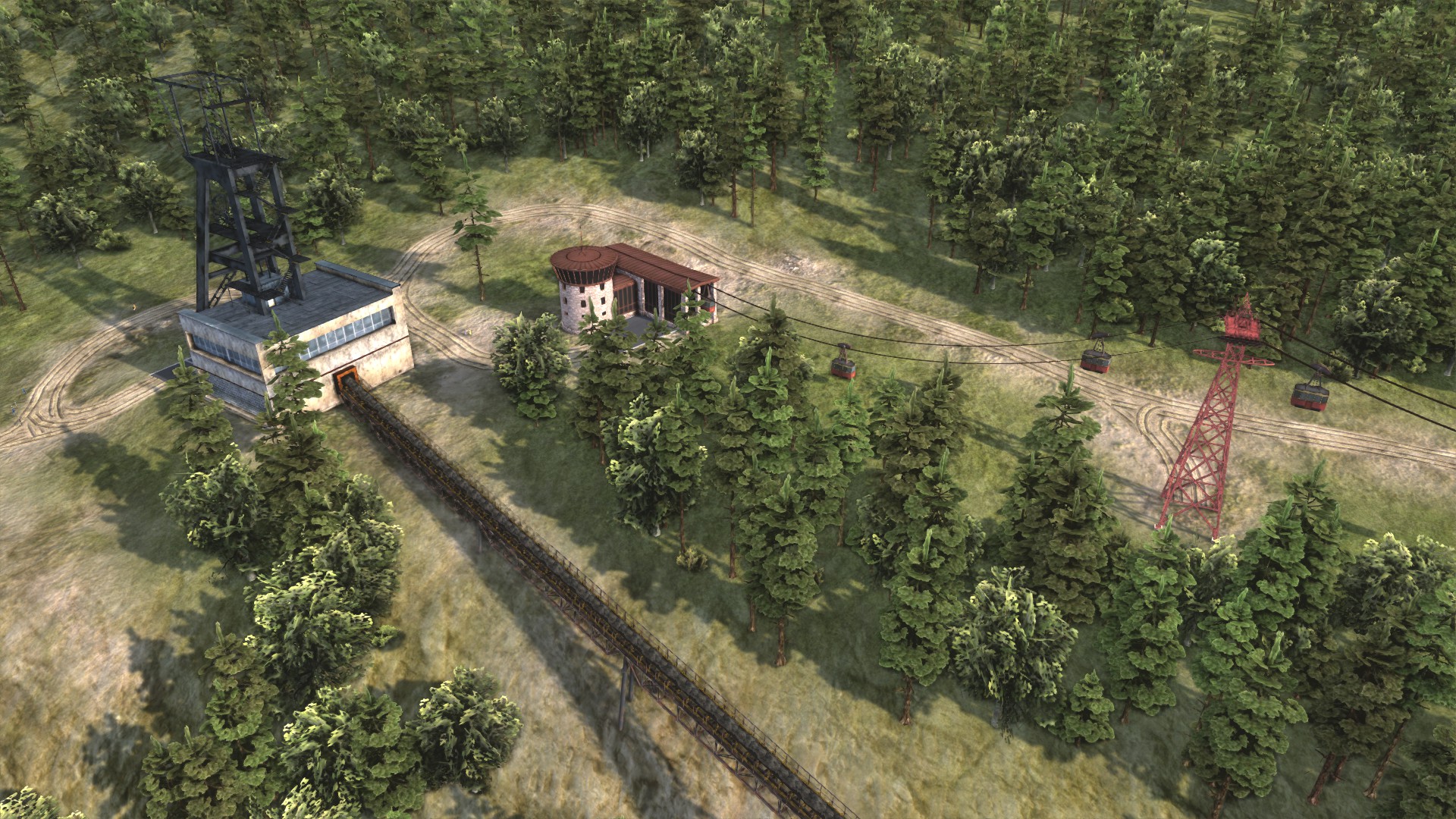

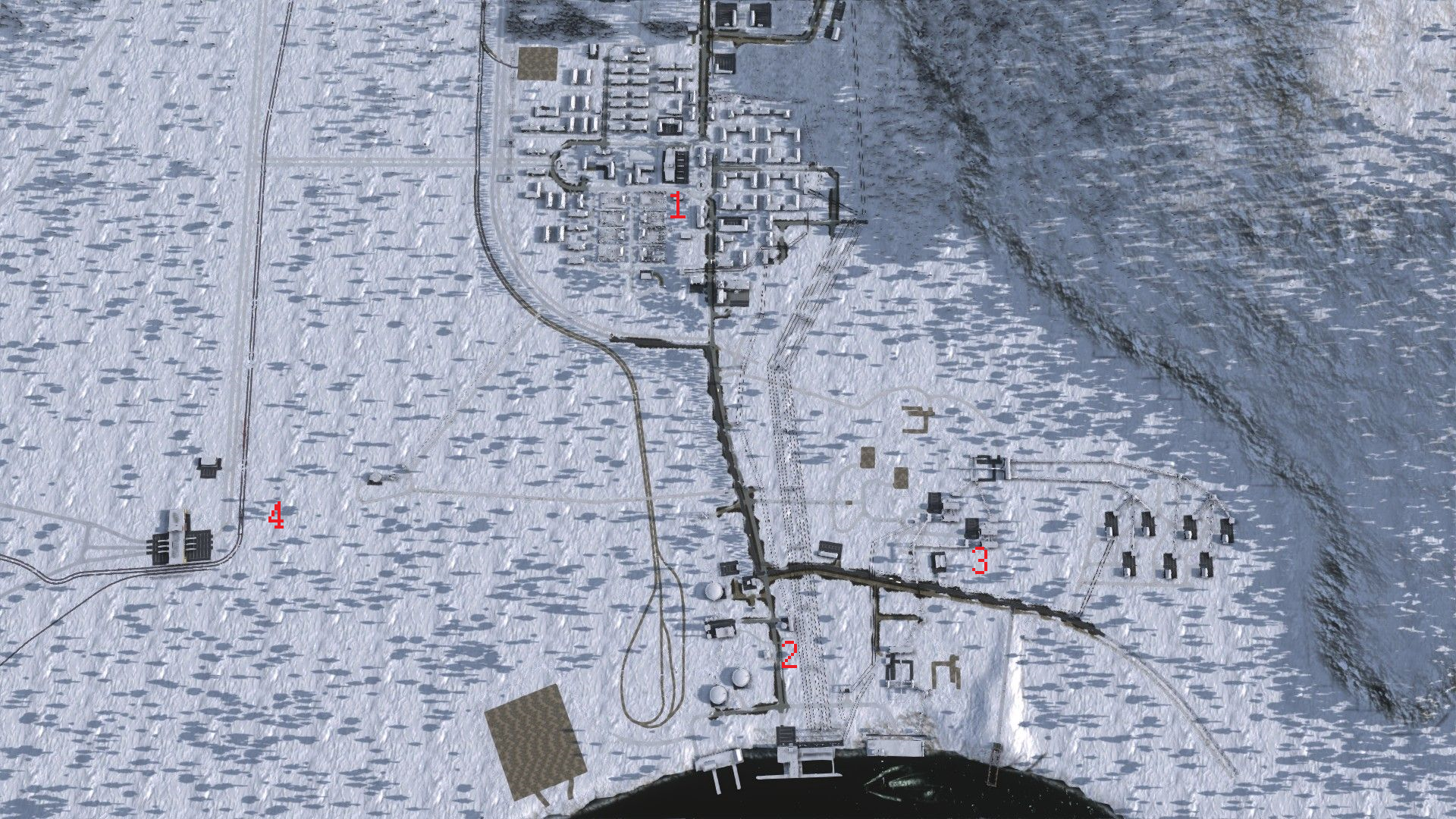
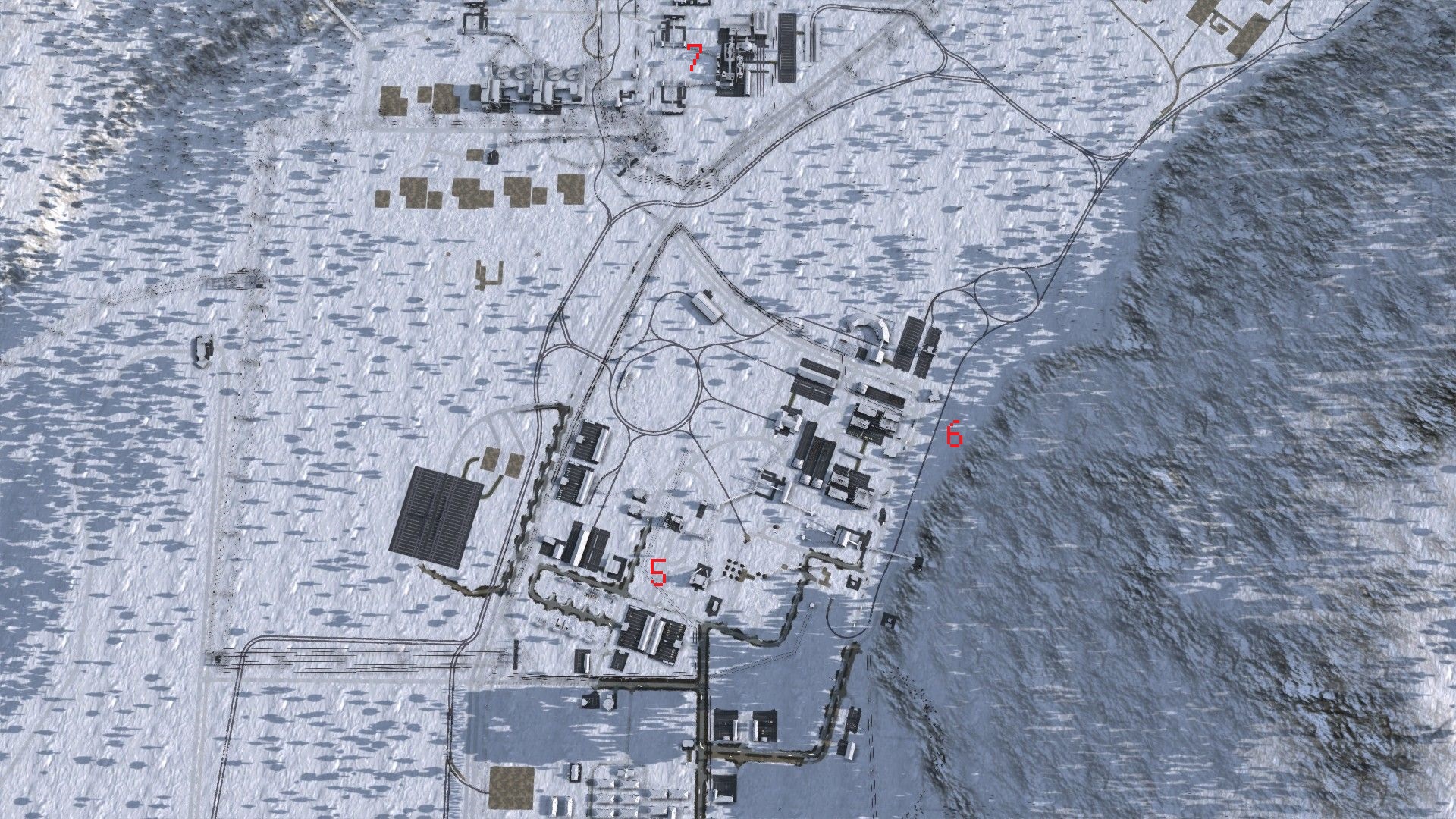
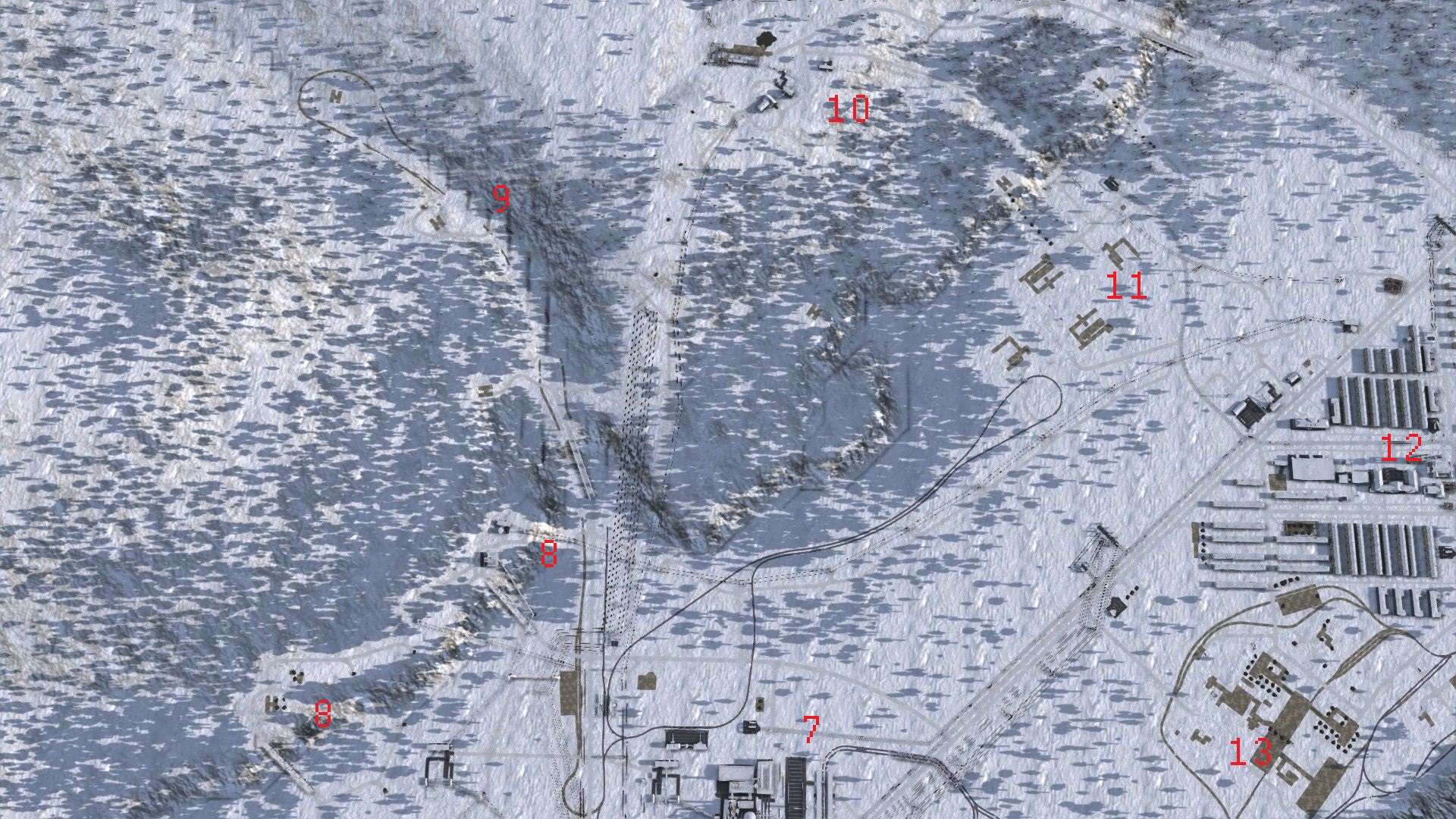
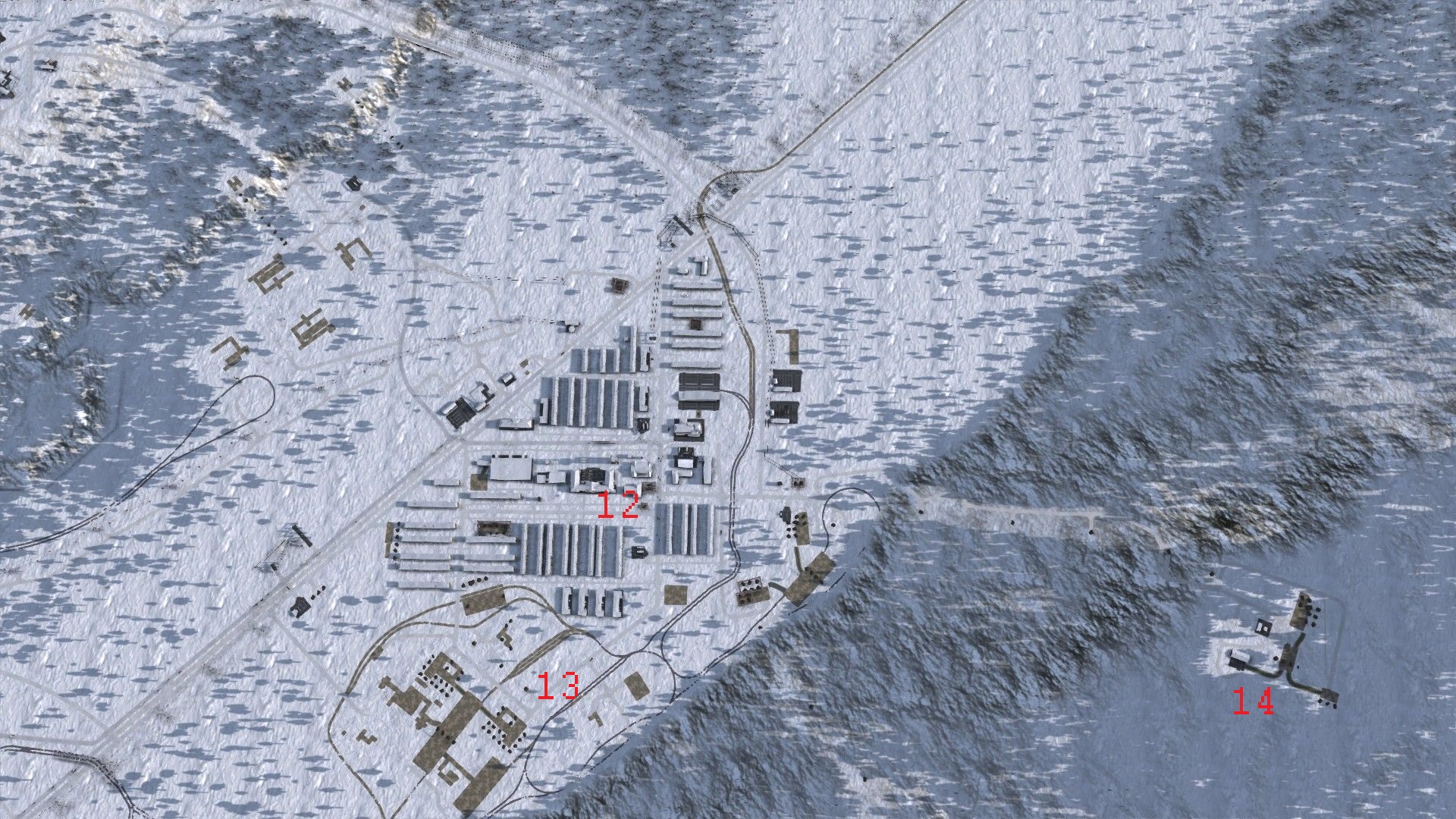
Some overhead views of my republic at the end of 1949. It’s a pain to stitch them all together, but please note:
1. the town of Alexandrov; 2. small-scale oil refining and hydropower generation; 3. bauxite mining, processing and export (under construction); 4. the customs office through which I import goods by rail; 5. the main construction offices and materials storage/manufacture; 6. road and rail vehicle production complex; 7. steelworks and coal processing; 8. coal mines; 9. further planned coal mines in a loop up a shallow valley; 10. planned coal power generation fed and staffed via cable car; 11. planned iron mines and processing; 12. the city of Belogorsk; 13. planned brickworks, cement and panel factories; and 14. a planned mountaintop logging.
More soon…
* With apologies to the excellent Sin Vega, who’s been playing WRSR in pre-war mode, for ripping off their pun.
 underneath the open sky
and you do not need to apply for planning permission – heaven!
On Sat, 8 Jan 2022 at 15:43, underneath the open sky wrote:
> brosencrantz posted: ” Workers and Resources: Soviet Republic is the most > complex, and thus obviously the best, city builder ever made. For those who > know the genre, consider the sophisticated supply chain optimisation of > Factorio or Satisfactory plus the managing populatio” >